From the free course AP United States Government and Politics on Lykke
1.3 Government Power and Individual Rights
Key concepts: Government power and individual rights · Individual liberty · Balance between individual freedom, social order, and equality of opportunity · Unenumerated rights · Right to privacy · First Amendment establishment and free exercise clauses · Religious liberty · Constitutional compromises and unresolved debates · Racial discrimination in voting · Pluralism and elitism
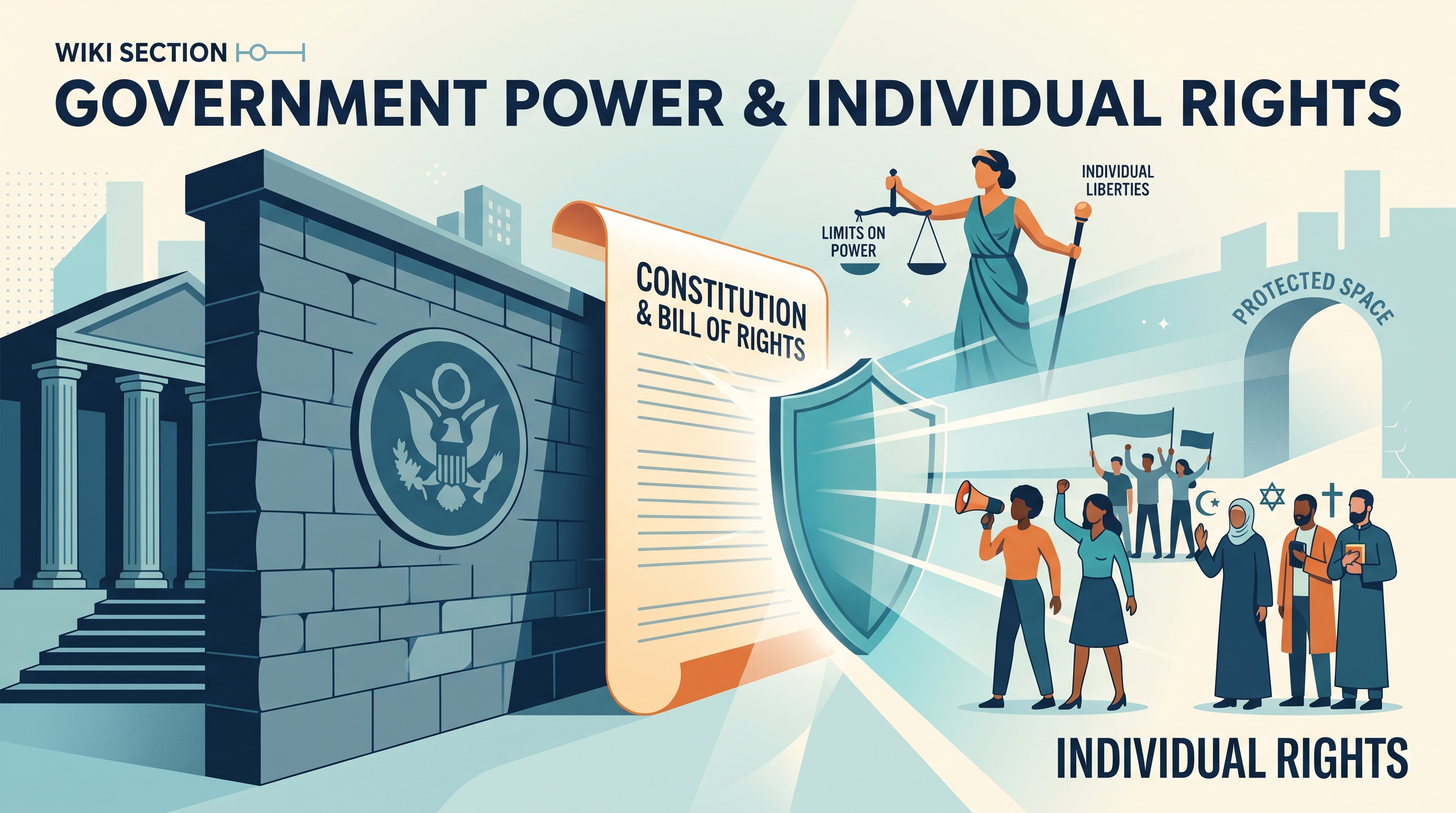
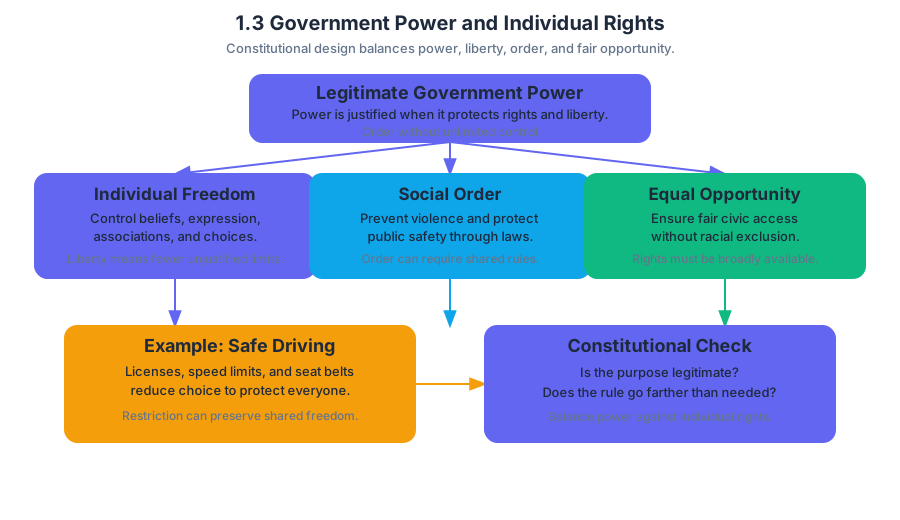
Government is legitimate only when its power is connected to the protection of individual rights and liberty. The central constitutional problem is not whether government should have power, but how a political system can use power to preserve order without giving officials unlimited control over people’s lives.
1.3 Government Power and Individual Rights
Government is legitimate only when its power is connected to the protection of individual rights and liberty. The central constitutional problem is not whether government should have power, but how a political system can use power to preserve order without giving officials unlimited control over people’s lives.
Individual liberty is the ability of people to make choices about their lives without unjustified government interference.
The Constitution reflects an ongoing effort to balance three values that can point in different directions:
- Individual freedom: people should control their beliefs, expression, associations, and personal choices.
- Social order: government must prevent violence, protect public safety, and enforce laws.
- Equality of opportunity: government should not deny people fair access to political participation or other civic opportunities because of characteristics such as race.
A law requiring safe driving illustrates the tension. The government limits individual behavior by requiring licenses, speed limits, and seat belts. Those rules reduce personal choice, but they can also protect everyone’s life and freedom to use public roads. The constitutional question is whether the government’s restriction is sufficiently connected to a legitimate public purpose and whether it goes farther than necessary.
Constitutional limits on government power
The constitutional system limits government through written rights, divided authority, and principles that prevent officials from treating power as unlimited. A government may claim that a policy promotes public order, but that claim does not automatically defeat an individual right. Constitutional conflicts arise when the state’s lawmaking authority collides with a protected sphere of personal freedom.
Unenumerated rights are rights not explicitly listed in the Constitution. The right to privacy is one example. The Constitution does not use the exact phrase “right to privacy,” yet constitutional interpretation has recognized privacy interests through protections found in several amendments and in the broader principle that government power has boundaries.
Key distinction: An unenumerated right is not necessarily an invented right. It is a right inferred from constitutional principles, structure, or specific guarantees rather than stated in one precise sentence.
Consider a government policy that requires officials to obtain legal authorization before entering a person’s home. The Fourth Amendment’s protection against unreasonable searches supports a zone of personal privacy even though the amendment does not create a general, single-sentence “privacy clause.” The dispute then becomes one of constitutional interpretation: how far does the protection extend, and what government interests can justify an intrusion?
Religious liberty: two First Amendment protections
The First Amendment demonstrates the tension between government power to make law and individual religious freedom through two related protections:
- The establishment clause limits government action that establishes, sponsors, or improperly favors religion.
- The free exercise clause protects an individual’s ability to practice religion.
These clauses can pull government in opposite directions. A government that officially promotes one faith may violate the establishment clause. A government that applies a neutral law may still burden religious conduct, raising a free exercise question. The constitutional challenge is to protect religious liberty without allowing either government or a religious majority to control everyone’s beliefs.
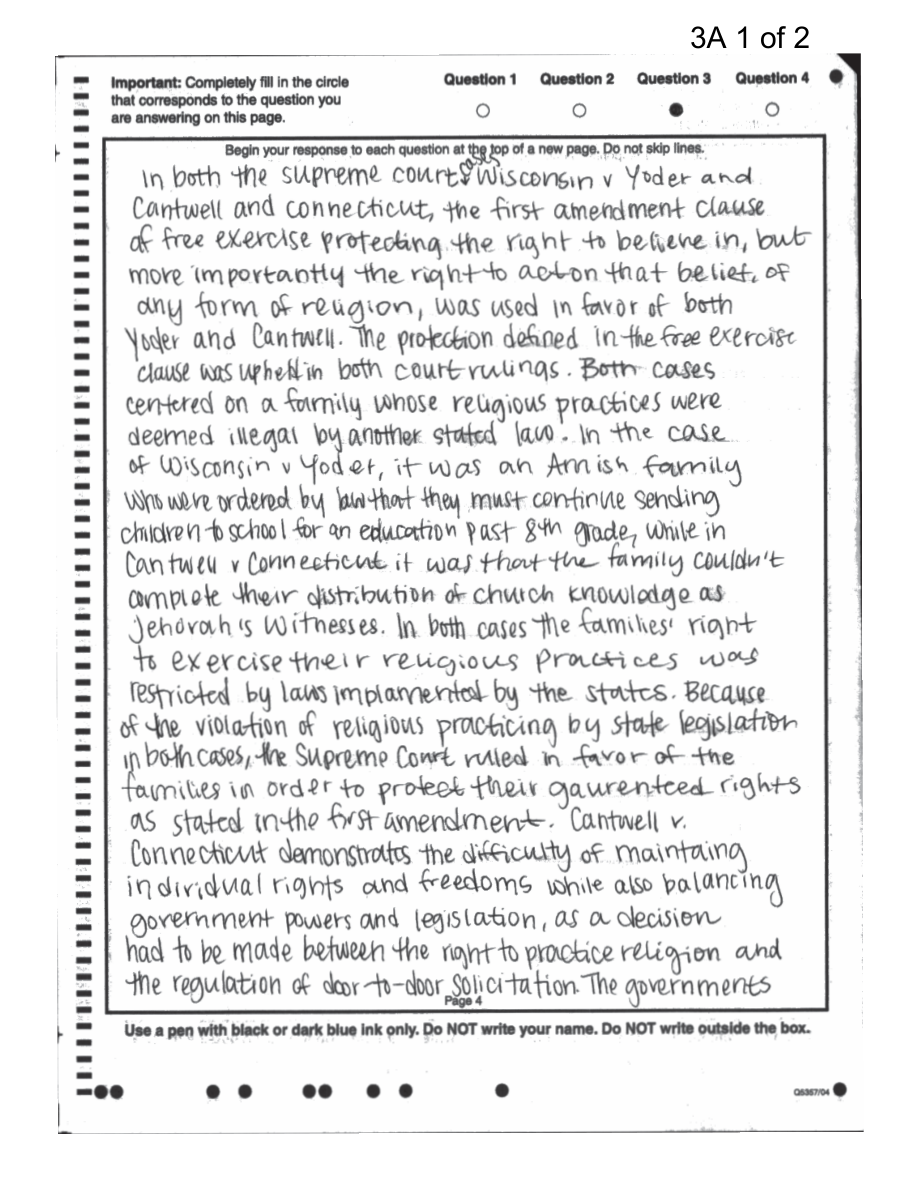
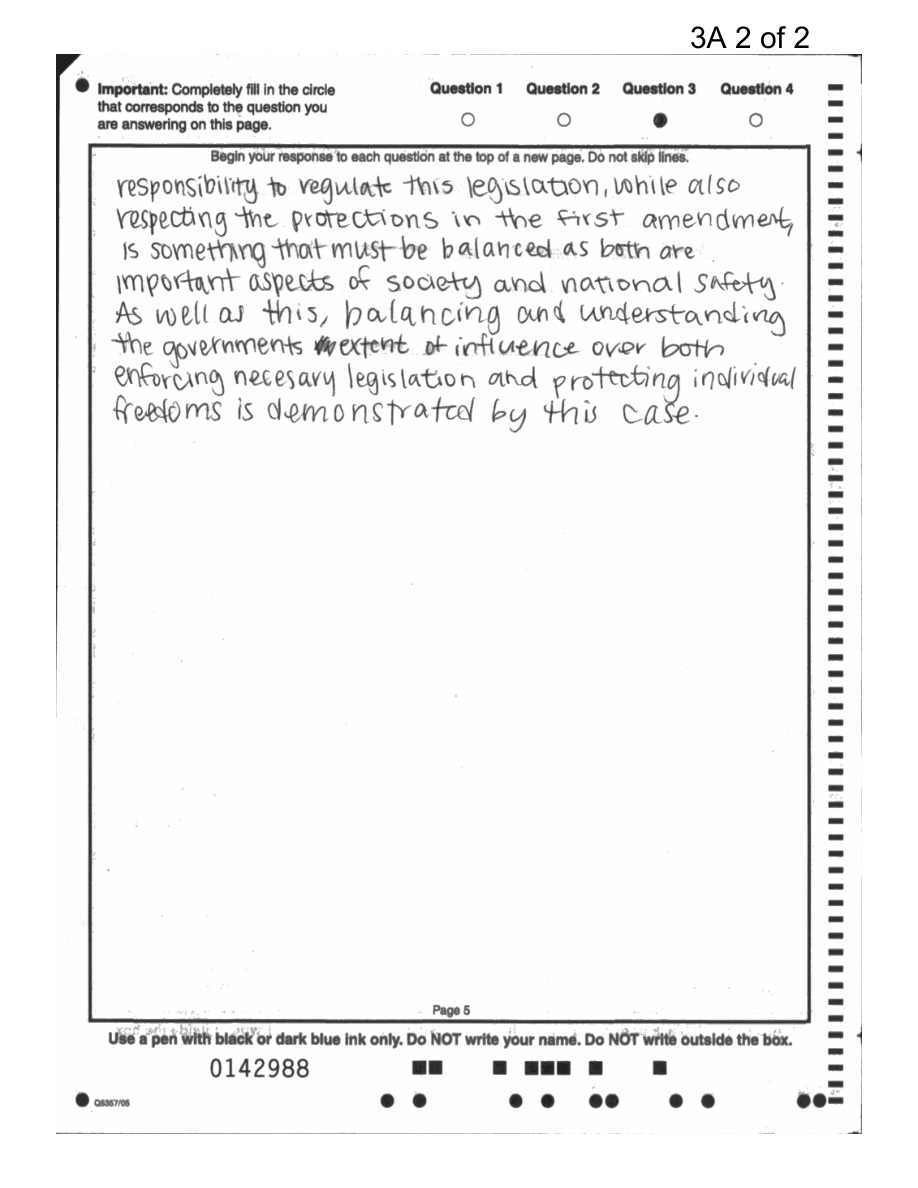
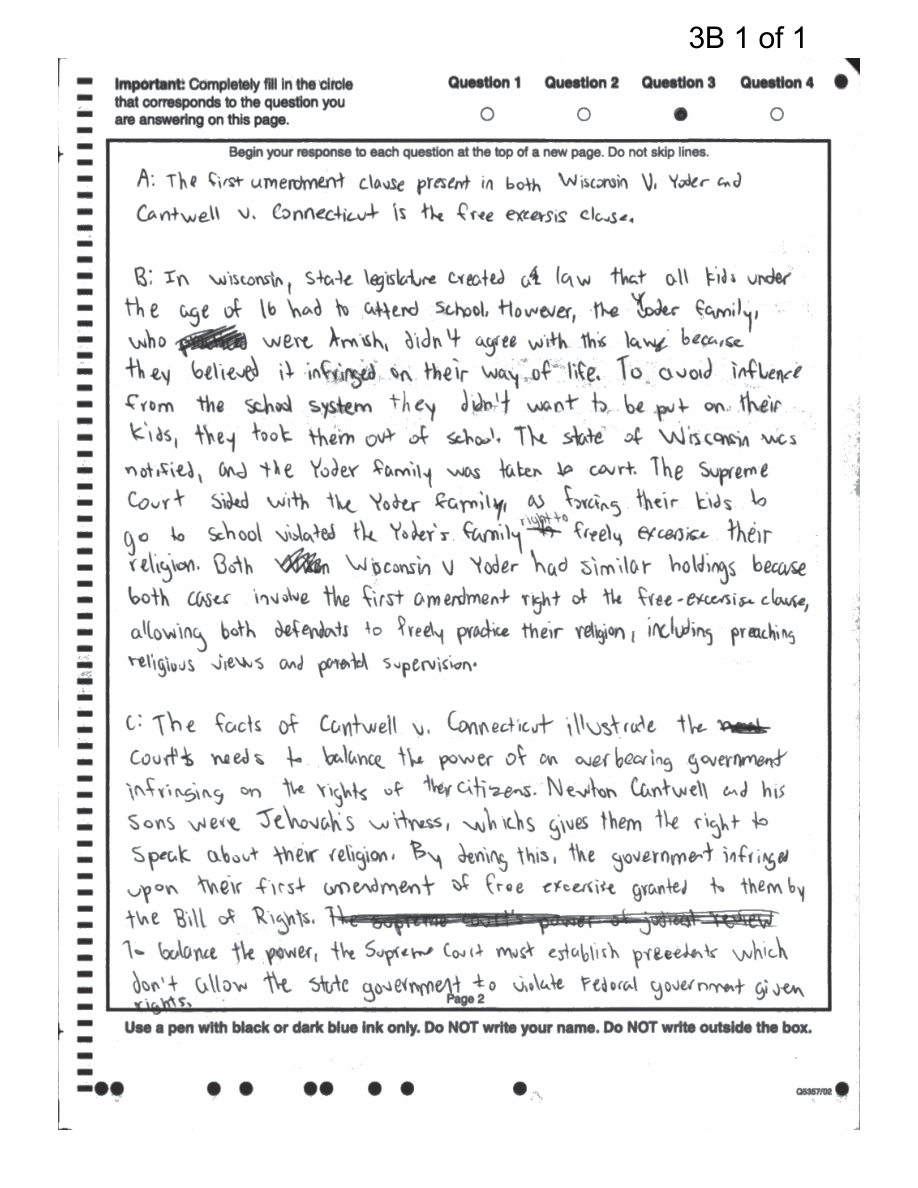
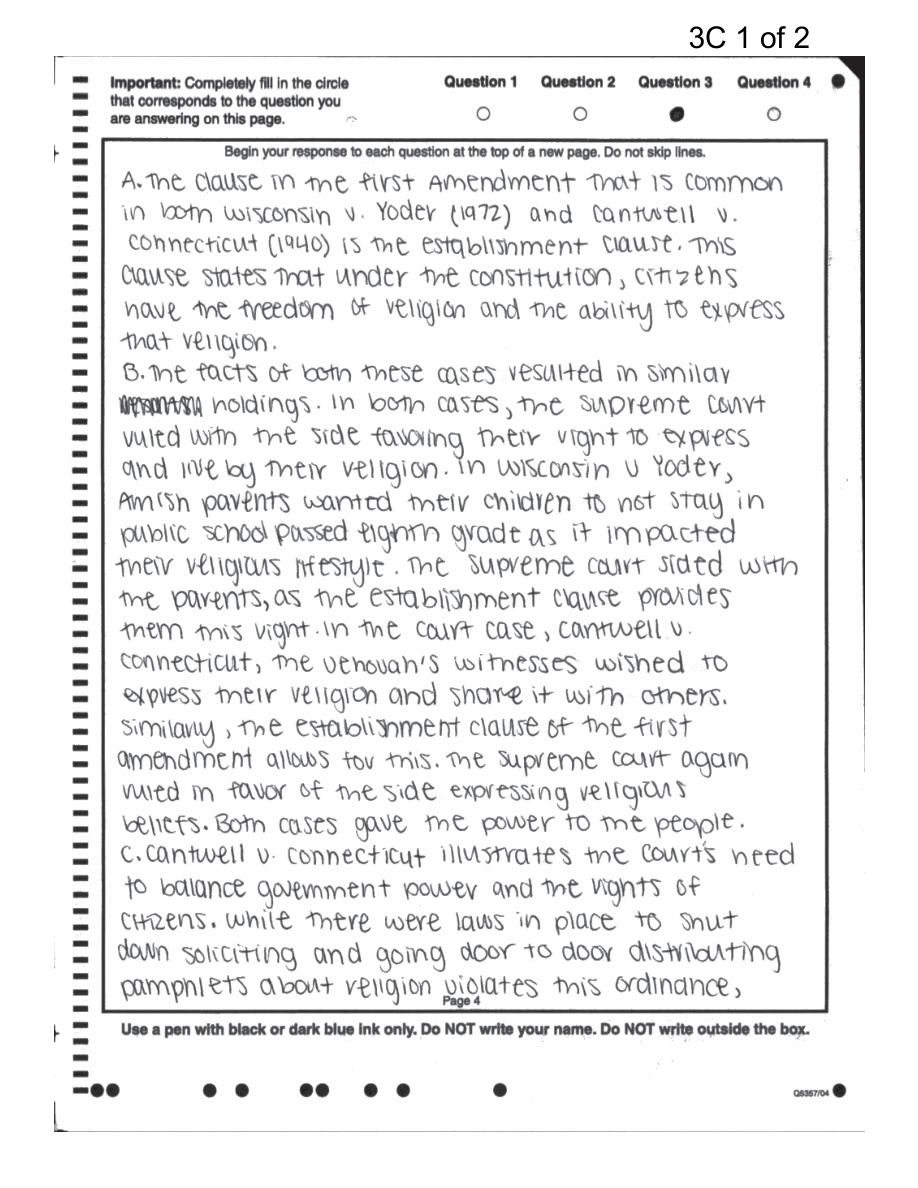
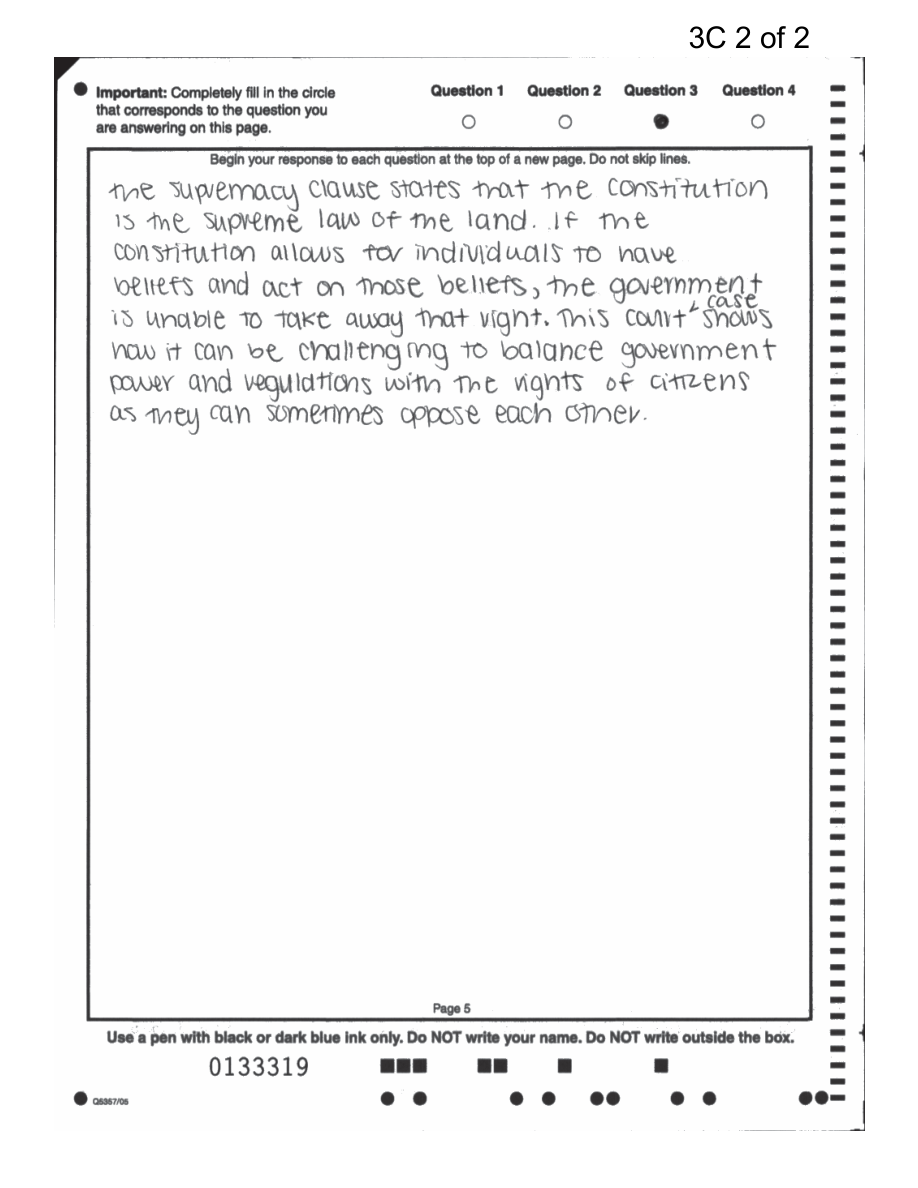
For example, imagine a city ordinance that restricts door-to-door distribution of religious pamphlets. The city may defend the rule as a way to prevent harassment or protect public order. A religious group may respond that the ordinance interferes with its ability to communicate and practice its faith. In Cantwell v. Connecticut, the Supreme Court treated this kind of conflict as involving the government’s regulatory power and the individual’s right to freely exercise religion.
Rights, political conflict, and unresolved compromises
The Constitutional Convention and ratification debates produced compromises, but they did not resolve every disagreement about liberty, order, and equality. Those unresolved questions continue to generate debate because constitutional rights must be applied to changing political circumstances. A policy affecting voting, for instance, may be defended as an administrative regulation while critics argue that it burdens equal political participation.
Racial discrimination in voting is a clear example of government action affecting individual rights. If officials use government power to prevent a racial group from registering, voting, or receiving equal access to the political process, the issue is not merely administrative efficiency. It concerns whether government is honoring equality of opportunity and protecting citizens’ political liberty.
Misconception check
Misconception: “Individual rights mean government can never restrict individual behavior.”
Correction: Rights are powerful limits on government, but constitutional government may regulate conduct to protect public safety and social order. The question is whether the restriction is constitutionally justified, fairly applied, and consistent with the protected liberty at stake.
CED traceability and skill application
Learning Objective LO 1.3.A: Explain how constitutional principles protect individual rights and limit government power.
Essential Knowledge EK 1.3.A.1: The Constitution contains provisions that limit the power of government and protect individual rights.
Essential Knowledge EK 1.3.A.2: The Bill of Rights protects individual liberties and rights from government action.
This topic is assessed through Concept Application 1.A: Describe political concepts and processes, Concept Application 1.B: Explain political concepts and processes, and Argumentation 5.A: Develop a defensible claim or thesis. A strong response identifies the constitutional principle, applies it to the specific government action, and explains the resulting conflict rather than merely naming a right.
Retrieval check: A state bans a religious practice because officials believe it is unpopular, even though the practice causes no identifiable harm. Which constitutional tension is most directly involved, and which First Amendment protection should be examined first? A strong answer would identify the conflict between government power and religious liberty and begin with the free exercise clause, while also asking whether the law improperly favors or targets religion.
Source Materials
- AP U.S. Government and Politics Course and Exam Description
- Learn More (.pdf)
- AP U.S. Government and Politics Course Overview
- AP U.S. Government and Politics Course at a Glance
- AP United States Government and Politics Course at a Glance Poster
- AP United States Government and Politics
- AP United States Government and Politics
- United States Government and Politics Sample Syllabus 1
- Figure — Sample Responses Q3 - Set 1 (p. 3)
- Figure — Sample Responses Q3 - Set 1 (p. 4)
- Figure — Sample Responses Q3 - Set 1 (p. 5)
- Figure — Sample Responses Q3 - Set 1 (p. 6)