From the free course AP United States History on Lykke
AP Practice 1
Key concepts: AP U.S. History course framework and exam preparation · Historical evidence and source credibility · Independent thinking and drawing evidence-based conclusions · Respectful debate and viewpoint diversity · Student and parent choice in AP enrollment · AP Course Audit and class-section setup · AP Classroom Progress Checks and feedback · Pre-Columbian North American societies and regional diversity · John Winthrop’s “A Model of Christian Charity” and the “city on a hill” idea · Virginia House of Burgesses and majority-rule debate
Historical study does not require everyone to reach the same conclusion; it requires each conclusion to be supported by credible evidence, historical context, and reasoning that another reader can evaluate.
AP Practice 1
Historical study does not require everyone to reach the same conclusion; it requires each conclusion to be supported by credible evidence, historical context, and reasoning that another reader can evaluate. That principle connects the AP U.S. History course framework to classroom debate, primary-source analysis, AP Classroom feedback, and the exam’s free-response tasks.
Core distinction: Evidence-based history asks, “What conclusion does the evidence justify?” It does not ask, “Which opinion is the class expected to repeat?”
The historian’s toolkit
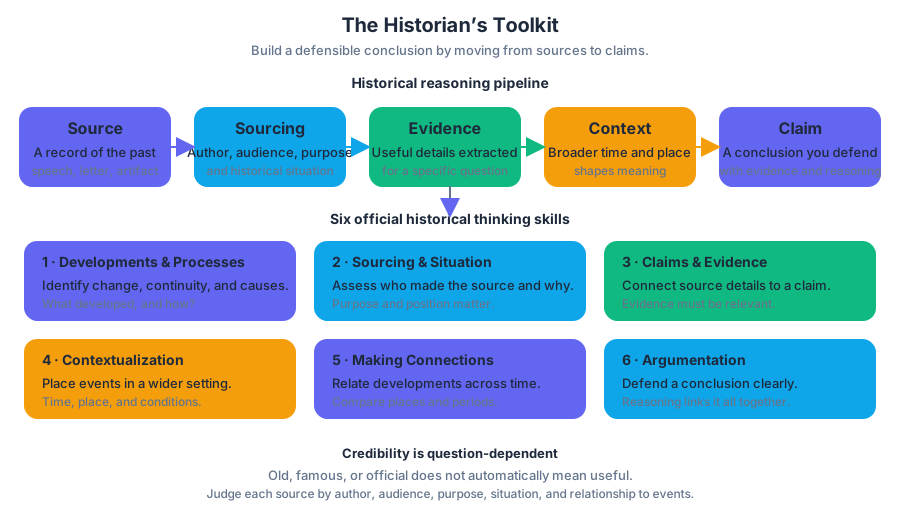
The course repeatedly develops six official historical thinking skills: Skill 1: Developments and Processes, Skill 2: Sourcing and Situation, Skill 3: Claims and Evidence in Sources, Skill 4: Contextualization, Skill 5: Making Connections, and Skill 6: Argumentation. On an assessment, these skills work together: identify what changed, examine who produced a source and why, connect evidence to a claim, place events in a broader setting, relate developments across time or place, and defend a conclusion.
A useful mental model is:
$$ \text{Source} \rightarrow \text{Sourcing} \rightarrow \text{Evidence} \rightarrow \text{Context} \rightarrow \text{Claim} $$
A source is not automatically credible because it is old, famous, or official. Source credibility means judging how useful a source is for a particular question by considering its author, audience, purpose, situation, and relationship to the event described. A source can be limited for one question yet highly valuable for another: a political speech may reveal a leader’s public goals even if it does not provide a neutral account of events.
Worked source-based short-answer practice
Original, unofficial practice prompt
Read the descriptions below and answer all parts.
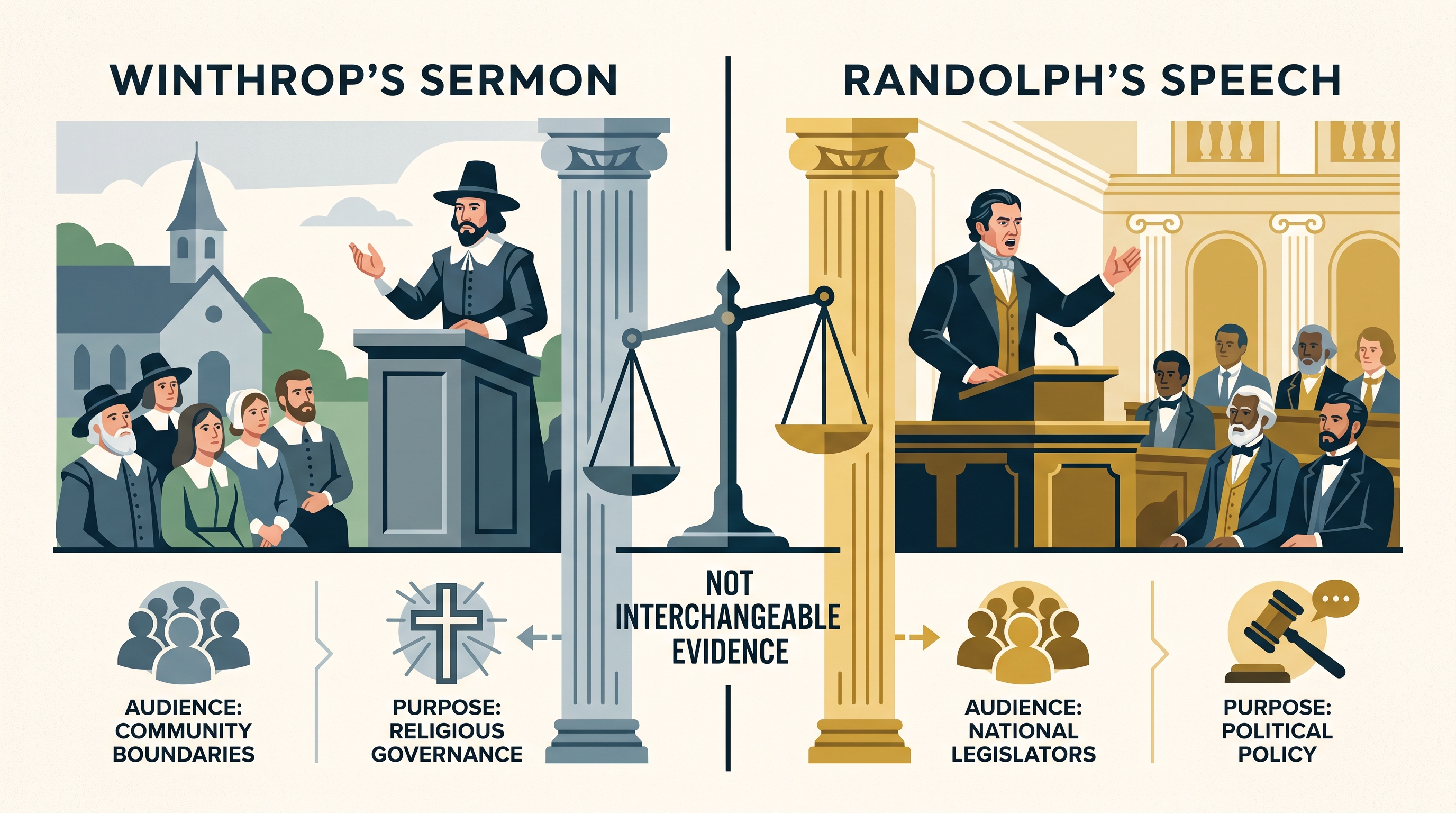
- In 1630, John Winthrop’s sermon “A Model of Christian Charity” described the Massachusetts Bay community as a “city on a hill,” a model Christian society formed through a covenant with God.
- In 1734, William Randolph, after being elected speaker of Virginia’s House of Burgesses, emphasized respectful debate and accepting the majority’s decision.
A. Identify one way the two sources reveal developing political or social expectations in British North America.
B. Explain one difference in the sources’ purposes or situations.
C. Explain one broader development from the period that helps place either source in context.
Model reasoning
A — Evidence and comparison: Both sources present community life as requiring shared obligations. Winthrop emphasizes a religious covenant and collective moral example; Randolph emphasizes orderly political disagreement and acceptance of a majority decision. This earns stronger reasoning than merely stating that both men “discussed society,” because it identifies the specific expectation each source reveals.
B — Sourcing and Situation: Winthrop spoke to Puritan migrants preparing to establish Massachusetts Bay, so his purpose was to encourage religious unity and mutual responsibility. Randolph spoke after a political election in Virginia, so his purpose was to establish norms for legislative debate and decision-making. The difference is not simply that they lived in different colonies; it is that their immediate audiences and political circumstances shaped what each speaker emphasized.
C — Contextualization: Both sources fit the development of distinct colonial societies shaped by migration, religion, local institutions, and regional conditions. Puritan Massachusetts developed around a covenant-centered religious community, while Virginia’s House of Burgesses reflected representative political institutions that had emerged in the Chesapeake. The contextual evidence must explain the source, not merely name “colonial America.”
Skills in action: Part A primarily uses Skill 3: Claims and Evidence in Sources and Skill 5: Making Connections. Part B uses Skill 2: Sourcing and Situation. Part C uses Skill 4: Contextualization. A response that connects all three parts also begins Skill 6: Argumentation by turning evidence into a defensible interpretation.
Debate without personal attacks
Historical interpretation often involves competing viewpoints. A classroom may ask students to defend different claims about a topic, such as which president was most significant, but the standard is evidence and reasoning—not personal loyalty. Respectful debate attacks neither the person nor the student’s identity; it tests the argument, asks what evidence supports it, and takes seriously perspectives shaped by students’ diverse backgrounds and experiences.
Misconception check: “Respectful debate means avoiding disagreement.”
Correction: Respectful debate permits strong disagreement while prohibiting personal attacks.
Choice, course design, and feedback
Students and parents freely choose AP coursework. The program welcomes students willing to undertake college-level academic challenges; enrollment is not an agreement to adopt a required political viewpoint. Teachers, meanwhile, must submit and obtain approval for their AP Course Audit course. Teachers or AP Coordinators establish class sections and order exams, while unit guides offer a possible instructional sequence that teachers may adopt or modify rather than requiring them to build a course from scratch.
At the end of a unit, AP Classroom Progress Checks can be assigned as homework or as an in-class task. Answer rationales provide question-level feedback, while the progress dashboard provides unit- and skill-level feedback; teachers can also create additional practice through the AP Question Bank. The most useful error review asks: What did I choose? What evidence did I overlook? Which skill failed—sourcing, contextualization, connection, or argumentation?
Retrieval check
In two sentences, explain why Winthrop’s sermon and Randolph’s speech should not be treated as interchangeable evidence. A strong answer identifies their different audiences, purposes, or situations and connects that difference to the historical claim being made. The AP U.S. History instructional framework and sample exam materials identified here become effective beginning in Fall 2026; exam updates beginning with the May 2027 exam change selected task formats, not the underlying course content.
Source Materials
- AP U.S. History Course and Exam Description
- AP U.S. History Course and Exam Description Clarifications and Corrections
- AP U.S. History Course Overview
- AP U.S. History Course at a Glance
- AP United States History Course at a Glance Poster
- AP United States History
- AP United States History
- AP United States History Sample Syllabus 1
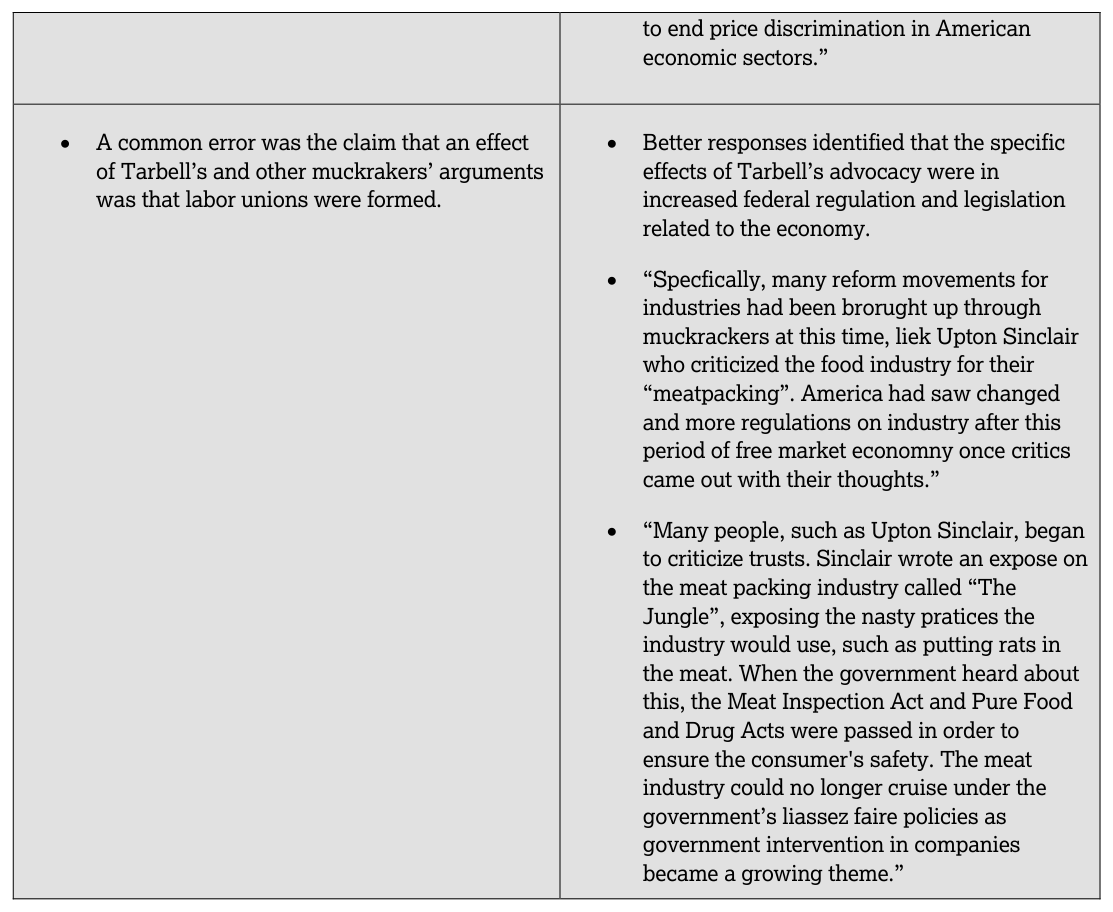
- Based on your experience at the AP® Reading with student responses, what advice would you offer teachers to help them improve the student performance on the exam?
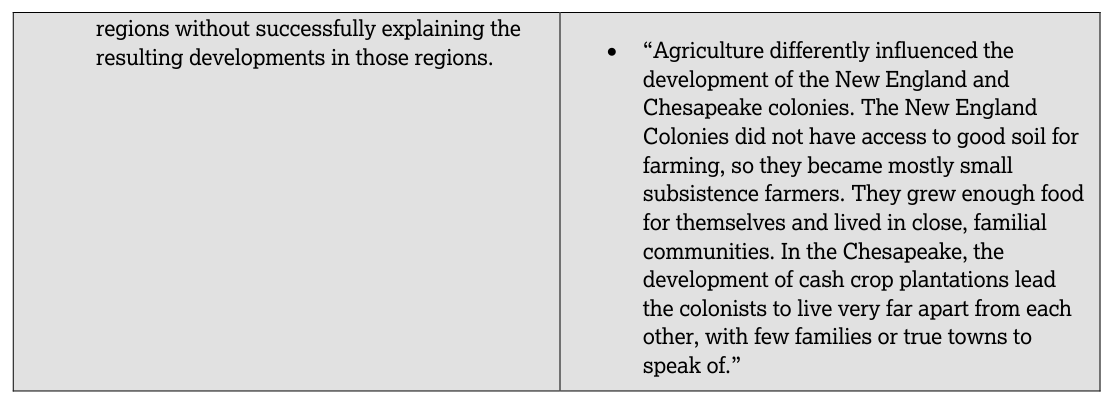
- Based on your experience at the AP® Reading with student responses, what advice would you offer teachers to help them improve the student performance on the exam?
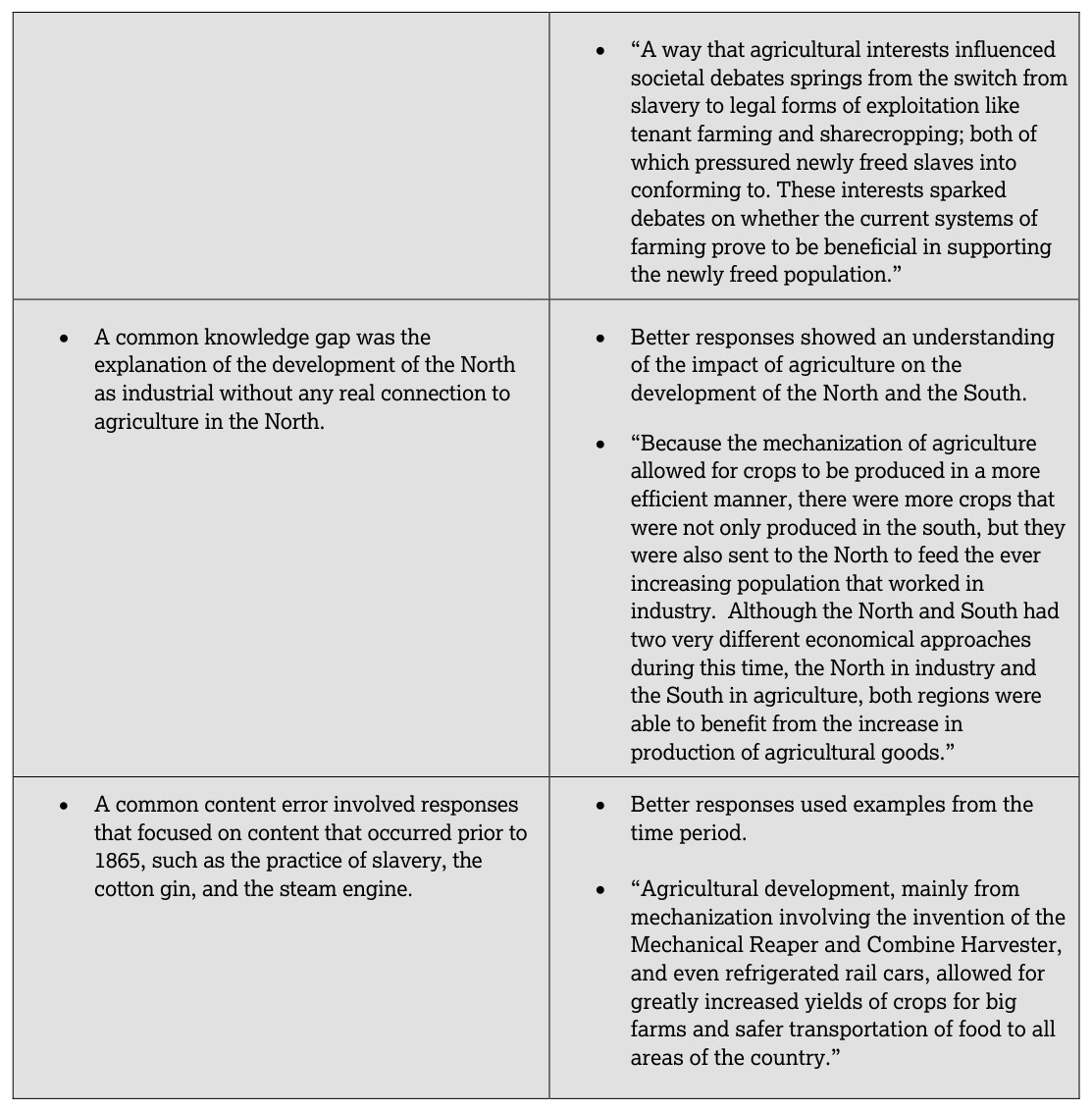
- Based on your experience at the AP® Reading with student responses, what advice would you offer teachers to help them improve the student performance on the exam?
- Based on your experience at the AP® Reading with student responses, what advice would you offer teachers to help them improve the student performance on the exam?