From the free course AP Environmental Science on Lykke
8.3 Endocrine Disruptors · 8.4 Human Impacts on Wetlands and Mangroves
Key concepts: Endocrine disruptors · Interference with the endocrine system in animals · Birth defects and developmental disorders caused by endocrine disruptors · Gender imbalances in fish and other species · Wetlands as providers of regulating ecosystem services · Human impacts of urbanization and development on wetlands · Mangrove and wetland environmental problems · Nutrient and sediment pollution in estuaries · Environmental solutions for aquatic pollution · Water-quality improvement through filtration
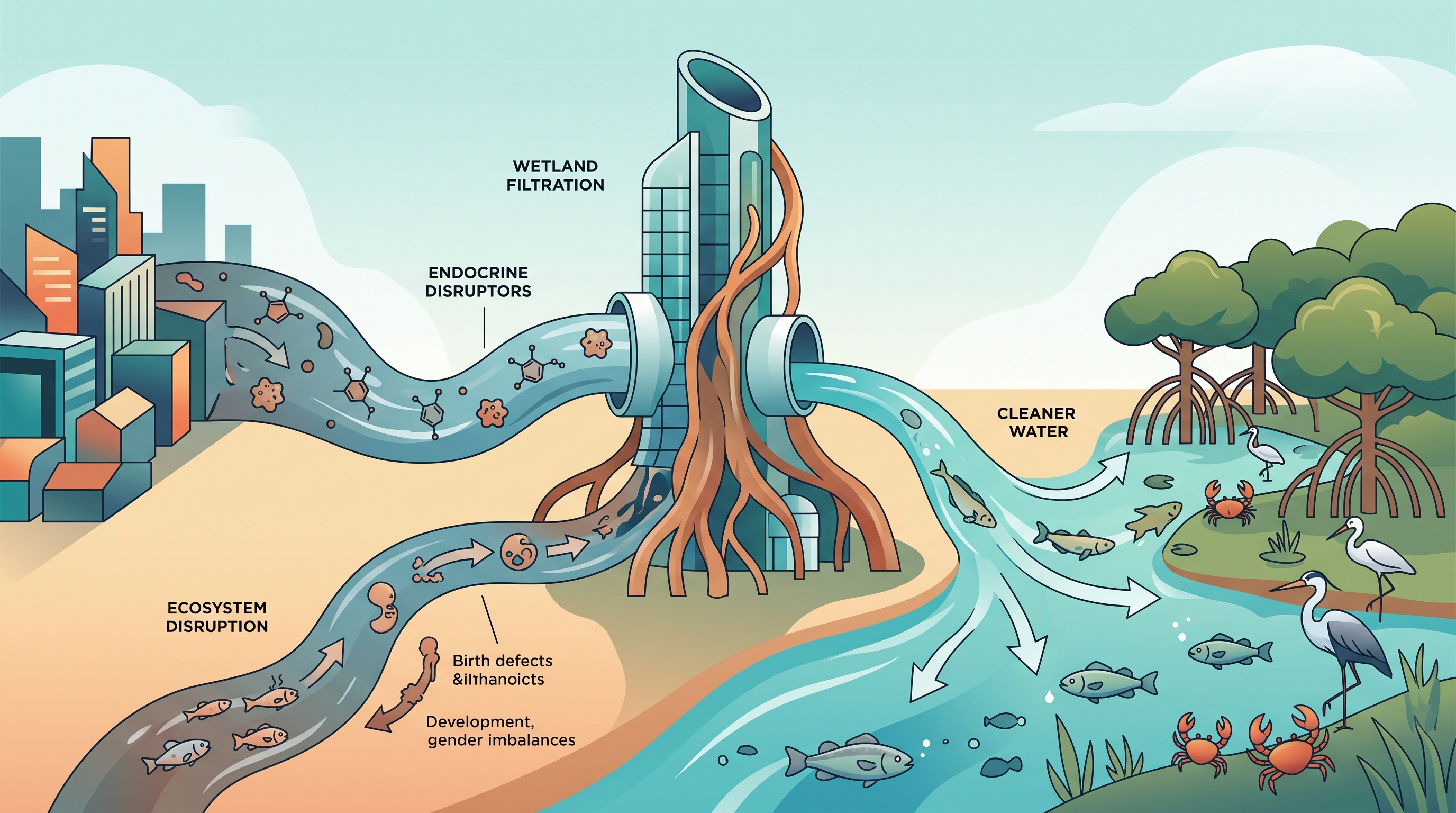
A chemical does not need to kill an animal immediately to damage an ecosystem: if it interferes with hormones during development, it can alter reproduction, growth, or sexual development across an entire population.
8.3 Endocrine Disruptors · 8.4 Human Impacts on Wetlands and Mangroves
A chemical does not need to kill an animal immediately to damage an ecosystem: if it interferes with hormones during development, it can alter reproduction, growth, or sexual development across an entire population.
Endocrine disruptors: chemical interference with hormones
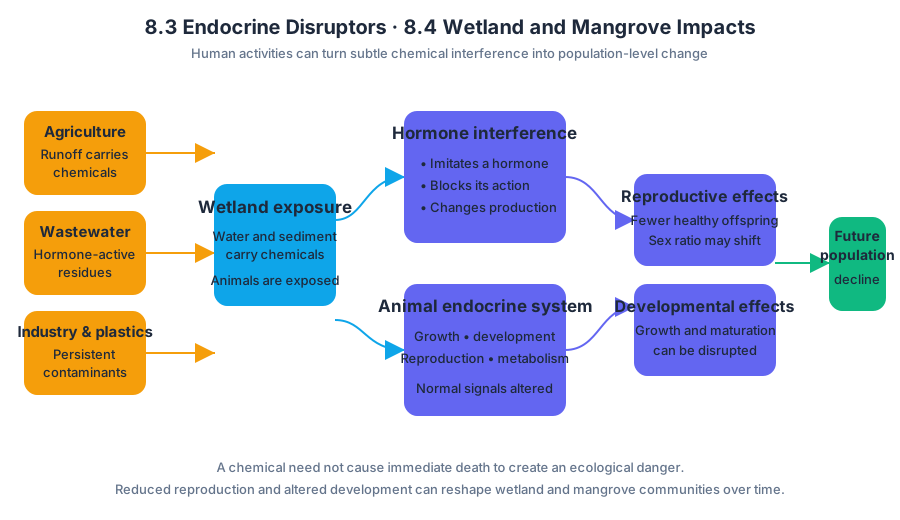
The endocrine system is the network of glands and hormones that regulates processes such as growth, development, reproduction, and metabolism. An endocrine disruptor is a chemical that interferes with this system in an animal. It may imitate a natural hormone, block a hormone’s action, or change how much hormone an animal produces or breaks down.
STB-3.C — Describe endocrine disruptors.
STB-3.C.1 — Endocrine disruptors are chemicals that can interfere with the endocrine system of animals.
The ecological danger is often indirect. A contaminant may not cause immediate mortality, yet still reduce the number of healthy offspring produced or alter the proportion of males and females. Because reproduction and development determine future population size, a subtle chemical effect can become a population-level problem over time.
Effects on animals and ecosystems
Endocrine disruptors can lead to birth defects, developmental disorders, and gender imbalances in fish and other species. For example, if a chemical causes unusually high production of female fish in a population, the population may eventually contain too few males for successful reproduction. The result is not merely an individual abnormality; it can reduce recruitment, meaning the addition of new individuals to the population.
STB-3.D — Describe the effects of endocrine disruptors on ecosystems.
STB-3.D.1 — Endocrine disruptors can lead to birth defects, developmental disorders, and gender imbalances in fish and other species.
Worked example: A wastewater discharge enters a stream below a city. Fish downstream show abnormal development and a strongly uneven sex ratio, while fish upstream do not. A defensible explanation is that a chemical in the discharge interferes with the fish endocrine system, producing developmental effects and fewer reproductively successful pairings. Over several generations, the downstream population could decline even if adult fish do not die immediately.
Misconception check — “Only poisonous chemicals are harmful.” Acute toxicity and endocrine disruption are different mechanisms. A chemical can be harmful at relatively low concentrations if it alters hormonal signaling, especially during sensitive stages such as embryonic or juvenile development.
For AP reasoning, Science Practice 1: Concept Explanation, especially 1.A Describe environmental concepts and processes, is central here. A strong response names the chemical interference, identifies the endocrine system as the affected biological system, and connects the effect to development or reproduction; simply stating that “pollution harms fish” is too vague.
Wetlands and mangroves as regulating systems
A wetland is an area where water covers the soil either all or part of the time. Marshes, swamps, tidal flats, and mangrove forests are examples. Mangroves are coastal wetlands whose salt-tolerant vegetation slows water movement and traps material carried by runoff and tides.
STB-3.E.1 — Wetlands are areas where water covers the soil, either part or all of the time.
Wetlands provide regulating ecosystem services: benefits produced when ecosystems control or moderate environmental conditions. Their vegetation, saturated soils, and sediments can filter water and reduce flooding.
| Wetland feature | Regulating service | Mechanism |
|---|---|---|
| Dense roots and stems | Water purification | Slow water and trap sediment and some pollutants |
| Saturated soil and shallow basins | Flood reduction | Store water and release it more gradually |
| Mangrove roots along coasts | Shoreline protection | Reduce wave energy and hold sediment in place |
Water purification is a form of filtration. As nutrient- and sediment-rich runoff moves through wetland vegetation and soils, suspended particles can settle and plant uptake can remove some nutrients from the water. This does not make wetlands limitless pollution sinks: excessive inputs can overwhelm their capacity.
Urbanization and a defensible environmental response
Urbanization replaces permeable soil and vegetation with roads, buildings, and drainage systems. Development can therefore increase the delivery of nutrient- and sediment-rich runoff to an estuary, while filling, draining, or fragmenting wetlands removes the very areas that would have slowed and filtered that water.
STB-3.E.2 — Wetlands provide a variety of ecological services, including water purification and flood protection.
Worked contextual example: An estuary surrounded by expanding neighborhoods has declining water quality and stressed manatees. A strong response is to reduce nutrient and sediment pollution before it reaches the estuary—for example, by protecting or restoring vegetated wetland buffers, improving stormwater filtration, and reducing polluted runoff from developed land.
The reasoning chain is:
$$ \text{urban development} \rightarrow \text{more nutrient and sediment runoff} \rightarrow \text{poorer estuary water quality} $$
$$ \text{wetland protection and filtration} \rightarrow \text{less nutrient and sediment delivery} \rightarrow \text{improved water quality} $$
The advantages extend beyond effects on manatees. Cleaner water can support fish and invertebrates, improve habitat for wading birds, reduce sediment accumulation, preserve wetland functions, and lower flood risk. A response earns stronger environmental-solutions reasoning when it identifies both the action and the environmental mechanism.
This applies Science Practice 7: Environmental Solutions, particularly 7.B Describe potential solutions to environmental problems. It also uses Science Practice 1: Concept Explanation, 1.B Explain environmental concepts and processes, when the response links filtration or nutrient reduction to improved water quality rather than merely naming a solution.
Misconception check — “Wetlands are wastelands that should be drained.” Wetlands provide valuable regulating services. Removing them can increase flooding and pollution because development eliminates natural water storage and filtration.
Retrieval and interpretation check
- What makes a chemical an endocrine disruptor?
- Name two ecosystem-level effects of endocrine disruption.
- Why can wetland filtration improve an urban estuary?
- Why does reducing nutrient and sediment pollution benefit more than one species?
Answers: An endocrine disruptor interferes with an animal’s endocrine system. Effects include birth defects, developmental disorders, and gender imbalances. Wetland filtration slows runoff, traps sediment, and removes or retains some nutrients, improving water quality. Cleaner water supports multiple organisms and preserves wetland and estuary functions, not only manatees.
Source Materials
- AP Environmental Science Course and Exam Description
- Review the Clarifications (.pdf)
- AP Environmental Science Course Overview
- AP Environmental Science Course at a Glance
- AP Environmental Science Course at a Glance Poster
- AP Environmental Science
- AP Environmental Science
- AP Environmental Science Sample Syllabus 1
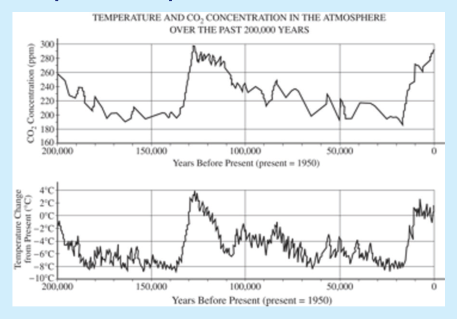
- (A) Answer the following questions that relate to the graphs above. Remember that for any calculation you must clearly indicate how you arrived at your answer. Answers must also include appropriate un
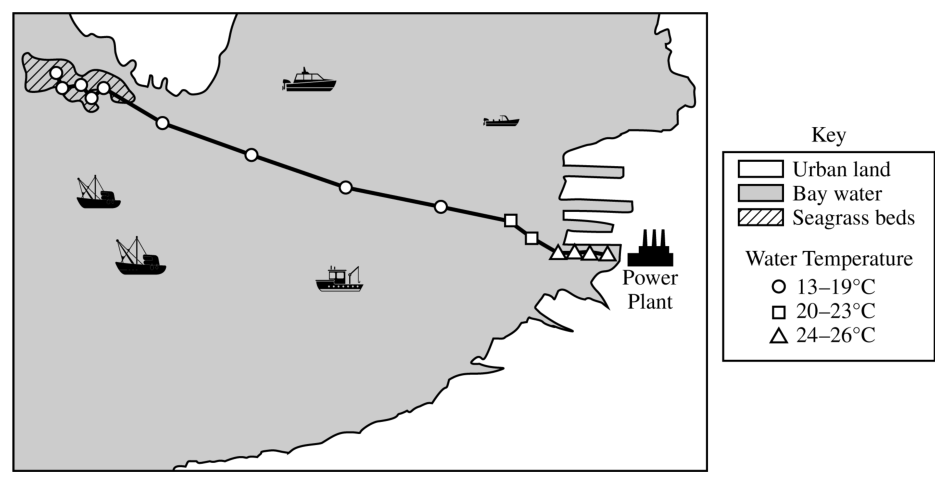
- (a) Based on the information in the diagram, identify the temperature range of the water through which the majority of the adult manatee’s daily movement occurs.