From the free course AP Environmental Science on Lykke
5.3 The Green Revolution · 5.4 Impacts of Agricultural Practices
Key concepts: Green Revolution agricultural strategies · Mechanization · Genetically modified organisms (GMOs) · Fertilization and soil fertility management · Irrigation and aquifer use · Pesticide use · Overgrazing and livestock management · Salinization and soil degradation · Free-range livestock systems
A single field can produce far more food than it once did—but only by redirecting energy, water, nutrients, and technology into the agricultural system. The Green Revolution was this broad shift toward agricultural strategies designed to increase food production, including mechanization, genetically modified…
5.3 The Green Revolution · 5.4 Impacts of Agricultural Practices
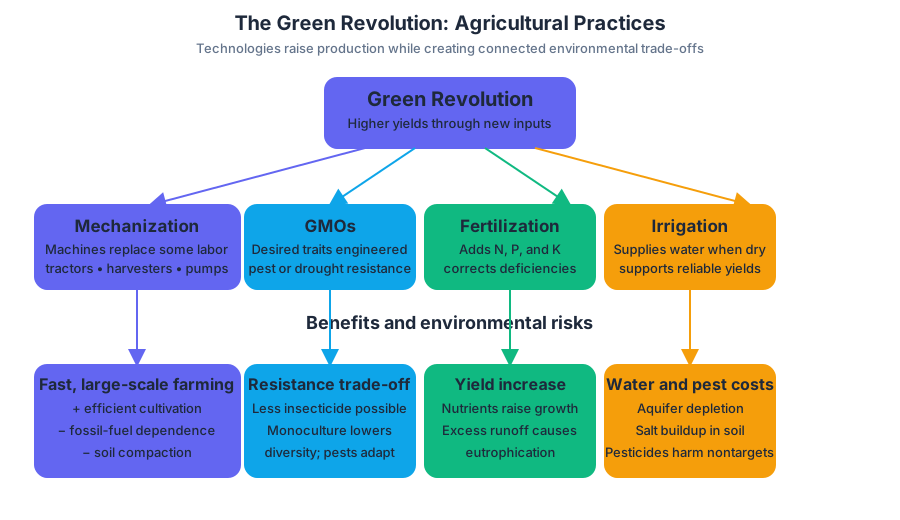
A single field can produce far more food than it once did—but only by redirecting energy, water, nutrients, and technology into the agricultural system. The Green Revolution was this broad shift toward agricultural strategies designed to increase food production, including mechanization, genetically modified organisms (GMOs), fertilization, irrigation, and pesticide use. Its central trade-off is simple: higher yields can improve food security, while the same strategies can damage soil, water, and ecosystems when poorly managed.
The Green Revolution: more food through intensified inputs
EIN-2.C — “Describe changes in agricultural practices.” The required knowledge is anchored by EIN-2.C.1, which identifies the Green Revolution as a shift toward new strategies and practices with both positive and negative results. These strategies include mechanization, GMOs, fertilization, irrigation, and pesticides.
Mechanization replaces some human or animal labor with machines such as tractors, harvesters, and irrigation pumps. Mechanized farming can cultivate large areas quickly and efficiently, but it also increases dependence on fossil fuels, can compact soil under heavy machinery, and may encourage large-scale monoculture—fields planted with one crop over extensive areas.
Genetically modified organisms (GMOs) are organisms whose genetic material has been altered to produce desired traits, such as pest resistance or tolerance to drought. A pest-resistant crop may reduce insecticide applications, but the environmental result depends on how the crop is used: repeated planting of one resistant variety can reduce genetic diversity and select for resistant pests.
Fertilization adds nutrients—especially nitrogen, phosphorus, and potassium—to increase plant growth. Fertilizers can correct nutrient deficiencies and raise yields, but excess nutrients can run off fields into streams and lakes, where they may contribute to eutrophication. Irrigation supplies water when precipitation is insufficient, but overuse can deplete aquifers or leave salts behind in soil. Pesticides suppress organisms that damage crops, yet may also harm nontarget organisms, contaminate water, or select for pesticide-resistant pests.
Worked example: evaluating one intensified farm
A wheat farm adopts a diesel-powered combine, a pest-resistant wheat variety, synthetic fertilizer, groundwater irrigation, and an insecticide. In the short term, harvests increase because machines reduce labor constraints, the crop suffers less insect damage, nutrients are readily available, and water stress is reduced. The environmental assessment must then follow each input: diesel adds air pollution and greenhouse-gas emissions, fertilizer may cause nutrient runoff, irrigation can lower the aquifer, and pesticide use can select for resistant insects.
The correct conclusion is not “the Green Revolution is beneficial” or “the Green Revolution is harmful.” Its effects depend on the balance between increased production and the environmental costs of the inputs. This is an AP Science Practice 1.A, “Describe environmental concepts and processes,” and 1.B, “Explain environmental concepts and processes,” task because a strong response identifies both the practice and its mechanism.
Agricultural impacts: when land and water are pushed beyond recovery
EIN-2.D — “Explain the environmental impacts of agricultural practices.” Agriculture changes ecosystems by altering vegetation cover, soil structure, nutrient availability, and water movement. Several impacts are especially important because they can create feedback loops: damaged soil produces less vegetation, which exposes more soil to erosion, causing still greater loss of productivity.
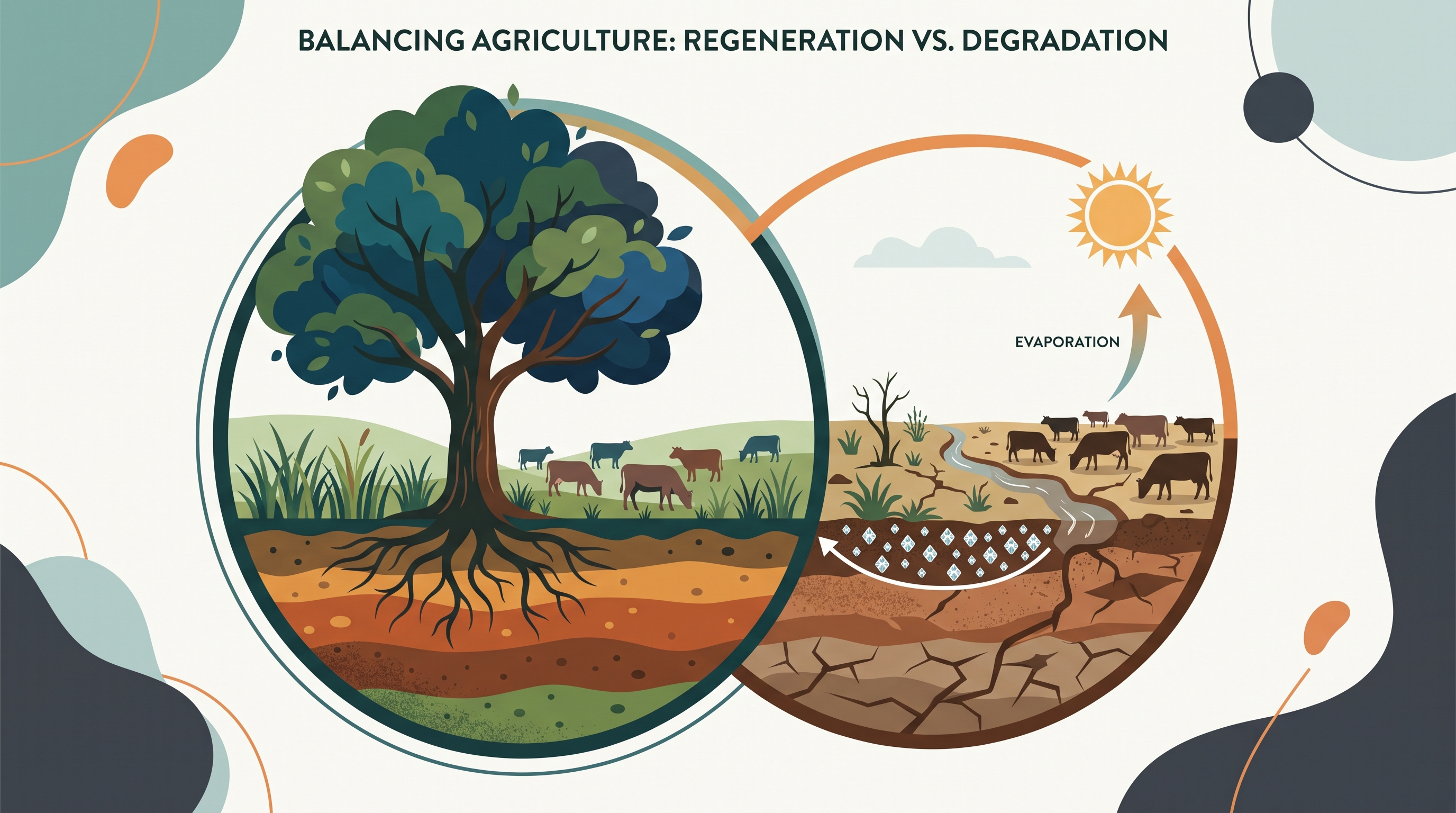
Overgrazing occurs when livestock populations exceed the land’s capacity to regenerate vegetation. As grazing removes plant cover, raindrops strike bare soil directly and runoff increases. Hoof traffic also causes soil compaction, reducing pore space and limiting infiltration. The combined result is more erosion, less plant growth, and reduced pasture productivity.
Salinization occurs when irrigation water containing dissolved salts enters soil, the water evaporates, and the salts remain behind. Over time, salt concentrations can become toxic to plants. Thus, irrigation may increase crop production initially while gradually making the soil less productive if salts are not removed.
Overuse of irrigation can also severely deplete aquifers. The Ogallala Aquifer in the central United States demonstrates this problem: groundwater withdrawal for agriculture can exceed the rate at which precipitation replenishes the aquifer. An aquifer is therefore not automatically a renewable resource on a human time scale; its renewability depends on recharge and withdrawal rates.
Soil fertility management and livestock systems
Farmers can improve soil fertility through crop rotation, which alternates crops so that one crop does not continually remove the same nutrients or support the same pests. Adding green manure—plant material grown and incorporated into soil—and adding limestone can also improve soil conditions. These practices illustrate management that maintains production by restoring soil resources rather than only increasing external inputs.
Free-range livestock systems may improve pasture soils because manure returns nutrients to the ground. However, “free-range” does not mean impact-free: high animal density can still produce runoff, erosion, and overgrazing. These systems require more land and may increase consumer costs, and free-range meat is not necessarily antibiotic-free.
Misconception check: “GMOs, fertilizers, or free-range systems are inherently good or bad.” Environmental science evaluates the mechanism, scale, and management of a practice—not its label alone.
Reasoning tools for this topic
Use 2.A, “Describe characteristics of a model or representation,” to trace water, nutrients, or energy through a farm; 2.B, “Describe patterns and trends,” to interpret declining aquifer levels or increasing soil salinity; and 2.C, “Explain relationships between variables,” to connect livestock density with vegetation loss and erosion. Use 5.A, “Perform mathematical calculations,” when comparing groundwater withdrawal with recharge, and 6.A, “Analyze environmental problems,” and 6.B, “Refine solutions,” when weighing yield against environmental damage. A defensible recommendation uses 7.A, “Justify a claim with evidence,” by linking a proposed practice to measurable environmental outcomes.
Retrieval check
A pasture supports plant regrowth only when livestock density remains below its regenerative capacity. If livestock numbers rise, vegetation declines, soil becomes compacted, and runoff increases. If an irrigated field becomes increasingly salty after repeated watering, identify the process and explain why evaporation worsens it. Answer: the process is salinization; evaporation removes water but leaves dissolved salts in the soil.
Source Materials
- AP Environmental Science Course and Exam Description
- Review the Clarifications (.pdf)
- AP Environmental Science Course Overview
- AP Environmental Science Course at a Glance
- AP Environmental Science Course at a Glance Poster
- AP Environmental Science
- AP Environmental Science
- AP Environmental Science Sample Syllabus 1
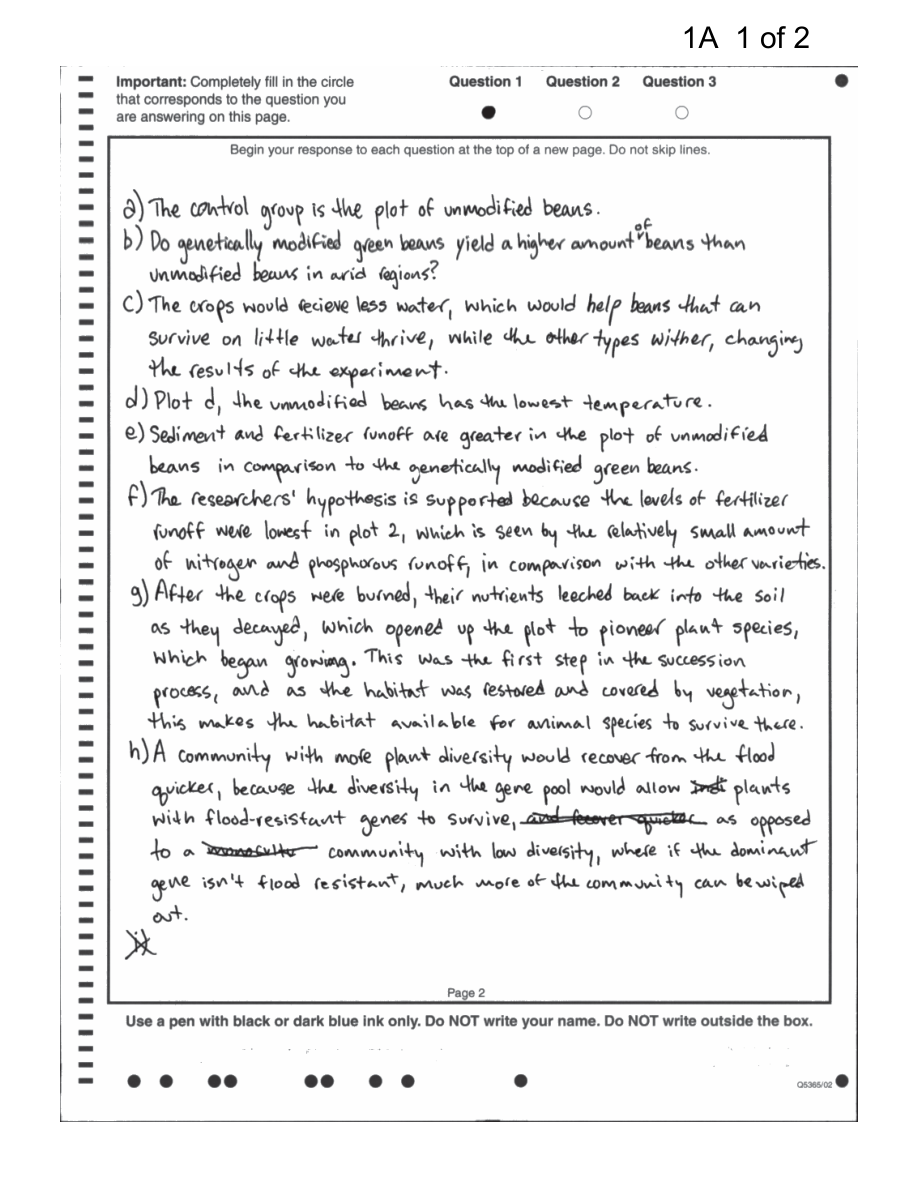
- Figure — Sample Responses Question 1 - Set 1 (p. 5)
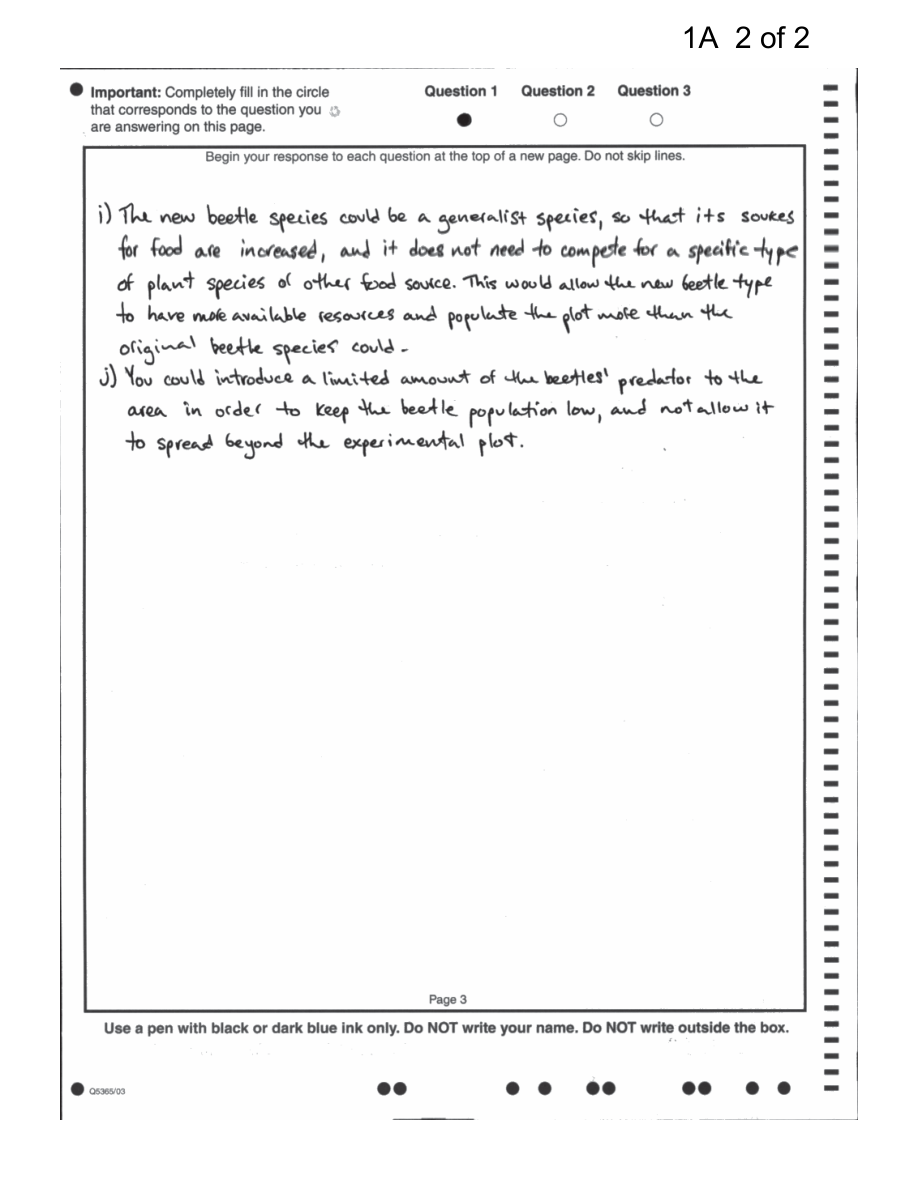
- Figure — Sample Responses Question 1 - Set 1 (p. 6)
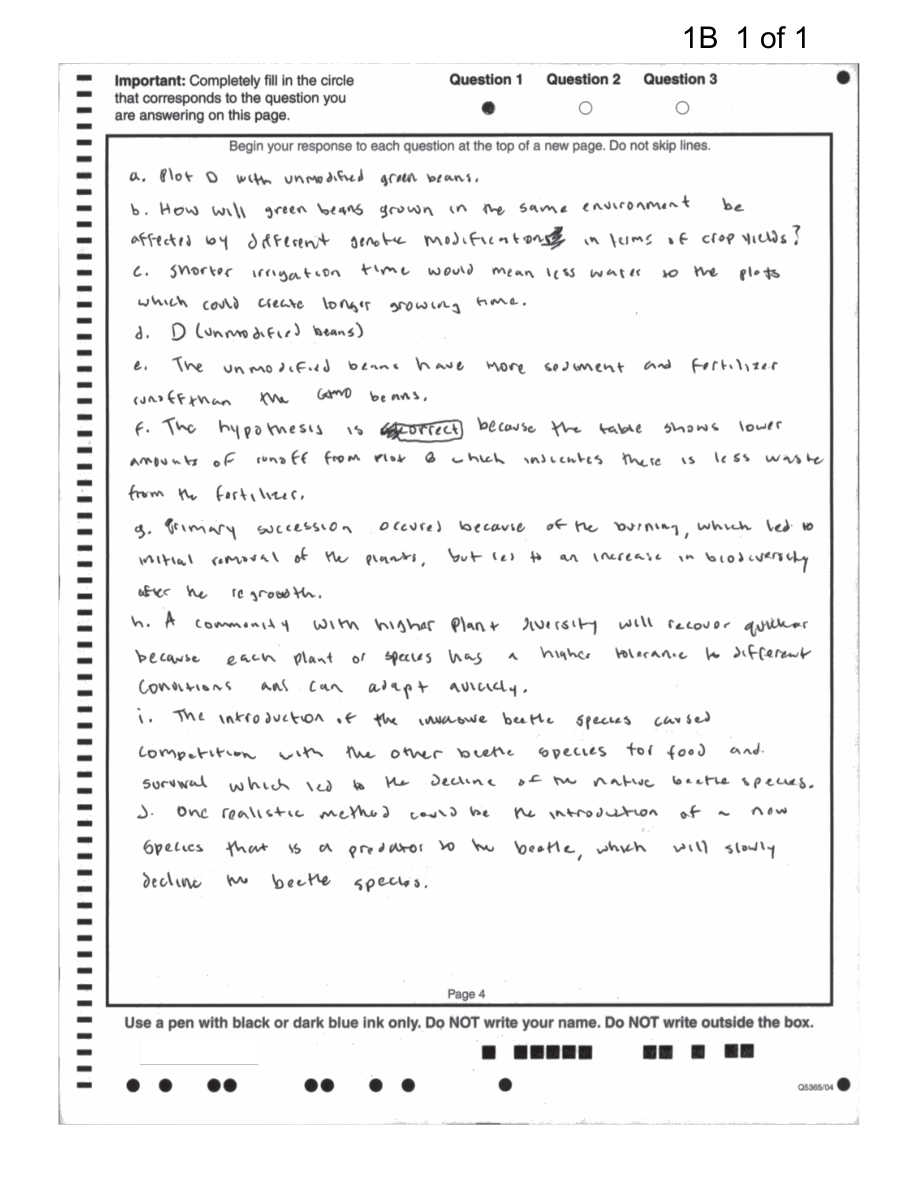
- Figure — Sample Responses Question 1 - Set 1 (p. 7)
- Figure — Sample Responses Question 1 - Set 1 (p. 8)