From the free course AP European History on Lykke
9.11 Technology · 9.12 Globalization
By the late twentieth century, a message could cross Europe in seconds, money could move across borders almost instantly, and a factory could depend on parts produced in several countries.
9.11 Technology · 9.12 Globalization
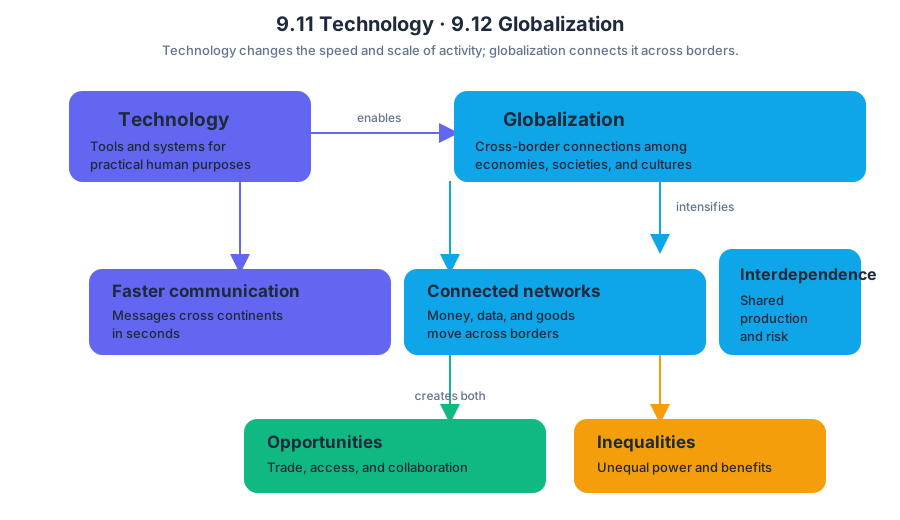
By the late twentieth century, a message could cross Europe in seconds, money could move across borders almost instantly, and a factory could depend on parts produced in several countries. Technology changed the speed and scale of human activity; globalization connected those activities into increasingly interdependent networks.
Technology is the application of scientific knowledge, tools, and systems to practical human purposes. Globalization is the intensification of connections among economies, societies, governments, and cultures across national borders.
The key historical question is not whether technology or globalization was simply “good” or “bad.” It is how new technologies changed relationships of power, and how expanding global connections created both opportunities and inequalities.
9.11 Technology: shrinking distance, expanding power
Technology altered modern Europe in several connected spheres:
- Economic: computers, telecommunications, automation, and improved transportation accelerated production, finance, and trade.
- Social: television, mobile communication, and the internet changed how people formed communities and received information.
- Political: governments and movements gained new tools for surveillance, propaganda, organization, and protest.
- Cultural: digital media allowed images, music, ideas, and styles to circulate rapidly across borders.
These effects were not evenly distributed. A society with access to advanced communications could coordinate business or political action more effectively than one without reliable infrastructure. Within the same society, unequal access created a digital divide, meaning a gap between people who can use modern information technologies and those who cannot.
Worked example: computer technology
Imagine a European manufacturer that once produced every component in one factory. Computerized design allows engineers in one country to send plans instantly to factories elsewhere; automated machinery performs repetitive tasks; and digital financial systems coordinate payments across borders.
The result is increased productivity and faster communication, but also economic disruption. Some workers gain specialized technical employment, while others lose jobs because machines or lower-cost international suppliers replace their labor. Technology therefore produces a double effect: it can increase wealth while intensifying insecurity and inequality.
This is the central reasoning move for 5.B: explain how a development produces consequences. A strong historical explanation links the mechanism to the result:
$$ \text{digital technology} \rightarrow \text{faster coordination} \rightarrow \text{global production} \rightarrow \text{new opportunities and labor disruption} $$
Misconception check — “Technology causes automatic progress.”
Technology does not determine one inevitable outcome. Political choices, economic systems, education, and access determine who controls a technology and who benefits from it. The same communication network can support democratic organizing, commercial exchange, state surveillance, or disinformation.
9.12 Globalization: connection with unequal consequences
Globalization intensified long-standing interactions among Europe and the wider world. Modern transportation and communication made these connections faster, while multinational corporations, international financial institutions, migration, and trade agreements made them more permanent. European economies increasingly depended on events beyond their own borders.
Globalization created several visible benefits:
- expanded markets for goods and services;
- greater movement of people, capital, information, and ideas;
- access to products and technologies from around the world;
- closer cooperation among states and institutions.
It also produced tensions. Workers and communities sometimes opposed trade policies that exposed them to foreign competition. Critics argued that globalization weakened national control, favored wealthy corporations, and widened the gap between regions that could attract investment and regions left behind. These concerns helped generate protests against globalization and debates over European unity.
Connection: technology makes globalization possible
Technology is the infrastructure of globalization. Container shipping reduces the cost of moving goods; commercial aviation accelerates migration and tourism; computers coordinate international finance; and the internet spreads information without waiting for physical transport.
Yet globalization also feeds back into technology. International competition encourages firms and governments to invest in faster communication, automation, and scientific research. The relationship is therefore cyclical:
$$ \text{technological innovation} \rightarrow \text{greater global integration} \rightarrow \text{competition and exchange} \rightarrow \text{further innovation} $$
For 4.B, historical reasoning requires using evidence to support, qualify, or revise an argument. For example, the claim “globalization weakened national sovereignty” is partly persuasive because international markets can limit a government’s economic choices. It must be qualified, however, because states still regulate borders, taxation, labor, and technology—and may use international institutions to increase their influence rather than surrender it.
Misconception check — “Globalization means the world became equal.”
Globalization increased connection, not equality. Wealth, political power, technological capacity, and access to education remained unevenly distributed. A connected world can still be sharply divided.
In-flow retrieval check
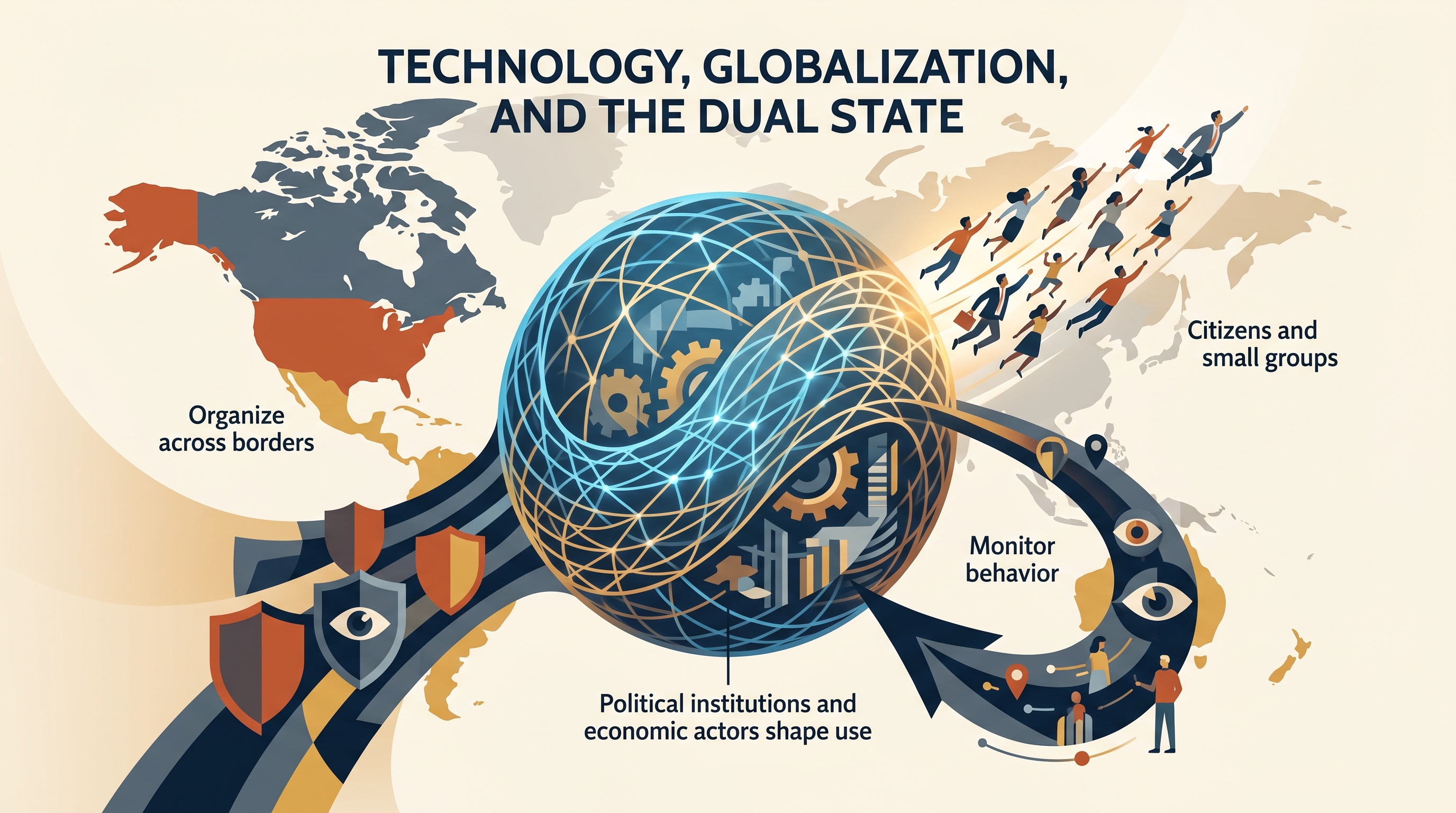
A historian argues that the internet transformed politics because it enabled citizens to organize across borders, but also allowed governments and corporations to monitor behavior. Which reasoning is strongest?
Answer: The strongest response explains both effects through technology’s increased speed and reach. It avoids technological determinism by showing that political institutions and economic actors shaped how the internet was used. The answer therefore applies 5.B while also qualifying a one-sided claim about globalization through 4.B.
Source Materials
- AP European History Course and Exam Description
- AP European History Course and Exam Description Clarifications and Corrections
- AP European History Course Overview
- AP European History Course at a Glance
- AP European History Course at a Glance Poster
- AP European History
- AP European History
- AP European History Sample Syllabus 1