From the free course AP European History on Lykke
8.7 Europe during the interwar period · 8.8 World War II
Key concepts: Militarism and alliance systems · Imperial competition · Interwar political and economic instability · The Great Depression · Fascism and fascist propaganda · Authoritarianism · Stalinism and forced modernization · The Spanish Civil War · Total war · The transition from World War II to the Cold War and transnational union
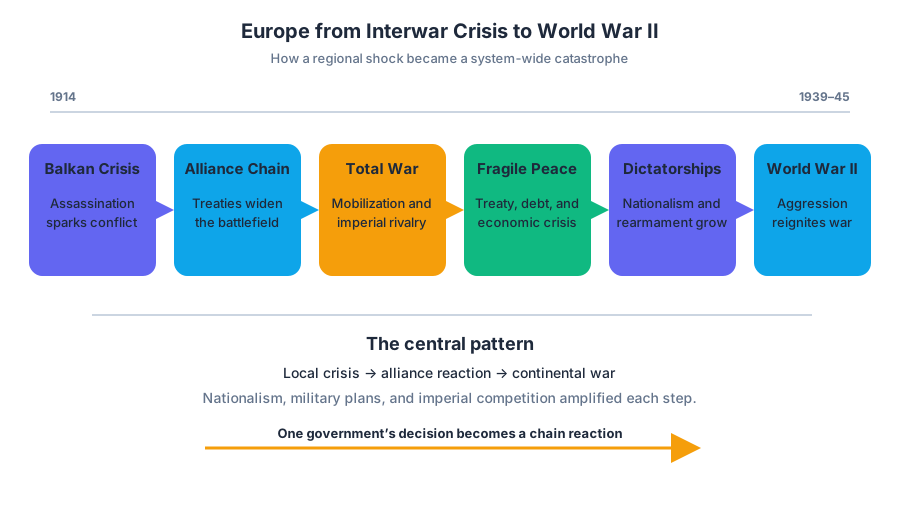
World War I began as a regional crisis in the Balkans but became a continental catastrophe because military plans, alliance systems, nationalism, and imperial competition turned one government’s decision into a chain reaction.
8.7 Europe during the interwar period · 8.8 World War II
World War I began as a regional crisis in the Balkans but became a continental catastrophe because military plans, alliance systems, nationalism, and imperial competition turned one government’s decision into a chain reaction.
From Balkan crisis to world war
The assassination of Archduke Franz Ferdinand in Sarajevo in 1914 did not make a general war inevitable by itself. Austria-Hungary’s decision to confront Serbia interacted with Germany’s support for Austria-Hungary, Russia’s ties to Serbia, France’s alliance with Russia, and Britain’s concern about the European balance of power. Military planners had prepared for rapid mobilization, so once governments began moving troops, delay could appear more dangerous than escalation.
Militarism means giving military power and military values an unusually important role in government and society. Imperial competition intensified the crisis because European states already competed for colonies, resources, strategic routes, and international prestige. Nationalist movements further encouraged governments and populations to interpret compromise as weakness.
Key distinction: The assassination was the immediate trigger; alliance commitments, mobilization plans, militarism, nationalism, and imperial rivalry created the conditions that allowed the crisis to expand.
Worked causal example: Serbia’s conflict with Austria-Hungary might have remained local in a less interconnected system. Austria-Hungary’s ultimatum, Germany’s backing, Russia’s mobilization, and the operation of opposing alliance networks transformed a dispute between neighboring states into a war involving much of Europe. The reasoning is therefore not “one assassination caused World War I,” but “a short-term trigger activated long-term structural tensions.”
Why the interwar democracies proved vulnerable
After 1918, European societies faced enormous debts, disrupted economies, political violence, and the psychological shock of total war. Total war mobilizes a society’s human, industrial, agricultural, and financial resources for conflict; its consequences therefore continued after the armistice. Veterans, workers, peasants, and middle-class citizens often experienced inflation, unemployment, political resentment, or fear of revolution.
World War I debts and nationalist anger made extremist promises attractive. Fascist leaders glorified war, discipline, sacrifice, and national unity while presenting parliamentary compromise as weakness. They manipulated fledgling and unpopular democracies by using elections, legal appointments, propaganda, intimidation, and emergency powers to destroy democratic institutions from within.
The Great Depression magnified these pressures. The collapse of international trade and unstable monetary practices produced mass unemployment and deepened distrust of liberal governments. In this environment, radical movements could claim that only authoritarian rule, centralized economic direction, and national solidarity could restore order.
Misconception check — “Fascism won only through popular enthusiasm.” Fascist leaders did attract disillusioned populations, but their success also depended on political elites, institutional weakness, economic crisis, violence, and the willingness of established authorities to treat them as useful tools against socialism and parliamentary instability.
Stalin’s alternative authoritarian model
After Lenin’s death, Stalin implemented a centralized program of rapid economic modernization in the Soviet Union. The state directed industrial development and agriculture, but the program imposed severe human costs: peasants and other perceived enemies were persecuted, famine struck Ukraine, and political rivals were removed through purges and terror.
Unit 8: Learning Objective I — KC-4.2.I.D.ii: Stalin’s economic policies combined rapid modernization with severe authoritarian rule and coercive control over society.
Stalin’s Soviet Union differed ideologically from fascist regimes, yet both rejected liberal democracy and concentrated power in a single-party authoritarian state. This distinction matters: Nazi racial ideology and imperial expansion were not identical to Soviet communist control, even though both systems used propaganda, repression, and state-directed mobilization.
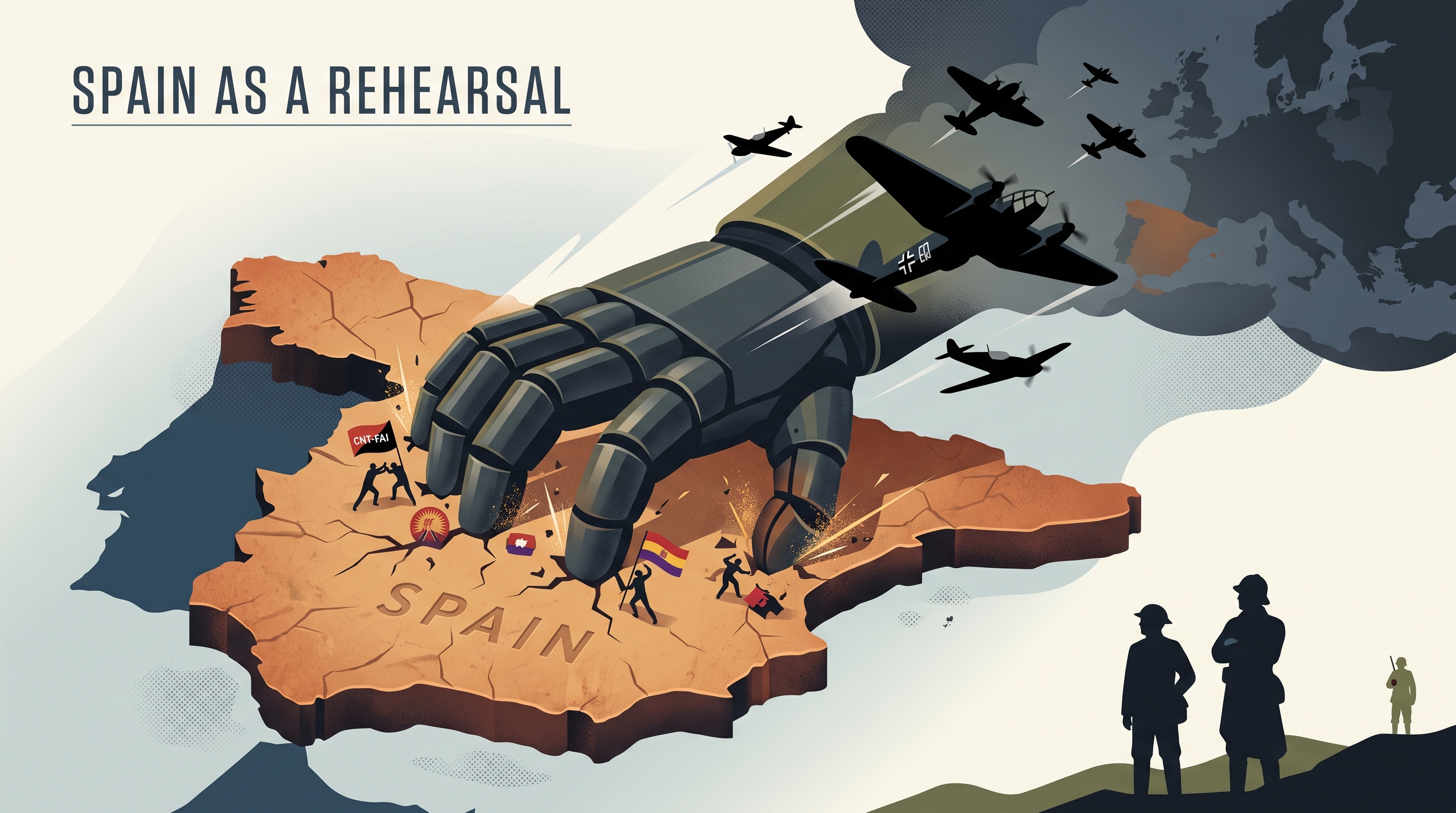
Spain as a rehearsal for World War II
The Spanish Civil War began in 1936 when military forces rebelled against the Spanish Republic. Francisco Franco received support from Italian and German fascists, while the conflict became a testing ground for weapons, aircraft, tactics, and ideological alliances. Western democracies chose not to intervene decisively, reinforcing the impression that fascist aggression could proceed without immediate opposition.
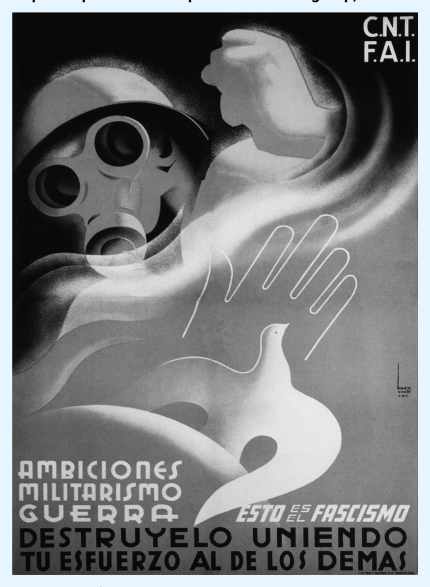
Franco’s victory in 1939 established authoritarian rule in Spain. The conflict also revealed the wider ideological struggle among Western democratic capitalist nations, fascist states, and the authoritarian communist Soviet Union. A poster produced by anarchist groups associated with the CNT-FAI, for example, should be read not merely as an image of fighting but as a call for collective action shaped by its creators’ opposition to militarism and authoritarian forces.
World War II and total war
Fascism, extreme nationalism, racist ideologies, and the failure of appeasement helped produce World War II. The conflict again became total war, drawing civilians, factories, farms, scientific institutions, and entire national economies into military struggle. Political instability intensified as governments collapsed, populations were displaced, and occupation regimes reorganized daily life through coercion.
The world wars also transformed women’s lives and roles. Mobilization expanded women’s participation in factories, offices, farms, transport, nursing, and other wartime work, although states and employers often treated this labor as temporary or secondary. War therefore created both new responsibilities and persistent inequalities.
Retrieval check: Explain why the First World War became general rather than remaining a Balkan conflict. Then identify one way the Great Depression weakened democracy and one way the Spanish Civil War anticipated World War II. A strong answer links specific mechanisms—alliances and mobilization; economic collapse and radical politics; fascist intervention and nonintervention—to their historical consequences.
Source Materials
- AP European History Course and Exam Description
- AP European History Course and Exam Description Clarifications and Corrections
- AP European History Course Overview
- AP European History Course at a Glance
- AP European History Course at a Glance Poster
- AP European History
- AP European History
- AP European History Sample Syllabus 1
- The text of the poster reads: Ambition, Militarism, War.
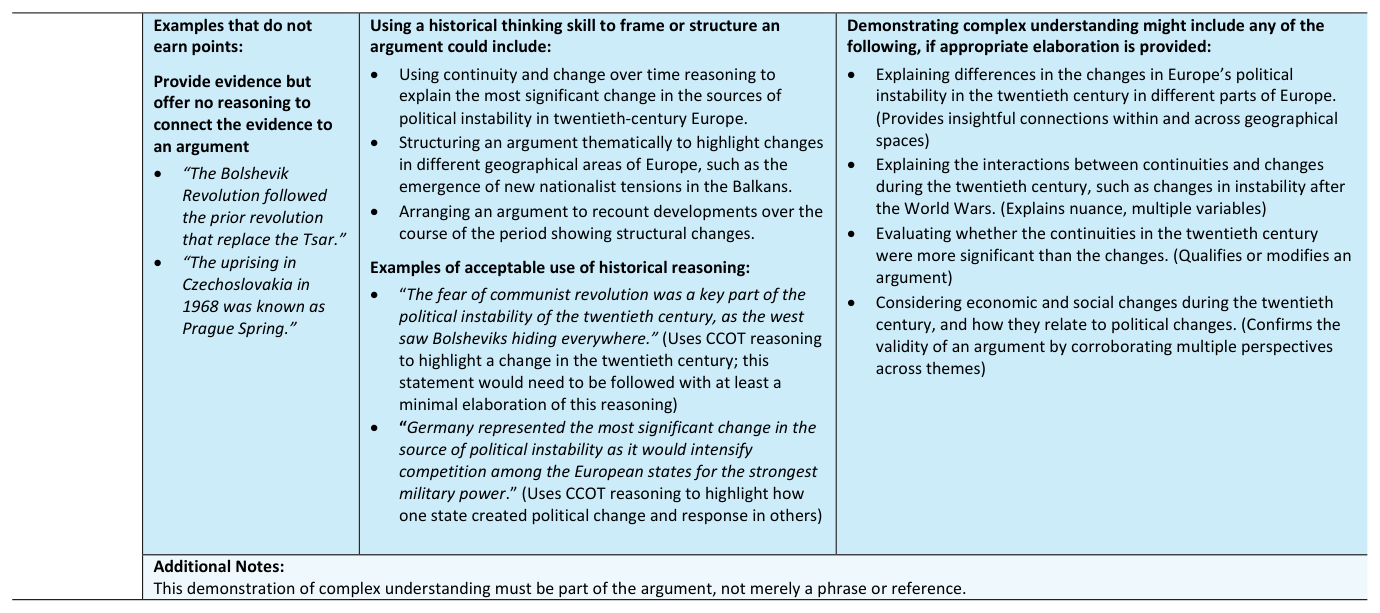
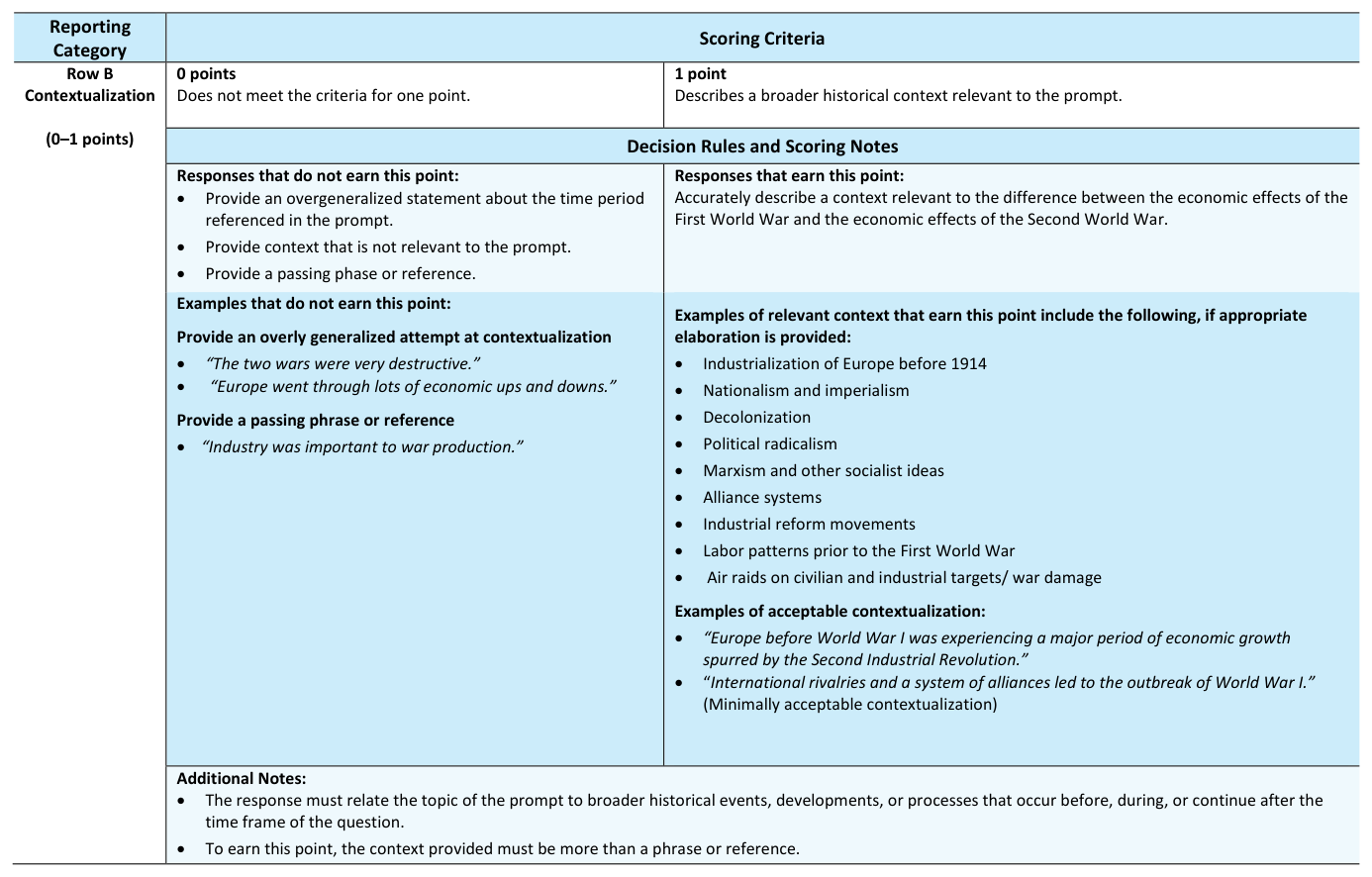
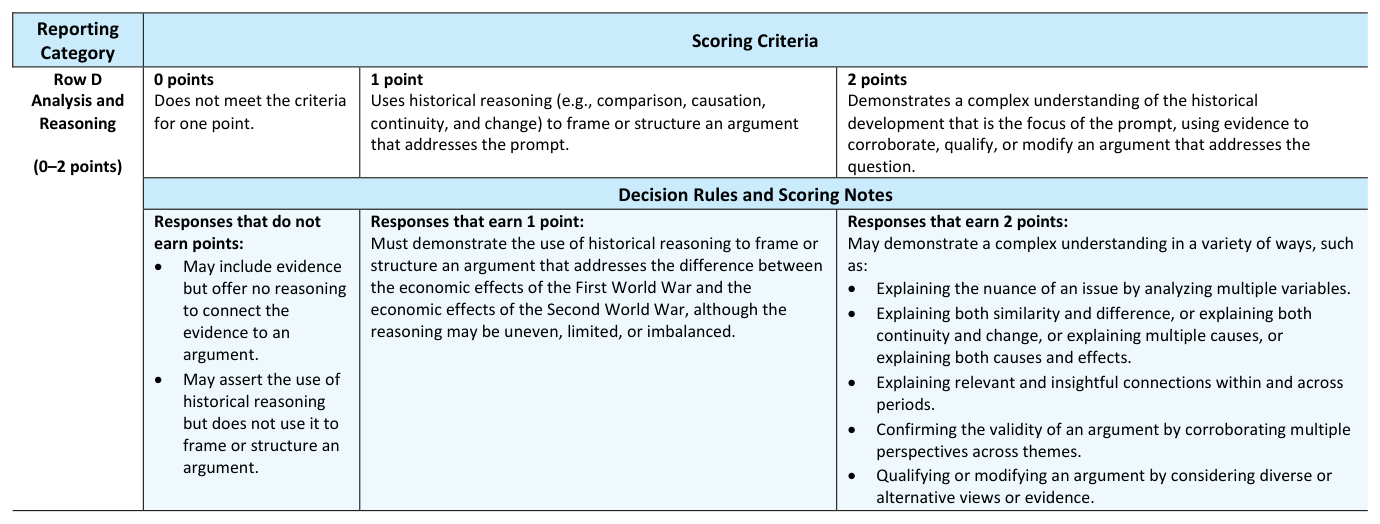
- Figure — Sample Responses - LEQ 4 - Set 1 (p. 4)
- Figure — Sample Responses - LEQ 4 - Set 1 (p. 6)
- Figure — Sample Responses - LEQ 4 - Set 1 (p. 7)