From the free course AP European History on Lykke
2.3 Protestant Reform Continues · 2.4 Wars of Religion
Key concepts: Protestant Reformation · religious reform and political power · religious wars · Protestant persecution · religious toleration · cuius regio, eius religio · absolutism in France · Edict of Nantes · Peace of Westphalia · decline of universal Christendom
Religious reform became politically explosive when rulers, nobles, and communities treated confessional identity as a question of sovereignty: who controls the church may also control the state.
2.3 Protestant Reform Continues · 2.4 Wars of Religion
Religious reform became politically explosive when rulers, nobles, and communities treated confessional identity as a question of sovereignty: who controls the church may also control the state. Between the Protestant Reformation and the Peace of Westphalia in 1648, disagreements over worship repeatedly became struggles over taxation, political authority, military alliances, and social order.
Investigative question: When did religious disagreement become a reason to fight—and when did the destruction caused by fighting make toleration seem necessary?
From reform to political power
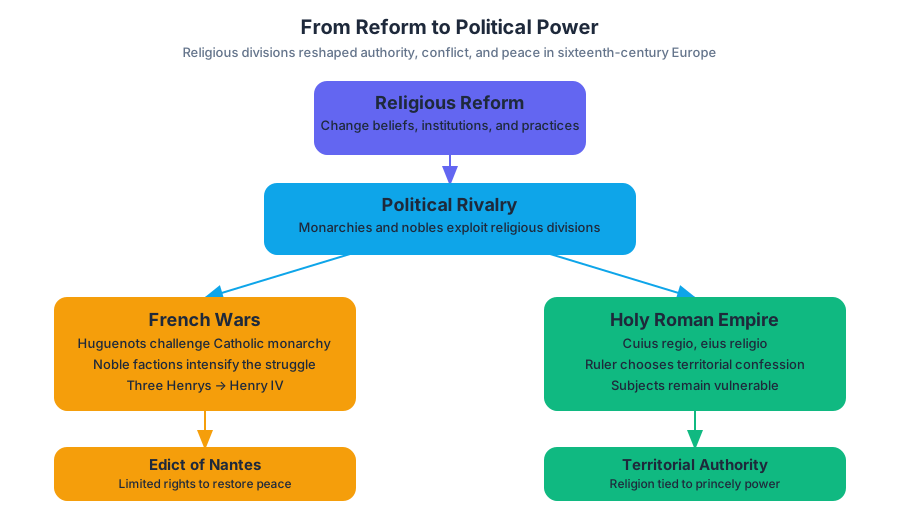
Religious reform means efforts to change religious beliefs, institutions, or practices. In sixteenth-century Europe, these efforts did not remain inside churches. Protestant and Catholic conflicts intensified rivalries between monarchies and nobilities, while states sometimes exploited religious divisions to pursue political and economic interests. This directly addresses Learning Objective 2.C: “Explain how matters of religion influenced and were influenced by political factors from 1450 to 1648.”
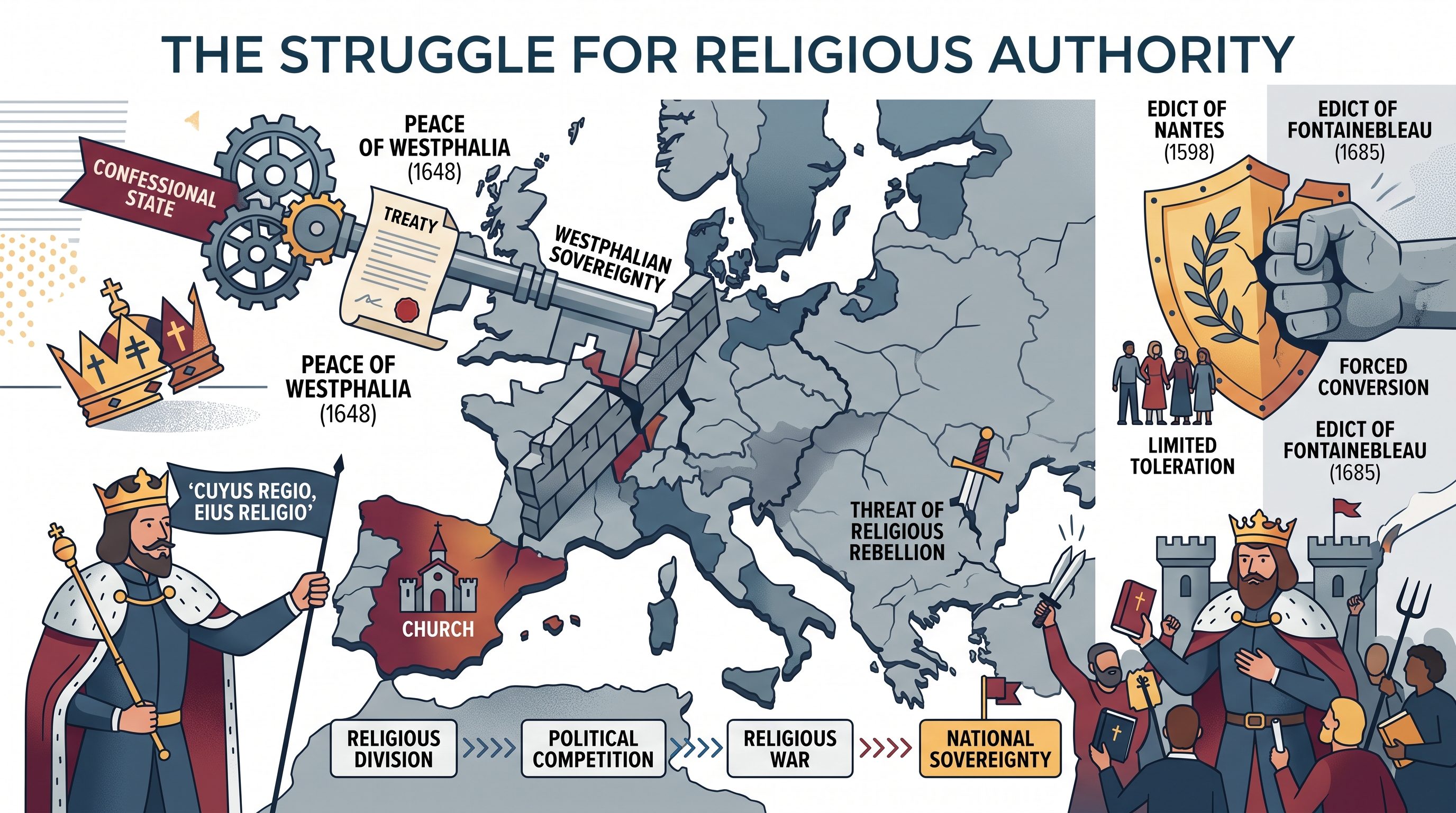
The French Wars of Religion illustrate the interaction. French Calvinists, known as Huguenots, challenged a Catholic monarchy whose authority was also contested by powerful noble families. Catherine de’ Medici attempted to manage the conflict, but violence—including the St. Bartholomew’s Day massacre—deepened distrust. The War of the Three Henrys eventually ended with the Huguenot Henry IV becoming king. His Edict of Nantes allowed limited religious pluralism: France remained officially Catholic, but Huguenots received protected rights in specified places. Toleration was therefore not simply philosophical generosity; it was a political strategy for restoring domestic peace.
In the Holy Roman Empire, the principle cuius regio, eius religio—“whose realm, his religion”—allowed a ruler to determine the official confession of that territory. The formula recognized Lutheranism alongside Catholicism and transferred important religious authority from universal institutions to territorial rulers. It reduced some conflicts, but it also made ordinary subjects vulnerable to the religious decisions of their prince.
Why wars spread beyond theology
Conflicts between Protestants and Catholics produced religious wars in England, France, and the Holy Roman Empire, but religion rarely acted alone. Dynastic rivalry, noble independence, commercial interests, and competition among states shaped alliances. Habsburg rulers such as Charles V tried unsuccessfully to restore Catholic unity while also confronting the expanding Ottoman Empire; Catholic Spain and Protestant England likewise used confessional conflict to advance strategic interests.
The Thirty Years’ War began within the Holy Roman Empire as a conflict involving religion and imperial authority, then widened as France, Sweden, Denmark, and other powers intervened. Catholic France, for example, could oppose the Habsburgs despite its own Catholic identity because weakening Habsburg power served French state interests. This is a crucial causal distinction: religious language organized loyalties, but state survival and geopolitical advantage often determined policy.
Absolutism and the reversal of toleration
Absolutism was a system in which a monarch sought to centralize decision-making, weaken competing institutions, and make royal authority more direct and uniform. Under Louis XIV, French absolutism linked political obedience to religious conformity. A single Catholic faith supported the king’s image as the supreme guardian of order, while independent Huguenot institutions could appear to offer alternative loyalties and local networks of authority.
Louis XIV therefore reversed the practical toleration associated with the Edict of Nantes. His government persecuted French Protestants, pressured them into forced conversion to Catholicism, and ultimately revoked the edict in 1685. The policy demonstrates how religious uniformity could serve absolutist state-building: the monarchy attempted to eliminate institutions that stood between the king and his subjects. Yet persecution also drove many Huguenots into exile, damaging France’s economy and revealing the costs of enforced unity.
Misconception check: The Edict of Nantes did not create modern religious equality, and Louis XIV did not merely “change his mind” about tolerance. Both policies served state power in different circumstances: Henry IV used pluralism to end civil war, while Louis XIV pursued uniformity to strengthen centralized authority.
Westphalia and the decline of universal Christendom
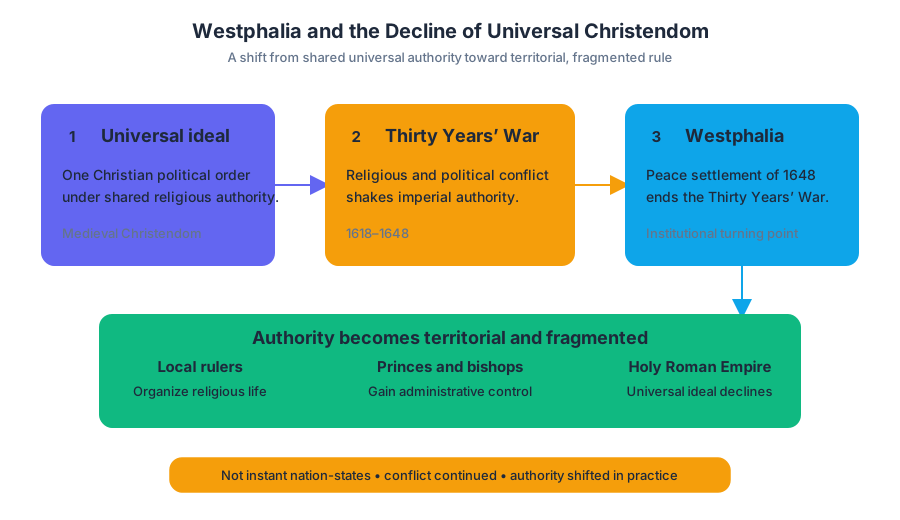
The Peace of Westphalia in 1648 ended the Thirty Years’ War and marked the effective end of the medieval ideal of universal Christendom—the belief that Europe should form one broadly unified Christian political order under shared religious authority. It accelerated the decline of the Holy Roman Empire by granting princes, bishops, and other local leaders greater control over religion and political administration.
Westphalia did not instantly create fully sovereign modern nation-states, nor did it end all religious conflict. Its importance was institutional: authority became more territorial and fragmented. The settlement confirmed that local rulers, rather than a single universal Christian authority, would play the decisive role in organizing religious life.
From persecution to toleration
The horrors of religious war encouraged thinkers and rulers to consider religious toleration, meaning the legal or political acceptance of religious minorities. Toleration emerged less because conflict disappeared than because repeated violence made compulsory uniformity appear dangerous. The printing press intensified this process by spreading reform arguments, polemics, translated scripture, and reports of persecution across Europe.
A period cartoon showing French Protestants being pressured into Catholicism would most likely aim to expose or criticize persecution by the Catholic government. Its purpose can be inferred from the contrast between forced conversion and the earlier policy of pluralism: the image presents religious uniformity not as peaceful consensus but as coercion.
Skills in action
This topic most directly develops Skill 1.A: Identify and explain patterns of continuity and change over time, by tracing movement from confessional conflict to territorial religious authority and limited toleration; Skill 2.A: Analyze the point of view, purpose, audience, and historical situation of a source, especially a persecution cartoon; Skill 5.A: Identify and explain patterns of historical continuity and change, when comparing the Edict of Nantes with Louis XIV’s revocation; and Skill 6.A: Identify and explain the causes and effects of historical developments, when connecting reform, state competition, warfare, and Westphalia.
Retrieval check: Explain one way religious reform strengthened political rulers and one way it threatened them. Then distinguish the political purpose of the Edict of Nantes from the political purpose of Louis XIV’s forced-conversion policy. Finally, complete the causal chain: religious division → political competition → religious war → __________.
Source Materials
- AP European History Course and Exam Description
- AP European History Course and Exam Description Clarifications and Corrections
- AP European History Course Overview
- AP European History Course at a Glance
- AP European History Course at a Glance Poster
- AP European History
- AP European History
- AP European History Sample Syllabus 1
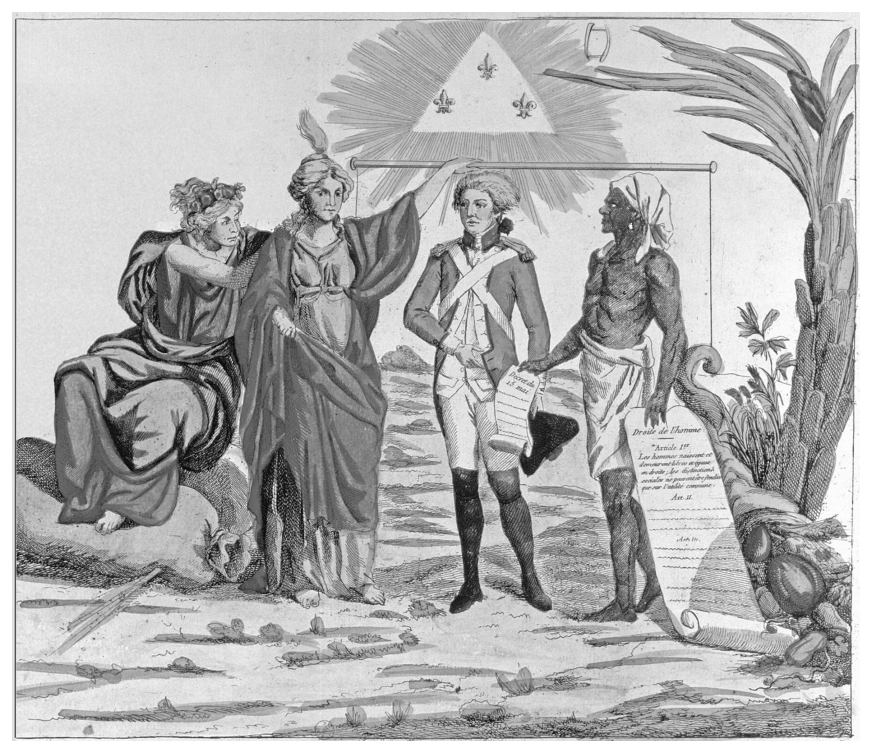
- Bibliotheque Nationale, Paris, France/Bridgeman Images
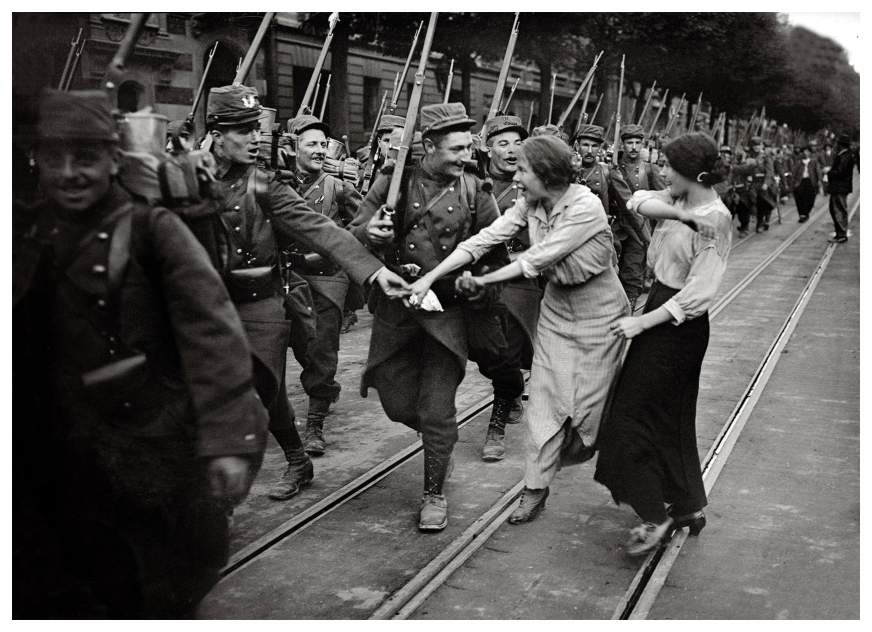
- Archives Larousse, Paris, France/Bridgeman Images