From the free course AP European History on Lykke
AP Practice 1
Key concepts: AP European History as an introductory college-level survey of modern European history · Independent thinking, evidence, and the scientific method in AP courses · Intellectual freedom and opposition to censorship · Analyzing perspectives different from one’s own · Teacher flexibility in pacing and adapting instruction · No prerequisites for AP European History · Major course themes including cultural and intellectual development, states and institutions of power, social organization, identity, and scientific innovation · Teaching earlier historical periods when relevant · Renaissance admiration for Greek and Roman political institutions and the revival of civic ideals · Economic change, including subsistence agriculture, commercial and agricultural capitalism, and new social patterns
AP European History is designed as an introductory college or university survey of modern European history, beginning around $1450$ and continuing to the present. Its central question is not simply “What happened?” but “How did Europeans’ ideas, institutions, economies, identities, societies, and technologies…
AP Practice 1
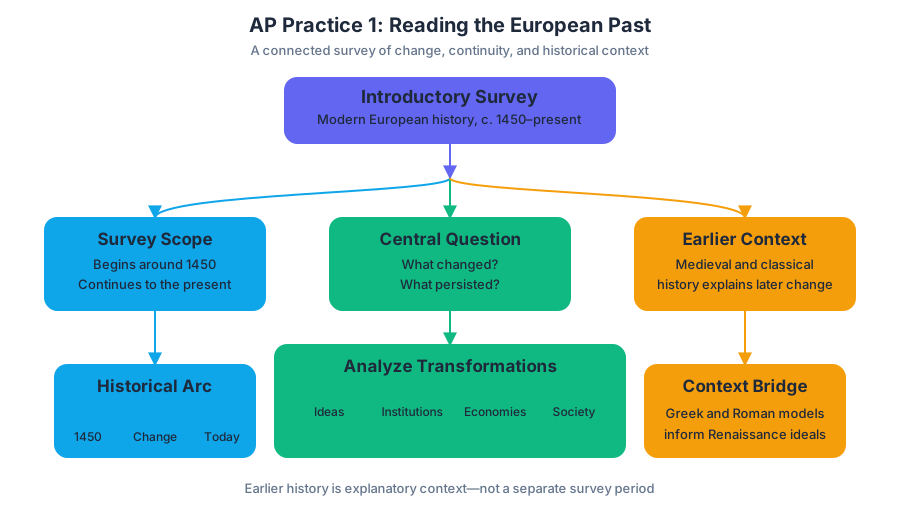
AP European History is designed as an introductory college or university survey of modern European history, beginning around $1450$ and continuing to the present. Its central question is not simply “What happened?” but “How did Europeans’ ideas, institutions, economies, identities, societies, and technologies change—and what persisted beneath those changes?”
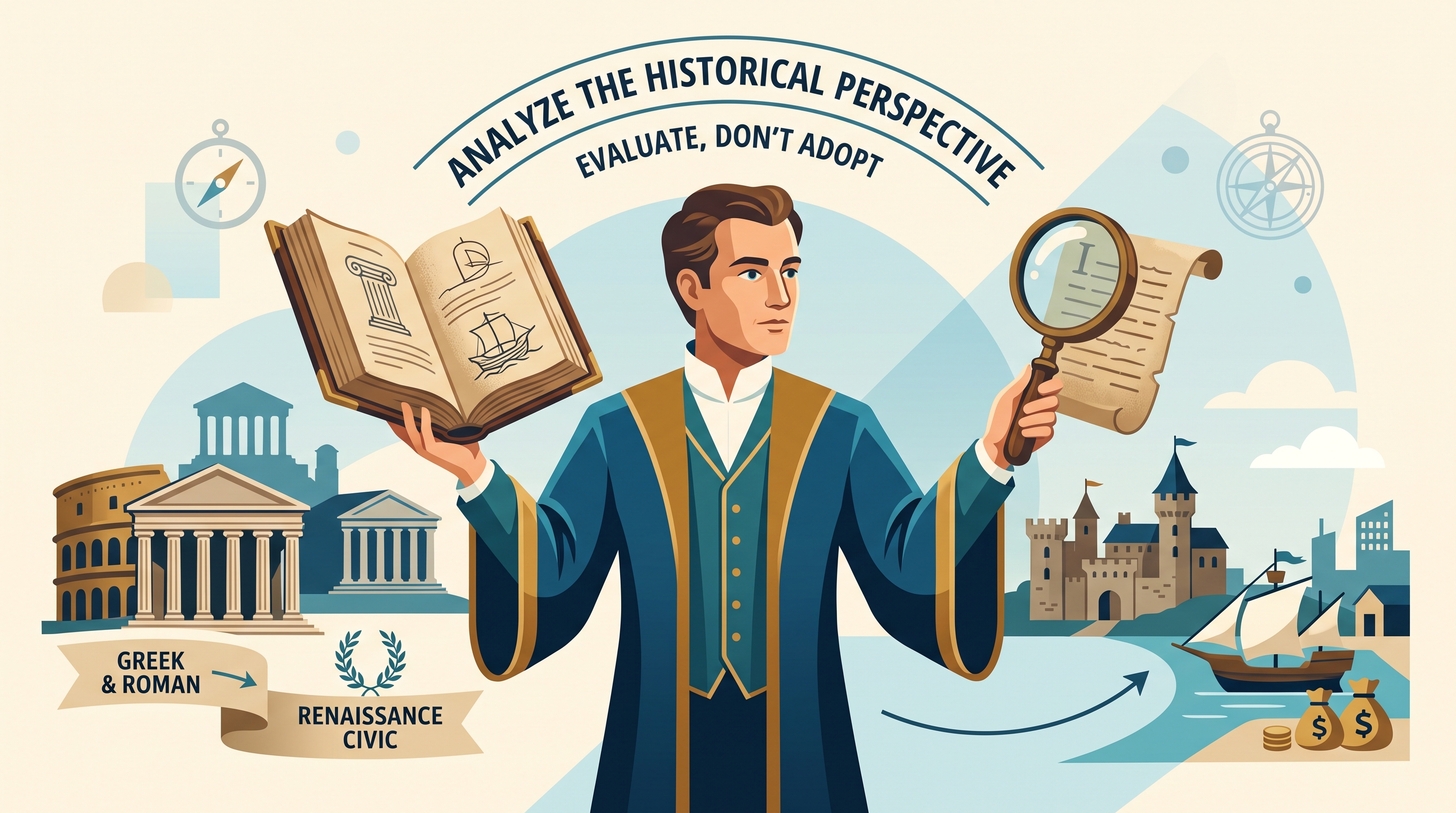
The survey begins around $1450$, but that starting point does not create a wall around earlier history. Teachers may introduce medieval, classical, or other earlier context whenever it clarifies a later European development. Greek and Roman political institutions, for example, mattered to Renaissance thinkers because admiration for classical civic life supported a revival of civic ideals. Earlier history functions as explanatory context, not as a separate period that must be studied for its own sake.
What the course investigates
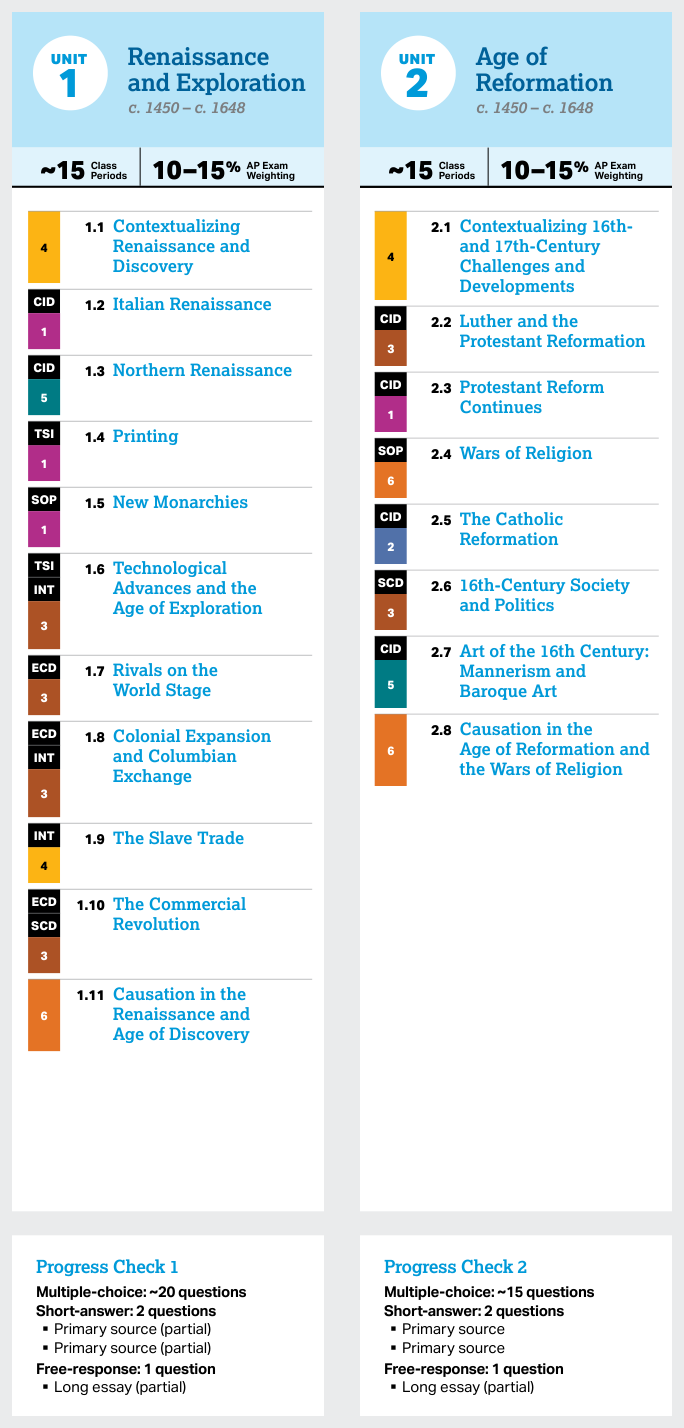
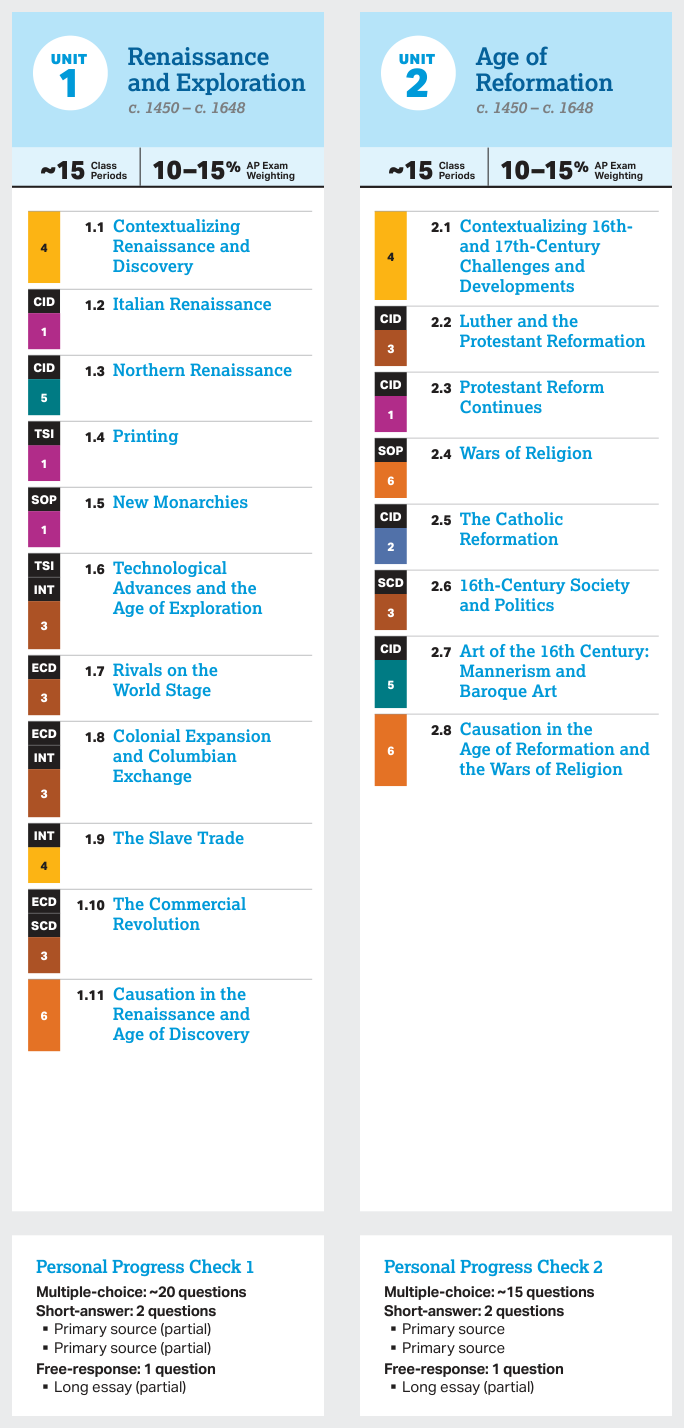
The course repeatedly returns to several connected dimensions of historical change:
- Cultural and intellectual development: humanism, religious thought, political theory, literature, and art.
- States and other institutions of power: monarchies, churches, city-states, empires, and later national governments.
- Social organization and development: hierarchy, family life, class, gender, labor, and demographic change.
- National and European identity: the formation of civic, religious, ethnic, national, and European identities.
- Technological and scientific innovations: printing, navigation, industrial machinery, medicine, and scientific methods.
- Economic and commercial developments: trade, agriculture, capitalism, markets, and changing patterns of wealth.
- Interaction of Europe and the world: exploration, empire, migration, exchange, conflict, and cultural encounter.
These categories are not separate boxes. A technological innovation can transform commerce; commercial change can reorganize society; social tensions can produce political reform; and political institutions can encourage or restrict intellectual activity. Historical reasoning means tracing these connections without assuming that one factor explains everything.
Historical thinking without indoctrination
Independent thinking means drawing conclusions from evidence rather than repeating a required political or cultural viewpoint. AP courses use evidence and the scientific method—posing questions, examining sources, testing interpretations, and revising conclusions—as starting points for serious discussion. In history, the “experiment” is not a laboratory procedure; it is the disciplined comparison of evidence, context, perspective, and consequence.
AP students are expected to analyze perspectives different from their own, not adopt a mandated viewpoint.
No AP Exam points are awarded for agreeing with a particular ideology. Credit comes from making a defensible claim, using relevant evidence, and explaining the reasoning that connects the evidence to the claim. A student can analyze a monarch’s justification for absolute power without endorsing absolutism, or examine an imperial argument without accepting its assumptions.
Intellectual freedom also means opposition to censorship. AP respects teachers’ and students’ ability to examine required historical subjects, including ideas that are controversial, disturbing, or unpopular. Omitting a central concept distorts the historical record in the same way that ignoring evolution would weaken a college biology course.
A worked historical connection
Consider Renaissance economic and social change. Most Europeans still depended on subsistence agriculture, meaning production aimed primarily at keeping households or villages alive. Medieval social and economic structures—manors, inherited status, and rural hierarchy—therefore remained powerful. Yet commercial and agricultural capitalism began altering rural production and political power.
The reasoning chain looks like this:
$$ \text{commercial expansion} \rightarrow \text{new opportunities for investment and trade} \rightarrow \text{new social patterns} \rightarrow \text{changes in rural production and power} $$
This does not mean medieval society suddenly disappeared. The stronger interpretation is continuity and change: agricultural life and inherited hierarchy persisted, while merchants, commercial farmers, urban elites, and financially powerful patrons gained influence. That same wealth helped support Renaissance art, scholarship, and civic building.
Misconception check: “The Renaissance replaced the Middle Ages overnight” is too simple. Renaissance developments rested on older structures while changing who possessed wealth, cultural influence, and political power.
Practice: original short-answer task
Unofficial practice prompt: In two or three complete sentences for each part, answer the following.
(a) Identify one classical influence on Renaissance political or cultural thought.
(b) Explain one way economic change altered European society while older structures continued.
(c) Explain why a historian should analyze a perspective without automatically adopting it.
Worked reasoning:
- (a) Renaissance admiration for Greek and Roman political institutions encouraged renewed civic ideals. The key is connecting classical influence to a Renaissance development rather than merely naming Greece or Rome.
- (b) Commercial and agricultural capitalism created new social patterns and shifted rural production or power, even though most Europeans remained agricultural and medieval hierarchies continued.
- (c) Historical analysis evaluates credibility, context, purpose, and evidence. Understanding a viewpoint is different from endorsing it.
Teachers may adjust pacing, sequencing, examples, and assignments to local priorities, schedules, and student needs. That flexibility changes the route—not the commitment to evidence, intellectual freedom, historical analysis, and the major developments that make modern European history intelligible.
Retrieval check: Why might a teacher introduce Roman republican institutions while teaching the Renaissance? A strong answer should mention classical context and explain how it helps account for the Renaissance revival of civic ideals.
Source Materials
- AP European History Course and Exam Description
- AP European History Course and Exam Description Clarifications and Corrections
- AP European History Course Overview
- AP European History Course at a Glance
- AP European History Course at a Glance Poster
- AP European History
- AP European History
- AP European History Sample Syllabus 1
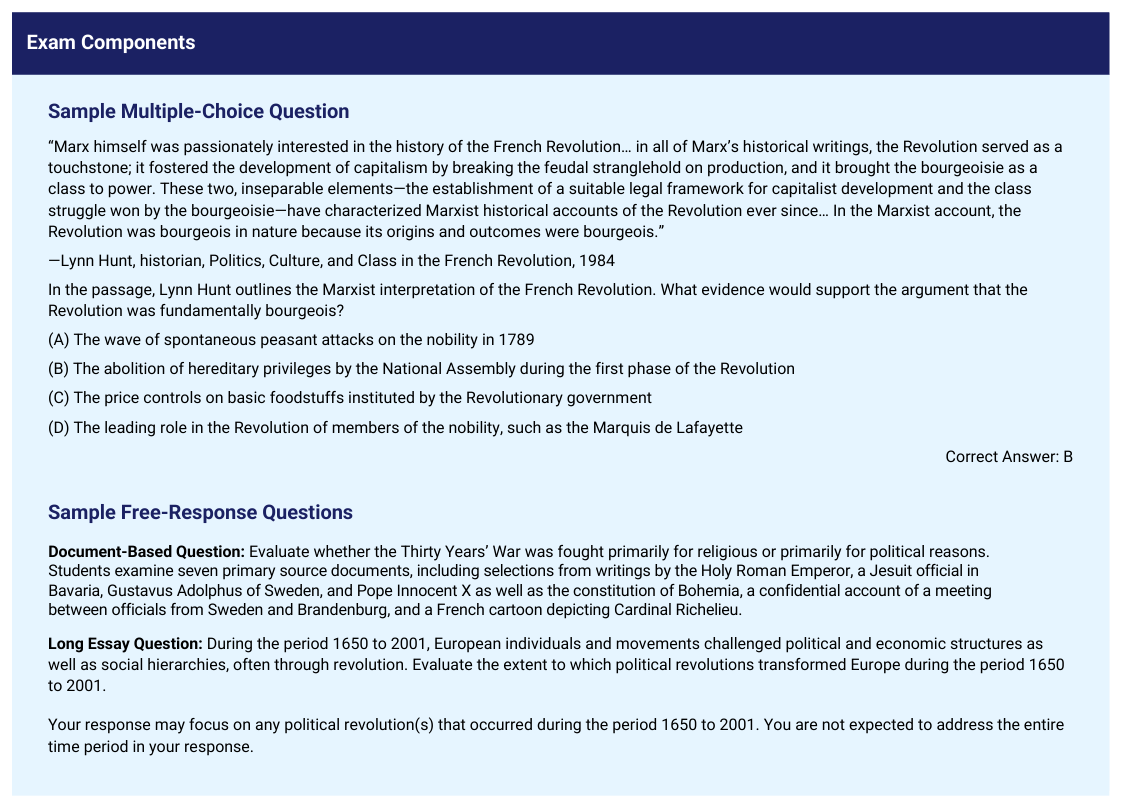
- NOTE: Partial versions of the free-response questions are provided to prepare students for more complex, full questions that they will encounter on the AP Exam.
- NOTE: Partial versions of the free-response questions are provided to prepare students for more complex, full questions that they will encounter on the AP Exam.
- Educators: apcentral.collegeboard.org/courses/ap-european-history Students: apstudent.collegeboard.org/courses/ap-european-history © 2026 The College Board. (Updated July 2026)
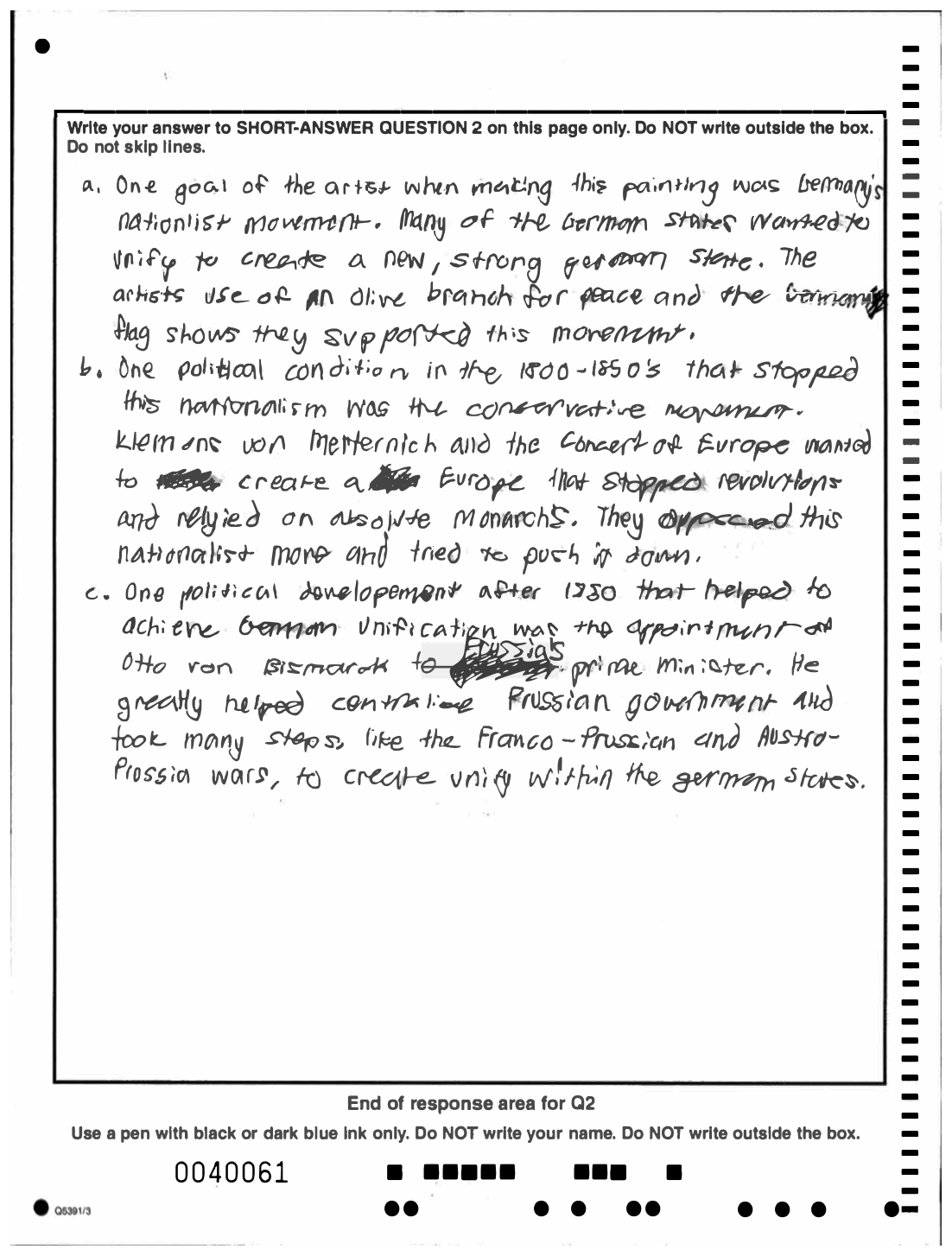
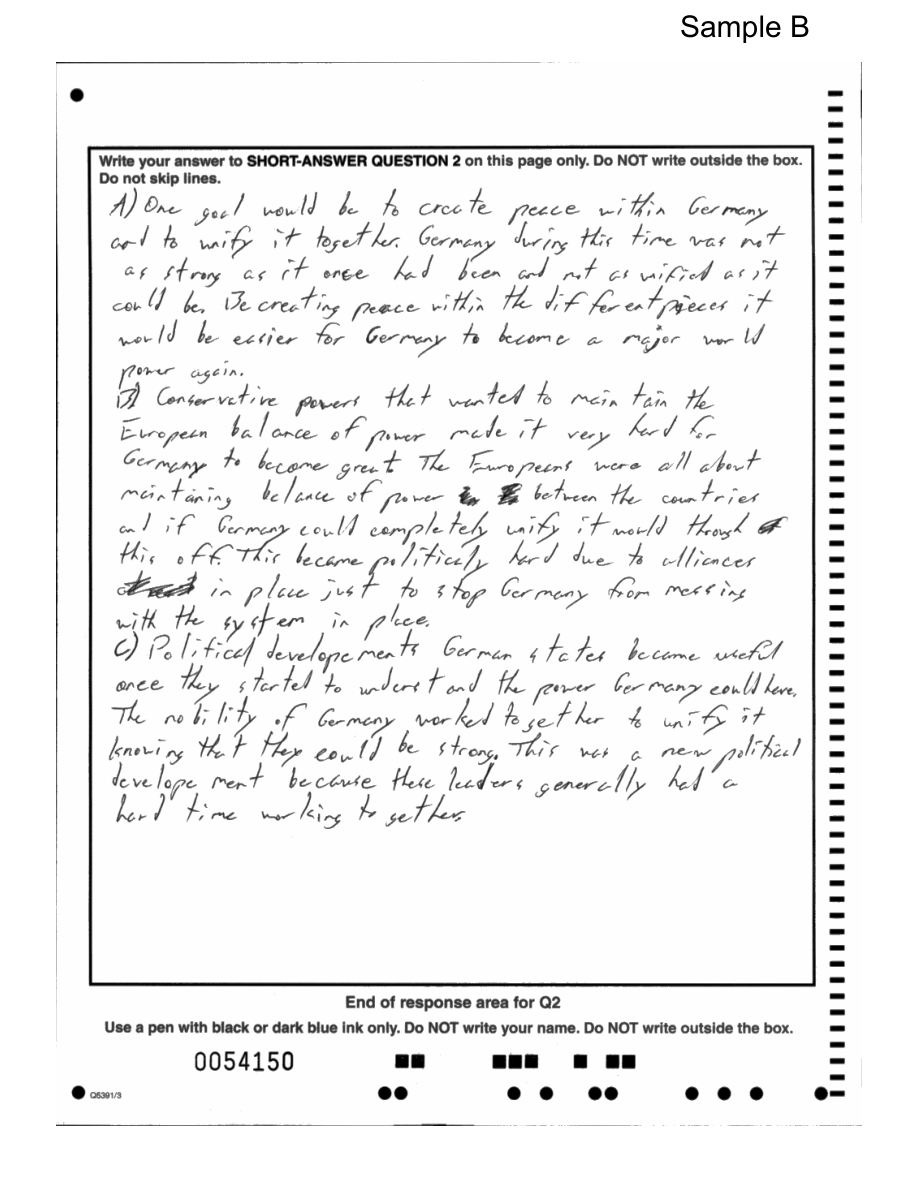
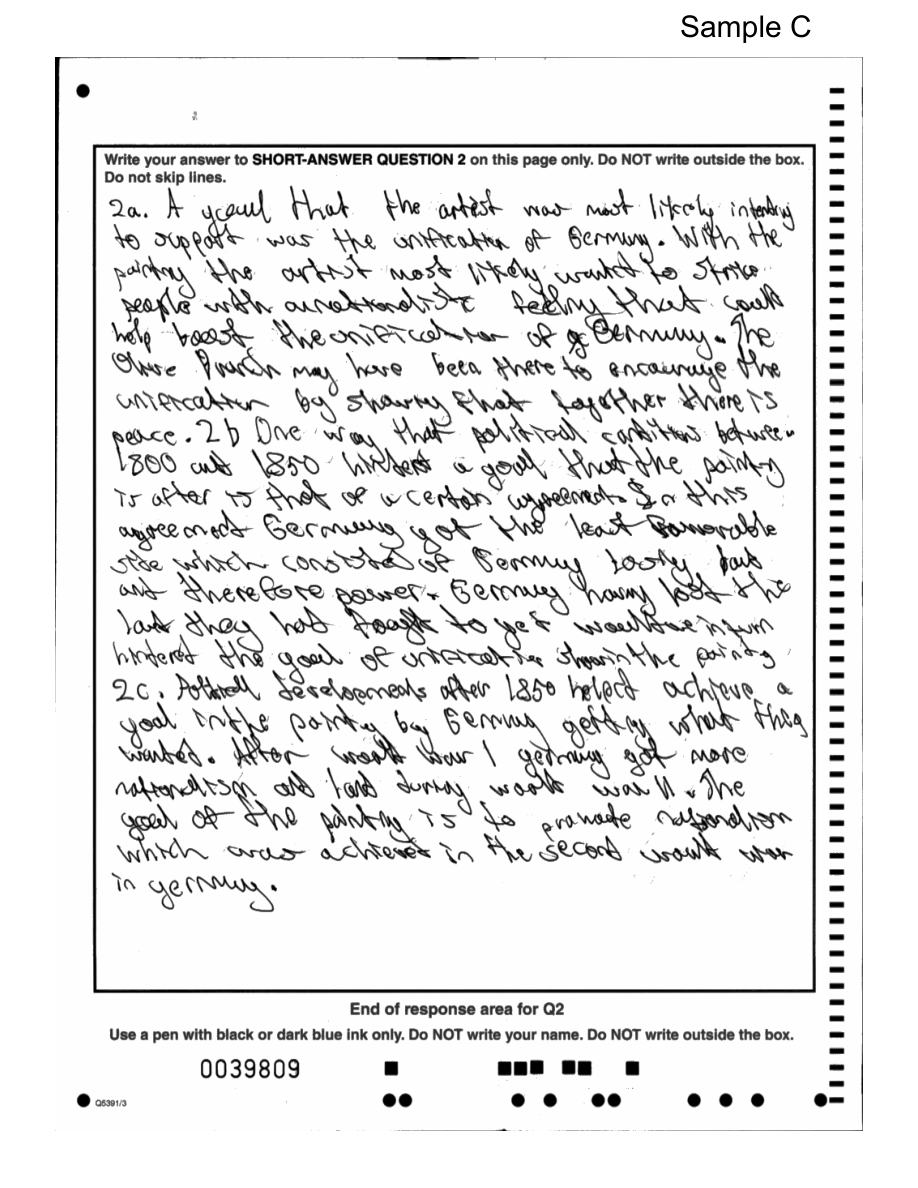
- Figure — Sample Responses - SAQ 2 - Set 1 (p. 4)