From the free course AP European History on Lykke
5.5 Effects of the French Revolution · 5.6 Napoleon’s rise, dominance, and defeat
Key concepts: Effects of the French Revolution · Napoleon’s rise, dominance, and defeat · The French Revolution’s challenge to Europe’s existing political and social order · Revolutionary armies and mass mobilization · Spread of French revolutionary ideals across Europe · Napoleon’s domestic reforms · Napoleon’s curtailment of rights and manipulation of political institutions · Napoleon’s effects on European social, economic, and political life · European responses to Napoleon’s rule · Historical causation and contextualization
The French Revolution did more than replace one government with another: it challenged the assumption that Europe’s social and political order should rest on inherited privilege, dynastic monarchy, and legally distinct estates.
5.5 Effects of the French Revolution · 5.6 Napoleon’s Rise, Dominance, and Defeat
The French Revolution did more than replace one government with another: it challenged the assumption that Europe’s social and political order should rest on inherited privilege, dynastic monarchy, and legally distinct estates. Napoleon later preserved some of that revolutionary transformation while rebuilding authoritarian power around himself.
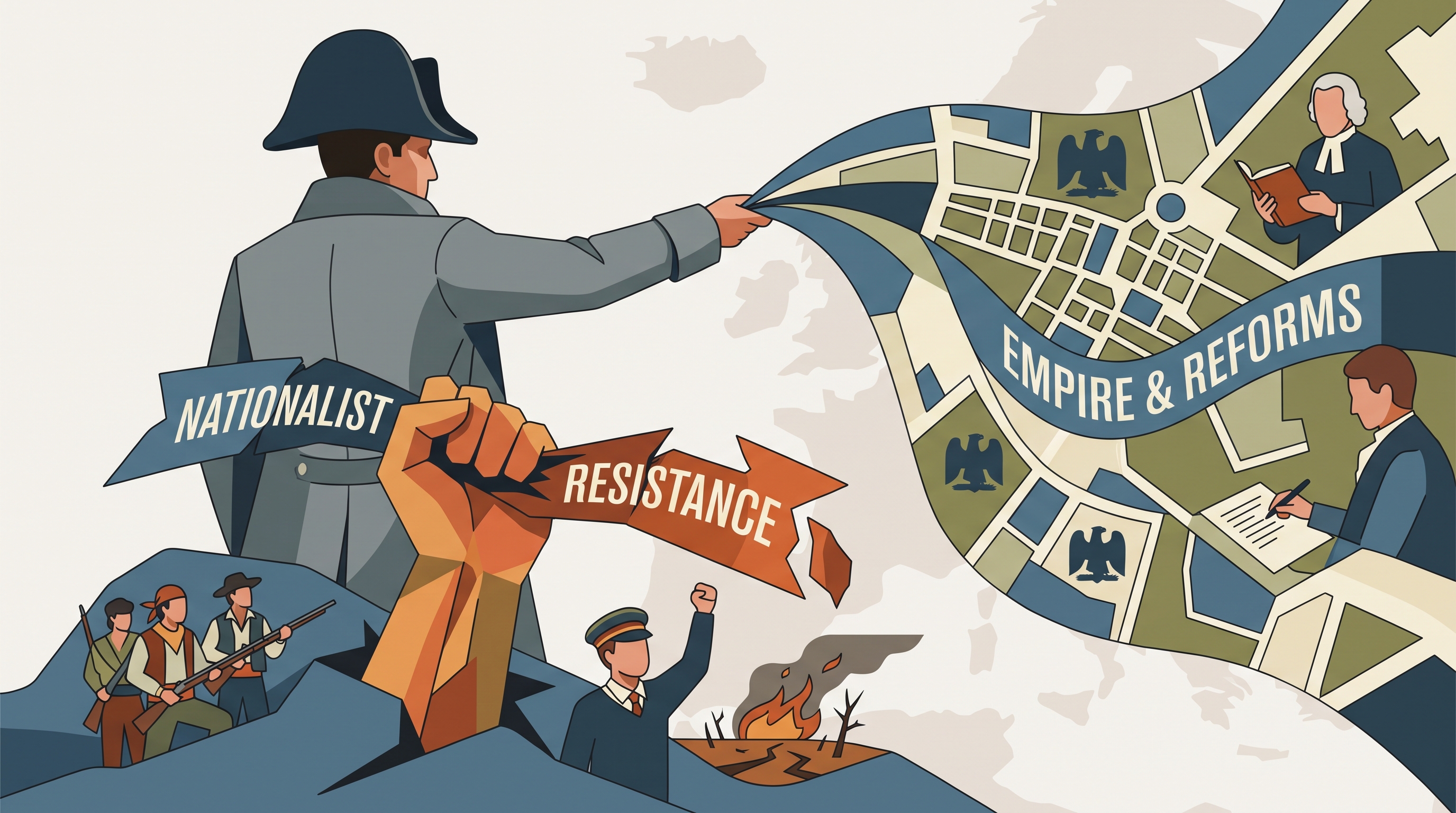
Central tension: Napoleon spread revolutionary principles—legal equality, careers open to talent, and the destruction of feudal privilege—while restricting political liberty and creating an empire.
The Revolution’s challenge to Europe’s existing order
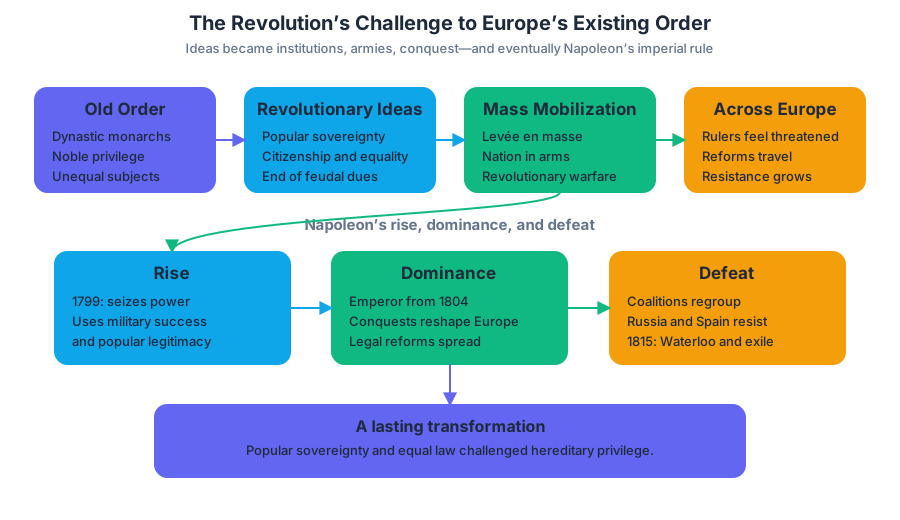
Before 1789, European society generally accepted hierarchy as legitimate. Monarchs ruled by dynastic right; nobles enjoyed legal and fiscal privileges; the Catholic Church held major institutional authority; and ordinary subjects possessed unequal political status. The French Revolution instead advanced ideas of popular sovereignty, citizenship, equality before the law, and the abolition of feudal obligations.
This challenge threatened rulers beyond France because revolutionary principles could travel across borders. If authority came from the nation rather than a monarch, then subjects elsewhere might question hereditary rule. If law should treat citizens equally, then aristocratic privileges appeared less defensible.
The revolutionary army turned these ideas into a continental force. Mass mobilization means recruiting and organizing large portions of the population for national war rather than relying primarily on small professional armies. France’s levée en masse supplied soldiers, while patriotic language portrayed military service as defending the nation and the Revolution.
Revolutionary armies defeated or pressured neighboring states and carried French reforms into conquered territories. In some regions, they abolished feudal dues, weakened noble privilege, and introduced more uniform administration. Yet military occupation also produced taxation, requisitions, and resistance, so the spread of revolutionary ideals was inseparable from coercion.
Napoleon’s rise: from revolutionary instability to empire
Napoleon Bonaparte rose during the instability that followed the most radical phase of the Revolution. His military reputation and political opportunism helped him seize power in the coup of 1799. As first consul, he concentrated authority in the executive, and in 1804 he crowned himself emperor.
His rise illustrates a crucial historical connection: revolutionary crisis weakened representative institutions, while military success gave Napoleon the authority to promise order. He claimed to defend the Revolution by preserving its useful reforms, but he rejected the idea that popular sovereignty required genuine political competition.
Napoleon’s domestic reforms: durable change and controlled politics
Under KC-2.1.V.A, Napoleon created enduring domestic institutions while curtailing rights and manipulating political participation behind representative forms. His centralized bureaucracy made the state more efficient; the Civil Code standardized law and affirmed equality of male citizens before the law, protection of property, and the abolition of many feudal privileges. The Concordat of 1801 repaired relations with the Catholic Church while keeping religion under state supervision. State-controlled education trained officials and promoted loyalty.
These reforms explain why Napoleon’s rule cannot be labeled simply “anti-revolutionary.” He preserved legal equality and administrative rationalization, but he limited women’s rights, strengthened paternal authority within families, used censorship and secret police, and controlled elections and plebiscites. Representative institutions existed, yet they largely confirmed decisions already made by the regime.
Misconception check: Napoleon did not restore the old feudal order. His authoritarian government preserved important revolutionary changes even as it suppressed revolutionary democracy.
Empire, resistance, and nationalist reaction
Under KC-2.1.V.B, Napoleon’s military tactics enabled direct or indirect control over much of Europe. Rapid movement, concentrated forces, and mass armies helped France defeat traditional coalitions. Napoleon reorganized territories, installed relatives or loyal rulers, and created dependent states.
The effects were contradictory. Napoleon’s empire spread legal and administrative reforms, but it also imposed French domination, economic demands, conscription, and the Continental System, which attempted to weaken Britain by restricting European trade with it. These pressures changed social and economic life while encouraging opposition.
Under KC-2.1.V.C, Napoleon’s expanding empire generated nationalist responses. Students protested French control in German states; Spanish communities fought a guerrilla war; and Russia used a scorched-earth strategy, destroying supplies during the French invasion so Napoleon’s army could not live off the land. Resistance increasingly linked local identity with opposition to foreign rule.
Defeat by coalition
Napoleon’s power collapsed because military expansion generated stronger and more coordinated resistance. The disastrous invasion of Russia in 1812 destroyed much of his army. European powers then formed renewed coalitions, defeated French forces at Leipzig in 1813, and invaded France. Napoleon abdicated in 1814, briefly returned during the Hundred Days, and suffered final defeat at Waterloo in 1815.
Skill 1: Developments and Processes requires tracing how revolutionary mobilization, Napoleonic centralization, imperial expansion, and nationalist resistance unfolded over time. Skill 5: Making Connections links domestic reforms to European consequences: the Civil Code strengthened state authority at home, while military conquest exported related institutions abroad. Skill 6: Argumentation requires weighing Napoleon’s reforming legacy against his authoritarian practices rather than treating either side as complete.
Worked interpretation: A source praising Napoleon as the “defender” of the Revolution might emphasize legal equality and the destruction of feudal privilege. A source condemning him might emphasize censorship, secret police, and imperial conquest. A strong comparison identifies each author’s main claim, then explains how political position and historical context shaped the argument.
Retrieval check: Explain one way Napoleon preserved revolutionary change, one way he curtailed revolutionary ideals, and one reason European resistance eventually defeated him.
Source Materials
- AP European History Course and Exam Description
- AP European History Course and Exam Description Clarifications and Corrections
- AP European History Course Overview
- AP European History Course at a Glance
- AP European History Course at a Glance Poster
- AP European History
- AP European History
- AP European History Sample Syllabus 1
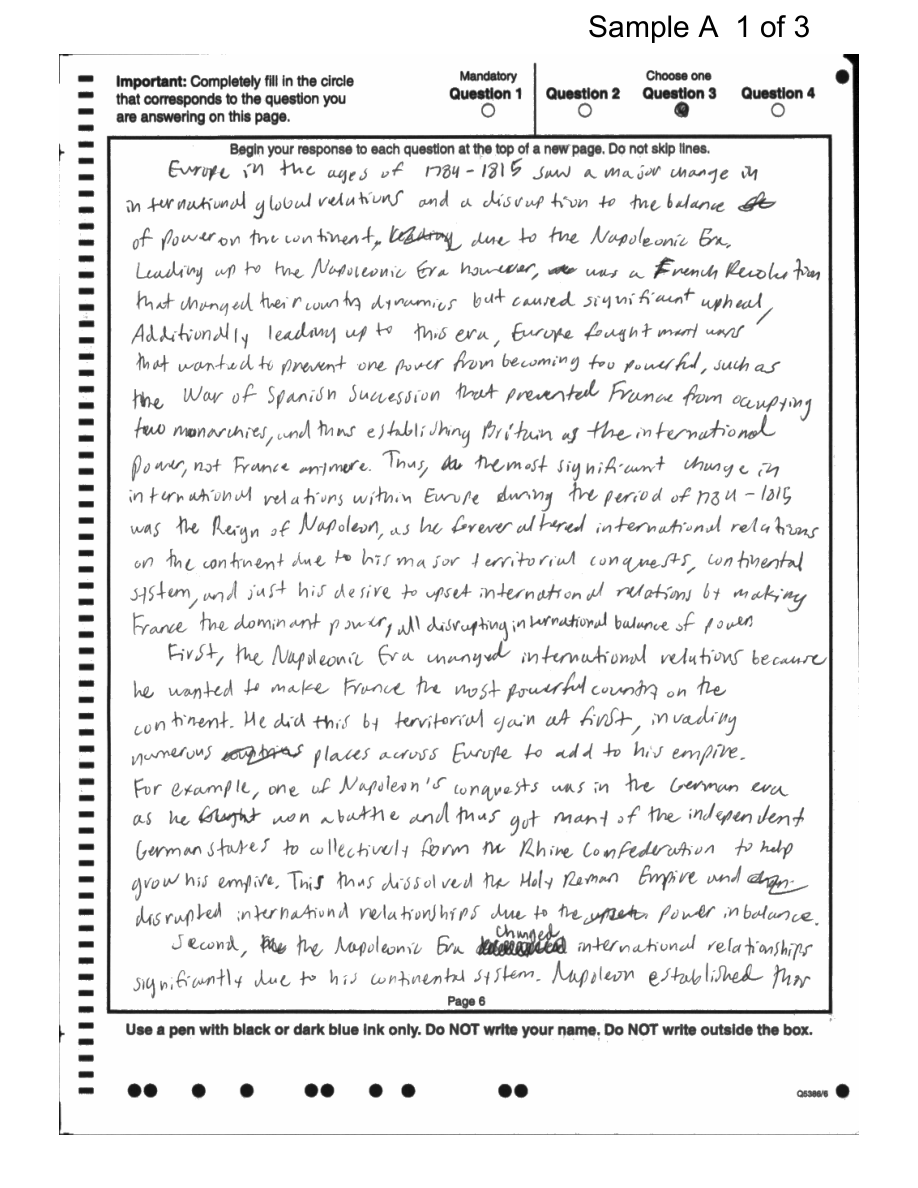
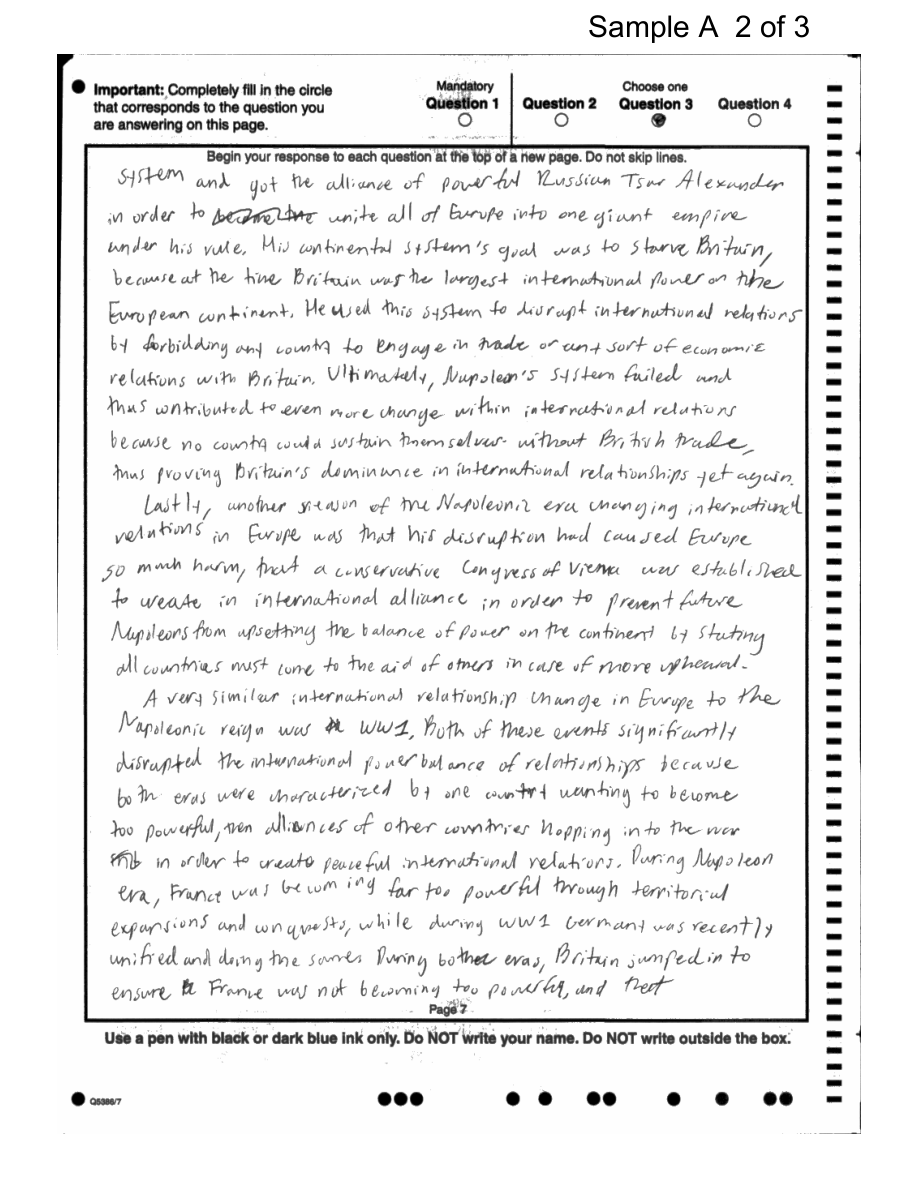
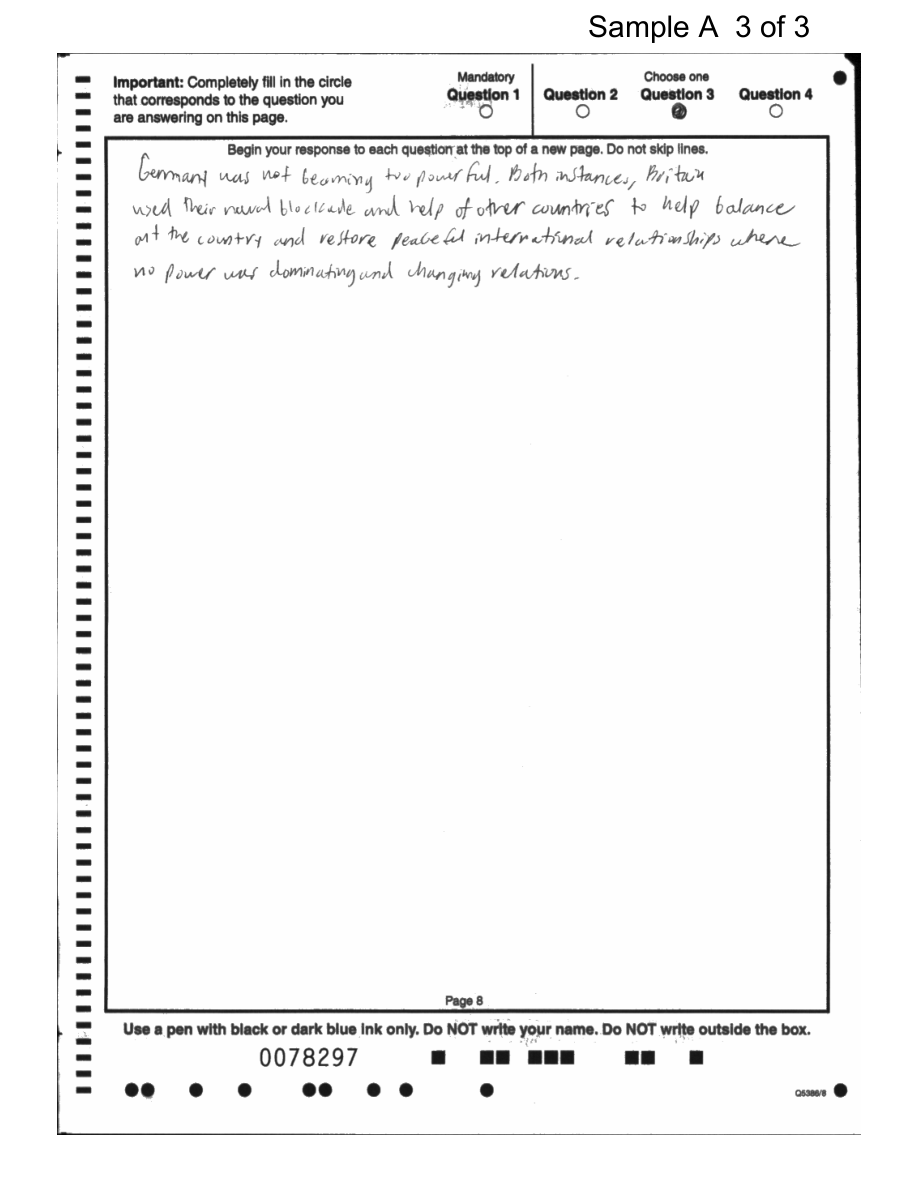
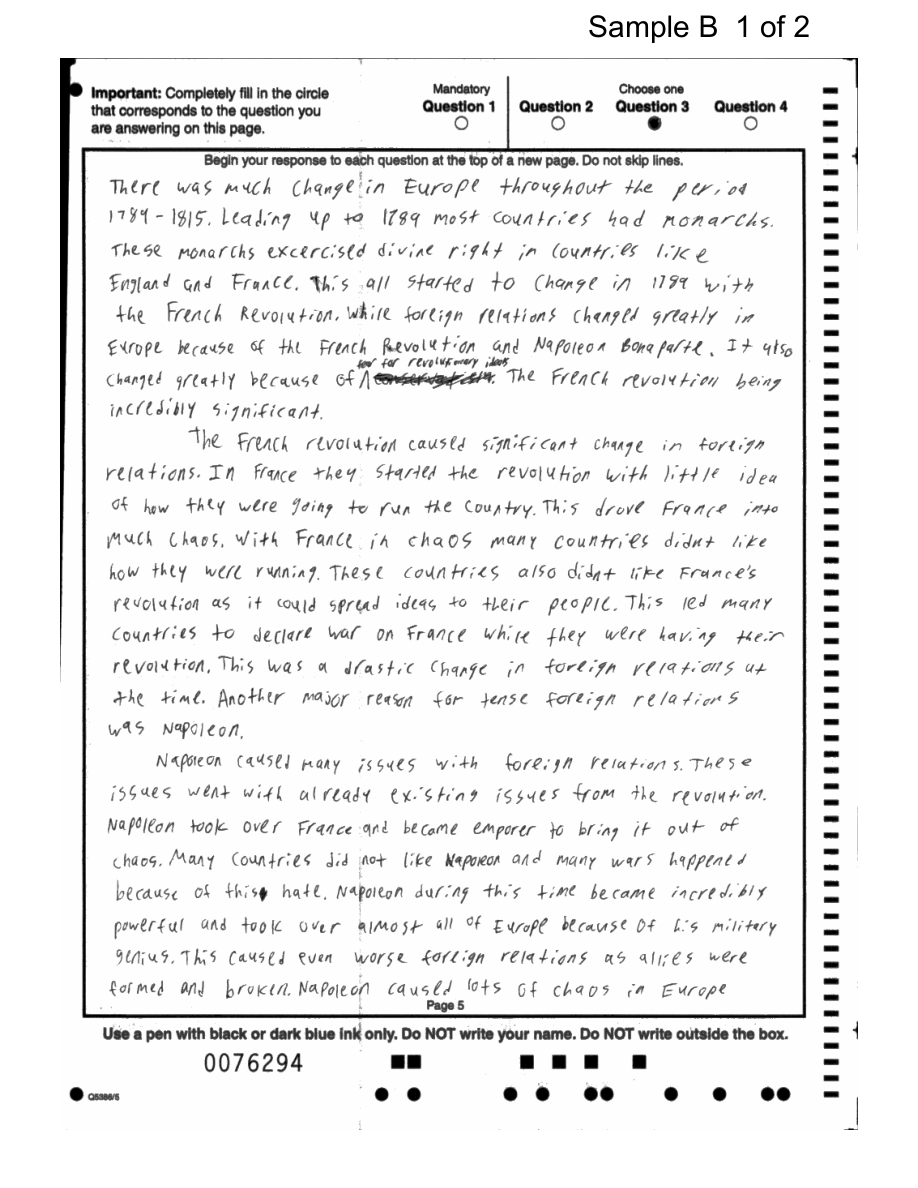
- Figure — Sample Responses - LEQ 3 - Set 1 (p. 6)
- Figure — Sample Responses - LEQ 3 - Set 1 (p. 8)
- Figure — Sample Responses - LEQ 3 - Set 1 (p. 9)
- Figure — Sample Responses - LEQ 3 - Set 1 (p. 10)