From the free course AP Comparative Government and Politics on Lykke
3.7 Civil Rights and Civil Liberties
Key concepts: Civil rights · Civil liberties · Government protection and restriction of liberties · Democratization · Democratic consolidation · Authoritarian and democratic regime placement · Media constraints · Political participation and voting access · Mass political protests and social movements · Rule of law and judicial protection
A government can call an election while restricting speech, limit protests while protecting due process, or expand voting while weakening press freedom. The key question is not whether a regime imposes any limits, but which rights it protects, which liberties it restricts, and how extensively it controls political…
3.7 Civil Rights and Civil Liberties
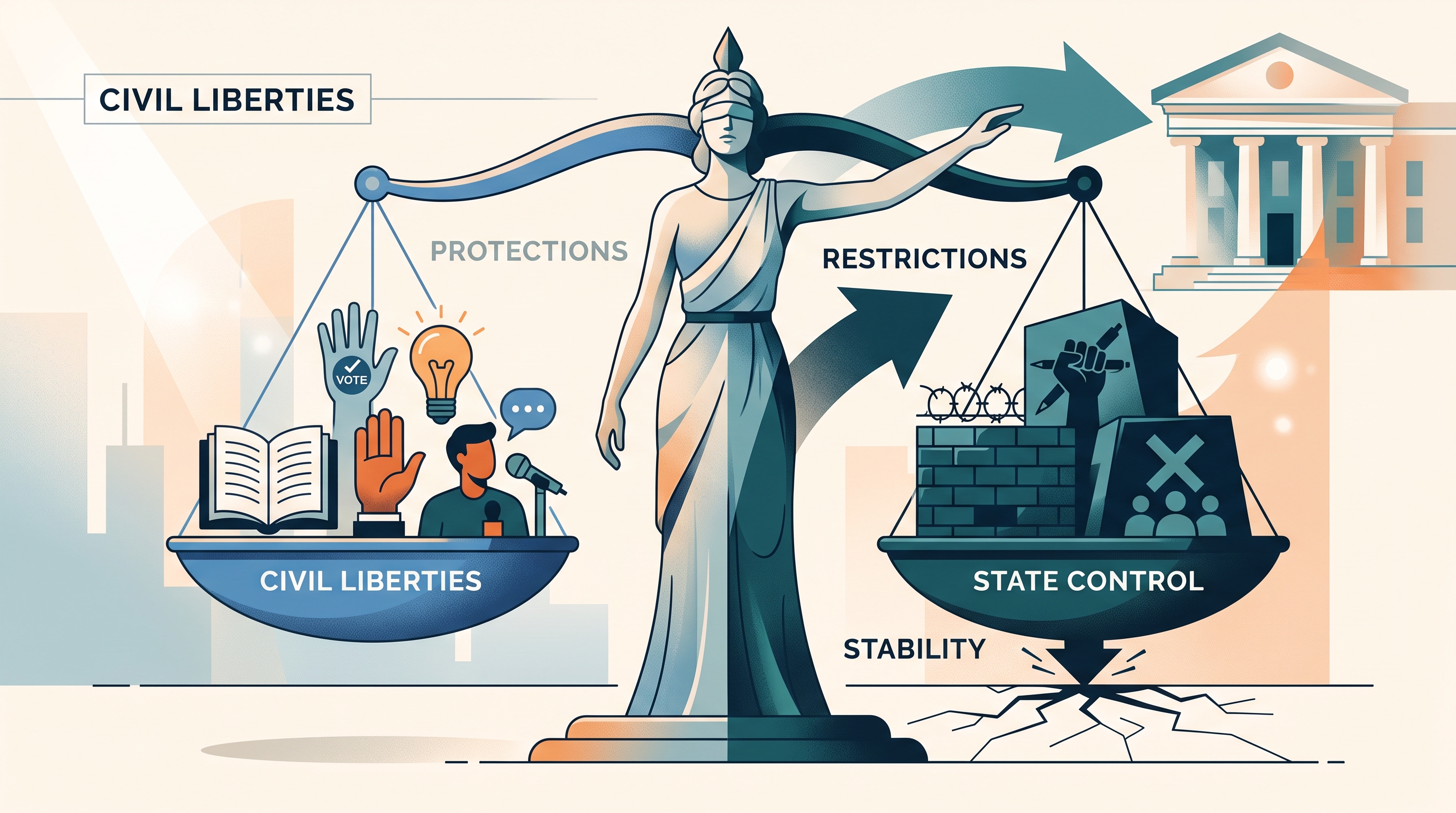
A government can call an election while restricting speech, limit protests while protecting due process, or expand voting while weakening press freedom. The key question is not whether a regime imposes any limits, but which rights it protects, which liberties it restricts, and how extensively it controls political participation.
Rights, liberties, and regime power
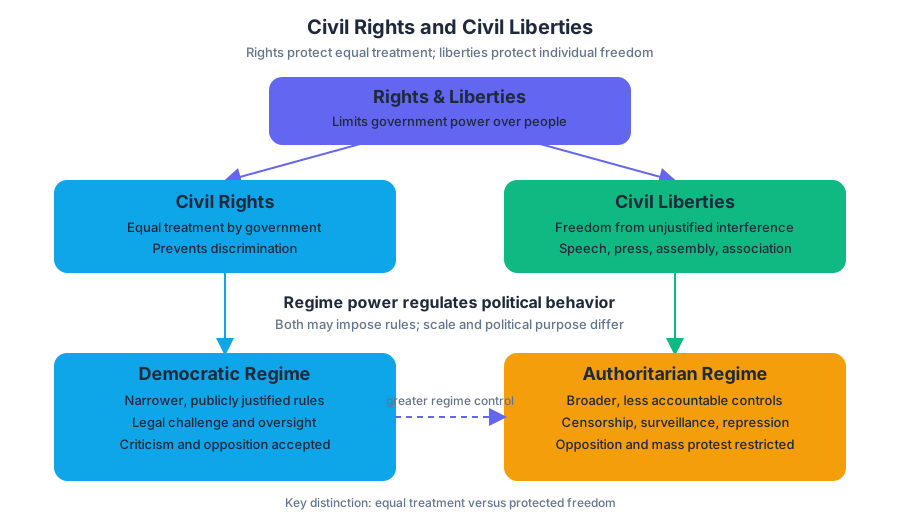
Civil rights are protections that require government to treat people equally and prevent discrimination. Civil liberties are freedoms from unjustified government interference, such as freedom of expression, association, press activity, and peaceful assembly.
Key distinction: Civil rights concern equal treatment; civil liberties concern protected individual freedoms.
Both democratic and authoritarian regimes regulate political behavior. A democratic government may require voter identification, limit campaign financing, or prohibit violent protests. An authoritarian government may impose similar formal rules but usually adds broader censorship, surveillance, repression, and restrictions on opposition organizations.
The difference is therefore one of scale and political purpose. Democratic regimes generally accept criticism and organized opposition as legitimate parts of politics, even when they restrict particular actions. Authoritarian regimes value public order and regime control more heavily than individual liberties and civil rights, so they tolerate mass political protests and movements far less (DEM-1.B.4).
A useful comparison is a volume control:
- Democratic regime: restrictions are usually narrower, publicly justified, and subject to legal challenge.
- Authoritarian regime: restrictions are broader, less accountable, and more likely to target opposition or independent organizations.
- Both regimes: may regulate voting, media, and public demonstrations.
A common misconception is that democracy means unlimited freedom. It does not. Democratic regimes may restrict voting access or prohibit disruptive and violent protests while still protecting substantially more civil liberties than authoritarian regimes (DEM-1.B.3). The stronger comparison asks whether restrictions are limited and contestable or systematic and politically coercive.
Democratization is uneven
Democratization is the transition from an authoritarian regime to a democratic regime. Its goals include more competitive, fair, and transparent elections; wider participation in policymaking; universal adult suffrage; greater governmental transparency; protected civil rights and liberties; equal treatment; and the rule of law (PAU-1.C.1).
Democratization is not a one-way staircase. It can stall, producing partial reforms without deeper accountability, or be reversed, as governments weaken election rules, restrict civil liberties, intimidate journalists, or limit opposition participation. Election reform and civil-liberties protection can therefore support democratization, while exclusionary election rules and repression can impede it.
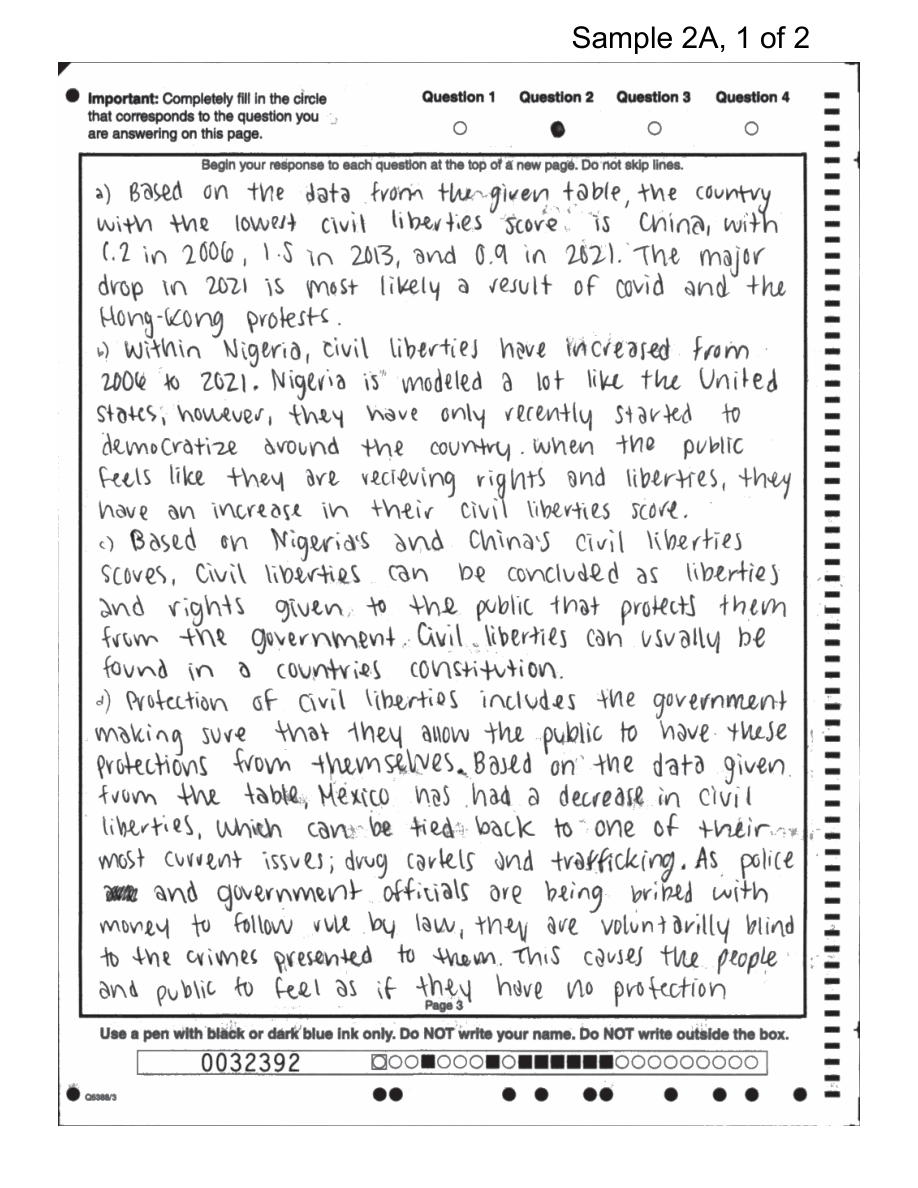
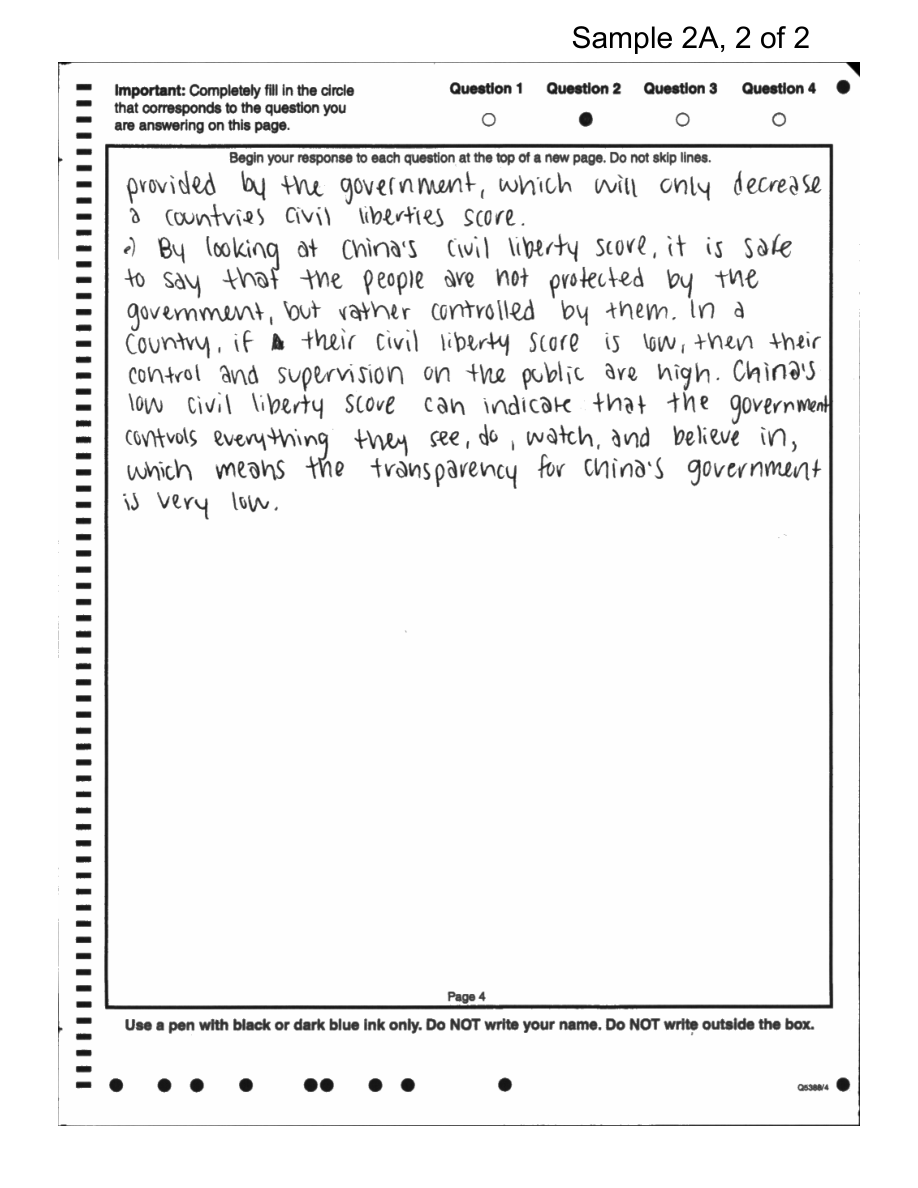
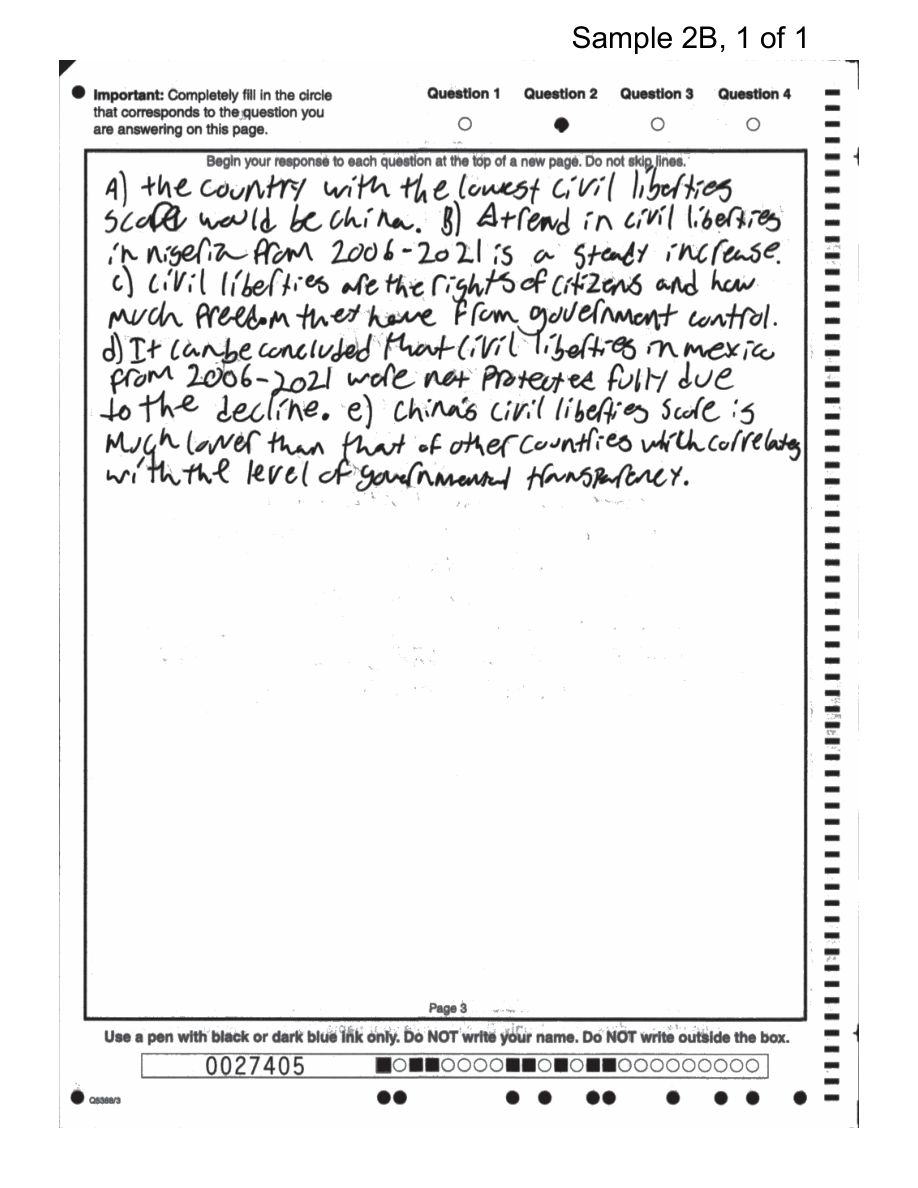
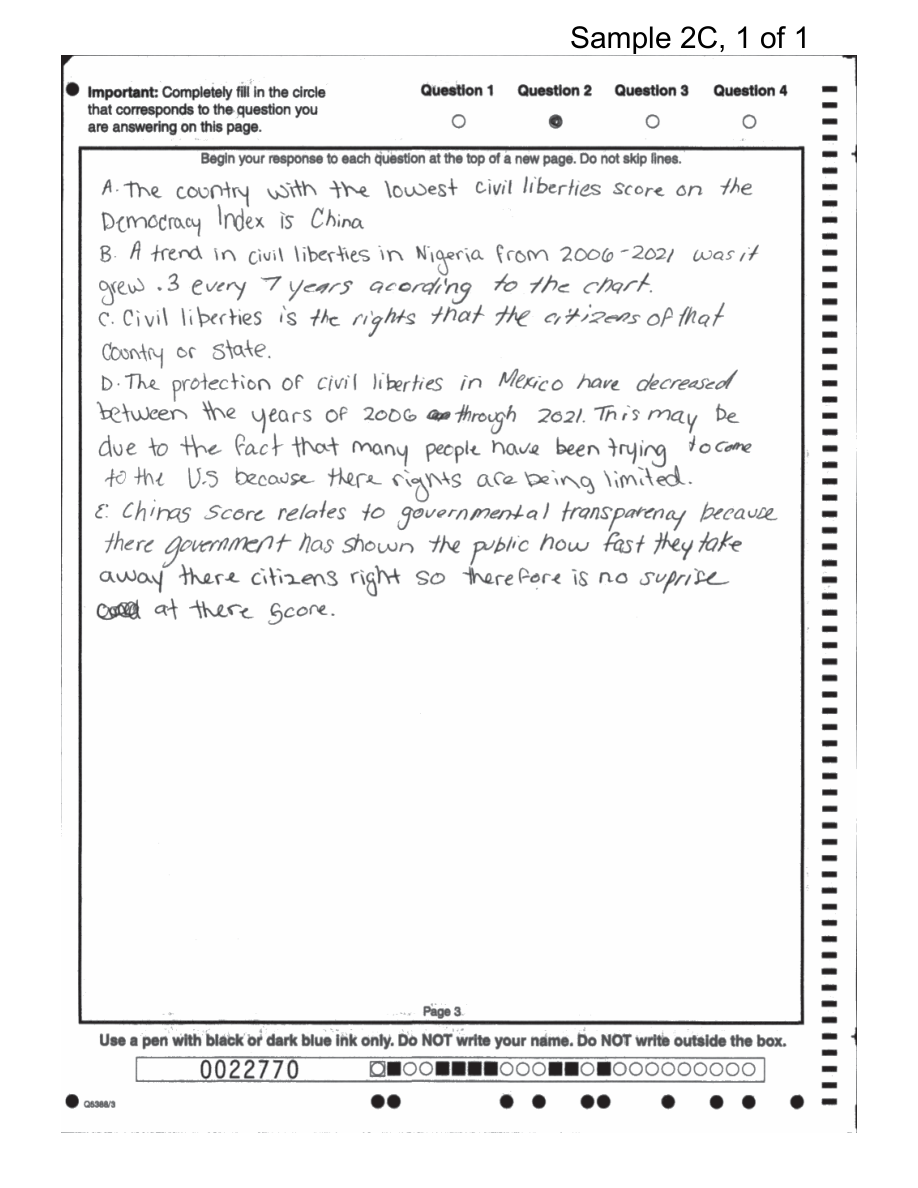
Worked example: interpreting press freedom. Suppose a country holds increasingly competitive elections but its press-freedom score falls over several years. The correct conclusion is not automatically “the country is authoritarian.” Instead, the evidence suggests that democratization is uneven, stalled, or regressing. Mexico illustrates this reasoning: competitive elections may coexist with declining press freedom when state or non-state actors, including criminal organizations, undermine journalists.
In a data-based response, build the reasoning in three steps:
- Identify the trend: press freedom declines over time.
- Connect the measure to the concept: weaker press freedom signals reduced governmental transparency or civil-liberties protection.
- Draw a qualified conclusion: democratization may be incomplete, stalled, or reversed rather than wholly absent.
Democratic consolidation
Democratic consolidation is the process through which a democratic regime matures and becomes more durable. Consolidation depends on reliable election rules, separation of powers, and protection of civil liberties (PAU-1.C.2).
These institutions reinforce one another. Fair election rules allow citizens to replace leaders; separation of powers prevents one institution from monopolizing authority; and protected liberties allow citizens, journalists, parties, and courts to criticize government. Without these safeguards, a country may retain democratic labels while becoming increasingly illiberal.
The United Kingdom as a rule-of-law example
The United Kingdom uses common law, a legal system in which judicial decisions and established precedents help enforce the rule of law. Its Supreme Court is the final court of appeals, protects human and civil rights and liberties, and rules on disputes involving devolution—the distribution of authority among the UK’s national governments.
The UK example shows that civil-liberties protection is connected to institutions, not merely official promises. Courts, legal precedent, legislative rules, and devolved governments create multiple sites at which government action can be challenged.
AP reasoning in action
This topic most directly develops Practice 1: Concept Application (CON-1) by applying civil liberties, democratization, and democratic consolidation to a country or scenario. It develops Practice 2: Country Comparison (COMP-1) when contrasting the UK’s legal protections with restrictions in authoritarian regimes, Practice 3: Data Analysis (DAT-1) when interpreting press-freedom trends, Practice 4: Source Analysis (SOUR-1) when evaluating evidence about censorship or protest, and Practice 5: Argumentation (ARG-1) when defending a claim about whether civil-liberties protections strengthen political stability.
Misconception check: A declining civil-liberties measure does not prove that every institution has become authoritarian. Strong analysis identifies the specific liberty affected, connects the change to regime power, and explains whether the broader democratization process is advancing, stalled, or reversing.
Retrieval check: A country expands voting access and judicial review but bans independent newspapers and violently suppresses peaceful demonstrations. Is democratization complete? Explain why the best answer is no: some democratic features have expanded, but restrictions on press freedom and peaceful participation show incomplete or possibly reversing democratization.
Source Materials
- AP Comparative Government and Politics Course and Exam Description
- AP Comparative Government and Politics Course and Exam Description Clarifications and Corrections
- AP Comparative Government and Politics Course Overview
- AP Comparative Government and Politics Course at a Glance
- AP Comparative Government and Politics Course at a Glance Poster
- AP Comparative Government and Politics
- AP Comparative Government and Politics
- AP Comparative Government and Politics Sample Syllabus 1
- Figure — Sample Responses Q2 - Set 1 (p. 3)
- Figure — Sample Responses Q2 - Set 1 (p. 4)
- Figure — Sample Responses Q2 - Set 1 (p. 5)
- Figure — Sample Responses Q2 - Set 1 (p. 6)