From the free course AP Comparative Government and Politics on Lykke
AP Practice 1
Key concepts: Transparency in AP course expectations · Evidence-based reasoning and independent judgment · Respectful debate and classroom inclusivity · Informed choice and access to AP courses · Equitable access to challenging curricula · Comparative government disciplinary practices · Data interpretation, comparison, and application · Evidence-based argumentation · Big ideas and cross-cutting conceptual understanding · Rule of law and limits on arbitrary government decisions
AP Comparative Government and Politics is an introductory college-level course equivalent to a one-semester college course, and it has no prerequisites. Its central discipline is comparison: students examine political structures, policies, and challenges across China, Iran, Mexico, Nigeria, Russia, and the United…
AP Practice 1
AP Comparative Government and Politics is an introductory college-level course equivalent to a one-semester college course, and it has no prerequisites. Its central discipline is comparison: students examine political structures, policies, and challenges across China, Iran, Mexico, Nigeria, Russia, and the United Kingdom while using evidence rather than adopting a required political viewpoint.
The public Course and Exam Description, sample assessments, and related course materials make expectations transparent. Students and teachers can see the required content, the five big ideas, and the disciplinary practices that shape assessment. That transparency matters because AP enrollment should be an informed choice: students should understand the type of reading, data interpretation, comparison, and evidence-based writing the class requires, while teachers should clearly communicate the classroom experience students are agreeing to enter.
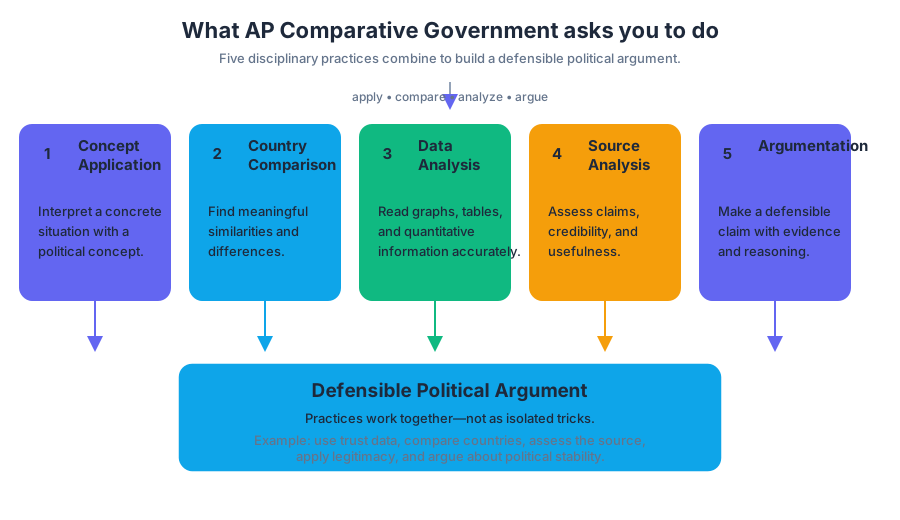
What AP Comparative Government asks you to do
The course repeatedly develops five disciplinary practices:
| Disciplinary Practice | What the student does |
|---|---|
| Disciplinary Practice 1: Concept Application | Uses a political concept to interpret a concrete situation. |
| Disciplinary Practice 2: Country Comparison | Identifies meaningful similarities and differences among the six selected countries. |
| Disciplinary Practice 3: Data Analysis | Reads tables, graphs, and other quantitative information accurately. |
| Disciplinary Practice 4: Source Analysis | Assesses what a source says, how credible or useful it is, and what conclusions it supports. |
| Disciplinary Practice 5: Argumentation | Develops a defensible claim supported by relevant evidence and reasoning. |
These practices work together rather than appearing as isolated tricks. A student might interpret a graph showing declining trust in government, compare that pattern across Mexico and the United Kingdom, evaluate whether the data source is credible, apply the concept of legitimacy, and then argue whether the trend threatens political stability.
The first practice: conceptual analysis
For this original practice task, work under a 10-minute target, consistent with the short conceptual-analysis format. The strongest response does not merely recognize a familiar word; it defines the concept precisely, applies it to the situation, and explains the political relationship involved.
Rule of law means that states are governed by established laws rather than by the arbitrary decisions of individual government officials.
Practice prompt: A government announces that officials may ignore court decisions whenever those decisions conflict with the leader’s policy goals. Using the definition of the rule of law, explain why this announcement could weaken political legitimacy.
Worked reasoning: First, establish the concept: the rule of law requires government officials—including powerful leaders—to operate within established legal rules. Next, apply it: allowing officials to disregard court decisions replaces legal constraint with personal or arbitrary decision-making. Finally, explain the consequence: citizens may view government authority as unpredictable or unfair, reducing acceptance of the government’s right to rule. That decline in acceptance can weaken political legitimacy, even if the government continues to possess coercive power.
A rubric-aligned response therefore contains three linked moves: a correct definition, a specific application to the scenario, and a causal explanation connecting the rule of law to legitimacy. Naming both concepts is not enough; the response must show how one affects the other.
Evidence, judgment, and disagreement
AP students are expected to assess source credibility, draw conclusions, and form independent judgments. “Independent” does not mean unsupported or purely personal. It means that the conclusion follows from evaluated evidence and reasoning rather than from a required ideological position.
A strong comparative classroom also permits respectful debate. Students may disagree about whether a policy strengthens stability or suppresses dissent, but personal attacks are unacceptable. Criticizing an argument, evidence choice, or interpretation is different from attacking the person making it.
Debate rule: Challenge claims with evidence and reasoning; never challenge a classmate’s worth or identity.
Big ideas that keep returning
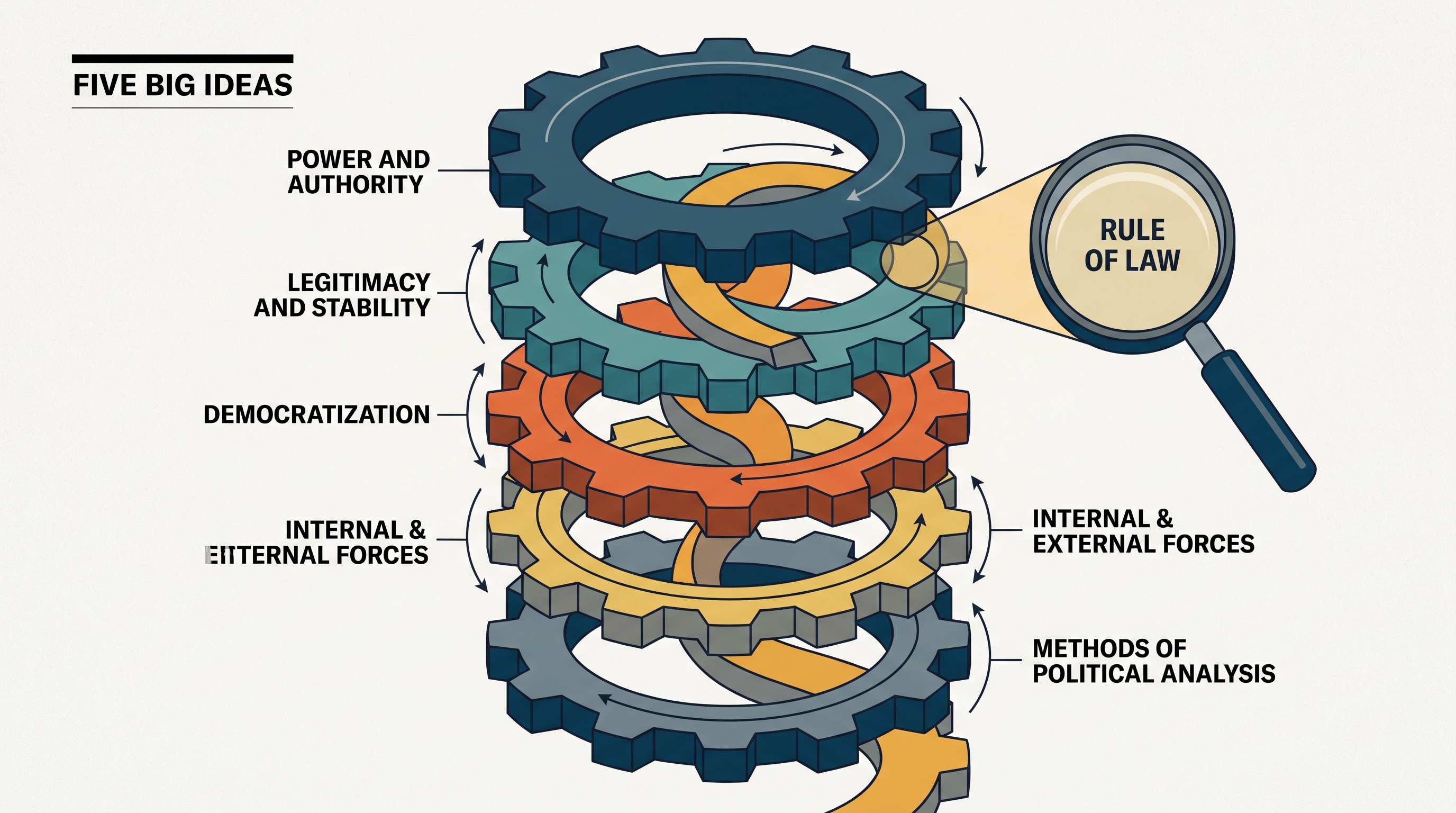
The five big ideas are cross-cutting concepts that build understanding across units and spiral through the course: Power and Authority, Legitimacy and Stability, Democratization, Internal and External Forces, and Methods of Political Analysis. The rule-of-law example connects at least three of them: authority is constrained by law, legitimacy depends partly on lawful governance, and methods of political analysis require evidence-based interpretation.
Equitable access means that all willing and academically prepared students should have the opportunity to take challenging AP coursework. Access, however, is strongest when paired with honest information about expectations, appropriate support, multiple perspectives in course materials, and an inclusive environment in which rigorous disagreement remains possible.
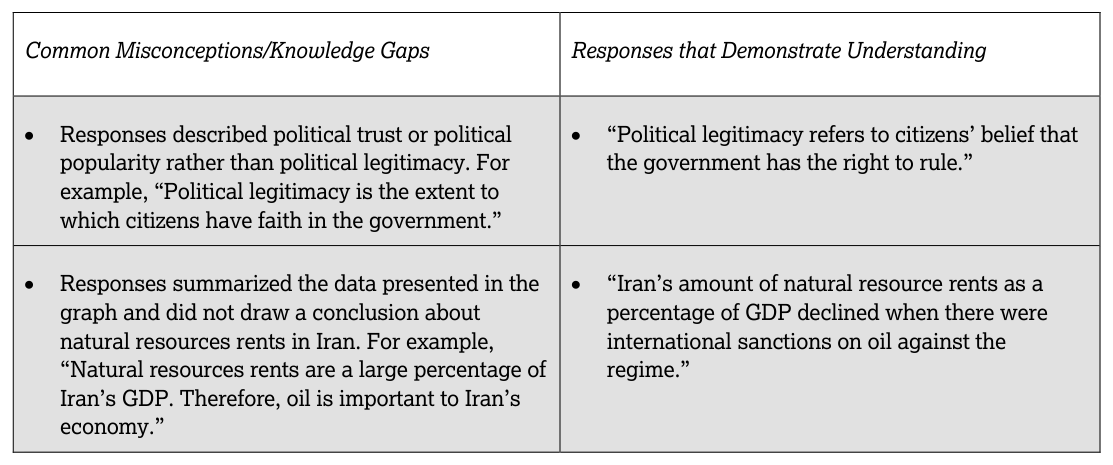
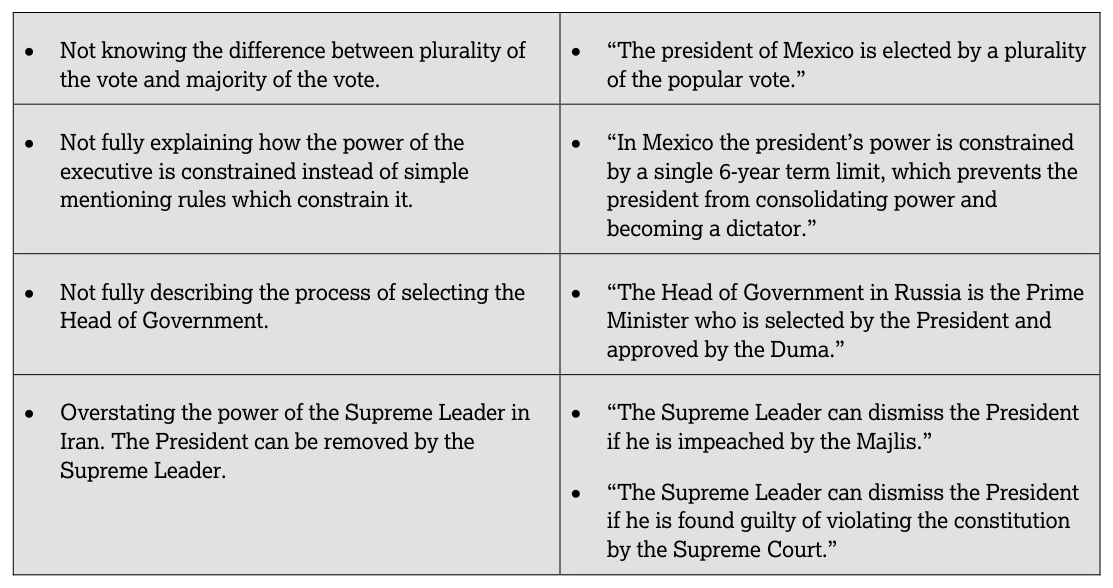
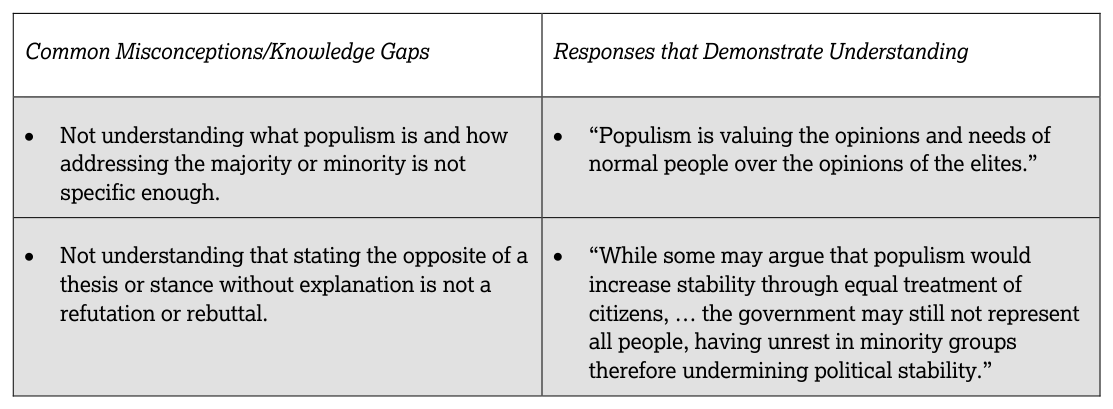
Error review: After answering, label your response with three questions: Did I define the concept precisely? Did I apply it to the facts rather than repeat the definition? Did I explain the political consequence? If one answer is no, revise that sentence before moving on.
Source Materials
- AP Comparative Government and Politics Course and Exam Description
- AP Comparative Government and Politics Course and Exam Description Clarifications and Corrections
- AP Comparative Government and Politics Course Overview
- AP Comparative Government and Politics Course at a Glance
- AP Comparative Government and Politics Course at a Glance Poster
- AP Comparative Government and Politics
- AP Comparative Government and Politics
- AP Comparative Government and Politics Sample Syllabus 1
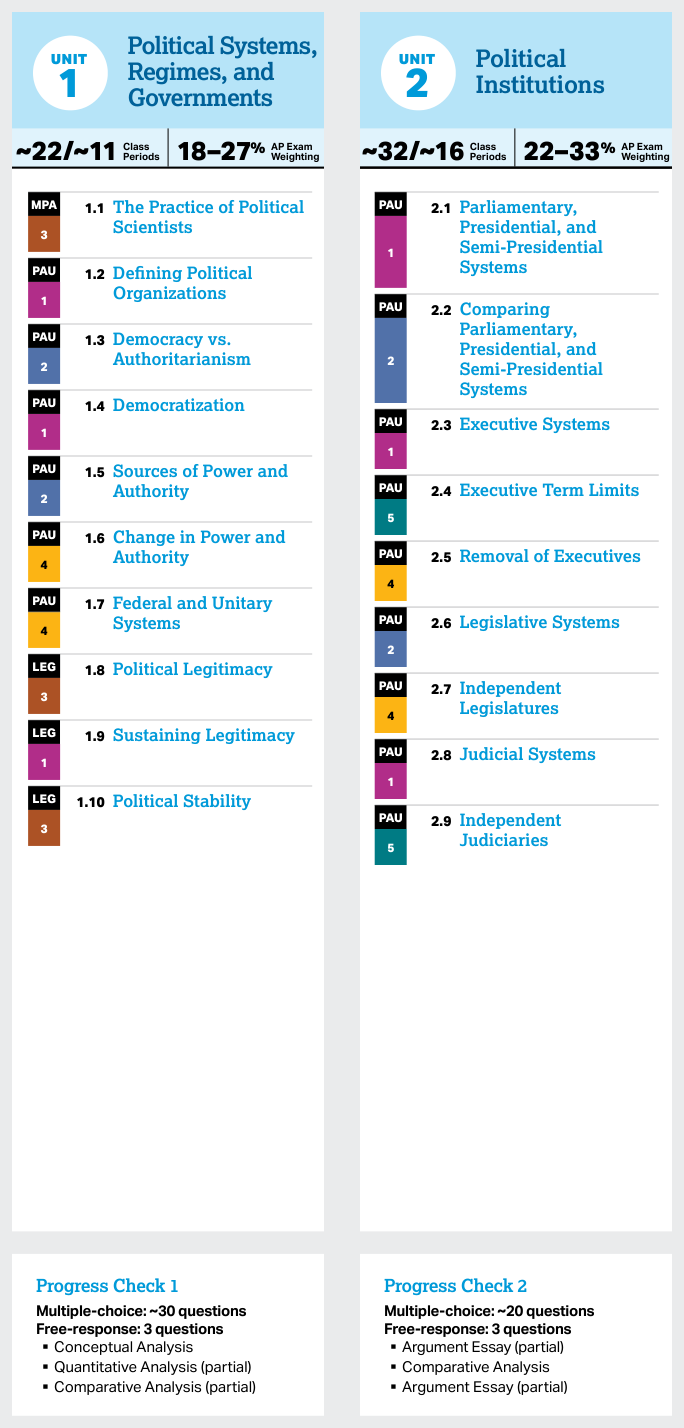
- NOTE: Partial versions of the free-response questions are provided to prepare students for more complex, full questions that they will encounter on the AP Exam. V.1 | 20
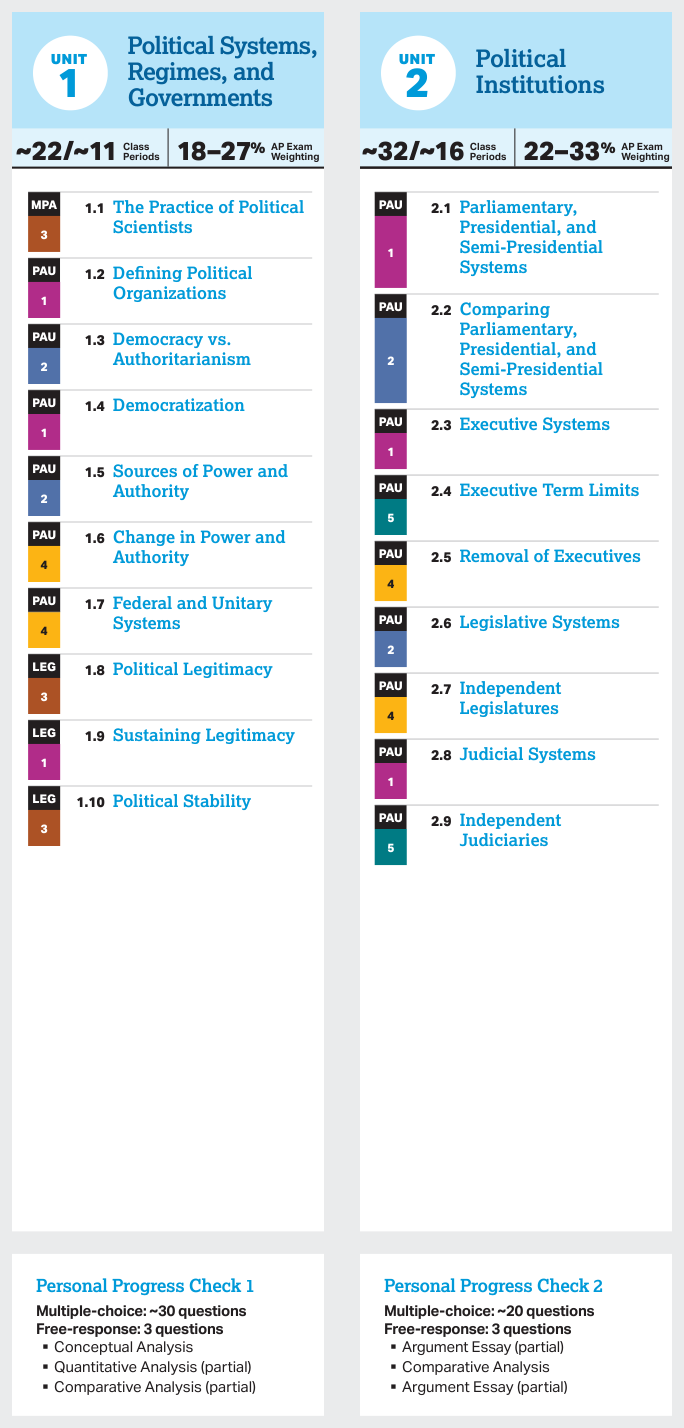
- NOTE: Partial versions of the free-response questions are provided to prepare students for more complex, full questions that they will encounter on the AP Exam.
- Based on your experience at the AP® Reading with student responses, what advice would you offer teachers to help them improve the student performance on the exam? Teachers should provide multiple oppo
- Based on your experience at the AP® Reading with student responses, what advice would you offer teachers to help them improve the student performance on the exam? Students performed well in interpreti