AP World History: Modern
Institution: MIT
167 study materials · 45 sections
AP World History: Modern students working the current College Board Course and Exam Description, including first-time students with no prior background, plus teachers reviewing the page for CED alignment.; Teach every official CED unit and every numbered topic at topic granularity.; Develop every AP skill / science-practice code explicitly and by name.; Replace description with teaching: worked contextual examples, named misconceptions, and in-flow retrieval checks.; Build an exam-practice unit covering every task type on the current exam.
Course Sections
Course Framework, Skills and Reasoning Processes
Key concepts: Course framework alignment with college-level learning · Organization of content and skills into course units · Themes as cross-cutting concepts that build and spiral conceptual understanding · Historical thinking skills · Reasoning processes · Instructional approaches for developing historical thinking and reasoning · AP Course Audit and curriculum review · Progress Checks for assessing knowledge and skills · Alignment between classroom curriculum and AP Exam tasks · Unit planning and scaffolding
Historical study combines factual knowledge with disciplined actions: students must explain why developments occurred, evaluate evidence, connect regions, and construct defensible arguments. In AP World History: Modern, content knowledge matters because it gives students something meaningful to analyze—but the…
Course Framework, Skills and Reasoning Processes
Historical study combines factual knowledge with disciplined actions: students must explain why developments occurred, evaluate evidence, connect regions, and construct defensible arguments. In AP World History: Modern, content knowledge matters because it gives students something meaningful to analyze—but the course framework determines how that analysis happens.
Historical thinking skills are the actions students perform with historical information. Reasoning processes are the logical relationships they use to organize those actions, especially comparison, causation, and continuity and change.
How the framework is organized
AP courses and exams use challenging, research-based curricula designed to align with introductory college courses. AP World History: Modern therefore combines a college-level world history textbook, diverse primary and secondary sources, thematic understanding, and repeated practice with historical reasoning. Schools design and implement their own curricula, but those curricula must develop the content understandings and skills described in the official course framework.
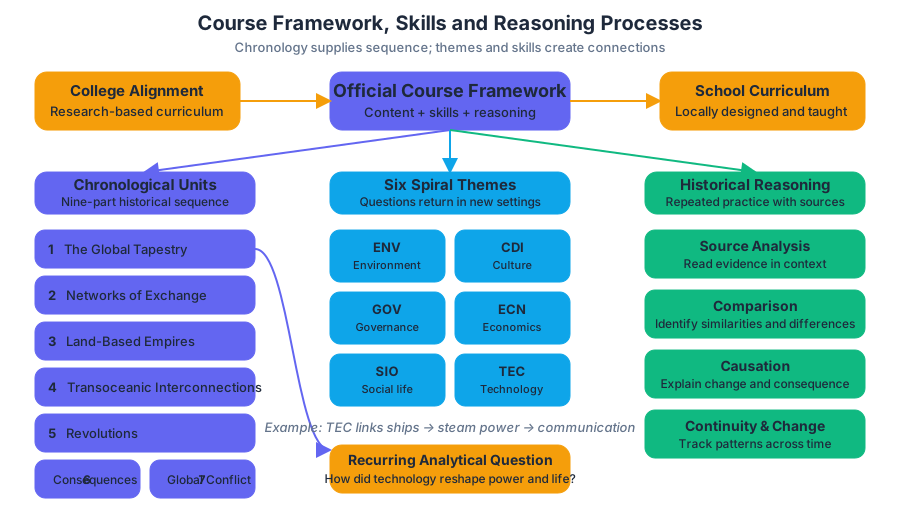
The framework organizes content into nine chronological units, moving from Unit 1: The Global Tapestry through Unit 9: Globalization. Chronology supplies the sequence; themes and skills create the connections. A student might study industrialization in Unit 5, imperialism in Unit 6, global conflict in Unit 7, and globalization in Unit 9—but the underlying questions about technology, governance, economic systems, social organization, culture, and the environment keep returning in new settings.
The six course themes are cross-cutting concepts that build understanding and spiral throughout the course:
- ENV — Humans and the Environment
- CDI — Cultural Developments and Interactions
- GOV — Governance
- ECN — Economic Systems
- SIO — Social Interactions and Organization
- TEC — Technology and Innovation
For example, TEC — Technology and Innovation can connect improved ship designs in Unit 4 to steam power in Unit 5 and communication technologies in Unit 9. The facts change, but the analytical question remains recognizable: How did a technological development alter power, exchange, or social life—and who benefited or suffered from that change?
The six historical thinking skills
Historical thinking skills describe what students should be able to do. They form the basis of tasks on AP history exams, so a successful response does more than identify a correct fact: it performs the relevant historical action.
| Code | Official skill name | What the historian does |
|---|---|---|
| 1 | Developments and Processes | Identifies and explains patterns, turning points, and relationships among historical developments. |
| 2 | Sourcing and Situation | Explains how a source’s point of view, purpose, audience, or historical situation affects its meaning or usefulness. |
| 3 | Claims and Evidence in Sources | Describes and evaluates claims made by sources and uses evidence to support, qualify, or challenge them. |
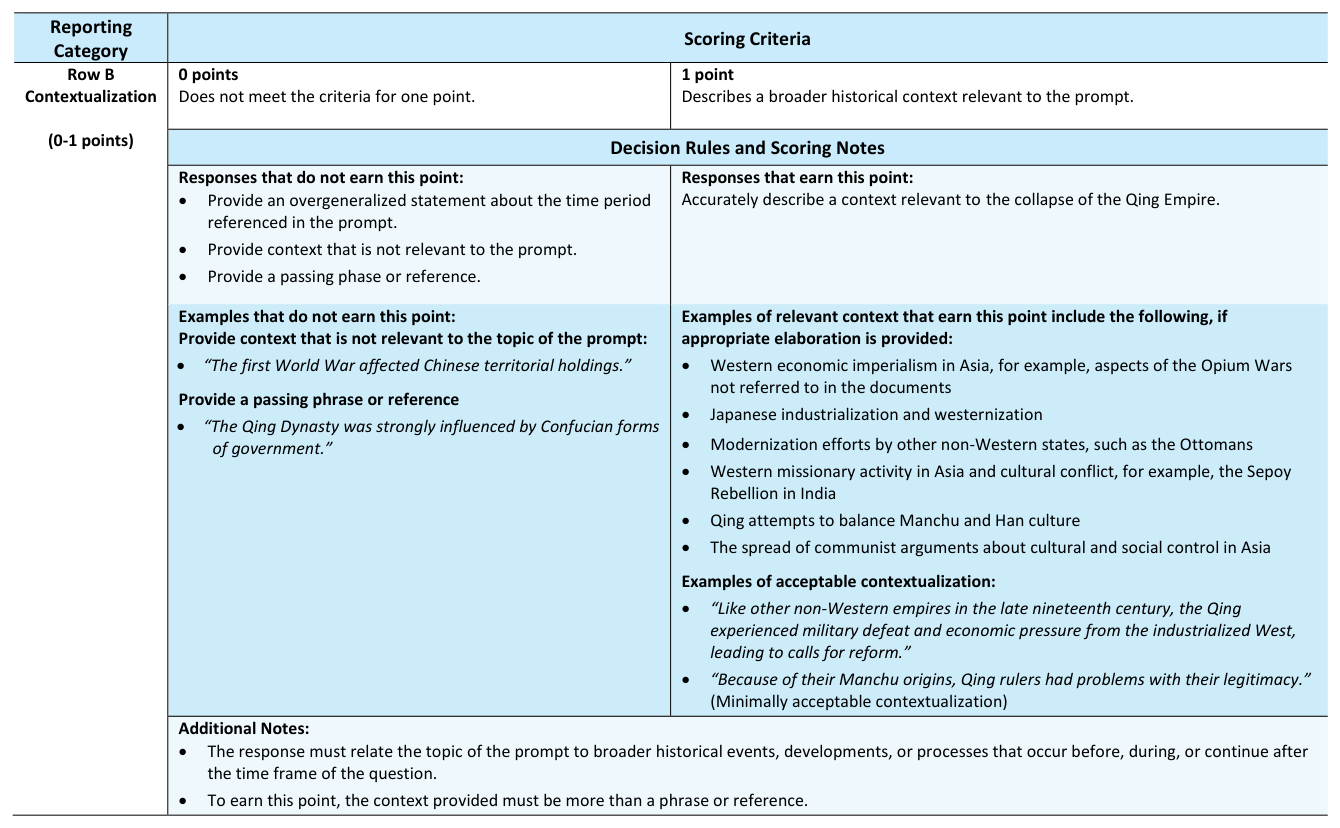
| 4 | Contextualization | Connects a historical development to broader events, conditions, or processes in the same period. |
| 5 | Making Connections | Connects developments through comparison, causation, or continuity and change. |
| 6 | Argumentation | Develops a defensible claim and supports it with relevant evidence and reasoning. |
Consider a merchant’s account describing trade across the Indian Ocean. Skill 2: Sourcing and Situation asks who wrote it, for whom, and under what circumstances. Skill 3: Claims and Evidence in Sources asks what the account actually claims and whether its details support that claim. Skill 4: Contextualization places the account within larger patterns of monsoon navigation, commercial exchange, and cultural interaction. Skill 6: Argumentation turns those observations into a defensible historical explanation.
Reasoning processes: the relationships between facts
The principal reasoning processes are comparison, causation, and continuity and change over time. Comparison asks what two societies or developments shared and how they differed. Causation distinguishes causes from consequences and weighs immediate factors against longer-term conditions. Continuity and change asks what persisted, what transformed, and why the balance shifted.
A weak comparison says, “Both empires used armies.” A stronger one explains that both expanded through military force but differed in administration: one might rely more heavily on local intermediaries, while another centralizes authority through officials, taxation, or religious legitimacy. The reasoning—not the number of examples—is what makes the connection historical.
Planning, teaching, and assessing skills
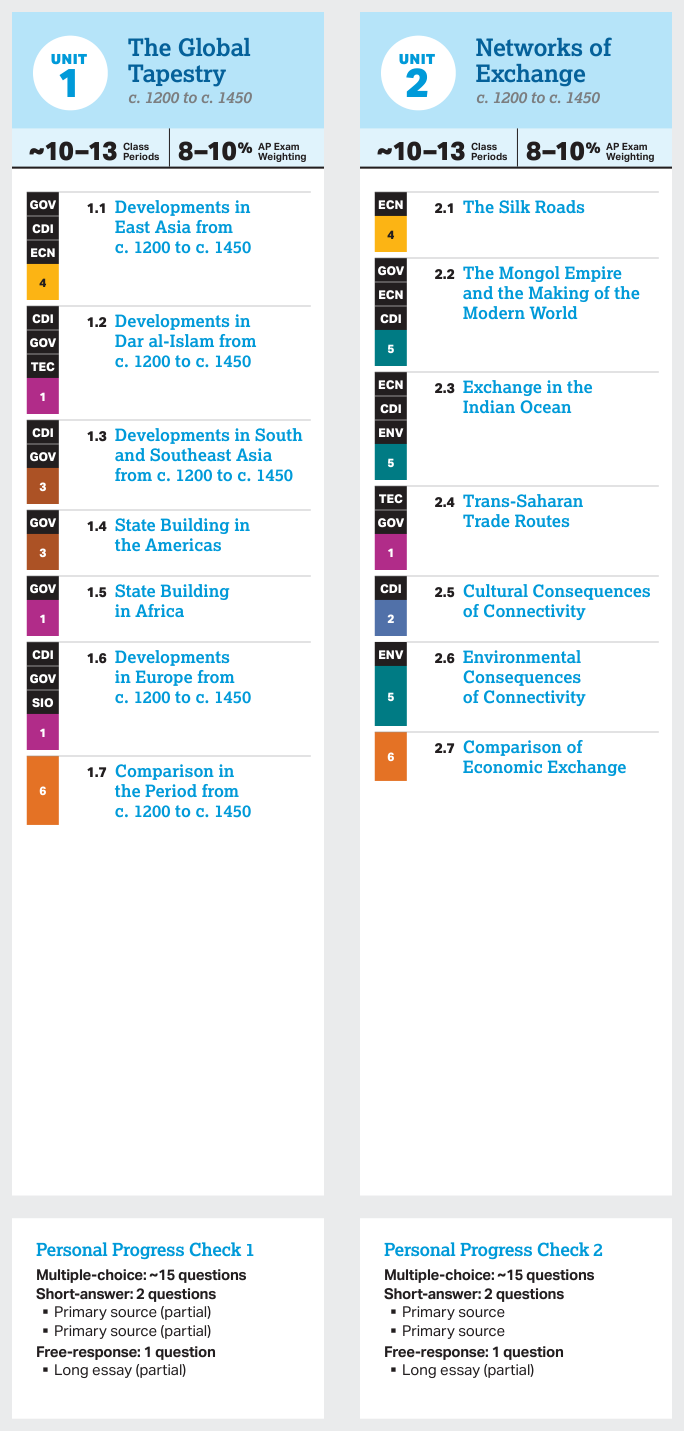
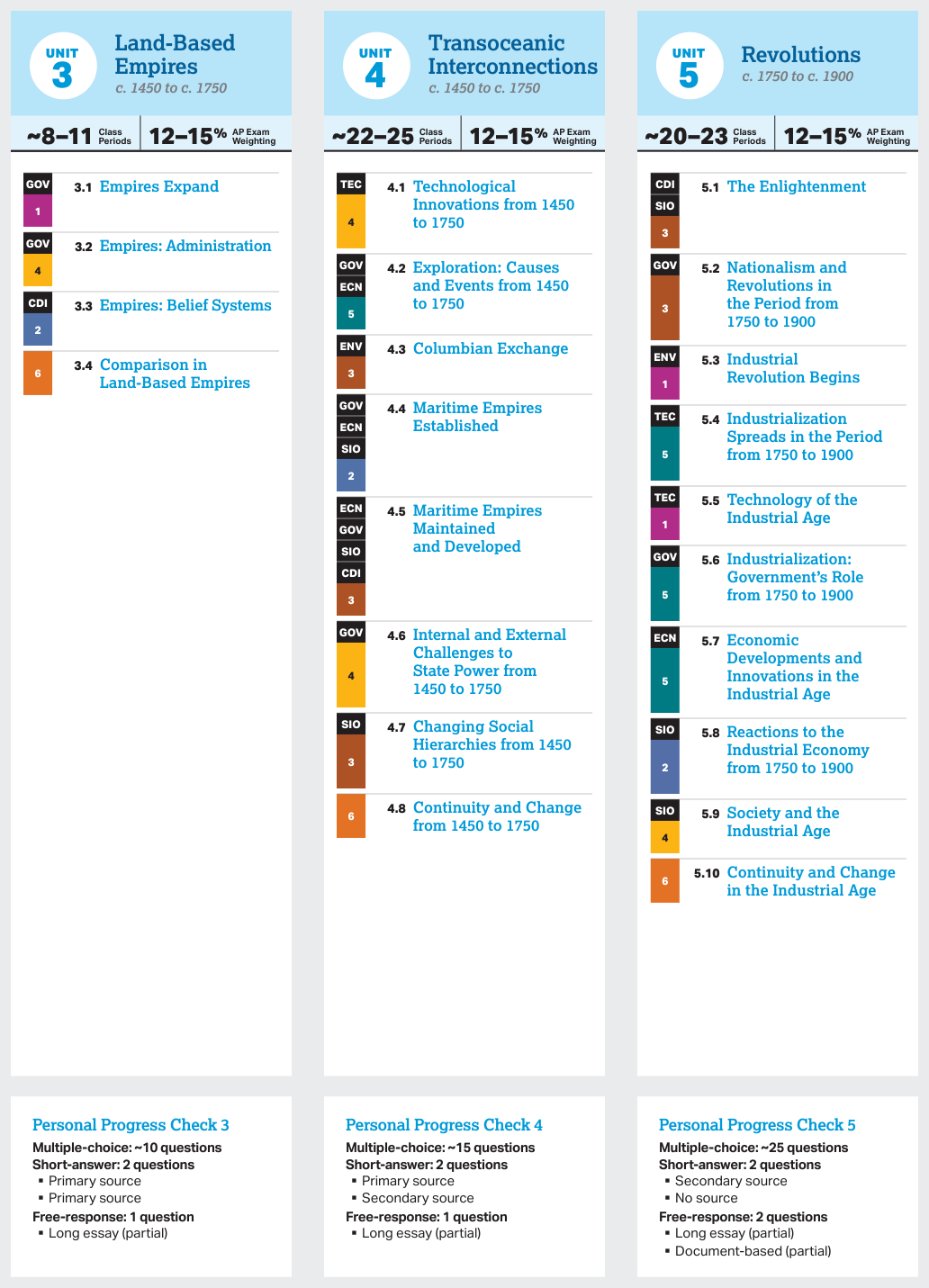
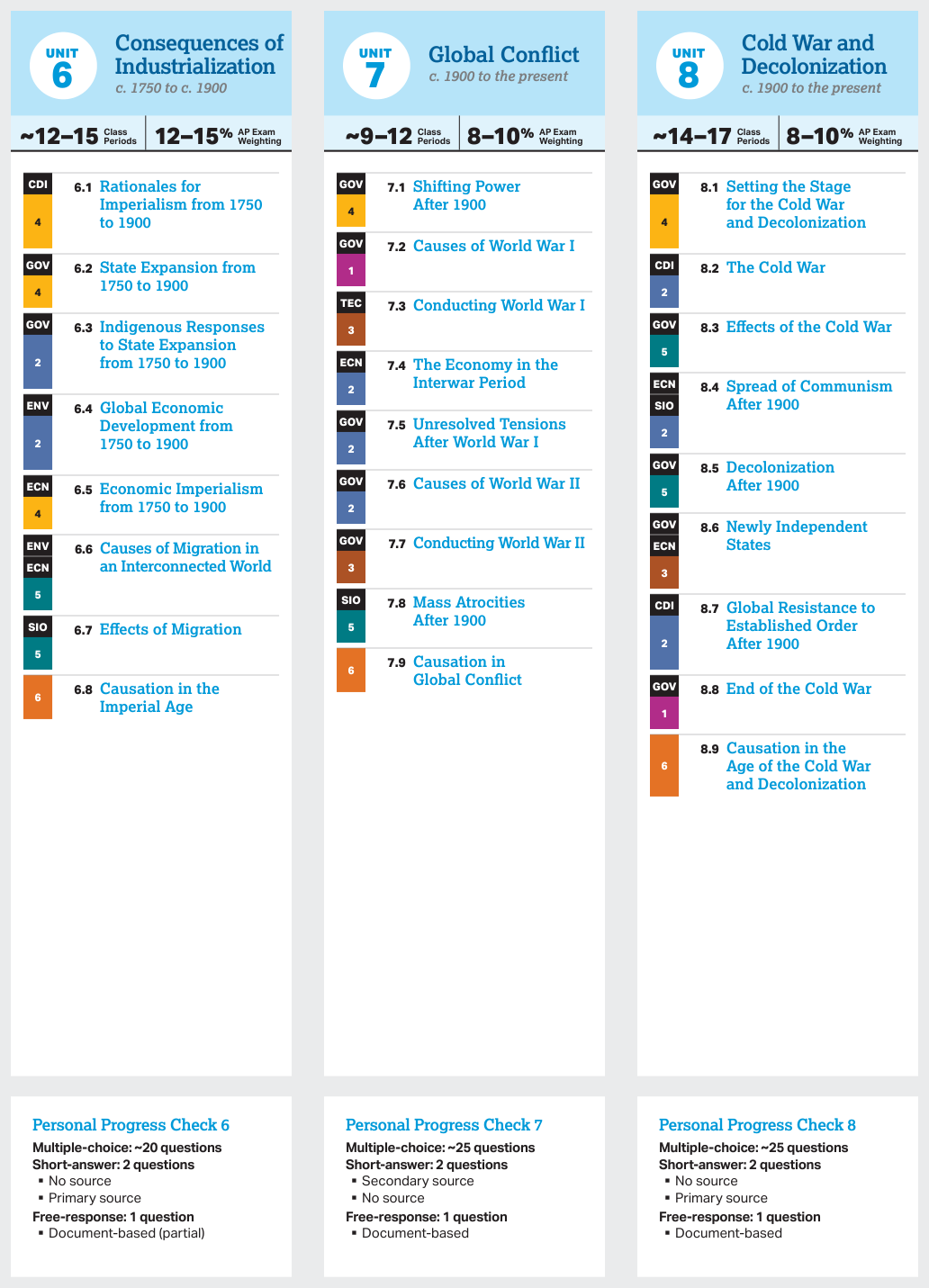
The Instructional Approaches section emphasizes two connected tasks: developing historical thinking skills and developing reasoning processes. Teachers can use each Unit at a Glance table to identify related topics, themes, skills, pacing, and assessments, then plan instruction that teaches content and its associated skill together rather than postponing skills until exam review.
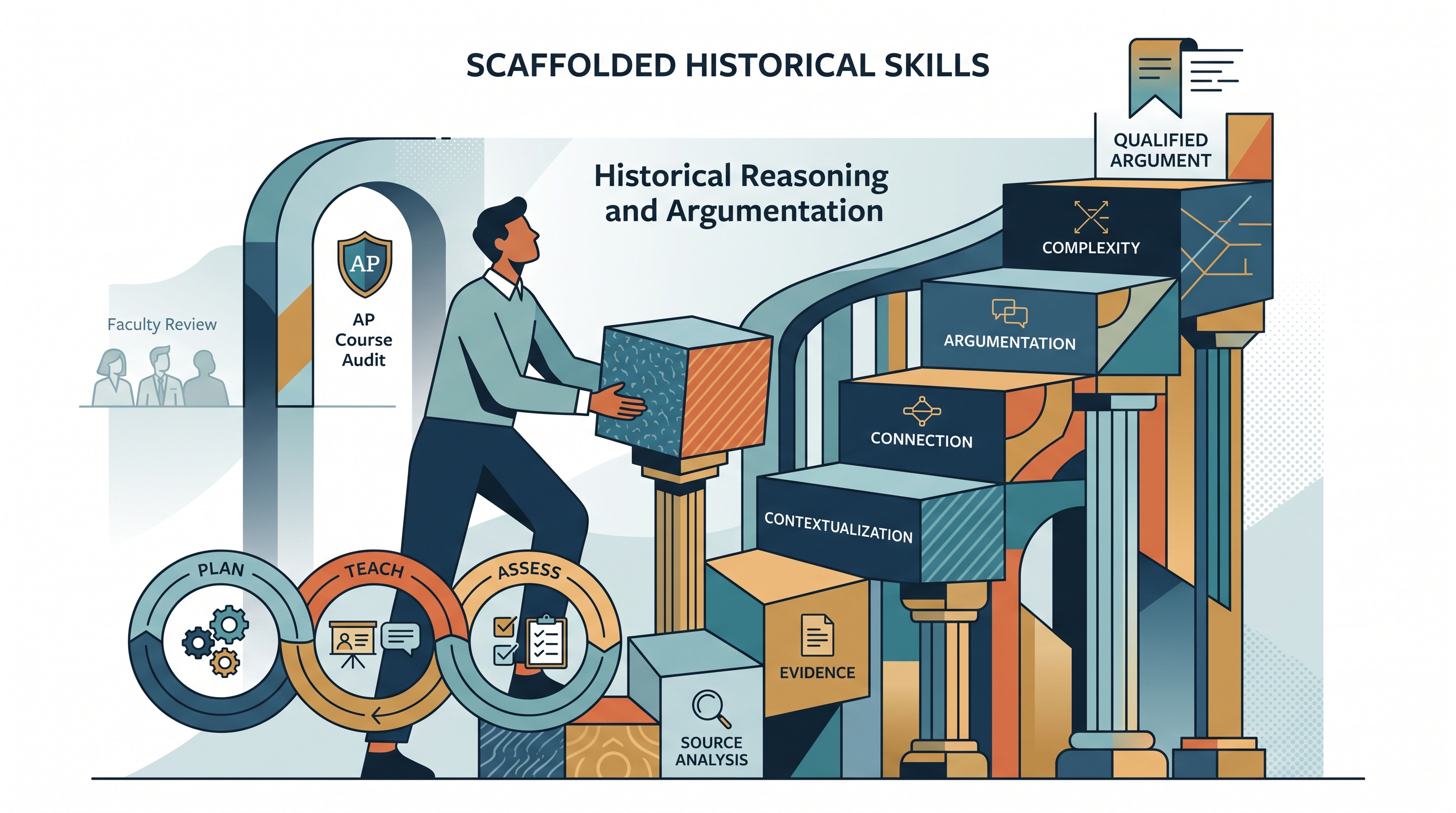
Scaffolding makes difficult historical work manageable. A teacher might first model sourcing a single document, then provide a checklist for students, then ask students to source unfamiliar documents independently. The same gradual release can support argumentation: identify a claim, select evidence, explain the evidence, and finally qualify the argument by acknowledging complexity or limits.
Instruction works best as a cycle:
- Plan: Use unit guides and Unit at a Glance tables to align required topics, themes, skills, scaffolds, and materials.
- Teach: Integrate content with source analysis, contextualization, connections, and argumentation.
- Assess: Use Progress Checks, including multiple-choice questions with rationales and free-response questions with scoring information; review results and address misunderstandings.
The AP Course Audit reviews teachers’ course materials through college faculty review. It checks for college-level resources, diverse historical sources, required course content and themes, and opportunities to develop all six historical thinking skills. In practice, the audit reinforces the central principle of the framework: rigorous historical knowledge and rigorous historical reasoning must be taught together.

1.1 Developments in East Asia · 1.2 Developments in Dar al-Islam
Key concepts: Developments in East Asia · Developments in Dar al-Islam · Chinese cultural traditions and their effects on East Asia · Intellectual innovation in Dar al-Islam · Rise of Islamic states · Cultural developments and interactions · Spread of Hinduism and Buddhism into Southeast Asia · Fragmentation of the Abbasid Caliphate · Turkic-dominated Islamic political entities · Continuity, innovation, and cultural transfers
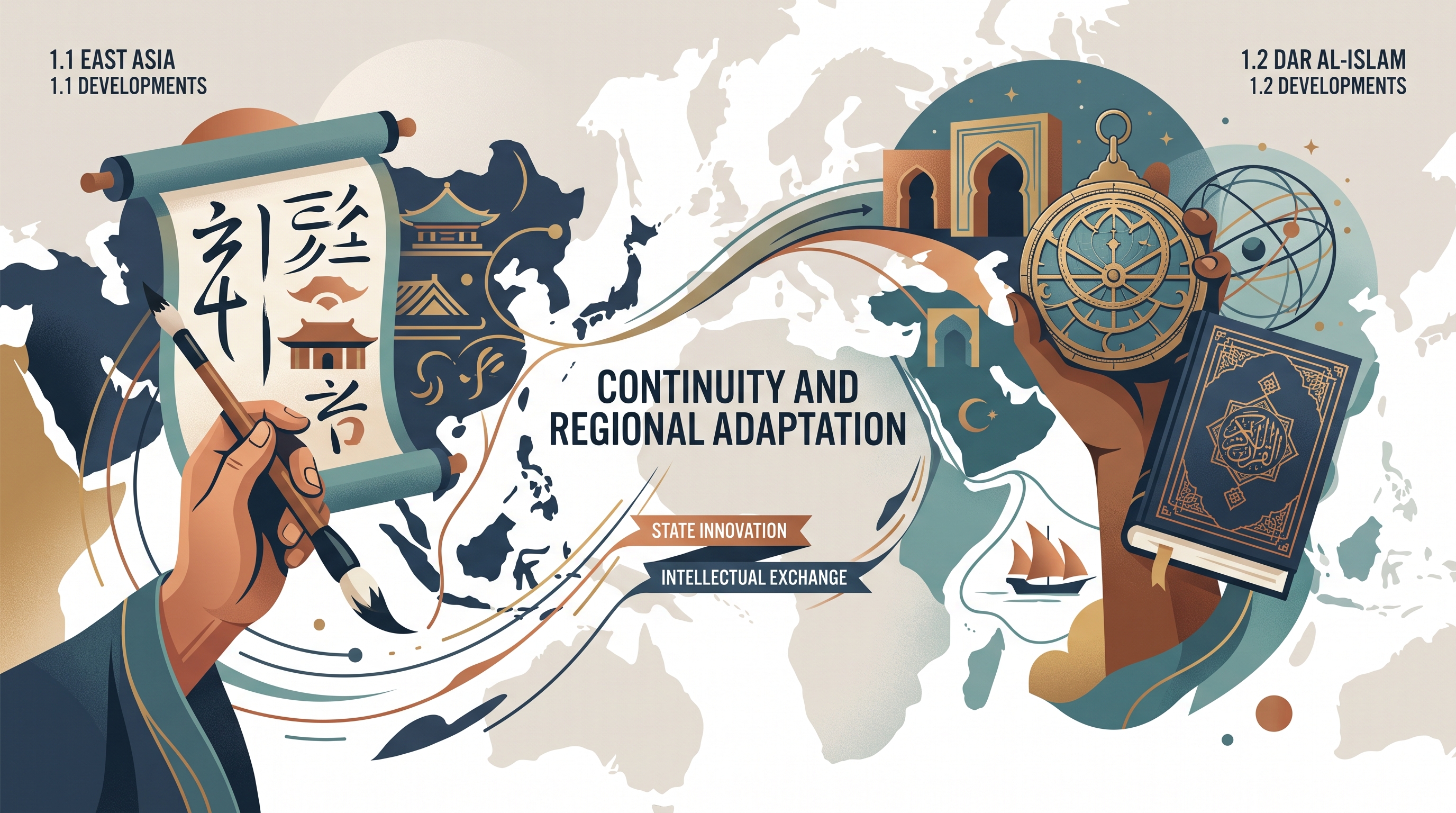
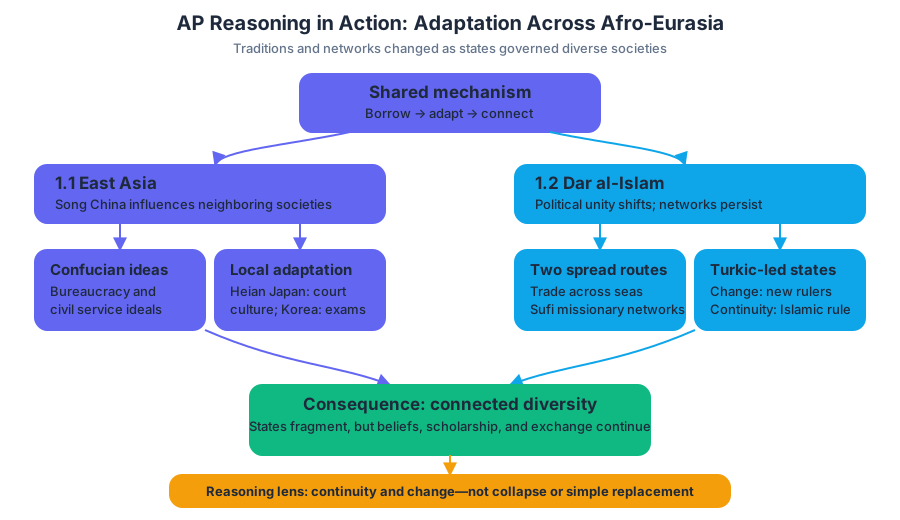
Between approximately $1200$ and $1450$, two large cultural worlds changed through a similar process: older traditions remained powerful, but they were repeatedly adapted to new political and social conditions.
1.1 Developments in East Asia · 1.2 Developments in Dar al-Islam
Between approximately $1200$ and $1450$, two large cultural worlds changed through a similar process: older traditions remained powerful, but they were repeatedly adapted to new political and social conditions. In East Asia, Chinese traditions shaped neighboring societies without making them identical to China. In Dar al-Islam—the interconnected lands where Islam formed a major religious and cultural framework—political fragmentation produced new states while intellectual exchange continued across Afro-Eurasia.
Chinese traditions beyond China
The Tang and Song dynasties provided the most important political and cultural context for East Asia. Chinese influence traveled through government institutions, education, literature, religious practice, and family ideals. Filial piety, the expectation that children respect and support parents and ancestors, reinforced family hierarchy and helped connect household discipline to broader political obedience.
KC-3.1.III.D.i identifies the continuity of Chinese cultural traditions and their influence on neighboring regions. Korea adopted Chinese-style bureaucratic and scholarly practices while maintaining its own political identity. In Heian Japan, Chinese literary and scholarly traditions influenced court culture, writing, and administration, but Japanese elites selectively adapted them rather than simply copying China.
Confucian traditions also shaped gender expectations. They emphasized respect for women within the family while often requiring women’s deference to male relatives. This combination matters: “respect” did not necessarily mean equality. Neo-Confucianism—an intellectual revival and reinterpretation of Confucian teachings—strengthened family hierarchy and social discipline, while Buddhism continued to shape Asian societies through multiple branches, schools, and practices, including Theravada, Mahayana, and Tibetan Buddhism (KC-3.1.III.D.ii).
Key distinction: Cultural influence is not the same as political control. Korea and Japan could borrow Chinese institutions and ideas while remaining independent states.
Worked example — explaining change and continuity: Suppose a prompt asks why Chinese traditions affected both Korea and Japan but produced different outcomes. Begin with the shared cause: China’s prestige, written traditions, and bureaucratic model made its institutions attractive. Then show different effects: Korea adopted more direct Confucian and bureaucratic patterns, while Japan adapted Chinese learning to a distinct court and political system. The strongest explanation connects shared cultural influence to local adaptation.
The fragmentation and rise of Islamic states
The Abbasid Caliphate once symbolized a broad Islamic political order, but its authority fragmented over time. As central control weakened, new Islamic political entities emerged, most of them dominated by Turkic peoples (KC-3.2.I). Nomadic Turkic groups maintained military and political dominance in the Middle East and Central Asia because their mobile cavalry forces could conquer territory and because rulers recruited Turkic soldiers and commanders into state service.
The rise of Islamic states resulted from more than conquest. KC-3.1.III.A emphasizes military expansion, but Islam also spread through merchants, missionaries, and Sufis—Muslim mystics whose teachers and networks attracted converts. New states therefore combined continuity with innovation: they preserved Islamic beliefs, law, and political legitimacy while incorporating Turkic military leadership, Persian administrative traditions, and local customs.
Islam, Judaism, and Christianity continued to shape societies in Africa and Asia (KC-3.1.III.D.iii). Dar al-Islam was not a single uniform society; it was a connected cultural zone containing diverse languages, ethnic groups, political systems, and interpretations of religious practice. Interaction among these communities helped states govern plural populations and connected distant intellectual centers.
Intellectual innovation in Dar al-Islam
States and empires in Dar al-Islam encouraged significant intellectual innovations and transfers. Scholars preserved, translated, criticized, and extended knowledge from Greek, Persian, Indian, and other traditions. Advances associated with mathematics, medicine, astronomy, and philosophy moved through scholarly and commercial networks, making Dar al-Islam a major zone of intellectual exchange (Unit 1: Learning Objective F; KC-3.2.II.A.i).
The causal chain is precise: political and economic centers supported scholars; scholars gathered and translated texts; institutions and networks circulated ideas; those ideas improved calculation, medical understanding, navigation, and administration. Intellectual innovation was therefore not isolated “genius”—it depended on patronage, cities, libraries, and cross-cultural contact.
AP reasoning in action
This topic most directly develops Skill 1: Developments and Processes by tracing how traditions or states changed over time; Skill 3: Claims and Evidence in Sources by using examples such as Heian Japan, Korea, Turkic-led states, and Sufi networks; Skill 4: Contextualization by connecting the Song and Abbasid settings to wider Afro-Eurasian exchange; and Skill 5: Making Connections through comparison, causation, and continuity and change. A successful response does not merely list facts: it explains a mechanism and its consequences.
Misconception check: “The Abbasid collapse ended Islamic civilization.” Incorrect. Political unity declined, but cultural and intellectual activity continued through new, diverse states. Fragmentation changed who governed; it did not erase the networks, beliefs, scholarship, or interactions that connected Dar al-Islam.
Retrieval check: Name one Chinese tradition that influenced East Asia, one way local societies adapted it, and two routes through which Islam spread. Then explain in one sentence why the rise of Turkic-led states represents both continuity and change.
1.3 Developments in South and Southeast Asia · 1.4 State Building in the Americas
Key concepts: State building · Governance · Continuity and change · Causation · South and Southeast Asian states · Song Dynasty of China · Confucianism · Imperial bureaucracy · State systems in the Americas · State systems in Africa
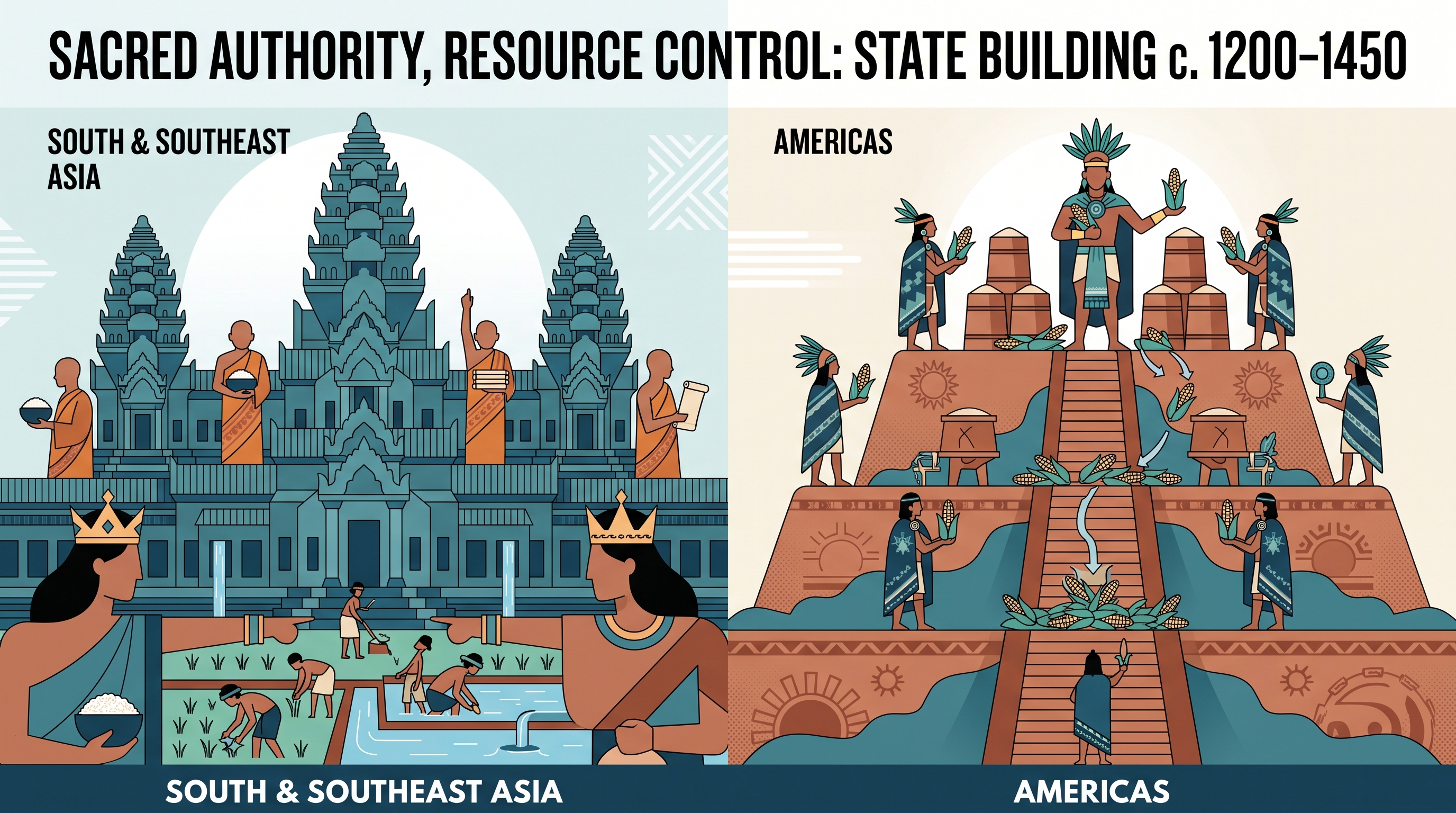
Between c. 1200 and c. 1450, states in South and Southeast Asia built power by adapting older religious traditions to new political circumstances, while American societies created powerful urban and regional systems without reproducing Eurasian models.
1.3 Developments in South and Southeast Asia · 1.4 State Building in the Americas
Between c. 1200 and c. 1450, states in South and Southeast Asia built power by adapting older religious traditions to new political circumstances, while American societies created powerful urban and regional systems without reproducing Eurasian models. The key question is not whether one region was “more advanced,” but how different societies obtained, retained, and exercised authority.
State building is the process by which a political community creates institutions, organizes people and resources, and establishes authority over territory.
Hindu and Buddhist states: adaptation rather than simple replacement
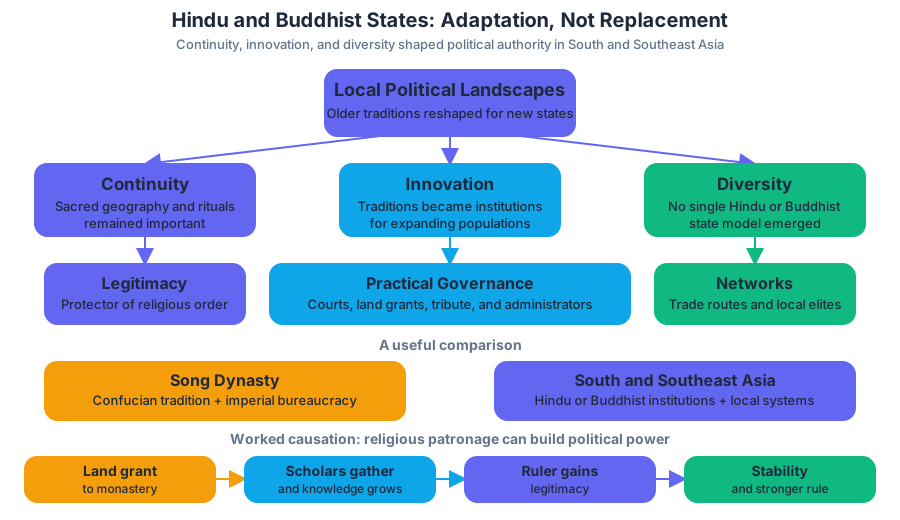
New Hindu and Buddhist states emerged in South and Southeast Asia, demonstrating the CED theme of continuity, innovation, and diversity (KC-3.2.I.B.i). Continuity appeared when rulers drew on established religious ideas, rituals, sacred geography, and social practices. Innovation appeared when leaders reshaped those traditions into institutions that could govern expanding populations. Diversity appeared because Hindu and Buddhist political systems did not produce one uniform state model.
Rulers used religion as one source of political legitimacy—the perceived right to rule—but legitimacy depended on more than belief alone. Temples, monasteries, courts, land grants, tribute, military power, and control of trade routes connected spiritual authority to practical governance. A ruler could present himself as a protector of religious order while also using administrators and local elites to collect revenue and maintain stability.
A useful comparison is with the Song Dynasty: the Song maintained authority by combining inherited Confucian traditions with an imperial bureaucracy, whereas South and Southeast Asian rulers adapted Hindu or Buddhist institutions to local political landscapes. The comparison shows continuity in the use of older traditions, but also innovation in the institutions built around them.
Worked example — explaining causation: Suppose a ruler patronizes a major Buddhist monastery and grants it land. The immediate action is religious patronage, but its political effects may include attracting scholars, legitimizing the ruler, organizing agricultural production, and linking the state to regional networks. A strong historical explanation therefore connects belief system → institution → political result, rather than merely stating that the ruler was Buddhist.
State systems in the Americas
American societies also demonstrated continuity, innovation, and diversity in state formation (KC-3.2.I.B.ii). Their political systems developed through local environmental conditions, agricultural production, warfare, trade, religious authority, and relationships among cities and surrounding communities. They should not be treated as isolated “exceptions” to world history: like states elsewhere, they created mechanisms for organizing labor, distributing resources, and exercising power.
Cahokia illustrates this process. Located near present-day St. Louis, Cahokia was a large Mississippian urban center whose monumental earthen mounds, population concentration, agricultural base, and regional influence reveal organized authority. Its power did not depend on copying a Chinese-style bureaucracy or a European monarchy; it rested on institutions and cultural practices suited to its own environment and society.
This example clarifies the difference between a state system and a familiar state form. A state system may govern through cities, tribute, religious centers, kinship networks, military alliances, or administrative officials. The important historical evidence is what the system could do: mobilize labor, support food production, construct monumental works, regulate exchange, and maintain hierarchy.
Governance across regions: the analytical pattern
States obtained, retained, and exercised power for different purposes. Some rulers emphasized religious legitimacy; others prioritized taxation, military expansion, commercial control, or social order. Imperial expansion required more than conquest: rulers had to incorporate diverse populations through institutions and policies such as tribute systems, local administration, religious patronage, law, and cultural accommodation.
African state systems, like those in Eurasia and the Americas, likewise demonstrated continuity, innovation, and diversity. This comparison prevents a common error: treating “state building” as a single path that all societies supposedly followed. The broader pattern is variation in methods, not absence of political organization.
Change across the period
The arrival of European domesticated animals—including horses, pigs, and cattle—in the Americas, and the movement of foods by African enslaved persons, belong primarily to the later era of transoceanic interconnection. They are important because they show how state systems and societies could be transformed by external biological and economic exchanges: animals altered transportation, warfare, agriculture, and labor, while food transfers reshaped diets and environments.
Misconception check — “religion alone explains political power.” Religious traditions could strengthen legitimacy, but states also required resources, institutions, labor, and enforcement. A better claim explains how a belief system interacted with governance—for example, how religious centers could support authority by organizing land, knowledge, or loyalty.
Skill application: 4.A Contextualization places Hindu, Buddhist, and American state formation within the wider period of intensified state development from c. 1200 to c. 1450. 5.A Identify patterns of continuity and change distinguishes the continued use of older religious traditions from new political institutions. 5.B Explain patterns of continuity and change shows why those traditions remained useful while states adapted them. 5.C Explain how historical developments relate to one another connects religious legitimacy, administration, economic resources, and imperial expansion. For an argument, 6.A Develop a thesis and 6.B Support an argument require a defensible comparison supported by specific evidence such as Cahokia, Hindu and Buddhist states, and Song governance.
Retrieval check: Which claim is more historically defensible, and why?
A. “Hindu and Buddhist states were religious states, while Cahokia was not.”
B. “South and Southeast Asian states and Cahokia used different institutions, but both connected cultural legitimacy and resource organization to political authority.”
Choose one, then support it with two specific pieces of evidence and explain the causal link between each piece of evidence and the state’s ability to retain power.
1.5 State Building in Africa · 1.6 Developments in Europe
Key concepts: State building in Ethiopia · Swahili Coast city-states and merchant settlement · Spread of Islam across Eurasia and Africa · Ottoman Empire in Southern Europe, the Middle East, and North Africa · Safavid Empire in the Middle East · Industrialization in Europe · European colonialism in Africa · Civilizing mission and Social Darwinism · Railways and new communication technologies in Africa · European-Muslim interactions and exploration
A state can grow from two very different foundations: Ethiopia built political authority around a durable Christian kingdom, while the Swahili Coast developed through commercially connected city-states whose power depended on merchants, ports, and Indian Ocean exchange.
1.5 State Building in Africa · 1.6 Developments in Europe
A state can grow from two very different foundations: Ethiopia built political authority around a durable Christian kingdom, while the Swahili Coast developed through commercially connected city-states whose power depended on merchants, ports, and Indian Ocean exchange. Across both regions, religion and long-distance interaction helped shape political life.
1.5 State Building in Africa
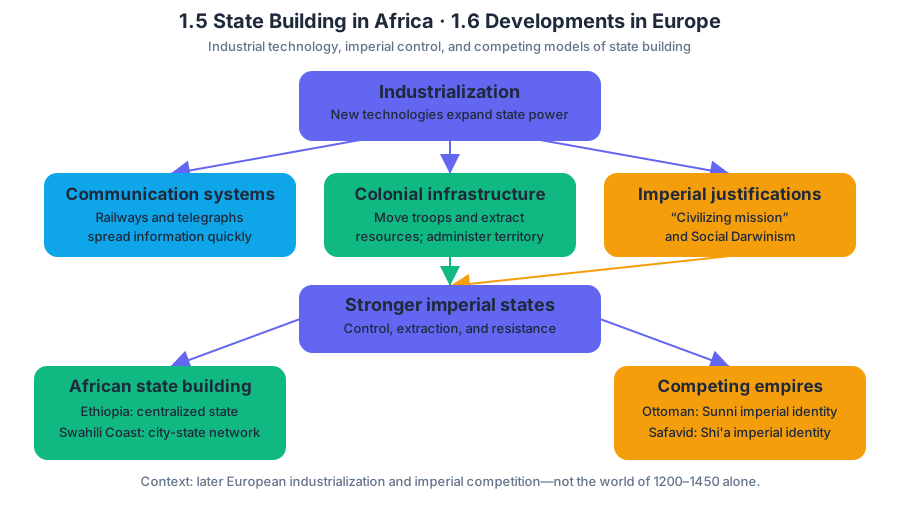
Ethiopia is an example of African state building in which Christianity supported both political identity and royal authority. The Church of St. George at Lalibela, carved from living rock, illustrates how religious architecture could express the strength, resources, and distinctiveness of a state.
The Swahili Coast of East Africa followed a different pattern. Rather than one unified empire, it contained independent or semi-independent city-states, including port settlements whose wealth came from commercial exchange across the Indian Ocean. Merchants settled in these cities, linking African communities with Arabia, Persia, India, and other regions.
The Swahili cities were not simply “foreign trading posts.” Their culture emerged from sustained interaction: African languages and customs combined with Islamic religious influence and commercial practices from across the Indian Ocean. This makes the coast a region shaped by cross-cultural commercial interaction, not a place where one civilization merely replaced another.
Islamic networks and African state building
The early Islamic conquests spread Islam across Eurasia and Africa, creating a large religious and commercial zone. Islam moved through conquest in some areas and through merchants, scholars, rulers, and urban communities in others. On the Swahili Coast, conversion connected local elites and merchants to wider networks of law, literacy, pilgrimage, and trade.
A useful synthesis is that Ethiopia, the Swahili city-states, and Islamic networks connected religion to state formation in different ways. Ethiopia used Christian institutions to reinforce a territorial kingdom; Swahili rulers used port-city wealth and commercial relationships; Islamic networks provided a wider cultural system through which African states and cities could participate in Afro-Eurasian exchange.
Misconception check: Islam did not spread across Africa only through military conquest. The early conquests created an important political foundation, but merchants, migration, scholarship, and urban trade also carried Islam into new communities.
1.6 Developments in Europe
Europe in this period was politically fragmented, but the Christian churches—especially Catholic, Orthodox, and later Protestant churches—held major social and political power. Churches shaped education, law, public rituals, architecture, and ideas about legitimate authority. Interactions among Europe, Africa, and the Muslim world also intensified through trade, diplomacy, conflict, and intellectual exchange.
The Ottoman Empire demonstrates how an expanding land empire connected several regions. It expanded into Southern Europe, the Middle East, and North Africa, bringing diverse peoples and religious communities under one imperial structure. The Safavid Empire, centered in the Middle East, likewise became a major regional power; political and religious disputes between the Ottomans and Safavids produced rivalry and conflict.
Europe, technology, and exploration
Interactions between Europe and the Muslim world facilitated early European exploration. Europeans gained access to navigational knowledge, geographic information, commercial goods, and technologies that circulated through Muslim-controlled or Muslim-connected regions. Exploration therefore developed from cross-cultural contact as well as from European political and economic ambitions.
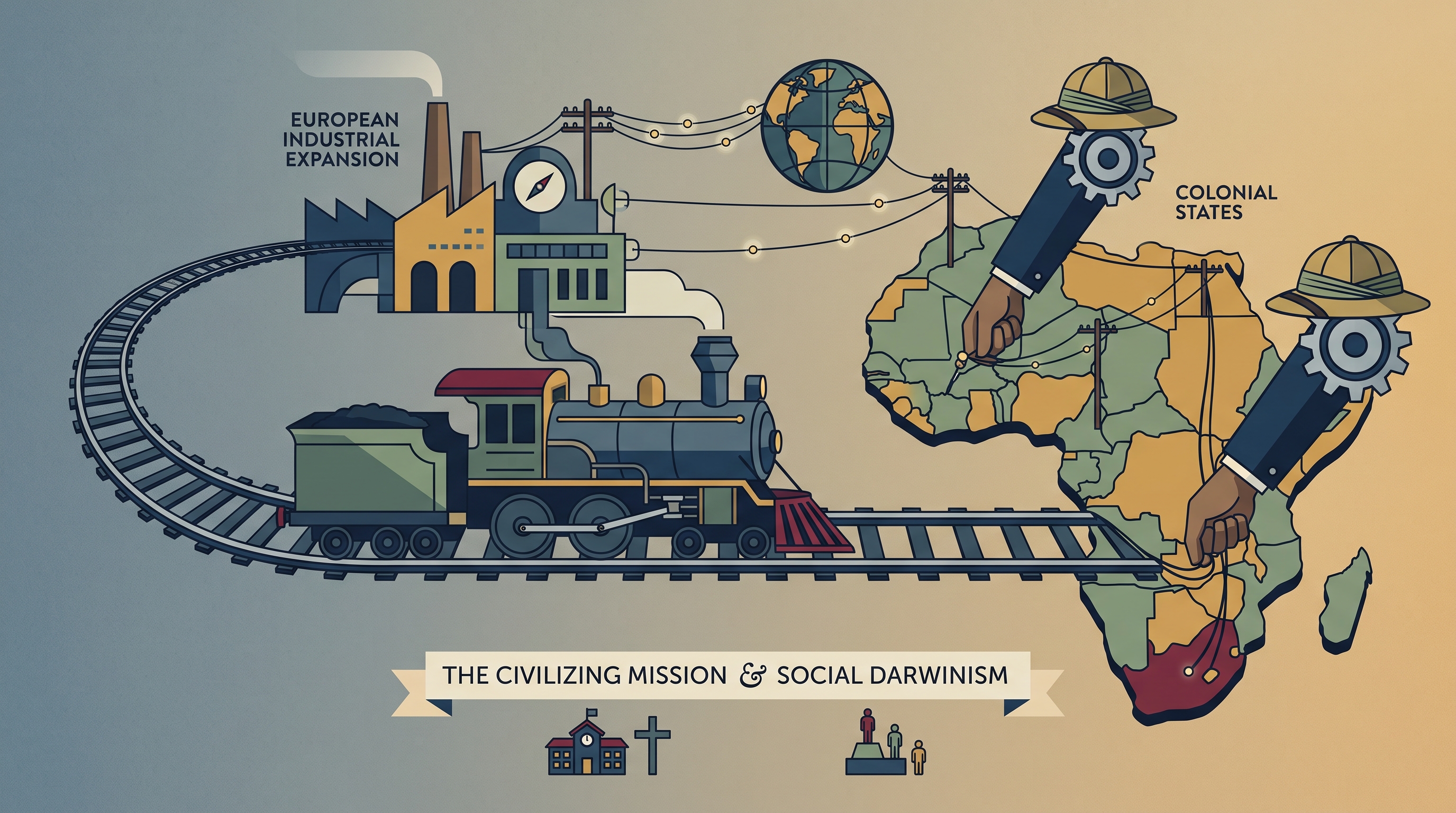
Industrialization in Europe belongs mainly to the later period after the eighteenth century, so it should not be projected backward into the years around $1200$–$1450$. Its later effects nevertheless matter for African history: industrialization helped spread new technologies, and European colonial states used railways, telegraphs, and other communication systems to strengthen control in Africa.
Some Europeans justified colonial expansion through the civilizing mission, the belief that Europeans had a duty to reshape other societies, and Social Darwinism, the misuse of evolutionary language to rank human societies and rationalize imperial domination. These ideas encouraged colonial governments to build infrastructure not simply for African communities, but to move troops, extract resources, administer territory, and expand European power.
Skill connection — 4.A Contextualization: Place a development in its broader historical setting. For example, railways in colonial Africa make sense only when connected to later European industrialization, imperial competition, and racial ideologies—not to the political conditions of $1200$–$1450$ alone.
Retrieval check: Why is Ethiopia a different state-building example from the Swahili Coast? Then explain how the Ottoman and Safavid empires show that religious and political disputes could strengthen imperial identity while also producing interstate conflict.
1.7 Comparison in the Period from c. 1200 to c. 1450
Key concepts: Political fragmentation in medieval Europe · Serfdom · Monarchical power and military assistance · Mongol expansion and its effects on Europe · Cross-cultural interactions · Diffusion of technologies through exchange networks · Long-distance trade routes and environmental knowledge · Diffusion of crops and pathogens · Bubonic plague · Social hierarchy and sovereign authority in Japan
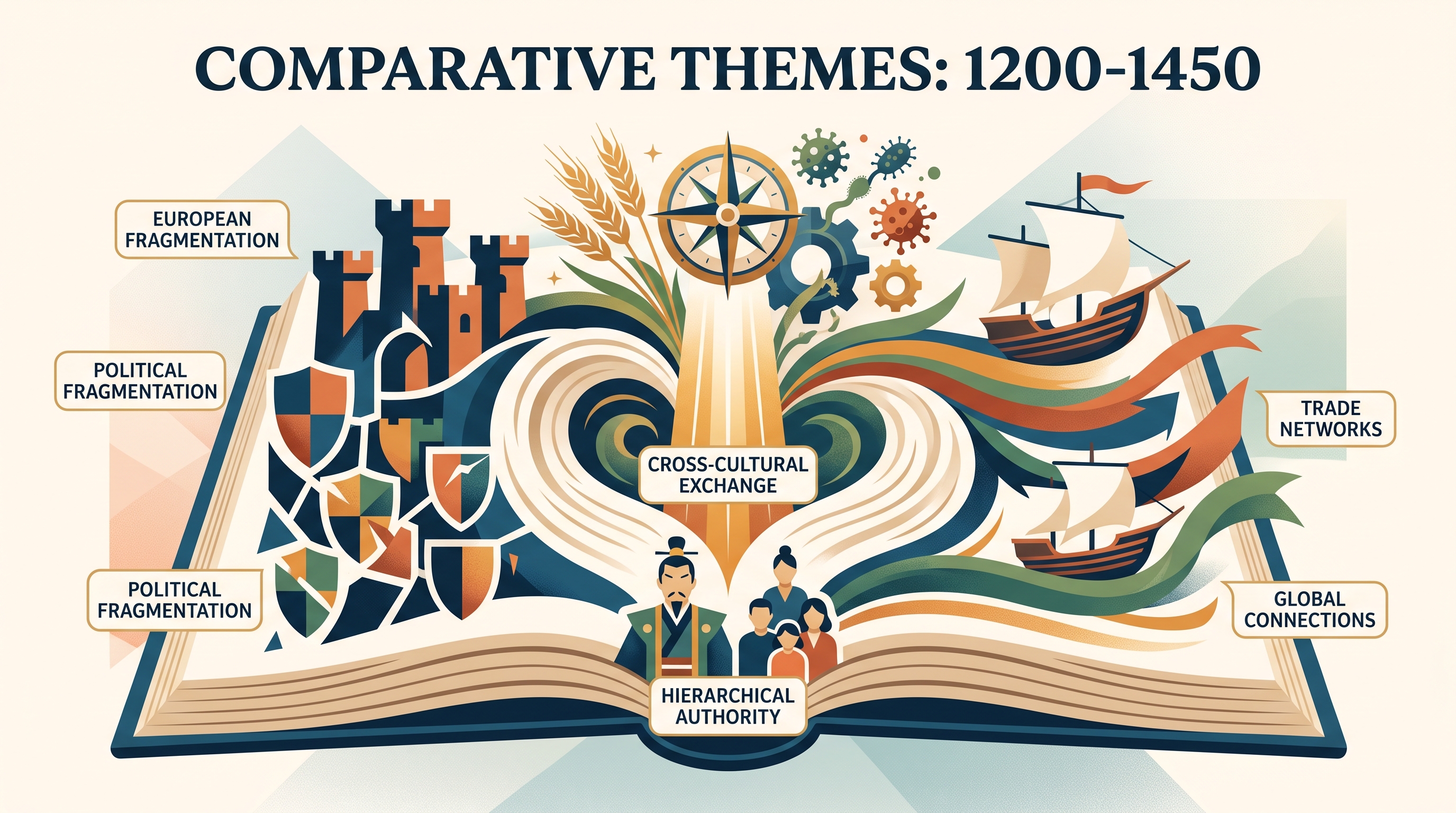
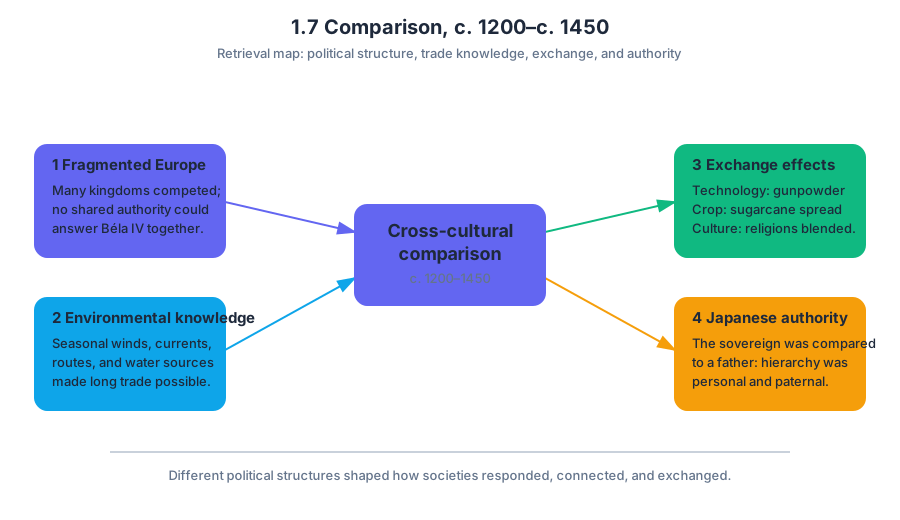
Between c. 1200 and c. 1450, Europe’s fragmented political structure made coordinated responses to external threats difficult, while expanding Afro-Eurasian exchange networks connected societies through technologies, environmental knowledge, crops, and disease.
1.7 Comparison in the Period from c. 1200 to c. 1450
Between c. 1200 and c. 1450, Europe’s fragmented political structure made coordinated responses to external threats difficult, while expanding Afro-Eurasian exchange networks connected societies through technologies, environmental knowledge, crops, and disease.
Europe: Fragmentation, Hierarchy, and Limited Coordination
Medieval Europe was divided among competing monarchies, nobles, and other political authorities, and its social order included serfdom, a system in which peasants were legally tied to the land and owed labor or payments to a lord. The important comparison is not simply that Europe was fragmented, but that fragmentation shaped what European rulers could do: kings depended on cooperation from nobles whose military service and political support were necessary but not guaranteed.
A letter written around 1250 by King Béla IV of Hungary to Pope Innocent IV makes this problem concrete. Béla warned that a people advancing from the Black Sea steppes and Central Asia threatened the survival of his kingdom and requested military assistance. His appeal reveals both the scale of the danger and the limits of his authority: a king could ask for aid, but he could not automatically command the resources of all European rulers.
The political fragmentation of Europe helps explain why Béla did not receive the military assistance he requested. European monarchies and nobles competed with one another, and no single authority could easily organize a unified response across the continent. Monarchical power and military assistance were therefore linked: kings sought to strengthen central authority, but their ability to mobilize armies still depended heavily on local elites and broader political cooperation.
Comparison insight: A state may possess a king, armies, and a social hierarchy without possessing highly centralized power. The existence of monarchy does not automatically mean the existence of an effective national government.
Mongol Expansion and Cross-Cultural Contact
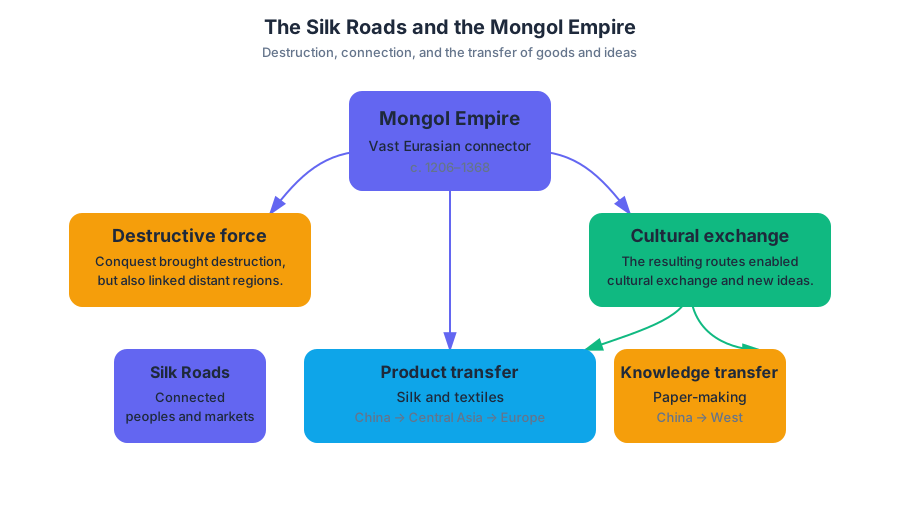
Mongol expansion intensified contact between Europe and the societies of Central and East Asia. Mongol conquests disrupted existing political arrangements, threatened states such as Hungary, and also connected distant regions through routes used by merchants, travelers, diplomats, and missionaries. The same expansion could therefore produce destruction and connection at once.
Cross-cultural interaction encouraged the diffusion of scientific and technological innovations. Gunpowder and paper from China moved westward through exchange networks, where technologies could be adapted to new political and commercial settings. Travelers such as Marco Polo, Ibn Battuta, and Margery Kempe also recorded observations that reveal how people encountered unfamiliar societies, customs, and landscapes.
Environmental Knowledge as Infrastructure
Long-distance trade did not operate through goods alone. Merchants and travelers needed environmental knowledge—information about climates, terrain, waterways, agricultural conditions, and seasonal winds—to decide when and where movement was possible. In the Indian Ocean, for example, knowledge of the monsoon winds allowed sailors to plan voyages around predictable seasonal wind patterns rather than treating the ocean as an unknowable barrier.
This knowledge functioned like infrastructure. A merchant who knew the timing of favorable winds, the location of reliable ports, or the availability of food and water could reduce risk, calculate travel time, and coordinate trade across great distances. Environmental information was shared through repeated travel, local pilots, port communities, and written or oral accounts; exchange networks expanded partly because people learned how to read the environments through which they moved.
Exchange Carries Life—and Epidemics
Trade networks also carried biological consequences. Crops continued to diffuse across Afro-Eurasia, supporting dietary change and sometimes population growth, while pathogens moved with travelers, animals, and goods. The bubonic plague spread along trade routes as an epidemic disease, demonstrating that connectivity could make societies more prosperous and more vulnerable at the same time.
Common misconception — “Trade only spreads culture and wealth.” Exchange networks also transmit environmental knowledge, agricultural species, and pathogens. Connectivity is not automatically beneficial; its effects depend on what moves, who controls movement, and how societies respond.
Comparing Cultural Perspectives
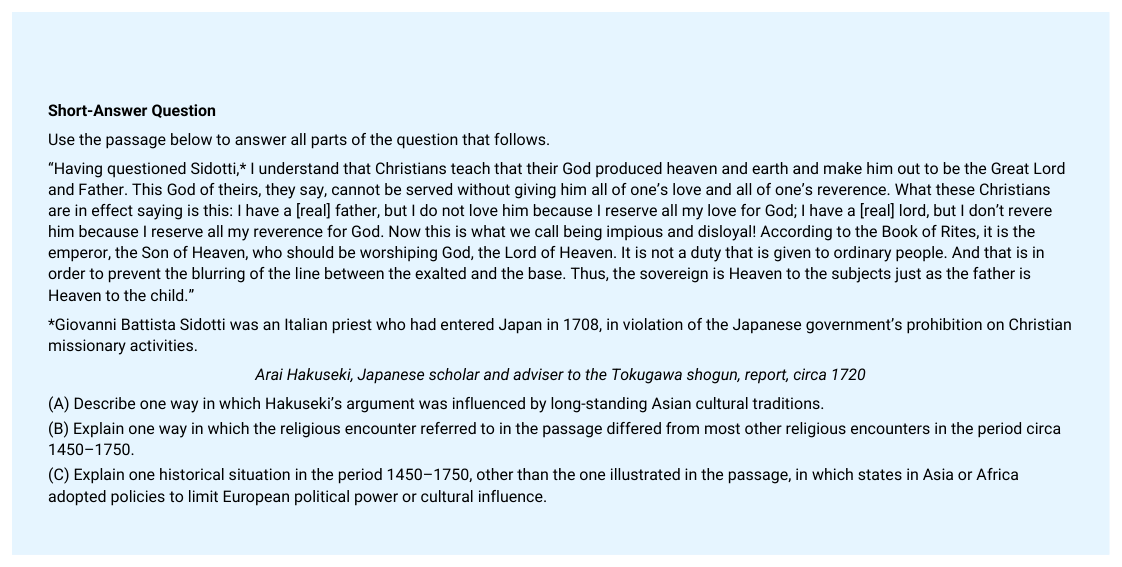
Written accounts also show that cross-cultural interaction depended on social assumptions. A Japanese quotation compares the sovereign to Heaven and the father to Heaven in relation to the child, reinforcing hierarchical authority and the expectation that obedience sustains social order. This perspective differs from a European narrator’s account of a person becoming willing to interact with a blind boy after a war, while the narrator had previously been unable to interact similarly with Europeans.
The contrast illustrates that contact can change attitudes, but it does not erase cultural boundaries automatically. The Japanese passage emphasizes hierarchy and proper relationships; the European reflection emphasizes how war and personal experience altered perceptions of outsiders. For Skill 2: Sourcing and Situation, ask what each writer’s position and historical experience reveal about the interaction. For Skill 3: Claims and Evidence in Sources, identify the claim about social authority or cross-cultural trust, then connect it to the passage’s specific evidence.
AP Historical Reasoning
Topic 1.7 Comparison in the Period from c. 1200 to c. 1450 is anchored in Learning Objective 1.7 and KC-1.7.I, especially comparison of political organization and the consequences of exchange. The central reasoning process is Skill 5: Making Connections, including comparison: identify a meaningful similarity or difference, then explain why it mattered. A strong comparison would connect Europe’s divided authority to Béla’s failed request, while contrasting that political fragmentation with the wider connectivity created by Mongol expansion and trade routes.
A complete argument might claim: Europe’s fragmented authority limited coordinated military action, whereas Afro-Eurasian exchange networks enabled sustained movement across political boundaries; however, both systems depended on cooperation among local actors and produced mixed consequences, including cultural diffusion alongside epidemic disease.
Retrieval Check
- Why did Europe’s political fragmentation make Béla IV’s request difficult to answer collectively?
- How did environmental knowledge help long-distance trade routes function?
- Name one technology, one crop-or-pathogen consequence, and one cultural effect of cross-cultural exchange.
- What does the Japanese comparison between sovereign and father reveal about hierarchical authority?
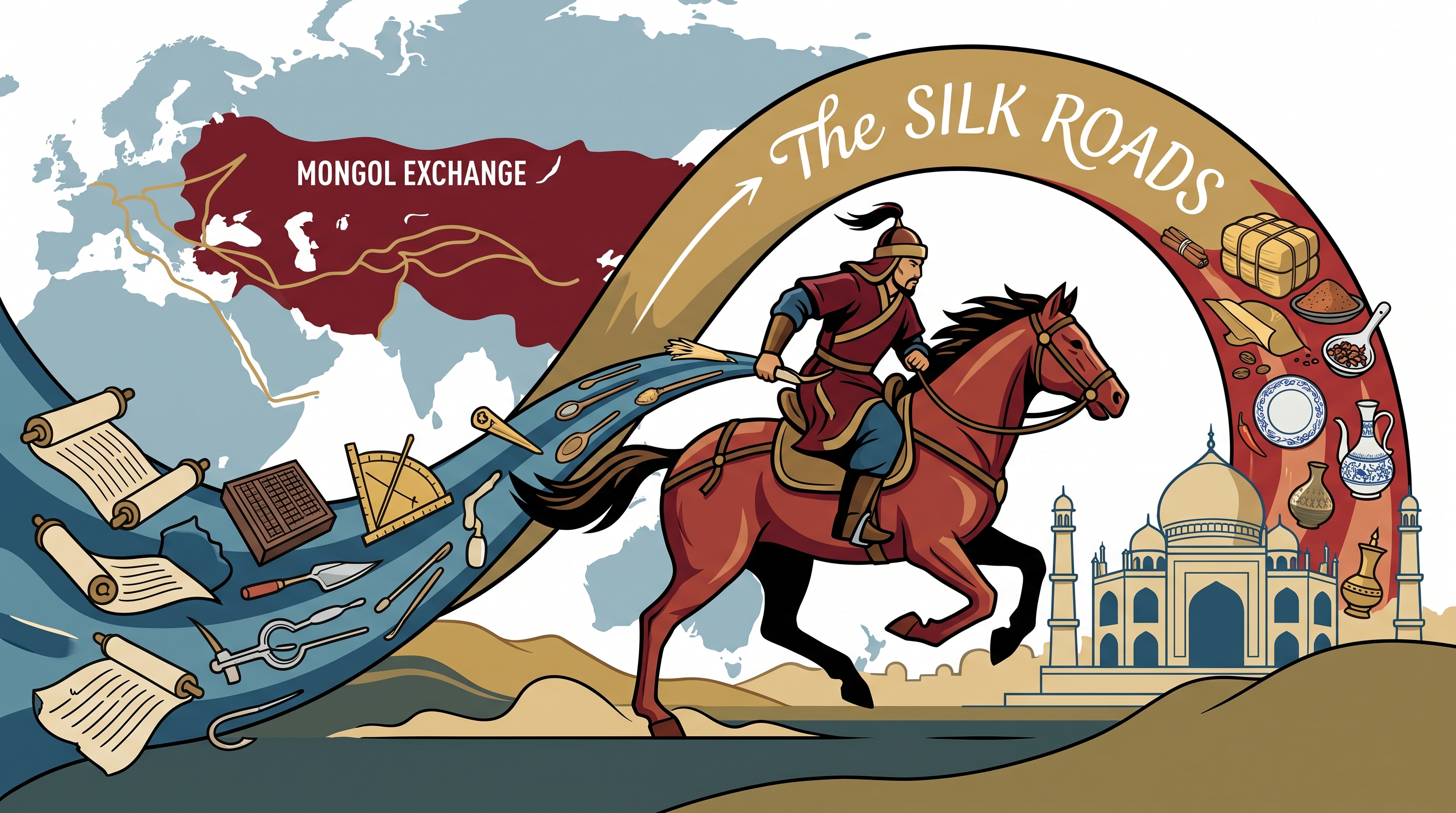
2.1 The Silk Roads · 2.2 The Mongol Empire and the Making of the Modern World
Key concepts: The Silk Roads · The Mongol Empire and the Making of the Modern World · Cultural developments and interactions · Governance and state formation · Economic systems and exchange · Social interactions and organization · Technology and innovation · Turkic-dominated political entities · New Islamic political entities · Production, exchange, and consumption of goods and services
A caravan carrying silk from China to Central Asia was not simply moving merchandise: it was moving languages, technologies, religions, diseases, and political influence across thousands of kilometers.
2.1 The Silk Roads · 2.2 The Mongol Empire and the Making of the Modern World
A caravan carrying silk from China to Central Asia was not simply moving merchandise: it was moving languages, technologies, religions, diseases, and political influence across thousands of kilometers. Between c. 1200 and c. 1450, the Silk Roads became especially powerful because existing routes connected with expanding states—and because the Mongol Empire temporarily imposed order across much of Eurasia.
The Silk Roads: networks, not one road
The Silk Roads were a network of overland routes linking East Asia, Central Asia, the Middle East, and parts of Europe. Their name reflects the importance of Chinese silk, but silk was only one item exchanged. Textiles, porcelains, spices, precious metals, horses, paper products, and other luxury goods moved through a chain of merchants and caravan cities.
The geography shaped the economic system. Deserts, mountain passes, and long distances made bulk goods expensive to transport, so merchants generally emphasized high-value goods that could survive a difficult journey. Caravanserais—rest stations for travelers, animals, and merchandise—reduced risk, while states and cities profited by taxing trade and protecting routes.
Economic systems describe how societies produce, exchange, and consume goods and services.
Production and exchange were interconnected. Chinese workshops produced silk and porcelain for export; Central Asian societies supplied horses and served as commercial intermediaries; cities in the Islamic world connected eastern goods to Mediterranean markets. The result was not a single unified marketplace, but a linked series of regional economies.
Political change across Eurasia
The period also saw the formation and expansion of political entities dominated by Turkic peoples. The Seljuk Empire, the Mamluk Sultanate of Egypt, and the Delhi sultanates were important Islamic political entities, although they differed in geography, administration, and social composition. Their existence demonstrates that political development was diverse rather than following one universal pattern.
The Mongols transformed this political landscape. Beginning with the conquests of Chinggis Khan in the early thirteenth century, Mongol armies created the largest contiguous land empire in history. The empire eventually divided into major khanates, including the Yuan dynasty in China, the Ilkhanate in Persia, the Chagatai Khanate in Central Asia, and the Golden Horde in northern Eurasia.
Mongol rule combined military conquest with practical administration. Mongol rulers used local officials, collected tribute and taxes, protected important routes, and incorporated skilled administrators from conquered societies. Their political system was therefore not simply destruction followed by disorder; it also created conditions for increased movement across Eurasia.
The Mongol Empire and connectivity
The period of relatively secure travel under Mongol rule is often called the Pax Mongolica, or “Mongol peace.” The phrase does not mean that all violence ended. Mongol conquest was extraordinarily destructive in many regions, but once territories were incorporated, imperial protection could make long-distance travel more predictable for merchants, diplomats, and missionaries.
Interregional contacts and conflicts between states and empires, including the Mongols, encouraged significant technological and cultural transfers (KC-3.2.II.A.ii). Knowledge moved alongside objects: Greco-Islamic medical learning reached western Europe, numbering systems traveled to Europe, and the Mongols adopted the Uyghur script for administrative use.
These exchanges reveal both continuity and innovation. Older routes and commercial practices continued, but new imperial connections increased their reach. Human adaptation and innovation—such as improved transportation practices, commercial finance, and administrative borrowing—could increase efficiency and comfort even while imperial expansion imposed severe costs on conquered populations.
Themes and reasoning in action
The six course themes provide different lenses for interpreting the same development:
- Humans and the Environment [ENV]: deserts, mountains, and climate shaped routes and travel.
- Cultural Developments and Interactions [CDI]: religions, scripts, medical knowledge, and numbering systems crossed cultural boundaries.
- Governance [GOV]: empires protected routes, collected revenue, and managed diverse peoples.
- Economic Systems [ECN]: production for export and long-distance exchange linked regional economies.
- Social Interactions and Organization [SIO]: merchants, nomads, artisans, officials, and religious communities interacted across political borders.
- Technology and Innovation [TEC]: transportation, administrative techniques, and practical knowledge helped people manage distance.
For this topic, practice Skill 1.A: Identify and describe a historical concept, development, or process by naming what made the Silk Roads a network rather than a single route. Practice Skill 1.B: Explain a historical concept, development, or process by linking Mongol political consolidation to increased Eurasian exchange. Practice Skill 5.A: Identify patterns among or connections between historical developments and processes by connecting Silk Roads trade with cultural transfer and state revenue. The central reasoning process is causation: political security influenced commercial movement, while commerce and cultural exchange strengthened connections among societies.
Worked example: tracing one historical process
Suppose a prompt asks why the Mongol Empire was significant beyond its military conquests. Build the explanation in three steps:
- Political cause: Mongol conquest unified or linked large areas of Eurasia under related imperial authorities.
- Immediate effect: Route protection and administrative coordination made travel and exchange more predictable.
- Broader significance: Merchants, technologies, medical knowledge, scripts, and religious ideas moved more widely, producing cultural and economic consequences.
A strong answer also qualifies the claim: Mongol rule encouraged connectivity after conquest, but conquest itself caused destruction, displacement, and disease transmission. Increased exchange was therefore both productive and dangerous.
Misconception check
Misconception: “The Silk Roads mainly carried silk from China directly to Europe.” In reality, they were multi-route networks involving many intermediaries, goods, and cultural exchanges. Misconception: “The Pax Mongolica was permanent peace.” It describes relative security under Mongol rule, not the absence of warfare or suffering.
Retrieval check
Explain in two sentences why the Mongol Empire could be both destructive and a force for cultural exchange. Then identify one example of a product transfer and one example of a knowledge or technology transfer connected to the Silk Roads.
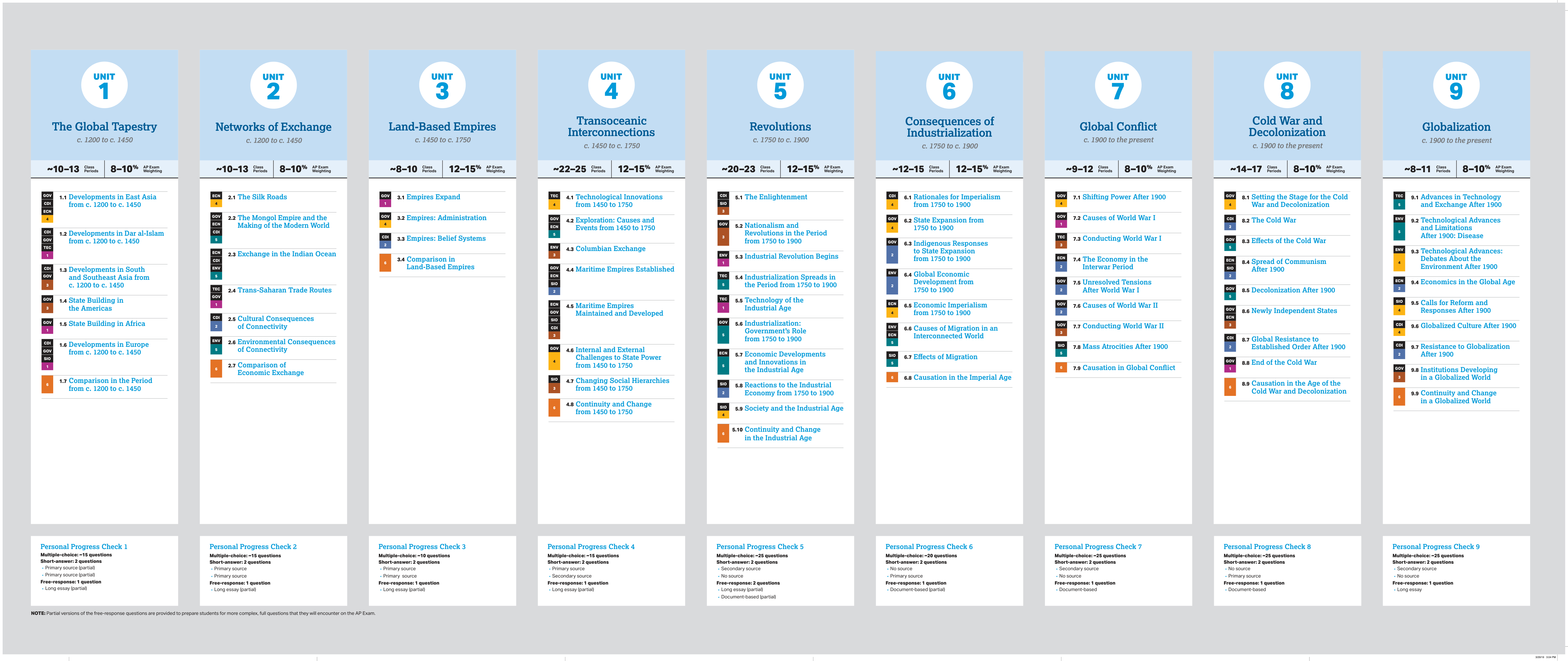

2.3 Exchange in the Indian Ocean · 2.4 Trans-Saharan Trade Routes
Key concepts: Indian Ocean trade networks · Trans-Saharan trade · Swahili Coast · Gujarat · Sultanate of Malacca · Muslim–European rivalry in the Indian Ocean · Diasporic merchant communities · Interregional trade in luxury goods · Transportation innovations · Chinese textiles, porcelain, iron, and steel production
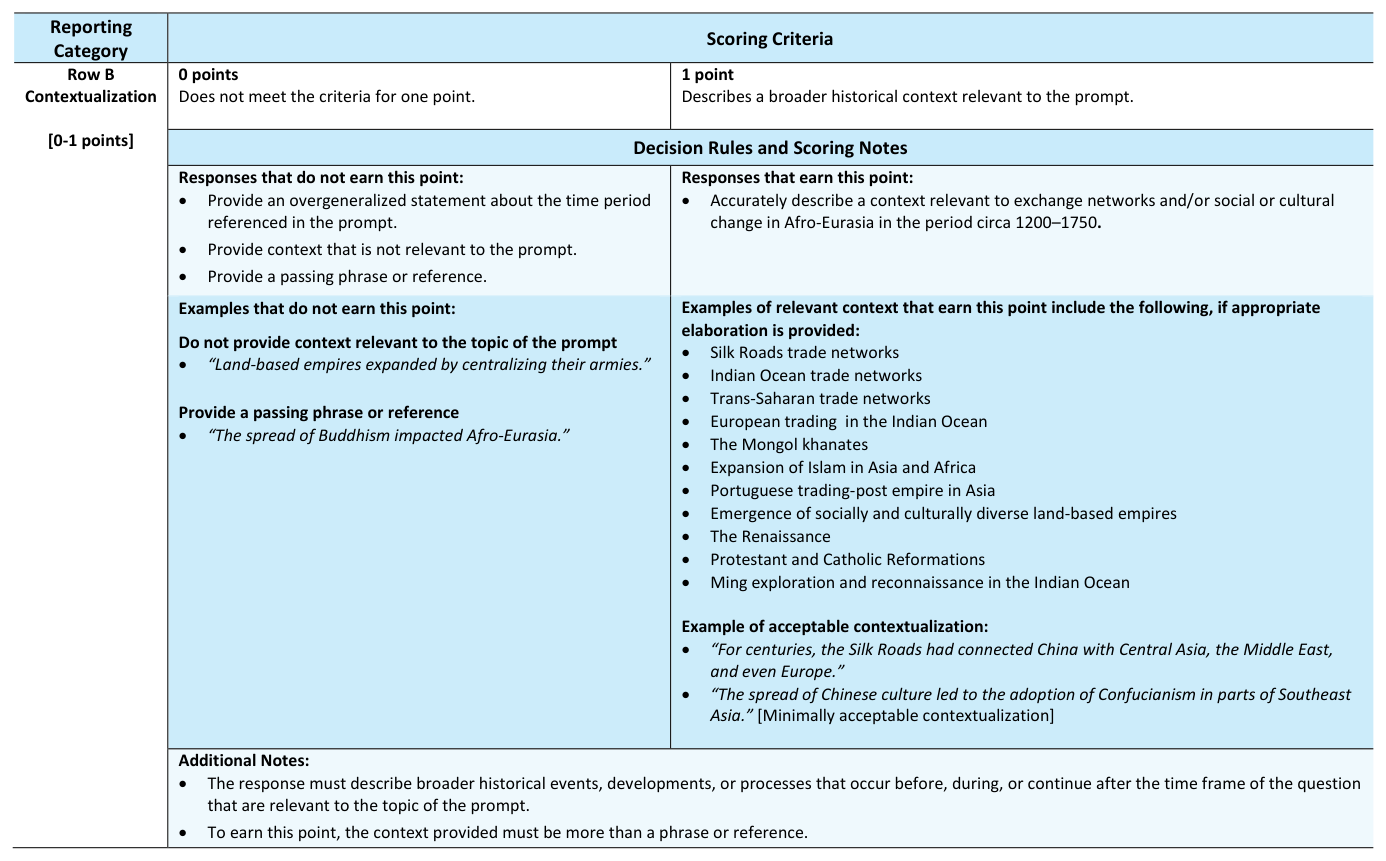
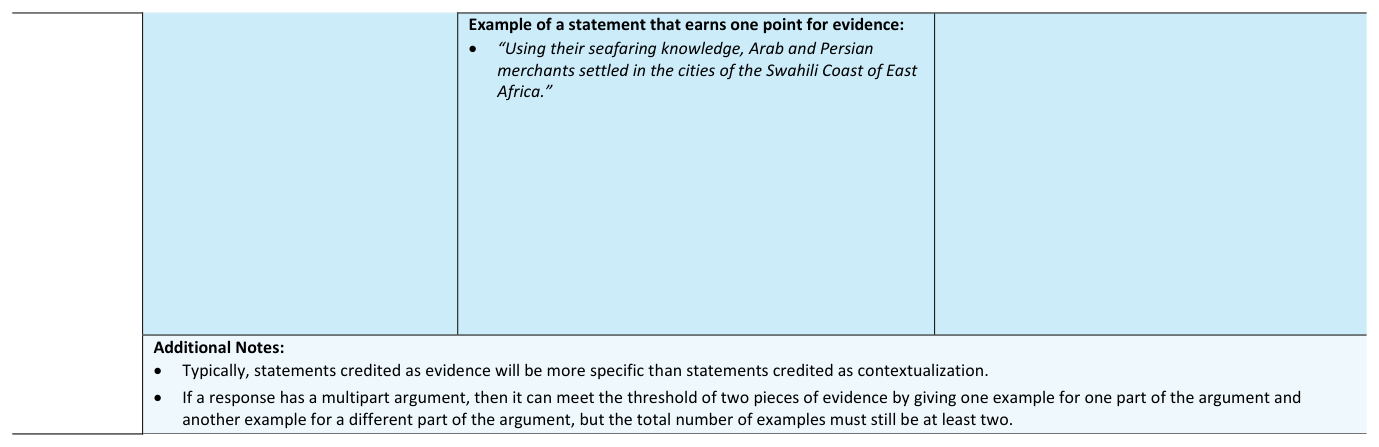
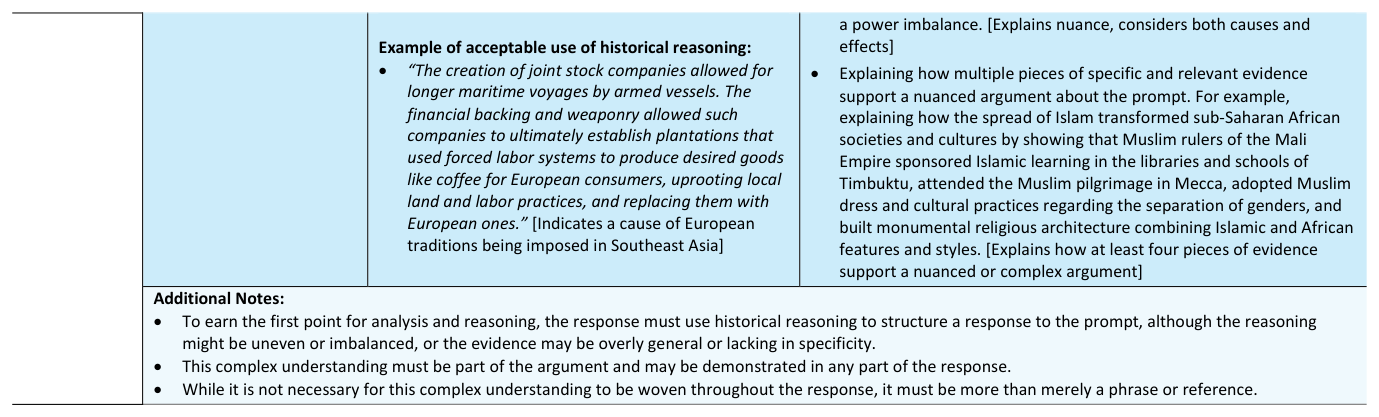
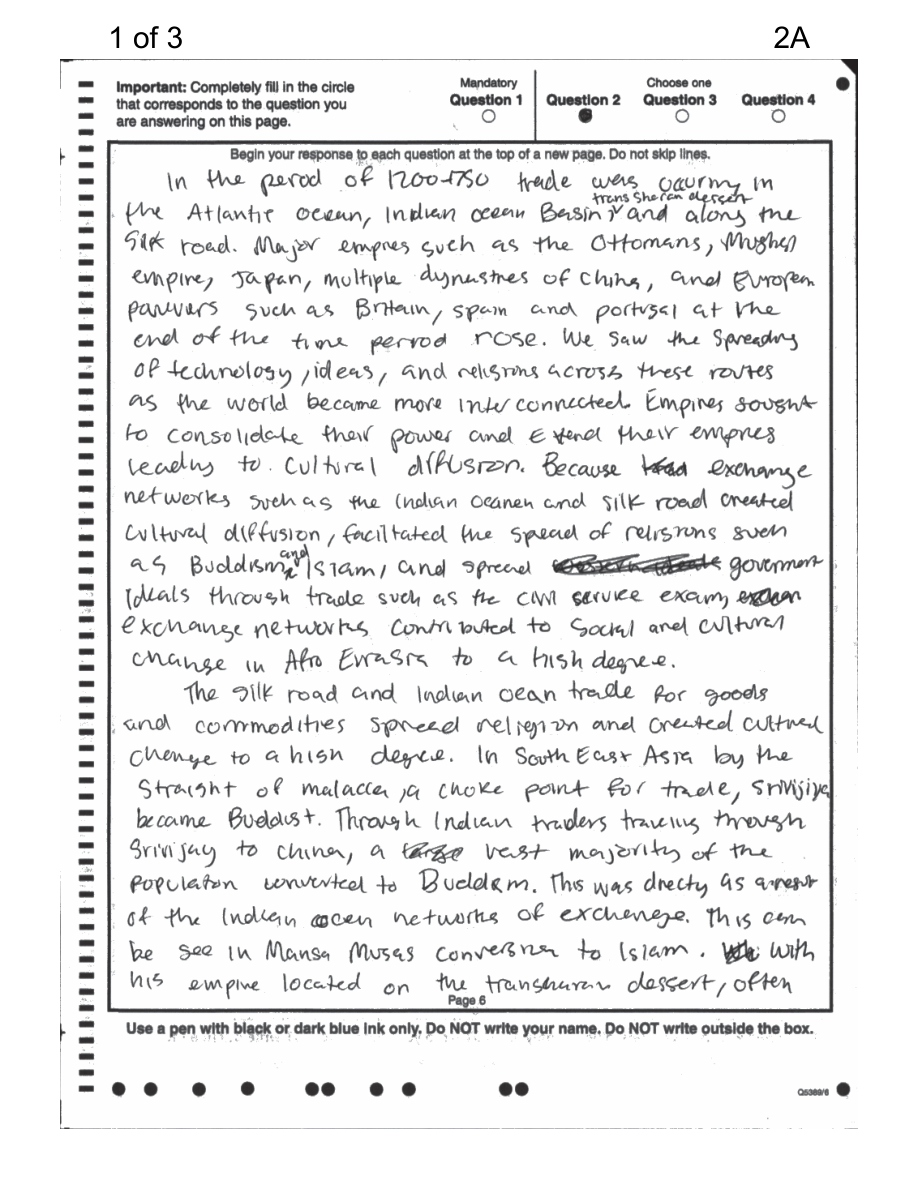
After $1200$, Indian Ocean and trans-Saharan commerce expanded not because entirely new routes suddenly appeared, but because older routes became more efficient, profitable, and politically important.
2.3 Exchange in the Indian Ocean · 2.4 Trans-Saharan Trade Routes
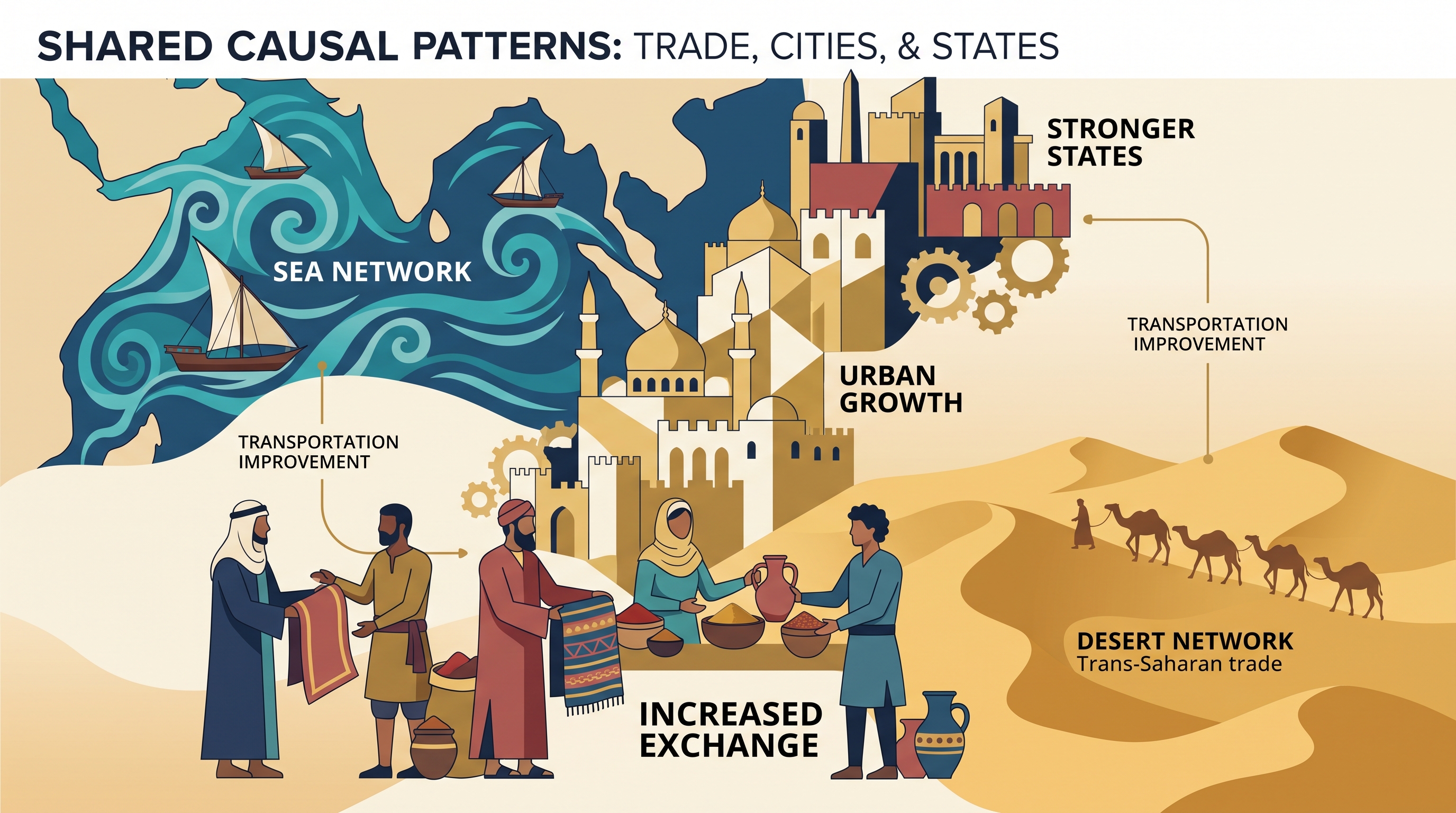
After $1200$, Indian Ocean and trans-Saharan commerce expanded not because entirely new routes suddenly appeared, but because older routes became more efficient, profitable, and politically important. The central question is causal: How did improved transportation and commercial practices transform regional exchange into networks powerful enough to build cities and strengthen states?
Unit 2: Learning Objective E: Explain the causes of the growth of networks of exchange after $1200$.
The governing thematic lens is Economic Systems (ECN): societies shape—and are shaped by—the ways they produce, exchange, and consume goods and services. The same network can therefore be read in two directions: transportation innovations increase trade, while trade enriches merchants, attracts states, and encourages further investment in production and infrastructure.
The Indian Ocean as a connected commercial system
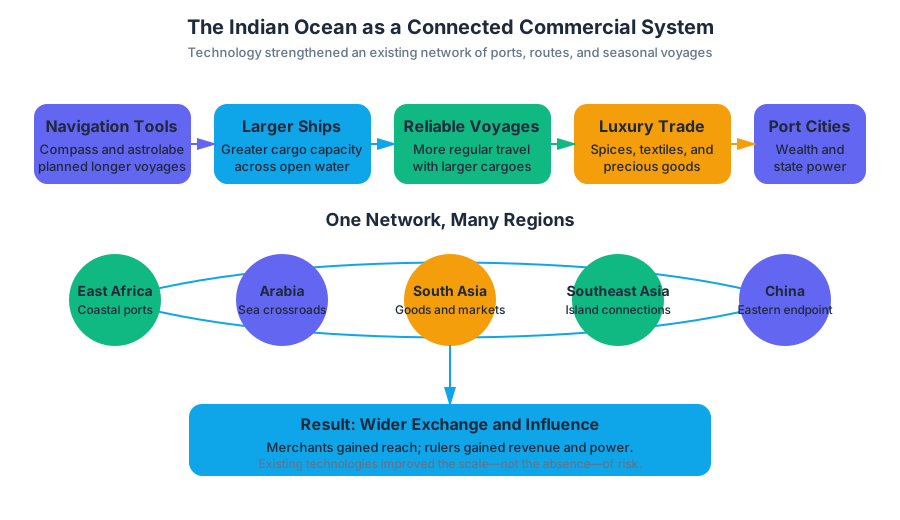
The Indian Ocean network linked the eastern coast of Africa, the Arabian Peninsula, South Asia, Southeast Asia, and China. Its growth depended on improvements to existing technologies and practices, including the compass, astrolabe, and larger ship designs. These tools did not eliminate danger or distance; they made it easier for merchants and sailors to navigate, carry larger cargoes, and plan voyages across a wider geographical range.
A useful causal chain is:
Improved navigation and ship capacity
$\rightarrow$ more reliable, higher-volume voyages
$\rightarrow$ expanded luxury-goods trade
$\rightarrow$ growth of port cities
$\rightarrow$ greater state power and merchant influence
This relationship is preserved in KC-3.1.I.A.ii, which connects improved transportation technologies and commercial practices to increased trade, expanded routes, and powerful new trading cities. KC-3.1.I.C.ii emphasizes that interregional luxury trade was encouraged by innovations in previously existing transportation and commercial technologies. KC-3.1.I.A.iii identifies the Indian Ocean trading network as a force that fostered the growth of states.
Trading cities and merchant communities
Three especially important locations were the Swahili Coast, Gujarat, and the Sultanate of Malacca. Their importance came from position as well as production: ports connected inland producers to overseas buyers and offered merchants places to store, exchange, finance, and redistribute goods.
Merchants also formed diasporic communities—communities living outside their places of origin while maintaining commercial and cultural ties to them. Gujaratis and Javanese were among the groups connected to Indian Ocean exchange. These communities helped make trade more dependable because merchants could draw on familiar languages, customs, credit relationships, and social networks in distant ports.
China illustrates how exchange affected production. Chinese merchants and producers expanded textile and porcelain manufacturing for export, while the manufacture of iron and steel also expanded. Trade was therefore not merely the movement of finished luxuries: foreign demand could reorganize production within major societies.
Worked causal example: why Malacca grew
Suppose a merchant vessel carrying valuable goods must cross the Indian Ocean and enter Southeast Asian waters. Larger ships increase cargo capacity; navigational instruments make long-distance travel more manageable; and a port located near crucial maritime routes can collect taxes, supply ships, and attract foreign merchants. The result is a reinforcing cycle: commerce increases Malacca’s wealth, wealth strengthens its political authority, and political authority makes the port more attractive to additional merchants.
Misconception check — “Technology caused trade by itself.” The compass, astrolabe, and larger ships mattered because merchants, producers, and states used them within commercial systems. Technology lowered some costs and risks, but profitable goods, established practices, strategic ports, and political protection were also necessary.
Muslim–European rivalry
The Indian Ocean was not an isolated Muslim trading lake, but Muslim merchants and states played major roles in its commerce. As European powers entered the ocean, Muslim–European rivalry became a significant development. Competition involved access to ports, routes, commercial profits, and political influence. The rivalry shows that trade networks could generate conflict as well as cooperation.
Trans-Saharan trade and growing influence
The trans-Saharan trade routes connected societies across the Sahara and increased the influence of the societies and merchants involved. Long-distance trade strengthened those able to control routes, organize caravans, protect merchants, or tax commerce. As in the Indian Ocean, exchange could convert geographic position into political and economic power.
The comparison should focus on mechanism rather than simply listing goods: both networks expanded when transportation and commercial practices made long-distance exchange more practical, and both increased the influence of merchants and states. Their environments differed—oceanic navigation versus desert crossings—so the technologies and logistical challenges were not identical.
Skills in action
Skill 5.A — Identify patterns and connections: connect the repeated pattern of transportation improvement, increased trade volume, urban growth, and stronger states across the Indian Ocean and trans-Saharan networks. A strong explanation does more than say both had trade; it identifies the shared causal structure and then notes the environmental difference between sea and desert routes.
Retrieval check: Name two technologies that encouraged Indian Ocean trade, one Indian Ocean trading center, one merchant group, and one political consequence of expanded exchange. Then explain why a port city could become powerful rather than remaining merely a stopping point.
2.5 Cultural Consequences of Connectivity · 2.6 Environmental Consequences of Connectivity
Key concepts: Cultural consequences of connectivity · Environmental consequences of connectivity · Authorial audience · Neighbors · Tatar ruler · Audience identification (Skill 2)
A trade route does more than move silk, salt, or gold: it moves habits of thought. When merchants, pilgrims, soldiers, and migrants cross long distances, they carry religions, languages, artistic styles, technologies, crops, and diseases with them.
2.5 Cultural Consequences of Connectivity · 2.6 Environmental Consequences of Connectivity
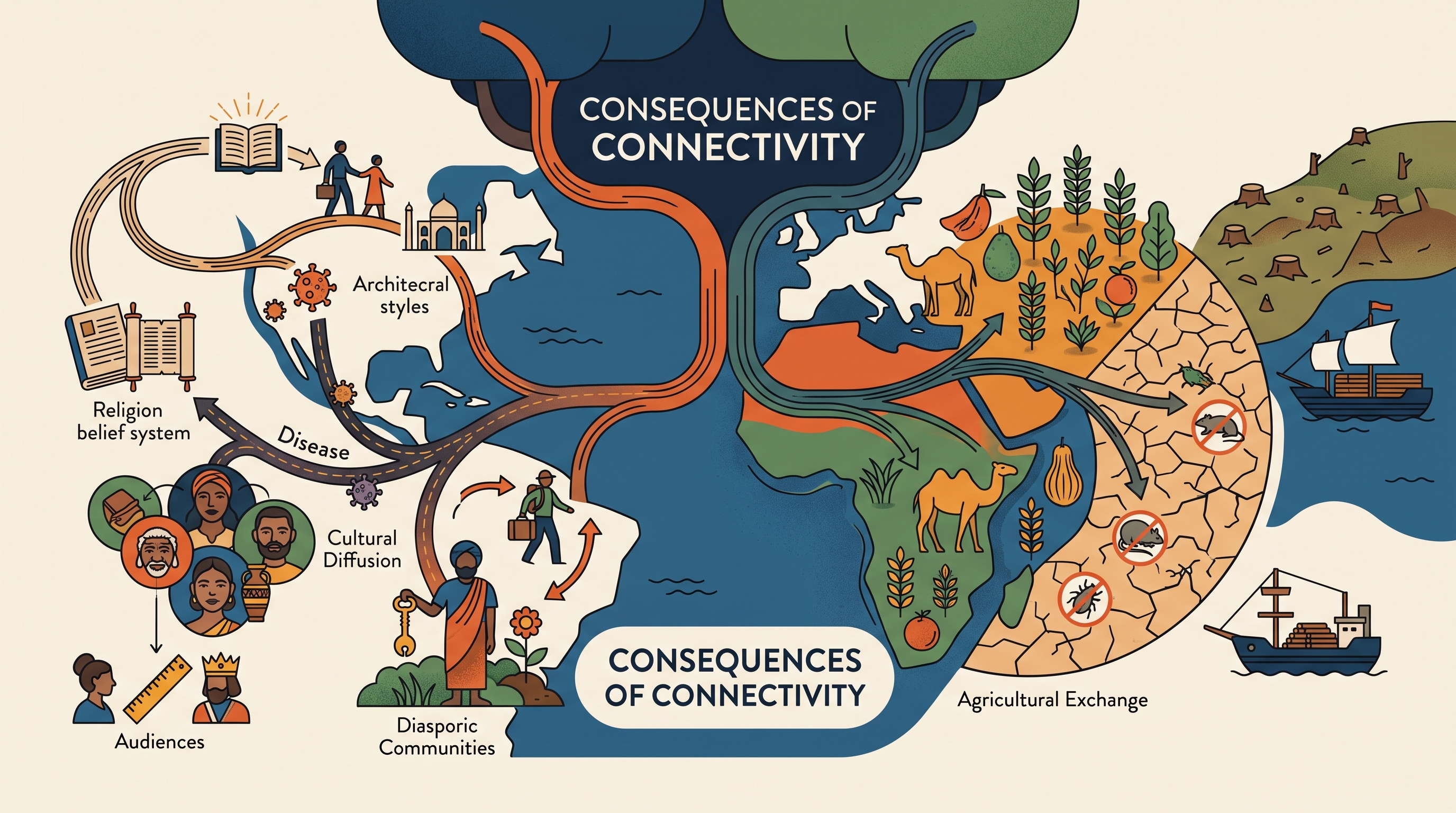
A trade route does more than move silk, salt, or gold: it moves habits of thought. When merchants, pilgrims, soldiers, and migrants cross long distances, they carry religions, languages, artistic styles, technologies, crops, and diseases with them. Between $c. 1200$ and $c. 1450$, expanding networks of exchange therefore changed both human culture and the natural environment.
Investigative question: When societies become more connected, what changes first—people’s ideas, their environments, or both?
Cultural consequences of connectivity
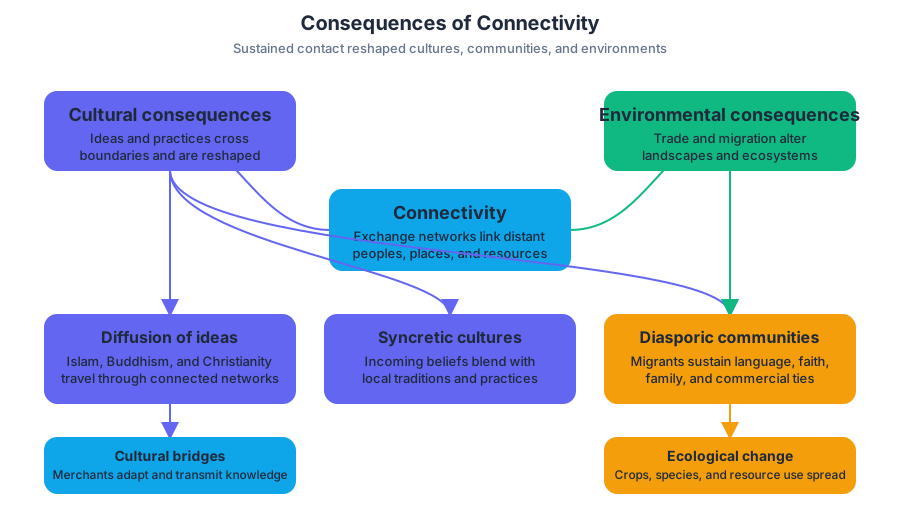
The cultural consequences of connectivity are the changes produced when sustained contact spreads beliefs, practices, knowledge, and communities across regions. These consequences were not always simple “adoption.” Local societies often blended incoming ideas with existing traditions, creating syncretic—or combined—belief systems and cultural forms.
Under CED 2.5.A, the expansion of networks of exchange influenced the diffusion of cultural practices and ideas. Islam spread through merchants, scholars, and rulers across parts of Africa and Asia; Buddhism traveled through Central and East Asian networks; and Christian communities remained connected across Europe and the Mediterranean. Literary traditions, artistic techniques, mathematical knowledge, navigational skills, and technologies also crossed cultural boundaries.
Under CED 2.5.B, these networks helped create diasporic communities—groups living outside an ancestral homeland while maintaining connections through religion, language, family, or commerce. Merchant communities could serve as cultural bridges: they introduced foreign practices to local societies but also adapted themselves to local political and social conditions.
Worked example: tracing one cultural change
Imagine a Muslim merchant settling in a port city far from his birthplace. The reasoning chain is:
- Connectivity: A regular trade route brings merchants into repeated contact with the port.
- Community: Other merchants establish a diasporic neighborhood, mosque, or commercial network.
- Cultural transmission: Religious practices, legal customs, writing systems, and architectural styles become visible locally.
- Adaptation: Local rulers and residents selectively adopt or reinterpret these practices.
- Historical consequence: The port becomes culturally plural rather than simply replacing one culture with another.
This example shows why historians should avoid the misconception that cultural diffusion means one civilization passively copying another. Exchange created interaction, but power, local choice, and existing traditions shaped the result.
Environmental consequences of connectivity
The environmental consequences of connectivity were equally significant. Under CED 2.6.A, expanding networks of exchange facilitated the movement of crops, animals, and pathogens. These transfers could increase food supplies and support population growth, but they could also produce ecological stress and devastating epidemics.
The movement of crops changed diets and agricultural systems. New crops could support people in regions with different climates, while the increased movement of animals and human populations altered landscapes. The most destructive example was the spread of the bubonic plague, or Black Death, along connected routes from Central Asia toward the Middle East, North Africa, and Europe during the fourteenth century. Trade did not “cause” the disease in isolation; connectivity accelerated its movement among densely populated settlements.
A useful cause-and-effect chain is:
$$ \text{expanded exchange} \rightarrow \text{more movement} \rightarrow \text{greater biological contact} \rightarrow \text{new opportunities and new risks} $$
The key misconception is that connectivity was automatically beneficial. Networks could spread knowledge and food, yet the same routes could spread pathogens faster than communities could respond.
Skill 2: Sourcing and Situation
Skill 2: Sourcing and Situation asks students to analyze a source’s point of view, purpose, historical situation, and audience. Audience identification means determining who the author expected to read, hear, or act upon the source—not merely naming a group that might have encountered it.
For a source connected to cultural exchange, ask: Who do you think was the author’s audience—his neighbors, the Tatar ruler, or someone else? Test each possibility against the source’s language, level of explanation, subject matter, and political purpose.
- The author’s neighbors: likely if the source explains unfamiliar customs, describes distant places for local readers, or uses shared local assumptions.
- The Tatar ruler: more likely if the source requests patronage, reports conditions, praises authority, or offers information useful for governance.
- Someone else: possible if the work addresses merchants, religious scholars, travelers, or a broad literary audience.
A strong Skill 2 response does not stop at “the audience was his neighbors.” It explains why: “The author likely addressed his neighbors because he explains distant practices in accessible terms and emphasizes information that would interest people who had not personally traveled.” Audience is an argument supported by source evidence.
Retrieval check
- How could the same network spread both a religion and a disease?
- What makes a diasporic community different from a temporary group of travelers?
- Which clues would distinguish an audience of neighbors from an audience of a Tatar ruler?
- Why is cultural diffusion not the same as simple cultural replacement?
Interpretation check: If a text praises a ruler’s protection of merchants and reports the wealth of distant cities, which audience is most plausible? Explain your answer using one feature of the author’s purpose or language.
2.7 Comparison of Economic Exchange
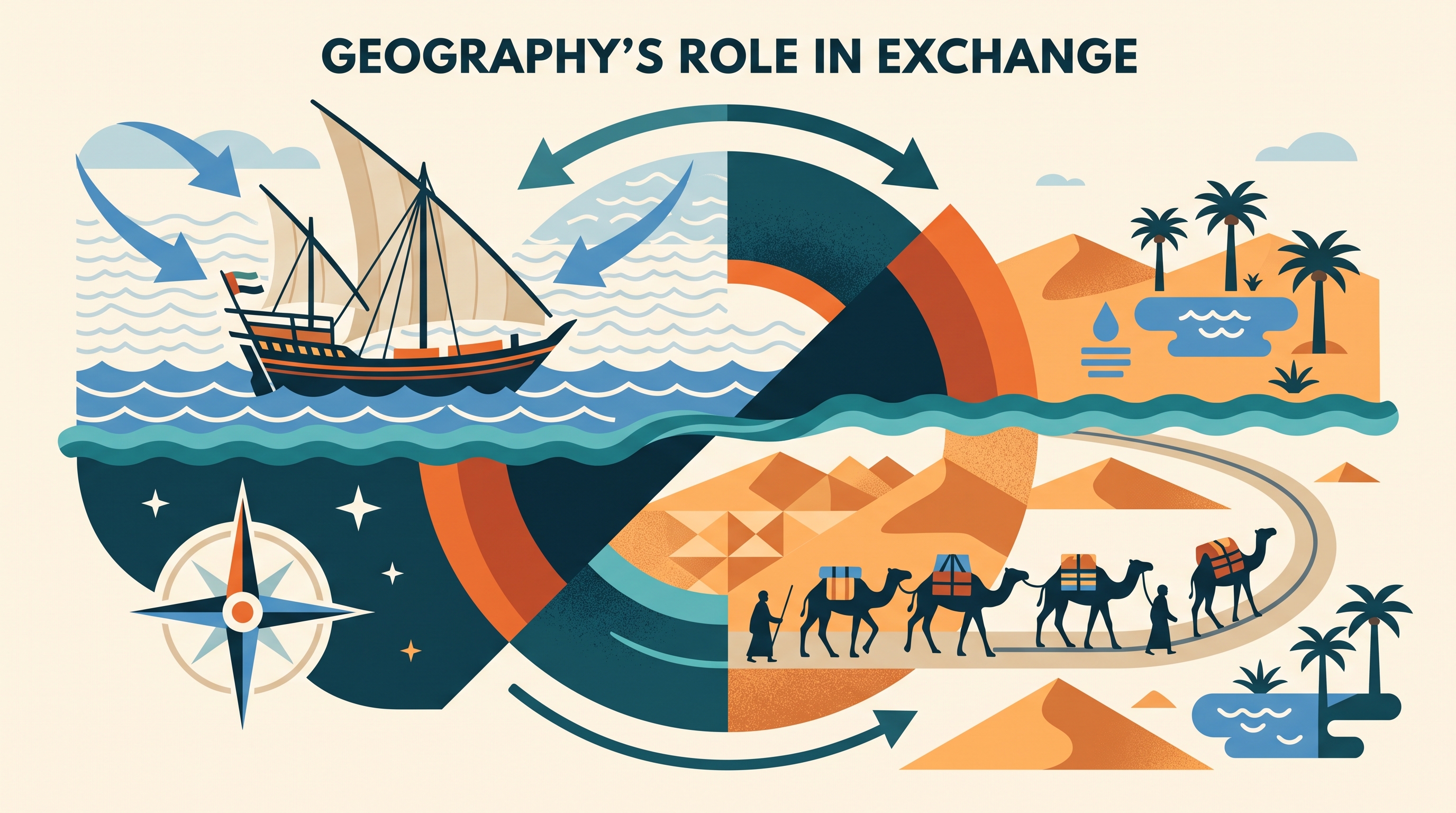
Why did similar goods travel through very different systems? Between approximately $1200$ and $1450$, merchants connected Afro-Eurasia through the Silk Roads, Indian Ocean routes, and Trans-Saharan networks.
2.7 Comparison of Economic Exchange
Why did similar goods travel through very different systems? Between approximately $1200$ and $1450$, merchants connected Afro-Eurasia through the Silk Roads, Indian Ocean routes, and Trans-Saharan networks. Each system exchanged products, technologies, and ideas, but geography, transportation, political authority, and environmental conditions shaped how each worked.
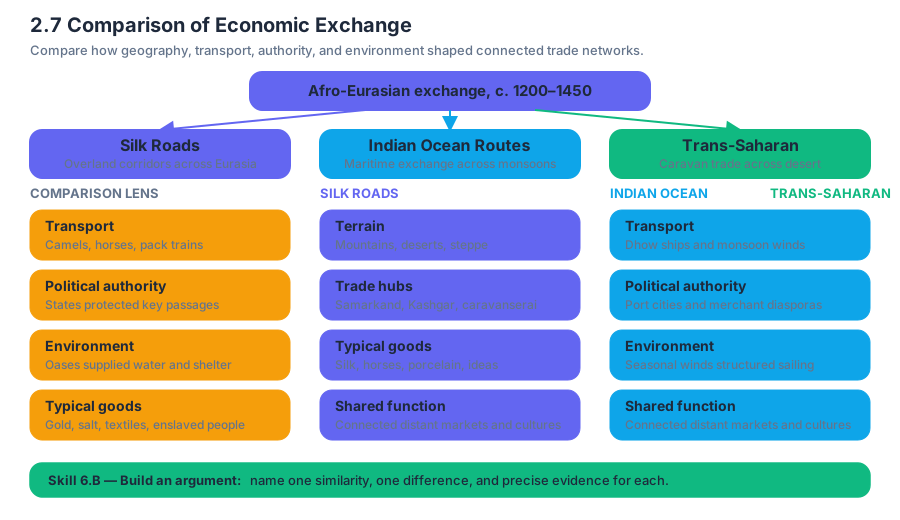
Topic 2.7 — Comparison of Economic Exchange asks students to compare these networks rather than memorize them as isolated routes. The central move is to identify a meaningful similarity, explain a meaningful difference, and support both with precise historical evidence. The topic is associated with Skill 6.B, which requires supporting an argument with specific and relevant evidence.
The comparison at a glance
| Exchange network | Geographic setting | Important goods | Main enabling conditions | Distinctive pattern |
|---|---|---|---|---|
| Silk Roads | Central and East Asia, the Middle East, and Europe | Silk, horses, porcelain, precious metals, textiles | Caravan travel, oasis cities, imperial protection | Long-distance overland exchange through relay points |
| Indian Ocean routes | East Africa, Arabia, South Asia, Southeast Asia, and China | Spices, cotton textiles, porcelain, ivory, gold | Monsoon winds, ports, ships, merchant communities | Maritime exchange organized around seasonal sailing |
| Trans-Saharan routes | North and West Africa across the Sahara | Gold, salt, enslaved people, textiles, books | Camel caravans, desert oases, Islamic commercial networks | Exchange between Mediterranean and sub-Saharan regions |
Similarity: networks depended on intermediaries
None of these systems was a single road controlled by one group. Goods usually moved through multiple merchants and markets. A Chinese producer might sell silk to a Central Asian trader, who transferred it to merchants connected to Persian or Mediterranean markets. Similarly, Indian Ocean cargoes passed through port cities where Arab, Persian, Indian, and Southeast Asian merchants exchanged goods without traveling the entire route.
This relay structure reduced risk and made exchange possible across enormous distances. Merchants relied on commercial infrastructure, meaning the institutions and facilities that support trade: caravanserais on overland routes, port cities and warehouses on maritime routes, and oasis settlements across the Sahara. Political stability also mattered because rulers could tax trade, protect merchants, and maintain roads or ports.
Difference: geography created different rhythms
The Indian Ocean network depended especially on monsoon winds, seasonal wind patterns that reverse direction during the year. A sailor could use one wind pattern to travel toward India or East Africa and a later pattern to return. This encouraged merchants to remain in port cities for months, helping create cosmopolitan communities and cultural exchange.
The Silk Roads and Trans-Saharan routes faced different physical constraints. Silk Road merchants organized travel around mountain passes, steppe routes, and oasis cities, while Saharan traders depended on camel caravans capable of carrying supplies across arid terrain. Thus, all three networks connected distant regions, but maritime trade used seasonal wind knowledge whereas desert and overland trade depended more heavily on pack animals, water points, and caravan organization.
Worked comparison: using “Southernization”
Lynda Shaffer’s idea of “Southernization” provides a useful way to compare economic exchange. The argument traces how crops, technologies, and commercial practices developed in southern parts of Asia moved westward and northward through interconnected routes. A student can map the movement of food crops and then ask not merely where they traveled, but which network made movement possible.
Step 1 — Claim: Economic exchange from $1200$ to $1450 spread both goods and productive knowledge across Afro-Eurasia.
Step 2 — Silk Roads evidence: Overland routes connected China and Central Asia to the Middle East, enabling luxury goods and technologies to move through caravan cities.
Step 3 — Indian Ocean evidence: Maritime routes linked South and Southeast Asia with East Africa and Arabia, allowing crops and agricultural knowledge to move through port cities shaped by monsoon sailing.
Step 4 — Difference: The Silk Roads depended on land-based relay systems, while the Indian Ocean system depended on ships, port networks, and seasonal winds.
Step 5 — Historical significance: These differences explain why exchange was not uniform: the same broad process of connectivity produced distinct regional patterns of settlement, merchant organization, and cultural interaction.
Misconception check: “Trade routes moved only luxury goods”
Luxury goods such as silk and spices were important because their high value justified long-distance transportation, but exchange networks also moved ordinary or productive goods. Food crops, cotton textiles, religious writings, metals, salt, and enslaved people circulated through these systems. The Southernization example is especially useful because it emphasizes the movement of crops and agricultural practices, not simply elite consumption.
A second misconception is that trade automatically produced equal relationships. Exchange connected regions, but merchants, rulers, and laborers experienced it differently. States collected taxes, commercial cities prospered, and some populations faced coercion or enslavement. A strong comparison therefore considers both connection and unequal power.
Retrieval and interpretation check
A historian claims: “The three major exchange networks were similar because all relied on intermediaries, but they differed because geography determined their operating methods.”
Which evidence best supports the second part of the claim?
- A. Merchants often traded goods several times before they reached their final buyers.
- B. Indian Ocean sailors used seasonal monsoon winds, while Trans-Saharan merchants depended on camel caravans and oasis settlements.
- C. Luxury goods traveled across long distances in all three systems.
- D. Political rulers benefited from taxing commercial activity.
Answer: B. It identifies a specific geographic condition and connects that condition to a distinct method of exchange. That is the kind of precise comparison required by Skill 6.B.
3.1 Empires Expand · 3.2 Empires: Administration
Key concepts: Expanding European maritime empires · Resistance to European imperial expansion · Failure to modernize · European industrial power · Falling behind Europe industrially
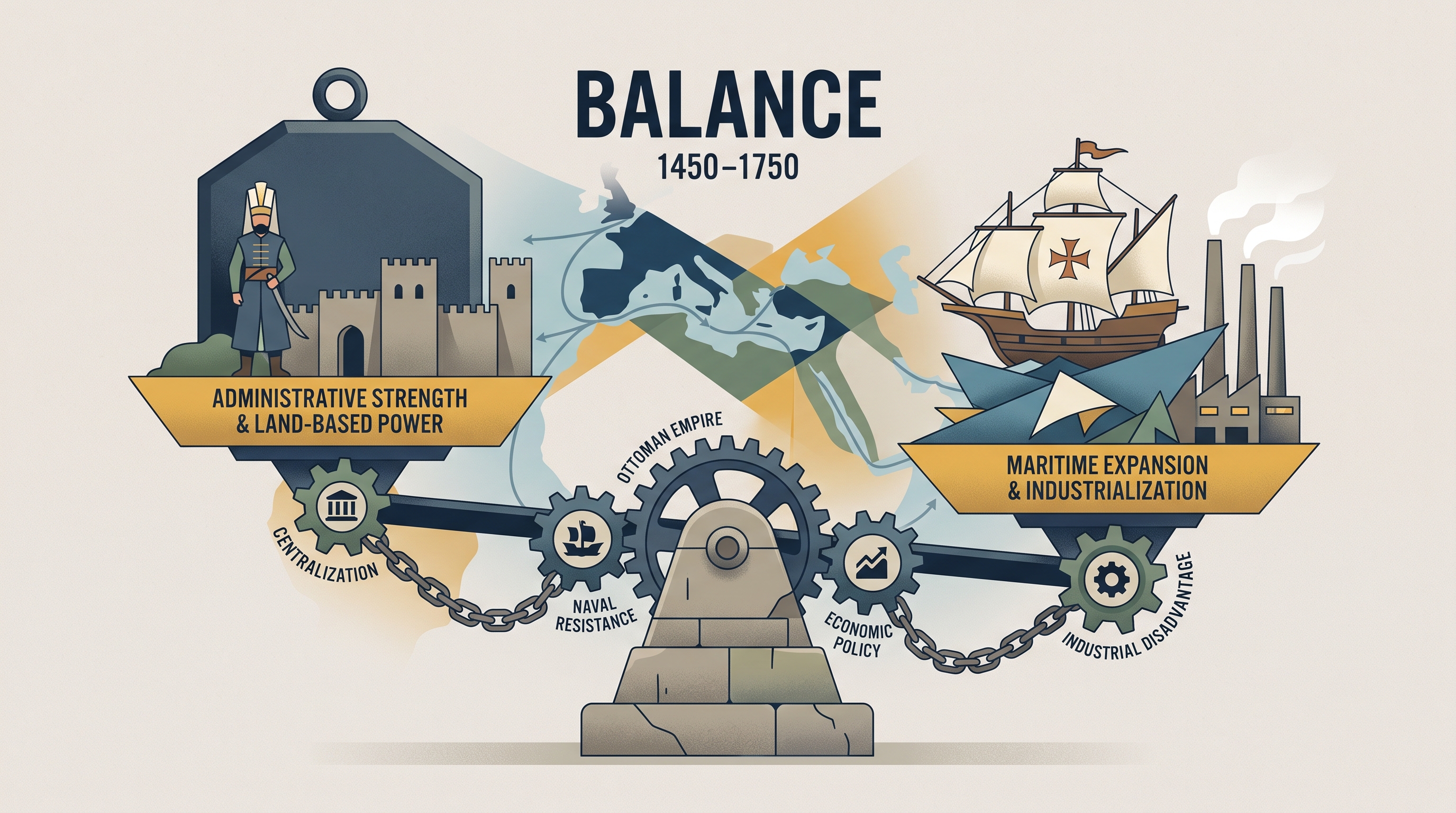
Between 1450 and 1750, the Ottoman Empire faced a new kind of rival: European states that could project power across oceans, seize strategic ports, and connect military expansion to long-distance commerce.
3.1 Empires Expand · 3.2 Empires: Administration
Between 1450 and 1750, the Ottoman Empire faced a new kind of rival: European states that could project power across oceans, seize strategic ports, and connect military expansion to long-distance commerce. The Ottomans successfully built a centralized land empire and resisted European intrusion in several regions, but their later inability to match Europe’s industrial transformation created a widening gap in weapons, finance, transportation, and naval power.
Investigative question: How could a powerful, well-administered empire resist European expansion in the early modern period yet eventually fall behind the European powers?
Ottoman expansion and centralized administration
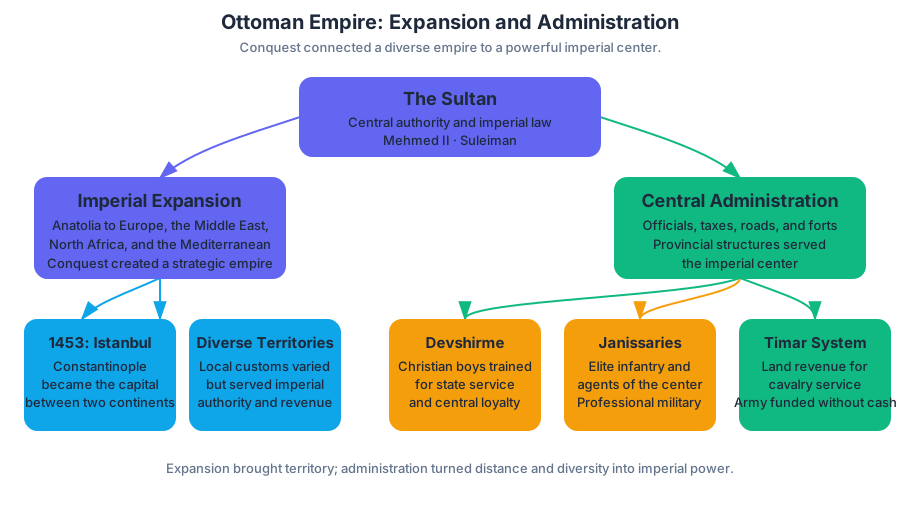
The Ottoman Empire expanded from Anatolia into southeastern Europe, the eastern Mediterranean, the Middle East, and North Africa. Its conquest of Constantinople in 1453 transformed the city into Istanbul, an imperial capital positioned between Europe and Asia. Under rulers such as Mehmed II and Suleiman the Magnificent, Ottoman authority rested on a strong central government, a professional military, and provincial officials who connected distant territories to the sultan.
The devshirme system recruited Christian boys from some Balkan communities, converted them to Islam, and trained many for state service. The most famous recipients became Janissaries, elite infantry soldiers and agents of the central government. The timar system assigned land-revenue rights to cavalrymen in exchange for military service, allowing the state to support an army without paying every soldier directly in cash.
These institutions helped the sultan prevent powerful nobles from becoming fully independent. Ottoman administrators collected taxes, enforced imperial law, maintained roads and fortifications, and governed a diverse population through provincial structures. Centralization did not mean that every region was governed identically; rather, it meant that local arrangements ultimately served the authority and fiscal needs of the imperial center.
European maritime empires challenge Ottoman power
European expansion operated differently from Ottoman land conquest. Portugal built a chain of fortified coastal positions after Vasco da Gama’s voyage around Africa, attempting to control Indian Ocean shipping through ports such as Goa, Hormuz, and Malacca. The Dutch later used the VOC, a chartered company with state-backed military powers, to dominate parts of the spice trade. England and France increasingly joined this competition.
The Portuguese strategy threatened Ottoman commercial and strategic interests because the Ottomans controlled important Red Sea, Egyptian, and Persian Gulf routes. Ottoman rulers responded with naval expeditions from the Red Sea, artillery, fortifications, and diplomacy. In 1538, an Ottoman fleet supported an unsuccessful attempt to drive the Portuguese from Diu, and Ottoman authorities cooperated with the sultanate of Aceh in Southeast Asia against Portuguese pressure. These efforts show that Ottoman resistance involved more than battlefield confrontation: it also used regional alliances, fortified ports, and control of overland connections.
| European method | Ottoman response | Historical significance |
|---|---|---|
| Armed merchant fleets and fortified ports | Naval expeditions and coastal fortifications | Commerce and warfare became tightly connected |
| Control of chokepoints such as Hormuz | Attempts to contest Red Sea and Persian Gulf access | Oceanic routes challenged older land-based trade systems |
| Alliances with local rulers | Diplomacy with regional powers such as Aceh | Resistance could be transregional rather than purely local |
| Commercial monopolies backed by states | Regulation and defense of imperial trade routes | States increasingly competed through both armies and economies |
Why resistance did not eliminate the long-term industrial gap
The Ottoman Empire did not simply “collapse” when Europeans arrived. It remained a major military and political power for centuries, and it continued to centralize administration and compete with European maritime empires. The deeper problem emerged later, when European states entered the Industrial Revolution—the shift toward mechanized production powered by coal, steam, and concentrated capital.
Industrialization multiplied military and economic capacity. Factories produced weapons, textiles, tools, and ships at increasingly large scales. Steam engines moved goods and troops more rapidly; industrial finance supplied governments and companies with investment capital; railroads and telegraphs improved coordination; and steam-powered ironclad navies could sustain operations far from home ports.
The Ottoman government attempted reforms, including military reorganization and the creation of new schools and industries. However, adapting an older imperial system was difficult. Military elites could resist changes that threatened their privileges, state finances were strained by war and debt, European manufactured goods undercut some local producers, and foreign commercial privileges limited Ottoman control over trade. The result was not an absence of modernization, but modernization that was slower and less comprehensive than Europe’s.
Worked example: explaining the Ottoman trajectory
Claim: Ottoman resistance succeeded in preserving imperial sovereignty for a time, but administrative centralization alone could not compensate for the industrial advantages developing in Europe.
Evidence: Ottoman naval expeditions, fortified ports, and alliances demonstrate active resistance to Portuguese expansion. Yet European mechanized production, steam transport, industrial finance, modern weapons, and steam-powered navies later increased European power at a faster rate.
Reasoning: The Ottoman system was highly effective for governing a large land empire, but its institutions were not redesigned quickly enough to compete with industrial economies. Thus, the same empire could be strong in the sixteenth century and increasingly disadvantaged by the nineteenth century.
Misconception check — “Ottoman decline began immediately after 1453.”
This is incorrect. Ottoman power expanded after 1453 and successfully resisted European challenges in several theaters. A stronger explanation distinguishes early modern resilience from the later failure to modernize rapidly enough, rather than treating all Ottoman history as uninterrupted decline.
AP historical reasoning in this topic
- Skill 1.B: Explain a historical concept, development, or process — connect centralization, maritime expansion, and industrialization as interacting processes.
- Skill 3.C: Explain how claims and evidence support, modify, or refute a source’s argument — test whether evidence shows Ottoman weakness, resilience, or both.
- Skill 4.B: Explain how a specific historical development or process is situated within a broader historical context — place Ottoman-European rivalry within the transition from land-based to oceanic and industrial power.
- Skill 5.C: Explain the significance of a similarity, difference, or continuity — compare Ottoman land-based administration with European maritime-commercial expansion.
- Skill 6.C: Use historical reasoning to explain relationships among pieces of historical evidence — link naval resistance, administrative structures, economic policy, and industrial disadvantage.
- Skill 6.D: Corroborate, qualify, or modify an argument using diverse evidence — argue that the Ottoman Empire was both a successful centralized empire and a state that later fell behind Europe industrially.
Retrieval check: Explain why Ottoman resistance to Portuguese expansion does not contradict the claim that the empire later fell behind Europe. Name one Ottoman administrative strength, one form of resistance, and two European industrial advantages.
3.3 Empires: Belief Systems · 3.4 Comparison in Land-Based Empires
Key concepts: Land-Based Empires · Empires: Belief Systems · Comparison in Land-Based Empires · Empires: Administration · Empires Expand · Governance (GOV) · Causation · Continuity and Change · Devshirme system in the Ottoman Empire · Religious ideas, art, and monumental architecture as tools of political legitimacy
Between c. 1450 and c. 1750, rulers did not rely on force alone to govern enormous territories.
3.3 Empires: Belief Systems · 3.4 Comparison in Land-Based Empires
Between c. 1450 and c. 1750, rulers did not rely on force alone to govern enormous territories. They also built a story of rightful rule: emperors presented themselves as chosen by God, favored by sacred traditions, or connected to the cosmic order. Legitimacy means the belief that a ruler’s authority is rightful, not merely powerful.
Core idea — 3.3 Empires: Belief Systems: Rulers used religious ideas, art, and monumental architecture to legitimize their rule.
Belief became visible power
Religious legitimacy worked through several channels. A ruler could claim divine approval, sponsor a dominant faith, perform rituals, or commission buildings and images that made imperial authority seem permanent. These methods did not replace administration; they gave administrative systems a persuasive moral and cultural foundation.
| Imperial example | Belief or cultural practice | Political message |
|---|---|---|
| Mexica practice of human sacrifice | Ritual maintenance of cosmic order | The state’s ceremonies were necessary for the survival of society |
| European notions of divine right | Monarchs claimed authority from God | Resistance to the monarch could appear both political and religiously wrong |
| Songhai promotion of Islam | Rulers associated the state with Islamic learning and authority | Imperial rule gained cultural connections across West Africa |
| Qing imperial portraits | Carefully controlled images of the emperor | The ruler appeared stable, elevated, and worthy of obedience |
| Incan sun temple of Cuzco | Monumental connection between the ruler, the sun, and the empire | Political authority was embedded in sacred space |
| Mughal mausolea and mosques | Islamic architectural patronage | The dynasty displayed piety, wealth, and lasting power |
| Versailles | European palace architecture | Royal magnificence centered the state around the monarch |
The key analytical question is not simply, “Was religion important?” It is: How did a belief system help a ruler govern? For example, the Qing use of imperial portraits transformed a political leader into a carefully represented symbol of order. Versailles similarly made hierarchy physical: courtiers had to approach power through the monarch’s court, while the palace’s scale advertised the resources of the state.
Continuity and change, c. 1450–c. 1750
Continuity and Change asks what persisted and what shifted across time. A major continuity was that land-based empires continued to combine coercion with legitimacy. Mexica rulers used ritual, European monarchs invoked divine right, and Mughal rulers sponsored religious architecture; in each case, belief helped explain why subjects should accept political hierarchy.
A major change was the increasing scale and institutional sophistication of imperial representation. Earlier rulers certainly used sacred traditions, but by the seventeenth century empires increasingly coordinated portraits, court ceremonies, monumental buildings, religious patronage, and taxation into centralized displays of dynastic power. Qing portraits, Mughal mausolea, and Versailles show how imperial culture became more elaborate as states expanded their fiscal and administrative capacity.
Revenue systems also reveal both continuity and change. Rulers continued to collect tribute and taxes to finance armies, officials, and expansion. However, methods became more systematized: the Mexica maintained tribute lists, the Mughal Empire used zamindar tax collection through local revenue intermediaries, the Ottoman Empire used tax farming, and Ming officials increasingly collected taxes in hard currency. The continuity was the fiscal need; the change was the development of more regularized and monetized collection systems.
The institutional connection: devshirme
The Ottoman devshirme system illustrates how legitimacy interacted with institutions already examined under imperial administration. Christian boys from the empire’s provinces were recruited, converted to Islam, and trained for service in the Ottoman state. The system therefore connected religious identity, loyalty to the dynasty, and access to imperial service—but its significance here is not simply recruitment; it shows how an empire could use religious transformation to reinforce the authority of its ruling house.
Analytical distinction: Belief systems legitimized rule; administrative institutions made rule workable. Strong empires connected the two.
How to compare empires
A comparison must identify a shared historical category and then explain meaningful similarities or differences. A weak claim says, “The Ottomans and Mughals were both Muslim.” A stronger claim explains that both used Islamic legitimacy and monumental architecture, but they adapted those tools to different populations, political traditions, and local governing arrangements.
Skill 2.B — Explain the point of view, purpose, historical situation, and/or audience of a source. When analyzing an imperial portrait, palace, mosque, or chronicle, ask who created it, for whom, and under what political circumstances. A Qing portrait commissioned by the court was designed for an audience that needed to see the emperor as orderly and authoritative; it should therefore be read as political representation, not a neutral photograph.
Skill 6.B — Support an argument using specific and relevant evidence. This skill requires more than naming examples. To support the argument that empires used culture to legitimize power, connect the evidence to the claim: Versailles supported royal authority because its monumental scale and controlled court access concentrated status around the monarch.
Misconception check — “Religion alone held empires together.” Religion mattered, but it operated alongside armies, taxation, officials, and local intermediaries. Misconception check — “Continuity and change means listing similarities and differences.” It requires a chronological judgment: identify what persisted, identify what transformed, and explain why that pattern mattered.
Retrieval check: In two or three sentences, compare the political function of the Mughal mausolea and Versailles. Then identify one continuity and one change in imperial governance between c. 1450 and c. 1750. A complete answer should name specific evidence and explain how each example strengthened or displayed state power.
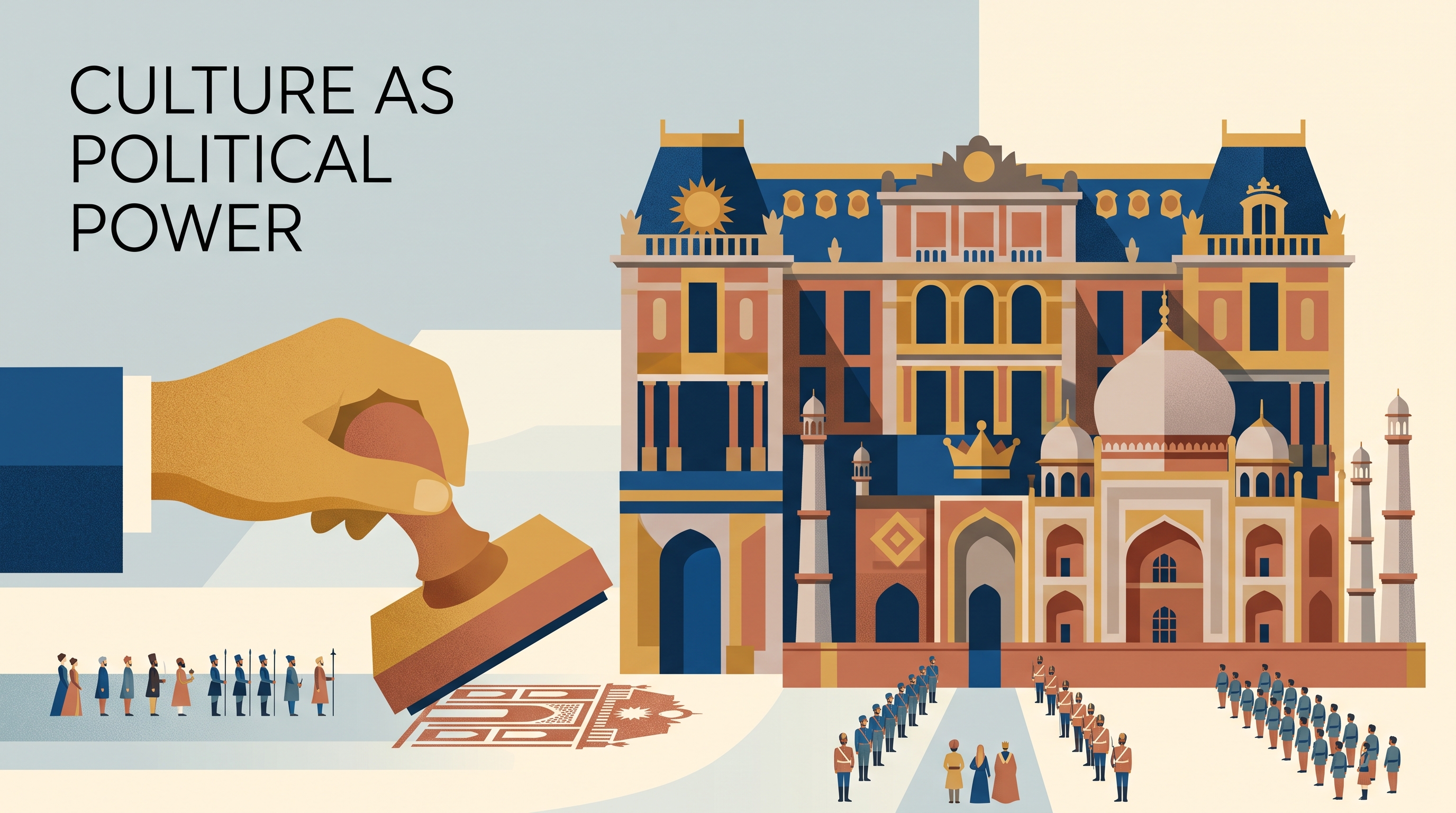
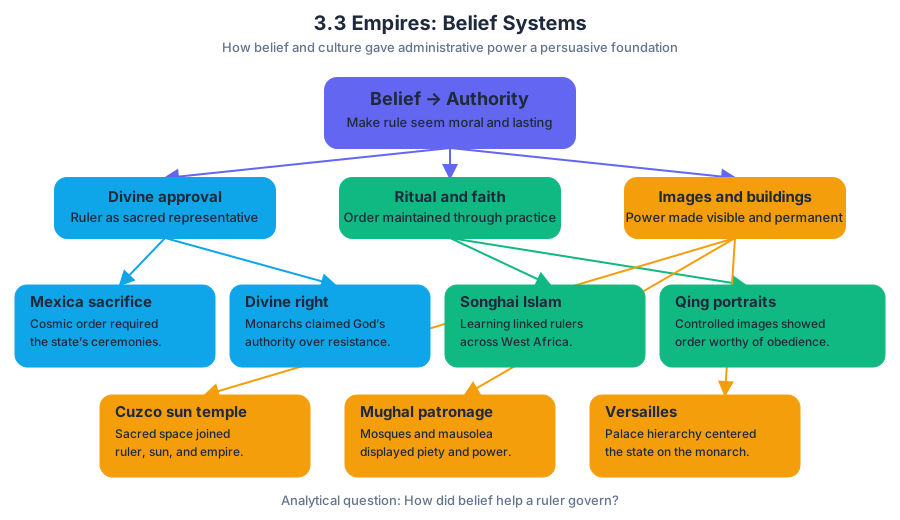
4.1 Technological Innovations from 1450 to 1750 · 4.2 Exploration: Causes and Events from 1450 to 1750
Key concepts: Technological innovations from 1450 to 1750 · Exploration causes and events from 1450 to 1750 · Maritime technology and navigational skills · China’s naval expeditions in the Indian Ocean basin · Western European geographical knowledge and mapmaking · Technological change and human development · Intended and unintended consequences of technological advances · Causation in historical analysis · Transoceanic interconnections · The TEC theme: technology and innovation
Explain and apply 4.1 Technological Innovations from 1450 to 1750 · 4.2 Exploration: Causes and Events from 1450 to 1750.
4.1 Technological Innovations from 1450 to 1750 · 4.2 Exploration: Causes and Events from 1450 to 1750
A ship could cross an ocean only when technology, accumulated knowledge, political support, and economic motives worked together. Between approximately $1450$ and $1750$, innovations in sailing and navigation made transoceanic travel more reliable—but also produced consequences that explorers and rulers could not fully control.
TEC — Technology and Innovation: Human adaptation and innovation increased efficiency, comfort, and security while reshaping development and interaction through both intended and unintended consequences.
4.1 Technological Innovations from 1450 to 1750
Unit 4: Learning Objective A: Explain how cross-cultural interactions resulted in the diffusion of technology and facilitated changes in patterns of trade and travel from $1450$ to $1750$.
KC-4.1.II: Knowledge, scientific learning, and technology from the Classical, Islamic, and Asian worlds spread, facilitating European technological developments and innovation.
KC-4.1.II.A: New tools, ship designs, and improved understanding of wind and current patterns enabled transoceanic travel and trade.
Maritime technology was not a single European invention. Sailors and scholars combined older Classical geographical ideas, Islamic astronomical and navigational learning, and Asian technologies such as the magnetic compass, sternpost rudder, and advanced sail designs. The caravel, a relatively small and maneuverable ship using lateen sails, could move more effectively against changing winds; larger ships could carry provisions, weapons, and cargo across longer routes.
Navigational skill also mattered. Mariners used the compass to determine direction, the astrolabe to estimate latitude from the height of a star, and practical observations of seasonal winds and ocean currents. These tools did not eliminate danger: longitude remained difficult to calculate, storms could destroy ships, and crews still faced hunger and disease. Technology increased the probability of successful travel rather than guaranteeing it.
Worked example — tracing diffusion:
- Asian compass technology improved a navigator’s ability to maintain direction.
- Islamic scholars preserved and developed astronomical knowledge useful for navigation.
- European mariners adapted these resources to Atlantic conditions and combined them with ship designs suited to long voyages.
- Portuguese voyages along the African coast generated additional information about winds, currents, and coastlines.
- The result was a new pattern of travel: European ships could connect the Atlantic, African, and Indian Ocean worlds more consistently.
The intended benefits were practical and political: ships could carry more cargo, rulers could reach distant markets, and sailors could travel with greater efficiency and security. An unintended consequence was that the same improvements in navigation and ship design made armed encounters across oceans more feasible. A tool developed to locate a route or manage a voyage could also increase the ability of states and merchants to impose unequal relationships on peoples they encountered.
Ming China and the Indian Ocean
China demonstrated that long-distance maritime exploration did not begin with western Europe. From $1405$ to $1433$, the Ming admiral Zheng He led seven major expeditions under the Yongle emperor and his successors. The fleets sailed from China through Southeast Asia and across the Indian Ocean to ports in India, Arabia, and the East African coast.
The voyages pursued several connected purposes: displaying Ming power, strengthening diplomatic and tribute relationships, facilitating trade, searching for prestige and information, and extending the emperor’s awareness of the wider world. The enormous fleets carried luxury goods and diplomatic representatives, and foreign rulers sometimes sent envoys or tribute to the Ming court.
These expeditions generated geographic and political knowledge about ports, coastlines, rulers, commercial networks, and monsoon routes. They show that the Indian Ocean was already an interconnected basin before European vessels entered it. However, the voyages did not produce a permanent Chinese overseas empire. After the expeditions ended, court officials criticized their expense, while the Ming government faced other priorities, including threats along its northern frontier and the cost of maintaining the fleet. The state therefore redirected resources away from large-scale naval expeditions.
Misconception check — “Europe discovered oceanic navigation.”
European mariners developed important combinations of ships, instruments, and sailing knowledge, but they did not invent global navigation from nothing. Chinese, Indian, Arab, Persian, and other sailors had long traveled the Indian Ocean. The historically stronger explanation is cross-cultural accumulation: European exploration depended partly on knowledge created or transmitted by other societies.
Mapmaking and the Expansion of Geographical Knowledge
Western European geographical knowledge was uneven. Commercial isolation from much of Asia and Africa meant that European mapmakers often relied on inherited Classical sources, including the work associated with Ptolemy, as well as information transmitted through Islamic scholars and merchants. These maps could contain serious distortions, especially for regions European travelers had not personally visited.
Exploration changed mapmaking in a feedback loop:
older Classical, Islamic, and Asian knowledge
                 ↓
initial European maps and route assumptions
                 ↓
voyage reports, coastal observations, and latitude readings
                 ↓
revised charts and more accurate coastlines
                 ↓
better planning for later voyages
European mapmakers incorporated new voyage reports into portolan-style charts, which emphasized coastlines, harbors, and sailing directions. As Portuguese sailors explored the African coast and rounded the Cape of Good Hope, maps increasingly represented actual coastal observations rather than only inherited speculation. Improved maps therefore both resulted from exploration and enabled further exploration by helping captains plan routes, identify ports, and compare distances.
Source-interpretation example: If one map shows a more recognizable West African coastline and a fuller southern half of the world than an earlier map, the strongest explanation is not simply “Europe became more curious.” The change may reflect Portuguese maritime technology and navigational skills, information from Chinese naval expeditions in the Indian Ocean basin, or the earlier limits of western European geographical knowledge. A historian must match each answer to the map’s visible evidence and historical context.
4.2 Exploration: Causes and Events from 1450 to 1750
Unit 4: Learning Objective B: Explain how the expansion of maritime exploration was related to economic, political, and cultural developments from $1450$ to $1750$.
European exploration had multiple causes. Monarchies sought new sources of wealth and greater political power; merchants wanted direct access to Asian luxury goods; and Christian rulers and missionaries pursued religious expansion. Competition among states encouraged rulers to sponsor voyages that might claim routes, gather information, and strengthen national prestige.
Portugal illustrates historical causation clearly. Its Atlantic position, experience with coastal sailing, royal sponsorship, commercial ambitions, and developing maritime technology encouraged voyages down the western coast of Africa. Portuguese navigators gradually learned to use Atlantic wind systems and currents, making longer voyages possible. In $1488$, Bartolomeu Dias rounded the Cape of Good Hope; in $1497$–$1499$, Vasco da Gama reached India by sea.
Spain pursued a different route to the same broad goals. Christopher Columbus’s voyage in $1492$ sought westward access to Asian markets but instead connected Europeans with the Americas. Later, Ferdinand Magellan’s expedition, begun in $1519$ and completed by surviving crew members in $1522$, demonstrated the practical possibility of circumnavigating the globe, although at enormous human cost.
Causation chain — from innovation to exploration:
| Causal factor | How it enabled exploration |
|---|---|
| Improved ships and sails | Increased maneuverability and range |
| Compass and astronomical tools | Supported direction-finding and latitude estimates |
| Knowledge of winds and currents | Made routes more predictable |
| Mapmaking and voyage reports | Reduced uncertainty for later sailors |
| State sponsorship | Supplied money, ships, crews, and authority |
| Economic and political motives | Made risky voyages seem worthwhile |
Skill focus — Historical Reasoning Process: Causation; 4.A Identify and describe a historical context for a specific historical development or process. To contextualize exploration, place it within the growth of powerful states, expanding commercial networks, technological diffusion, and competition for access to wealth. Do not treat a voyage as an isolated heroic event; explain the conditions that made it possible.
Skill focus — 5.B Explain how a historical development or process relates to another historical development or process. A strong explanation connects maritime innovation to exploration rather than merely listing both. For example: improved knowledge of winds and currents made Portuguese voyages more reliable, while each voyage produced information that improved maps and navigation for subsequent travelers.
Misconception check — “Technology alone caused exploration.” Ships and instruments created possibilities, not motives. Without royal financing, commercial goals, religious aims, and interstate rivalry, many innovations would not have produced sustained transoceanic exploration.
Retrieval check: In two or three sentences, explain why the Ming voyages of $1405$–$1433$ and Portuguese voyages after the fifteenth century represent different outcomes of maritime capability. Include one purpose of the Ming expeditions, one factor behind Portuguese exploration, and one reason improved maps mattered.
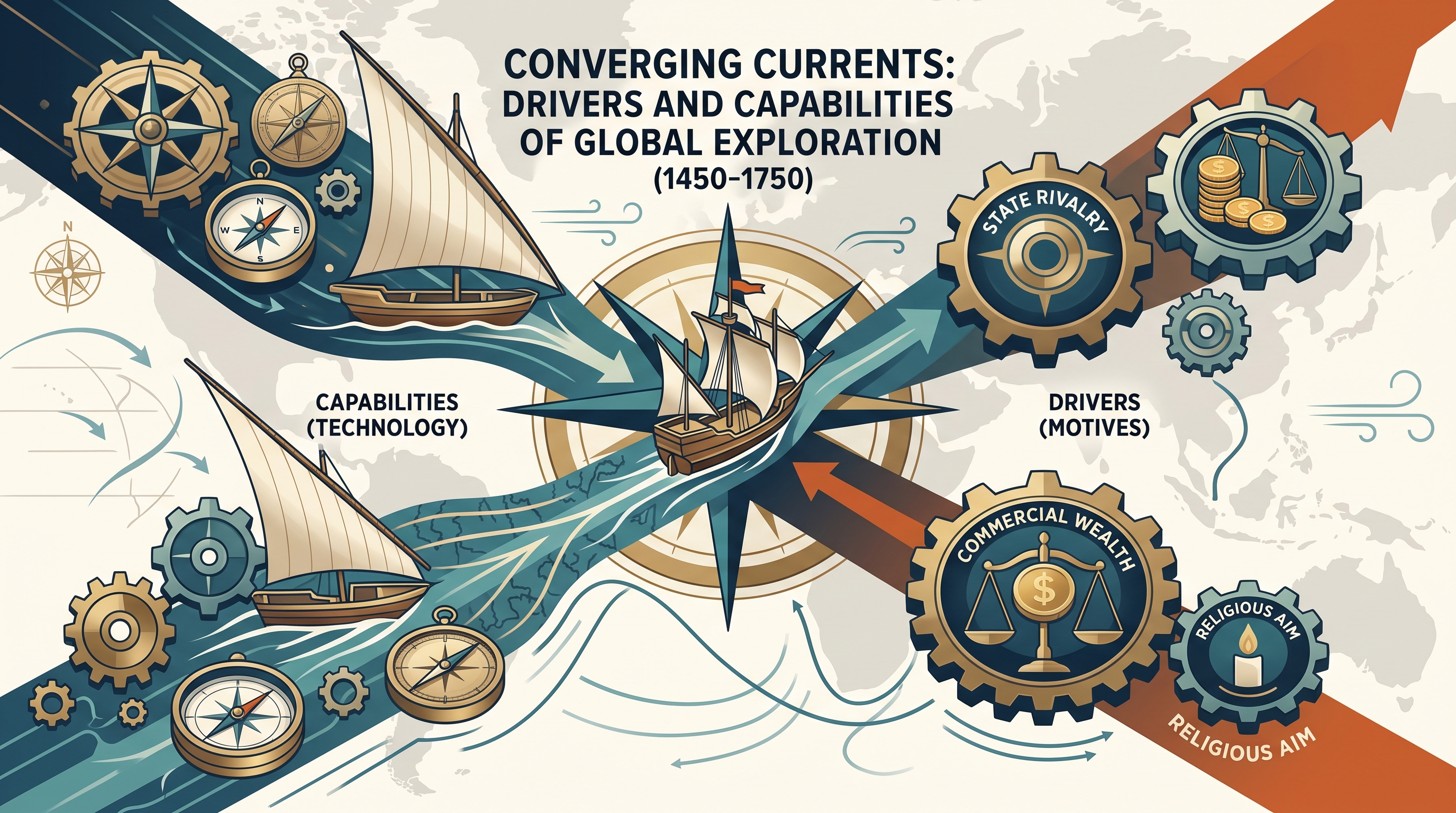
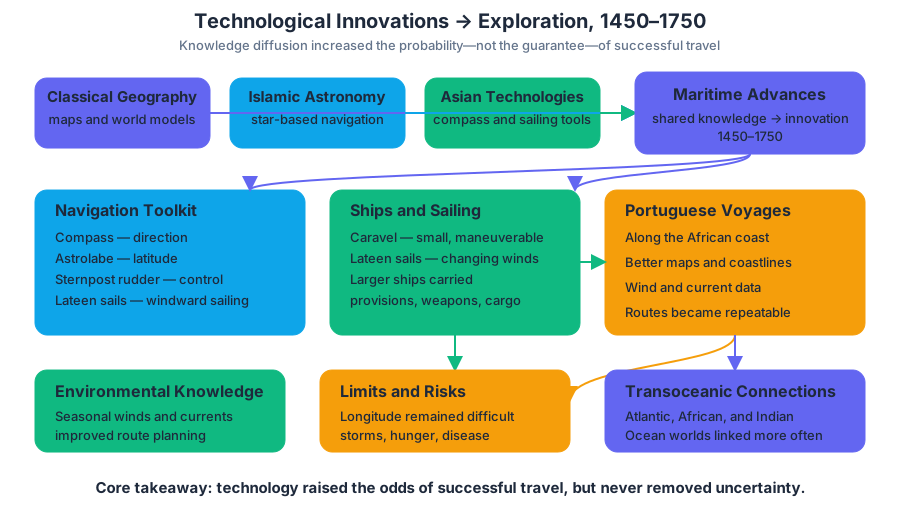
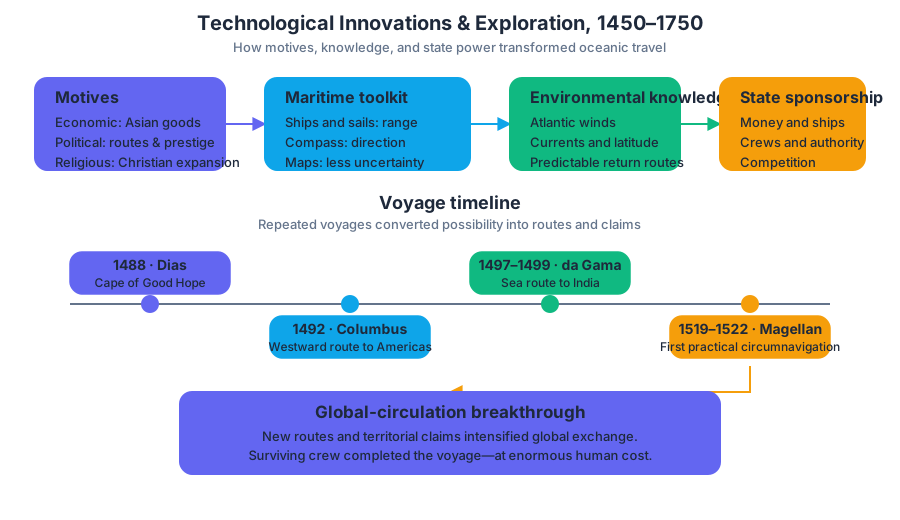
4.3 Columbian Exchange · 4.4 Maritime Empires Established
Key concepts: Columbian Exchange · Maritime empires · European maritime expansion · Navigation and maritime technology · Christopher Columbus and Spanish voyages · Atlantic demographic, cultural, and social change · Exchange of pathogens, people, and plants · Mercantilism · Colonial raw-material extraction and manufacturing · Plantation economies and the development of a global economy
A voyage intended to reach India instead connected two previously separated biological worlds. When Spain sent Christopher Columbus westward in 1492, the expedition reached the Americas rather than Asia; the resulting movement of plants, animals, people, diseases, and cultural practices became known as the…
4.3 Columbian Exchange · 4.4 Maritime Empires Established
A voyage intended to reach India instead connected two previously separated biological worlds. When Spain sent Christopher Columbus westward in 1492, the expedition reached the Americas rather than Asia; the resulting movement of plants, animals, people, diseases, and cultural practices became known as the Columbian Exchange. It transformed the Atlantic region and helped create the first truly global economy.
Columbian Exchange: the transfer of plants, animals, people, pathogens, and cultural practices between the Americas and Afro-Eurasia after sustained European contact.
From ocean voyages to maritime empires
European maritime technological advancements made overseas expansion practical. Improved ships and navigation enabled European states to establish trading posts, control sea routes, and claim overseas territories. A maritime empire is an empire whose power depends heavily on naval strength, oceanic commerce, and colonies or trading stations separated from the imperial center by sea.
Spain became a major maritime empire after Columbus’s voyage. Other European states also pursued overseas trade and conquest, seeking territory, commercial goods, and access to precious metals. These empires connected Europe, Africa, and the Americas through Atlantic shipping, colonial administration, plantation production, and forced labor.
The economic system associated with many maritime empires was mercantilism—the belief that a state should increase its wealth by exporting more than it imported and by accumulating precious metals. Colonies supplied raw materials to imperial states, which used those materials in manufacturing, while colonial markets purchased European goods.
The exchange of biology—and the unequal consequences
The Columbian Exchange moved biological materials in both directions, but its effects were highly uneven.
| Direction | Major transfers | Important consequences |
|---|---|---|
| Americas to Afro-Eurasia | Maize, potatoes, and other plants | Improved diets and supported population growth in parts of Afro-Eurasia |
| Afro-Eurasia to the Americas | European diseases and pathogens | Catastrophic mortality among Indigenous peoples |
| Africa and Europe to the Americas | Enslaved Africans, crops, animals, and cultural practices | Plantation labor systems and new African cultural communities |
| Across the Atlantic world | People, commodities, technologies, and beliefs | Expansion of colonial societies and a global economy |
European pathogens—including smallpox, measles, and malaria—had especially devastating effects in the Americas. Afro-Eurasian societies had experienced repeated exposure to many diseases through long-standing interregional connections, while many Indigenous American communities had been separated from those disease environments. As a result, epidemics killed millions, weakened political structures, reduced labor forces, and made European conquest and colonization easier.
Key asymmetry: the exchange was transatlantic, but it was not equal. American populations suffered enormous demographic losses from disease, while some Afro-Eurasian populations benefited from American food crops.
American crops improved diets in Afro-Eurasia and helped some populations live longer or support more people. At the same time, European colonization brought forced labor, land seizure, Christianization, and new racial and social hierarchies to the Americas.
Plantations, slavery, and Atlantic society
The growth of plantations intensified the Atlantic labor system. Plantations in the Americas and Africa produced valuable commodities for overseas markets, while European colonizers increasingly relied on the forced transportation of enslaved Africans to provide labor. African languages, foods, religious practices, and music diffused into American societies, even under conditions of coercion.
This process produced cultural change alongside exploitation. Colonial societies developed hierarchies shaped by European ancestry, Indigenous identity, and African descent; the exchange therefore changed not only population numbers but also social organization, labor systems, and cultural life.
Worked historical example: tracing one global chain
Consider a potato grown in the Andes:
- Indigenous American farmers cultivated and improved the crop.
- European voyagers transported it across the Atlantic.
- Farmers in Afro-Eurasia adopted it in suitable regions.
- A calorie-rich crop supported larger populations.
- Population growth increased labor availability, consumption, and state resources.
- At the same time, European colonization of the Americas intensified disease transmission, land seizure, and plantation labor.
The same exchange could therefore produce population growth in one region and demographic collapse in another. Treating the Columbian Exchange as simply “beneficial” or simply “harmful” misses its central historical feature: unequal effects across regions and social groups.
CED traceability and historical reasoning
4.3 Learning Objective: Explain the causes of the Columbian Exchange and its effects on the Americas and Europe.
4.3.A: The new global circulation of goods had a variety of effects on the world.
4.3.A.1: European colonization of the Americas led to the exchange of new plants, animals, and diseases between the Eastern and Western Hemispheres.
4.3.A.2: The exchange of plants and animals between the Americas and Europe had a significant impact on both populations.
4.4 Learning Objective: Explain the development of maritime empires from 1450 to 1750.
4.4.A: Europeans established maritime empires in the Americas.
4.4.A.1: Portuguese maritime expansion focused heavily on establishing trading-post empires.
4.4.A.2: Spanish maritime expansion involved conquest and the establishment of colonies in the Americas.
The most useful AP historical thinking skills here are Skill 1: Developments and Processes, especially 1.B Explain a historical concept, development, or process; Skill 4: Contextualization, especially 4.A Identify and explain the historical context of a source or development; Skill 5: Making Connections, especially 5.B Explain the causes and effects of a historical development and 5.C Explain patterns of continuity and change over time; and Skill 6: Argumentation, especially 6.A Develop a thesis or claim that responds to a question. These skills turn a list of exchanges into an explanation of causation, comparison, and consequence.
Misconception check
Misconception: “Columbus discovered an empty New World.”
Correction: The Americas contained numerous Indigenous societies with established populations, political systems, economies, and cultures. Columbus’s voyage initiated sustained contact and colonization by Europeans; it did not create the societies already present.
Retrieval check
Explain, in two linked sentences, why the Columbian Exchange contributed both to population growth in parts of Afro-Eurasia and to demographic catastrophe in the Americas. Then identify one way plantations connected biological exchange to the expansion of Atlantic economic systems.
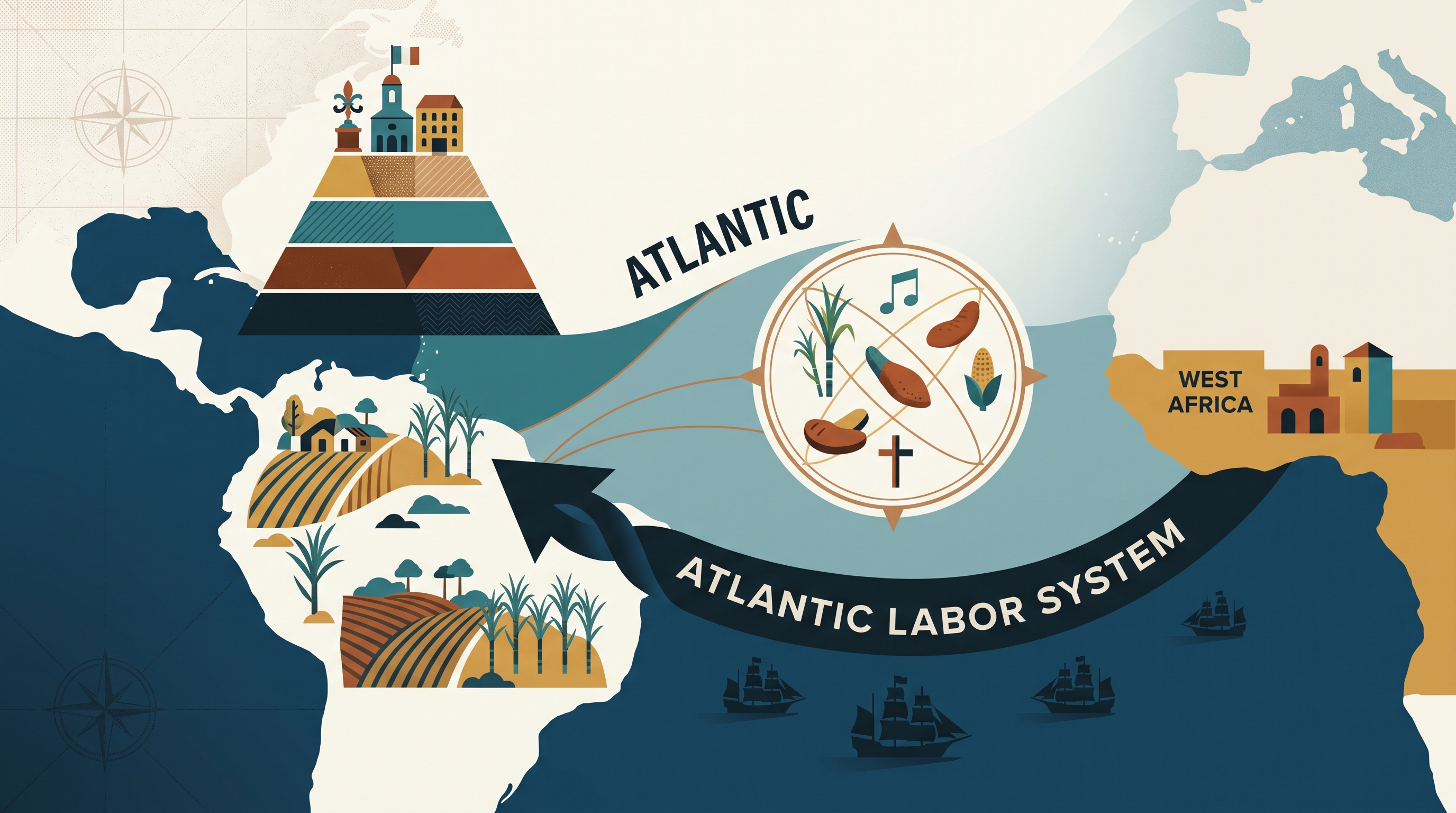
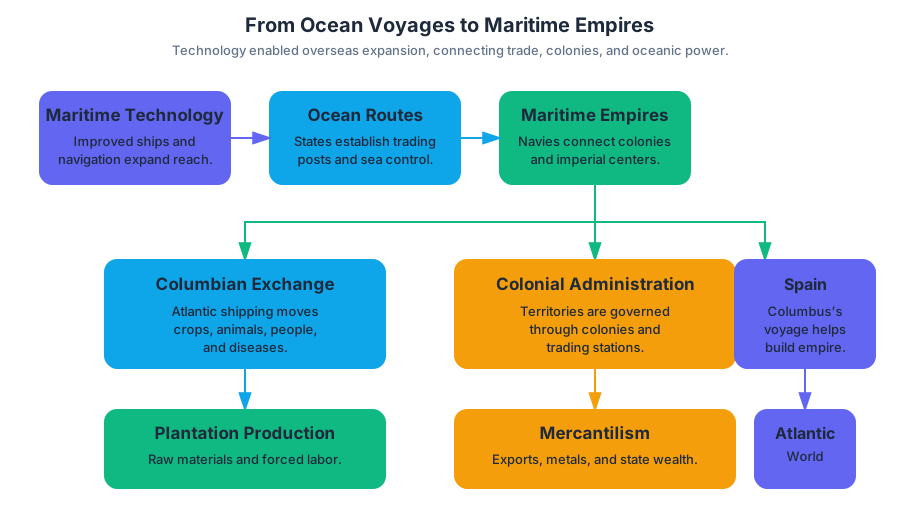
4.5 Maritime Empires Maintained and Developed · 4.6 Internal and External Challenges to State Power from 1450 to 1750
Key concepts: Governance and state power · Internal and external factors in state formation, expansion, and decline · Administrative institutions, policies, and procedures used to maintain order · Recruitment and use of bureaucratic elites and military professionals · Maritime empires · The Ottoman devshirme system · Salaried samurai in Japan · Ming China · Tokugawa Japan · The Protestant and Catholic reformations and the growth of Christianity
Explain and apply 4.5 Maritime Empires Maintained and Developed · 4.6 Internal and External Challenges to State Power from 1450 to 1750.
4.5 Maritime Empires Maintained and Developed · 4.6 Internal and External Challenges to State Power from 1450 to 1750
A state could possess powerful ships and still lose control on land. Between $1450$ and $1750$, rulers maintained authority by combining military force, administrative systems, religious legitimacy, taxation, and carefully managed trade. The central question is not simply which empire expanded, but how governments obtained, retained, and exercised power—and why that power sometimes weakened.
Governance (GOV): A variety of internal and external factors contribute to state formation, expansion, and decline. Governments maintain order through administrative institutions, policies, and procedures, and they obtain, retain, and exercise power in different ways and for different purposes.
Maritime power required administration
A maritime empire is a state whose influence depends significantly on oceanic trade, naval power, overseas ports, or commercial networks. European states established profitable trading posts in Africa and Asia, but maritime power was not exclusively European. Ming China is identified as a maritime empire established during this period, while Tokugawa Japan is discussed in relation to the way an Asian state responded to European-dominated long-distance trade.
European trading posts generated revenue for rulers and merchants, yet they also created cultural and economic disruption. Some Asian states therefore adopted restrictive or isolationist policies to limit European influence. Tokugawa Japan did not become completely disconnected from the world; rather, its government attempted to regulate foreign contact and preserve political control over exchange.
Misconception check — “isolation” means total closure: Restrictive policies usually meant controlled access, not perfect isolation. A government could limit foreign merchants, missionaries, and political influence while still permitting selected trade.
Centralized states depended on specialists
Rulers increasingly recruited bureaucratic elites, administrators who managed taxation and government, and military professionals, soldiers whose careers were organized around state service. These specialists helped rulers control populations and resources more consistently than personal loyalty alone could.
The Ottoman devshirme system illustrates this strategy. Christian boys from parts of the empire were recruited, converted to Islam, and trained for service in the Ottoman administrative or military establishment. Some became bureaucrats; others entered the elite Janissary corps. The system gave the sultan personnel whose careers and status depended directly on the central government.
Salaried samurai provide another example. In Tokugawa Japan, warrior professionals received stipends from their lords and served within a hierarchical political order. Their military identity was therefore connected to administration and state discipline, not merely to independent landholding.
Key distinction: A professional military is not simply a large army. It is a force whose recruitment, training, payment, and loyalty are organized by the state.
Revenue, legitimacy, and order worked together
States needed revenue to pay soldiers, maintain officials, build infrastructure, and expand. Rulers used tribute collection, tax farming, and innovative tax systems; examples include Ottoman tax farming, Mughal zamindar tax collection, Mexica tribute lists, and the Ming practice of collecting taxes in hard currency. These systems converted political control into material resources.
Power also required legitimacy, the belief that rule was rightful. Religious ideas, art, and monumental architecture communicated authority. The Protestant and Catholic reformations changed existing Christian traditions and contributed to Christianity’s continued growth, while rulers elsewhere used religious policies, imperial portraits, mausolea, mosques, and palaces to present government as sacred, orderly, and powerful.
Internal and external challenges could redirect states
State formation, expansion, and decline resulted from interacting pressures. Internally, rulers faced succession disputes, religious divisions, resistance from local elites, fiscal problems, and administrative overreach. Externally, states confronted rival empires, military competition, changing trade routes, and the disruptive arrival of European maritime powers.
The fragmentation of the Abbasid Caliphate demonstrates political change within the Islamic world: religious and cultural influence could persist even as centralized political authority weakened. Political fragmentation did not mean that a civilization disappeared; it meant that power was redistributed among competing states and rulers.
Reading power in a primary source
Bernal Díaz del Castillo’s description of Tenochtitlan can be read as evidence about how an observer interpreted state power. The city’s scale, organization, markets, monumental structures, and tribute relationships reveal a highly developed political center. At the same time, Díaz wrote as a Spanish participant in the conquest, so his purpose and perspective shaped what he emphasized.
Worked contextual example: If a passage praises Tenochtitlan’s grandeur but describes Mexica religious practices as shocking, contextualize both details together. The first reflects the city’s administrative and economic strength; the second reflects European Christian assumptions during Spanish conquest. A strong interpretation therefore uses the source both as evidence about Tenochtitlan and as evidence about the observer’s worldview.
Skill focus: Contextualization (4.A)
4.A — Identify and describe a historical context for a specific historical development or process. For the devshirme, relevant context includes Ottoman territorial expansion and the need for personnel loyal to the central ruler. For Tokugawa restrictions, relevant context includes European trading posts, missionary activity, and the political risks of uncontrolled foreign influence.
Retrieval check: Why could a ruler use both religious legitimacy and professional military recruitment? What internal problem did each address? A complete response should explain that religious ideas encouraged obedience by presenting rule as rightful, while trained and salaried specialists gave the government practical tools to collect revenue, enforce policy, and maintain centralized control.
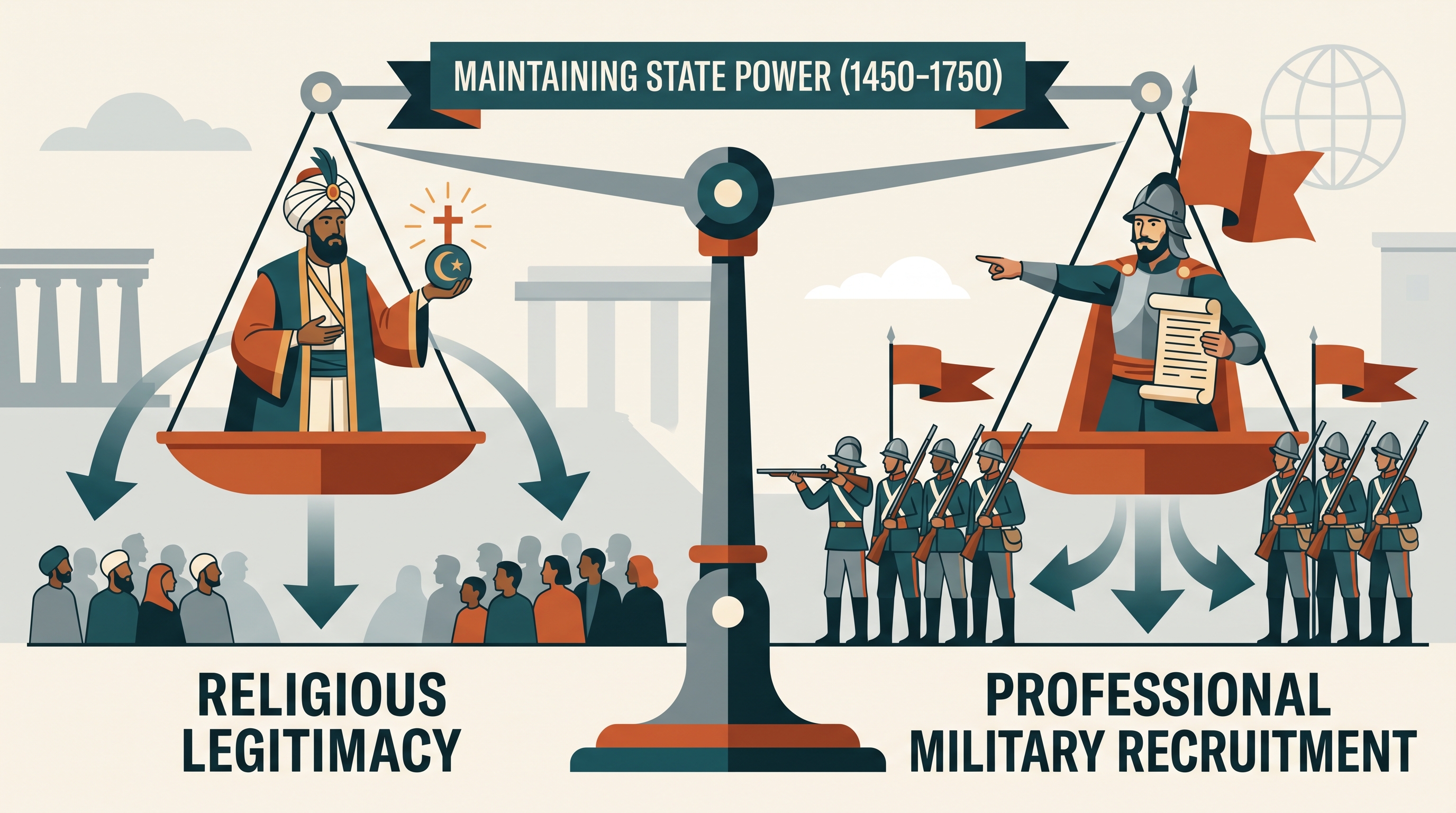
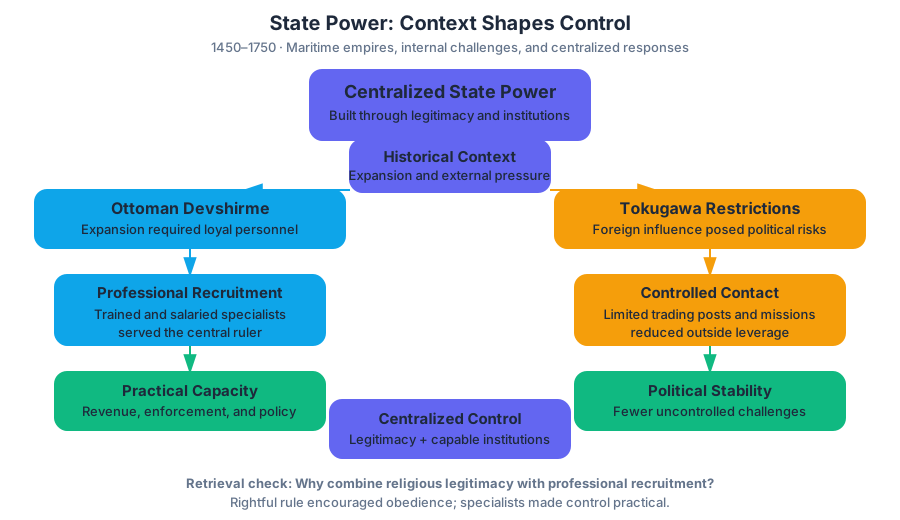
4.7 Changing Social Hierarchies from 1450 to 1750 · 4.8 Continuity and Change from 1450 to 1750
Key concepts: Changing social hierarchies from 1450 to 1750 · Continuity and change over time · Social interactions and organization · Cultural developments and interactions · Demographic change in Africa · Trade in enslaved persons · Differential treatment of social and religious groups · Religious encounters and their political, social, and cultural effects · Global economic interconnections · State policies limiting European political influence
Explain and apply 4.7 Changing Social Hierarchies from 1450 to 1750 · 4.8 Continuity and Change from 1450 to 1750.
4.7 Changing Social Hierarchies from 1450 to 1750 · 4.8 Continuity and Change from 1450 to 1750
Between 1450 and 1750, expanding trade did not simply erase older social hierarchies. Instead, new wealth, coerced labor systems, religious policies, and demographic upheavals rearranged some groups while preserving others. The central question is: when global connections intensified, who gained status, who lost power, and which social patterns endured?
A social hierarchy is a system of ranked relationships
A social hierarchy ranks people according to categories such as religion, ethnicity, gender, occupation, legal status, wealth, or ancestry. The AP theme Social Interactions and Organization (SIO) asks how societies grouped their members and how the rules governing those groups shaped political, economic, and cultural institutions.
Unit 4: Learning Objective M requires explaining how social categories, roles, and practices were maintained or changed over time. Unit 4: Learning Objective J adds the relationship between political, economic, and cultural forces and society. For Topic 4.8, continuity and change over time means making a precise argument: identify what persisted, identify what shifted, and explain why.
The Atlantic slave trade transformed African societies
The trade in enslaved persons produced major demographic changes in Africa. European merchants and African states participated in an Atlantic system that forcibly transported millions of Africans to the Americas. This removal disproportionately affected young adults, especially men in many regions, producing gender imbalances, disrupting family structures, and encouraging some communities to reorganize marriage, inheritance, and labor.
The consequences varied across Africa. Some rulers gained firearms, luxury goods, or political leverage by participating in the trade, while other societies suffered raids, warfare, population loss, and political instability. The key causal chain is:
European and American demand for labor → expansion of slave trading → forced migration from Africa → demographic imbalance and family restructuring → altered political and social organization.
Misconception check: The Atlantic slave trade did not merely “move workers.” It changed the age and gender composition of African communities and reshaped kinship, political authority, and regional security.
Status changed in the Americas, but hierarchy persisted
In the Americas, European colonization created new racial and legal categories. Spanish and Portuguese colonies developed caste systems that ranked peninsulares, creoles, mixed-race groups, Indigenous peoples, and Africans differently. These categories could affect taxation, officeholding, marriage, labor, and legal rights. At the same time, older Indigenous hierarchies and community structures often survived beneath or alongside colonial rule.
This is a classic continuity-and-change pattern: European conquest changed political power and introduced racial classification, but societies did not become socially equal. Gender inequality, elite privilege, and coerced labor persisted, even as the identities used to justify hierarchy changed.
Religious encounters produced different outcomes
Religious interaction depended on local political conditions. European missionaries often sought to convert Indigenous peoples in the Americas, while states in Asia and Africa sometimes restricted missionary activity to protect political autonomy or established religious traditions. In China, the Jesuit Matteo Ricci used knowledge of mathematics and astronomy to gain access to elite circles, creating a religious encounter that involved accommodation with Confucian traditions rather than immediate mass conversion.
The expulsion of Jews from Spain in 1492 illustrates differential treatment—the unequal treatment of a group based on religious identity. Spanish rulers promoted Catholic uniformity and expelled Jews who refused conversion. Yet expelled Jewish communities carried commercial expertise, languages, and connections into the Ottoman Empire and elsewhere. Persecution therefore produced both social exclusion and wider cultural circulation.
States also limited European influence. Tokugawa Japan restricted foreign merchants and Christian missionaries, while China regulated European access through controlled trading arrangements. These policies did not mean Asian or African societies were isolated; they meant governments attempted to manage contact on their own terms.
Silver connected American mines to Asian markets
American silver from mines such as Potosí and Japanese silver entered expanding global trade networks. European monopoly companies, including the Dutch East India Company and the English East India Company, used silver to purchase Asian textiles, spices, tea, porcelain, and other goods. Because China demanded payment in silver, American bullion often moved across the Pacific through the Manila trade and ultimately entered Chinese markets.
This system reveals both global integration and regional continuity. Long-established Afro-Eurasian markets continued to flourish; European merchants entered those markets but did not replace them. Rising demand intensified the work of peasants and artisans producing food and consumer goods. Commercial growth therefore strengthened states and merchants while increasing labor demands on ordinary people.
How to write the historical argument
For Skill 1: Developments and Processes, trace the process from expanding trade to social restructuring. For Skill 4: Contextualization, place Atlantic slavery, caste systems, and silver flows within the larger expansion of maritime connections. For Skill 5: Making Connections, compare two regions or distinguish continuity from change. For Skill 6: Argumentation, turn evidence into a defensible claim rather than listing examples. Skill 3: Claims and Evidence in Sources matters when a passage reveals a ruler’s policy, a missionary’s purpose, or a merchant’s perspective.
Worked example: A strong continuity-and-change claim might argue that global commerce transformed labor and status by expanding slavery, caste categories, and market production, but older religious distinctions, elite privilege, gender inequality, and regional markets persisted. The explanation links evidence to causes: changing demand created new institutions, while governments and communities adapted existing hierarchies rather than abandoning them.
Retrieval check: Explain one demographic effect of the Atlantic slave trade in Africa, one reason China attracted American silver, and one example of a state limiting European influence. Then identify one continuity and one change in social hierarchy between 1450 and 1750.
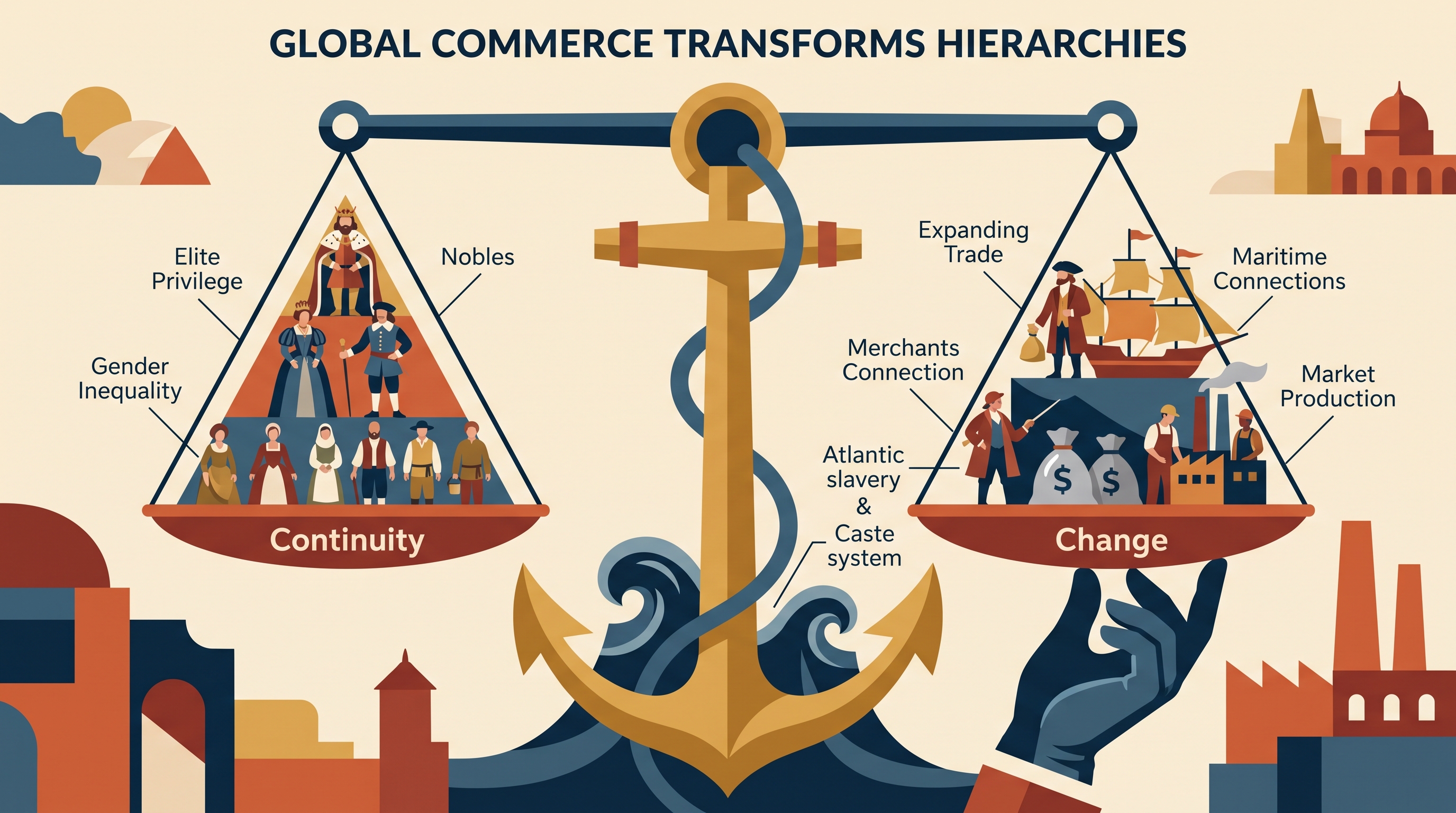
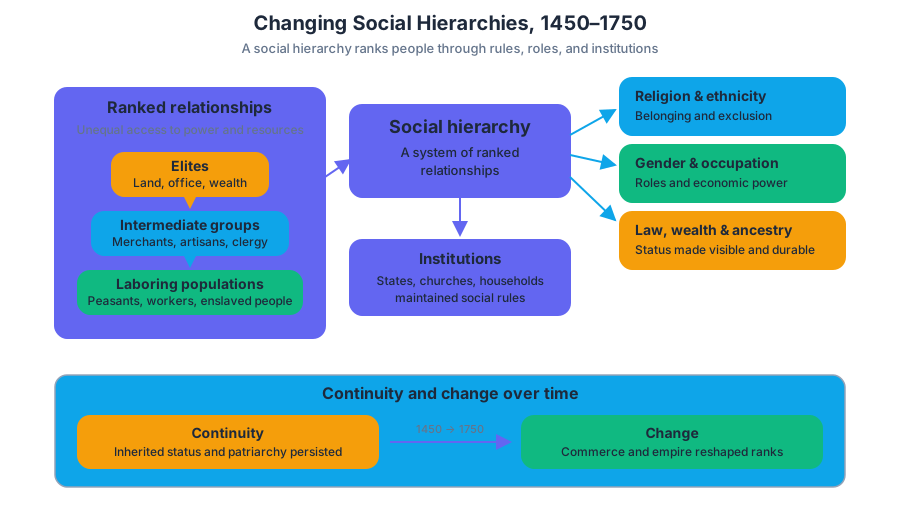
5.1 The Enlightenment · 5.2 Nationalism and Revolutions from 1750 to 1900
Key concepts: Enlightenment thought · Nationalism · Revolutions and rebellions from 1750 to 1900 · Democratic ideals · Questioning established traditions · Commonality based on language, religion, social customs, and territory · Government use of nationalism to foster unity · Colonial resistance in the Americas · Causes and effects of revolutions · Historical development of states and empires
Between approximately 1750 and 1900, political authority faced a powerful double challenge: people questioned why governments should rule, and they increasingly asked who belonged to the political community.
5.1 The Enlightenment · 5.2 Nationalism and Revolutions from 1750 to 1900
Between approximately 1750 and 1900, political authority faced a powerful double challenge: people questioned why governments should rule, and they increasingly asked who belonged to the political community. Enlightenment thought supplied arguments about reason, rights, and legitimate government; nationalism supplied a sense of collective identity based on language, religion, social customs, and territory. Together, these forces helped produce an intense period of revolutions and rebellions against existing governments.
Learning Objective — Unit 5: Learning Objective C: Explain causes and effects of the various revolutions in the period from 1750 to 1900.
The Enlightenment: questioning established traditions
The Enlightenment was an intellectual movement that applied reason and evidence to questions traditionally answered by inherited authority. Enlightenment thinkers questioned established traditions in government, religion, society, and law. Their central pressure point was legitimacy: Should a monarch, church, or social hierarchy be obeyed simply because it had existed for a long time?
Enlightenment arguments often included natural rights, the social contract, religious toleration, and limits on arbitrary government. John Locke argued that people possessed rights that governments should protect; Montesquieu advocated separating governmental powers; and Jean-Jacques Rousseau emphasized popular sovereignty—the idea that political authority ultimately rests with the people. These arguments did not automatically create equal societies, but they gave critics of monarchist and imperial rule a language for demanding reform.
KC-5.3.I: The rise and diffusion of Enlightenment thought that questioned established traditions in all areas of life often preceded revolutions and rebellions against existing governments. The key relationship is not “ideas caused every revolution by themselves.” Rather, ideas helped people interpret existing grievances—taxation, political exclusion, imperial control, or social inequality—and imagine an alternative political order.
From political discontent to revolution
A revolution is a rapid and substantial transformation of political or social order. A rebellion is organized resistance against authority, which may or may not create a new state. During this period, colonial subjects in the Americas led rebellions inspired partly by democratic ideals. The American Revolution challenged British imperial rule, while the Haitian Revolution combined anticolonial resistance with a direct challenge to racial slavery. In Spanish America, independence movements weakened Iberian imperial control and produced new states.
The causes of revolutions usually operated together:
- Political causes: monarchist or imperial governments restricted representation and participation.
- Economic causes: taxation, unequal trade arrangements, debt, and food insecurity intensified discontent.
- Ideological causes: Enlightenment ideas made natural rights and popular sovereignty appear politically legitimate.
- Social causes: groups excluded from power sought recognition, autonomy, or equality.
The effects were equally uneven. Revolutions could establish republics, weaken empires, and inspire new nation-states, while still preserving slavery, racial hierarchy, gender inequality, or elite power. This is a crucial AP distinction: a revolution may produce major political change without creating social equality for everyone.
Worked example: tracing an ideological cause
Consider a colonial society ruled by a distant empire. Local elites resent imperial taxes and restrictions; merchants oppose regulated trade; and political thinkers circulate arguments about rights and representation. Enlightenment ideas do not create every grievance, but they transform the argument from “this policy is inconvenient” into “this government violates legitimate political rights.” Rebellion can then claim a universal principle—self-government—even when many revolutionaries limit that principle to property-owning men.
Reasoning chain: imperial rule and economic restrictions → political discontent → Enlightenment language of rights and representation → rebellion → creation of a new government. The same chain can produce different outcomes depending on the population mobilized and the institutions available afterward.
Nationalism and the making of unity
Nationalism is the belief that people who share a common identity should possess political loyalty, autonomy, or their own state. KC-5.3.II.i identifies nationalism as a major force shaping the historical development of states and empires. KC-5.3.II.ii emphasizes that commonality could be based on language, religion, social customs, and territory—and that governments sometimes harnessed it to foster unity.
Nationalism could unite people against an empire, as in independence movements, or strengthen an existing state by encouraging citizens to identify with a common homeland. It could also exclude minorities whose language, religion, or customs differed from the dominant national identity. Thus nationalism was both a force for self-determination and a tool governments could use to consolidate power.
Comparison: Enlightenment and nationalism
Enlightenment thought primarily asked, What makes government legitimate? Nationalism primarily asked, Who constitutes the political community? They often reinforced one another: a national community could demand popular government, while democratic ideals could justify national independence. Yet they were not identical. A nationalist movement could seek an independent monarchy, and a government could invoke national unity while limiting democratic participation.
KC-5.3: The eighteenth century marked the beginning of an intense period of revolution and rebellion against existing governments, leading to the establishment of new nation-states around the world. KC-5.3.IV.A.i connects discontent with monarchist and imperial rule to new systems of government and ideologies, including democracy and nineteenth-century liberalism.
AP historical-thinking skills in this topic
- Skill 1: Developments and Processes: identify how Enlightenment ideas and nationalism developed over time and shaped revolutions.
- Skill 2: Sourcing and Situation: ask how an author’s position, purpose, audience, and historical situation affect arguments about rights or national identity.
- Skill 3: Claims and Evidence in Sources: use a specific political document or revolutionary statement as evidence for a claim about ideology.
- Skill 4: Contextualization: connect revolutions to wider monarchist, imperial, economic, and social conditions.
- Skill 5: Making Connections: compare causes and effects across the American, Haitian, French, and Latin American revolutions.
- Skill 6: Argumentation: defend an argument about the extent to which Enlightenment thought or nationalism produced political change.
Misconception check
Misconception: “Enlightenment ideas immediately created democratic equality.” In reality, revolutionary language could be universal while political rights remained restricted by gender, race, class, or property. Always separate a revolution’s ideals, its institutional changes, and the people who actually benefited.
Retrieval check
Explain, in two steps, how Enlightenment thought could contribute to revolution without being the only cause. Then identify one way nationalism could promote unity and one way it could produce exclusion.
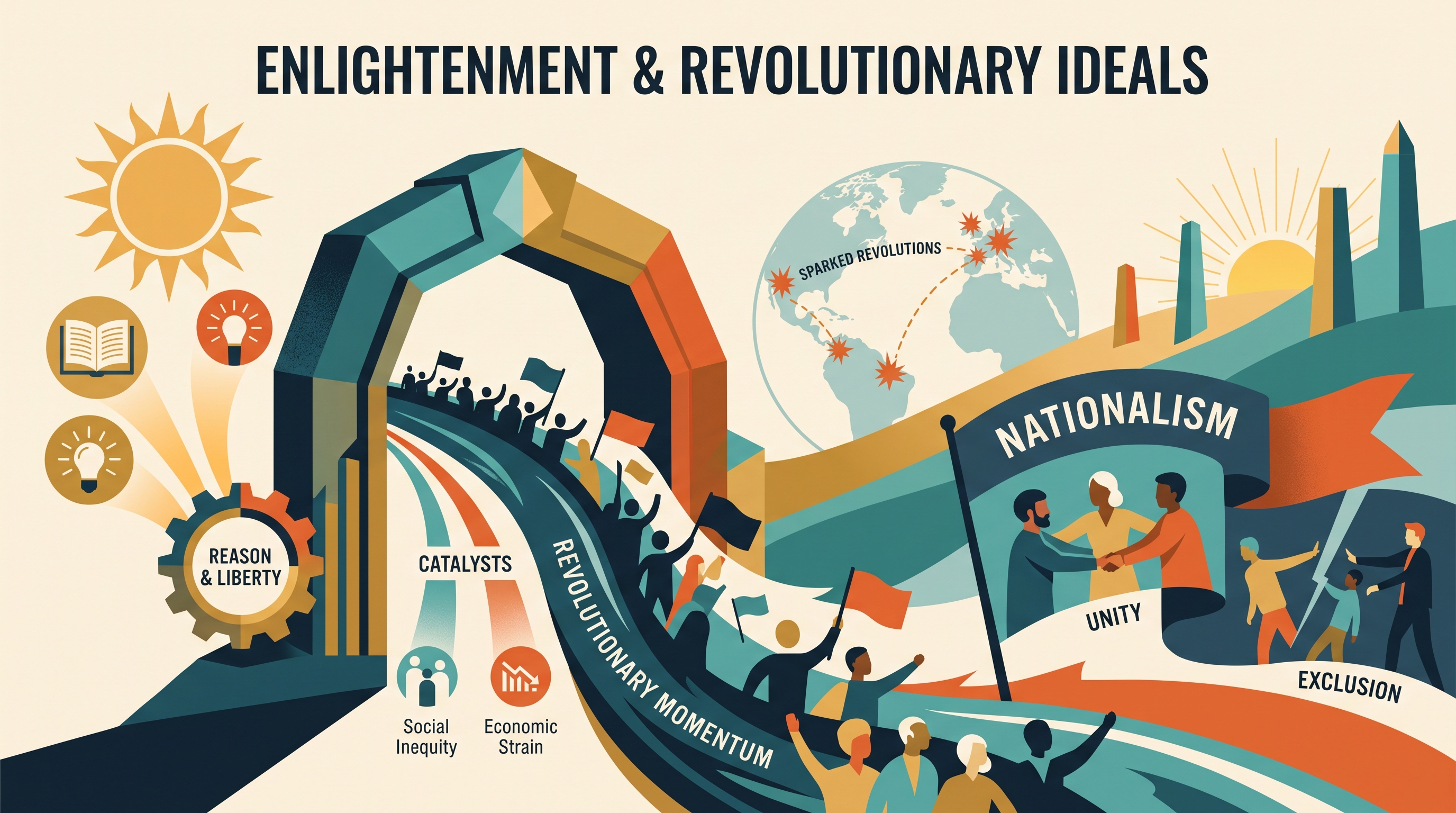
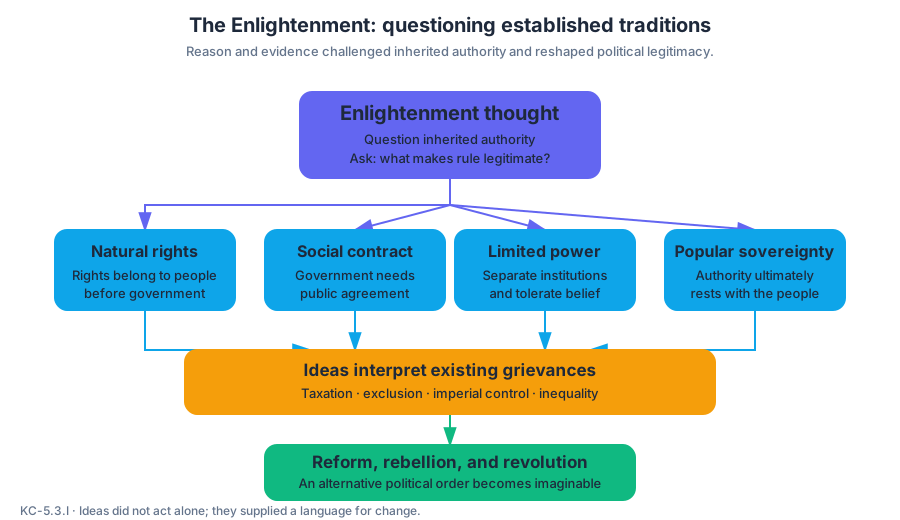
5.3 Industrial Revolution Begins · 5.4 Industrialization Spreads from 1750 to 1900
Key concepts: Industrial Revolution · Industrial capitalism · Industrialization and change, continuity, and causation from 1750 to 1900 · First Industrial Revolution in England · Second Industrial Revolution · Urbanization · Factory labor and working-class family economies · Environmental effects of industrialization · Standards of living · Historical comparison and contextualization
The Industrial Revolution was the shift from hand production and household workshops toward mechanized production in factories, beginning in England during the period $c. 1750$ to $c.
5.3 Industrial Revolution Begins · 5.4 Industrialization Spreads from 1750 to 1900
The Industrial Revolution was the shift from hand production and household workshops toward mechanized production in factories, beginning in England during the period $c. 1750$ to $c. 1900$. Industrialization means the broader process by which societies adopted factories, new energy sources, wage labor, mechanized transportation, and industrial capitalism.
Investigative question: Why did industrialization begin in England, and why did its effects spread unevenly across the world?
5.3 — The Industrial Revolution Begins
England became the first major center of industrialization because several developments reinforced one another. Agricultural changes increased food production and displaced some rural workers; England possessed accessible coal and iron; merchants and investors supplied capital; and expanding trade created markets for manufactured goods. These conditions did not make industrialization automatic, but together they lowered the barriers to mechanized production.
The early factory system reorganized work. Instead of producing textiles in scattered homes, owners concentrated workers and machines in factories, where labor could be supervised and production standardized. Coal, steam power, and water power supplied energy beyond the limits of human and animal labor, while railways later connected mines, factories, cities, and ports.
Industrial capitalism is an economic system in which private owners invest capital—the money and resources used to produce goods—in factories, machinery, and businesses in expectation of profit. It increased production and raised standards of living for some people, especially entrepreneurs and parts of the middle class, but benefits were uneven: many workers faced low wages, long hours, unsafe conditions, and unstable employment.
Labor, family income, and urbanization
Industrialization connected directly to urbanization, the growth of cities as people moved toward industrial employment. During the first Industrial Revolution in England, lower-class women and children worked in factories to supplement family income. Their wages could be essential to household survival, even as factory labor exposed them to dangerous machinery and harsh discipline.
Urban growth transformed environments as well as societies. Coal smoke polluted air, factories discharged waste, and crowded neighborhoods often lacked clean water and sanitation. At the same time, cities became centers of commerce, transportation, political organization, and new class identities, including a growing industrial working class and an expanding middle class.
Misconception check: Industrialization did not improve everyone’s life immediately. A strong historical explanation distinguishes long-term increases in production and income from the short-term poverty, exploitation, and environmental damage experienced by many workers.
5.4 — Industrialization Spreads, $1750$–$1900
Industrialization spread from England to parts of western Europe, North America, Russia, Japan, and other regions, but it did not follow one identical path. Some governments promoted railways and factories; some societies relied on foreign investment or imported machinery; and many regions remained primarily agricultural or became suppliers of raw materials to industrial economies.
The Second Industrial Revolution expanded industrial production during the later nineteenth century. Cheap steel, electricity, chemicals, and precision machinery supported larger factories and increased the production of consumer goods. Industrialization therefore changed not only how goods were made but also what ordinary people could purchase and how quickly goods could circulate.
A comparison clarifies the process:
| Feature | First Industrial Revolution | Second Industrial Revolution |
|---|---|---|
| Main setting | England, especially textile-producing regions | Germany, the United States, and other industrializing regions |
| Energy and materials | Coal, steam, and water power; iron | Electricity, chemicals, cheap steel, and precision machinery |
| Major effect | Factory production and mechanized textiles | Larger-scale industry and expanded consumer-goods production |
| Social result | Urban working class and factory labor | Mass production, expanding markets, and intensified urbanization |
Change, continuity, and causation
The required reasoning process for 5.3 Industrial Revolution Begins is Causation, especially Skill 1.B: Explain a historical concept, development, or process. To explain causation, connect conditions to outcomes rather than listing inventions: agricultural change and available coal helped England industrialize; factories then encouraged wage labor, urbanization, and environmental transformation.
The required reasoning process for 5.4 Industrialization Spreads in the Period from 1750 to 1900 is Continuity and Change, especially Skill 5.A: Identify patterns among or connections between historical developments and processes. Industrialization brought major change in production, transportation, cities, and class structure, but continuity remained: social inequality persisted, many people continued farming, and women and children still performed economically necessary labor.
A strong argument evaluates extent. For example: Industrialization substantially changed production and urban life from $1750$ to $1900$ by creating factories, wage labor, railways, and industrial cities; however, it did not eliminate rural economies or inequality, and its benefits in living standards were distributed unevenly.
For Skill 3.C: Compare the arguments or main ideas of two sources, compare what each source claims about industrialization, then explain why the difference matters. A factory owner might emphasize cheaper goods and rising output, while a worker might emphasize dangerous conditions and low wages. The strongest comparison identifies both perspectives and connects them to each source’s position, purpose, or historical situation.
Worked contextual example
Suppose a source praises the growth of English textile factories while another condemns factory labor. First, establish context: agricultural change and new energy systems helped create England’s factory economy. Then compare the arguments. The first source measures progress through production and consumer goods; the second measures it through workers’ health, family income, and safety. The defensible conclusion is not that one source is automatically “correct,” but that industrial capitalism produced unequal change: rising output and prosperity for some alongside exploitation and urban poverty for others.
Retrieval check: Name one cause of England’s early industrialization, one change produced by factories, and one continuity from $1750$ to $1900$. Then explain why “industrialization improved living standards” is incomplete without identifying which social groups benefited.
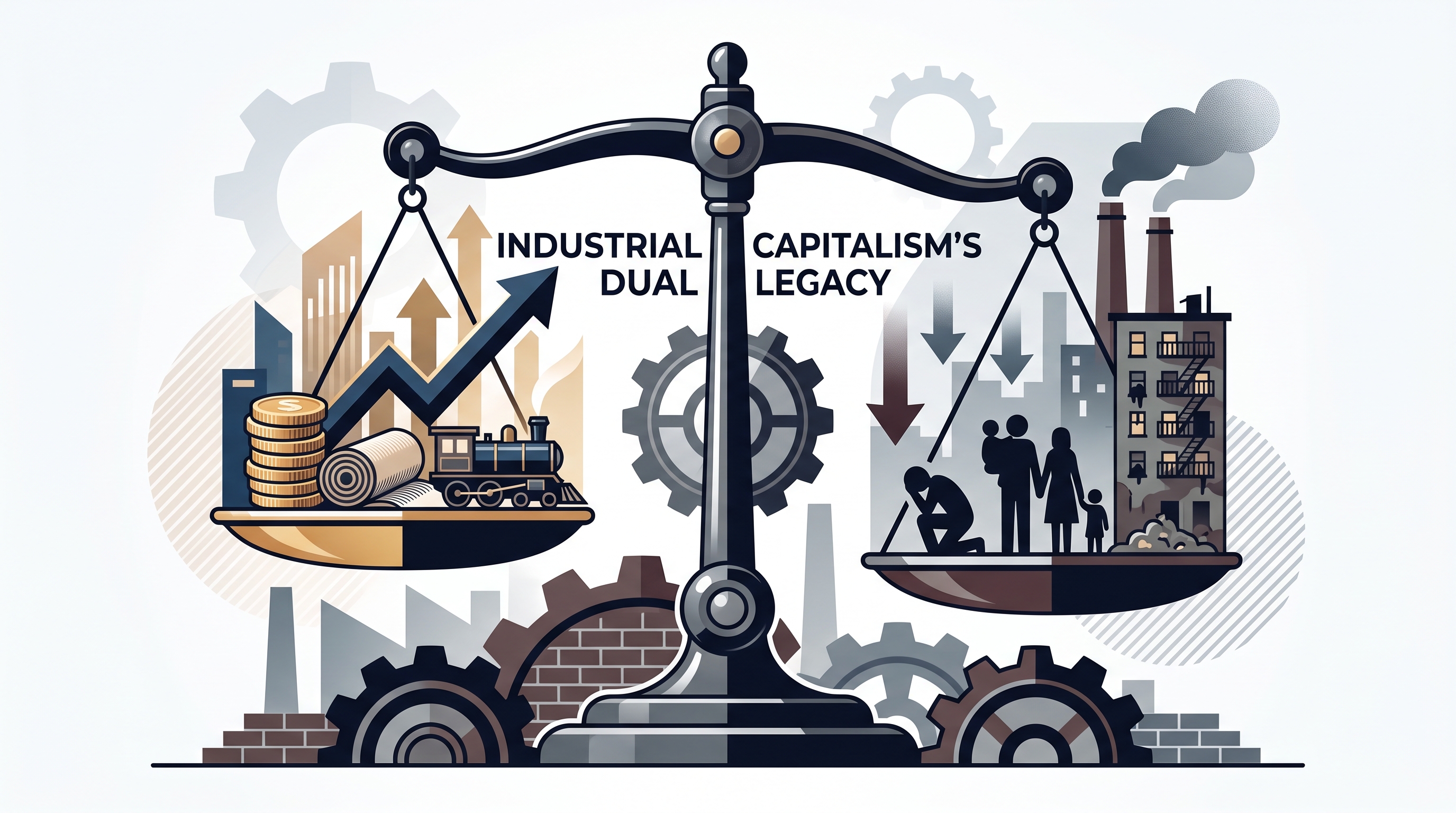
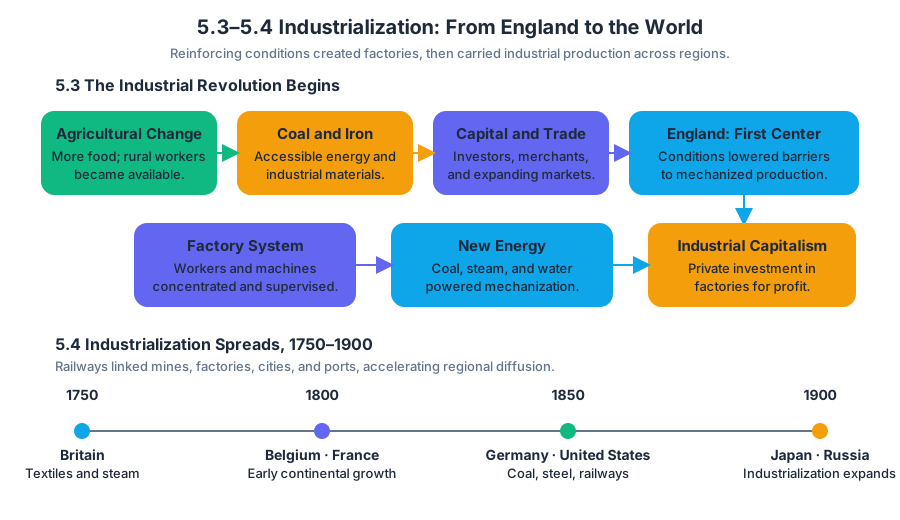
5.5 Technology of the Industrial Age · 5.6 Industrialization: Government’s Role from 1750 to 1900
Key concepts: Industrialization from 1750 to 1900 · Technology of the Industrial Age · The spread of industrialization · Government’s role in industrialization · Causation in historical developments · Continuity and change over time · Interactions between humans and the environment · Economic developments during industrialization
Industrialization became transformative when machines stopped being isolated inventions and became parts of systems: factories needed power, railways needed steel, telegraphs needed governments and capital, and expanding states increasingly shaped who received the benefits.
5.5 Technology of the Industrial Age · 5.6 Industrialization: Government’s Role from 1750 to 1900
Industrialization became transformative when machines stopped being isolated inventions and became parts of systems: factories needed power, railways needed steel, telegraphs needed governments and capital, and expanding states increasingly shaped who received the benefits. The central question is therefore not simply what technologies appeared, but how technology, government action, economic development, and the environment reinforced one another from 1750 to 1900.
5.5 Technology of the Industrial Age examines how new technologies supported industrialization and spread beyond Britain. 5.6 Industrialization: Government’s Role from 1750 to 1900 examines how governments actively encouraged, organized, or controlled that process.
Technology became a connected industrial system
A steam engine mattered because it could do more than replace human muscle. Attached to factory machinery, it supplied regular power; placed in a locomotive, it moved coal, workers, and manufactured goods; adapted to ships, it altered the speed and reliability of oceanic transport. One invention therefore generated effects across production, transportation, communication, and state power.
| Technological change | Immediate function | Wider historical connection |
|---|---|---|
| Steam-powered machinery | Supplied mechanical energy | Expanded factory production |
| Railroads | Connected mines, factories, cities, and ports | Integrated national markets |
| Steamships | Made ocean transport faster and more predictable | Intensified global exchange |
| Telegraphy | Sent information rapidly across distance | Improved commercial and governmental coordination |
The technology of the Industrial Age did not spread automatically. Industrialization and its technologies expanded from Britain to other parts of Europe and to the United States, Russia, and Japan, but each society adapted imported machinery to its own resources, institutions, and political goals. Coal deposits, transportation networks, skilled labor, investment capital, and state policy all influenced the pace and character of industrial development.
Government was an industrial actor
The government’s role was a central historical development of the period. States could sponsor railways, protect domestic industries with tariffs, invest in infrastructure, support technical education, provide legal systems for corporations and contracts, and use military power to secure resources and markets. Industrialization was therefore not merely a story of private entrepreneurs inventing machines.
Key distinction: Governments did not all industrialize in the same way. Some encouraged private investment; others directly managed major projects or used industrialization to strengthen military and political power.
Worked example: Japan’s industrial transformation
After the Meiji government consolidated power in the late nineteenth century, it treated industrialization as a means of strengthening the state. Officials supported modern factories, transportation networks, military production, and technical training. The reasoning chain is:
- Government action: the state directed resources toward modern infrastructure and industry.
- Technological effect: imported and adapted technologies increased production and transportation capacity.
- Economic effect: Japan developed stronger industrial and commercial capabilities.
- Political effect: the central government gained greater military and international power.
This example demonstrates causation without reducing history to a single cause. Technology enabled change, but government policy helped determine which technologies were acquired, funded, and placed into national service.
Industrialization reshaped the environment—and the reverse
The relationship between industrial society and the environment operated in both directions. Coal, iron, waterways, and agricultural land shaped where industries could develop; meanwhile, mines, factories, railroads, and expanding cities transformed landscapes. Growing and changing populations also altered environments by increasing demand for fuel, food, housing, and transportation.
A useful causal map is:
Resources → industrial technology → expanded production → population growth and urban change → increased environmental pressure
The arrow is not one-way. Environmental resources made industrialization possible, while industrialization reorganized those resources and changed the environments in which people lived.
Historical reasoning: causation and continuity/change
For Skill 5.A: Identify patterns among or connections between historical developments and processes, connect repeated relationships rather than merely listing inventions. For example, railways, steamships, and telegraphy all compressed distance and helped governments and businesses coordinate larger economies.
For Skill 5.B: Explain how a historical development or process relates to another historical development or process, explain the mechanism linking them. A strong explanation does not say only “industrialization spread because of technology”; it shows that state investment, transportation, resources, and economic goals helped technologies move and operate in new settings.
Continuity and change over time requires a balanced claim. Industrialization changed the scale and speed of production, but older political institutions, unequal access to resources, and environmental dependence continued. The period was therefore neither total rupture nor simple continuation.
Misconception check
Misconception: “Industrialization was caused by inventions alone.” Inventions created possibilities, but governments, investors, labor forces, natural resources, and markets determined whether those possibilities became durable industrial systems. A precise historical answer links technological change to institutional and environmental conditions.
Retrieval check
Explain one way government action connected technology to economic development between 1750 and 1900. Then identify one environmental factor that shaped industrialization and one way industrialization reshaped the environment. Your answer should use a clear cause-and-effect chain, not just three separate examples.
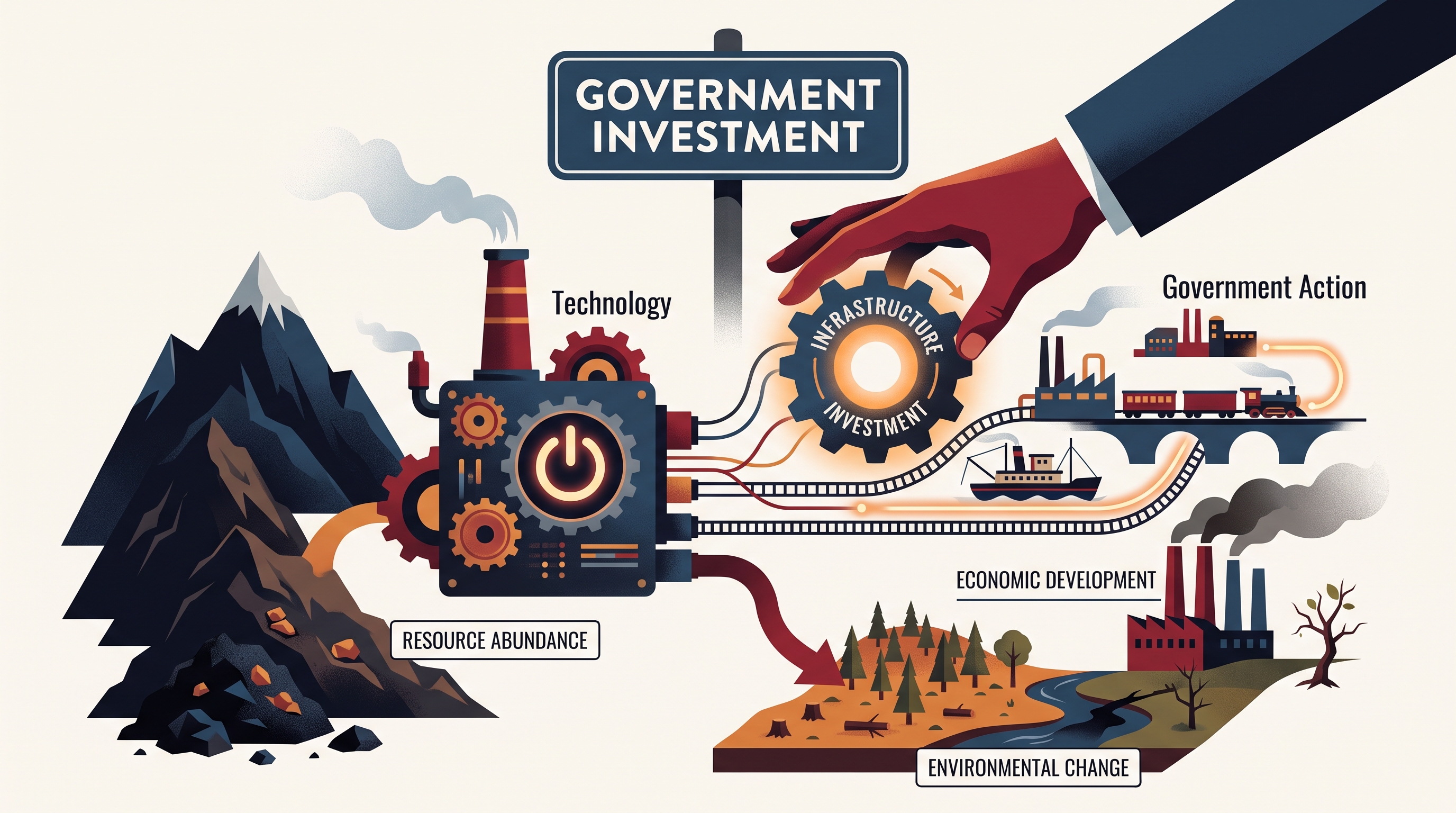
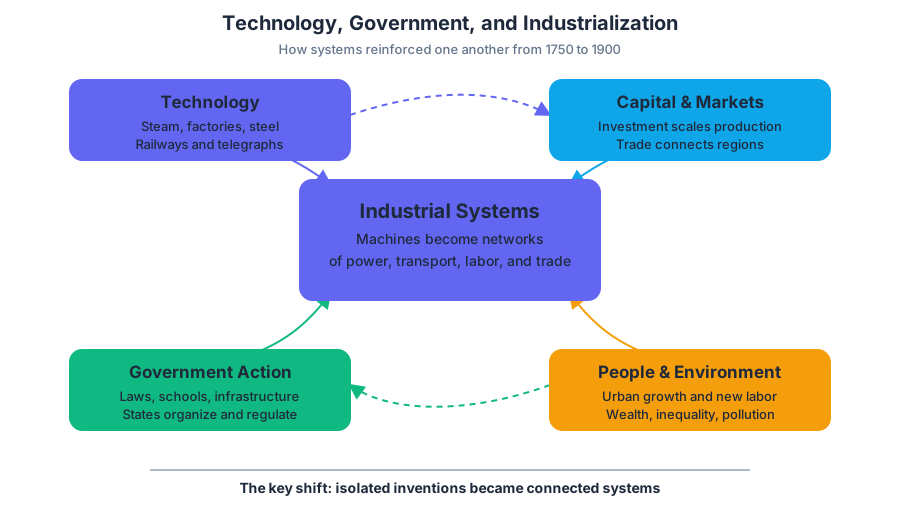
5.7 Economic Developments and Innovations in the Industrial Age · 5.8 Reactions to the Industrial Economy from 1750 to 1900
Key concepts: Technological innovation and increased efficiency, comfort, and security · Diffusion of technology through cross-cultural interactions · Innovations in ship design and navigation, including the lateen sail and compass · Industrialization and the global nature of trade and production · Large-scale manufacturing and the production of consumer goods · Industrial capitalism and its social and economic effects · The emergence of new social classes, including the middle class · Government and organizational responses to industrial capitalism · Calls for social, economic, and cultural changes in industrial societies · The demand for factory raw materials and increased food supplies
Explain and apply 5.7 Economic Developments and Innovations in the Industrial Age · 5.8 Reactions to the Industrial Economy from 1750 to 1900.
5.7 Economic Developments and Innovations in the Industrial Age · 5.8 Reactions to the Industrial Economy from 1750 to 1900
Industrialization transformed trade from a network of regional exchanges into a system of global production, in which factories depended on raw materials, workers, markets, banking, transportation, and food supplies spread across continents.
From shared technologies to global production
The lateen sail—a triangular sail that allowed ships to tack more effectively against the wind—and the compass, which helped sailors determine direction, were technologies shared through interactions among the Classical, Islamic, and Asian worlds. Astronomical charts also supported navigation. These innovations did not belong to one isolated civilization: cross-cultural contact carried knowledge across regions, where later users adapted it to new purposes.
This illustrates KC-4.1.II and KC-4.1.II.A: knowledge, scientific learning, and technology from the Classical, Islamic, and Asian worlds spread and facilitated European developments. The important historical process is diffusion: an innovation moves through interaction, but its consequences depend on how societies apply it.
Technological development often produced both intended and unintended consequences. Better ships and navigation increased efficiency, comfort, and security for merchants and travelers, while also making longer-distance trade, conquest, migration, and exploitation more practical.
Misconception check — “Technology automatically causes progress.” A technology can solve one problem while creating another. Improved navigation might make travel safer and trade faster, yet the same capacity could support imperial expansion or intensify the extraction of labor and resources.
Industrial capitalism and the global economy
Industrial capitalism is an economic system organized around privately owned factories, investment for profit, wage labor, and large-scale production. Industrialization increased the demand for food and consumer goods, intensifying patterns of trade and travel. Factories needed raw materials such as cotton, rubber, minerals, and other agricultural products; growing urban populations also required expanded food supplies.
The global nature of trade and production contributed to the proliferation of large-scale manufacturing, meaning production carried out in factories using substantial capital, specialized machinery, and a concentrated workforce. Production could therefore be separated from consumption: raw cotton might come from one region, be processed in another, financed through banks in a third, and sold in markets around the world.
The movement from mercantilism toward free-trade policies and laissez-faire capitalism—the idea that governments should interfere relatively little in economic exchange—was influenced by Adam Smith. KC-5.1.III.A identifies this shift, while KC-5.1.III.B connects global trade and production to transnational businesses and new banking and financial practices.
HSBC and Unilever illustrate this expanding commercial world. HSBC developed as an international banking institution connected to Asian and global trade, while Unilever became associated with multinational production and the worldwide sale of consumer goods. These examples show that industrial capitalism required more than factories: it also depended on finance, transportation, marketing, and international business organization.
Why industrialization provoked resistance
Industrial capitalism made manufactured goods more available, affordable, and varied, and it raised living standards for some people. However, its benefits were uneven. Factory workers often faced low wages, long hours, dangerous conditions, and insecure employment, while owners and investors accumulated wealth.
Industrialization also contributed to the emergence of new social classes, especially an expanding middle class of merchants, professionals, managers, and business owners. At the same time, wage labor created a large industrial working class. These economic divisions prompted calls for reform, including labor unions, workplace regulation, social welfare measures, and alternative economic ideologies such as socialism and communism.
Governments and organizations responded by creating social, economic, and cultural institutions. Banks helped mobilize investment; corporations organized production across borders; labor organizations represented workers; reform movements challenged poverty and unsafe workplaces. Industrial society therefore generated both institutions that strengthened capitalism and movements that criticized its consequences.
Environmental costs of industrial demand
Industrial production linked distant environments to factory consumption. The Amazon and Congo basins, for example, became connected to industrial demands for raw materials and food supplies. Forests, mines, plantations, and river systems were increasingly treated as sources of commodities for global markets.
The causal chain is crucial: industrial factories → rising demand for raw materials and food → expanded extraction and production → environmental and social disruption. A strong historical explanation does not merely list inventions or factories; it shows how technological and economic changes altered prices, labor, trade, class relations, and environments.
Worked example: from innovation to social change
Suppose a new manufacturing process allows textiles to be produced more quickly. First, factory efficiency increases. Second, cloth becomes cheaper and more widely available. Third, demand for cotton and factory labor grows. Fourth, trade networks expand, cities attract workers, and factory owners gain wealth. Finally, unsafe conditions and unequal wages encourage workers and reformers to organize.
This chain demonstrates the reasoning expected under Unit 5: Learning Objective G and Unit 5: Learning Objective H: connect economic developments to their broader social effects and explain how industrial capitalism generated reactions and institutional responses. The key is not naming an invention; it is explaining its long-term economic impact.
Retrieval check: Why did industrialization increase both global trade and demands for reform? A complete answer should connect factory production to the need for raw materials, food, labor, and consumers—and then connect unequal industrial conditions to labor organizations, reform movements, and new economic ideologies.
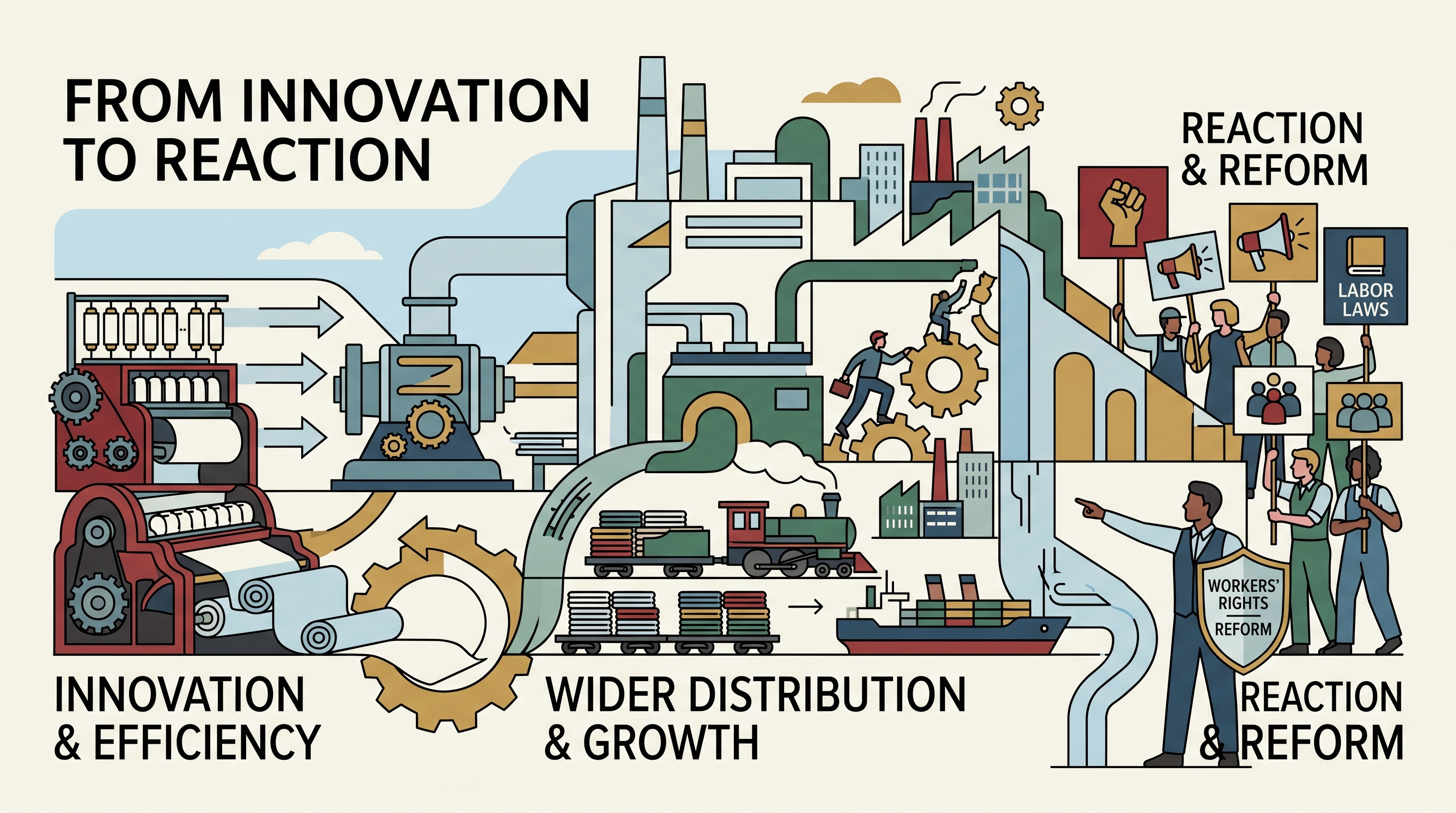

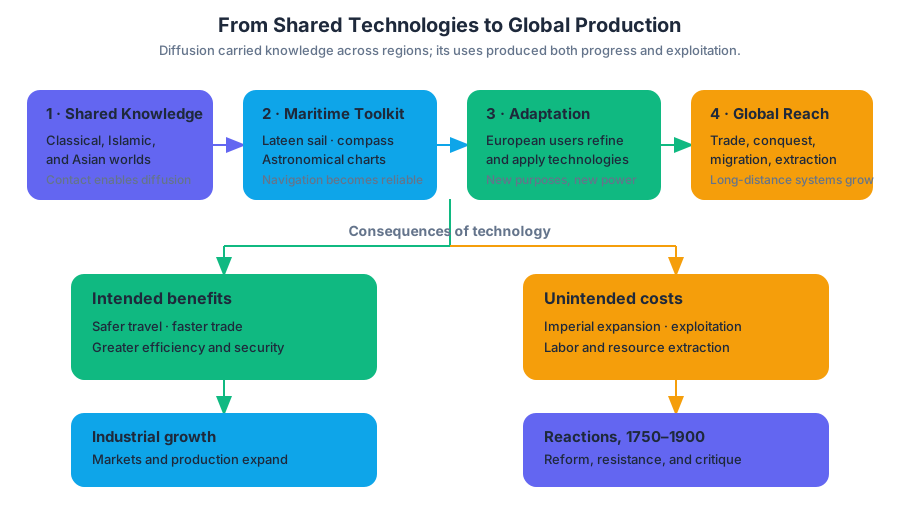
5.9 Society and the Industrial Age · 5.10 Continuity and Change in the Industrial Age
Key concepts: Society and the Industrial Age · Continuity and change in the Industrial Age · Industrialization’s impact on cities · Social change in terms of race, class, gender, and religion · Political and social changes in the 20th century · Women’s labor activism and political organization · Historical contextualization (skill 4.B) · Industrial Revolution transportation and communication technologies · Continuities involving caste, Hindu states, and Confucianism · Industrialization’s effects on quality of life
Industrialization did more than increase production: it reorganized where people lived, how they worked, and how societies defined race, class, gender, and religion. The central historical question is therefore not simply what changed, but which social structures changed, which persisted, and why.
5.9 Society and the Industrial Age · 5.10 Continuity and Change in the Industrial Age
Industrialization did more than increase production: it reorganized where people lived, how they worked, and how societies defined race, class, gender, and religion. The central historical question is therefore not simply what changed, but which social structures changed, which persisted, and why.
Unit 5: Learning Objective J: Explain how industrialization caused change in existing social hierarchies and standards of living.
The thematic lens is Social Interactions and Organization (SIO): the ways societies group members and regulate relationships among groups and individuals shape political, economic, and cultural institutions. The required historical development KC-5.1.VI.A identifies the emergence of new social classes, especially the middle class and the industrial working class.
Industrialization’s impact on cities
Railroads were a powerful engine of social change. By connecting factories, mines, ports, and markets, they accelerated urban growth and made cities more tightly connected to regional and global economies. People increasingly moved toward industrial centers in search of wage labor, while goods, information, and investment moved more rapidly between cities.
Urbanization created opportunities but also produced crowded neighborhoods, dangerous working conditions, pollution, and sharp inequalities in housing and sanitation. A city could therefore represent both rising standards of living for some groups and worsening insecurity for others.
Worked contextual example: A railroad linking an inland coal region to a coastal manufacturing city creates a chain of effects: coal reaches factories more cheaply; factories employ more workers; migrants arrive; landlords build dense housing; merchants gain new customers; and city governments face pressure to improve streets, sewage, and public health. The railroad is not merely a transportation technology—it changes the organization of society.
Race, class, gender, and religion
Social change during the Industrial Age must be analyzed through four connected categories:
| Social category | Historical question |
|---|---|
| Class | Who owned factories, controlled capital, or depended on wages? |
| Gender | Which kinds of work and political participation were considered appropriate for women and men? |
| Race | How did racial hierarchies shape labor, citizenship, education, and imperial rule? |
| Religion | How did religious beliefs support, challenge, or adapt to industrial society? |
Industrial society did not erase older hierarchies. Instead, it often layered new class divisions onto existing distinctions of race, gender, and religion. Access to education, skilled employment, political rights, and safe living conditions remained unequal, even where industrialization created new possibilities.
Misconception check: Industrialization did not produce universal progress. It raised production and eventually improved life for many people, but its benefits were distributed unevenly and often followed prolonged periods of exploitation.
Women’s labor activism
Women were not merely passive victims of industrialization. In the 1890s, a Russian woman labor activist organized women factory workers in St. Petersburg through the Factory Workers’ Society. Each branch elected a chairwoman and secretary, demonstrating that women workers could create formal organizations, select leaders, and advocate collectively.
The activist’s memoir was published in the Soviet Union in 1926, showing how later political movements preserved and interpreted earlier labor activism. This example connects workplace organization to broader changes in political participation: industrial workers became an increasingly important constituency, and women used labor organizations to challenge both class exploitation and gender exclusion.
For Skill 4.B: Explain how a specific historical development or process is situated within a broader historical context, place this activism within the expansion of factories, urban wage labor, socialist politics, and debates over women’s rights. The strongest explanation links the Factory Workers’ Society to all four conditions rather than treating it as an isolated event.
Continuity and change after 1900
The twentieth century brought major changes in communication and technology. Technologies including the microchip expanded the speed and reach of information, while medical and scientific discoveries improved the quality of life for hundreds of millions of people. Yet technological change did not automatically eliminate inequality: access to education, health care, and new technologies remained shaped by class, race, gender, religion, and geography.
Political and social changes in the twentieth century also transformed the arts. In the second half of the century, popular and consumer culture became more global, and arts, entertainment, and popular culture increasingly reflected a globalized society.
This is a classic continuity-and-change pattern:
- Change: railroads, microchips, medical discoveries, mass media, urban growth, and global consumer culture altered daily life.
- Continuity: social inequality, cultural traditions, religious relationships, and inherited hierarchies persisted.
- Interaction: new technologies could spread ideas rapidly while existing institutions determined who gained access and influence.
A global comparison
Continuity and change can also be examined through the persistence of numerous jatis, or caste communities, within South Asian societies; the development of various Hindu states; and changing relationships involving Confucianism in East Asia. Industrial and political transformation did not simply replace older social systems. Instead, older institutions adapted, resisted, or became entangled with new states, markets, and technologies.
Retrieval check: Explain one way industrialization changed urban society, one way it preserved an older inequality, and one reason the Factory Workers’ Society represents more than a workplace organization. A complete answer should connect technology, social organization, and political action rather than listing the examples separately.
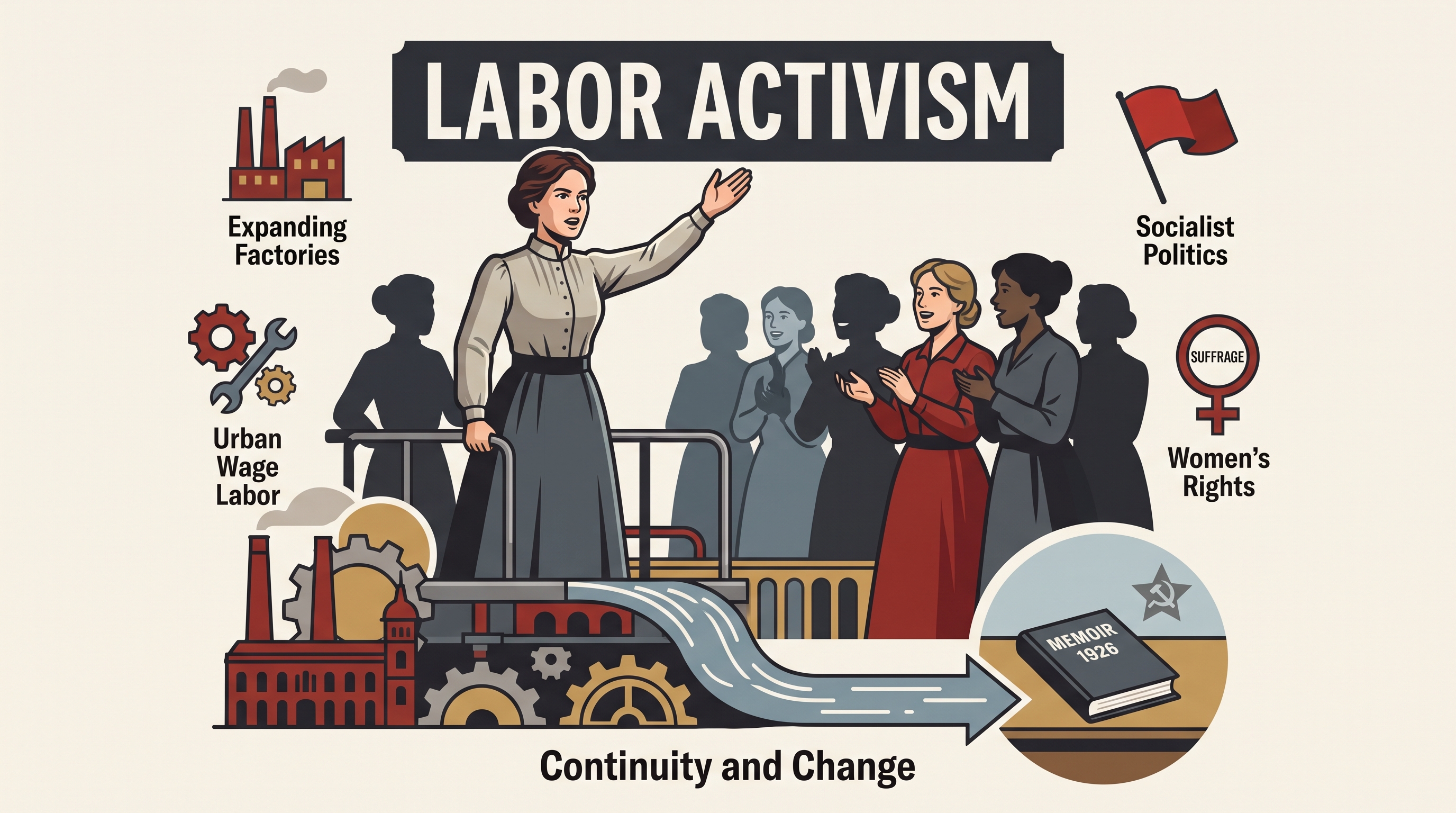
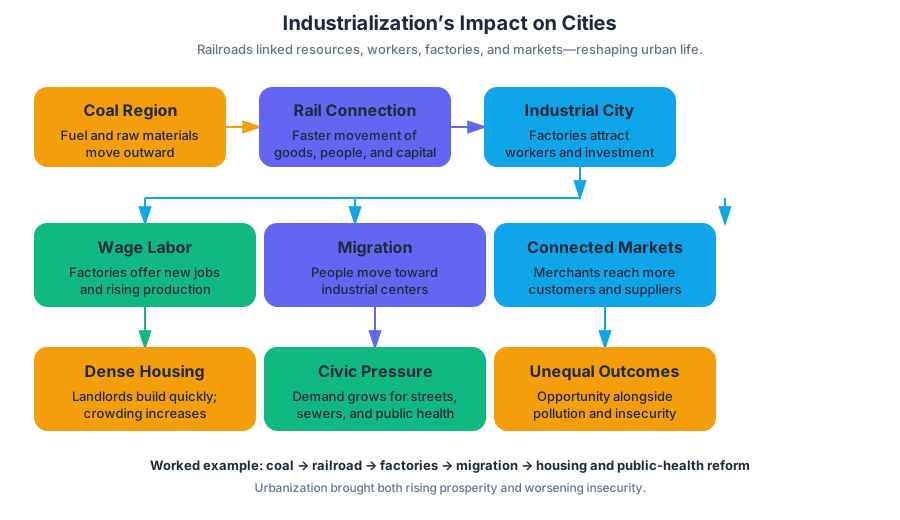
6.1 Rationales for Imperialism from 1750 to 1900 · 6.2 State Expansion from 1750 to 1900
Key concepts: Rationales for imperialism from 1750 to 1900 · State expansion from 1750 to 1900 · Ideologies contributing to imperialism · Governance and the exercise of political power · Religious ideas used to legitimize rule · Art and monumental architecture as tools of political legitimacy · Mughal zamindar tax collection · Ottoman tax farming · Cultural developments and interactions under imperialism · Ashanti resistance to imperial expansion in West Africa
Imperialism was not driven by one motive. From $1750$ to $1900$, states expanded through a combination of political competition, economic goals, strategic calculation, and ideologies that presented domination as justified or even beneficial.
6.1 Rationales for Imperialism from 1750 to 1900 · 6.2 State Expansion from 1750 to 1900
Imperialism was not driven by one motive. From $1750$ to $1900$, states expanded through a combination of political competition, economic goals, strategic calculation, and ideologies that presented domination as justified or even beneficial. The central historical problem is therefore not “Which single cause created imperialism?” but “How did ideas and institutions make expansion possible and defensible?”
Imperialism: power backed by ideology
Imperialism means extending a state’s authority over other peoples or territories, often without granting those populations equal political power. During this period, European states increasingly connected overseas expansion to rivalry among nation-states, access to resources and markets, military advantage, and claims about cultural or racial superiority.
Under Unit 6: Learning Objective A, students should explain how ideologies contributed to the development of imperialism. The required knowledge identifier KC-5.2.III emphasizes that cultural, religious, and racial ideologies—including Social Darwinism and nationalism—were used to justify imperialism.
Social Darwinism misapplied the language of biological competition to human societies. Imperial powers portrayed stronger states as naturally entitled to rule weaker ones, transforming conquest into an allegedly scientific process. Nationalism added another motive: governments competed for colonies because overseas possessions could symbolize national greatness, strategic strength, and international prestige.
These arguments were rationales, not neutral explanations. Economic or strategic interests might encourage expansion, but racial and cultural ideologies helped governments represent coercion as civilization, protection, or progress. This distinction matters: an ideology can explain how imperialism was defended even when it did not create the original economic or political motive.
Key insight: Imperialism grew from the interaction of material power and legitimizing ideas. A state needed ships, soldiers, administrators, and revenue; it also needed a story explaining why its rule was acceptable.
State expansion and the machinery of rule
State expansion involved more than conquering territory. Governments had to collect revenue, maintain order, communicate with officials, and convert distant populations into subjects of a political system. Administrative institutions, policies, and procedures made authority durable after military force had opened the way.
Revenue systems illustrate this process. The Mughal Empire used zamindars, local landholders or intermediaries, in systems of tax collection. The Ottoman Empire used tax farming, in which the state granted individuals the right to collect taxes in return for an agreed payment. These arrangements allowed rulers to draw income across large territories without personally supervising every village or market.
Other governments used different mechanisms. Mexica rulers organized tribute lists, while Ming authorities emphasized collecting taxes in hard currency. The systems varied, but their purpose was comparable: transform political control into predictable revenue that could support armies, officials, and further expansion.
| Administrative mechanism | How it worked | Political purpose |
|---|---|---|
| Mughal zamindars | Local intermediaries helped collect taxes | Connected imperial authority to local society |
| Ottoman tax farming | Tax-collection rights were assigned in exchange for payment | Generated revenue while reducing direct administrative costs |
| Mexica tribute lists | Subject communities were assessed obligations | Recorded and organized imperial extraction |
| Ming hard-currency taxes | Taxes were collected in monetary form | Linked state revenue to wider markets |
Legitimizing political power
Governments also used religion, art, and monumental architecture to make rule appear rightful. Religious legitimation means presenting political authority as supported by sacred tradition, divine approval, or the ruler’s responsibility to defend a religious order. This could strengthen loyalty, distinguish legitimate authority from rebellion, and connect imperial government to familiar beliefs.
Art and monumental architecture performed a similar political function in visible form. Palaces, mosques, tombs, courts, inscriptions, and ceremonial images communicated that the ruler possessed wealth, order, and access to sacred or universal authority. Such projects were not merely decorative: they displayed the state’s capacity to command labor and resources while shaping how subjects understood political power.
Worked example—expansion requires both extraction and legitimacy: imagine a ruler extending authority over a region with established local elites. First, the government incorporates intermediaries—such as Mughal zamindars—to collect taxes. The resulting revenue funds officials and military power. Next, the ruler uses religious language and monumental building to portray the expanded empire as ordered and legitimate. Administration supplies the resources of rule; ideology and spectacle help justify it.
Applying historical reasoning
The most directly assessed skill here is Skill 4: Contextualization, especially the prompt language “Explain how a specific historical development or process is situated within a broader historical context.” A strong response places imperialism within nineteenth-century state rivalry and ideological change rather than treating a colony as an isolated event.
Also use Skill 1: Developments and Processes to explain how expansion unfolded through institutions, Skill 5: Making Connections to connect ideology with governance and revenue, and Skill 6: Argumentation to defend a claim about relative importance. For example, a defensible argument might state that ideology was especially important because it converted conquest and extraction into publicly acceptable claims of racial, national, or religious entitlement.
A brief reminder of limits belongs here: expansion was never frictionless. In the Ashanti region near Kumasi, resistance disrupted imperial communications when forces severed telegraph lines, attacked a telegraph clerk, and blockaded the main road, prompting troops from Lagos in Nigeria to move toward Kumasi. The example shows that administrative networks and military occupation depended on practical control of territory—but the larger analysis of Indigenous responses belongs with Topic 6.3.
Misconception check: “Imperialism was purely economic.”
Correction: Economic interests mattered, but political rivalry, nationalism, Social Darwinism, racial theories, religious claims, and administrative capacity all shaped imperial expansion and its justification.
Retrieval check
Explain, in two sentences, why tax collection and monumental architecture belonged to the same imperial project. A strong answer should connect revenue to the practical exercise of power and connect religion, art, or architecture to the legitimacy of that power.
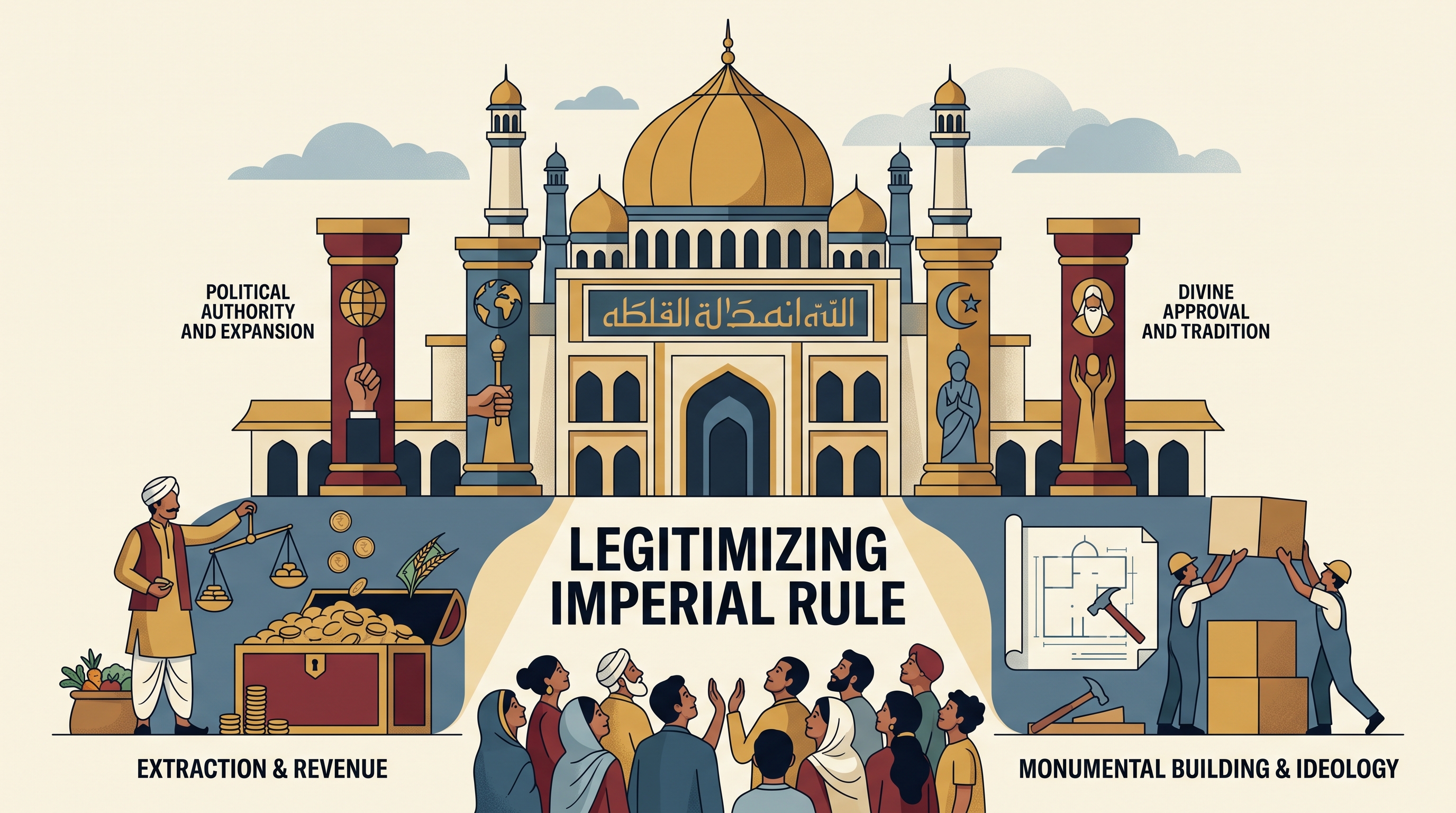
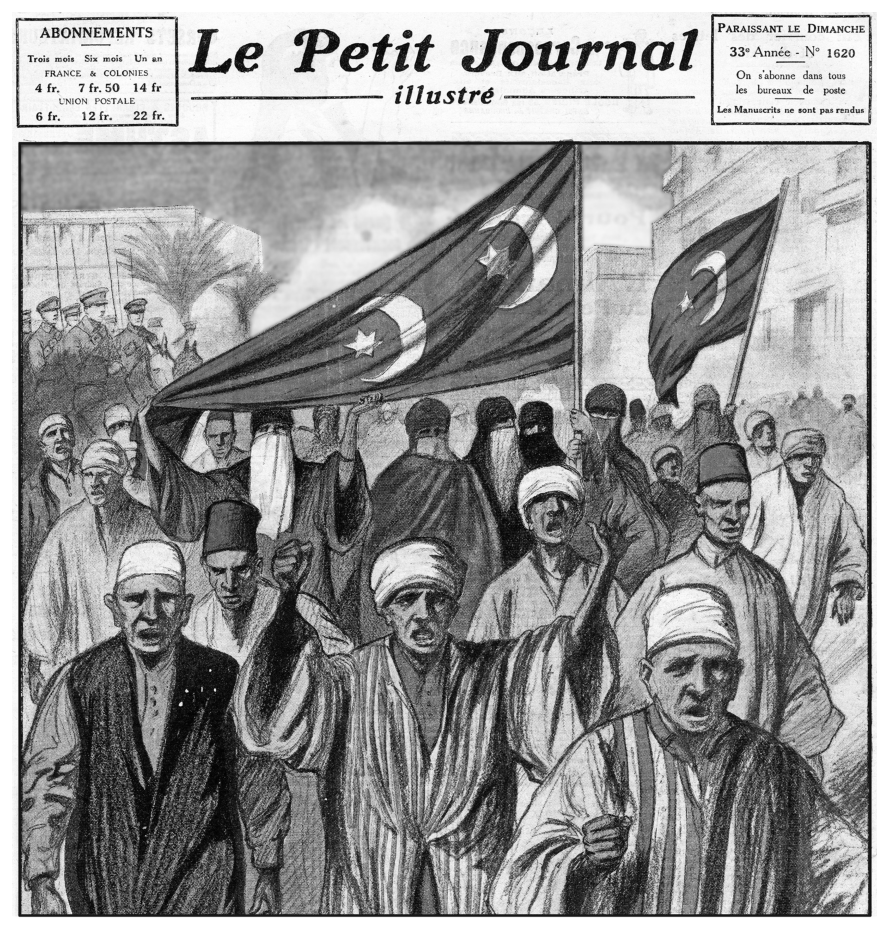
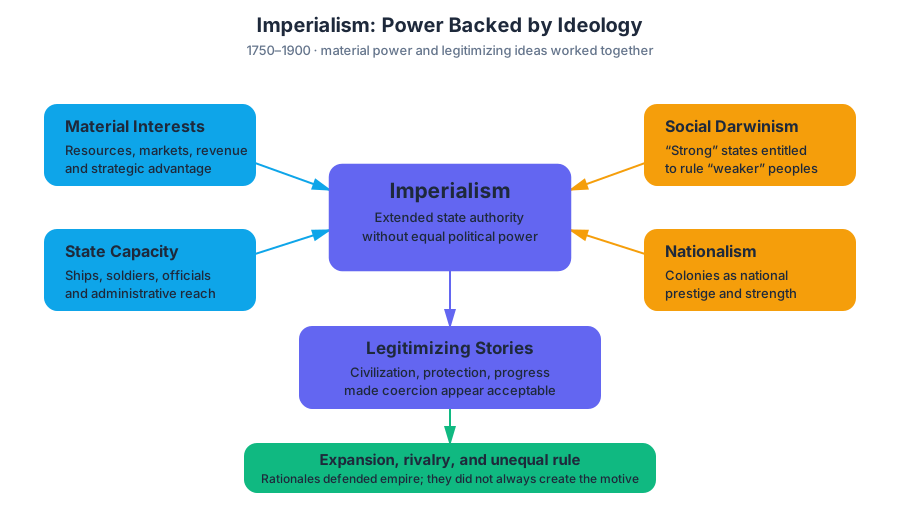
6.3 Indigenous Responses to State Expansion from 1750 to 1900 · 6.4 Global Economic Development from 1750 to 1900
Key concepts: Indigenous responses to state expansion · State expansion from 1750 to 1900 · Rationales for imperialism · Industrialization · Global economic development · Economic systems and global trade · Migration · Bureaucracy and state rule · Nationalism and direct resistance · Karl Marx, socialism, and communism
Explain and apply 6.3 Indigenous Responses to State Expansion from 1750 to 1900 · 6.4 Global Economic Development from 1750 to 1900.
6.3 Indigenous Responses to State Expansion from 1750 to 1900 · 6.4 Global Economic Development from 1750 to 1900
When expanding states met established societies between $1750$ and $1900$, the result was never simply “conquest.” Indigenous peoples resisted, negotiated, reorganized, migrated, and sometimes built new states of their own. At the same time, industrial production connected distant economies so tightly that the way one society produced and exchanged goods could transform another.
6.3 Indigenous Responses to State Expansion from 1750 to 1900
Indigenous responses to state expansion were the strategies used by peoples facing the military, political, economic, or cultural pressure of expanding empires and centralized states. These responses were shaped by both internal factors—such as political divisions, religious beliefs, nationalism, and dissatisfaction with local rulers—and external factors, including military technology, taxation, forced labor, and foreign invasion.
The major response patterns included:
- Direct resistance: armed rebellion or warfare against an expanding state.
- Religious resistance: opposition organized around religious leaders or beliefs.
- Nationalist resistance: attempts to defend or create a political community based on shared identity.
- Accommodation: selective cooperation or adaptation to preserve land, authority, or cultural practices.
- New-state formation: creating an independent or semi-independent political structure.
The 1857 rebellion in India shows how several causes could combine. Indian soldiers in the British East India Company’s army rebelled amid distrust of British policies, military grievances, and fears that colonial rule threatened established religious and social practices. The uprising spread beyond the army, but it failed to remove British power. Its consequence was nevertheless substantial: the British government ended the East India Company’s rule and assumed direct control of India in $1858$.
Other examples reveal different combinations of resistance and state-building. Túpac Amaru II’s rebellion in Peru opposed Spanish colonial authority and burdens imposed on Indigenous communities. In West Africa, Samory Touré fought French expansion, while the Yaa Asantewaa War challenged British efforts to dominate the Asante region. The Zulu Kingdom and the Sokoto Caliphate demonstrate that African peoples did not merely react to European expansion; they also built powerful states using military organization, religious legitimacy, and political consolidation.
Misconception check — “Indigenous resistance was always spontaneous.” Resistance often depended on organized leadership and preexisting political structures. Nationalism, religious ideas, and local conflicts could turn opposition into a sustained movement. Conversely, internal divisions could weaken resistance even when external pressure was intense.
Source skill: 2.C Sourcing and Situation
The suggested skill for Topic 6.3 is 2.C: Explain the significance of a source’s point of view, purpose, historical situation, and/or audience, including how these might limit the use(s) of a source. A colonial official describing a rebellion may emphasize “disorder” to justify repression; a rebel proclamation may stress religion or national identity to mobilize support. Neither source should be accepted as a complete account without considering who created it, why, and under what conditions.
Worked interpretation: If a British report calls the 1857 uprising a military mutiny, its purpose may be to reassure British readers that the rebellion was narrow and controllable. Evidence that civilians and regional leaders also participated would complicate that description. The source remains useful—but primarily for revealing how British authorities wanted the uprising understood.
6.4 Global Economic Development from 1750 to 1900
Global economic development means the changing ways societies produced, exchanged, and consumed goods across increasingly connected regions. Industrialization expanded factory production, transportation, and demand for raw materials, while global trade linked producers, merchants, workers, and consumers across oceans.
The relationship worked in both directions:
| Economic change | Consequence |
|---|---|
| Industrial production increased demand for raw materials | Regions producing cotton, rubber, minerals, tea, and other commodities became more important to global markets |
| Railways, steamships, and communication systems reduced travel and transaction time | Goods, capital, information, and people moved more rapidly |
| Global trade expanded | Local economies became more dependent on distant prices and buyers |
| Factory labor and commercial agriculture grew | Workers and farmers experienced new opportunities, pressures, and forms of inequality |
Industrialization also encouraged new political and economic ideologies. Karl Marx argued that industrial society was divided by class conflict, especially between owners of capital and wage laborers. Socialism proposed greater collective control over production, while communism sought a classless society in which productive resources would not be privately controlled. These ideologies grew partly from discontent with established power structures and the poverty and insecurity associated with industrial economies.
Migration formed another major connection between industrialization and global development. Many people relocated voluntarily in search of work, including migrants moving toward expanding industrial cities, plantations, mines, and infrastructure projects. Industrial economies therefore created both labor demand and population movement, although migration patterns varied according to wages, coercion, legal restrictions, and access to transportation.
Source skill: 2.B Sourcing and Situation
Topic 6.4 emphasizes 2.B: Explain how the point of view, purpose, historical situation, and/or audience of a source might affect its interpretation. A factory owner’s account may present industrial growth as progress, while a worker’s testimony may emphasize exhaustion, low wages, or dangerous conditions. A trade statistic can demonstrate expanding exchange, but it may not reveal who controlled the profits or who bore the social costs.
Retrieval check: Explain one way the 1857 rebellion in India reflected both internal and external pressures. Then identify one reason a source written by a colonial official might understate Indigenous political organization. Finally, connect industrialization to global trade in one causal sentence.
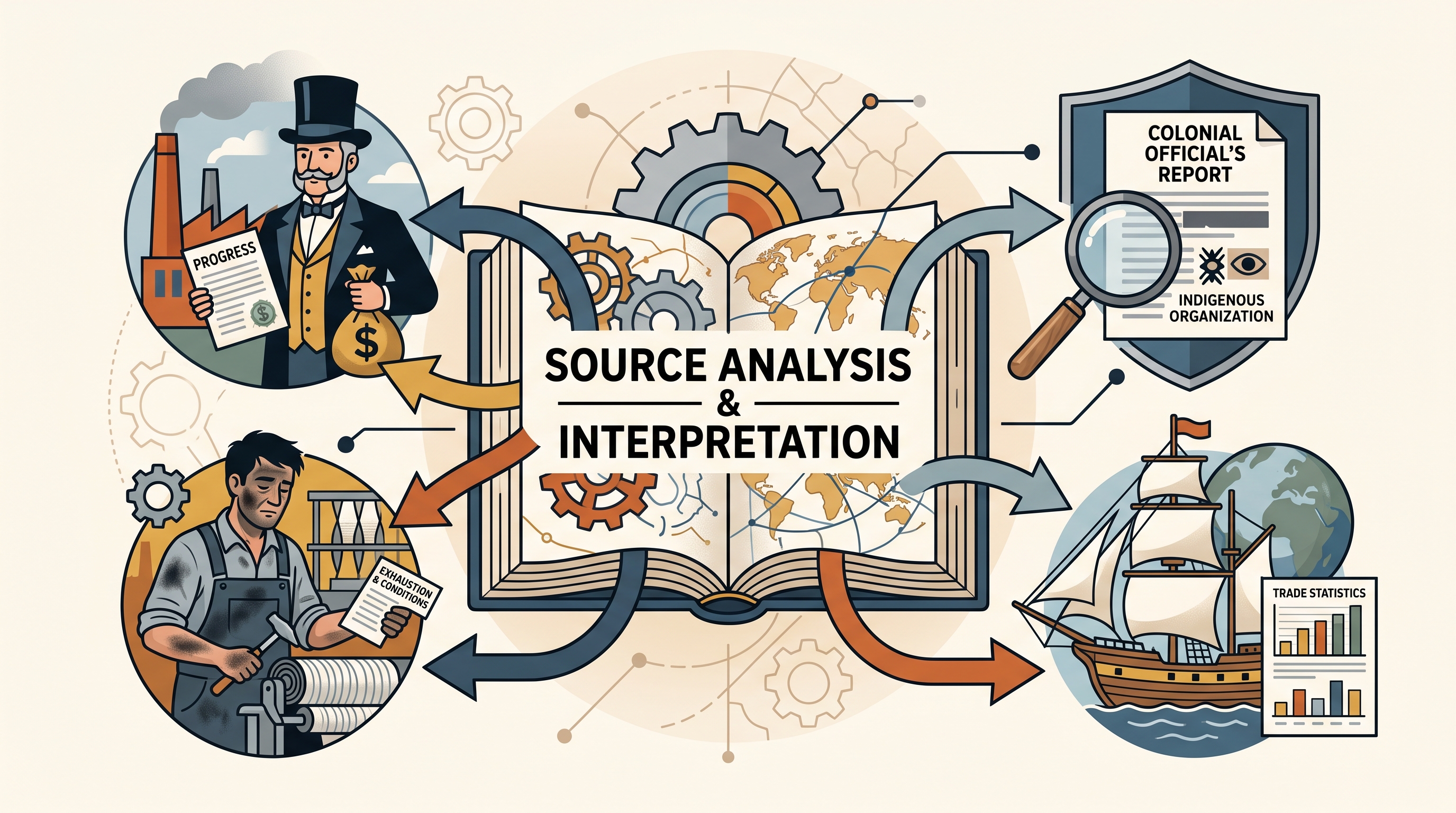
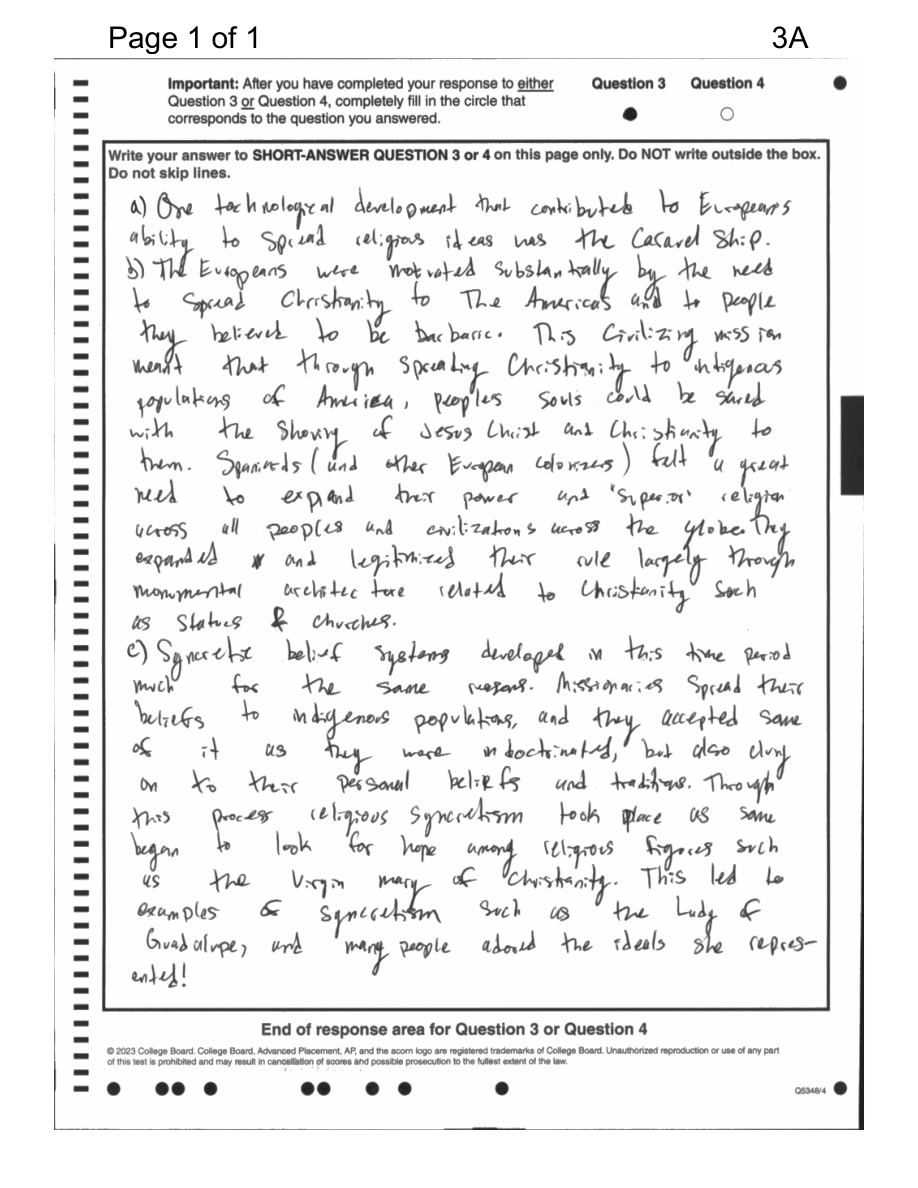
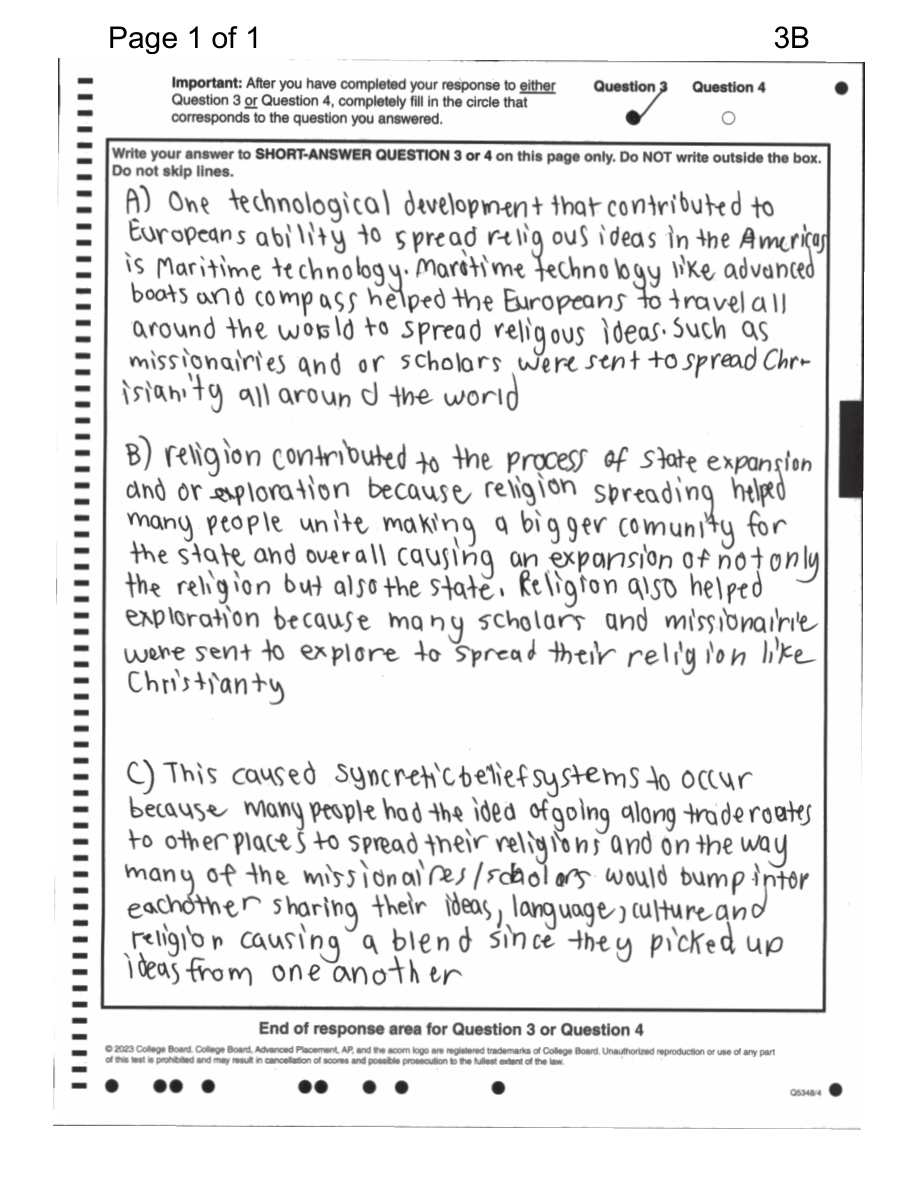
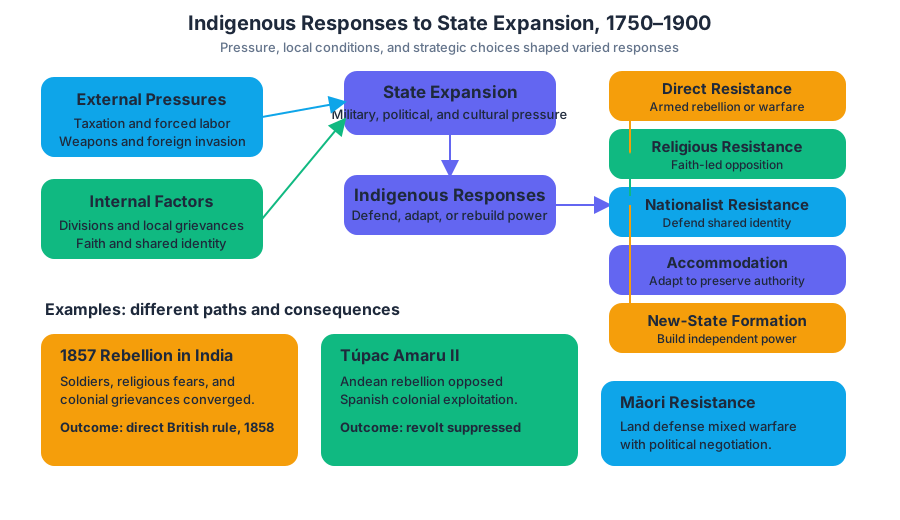
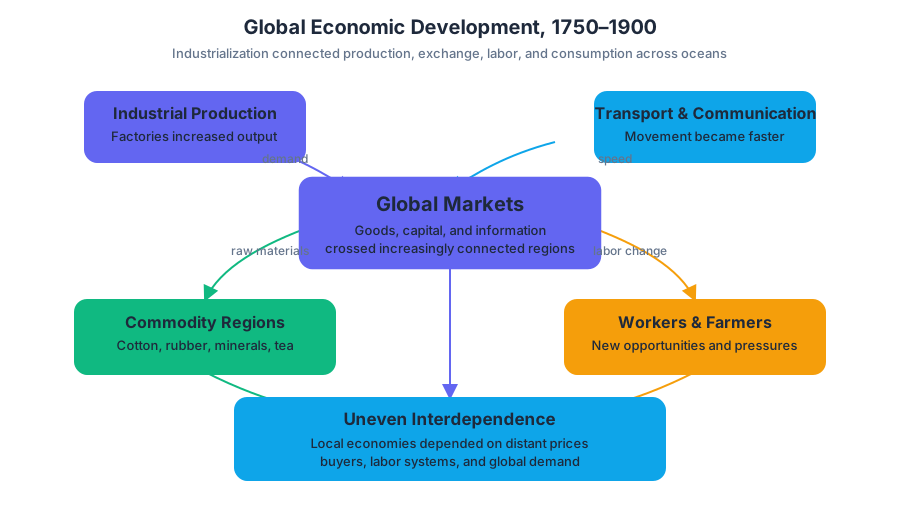
6.5 Economic Imperialism from 1750 to 1900 · 6.6 Causes of Migration in an Interconnected World
Key concepts: Economic imperialism · Causes of migration in an interconnected world · Consequences of industrialization, c. 1750–1900 · Commodity trade and unequal economic relationships · European economic influence in China · European joint-stock companies and imperial control in Asia · State intervention in economic life · Migration of Europeans to the Americas · Government regulation of immigrants · The relationship between economic pressures and social or gender changes
A country could dominate another economy without formally annexing its territory. Between $1750$ and $1900$, European merchants and states used economic imperialism—the extension of economic power over another society’s trade, markets, labor, or resources—to make distant regions serve European commercial interests.
6.5 Economic Imperialism from 1750 to 1900 · 6.6 Causes of Migration in an Interconnected World
A country could dominate another economy without formally annexing its territory. Between $1750$ and $1900$, European merchants and states used economic imperialism—the extension of economic power over another society’s trade, markets, labor, or resources—to make distant regions serve European commercial interests.
Economic imperialism is control or influence gained through trade, investment, finance, or commodity production rather than through direct political conquest alone.
The key distinction is who benefits and who controls the terms. A trade relationship may look voluntary while still being unequal if European merchants determine what a region produces, what it imports, how prices are set, or which companies receive privileged access.
Economic imperialism and commodity trade
Trade in some commodities was organized to give merchants and companies greater control over markets. Instead of simply exchanging whatever local producers chose to sell, European commercial networks increasingly connected particular regions to particular products and markets.
Two examples show how this worked:
| Commodity and region | Economic relationship | Larger imperial pattern |
|---|---|---|
| Diamonds from Africa | Diamonds were exchanged or used to purchase finished goods | African resources entered European-controlled commercial circuits |
| Cotton from South Asia | Cotton grown in South Asia was exported to China | Colonial production was tied to international trade and foreign demand |
In the diamond example, the valuable raw material originated in Africa, while finished goods were produced elsewhere. This arrangement could leave African producers supplying resources but depending on foreign merchants for manufactured products. In the cotton example, South Asian agriculture became connected to a wider commercial system in which European influence shaped the movement and value of the crop.
Misconception check — “Economic imperialism was only private business.” European joint-stock companies mattered, but economic imperialism involved European merchants and states. Governments protected trade routes, granted monopolies, enforced contracts, imposed regulations, and sometimes used military power when commercial interests were threatened.
China: commerce becoming political pressure
European economic influence in China illustrates the blurred boundary between trade and coercion. European immigrants increased their economic influence in China, while European merchants pursued profitable exchanges even when Chinese officials objected to the social and political consequences.
The opium trade is a useful worked example. British merchants used opium grown in India to obtain silver and Chinese goods, especially tea. When Chinese authorities attempted to suppress the trade, British military action produced the Treaty of Nanjing in $1842$, which expanded foreign commercial privileges and transferred Hong Kong to Britain.
Reasoning chain:
$ \text{European commercial demand} \rightarrow \text{opium sales in China} \rightarrow \text{Chinese resistance} \rightarrow \text{military conflict} \rightarrow \text{expanded European economic influence} $
The important point is not merely that Europeans traded in China. It is that commercial disputes could be backed by state power, allowing foreign merchants to gain advantages that Chinese authorities had not freely chosen to provide.
Joint-stock companies and direct imperial control
Earlier European expansion in Asia often relied on joint-stock companies, businesses funded by multiple investors who shared profits and risks. Companies such as the British East India Company could collect taxes, maintain armies, and govern territory. Over time, however, European states assumed more direct imperial control.
This shift did not mean European influence disappeared. It meant that the state, rather than a private company, became the main instrument of imperial rule. The British government’s takeover of India after the 1857 rebellion demonstrates this transition: company authority gave way to direct British imperial administration.
Comparison insight: Company rule and direct state rule differed in administration, but both connected Asian economies to European power.
Why people migrated in an interconnected world
Migration—the movement of people from one place to another—expanded as industrialization, imperialism, transportation, and global commodity markets connected societies more tightly. People moved because economic opportunities and pressures changed, not simply because they wanted to travel.
Economic causes included poverty, land shortages, unemployment, famine, political instability, and the demand for labor in expanding industries and agricultural regions. Italians, for example, migrated in large numbers to both North and South America, where growing economies offered work and the possibility of land or higher wages.
Governments responded by creating regulations governing immigrants. States classified newcomers, controlled entry, monitored labor, or restricted particular groups. These policies reveal that migration was not purely a personal decision: governments viewed mobile workers as sources of labor, possible threats, or competitors for jobs.
Migration and social change
Economic pressures and migration also contributed to changes in social and gender practices. When men migrated for wage work, families could become separated across regions or oceans. Women and other relatives might assume new economic responsibilities, manage households, enter paid labor, or maintain transnational family networks.
These changes did not automatically create equality. Migration could expand choices for some people while increasing exploitation, insecurity, and discrimination for others. That tension is essential to the ECN (Economic Systems) and ENV (Humans and the Environment) themes in 6.6.
AP reasoning focus
Topic 6.5 Economic Imperialism from 1750 to 1900 is tied to ECN (Economic Systems) and Skill 4: Contextualization in the provided topic map; its comparison emphasis also requires the course’s Skill 5: Making Connections. Topic 6.6 Causes of Migration in an Interconnected World is tied to ENV (Humans and the Environment) and ECN (Economic Systems) and emphasizes Skill 5: Making Connections.
A strong comparison identifies a meaningful similarity or difference and explains why it matters. For instance, diamonds from Africa and cotton from South Asia both entered European-centered trade networks, but their specific markets and consequences differed. A strong causal explanation then connects economic restructuring to migration: industrial demand and unequal markets created pressures that encouraged Italians and others to move.
Retrieval check
- Why is economic imperialism broader than direct colonial conquest?
- How did the opium trade demonstrate the connection between private commerce and state power?
- What economic pressures encouraged Italian migration to the Americas?
- Why did European joint-stock companies lose political power in parts of Asia?
Interpretation: If a prompt describes foreign merchants controlling a commodity market while a European government protects their privileges, the best explanation is not “private trade alone.” It is economic imperialism by European merchants and states.
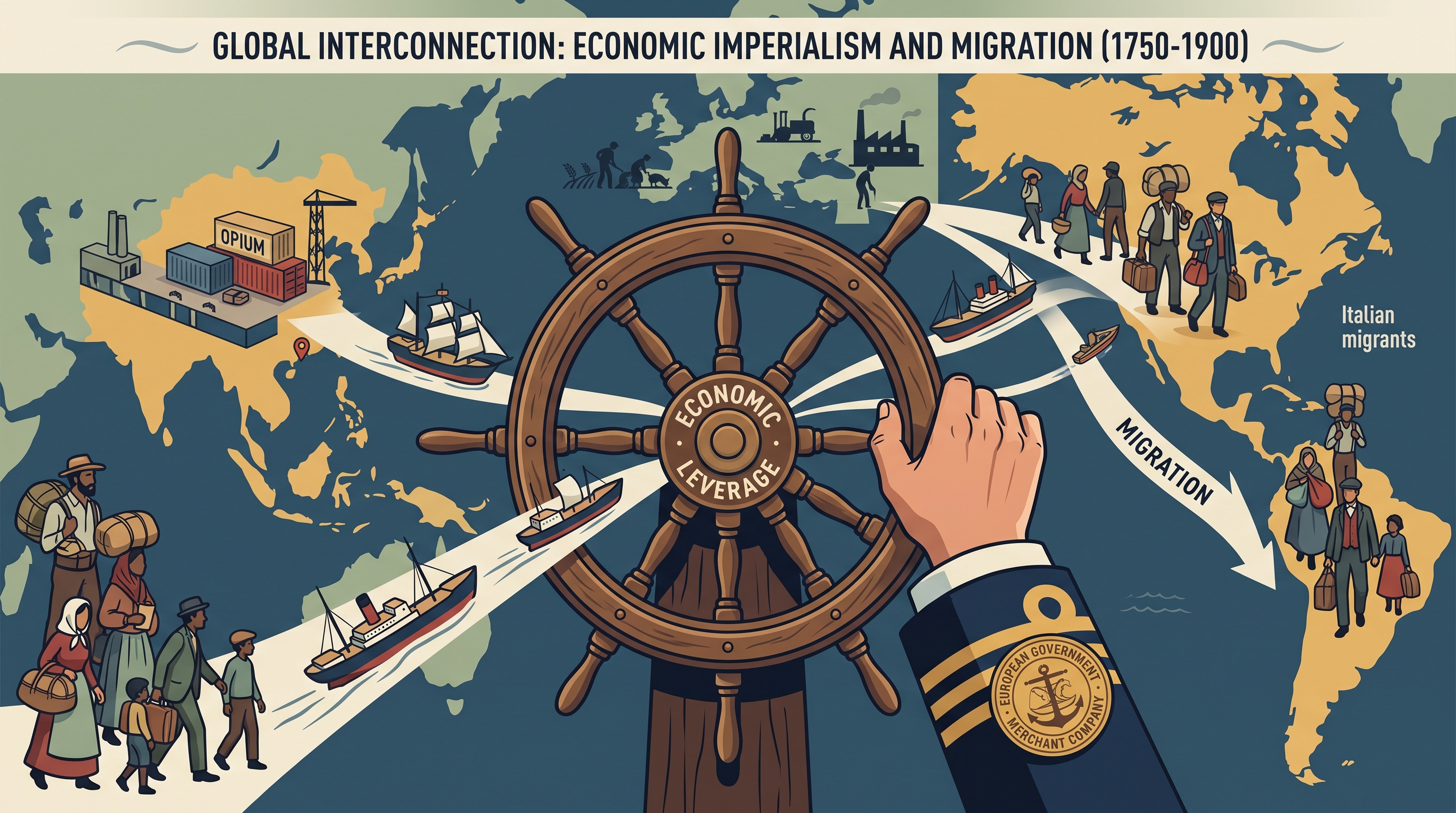
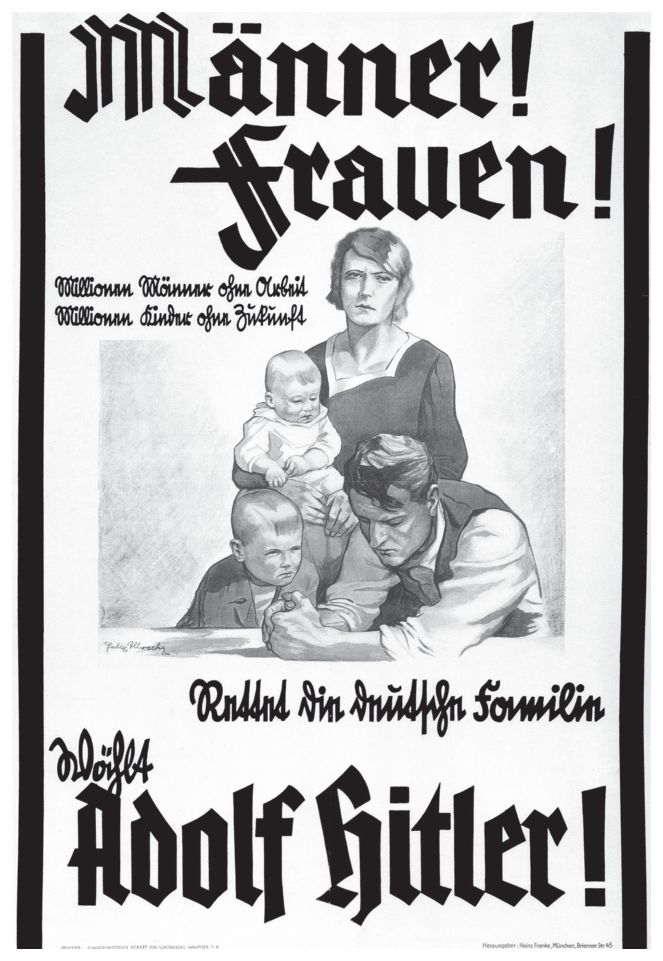
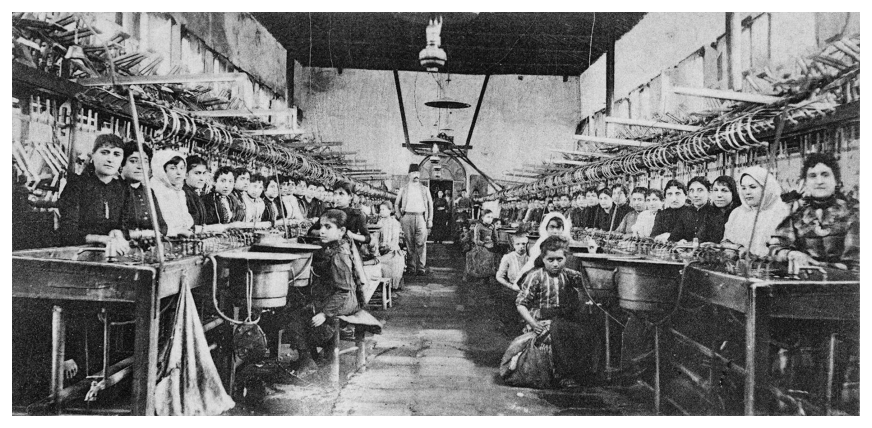
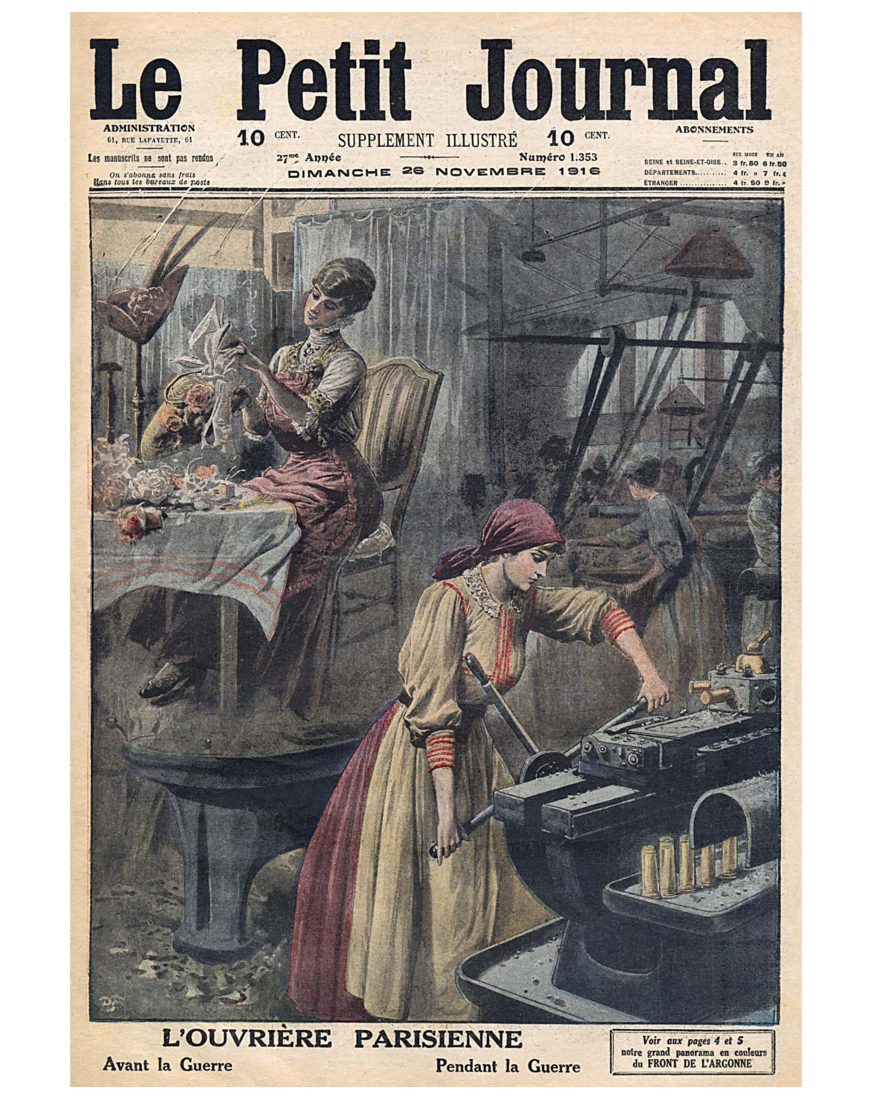
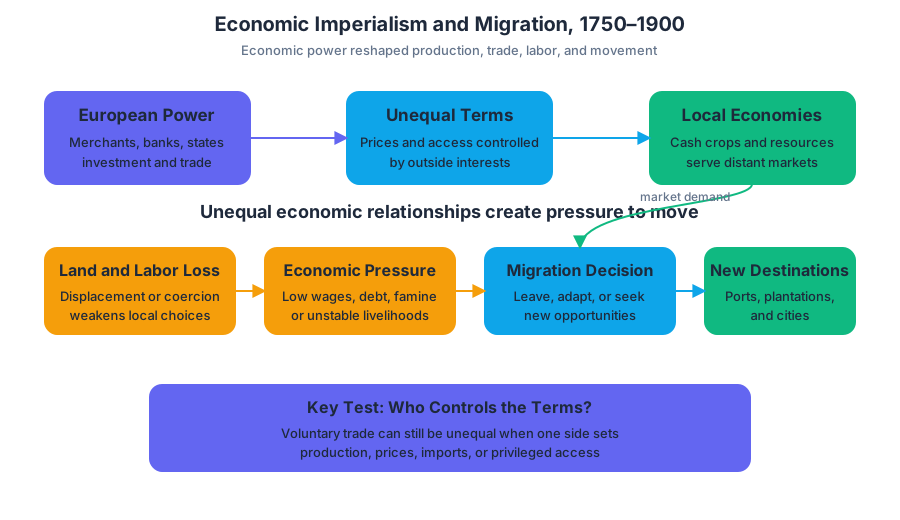
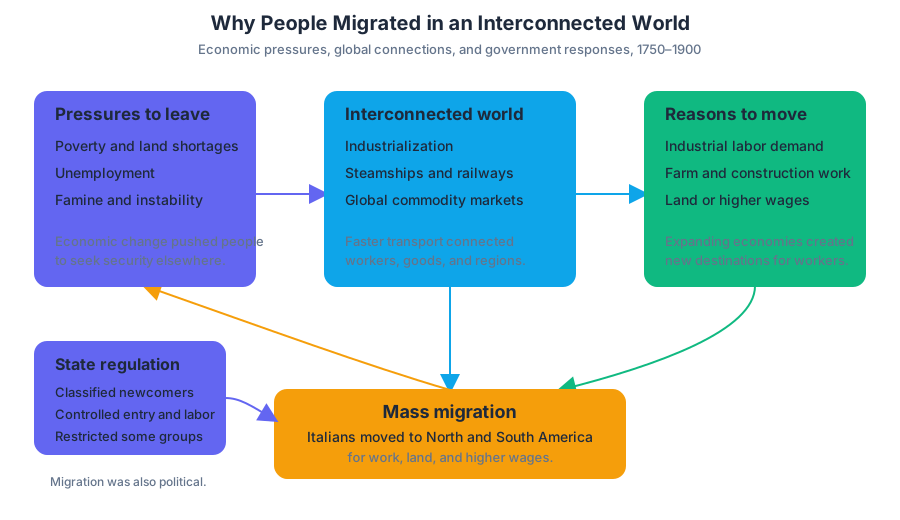
6.7 Effects of Migration · 6.8 Causation in the Imperial Age
Key concepts: Effects of migration · Causation in the Imperial Age · Historical reasoning · Explaining multiple themes or perspectives to explore complexity · Imperial examination system · Mandate of Heaven · Confucian scholars · Buddhist monks · Neo-Confucianism · Social prestige of scholars
Migration transforms more than population maps: it creates diasporas, rearranges labor systems, and produces new political and racial hierarchies. In the imperial age, the central historical question is not simply who moved, but how movement changed both the migrants’ lives and the societies that recruited, ruled,…
6.7 Effects of Migration · 6.8 Causation in the Imperial Age
Migration transforms more than population maps: it creates diasporas, rearranges labor systems, and produces new political and racial hierarchies. In the imperial age, the central historical question is not simply who moved, but how movement changed both the migrants’ lives and the societies that recruited, ruled, or resisted them.
6.7 Effects of Migration
A diaspora is a community living outside its place of origin while maintaining cultural, family, or economic connections across regions. During the nineteenth century, colonial labor demand helped produce large diasporas through indentured labor, a contract system in which workers agreed to labor for a specified period in exchange for wages, transportation, or eventual freedom.
A useful causal chain is:
For example, the abolition or restriction of slavery increased plantation owners’ demand for controlled labor. Colonial governments and private employers recruited Indian workers for plantations and infrastructure projects in places such as the Caribbean, southern Africa, and Southeast Asia. The workers’ movement created Indian diasporas, but it also placed migrants into unequal societies where colonial authorities often classified them by race, legal status, and occupation.
The effects differed by perspective. Employers gained a disciplined labor force; imperial governments gained revenue and population mobility; migrants gained wages and sometimes opportunities unavailable at home, but they also faced coercive contracts, harsh working conditions, family separation, and discrimination. Indigenous workers could experience competition for employment, while colonial authorities used racial categories to divide laborers and weaken collective resistance. A strong historical explanation therefore connects migration’s economic effects to its social and political consequences.
Key distinction: Migration may be voluntary, forced, or constrained by economic necessity. Calling all contract labor “free migration” hides the unequal power relationship built into the contract.
6.8 Causation in the Imperial Age
Causation means explaining how and why one historical development contributed to another. It requires more than placing events in chronological order. A causal argument identifies a mechanism—the process linking cause to effect—and considers whether other causes, limits, or perspectives modify the explanation.
Worked causal example: Colonial labor demand encouraged indentured recruitment because plantation economies required large workforces after slavery declined. Indentured migration then created permanent diasporas because many workers remained after their contracts ended, established families, or built businesses. These diasporas altered local societies because colonial governments assigned groups different legal and racial positions. The result was not only labor replacement but also new political identities, ethnic tensions, and demands for rights.
Notice the reasoning: each arrow explains why the next development followed. A weak answer says, “Indentured workers moved and discrimination occurred.” A stronger answer explains the connection between labor demand, imperial regulation, settlement, and hierarchy.
Belief Systems and Political Systems
Belief systems could legitimize political authority while also giving rulers tools for administration. In China, the imperial examination system selected officials through tests based heavily on Confucian learning. This strengthened the state by creating a class of educated administrators who shared a political language, valued hierarchy, and could serve a centralized bureaucracy.
The Mandate of Heaven held that a ruler governed legitimately only while maintaining moral order and effective rule. Natural disasters, rebellion, or political disorder could be interpreted as evidence that the ruler had lost Heaven’s support. This idea both reinforced authority and placed conditions on it: emperors claimed legitimacy, but subjects could explain dynastic change as justified when rulers failed.
Confucian scholars therefore occupied an ambiguous position. Their education gave them rising prestige and access to government, yet their role also depended on serving the imperial system. Buddhist monks offered another source of authority through monasteries, learning, charity, and spiritual influence. The Yuan emperors supported both Confucian scholars and Buddhist monks, using multiple traditions to portray Mongol rule as legitimate in China.
Neo-Confucianism, a renewed form of Confucian thought that incorporated ideas responding to Buddhism and Daoism, further elevated the social prestige of the Confucian scholarly class. It connected personal morality, family hierarchy, education, and good government. The relationship was reciprocal: political systems promoted beliefs that supported order, while belief systems supplied rulers with claims about why obedience and hierarchy were proper.
Historical Reasoning: Explaining Complexity
For historical reasoning, especially Skill 5: Making Connections and Skill 6: Argumentation, complexity comes from explaining more than one valid dimension. A sophisticated claim might argue that belief systems reinforced political hierarchies through examinations, filial piety, and the Mandate of Heaven, while also limiting rulers by defining standards of moral conduct. Likewise, migration could create opportunity for some groups while producing exploitation and exclusion for others.
When exploring multiple themes or perspectives, combine categories rather than listing them: migration affected ECN through labor markets, SIO through racial and ethnic hierarchies, GOV through colonial regulation, and CDI through diasporic cultures. The goal is a connected explanation, not a catalogue of facts.
Complexity formula: claim + specific evidence + causal mechanism + qualification or alternate perspective.
Misconception check: “The Mandate of Heaven was simply a religious version of divine-right monarchy.” Not exactly. Both could legitimize rulers, but the Mandate of Heaven made legitimacy conditional on competent and moral governance, allowing rebellion and dynastic replacement to be explained as historically justified.
Retrieval check: Explain one causal chain linking colonial labor demand to a new social hierarchy. Then explain how the imperial examination system both strengthened Chinese political authority and increased the prestige of Confucian scholars. Finally, add one qualification showing how migrants or subjects could experience the same system differently from rulers.
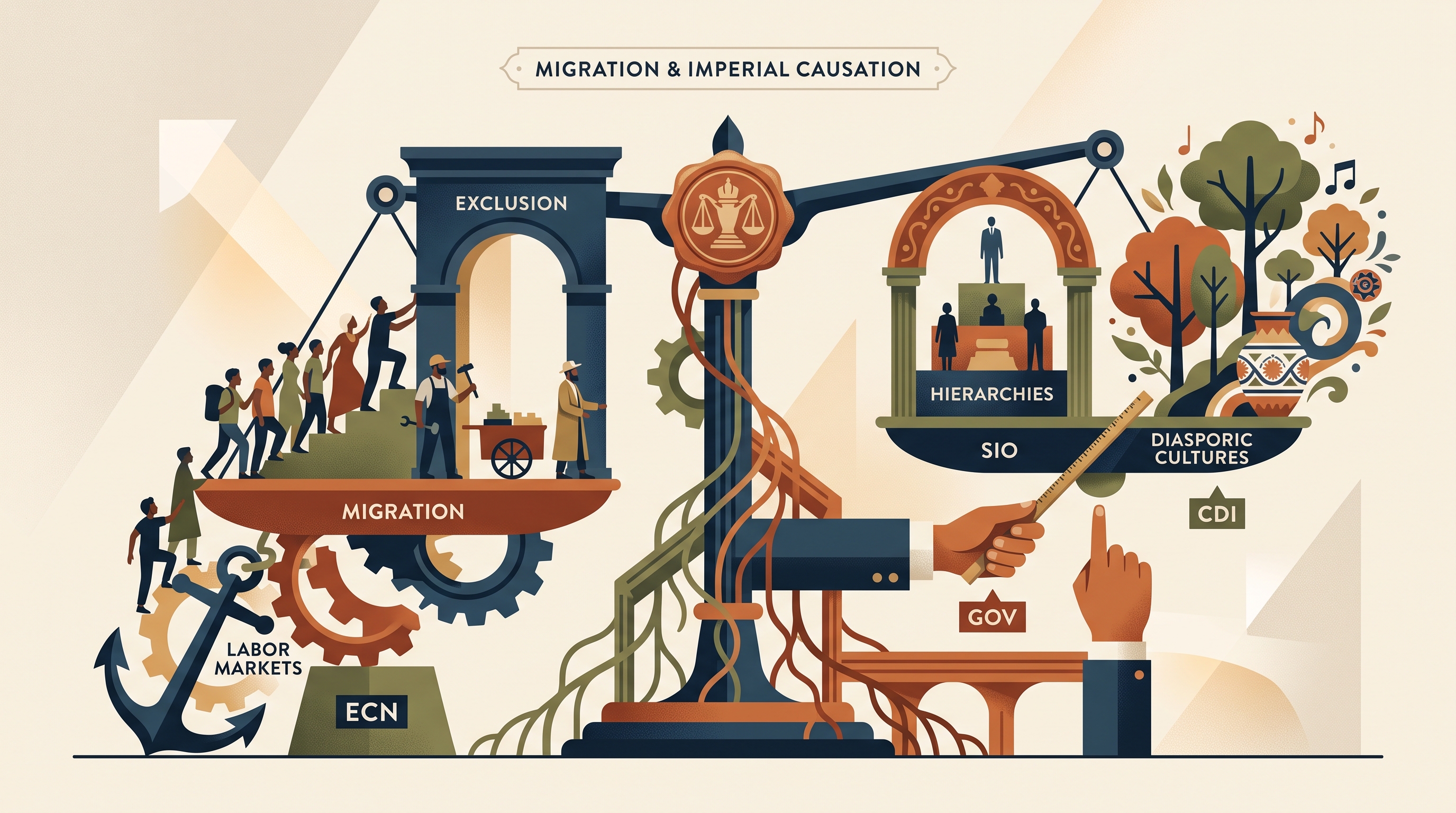
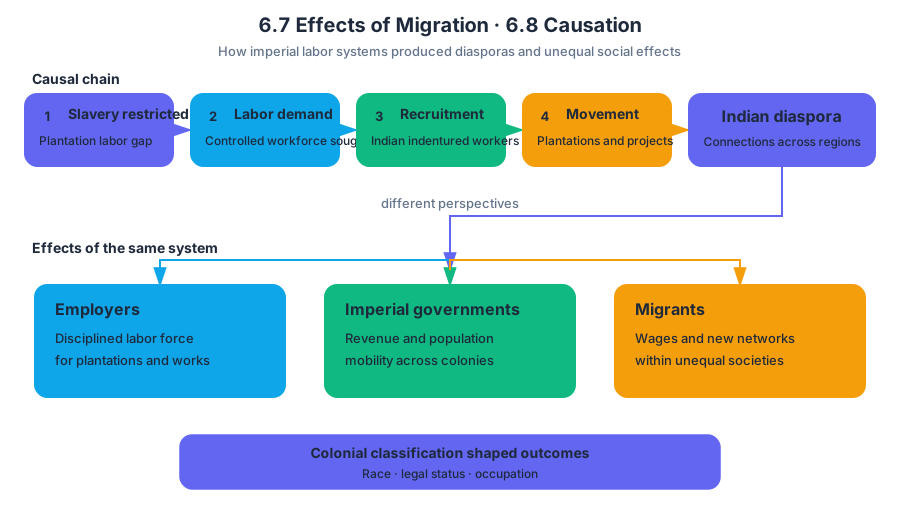
7.1 Shifting Power After 1900 · 7.2 Causes of World War I
Key concepts: The rise of new global powers after 1900 · The decline of established empires, including the Ottoman Empire and Qing China · Imperialist expansion and competition for resources · Nationalism and territorial or regional conflicts · The alliance system and its role in creating global conflict · The relative significance of multiple causes of World War I
By 1900, global power was becoming more competitive: the United States, Russia, and Japan expanded their influence while older empires such as the Ottoman Empire and Qing China struggled to survive.
7.1 Shifting Power After 1900 · 7.2 Causes of World War I
By 1900, global power was becoming more competitive: the United States, Russia, and Japan expanded their influence while older empires such as the Ottoman Empire and Qing China struggled to survive. The sharp historical question is: why did a changing balance of power turn a regional crisis into World War I?
7.1 Shifting Power After 1900 uses the reasoning process Continuity and Change and emphasizes Skill 4.B: Explain how a specific historical development or process is situated within a broader historical context. 7.2 Causes of World War I uses Causation and emphasizes Skill 1.B: Explain a historical concept, development, or process.
A changing global balance of power
The United States, Russia, and Japan emerged as increasingly powerful states after 1900, but they did so through different combinations of industrialization, military expansion, state centralization, and imperial ambition.
- The United States combined industrial production, financial strength, naval expansion, and overseas influence. Its growing power challenged the assumption that Europe alone controlled global affairs.
- Russia possessed enormous territory and population and expanded across Eurasia, but its power was weakened by uneven industrialization, political unrest, and military difficulties.
- Japan rapidly modernized after the Meiji Restoration, built a powerful army and navy, and pursued imperial expansion in East Asia. Its victories over China and Russia demonstrated that a non-European state could compete successfully with major imperial powers.
The important continuity was imperial competition: states still sought territory, resources, and strategic advantage. The important change was the identity of the competitors. Power was no longer concentrated exclusively among western European empires.
Declining empires
The Ottoman Empire faced nationalist movements, European intervention, military pressure, and internal administrative challenges. European powers competed for influence in Ottoman territories, especially in the Balkans, where competing national claims made the region politically unstable.
Qing China likewise confronted internal rebellion, foreign economic pressure, unequal treaties, territorial losses, and challenges to imperial authority. The Qing government’s decline created opportunities for Japan and European powers while encouraging Chinese reformers and revolutionaries to question the existing political order.
Misconception check — “Decline means disappearance.” The Ottoman and Qing states did not simply vanish when their power weakened. They continued governing large populations, but their ability to control territory, resist foreign pressure, and maintain legitimacy was increasingly limited.
Why imperialism increased tension
Imperialist expansion is the extension of a state’s political, military, or economic control over other territories. In the decades before World War I, European powers intensified their competition for colonies, trade routes, strategic ports, and raw materials.
Competition for resources mattered because industrial economies required dependable supplies and markets. Coal, rubber, minerals, agricultural products, and access to transportation routes could strengthen one empire while making another feel threatened. Imperialism therefore operated as both an economic project and a contest for national security.
The competition also carried symbolic meaning. Governments presented overseas expansion as evidence of national greatness, so a diplomatic compromise could be portrayed at home as humiliation. Economic rivalry thus reinforced nationalism, and nationalism made rivalry more dangerous.
From regional disputes to world war
Territorial and regional conflicts supplied the immediate pressure points. In the Balkans, the weakening Ottoman presence, the growth of competing nationalisms, and the ambitions of states such as Serbia, Austria-Hungary, and Russia produced overlapping claims to territory and political influence.
Nationalism is loyalty to, and political identification with, a nation. It could unify populations within states, but it could also encourage national groups to demand independence or persuade governments that compromise betrayed the nation. In a region containing many ethnic and linguistic communities, nationalism transformed local disputes into questions of honor and survival.
The alliance trap
The alliance system was intended to preserve security, but it created a dangerous chain reaction. European powers made agreements promising support to one another; when conflict began between Austria-Hungary and Serbia, those commitments drew in Russia, Germany, France, and Britain.
An alliance did not make war inevitable by itself. Its significance was that it converted a limited dispute into a conflict involving several great powers. Mobilization plans, military timetables, fear of encirclement, and pressure to defend national honor reduced the time available for negotiation.
Weighing the causes
The strongest explanation treats World War I as the result of interacting causes rather than a single event. Imperialist expansion and competition for resources intensified rivalries; nationalism made compromise politically costly; territorial and regional conflicts created flashpoints; and the flawed alliance system expanded a regional war into a global conflict.
| Cause | How it increased the risk of war |
|---|---|
| Imperialist expansion | Made overseas territory and influence objects of great-power rivalry |
| Competition for resources | Encouraged states to seek economic security and strategic advantage |
| Nationalism | Turned political disputes into matters of honor and identity |
| Territorial and regional conflicts | Created immediate crises, especially in the Balkans |
| Alliance system | Spread a local conflict across Europe and beyond |
Worked interpretation: If a historian argues that the assassination of Archduke Franz Ferdinand caused World War I, the claim identifies the trigger but not the full explanation. A stronger argument distinguishes the trigger from the underlying conditions: the assassination activated tensions created by nationalism, imperial rivalry, regional conflict, and alliances.
Retrieval check: Explain one continuity and one change in global power after 1900. Then rank the alliance system, nationalism, imperialism, and regional conflict by significance, explaining why the factor you rank first could not alone explain the war.
Learning Objective — Unit 7: Learning Objective B: Explain the causes and consequences of World War I. Historical Developments — KC-6.2.IV.B.i: The causes of World War I included imperialist expansion and competition for resources. In addition, territorial and regional conflicts combined with a flawed alliance system and intense nationalism to escalate the tensions into global conflict.
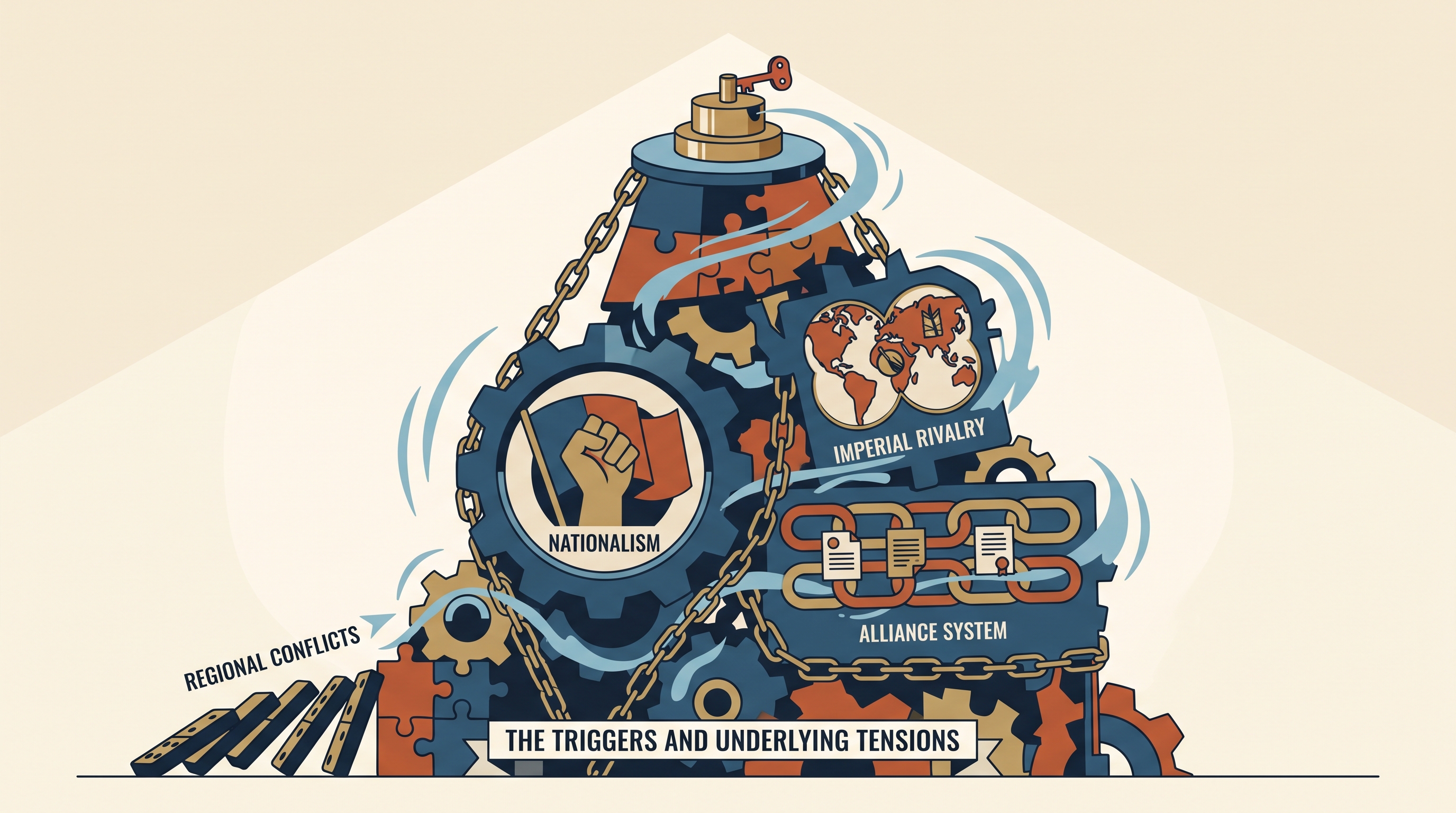
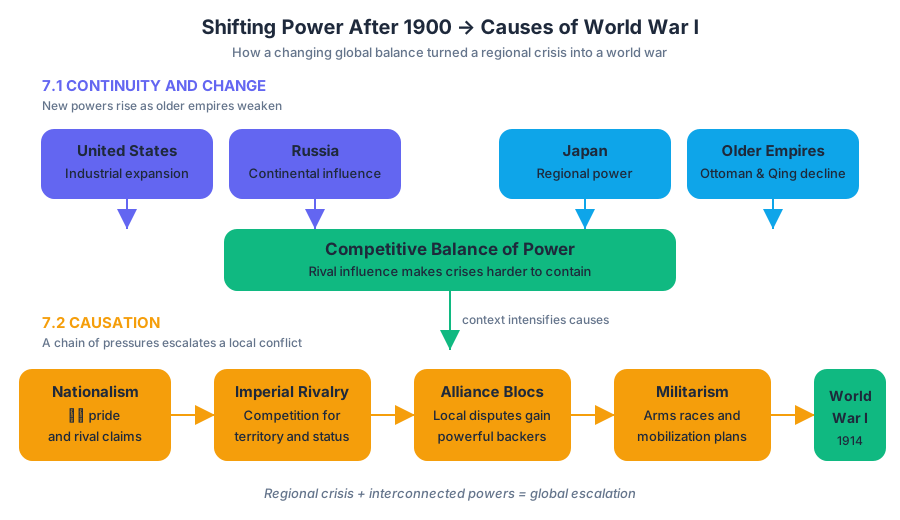
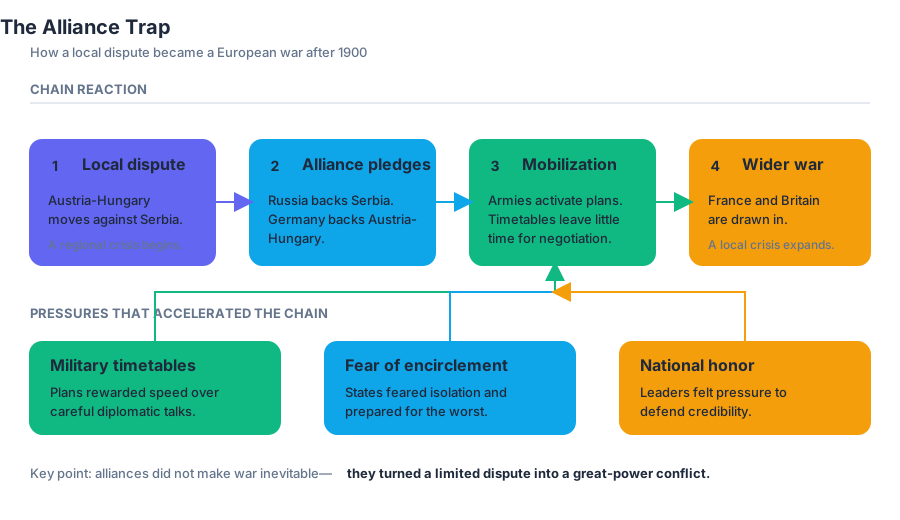
7.3 Conducting World War I · 7.4 The Economy in the Interwar Period
Key concepts: Militarism · Nationalism · Alliance systems · Territorial and regional conflicts · Global escalation of local tensions · Colonial participation in World War I · Anti-colonial critique of European imperialism · Interwar economic systems · The New Deal · Fascist corporatism and Nazi militarism
World War I became global because a local crisis moved through an interconnected political system: territorial disputes, regional conflicts, intense nationalism, and a flawed alliance system transformed one confrontation into a war involving empires across Europe, Africa, Asia, and the Middle East.
7.3 Conducting World War I · 7.4 The Economy in the Interwar Period
World War I became global because a local crisis moved through an interconnected political system: territorial disputes, regional conflicts, intense nationalism, and a flawed alliance system transformed one confrontation into a war involving empires across Europe, Africa, Asia, and the Middle East. The central historical problem is not simply who fought, but how governments, soldiers, colonies, economies, and technologies made a regional conflict expand.
From regional crisis to global war
A territorial conflict is a struggle over control of land, borders, or political authority. A regional conflict involves competing powers within a particular area. Before 1914, these disputes existed alongside militarism—the belief that military strength and readiness were essential to national success—and nationalism, the conviction that a people sharing an identity should defend or rule themselves.
The alliance system was intended to deter aggression, but it operated like a chain of linked obligations. When one state entered a confrontation, its allies could enter to protect strategic interests, honor agreements, or avoid appearing weak. In this way, alliances and nationalism escalated tensions rather than containing them.
Worked causal example: A dispute that might otherwise have remained regional could become global through the following sequence:
- A territorial or regional conflict creates a crisis.
- Nationalist leaders portray compromise as betrayal.
- Militarized governments prepare for rapid action.
- Alliances pull additional states into the confrontation.
- Imperial powers mobilize resources and troops from overseas territories.
- New military technologies increase the war’s destructive reach and duration.
This is the required causal pattern identified in Unit 7: Learning Objective B and KC-6.2.IV.B.i: territorial and regional conflicts combined with a flawed alliance system and intense nationalism to escalate tensions into global conflict.
Colonial participation and imperial hypocrisy
European empires did not fight World War I with European soldiers alone. Great Britain and France recruited colonial troops, while those same empires had previously used colonial forces to suppress revolts and expand imperial control. Colonial participation therefore exposed a contradiction: imperial governments demanded loyalty and sacrifice from colonial subjects without granting them equal political treatment.
John Chilembwe criticized this hypocrisy. His argument was not merely that colonial people were being asked to fight; it was that Europeans invoked shared duties during wartime while denying equality during peacetime. Colonial soldiers and workers could be treated as essential to imperial survival without being treated as equal members of the political community.
Misconception check — “The war was only European.” European governments directed much of the conflict, but the war depended on imperial manpower, resources, and territories. A global war can be global even when its principal decision-makers are concentrated in one region.
Technology, violence, and patriotism
Technology and innovation changed how humans adapted to modern conflict. Industrial production supplied armies on an unprecedented scale, while military technologies increased the speed, range, and destructive power of warfare. Technology did not determine political decisions by itself; governments chose how to organize and deploy it.
The passage also condemns patriotism when it becomes a justification for violence. That warning applies both to individual terrorists and to organized armies acting under orders: the scale of violence differs, but patriotic language can be used in both cases to turn killing into a supposed moral duty.
Key distinction: Patriotism is attachment to a political community; militarized nationalism turns that attachment into a demand for obedience, sacrifice, and sometimes violence.
The interwar economy: competing responses
The interwar period was not simply a pause between two wars. It was a period of economic crisis and political experimentation in which societies debated how much governments should manage production, employment, welfare, and national recovery.
The New Deal represented one response: the government intervened to address economic hardship and stabilize society. Fascist corporatist economics represented another: the state organized economic relationships among employers, workers, and professional groups under authoritarian political control. These systems differed in ideology and institutions, but both rejected the idea that governments should remain completely passive during severe economic disruption.
The League of Nations mandate system further complicated the interwar order. Former colonial territories were placed under external administration rather than receiving full independence, holding back self-determination. Western-educated independence and decolonization figures challenged this continued imperial control during and after the interwar period.
Aggressive militarism in Nazi Germany under Adolf Hitler contributed to the conditions leading to World War II. The connection is causal rather than automatic: economic and political instability created opportunities for authoritarian movements, while militarism and expansion converted domestic mobilization into international aggression.
Skill focus: reading evidence
The suggested skill for Topic 7.3 is 3.B: Identify the evidence used in a source to support an argument. For example, in a source by John Chilembwe, evidence supporting a criticism of imperial hypocrisy might include the contrast between colonial participation in wartime and unequal treatment in peacetime. Identifying that contrast is stronger than merely stating that Chilembwe “disliked imperialism.”
Retrieval check: Explain in two sentences how an alliance system could turn a regional conflict into a global war. Then identify one piece of evidence that would support John Chilembwe’s argument about colonial participation and unequal treatment.
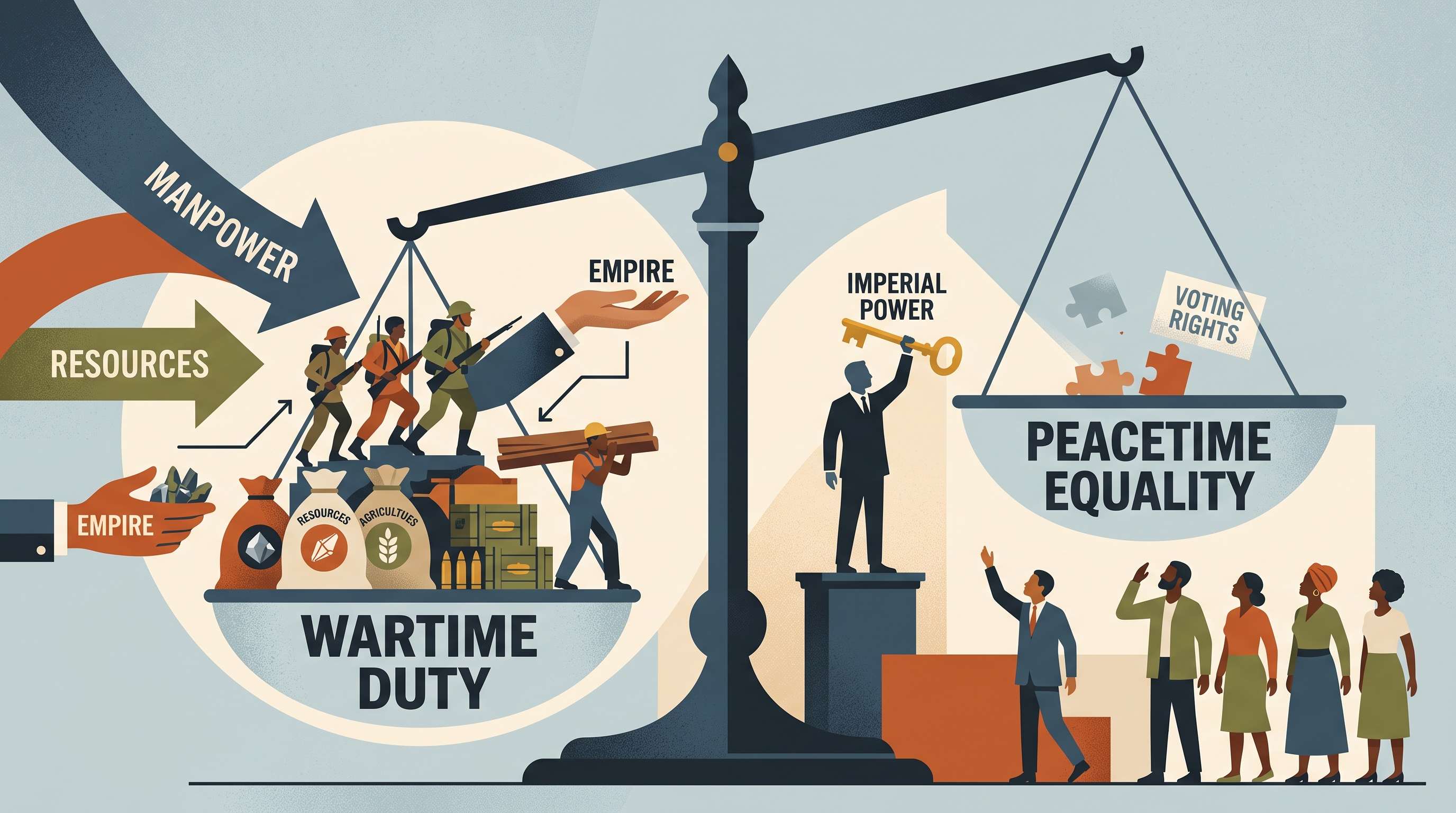
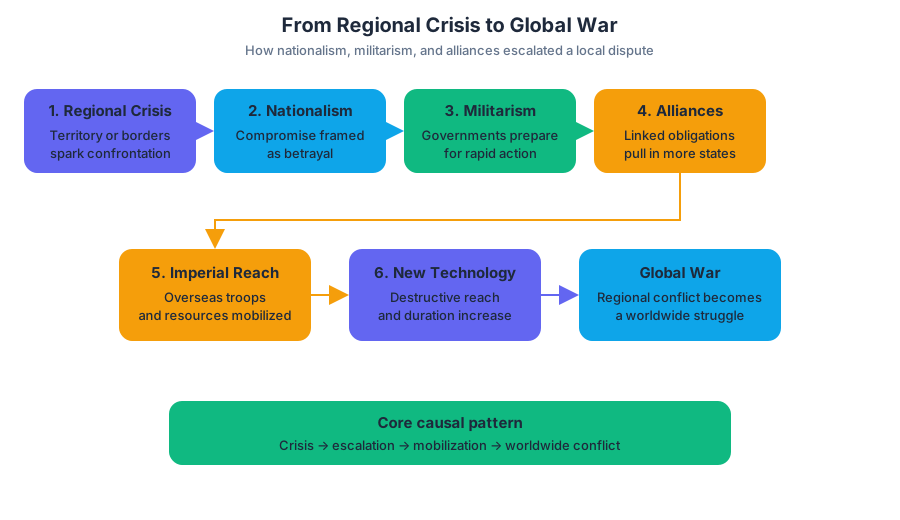
7.5 Unresolved Tensions After World War I · 7.6 Causes of World War II
Key concepts: Unresolved tensions after World War I · Causes of World War II · Point of view, purpose, historical situation, and audience · Continuity and change · Mexican Revolution · Russian Revolution · Imperialism · Territorial and regional conflicts · Alliance systems · Nationalism
World War II did not begin from a single spark. It emerged when the unresolved political debts of World War I met economic crisis, imperial expansion, territorial disputes, weak international institutions, and aggressive nationalism.
7.5 Unresolved Tensions After World War I · 7.6 Causes of World War II
World War II did not begin from a single spark. It emerged when the unresolved political debts of World War I met economic crisis, imperial expansion, territorial disputes, weak international institutions, and aggressive nationalism. The central historical question is therefore: how did regional conflicts become a global war?
Key idea: Postwar settlements attempted to create order, but often produced new grievances or applied principles inconsistently.
The postwar settlement: peace without resolution
The Treaty of Versailles weakened Germany through territorial losses, military restrictions, and reparations. At the same time, the peace settlement transferred former German colonies to Great Britain and France through the League of Nations mandate system. This created a contradiction: European powers publicly endorsed national self-determination while continuing imperial control over much of Africa, the Middle East, and Asia.
New states and borders also left minorities and rival national groups inside the same political units. The League of Nations lacked an effective military force, and major powers did not consistently enforce its decisions. As a result, aggressive states could test the international system: Japan created Manchukuo in China, Italy invaded Ethiopia, and Germany remilitarized and expanded into neighboring territories.
Imperialism—the expansion of a state’s political, military, or economic control over other territories—contributed to conflict because industrial powers competed for land, resources, markets, and strategic routes. Japan’s proposed Greater East Asia Co-Prosperity Sphere, for example, presented Japanese expansion as regional liberation from Western imperialism but functioned as an empire designed to secure resources and political control.
From regional crisis to global conflict
Several forces reinforced one another:
- Competition for resources: Industrial and militarized states sought oil, coal, iron, rubber, food supplies, and colonial markets. Resource insecurity encouraged territorial expansion.
- Territorial and regional conflicts: Japan’s expansion in China, Germany’s demands in Europe, and Italy’s invasion of Ethiopia challenged the existing order in separate regions.
- A flawed alliance system: Agreements intended to deter aggression created opposing blocs and made local confrontations more dangerous. Once Germany, Italy, and Japan coordinated more closely, their actions appeared connected to a wider challenge.
- Intense nationalism: Governments portrayed compromise as weakness and territorial expansion as proof of national strength. Nationalist propaganda transformed disputes into tests of national honor.
- Imperial rivalry: Anti-imperial movements and colonial resistance exposed the hypocrisy of European claims to defend civilization and self-determination. The Indian National Congress and West African strikes and congresses challenged imperial rule, even when they did not directly cause World War II.
A useful causal chain is:
unresolved postwar grievances → economic and political instability → aggressive expansion → weak international response → emboldened dictatorships → alliance commitments and nationalism → global war
Continuity and change: Mexico and Russia
The Mexican Revolution and Russian Revolution both changed political authority by attacking old elites and promising social transformation. In Mexico, revolutionary governments weakened the power of large landowners and adopted reforms associated with land redistribution, labor rights, and national control over resources. In Russia, the Bolsheviks overthrew the tsarist order and created a communist state that abolished private aristocratic privilege while building a centralized one-party government.
Continuities remained important. Both revolutions relied on state power to impose order, and neither immediately eliminated hierarchy or coercion. The historical situation explains the difference in outcomes: Mexico’s revolution produced a nationalist state that retained a mixed economy, while Russia’s wartime collapse, class conflict, and imperial crisis enabled the Bolsheviks to pursue a more radical communist restructuring.
Reading sources as historical evidence
Point of view means the position or perspective from which a source speaks. Purpose means what the creator hoped to accomplish. Historical situation means the conditions surrounding the source’s creation, and audience means the people intended to read, hear, or see it.
Source analysis rule: A source is not automatically reliable or unreliable. Its value depends on the question being asked.
For example, a League of Nations report might describe mandates as international supervision designed to prepare territories for self-government. Its purpose and audience could encourage diplomatic language that minimizes exploitation. A speech by an anti-imperial organization might reveal colonial grievances more clearly, but its persuasive purpose could emphasize abuses and understate divisions within the resistance movement. Comparing both sources produces stronger analysis than accepting either as a complete account.
This is Skill 2.C: Explain the significance of a source’s point of view, purpose, historical situation, and/or audience, including how these might limit the use(s) of a source. It also requires comparison: identify a meaningful similarity or difference, then explain how the historical situation produced it.
Worked causal example
Suppose a document claims that territorial expansion will restore national greatness. First, identify its point of view: it likely reflects a nationalist government or supporter. Next, connect its purpose to persuasion and mobilization. Then place it in the historical situation of postwar grievances, economic insecurity, and perceived humiliation. Finally, explain its limitation: it may reveal how leaders justified expansion, but it cannot by itself prove that expansion benefited ordinary people or lacked opposition.
Skill 1.B: Explain a historical concept, development, or process means showing how and why imperialism, resources, territorial disputes, alliances, and nationalism interacted. Continuity and Change requires separating what changed from what persisted rather than claiming that a revolution or peace treaty transformed everything at once.
Misconception check
Misconception: “The Treaty of Versailles alone caused World War II.” The treaty created grievances, especially in Germany, but grievances became a world war only through later choices: economic crisis, dictatorship, militarization, expansion, failed deterrence, and the inability of international institutions to contain aggression.
Retrieval check: Explain one continuity and one change produced by the Mexican or Russian Revolution. Then complete the chain: territorial expansion + weak international response + nationalism = __________. Why would a source celebrating imperial expansion be useful—and limited—for understanding the causes of World War II?
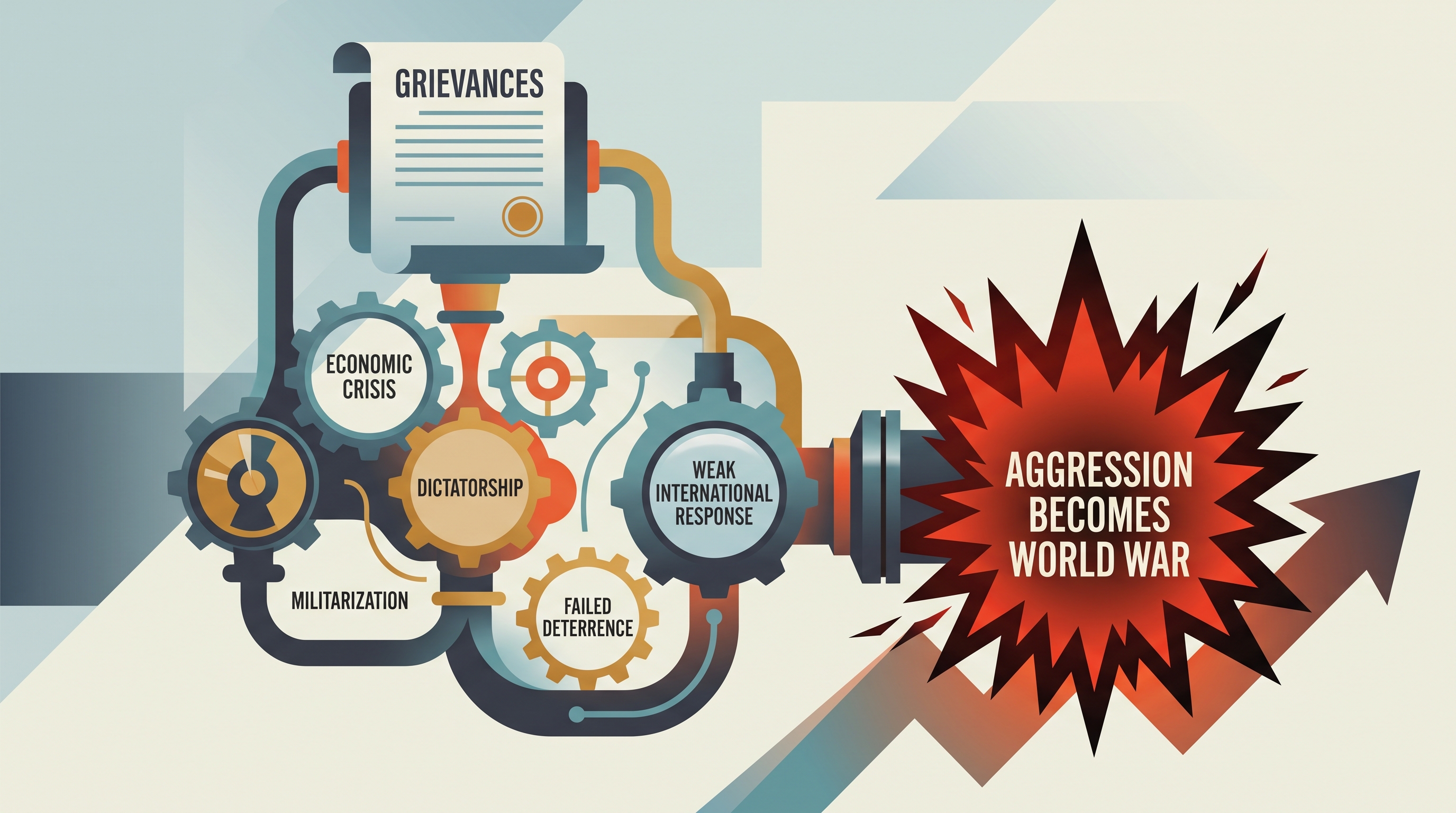
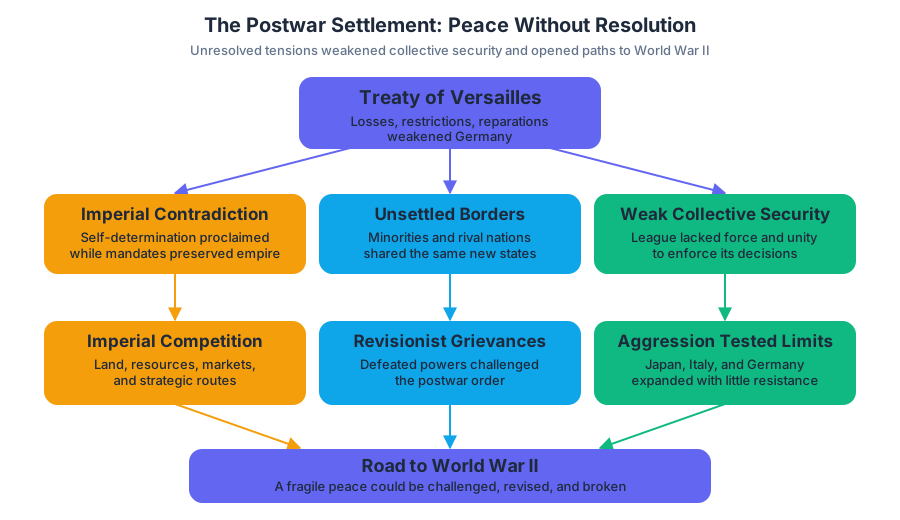
7.7 Conducting World War II · 7.8 Mass Atrocities After 1900
Key concepts: Conducting World War II · Mass atrocities after 1900 · The Holocaust · Genocide and ethnic violence · Xenophobic nationalism · Extremist groups gaining power · Colonial consequences of World War II · Armenians in the Ottoman Empire · Cambodia · Consequences of mass atrocities
World War II was conducted not only through armies and battlefields but also through air power, occupation, imperial conquest, and ideological persecution. The bombing of Pearl Harbor in December 1941 brought the United States directly into the war, while Japan’s invasions across Asia reshaped European colonial…
7.7 Conducting World War II · 7.8 Mass Atrocities After 1900
World War II was conducted not only through armies and battlefields but also through air power, occupation, imperial conquest, and ideological persecution. The bombing of Pearl Harbor in December 1941 brought the United States directly into the war, while Japan’s invasions across Asia reshaped European colonial rule in territories such as Vietnam and Indonesia.
Conducting World War II: War and Empire
Japan’s military leaders presented expansion as a regional project, but Japanese conquest placed much of East and Southeast Asia under harsh occupation. Japan invaded territories including parts of China, French Indochina, and the Dutch East Indies. The conquest of France and the Netherlands weakened their ability to control overseas empires: French authority in Vietnam and Dutch authority in Indonesia were disrupted by Japanese victories.
The war therefore operated on two connected levels:
- Global military conflict: Axis and Allied states fought across Europe, North Africa, and Asia.
- Imperial crisis: European defeats weakened colonial governments and encouraged anticolonial movements.
- Ideological conflict: States mobilized populations through intense nationalism, often defining national belonging against supposedly dangerous outsiders.
- Total war: Governments directed economies, civilians, industry, propaganda, and scientific research toward victory.
A useful chain of reasoning is: Japanese expansion → European colonial defeat → weakened imperial authority → new political opportunities for Asian independence movements. This does not mean Japan liberated these territories; Japanese occupation replaced one form of imperial control with another. The same event could weaken European empires while producing severe violence for local populations.
Key distinction: A military victory over a colonial power is not automatically national liberation. Analyze who gained power, who lost power, and how occupying authorities treated civilians.
Xenophobic Nationalism and Extremist Power
Xenophobic nationalism is nationalism that defines the nation through hostility toward people portrayed as foreign, racially inferior, ethnically dangerous, or culturally disloyal. During World War II, states were motivated by this kind of exclusionary nationalism, especially when leaders claimed that national survival required removing or destroying alleged internal enemies.
The rise of extremist groups in power led to the attempted destruction of specific populations. This is the central historical development identified by KC-6.2.III.C. Extremist governments used laws, propaganda, police organizations, forced relocation, imprisonment, starvation, deportation, and mass killing to transform prejudice into state policy.
The Holocaust: From Exclusion to Destruction
The Holocaust was Nazi Germany’s systematic persecution and murder of Europe’s Jews during World War II. It is an example of a mass atrocity, meaning large-scale, organized violence against civilians or a targeted population. The Holocaust developed through stages rather than appearing suddenly: antisemitic propaganda and legal exclusion were followed by confiscation, segregation, forced displacement, ghettos, deportations, and industrialized mass murder.
The first signs mattered because they revealed how ordinary institutions could be redirected toward persecution. Identification requirements, exclusion from professions, attacks on businesses and synagogues, and the removal of civil rights made discrimination increasingly visible. Etty Hillesum, a Jewish Dutch writer, recorded the mounting danger while reflecting on fear, hatred, responsibility, and the effort to preserve inner humanity under persecution.
Hillesum’s reaction is historically important because it shows that victims were not merely statistics within a state process. Her writings reveal uncertainty, moral reflection, fear, and attempts to resist hatred psychologically even as Nazi persecution narrowed the possibilities for physical escape. Personal testimony helps historians examine how large political systems were experienced by individuals.
Genocide, Ethnic Violence, and Comparison
Genocide is the deliberate attempt to destroy a national, ethnic, racial, or religious group, in whole or in part. Ethnic violence is organized violence directed against people because of their ethnic identity; it may involve expulsion, massacres, forced assimilation, or other attacks without always pursuing complete physical destruction.
| Case | Historical setting | Analytical significance |
|---|---|---|
| Armenians in the Ottoman Empire | During and after World War I | Illustrates genocide or ethnic violence connected to wartime fear, nationalism, and state action |
| The Holocaust | Nazi-controlled Europe during World War II | Illustrates the attempted destruction of Europe’s Jews by an extremist state |
| Cambodia | Late 1970s | Illustrates mass atrocity under an extremist revolutionary regime |
| Tutsi in Rwanda | 1990s | Illustrates genocide fueled by ethnic classification and organized political violence |
| Ukraine in the Soviet Union | 1920s and 1930s | Illustrates mass suffering and state violence within an authoritarian system |
These cases should be connected, not treated as identical copies. The comparison question is: What mechanisms recur, and what conditions differ? Extremist ideology, state or militia organization, dehumanizing propaganda, and weakened protections for targeted groups may recur, while the political goals, social categories, and methods of violence vary.
Consequences of Mass Atrocities
Under Unit 7: Learning Objective H, students must “Explain the various causes and consequences of mass atrocities in the period from 1900 to the present.” Consequences included enormous population loss, displaced survivors, destroyed communities, trauma across generations, altered borders, refugee crises, and demands for accountability. Mass atrocities also reshaped international politics by encouraging new legal concepts, human-rights institutions, and debates over state sovereignty.
A common misconception is that mass atrocities are caused only by ancient ethnic hatred. Historical evidence instead shows that political leaders and extremist organizations often construct or intensify identities, identify alleged enemies, and mobilize state power against them. Hatred can be present, but explaining causation requires tracing institutions, ideology, wartime conditions, propaganda, and organized action.
AP Skill 5.B — Making Connections: Explain how one historical development or process relates to another. For example, connect xenophobic nationalism to extremist rule, extremist rule to population destruction, and mass atrocities to postwar displacement and international responses.
Retrieval check: Explain one way World War II weakened European colonial authority, then identify one recurring mechanism linking the Holocaust with another listed case of genocide, ethnic violence, or mass atrocity. Distinguish the shared mechanism from the historical difference.
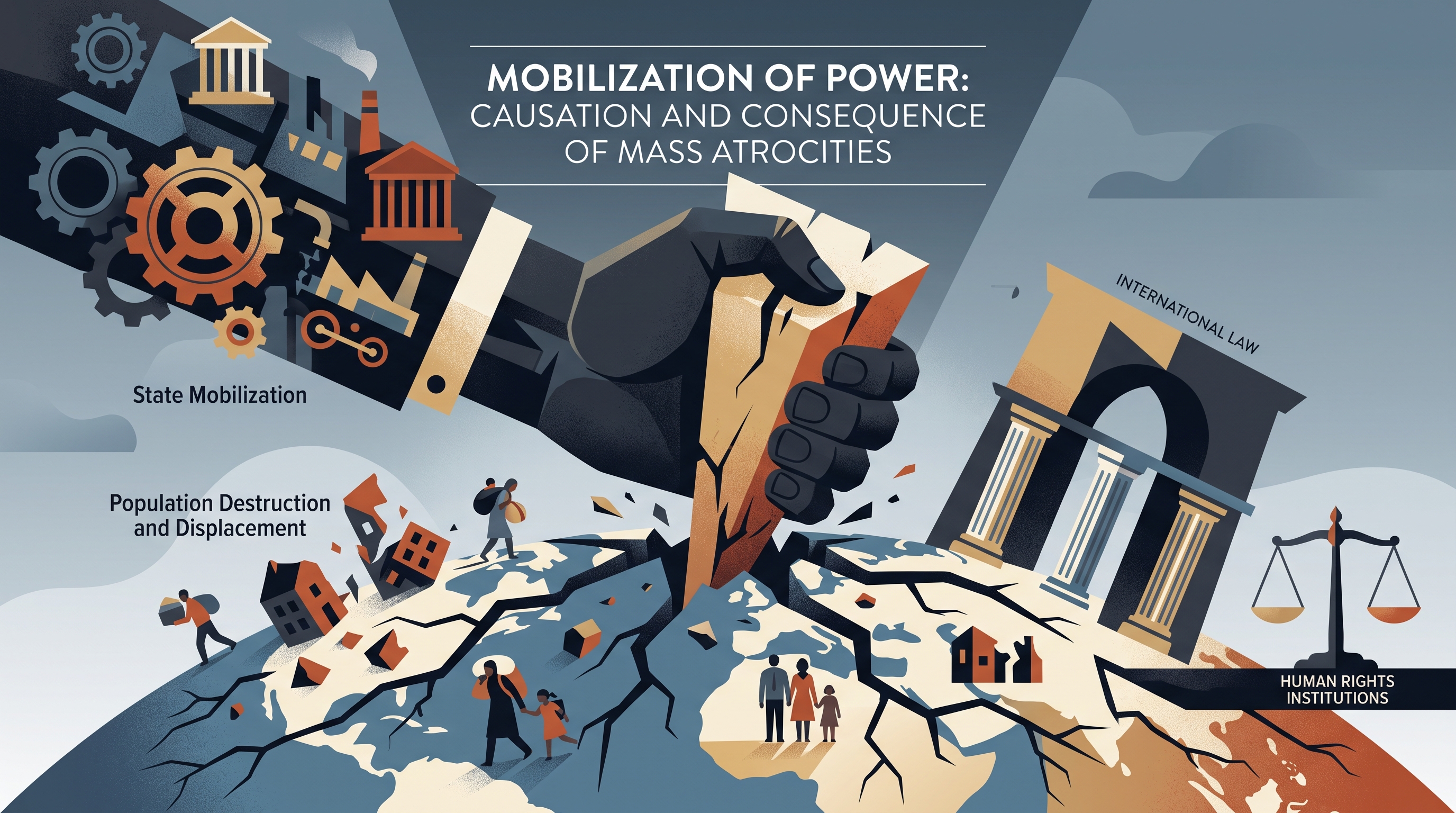
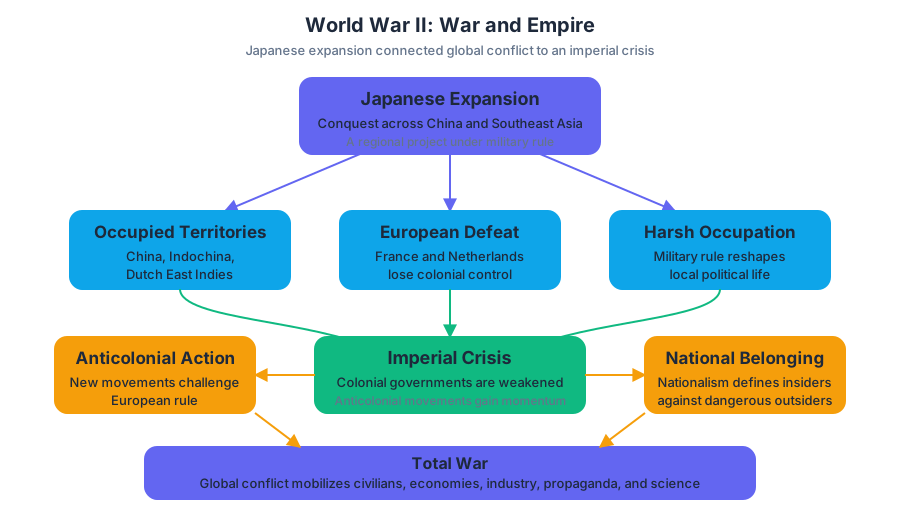
7.9 Causation in Global Conflict
Key concepts: Causation in Global Conflict · Contextualization · Evidence
A global war rarely has a single cause: causation means explaining how several conditions, decisions, and developments combined to produce an outcome, while distinguishing long-term pressures from immediate triggers.
7.9 Causation in Global Conflict
A global war rarely has a single cause: causation means explaining how several conditions, decisions, and developments combined to produce an outcome, while distinguishing long-term pressures from immediate triggers. For twentieth-century conflicts, nationalism mattered greatly—but nationalism became globally destructive only when linked to imperial rivalry, militarized states, weak international institutions, and leaders’ choices.
Building a Causal Explanation
A useful causal explanation works like a chain rather than a list. Begin with the background conditions, identify the mechanism that connected those conditions to action, and then show the result. A mechanism is the process through which one factor produces an effect.
| Causal layer | Guiding question | Twentieth-century example |
|---|---|---|
| Long-term condition | What made conflict possible? | National rivalries, imperial competition, militarism |
| Intermediate development | What intensified the pressure? | Alliance systems, economic crisis, resentment over peace settlements |
| Immediate trigger | What set events in motion? | A crisis, invasion, assassination, or diplomatic breakdown |
| Human decision | Who converted pressure into policy? | Governments choosing mobilization, conquest, or appeasement |
| Outcome | What followed? | Regional conflict expanding into global war |
The same event can occupy different positions in different explanations. The assassination of Archduke Franz Ferdinand was an immediate trigger of World War I, but it did not by itself explain why a local crisis became a continental and then global war. Alliance commitments, nationalism, military planning, and imperial rivalries made escalation more likely.
Nationalism as a Factor in Global Conflict
Nationalism is the belief that a people identified as a nation should possess political loyalty, self-government, or a state of their own. It could unify populations against imperial rule, as in anticolonial movements, but it could also define belonging narrowly and portray neighboring peoples as threats.
In Europe before World War I, nationalist competition encouraged states to measure security through military strength and territorial influence. Serbian nationalism challenged Austro-Hungarian authority in the Balkans; German, French, Russian, and Austro-Hungarian rivalries made the region strategically sensitive. Nationalism therefore acted less like a solitary cause than an accelerant: it intensified existing rivalries and made compromise appear dishonorable or dangerous.
After World War I, nationalism remained powerful because peace settlements left many populations dissatisfied. The collapse of empires created new states but did not neatly match borders to national identities. In Germany, resentment over the postwar settlement combined with economic and political instability; in Italy and Japan, nationalist leaders associated national greatness with territorial expansion. These developments help explain why nationalism contributed to later conflict, but they do not prove that nationalism alone caused it.
Worked Causal Example: Nationalism and Twentieth-Century War
Prompt: Evaluate the extent to which nationalism contributed to global conflict in the twentieth century.
Step 1 — Contextualization (Skill 4: Contextualization): Establish a broader setting before the argument. The nineteenth-century spread of nationalism, imperial competition, and mass politics increased the importance of popular national identity. World War I then dismantled several empires and produced disputed borders, unresolved grievances, and new states.
Step 2 — Thesis and claim (Skill 6: Argumentation): Make a defensible judgment, not merely a statement of importance. A strong claim might argue that nationalism was a major contributing factor because it intensified pre-1914 rivalries and later encouraged expansionist politics, but that its effects depended on militarization, institutional weakness, and government decisions.
Step 3 — Evidence (Skill 3: Claims and Evidence in Sources): Use specific evidence and explain its relevance. Serbian nationalism helps demonstrate how national claims destabilized multinational empires. Nazi German racial nationalism shows how national identity could be fused with territorial expansion. Indian anticolonial nationalism provides a qualification: nationalism could also mobilize resistance to imperial rule rather than produce interstate war.
Step 4 — Causal reasoning (Skill 5: Making Connections): Explain the connection between evidence and outcome. Nationalist ideas encouraged leaders and populations to treat territorial compromise as a loss of national honor; military institutions and imperial ambitions then supplied the means and objectives for conflict. The argument becomes causal when it shows how nationalism altered decisions, not simply that nationalism existed.
Qualification: Crisis Does Not Produce War Automatically
A common misconception is mechanical causation: the belief that the Great Depression automatically caused World War II. Economic hardship created unemployment, social fear, and distrust of liberal governments, but it did not inevitably produce conquest. Regime choices, institutional weakness, ideological commitments, and specific decisions connected economic crisis to expansionist policy in some states and not others.
This qualification strengthens an argument. Compare countries affected by the Depression: some adopted authoritarian or militarist policies, while others preserved political institutions or pursued different responses. Therefore, the most precise explanation treats economic crisis as a condition that widened opportunities for radical leaders, not as a sufficient cause by itself.
Misconception Check
Key insight: A cause is not simply an event that came earlier. A historical cause must be connected to the outcome through a demonstrated process.
Do not write “nationalism caused World War I because nationalism existed before 1914.” Instead, explain that competing national claims intensified rivalries, encouraged military preparedness, and made a Balkan crisis more likely to escalate through alliance commitments. Then acknowledge limits: imperialism, militarism, diplomacy, and state decisions also mattered.
Retrieval Check
In three sentences, explain why the assassination at Sarajevo was a trigger rather than a complete explanation of World War I. Then name one piece of evidence showing that nationalism could produce either interstate conflict or anticolonial resistance, and identify the mechanism linking that evidence to its result.
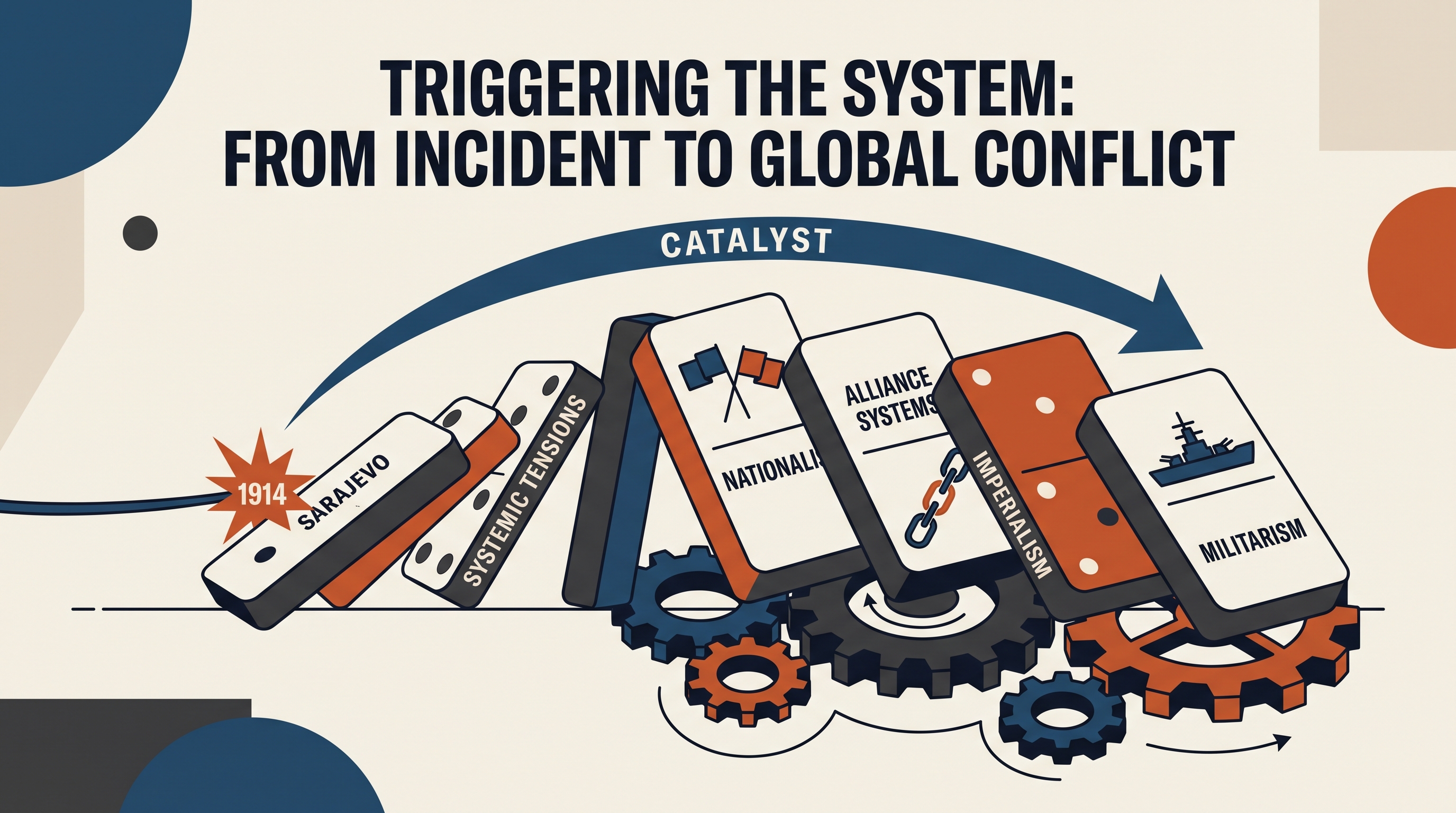
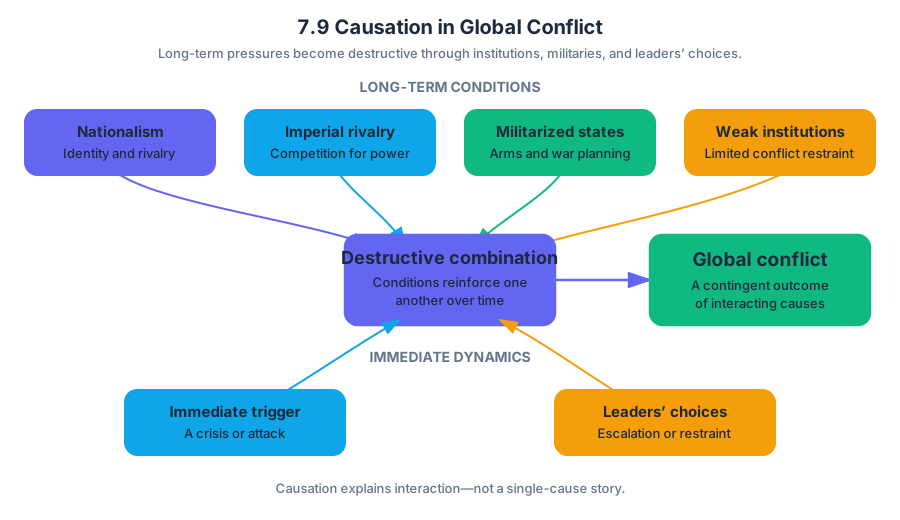
8.1 Setting the Stage for the Cold War and Decolonization · 8.2 The Cold War
Key concepts: Cold War · Decolonization · Global balance of power · Self-government and nationalism · Revolutionary movements · Political and social order · Land-based empires · Military alliances · Collapse of the Soviet Union · Colonial metropole
After 1945, the world was no longer organized around the old European imperial balance: World War II had weakened European empires, elevated the United States and Soviet Union, and intensified demands for national self-government.
8.1 Setting the Stage for the Cold War and Decolonization · 8.2 The Cold War
After 1945, the world was no longer organized around the old European imperial balance: World War II had weakened European empires, elevated the United States and Soviet Union, and intensified demands for national self-government. The result was a dual transformation: a geopolitical rivalry between superpowers and the political dissolution of empires.
Cold War: a prolonged competition between the United States and the Soviet Union that involved ideology, military alliances, economic influence, technology, and proxy conflicts, but generally avoided direct full-scale war between the two superpowers.
Decolonization: the process through which colonial territories gained formal political independence and created new states, often while retaining economic, military, or cultural ties to a former imperial metropole, the imperial center that had ruled them.
The global balance of power after 1945
World War I had already damaged confidence in empire, but its promises of self-determination were largely unfulfilled. European powers redrew borders and created some new states while continuing to rule much of Africa, the Middle East, and South Asia. Nationalist movements therefore encountered a sharp contradiction: European governments defended national sovereignty for some peoples while denying it to colonized populations.
World War II made that contradiction harder to sustain. European states suffered enormous military and economic losses; colonial soldiers and workers gained political experience; and anti-imperialist ideas spread globally. The United States and Soviet Union emerged as the most powerful states, while the United Nations gave greater international visibility to claims based on self-determination.
The shift can be pictured as a three-stage chain:
European imperial weakness $\rightarrow$ stronger nationalist and anti-imperialist movements $\rightarrow$ dissolution of empires and restructuring of states
This does not mean that independence automatically produced complete freedom from foreign influence. A former colony might gain a flag, legislature, and diplomatic recognition while remaining dependent on foreign investment, trade patterns, military aid, or technical expertise. That continuing influence explains why political decolonization and economic decolonization did not always occur together.
Earlier crises of political and social order
The crises that shaped the twentieth century developed before the Cold War. The Ottoman, Qing, and Romanov empires illustrate how large land-based empires could face military pressure, nationalist opposition, fiscal weakness, and internal political crisis at the same time. Their decline showed that imperial governments could lose legitimacy when they could no longer maintain order or answer demands for reform.
The Mexican Revolution beginning in 1910 challenged an established political and social order. Opposition to the long rule of Porfirio Díaz joined demands involving land, labor, regional power, and national sovereignty. It demonstrates that revolutionary movements were not limited to Europe or to communist ideology: internal inequality and political exclusion could also produce revolutionary change.
The Russian Revolution of 1917 began in the crisis of the Romanov state and produced a revolutionary government claiming to replace capitalism with communism. It combined immediate pressures—war, food shortages, economic disruption, and loss of confidence in the monarchy—with a broader ideological challenge to existing political and social arrangements.
Key distinction: a revolutionary movement seeks fundamental change in political or social order; a nationalist movement seeks greater control by a people who define themselves as a nation. The two can overlap, but they are not identical.
Why the Cold War formed
The United States and Soviet Union had opposed political-economic visions: the United States generally defended liberal capitalism and pluralist political institutions, while the Soviet Union promoted communist rule and state-directed economic organization. Yet ideology alone did not cause the Cold War. Security fears, the future of Europe, control of occupied territories, nuclear weapons, and competition for global influence turned ideological difference into a worldwide rivalry.
The rivalry produced military alliances that divided much of the world into competing security systems. The United States and its partners created the North Atlantic Treaty Organization, or NATO, in 1949. The Soviet Union later organized the Warsaw Pact in 1955. These alliances made a conflict in one region potentially relevant to the security of an entire bloc.
Worked contextual example — Ghana, 1957: Ghana’s independence can be explained through multiple variables. British weakness after World War II reduced the capacity and willingness to preserve empire; African nationalism organized demands for self-government; veterans and political activists strengthened anticolonial leadership; and international discussion of self-determination increased pressure on European states. The best explanation is therefore not “Britain simply gave Ghana independence,” but a causal argument linking imperial decline, organized nationalism, and changing international expectations.
The Cold War’s changing endpoint
The Cold War eventually ended as Soviet power weakened. KC-6.2.IV.E identifies several connected causes: advances in U.S. military and technological development, the Soviet Union’s costly and failed invasion of Afghanistan, public discontent, and economic weakness in communist countries. These pressures contributed to the collapse of the Soviet Union, not merely to a change in diplomatic relations.
The Soviet collapse also reveals a final complication of decolonization and imperial dissolution: when an empire disappears, its influence may not disappear immediately. Former imperial centers can continue shaping trade, security arrangements, language, institutions, borders, and political elites. Decolonization therefore changed sovereignty while often preserving unequal relationships.
Skill in action: Contextualization 4.B
Contextualization (4.B) means explaining how a specific development fits within a broader historical setting. For a claim about post-1945 decolonization, a strong context would connect nineteenth-century imperialism and World War I’s unfulfilled promises of self-government to World War II’s weakening of European empires. A mere phrase such as “imperialism existed before” is not enough; the context must show how earlier developments shaped the later possibility of independence.
Misconception check
Misconception: “The Cold War was only a conflict between two European-style superpowers.” The United States and Soviet Union drove the rivalry, but its consequences reached newly independent states, revolutionary movements, and societies resisting colonial rule. Many governments pursued nonalignment rather than joining either bloc, and decolonization often became entangled with superpower competition without being caused entirely by it.
Retrieval check
Explain the relationship among World War II, decolonization, and the Cold War in two sentences. Then identify one reason the Mexican or Russian Revolution should be understood as a challenge to the existing political and social order rather than simply as a change of leaders.
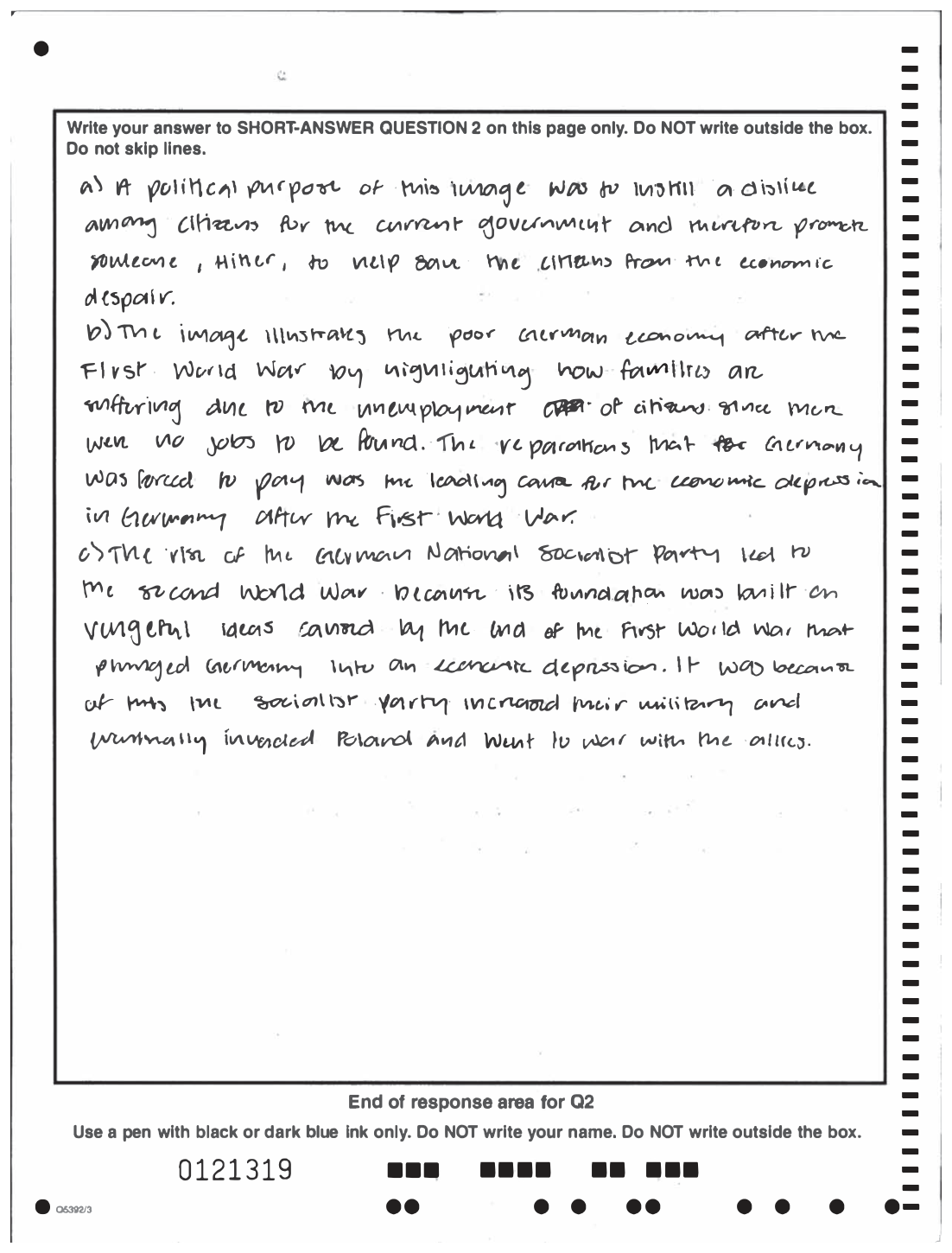
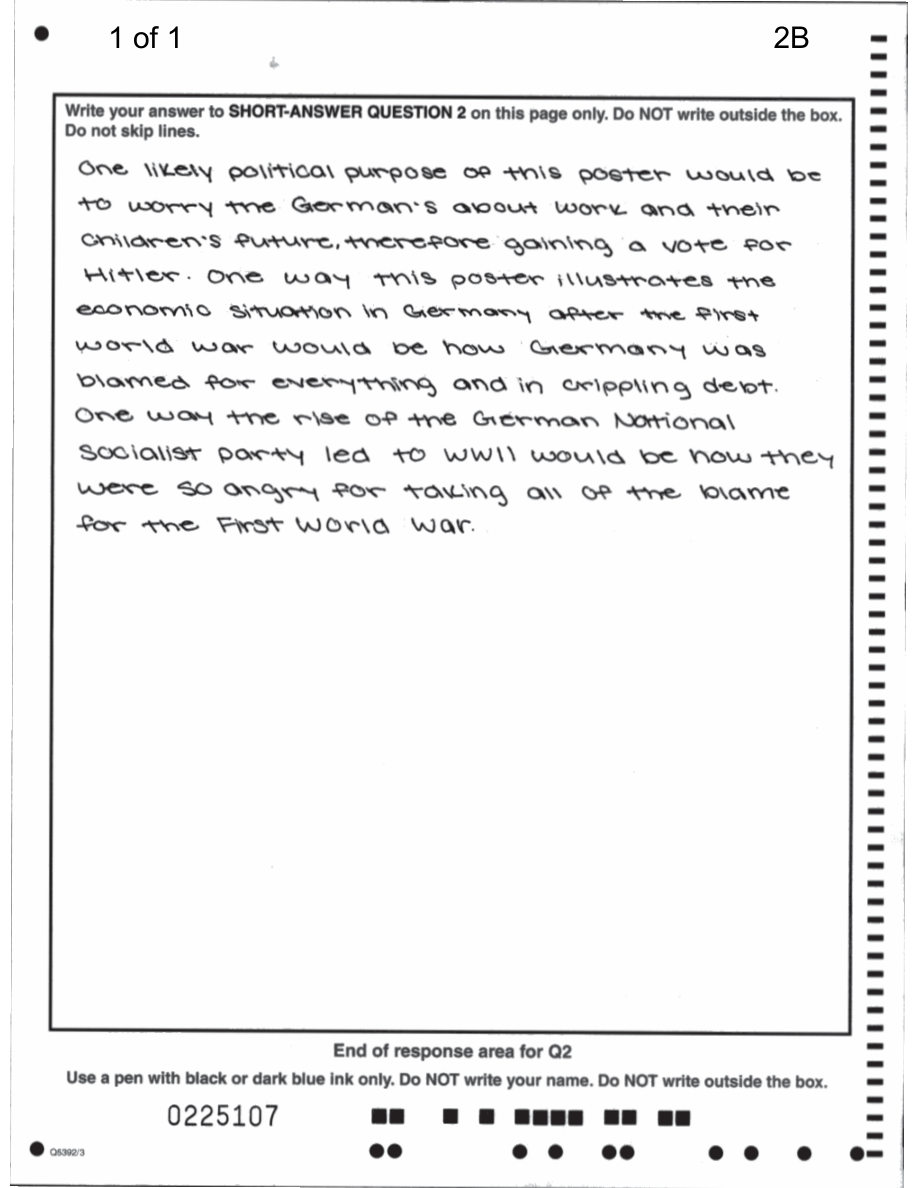
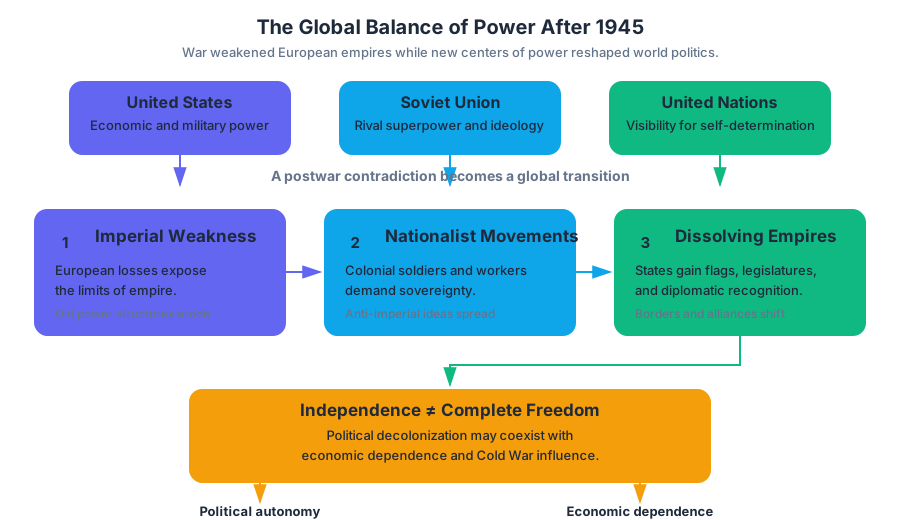
8.3 Effects of the Cold War · 8.4 Spread of Communism After 1900
Key concepts: Effects of the Cold War · Spread of communism after 1900 · The ideological struggle between the United States and the Soviet Union · The emergence of the United States and USSR as superpowers after World War II · Military alliances during the Cold War · The nuclear weapons buildup · Proxy wars in the developing world · Cold War effects in the Eastern and Western Hemispheres · Sukarno in Indonesia · Kwame Nkrumah in Ghana
The Cold War transformed an ideological disagreement between the democratic United States and the authoritarian communist Soviet Union into a worldwide struggle over political influence, military security, and the future of postcolonial states.
8.3 Effects of the Cold War · 8.4 Spread of Communism After 1900
The Cold War transformed an ideological disagreement between the democratic United States and the authoritarian communist Soviet Union into a worldwide struggle over political influence, military security, and the future of postcolonial states.
A bipolar world after World War II
World power shifted sharply during and after World War II. European empires were weakened, while the United States and the USSR possessed the economic, military, and political capacity to shape events far beyond their own borders. A superpower is a state powerful enough to project influence globally, even when it does not directly control every country affected by its policies.
The conflict was ideological as well as geopolitical. The United States generally presented constitutional democracy and capitalist economics as the basis of freedom and prosperity; the Soviet Union promoted one-party communist rule and state-directed economics as the path toward equality and protection from capitalist exploitation. These competing systems encouraged each superpower to treat political developments elsewhere as part of a global contest.
How superpower influence operated
The Cold War’s effects appeared in both the Eastern and Western Hemispheres. The United States and USSR rarely fought one another directly because direct war risked escalation, especially after both acquired nuclear weapons. Instead, they maintained influence through alliances, military aid, economic assistance, political pressure, intelligence operations, and support for friendly governments or revolutionary movements.
| Instrument of influence | Cold War effect | Historical significance |
|---|---|---|
| NATO | United States, Canada, and Western European states formed a collective military alliance in 1949. | An attack on one member could be treated as a threat to the alliance, strengthening the Western bloc. |
| Warsaw Pact | The USSR organized a rival military alliance with Eastern European communist states in 1955. | It formalized Soviet military influence in Eastern Europe. |
| Nuclear weapons buildup | The superpowers accumulated increasingly destructive arsenals. | Nuclear deterrence discouraged direct war but created permanent danger and competition. |
| Proxy wars | Local conflicts received outside weapons, money, training, or diplomatic support. | The Cold War became violent in Latin America, Africa, and Asia even when Washington and Moscow avoided direct combat. |
Nuclear proliferation and proxy conflict
Nuclear proliferation means the spread or expansion of nuclear weapons capabilities. The arms race produced a paradox: nuclear weapons made direct superpower war extraordinarily dangerous, yet the same rivalry encouraged military planning, weapons development, and crises in which a small miscalculation could have global consequences.
The ideological struggle also contributed to proxy wars, conflicts in which outside powers support opposing sides rather than fighting each other openly. In postcolonial states, local political disputes could therefore become connected to the larger contest between communism and anticommunism. A movement seeking social or economic transformation might receive Soviet support, while its opponents received American assistance—or the pattern could be more complicated, since local actors pursued their own goals rather than acting as simple puppets.
Key distinction: A proxy war was not merely a war “caused by” the United States or USSR. Local political, economic, ethnic, and anticolonial conflicts mattered; superpower intervention intensified and internationalized them.
Communism and postcolonial political choices
The spread of communism after 1900 was a major historical development, but postcolonial leaders did not always choose a simple American or Soviet identity. Indonesia under Sukarno and Ghana under Kwame Nkrumah illustrate how leaders in newly independent countries confronted Cold War pressure while seeking political autonomy and economic development.
A useful comparison begins with situation and point of view. Sukarno spoke from the position of an Indonesian nationalist leader attempting to protect independence after colonial rule; Nkrumah spoke as Ghana’s leader during African decolonization, seeking to prevent political independence from becoming continued economic dependence. Their perspectives help explain why leaders could criticize Western imperialism, cooperate with communist states, or pursue nonalignment without necessarily adopting Soviet-style communism.
Worked contextual example: interpreting a leader’s position
Prompt: Why might Sukarno or Nkrumah cooperate with communist governments while resisting alignment with either superpower?
Step 1 — Identify the situation. Indonesia and Ghana were postcolonial states operating in a world dominated by the United States and USSR.
Step 2 — Explain the point of view. A nationalist leader would likely view foreign alliances through the experience of colonial domination. Assistance from a superpower could be useful, but dependence on either bloc might threaten sovereignty.
Step 3 — Connect ideology to politics. Cooperation with communist states could provide trade, weapons, diplomatic support, or development aid. It did not automatically mean that the leader accepted every feature of Soviet authoritarian communism.
Step 4 — State the historical consequence. Cold War competition shaped political developments in countries such as Indonesia and Ghana, but local leaders and movements retained agency. This is why “communist versus capitalist” is sometimes too simple to explain postcolonial politics.
Misconception check
Misconception: “The Cold War was cold everywhere.” The United States and USSR avoided a direct full-scale war with one another, but the conflict produced intense military violence through proxy wars and political intervention in Latin America, Africa, and Asia. “Cold” describes the relationship between the superpowers, not the lived experience of every society caught within their rivalry.
Retrieval and interpretation check
Answer in two or three sentences: How did NATO, the Warsaw Pact, nuclear weapons, and proxy wars allow the United States and USSR to maintain influence without fighting one another directly? Then add one sentence explaining why Sukarno’s or Nkrumah’s perspective complicates a purely two-sided interpretation of the Cold War.
Skill focus: Unit 8: Learning Objective B asks students to explain the causes and effects of the ideological struggle of the Cold War, while Unit 8: Learning Objective C asks students to compare how the United States and Soviet Union maintained influence. The relevant evidence is KC-6.2.IV.C.ii and KC-6.2.IV.D. The source-analysis practice is Skill 2.B: Explain the point of view, purpose, or audience of a source, especially when interpreting Sukarno or Nkrumah.
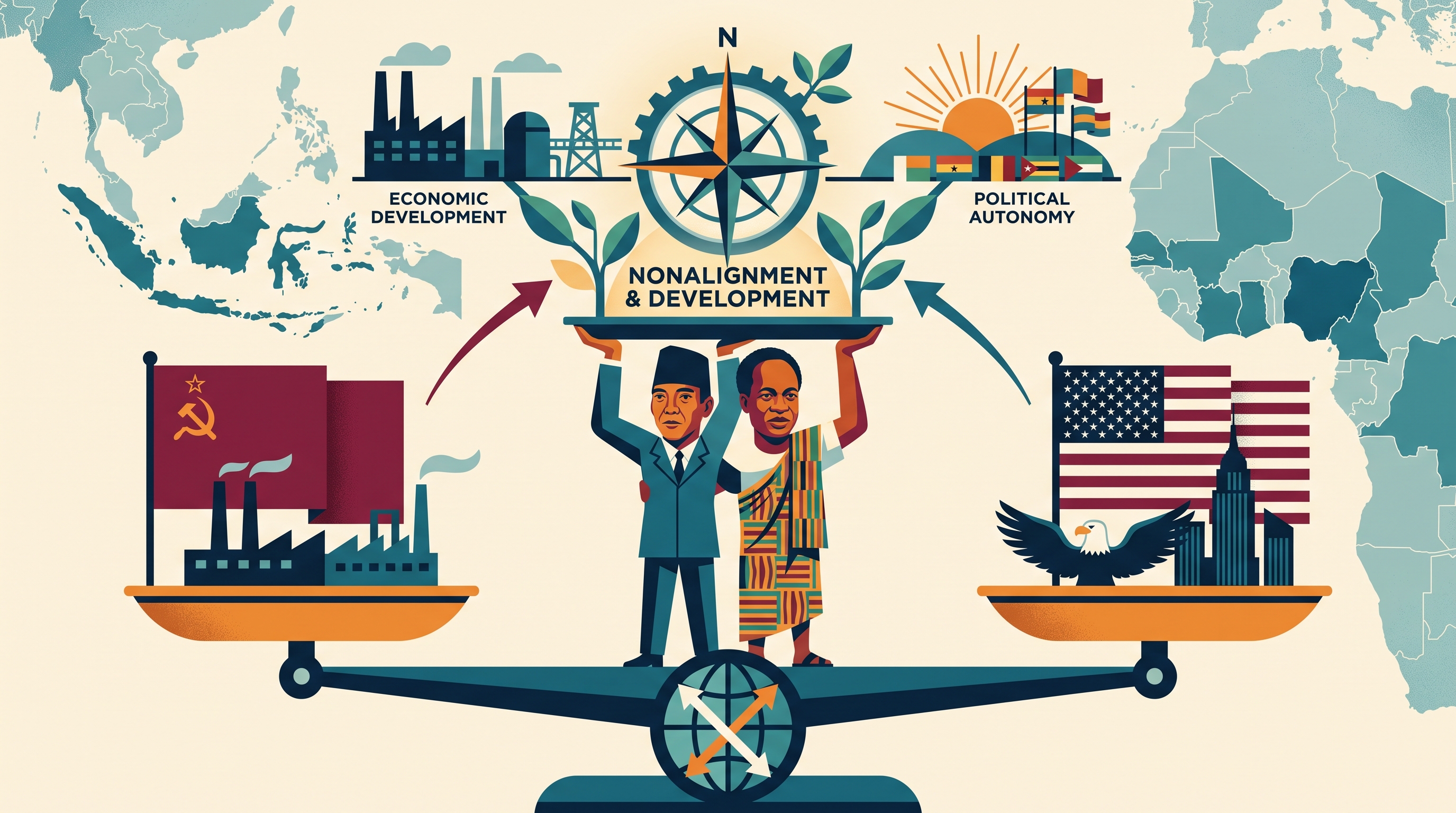
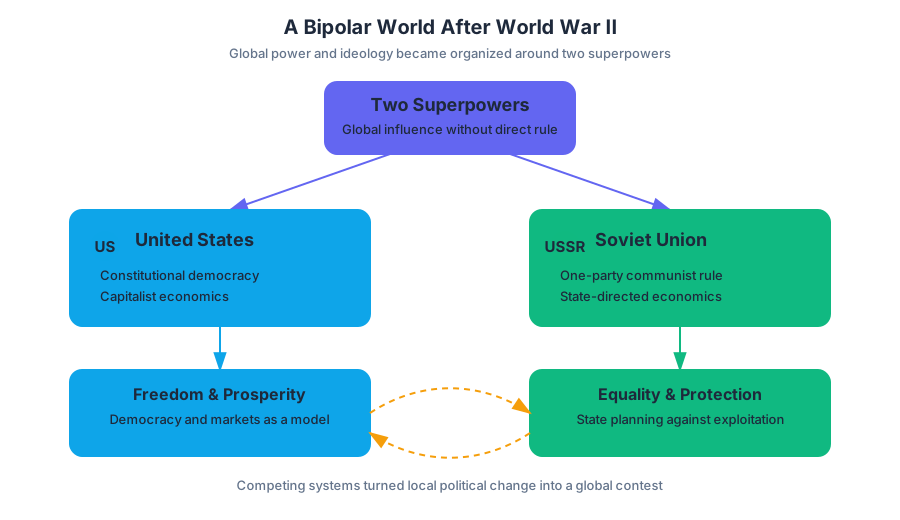
8.5 Decolonization After 1900 · 8.6 Newly Independent States
Key concepts: Decolonization after 1900 · Newly independent states · African nationalism · Anti-imperialism · Postcolonial states · Nonviolent and violent anticolonial movements · The impact of the World Wars on European imperial powers · Economic globalization and globally competitive corporations · Comparison of historical developments across regions · Historical evidence and source limitations
African independence was not a single event but a two-stage transformation: decolonization ended formal imperial rule, while newly independent states had to build political and economic systems after European authority withdrew.
8.5 Decolonization After 1900 · 8.6 Newly Independent States
African independence was not a single event but a two-stage transformation: decolonization ended formal imperial rule, while newly independent states had to build political and economic systems after European authority withdrew. The central question is therefore not only when did a colony become independent? but also what changed—and what continued—after independence?
Decolonization: why European rule weakened
Decolonization means the process by which colonies gained political independence from imperial powers. In Africa, nationalist and anti-imperialist ideas expanded during the twentieth century, encouraging people to challenge European rule and demand self-government.
After 1945, European empires were weaker and less able to maintain their colonies. France and other Western nations had suffered enormous economic and political costs during the two World Wars. African veterans who had served in those wars also used their military experience and contributions as evidence that they deserved political rights and independence. International support for self-determination, including attention from the United Nations, further strengthened anticolonial claims.
Decolonization took both nonviolent and violent forms. Some nationalist movements used strikes, elections, protests, negotiations, and mass political organizing. Others concluded that colonial governments would not surrender power peacefully and adopted armed struggle. The difference was shaped by the policies of each imperial state, the strength of local nationalist organizations, settler resistance, and the willingness of colonial authorities to use force.
| Path toward independence | Typical methods | Historical pattern |
|---|---|---|
| Negotiated or largely nonviolent | Elections, strikes, boycotts, constitutional talks | Nationalists pressured imperial governments to transfer authority |
| Violent anticolonial movement | Guerrilla warfare, armed revolt, attacks on colonial forces | Independence followed prolonged conflict when negotiation failed |
| Mixed process | Peaceful organizing combined with repression or armed resistance | Political movements shifted tactics as colonial governments responded |
A useful comparison is Ghana and Algeria. Ghana’s independence in 1957 followed sustained nationalist mobilization and negotiations with Britain, although political pressure included strikes and mass protest. Algeria’s war against France, by contrast, became intensely violent because French settlers and the French government resisted relinquishing control; Algeria achieved independence in 1962 after a devastating war. Both movements were nationalist and anti-imperialist, but the colonial power’s response produced different routes to independence.
Colonial economies and the problem of state-building
European colonial rule in Africa was connected to capitalist economic systems and unequal class structures. Colonial governments often organized production around exports, labor extraction, taxation, and the interests of European firms rather than balanced development for local populations. Political independence therefore did not erase inherited economic structures.
Unit 8: Learning Objective H: Explain the economic changes and continuities resulting from the process of decolonization.
The establishment of a postcolonial state—a state governing after colonial rule—created a new challenge: leaders had to provide education, infrastructure, employment, health services, and national unity while relying on economies shaped by imperialism. Under [KC-6.3.I.C], governments in newly independent states often took a strong role in guiding economic life to promote development. State-led planning and socialist policies appealed to some leaders because European capitalism was associated with exploitation and unequal colonial development.
This did not mean every postcolonial government became communist, nor that socialism solved economic dependence. Many states remained dependent on a small number of export commodities, foreign loans, imported technology, or investment by globally competitive corporations. Those corporate connections were enabled by the late-twentieth-century trend toward economic globalization, which increased cross-border flows of capital, goods, and services while sometimes preserving unequal bargaining power.
Independence did not end every colonial connection
Under [KC-6.2.III.B], migration from former colonies to imperial metropoles—the major cities of former colonizing countries—maintained cultural and economic ties after empires dissolved. African migrants who moved to cities such as London or Paris created durable connections through families, remittances, language, education, political activism, and trade. Thus, formal sovereignty changed political authority, but colonial-era relationships could continue through migration and economic networks.
Source perspective: what a text can and cannot show
When evaluating a source about decolonization or postcolonial development, ask who produced it, why, and for whom. A speech by an African nationalist may reveal the goals and grievances of an independence movement but understate internal disagreements; a corporate report may describe investment as mutually beneficial while minimizing labor inequality or resource extraction. The author’s perspective and purpose can make a source valuable for understanding one dimension of the past while limiting its usefulness for judging the whole process.
Skill 2: Sourcing and Situation requires connecting a source’s point of view, purpose, historical situation, or audience to its meaning. Skill 5: Making Connections is especially important here: compare regions, identify causes, and track continuity and change rather than treating “Africa” as a single political experience. Skill 6: Argumentation then turns those observations into a defensible claim supported by specific evidence.
Misconception check: Independence movements did not all follow the same pattern. Compare Ghana and Algeria by explaining one similarity in their nationalist goals and one difference in their methods or political circumstances.
Retrieval check: Explain why European weakness after the World Wars facilitated African independence, then identify one economic continuity that limited the freedom of a newly independent state. Finally, explain how migration to an imperial metropole could preserve a colonial-era connection after political decolonization.
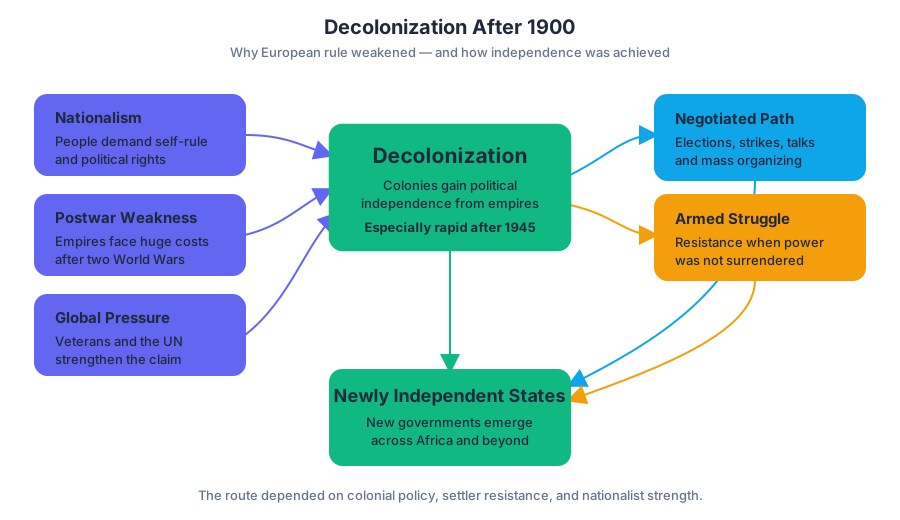
8.7 Global Resistance to Established Order After 1900 · 8.8 End of the Cold War
Key concepts: Global resistance to established power structures after 1900 · Decolonization and the dissolution of empires · Negotiated independence · Armed struggle for independence · End of the Cold War · Causes of the end of the Cold War · Margaret Thatcher · China under Deng Xiaoping · Anti-imperialist sentiment · Changing global balance of power after World War II
After World War II, resistance to established power structures reshaped both political borders and the global balance of power. Some colonies secured independence through negotiation, while others fought armed struggles; by the late twentieth century, a different challenge—the weakening of Soviet power—brought the…
8.7 Global Resistance to Established Order After 1900 · 8.8 End of the Cold War
After World War II, resistance to established power structures reshaped both political borders and the global balance of power. Some colonies secured independence through negotiation, while others fought armed struggles; by the late twentieth century, a different challenge—the weakening of Soviet power—brought the Cold War to an end.
Resistance and the Dissolution of Empires
Anti-imperialist sentiment means opposition to foreign political control and the unequal economic relationships associated with empire. After World War II, this sentiment contributed to the dissolution of empires and the restructuring of states. The change was not simply a European decision to withdraw: colonized peoples used political organizations, mass movements, diplomacy, and armed resistance to make imperial rule increasingly difficult to sustain.
Key distinction: Decolonization describes the transfer or recovery of political sovereignty; resistance describes the methods used to challenge the existing power structure.
The contrast between negotiated independence and armed struggle for independence is therefore analytical rather than absolute. Negotiation could follow strikes, protests, or political pressure, while armed movements often combined military action with diplomacy. The important question is not whether one method was universally successful, but how each shaped the timing, boundaries, and political conditions of independence.
Worked comparison: Angola and Vietnam
Angola gained independence from the Portuguese Empire after a prolonged armed struggle. Portugal’s withdrawal followed anti-colonial warfare and political upheaval in Portugal itself, so Angolan independence emerged amid intense competition among rival movements and outside powers. Independence ended Portuguese rule, but it did not immediately produce political stability.
Vietnam gained independence from the French Empire through armed conflict led by Vietnamese nationalists and communists. The struggle demonstrated that an anti-colonial movement could defeat a European empire militarily, but it also became entangled with the wider Cold War. Vietnam therefore illustrates how resistance to imperialism and rivalry between superpowers could operate simultaneously.
| Case | Imperial power | Main independence pathway | Broader significance |
|---|---|---|---|
| Angola | Portugal | Armed struggle | Decolonization overlapped with Cold War intervention and internal conflict |
| Vietnam | France | Armed struggle | Anti-imperial nationalism became connected to communist revolution and superpower rivalry |
Misconception check — “Negotiated independence was peaceful.” Negotiation describes the formal method of transferring authority, not necessarily the entire history leading to that transfer. Political pressure, violence, economic disruption, or fear of wider conflict could all push an imperial government toward negotiations.
Historical Context and Power Shifts
The postwar restructuring of states rested on a major shift in global power. KC-6.2.IV.C.i identifies the technological and economic gains experienced during World War II by victorious nations as a factor that shifted the global balance of power. The war weakened European empires while strengthening the United States and the Soviet Union, whose competing political and economic models shaped the international environment in which new states emerged.
The required thematic lens for Topic 8.7 is Cultural Developments and Interactions [CDI]. Resistance was not only military or governmental: anti-imperialist movements challenged ideas of racial hierarchy, European cultural superiority, and the supposed legitimacy of foreign rule. This connects to Unit 8: Learning Objective I, “Explain various reactions to existing power structures in the period after 1900,” because resistance changed both institutions and the beliefs used to justify them.
Why the Cold War Ended
The Cold War ended through the interaction of economic strain, political reform, popular resistance, and technological competition—not because of one isolated event. The Soviet Union faced the enormous cost of maintaining military power and competing technologically with the United States while also dealing with stagnating economic performance and growing demands for political change.
Advances in U.S. military and technological development increased pressure on the Soviet system. The competition required the Soviet Union to devote substantial resources to defense and technology. Soviet costly military and technological development deepened that burden: resources spent sustaining superpower competition were resources unavailable for consumer needs, economic modernization, and political stability.
Political leadership also mattered. Margaret Thatcher, the British prime minister, is identified as an important figure associated with the end of the Cold War because she supported a firm stance toward the Soviet Union while also engaging in diplomacy with Soviet leader Mikhail Gorbachev. In the Soviet Union, Gorbachev’s reforms loosened political controls and attempted to reduce the costs of confrontation, but these reforms also released pressures that the Soviet government could not fully contain.
The end of the Cold War was therefore a process: arms competition increased Soviet costs; reform weakened centralized control; popular movements challenged communist governments in Eastern Europe; and the Soviet Union ultimately dissolved in 1991. The collapse of the Soviet state ended the bipolar structure that had organized international politics since the mid-twentieth century.
A New Global Economic Direction
The post-Cold War order also encouraged governments to adopt free-market economic policies and promote economic liberalization, meaning the reduction of state controls over markets, trade, and private enterprise. KC-6.3.I.D connects this trend to the end of the Cold War and identifies China under Deng Xiaoping, Chile under Augusto Pinochet, and knowledge economies such as Finland, Japan, and the United States as relevant developments.
China under Deng Xiaoping is especially important because political rule remained communist while economic policy incorporated market-oriented reforms. This demonstrates that the end of the Cold War did not create one identical political system everywhere; instead, states selectively combined centralized authority, global trade, private enterprise, and technological development.
Misconception check — “The Cold War ended only because the United States won an arms race.” Military and technological pressure was significant, but it interacted with Soviet economic difficulties, reform politics, resistance in Eastern Europe, and changing international relationships. A strong explanation must connect multiple causes rather than name a single victor or event.
Retrieval Check
Explain the difference between Angola and Vietnam as examples of armed independence struggles, then identify two connected causes of the end of the Cold War. A strong response would link anti-imperialist resistance to the dissolution of empires, and would connect U.S. technological pressure with the Soviet Union’s costly military development and internal political-economic strain.
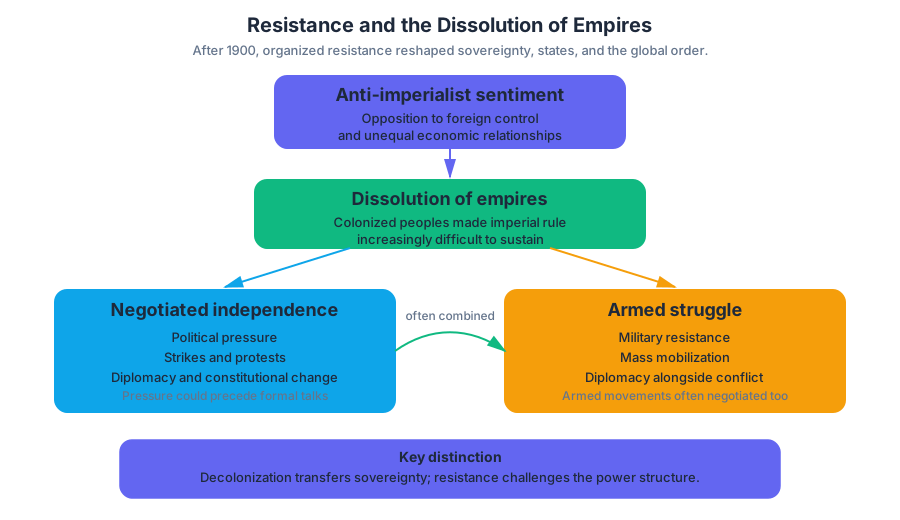
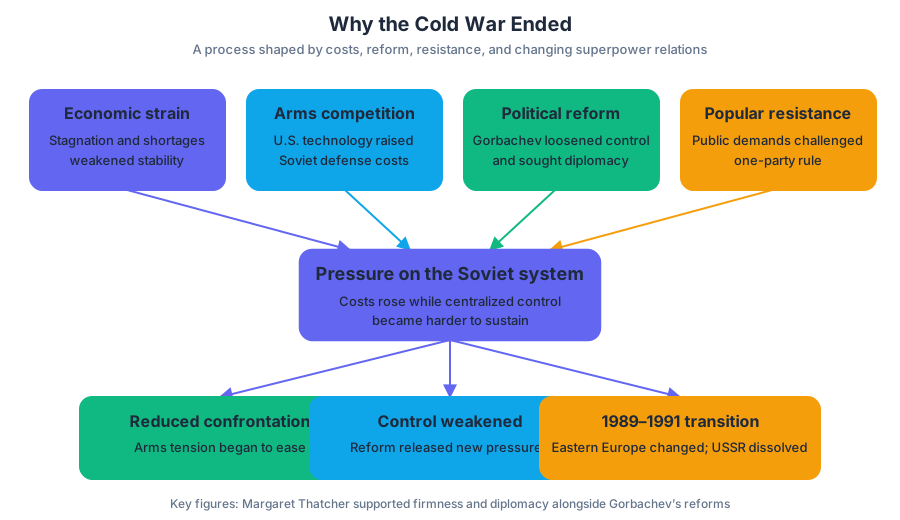
8.9 Causation in the Age of the Cold War and Decolonization
Key concepts: Causation in the context of the Cold War and decolonization · Post–World War II European economic struggles and the weakening of colonial empires · African anticolonial movements and the achievement of independence · The establishment of independent postcolonial states in Africa · The adoption of communist or socialist ideologies by some postcolonial African states · Cold War competition between communist and capitalist powers · Superpower support for African independence movements · Postcolonial control over economies and natural resources · The relationship between colonial economic policies and the goods colonies could produce, receive, import, or obtain · Environmental and economic factors contributing to anticolonial movements
After World War II, European empires weakened because the states that had ruled them were financially exhausted, militarily damaged, and increasingly unable to justify the cost of colonial control.
8.9 Causation in the Age of the Cold War and Decolonization
After World War II, European empires weakened because the states that had ruled them were financially exhausted, militarily damaged, and increasingly unable to justify the cost of colonial control. Anticolonial movements recognized this weakness, demanded political independence, and helped create a new map of independent postcolonial states across Africa.
Central causal claim: European weakness created an opening, but African political action, economic demands, environmental hardships, and Cold War competition determined how decolonization unfolded.
The causal chain of decolonization
Decolonization means the process by which colonies gained political independence from imperial powers. It was not caused by one event. Instead, several pressures reinforced one another:
World War II
   ↓
European financial and military exhaustion
   ↓
Weaker ability to suppress colonial resistance
   ↓
African nationalist and anticolonial movements
   ↓
Independence and postcolonial state formation
   ↓
Cold War competition over political and economic alignment
The two world wars damaged European economies and consumed enormous military resources. Even victorious powers such as Britain and France faced debts, reconstruction costs, and pressure to provide social services at home. Maintaining distant colonies required armies, administrators, transportation networks, and coercive institutions; after 1945, these costs became increasingly difficult to sustain.
At the same time, colonial subjects recognized that European power was not unlimited. African veterans who had served in world wars, educated political leaders, labor organizers, and nationalist movements used this contradiction—European claims to defend freedom while denying it in colonies—to demand self-government. International support for self-determination, including pressure associated with the United Nations, further weakened the legitimacy of empire.
Economic causes: independence as resource control
Political independence did not automatically produce economic independence. Colonial economies had usually been organized to extract particular products—such as minerals, cash crops, or other resources—for export. This structure influenced what colonies could produce, what manufactured goods they had to import, and who controlled their land, labor, trade, and natural resources.
For many African movements, independence therefore meant more than replacing a European governor with an African one. It meant gaining control over mines, agricultural production, taxation, trade, and national development. Environmental and economic hardships—such as difficult climates, resource exploitation, poverty, and unequal access to land or goods—also helped fuel opposition to colonial rule.
| Cause | How it encouraged decolonization |
|---|---|
| European economic weakness | Made imperial administration and military repression more expensive |
| Wartime losses | Reduced European military and political authority |
| Colonial economic systems | Encouraged demands for control over resources and production |
| Environmental hardship | Increased dissatisfaction with colonial conditions |
| African nationalism | Turned social grievances into organized independence movements |
| Cold War competition | Supplied money, weapons, training, or diplomatic support to movements and new states |
Cold War choices after independence
The Cold War added a second layer of causation. Newly independent African states emerged while the United States and Soviet Union competed for influence. Both superpowers presented their economic and political systems as models for newly sovereign nations, and competition between capitalist and communist powers led to financial and material support for some independence movements.
Some postcolonial African governments adopted communist or socialist ideologies because these systems appeared to offer tools for rapid development, national economic planning, and resistance to foreign economic control. Soviet support could also provide weapons, advisers, or diplomatic backing. This does not mean every socialist government simply acted as a Soviet puppet: African leaders often selected ideologies strategically to pursue sovereignty and reshape colonial economies.
A useful example is the relationship between political independence and economic policy in India. British economic policy had long shaped Indian production and trade; in the Cold War era, superpower influence affected the choices available to newly independent governments. The broader pattern was global: political sovereignty was difficult to protect when colonial trade systems, foreign investment, and strategic resources remained controlled from abroad.
Worked causal example: from weakness to independence
Suppose an explanation asks why many African states achieved independence after 1945. A strong chain of reasoning would proceed as follows:
- Identify the condition: World War II left European powers with severe financial and military burdens.
- Explain the mechanism: These burdens reduced their ability and willingness to pay for colonial administration and suppress rebellion.
- Identify the response: African nationalists, veterans, workers, and political organizations recognized the opening and demanded independence.
- Show the result: Colonial rule ended in many territories, producing independent postcolonial states.
- Add complexity: Cold War competition then influenced whether new governments received support from capitalist or communist powers and which economic ideologies they adopted.
Misconception check
Misconception: “Europe simply gave Africa independence because empire had become morally unpopular.” Moral criticism mattered, but causation must include material and political pressures: wartime exhaustion, the expense of colonial rule, organized African resistance, demands for resource control, and Cold War intervention.
Misconception: “Cold War influence caused decolonization by itself.” The Cold War amplified and redirected anticolonial struggles, but African movements and populations were active causes. Independence emerged from the interaction of European weakness, African political action, economic grievances, and superpower competition.
AP reasoning focus
This topic most directly develops Skill 5: Making Connections, especially 5.B: Explain the causes and effects of a historical development. A high-quality response distinguishes long-term conditions from immediate catalysts and connects each cause to a specific mechanism. It also uses Skill 4: Contextualization by placing African decolonization within the post–World War II weakening of European empires, and Skill 6: Argumentation by advancing a defensible claim about which causes mattered most.
Retrieval check: Explain how European economic weakness, African anticolonial movements, and Cold War competition formed a connected—not separate—causal process after 1945. Which factor created the opening, which actor exploited it, and which forces shaped the new states’ choices?
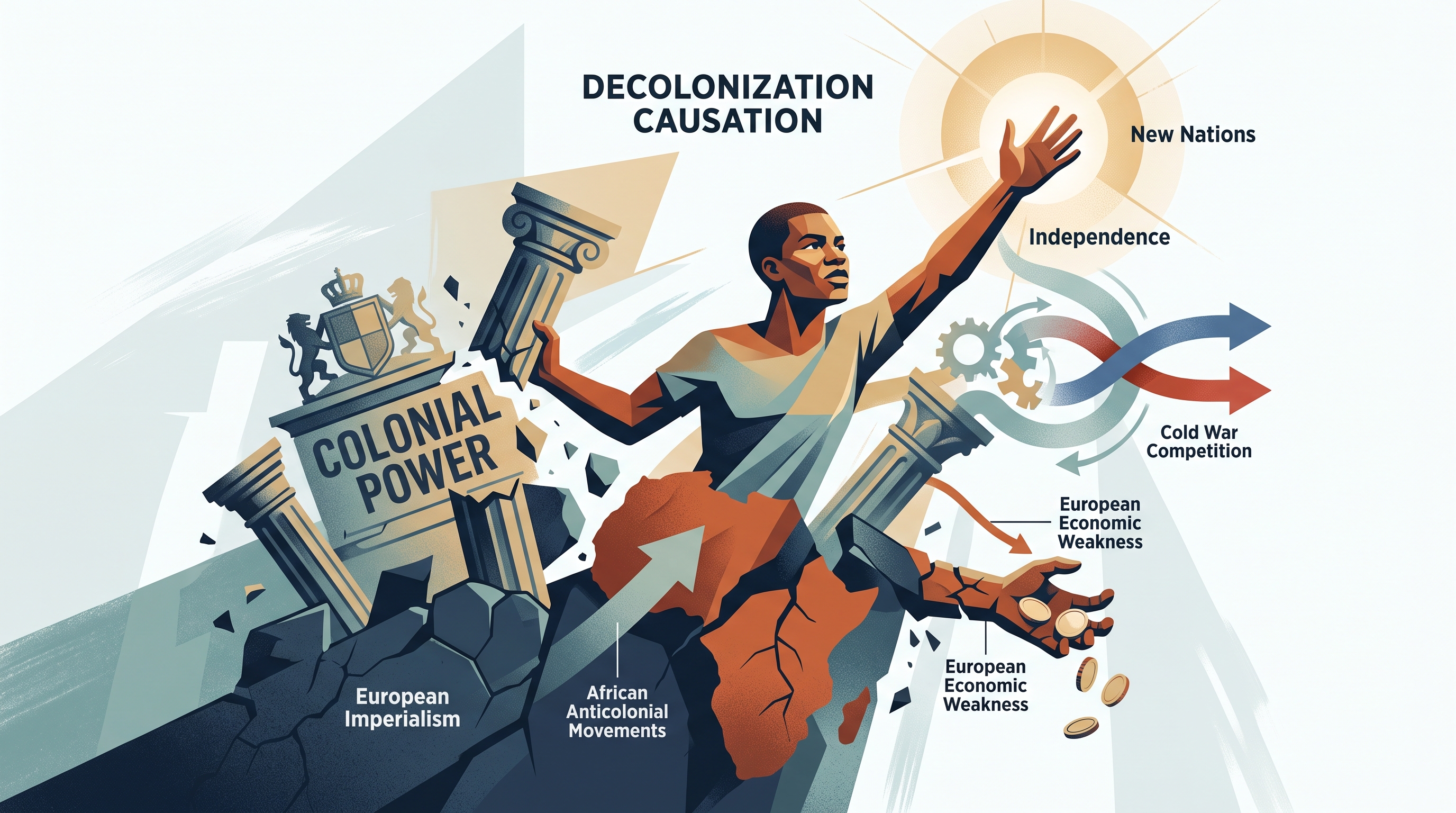
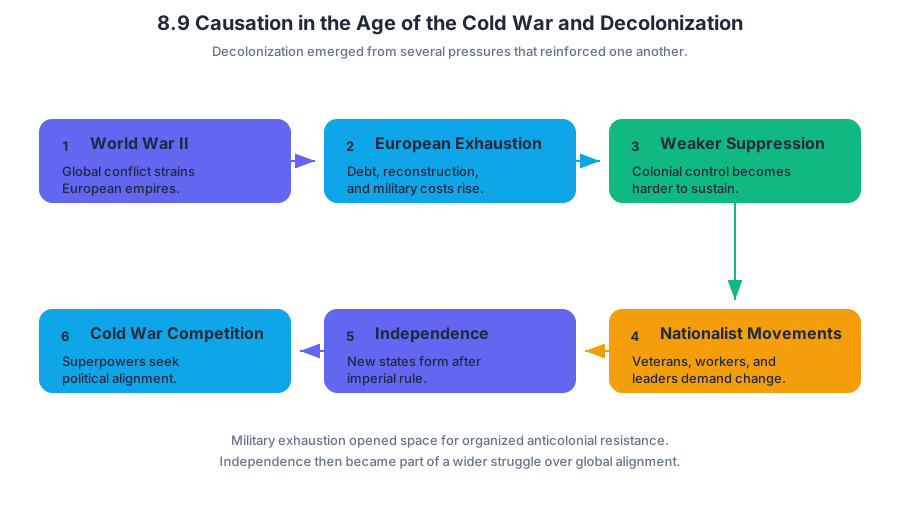
9.1 Advances in Technology and Exchange After 1900 · 9.2 Technological Advances and Limitations After 1900: Disease
Key concepts: Technological innovation after 1900 · Globalization and exchange · Communication technologies · The Green Revolution · Commercial agriculture · Chemical and genetically modified agriculture · Medical innovations · Vaccines and antibiotics · Increased human longevity · Persistent and emerging diseases
Explain and apply 9.1 Advances in Technology and Exchange After 1900 · 9.2 Technological Advances and Limitations After 1900: Disease.
9.1 Advances in Technology and Exchange After 1900 · 9.2 Technological Advances and Limitations After 1900: Disease
After 1900, technology made the world more connected, productive, and medically resilient—but also more vulnerable to rapid global crises. A message, crop variety, or infectious disease could now cross oceans at a speed earlier societies could scarcely imagine.
Core distinction: technological innovation increased humanity’s ability to move information, goods, food, and people; it also increased the speed and scale at which diseases and unintended consequences could spread.
A faster web of exchange
Radio, telephones, cellular communication, and the internet accelerated the movement of ideas and information. Air travel and shipping containers similarly accelerated the movement of people and goods, helping create globalization, the intensification of worldwide connections among societies and economies.
The pattern is cumulative:
- Radio allowed information to reach mass audiences across national borders.
- Telephones and cellular networks made communication nearly immediate across long distances.
- The internet connected individuals, businesses, governments, and researchers in a worldwide information network.
- Air travel compressed geographic distance for passengers and disease carriers.
- Shipping containers made international commerce faster, cheaper, and more predictable.
Worked connection: A new agricultural technique developed in one region could be reported through radio, discussed by scientists through telephones, distributed through international trade, and adopted elsewhere using industrial fertilizers and machinery. Technology therefore changed not only how fast exchange occurred but also how widely innovations could be adopted.
Food production and the Green Revolution
The Green Revolution was the spread of agricultural practices and technologies that sharply increased productivity, especially through improved crop varieties, irrigation, chemical fertilizers, and pesticides. Commercial agriculture—farming organized increasingly for markets and large-scale production—helped supply expanding urban and global populations.
The key historical claim is not simply that farmers produced more food. The Green Revolution increased productivity sufficiently to help sustain a growing global population, while also spreading chemically modified and genetically modified forms of agriculture. These technologies could raise yields, but they also tied farmers more closely to purchased seeds, fertilizers, pesticides, machinery, and market prices.
CED evidence — KC-6.1.I.B: The Green Revolution and commercial agriculture increased productivity and helped sustain the earth’s growing population as chemically and genetically modified forms of agriculture spread.
Misconception check — “More food automatically solved hunger.” Higher productivity improved the total food supply, but hunger also depended on access, distribution, land ownership, income, war, and government policy. Increased production did not guarantee equal food security.
Other technologies reshaping daily life
The CED also links technological change to energy and reproduction. Petroleum-based energy supported transportation and industrial production, while nuclear technology created new energy possibilities alongside serious risks. Effective birth control gave women greater control over fertility and contributed to declining fertility rates.
Key CED connections: KC-6.1.I.D — energy technologies, including petroleum and nuclear power; KC-6.1.III.B — effective birth control and declining fertility rates.
Medical innovation: prevention, survival, and longer lives
Vaccines increased humans’ ability to prevent infectious diseases by preparing the immune system to recognize and resist particular pathogens. Antibiotics—especially penicillin—allowed humans to survive bacterial illnesses that had previously been frequently fatal.
Together with improved public health and medical knowledge, these innovations increased average human longevity. The crucial distinction is between prevention and treatment: vaccines primarily reduce the likelihood or severity of infection, while antibiotics treat certain bacterial infections after illness occurs. Antibiotics do not cure viral diseases such as influenza.
Misconception check — “Medical progress ended disease.” Medical advances improved survival and extended lives, but diseases persisted, evolved, and sometimes emerged as new epidemics. Longer life also increased the number of people vulnerable to chronic conditions associated with aging, including heart disease and Alzheimer’s disease.
The paradox of connection: epidemics
The same interconnected systems that spread medical knowledge could spread disease. The 1918 influenza pandemic demonstrates this danger: modern transportation and wartime movement helped a highly infectious disease reach populations across the globe, producing a major international health crisis.
This is the central continuity-and-change pattern of Topics 9.1 and 9.2:
| Technological development | Intended benefit | Unintended or continuing problem |
|---|---|---|
| Phones and the internet | Faster exchange of information and ideas | Faster circulation of misinformation and crisis reports |
| Commercial agriculture and Green Revolution techniques | Higher yields and population support | Dependence on chemical inputs and unequal access |
| Vaccines | Prevention of infectious disease | Diseases can persist where vaccination is limited |
| Antibiotics, including penicillin | Greater survival from bacterial illness | Not effective against viruses; resistance can develop |
| Air travel and global shipping | Faster worldwide exchange | Diseases can cross regions rapidly |
| Longer life expectancy | More years of life | Greater prevalence of heart disease and Alzheimer’s disease |
AP reasoning focus: 5.A Making Connections
Skill 5.A: Making Connections asks you to identify patterns among historical developments and processes. For this topic, connect a technology to both an intended consequence and an unintended consequence.
Model reasoning: Vaccines and antibiotics improved human survival and contributed to longer lives. However, medical progress did not eliminate disease: the 1918 influenza pandemic shows that epidemics could still spread widely, while increased longevity helped make chronic diseases such as heart disease and Alzheimer’s more significant health threats.
Retrieval check: Explain one way phones or the internet changed globalization, one way the Green Revolution changed population history, and one reason medical advances did not eliminate disease. A strong response should include a specific example—such as cellular communication, genetically modified agriculture, penicillin, vaccines, or the 1918 influenza pandemic—and explain the connection rather than merely naming it.
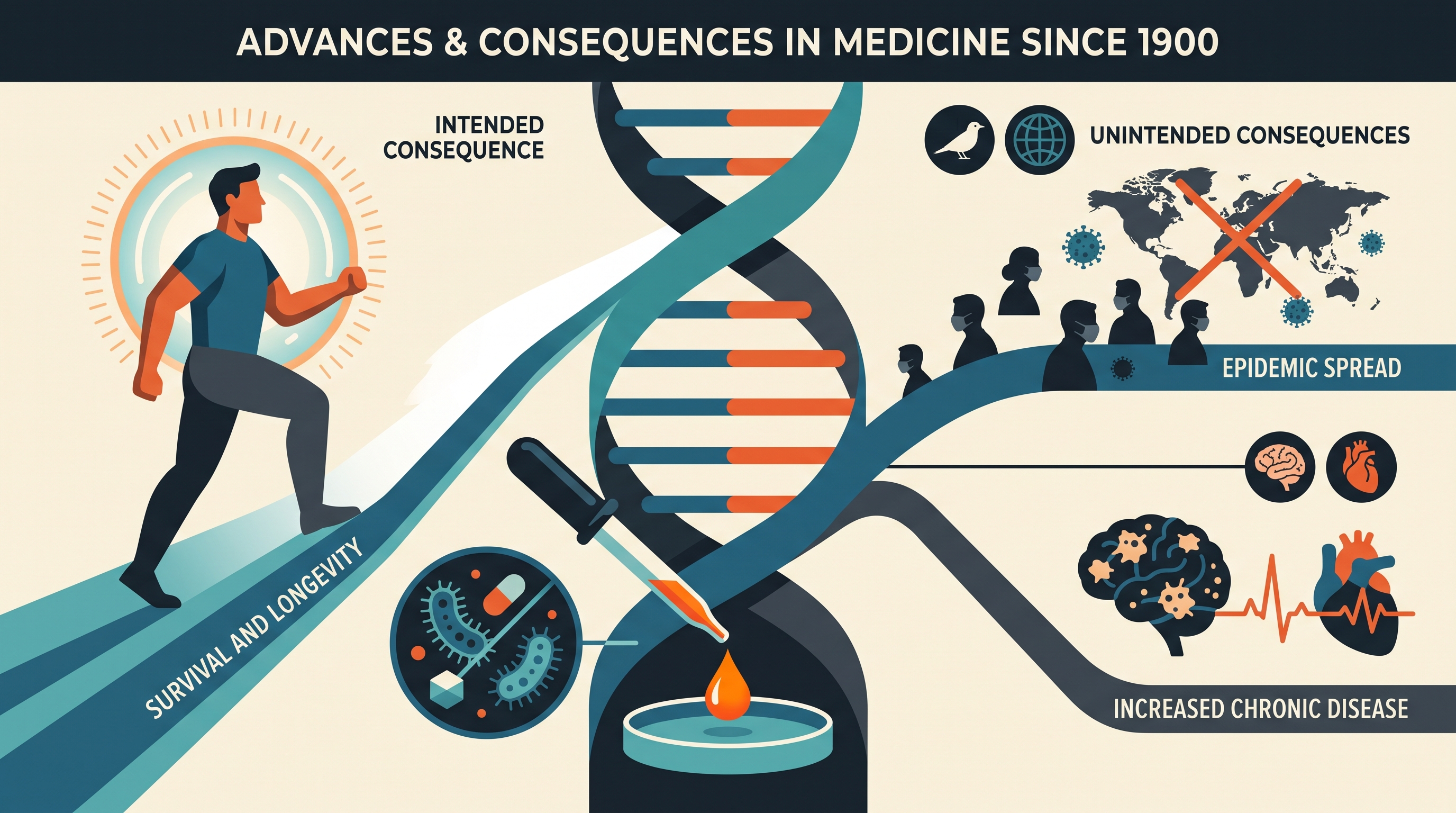
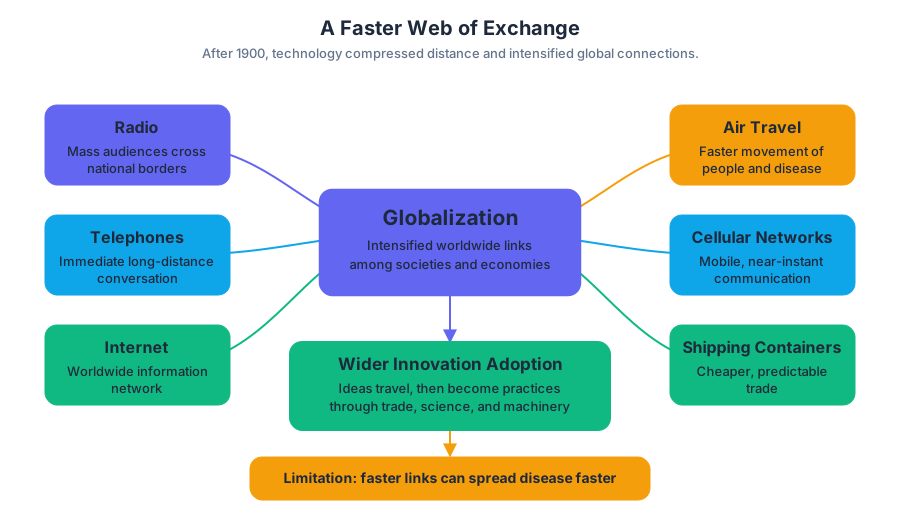
9.3 Technological Advances: Debates About the Environment After 1900 · 9.4 Economics in the Global Age
Key concepts: Human adaptation and innovation · Technological advances after 1900 · Environmental change and human populations · Deforestation · Desertification · Air-quality decline · Greenhouse-gas emissions · Freshwater consumption and competition · Disease and medical/scientific developments · Government intervention in the economy
After 1900, technology made it possible for human beings to produce, travel, communicate, and consume on an unprecedented scale—but the same systems that increased comfort and security also transformed forests, farmland, air, water, and climate.
9.3 Technological Advances: Debates About the Environment After 1900 · 9.4 Economics in the Global Age
After 1900, technology made it possible for human beings to produce, travel, communicate, and consume on an unprecedented scale—but the same systems that increased comfort and security also transformed forests, farmland, air, water, and climate.
Innovation, adaptation, and unintended consequences
Human innovation is the creation or application of new tools, systems, or knowledge to solve problems or increase efficiency. Human adaptation is the way people or communities alter their behavior, technology, settlement patterns, or economic practices in response to changing conditions. Innovation asks, “What new capability can we create?” Adaptation asks, “How must we live differently because conditions have changed?”
A dam, for example, is an innovation that can generate electricity, control floods, and supply irrigation water. Farmers adapting to repeated drought might conserve water, plant drought-resistant crops, change planting schedules, or migrate toward more reliable farmland. Each response can reduce immediate pressure, but each also creates trade-offs: dams may displace communities, irrigation can exhaust rivers, and migration can intensify competition in receiving areas.
The central historical pattern is therefore not “technology is good” or “technology is bad.” Technological advances increased efficiency, comfort, and security while producing both intended and unintended consequences.
| Human goal | Technological or economic response | Environmental consequence |
|---|---|---|
| Produce more food | Irrigation, mechanization, high-yield crops | Freshwater depletion and soil stress |
| Expand settlements and industry | Roads, mines, factories, urban growth | Deforestation and air-quality decline |
| Increase energy supply | Coal, oil, gas, and electricity systems | Greenhouse-gas emissions and pollution |
| Protect communities from scarcity | Conservation, reforestation, migration | Adaptation, but also new competition over land and water |
Environmental change and human populations
The CED’s Learning Objective C requires students to explain the causes and effects of environmental changes from 1900 to the present. KC-6.1.II.A identifies deforestation, desertification, declining air quality, and increased consumption of freshwater as processes that intensified competition over resources.
Deforestation is the large-scale removal of forests, often for agriculture, mining, fuel, roads, or settlement. Desertification is the degradation of productive land in dry regions until it becomes less capable of supporting crops, animals, or human populations. Air-quality decline results when industrial emissions, vehicle exhaust, smoke, and other pollutants accumulate in the atmosphere.
These changes affected populations by altering where people could safely live and earn a living. Drought combined with degraded farmland could push rural families toward cities or across borders; shrinking water supplies could encourage communities to build conservation systems or compete with neighboring regions. Population movement was therefore not only a political or economic phenomenon—it could also be an adaptation to environmental pressure.
Worked example: Imagine a farming region experiencing declining rainfall. First, repeated drought reduces harvests. Second, farmers respond through water storage, irrigation, drought-resistant crops, or reduced livestock herds. Third, if these adaptations cannot keep pace with environmental stress, some households migrate to cities. Finally, urban growth increases demand for housing, food, and water, shifting the original environmental problem into a new location. This chain demonstrates causation rather than merely listing “drought” and “migration.”
Greenhouse gases and the climate debate
KC-6.1.II.B states that the release of greenhouse gases and pollutants contributed to debates about the nature and causes of climate change. Industrialization, transportation, electricity generation, and mass consumption released substances that altered atmospheric conditions. The historical debate involved both scientific questions—what was changing and why—and political questions about responsibility, regulation, economic growth, and unequal effects.
A common misconception is that environmental change began only when governments formally recognized climate change. In reality, deforestation, pollution, soil degradation, and freshwater competition developed over time; later scientific and political debates interpreted, measured, and contested those changes.
Economics in the Global Age
Economic intervention occurs when governments shape production, labor, trade, prices, investment, or social welfare rather than leaving economic activity entirely to private actors. The New Deal in the United States illustrates intervention through public works, regulation, and relief during the Great Depression. Fascist states developed corporatist economies, in which governments organized employers and workers into state-supervised bodies while limiting independent labor action.
Governments with strong popular support in Brazil and Mexico also illustrate intervention in the economy. Their governments used state authority to promote national development, manage resources, and pursue social or industrial goals. These cases show that government involvement was not limited to one ideology: democratic, authoritarian, and populist governments could all intervene, although they justified and organized that intervention differently.
The global age connected environmental and economic decisions across borders. Industrial production could depend on distant raw materials; international markets could encourage deforestation or resource extraction; and pollution or greenhouse-gas emissions could create effects far beyond the place where goods were produced.
AP historical reasoning in action
Use Skill 4: Contextualization, especially 4.B Explain how a specific historical development or process is situated within a broader historical context, by connecting environmental change to industrialization, urbanization, population growth, imperial legacies, and global consumption.
Use Skill 5: Making Connections, including 5.B Explain how a historical development or process relates to another historical development or process, to connect economic intervention with environmental policy, or migration with drought and land degradation. For source-based work, Skill 2: Sourcing and Situation—including 2.C Explain the significance of a source’s point of view, purpose, historical situation, or audience—helps reveal why a government, scientist, corporation, or activist represented environmental change in a particular way. Skill 1: Developments and Processes, Skill 3: Claims and Evidence in Sources, and Skill 6: Argumentation support identifying change over time, using evidence, and defending a historically precise claim.
Misconception check: Government intervention does not automatically mean socialism, and economic growth does not automatically produce identical environmental results everywhere. The stronger historical explanation identifies the policy, the actors who supported it, the problem it addressed, and its intended and unintended consequences.
Retrieval check: A region loses forest cover, suffers soil degradation, and experiences falling crop yields. Name one cause, one human adaptation, one limit or trade-off of that adaptation, and one broader global development that could intensify the problem. A strong answer might connect commercial agriculture to deforestation, drought-resistant crops to adaptation, groundwater depletion to its limits, and global demand for agricultural commodities to the wider context.
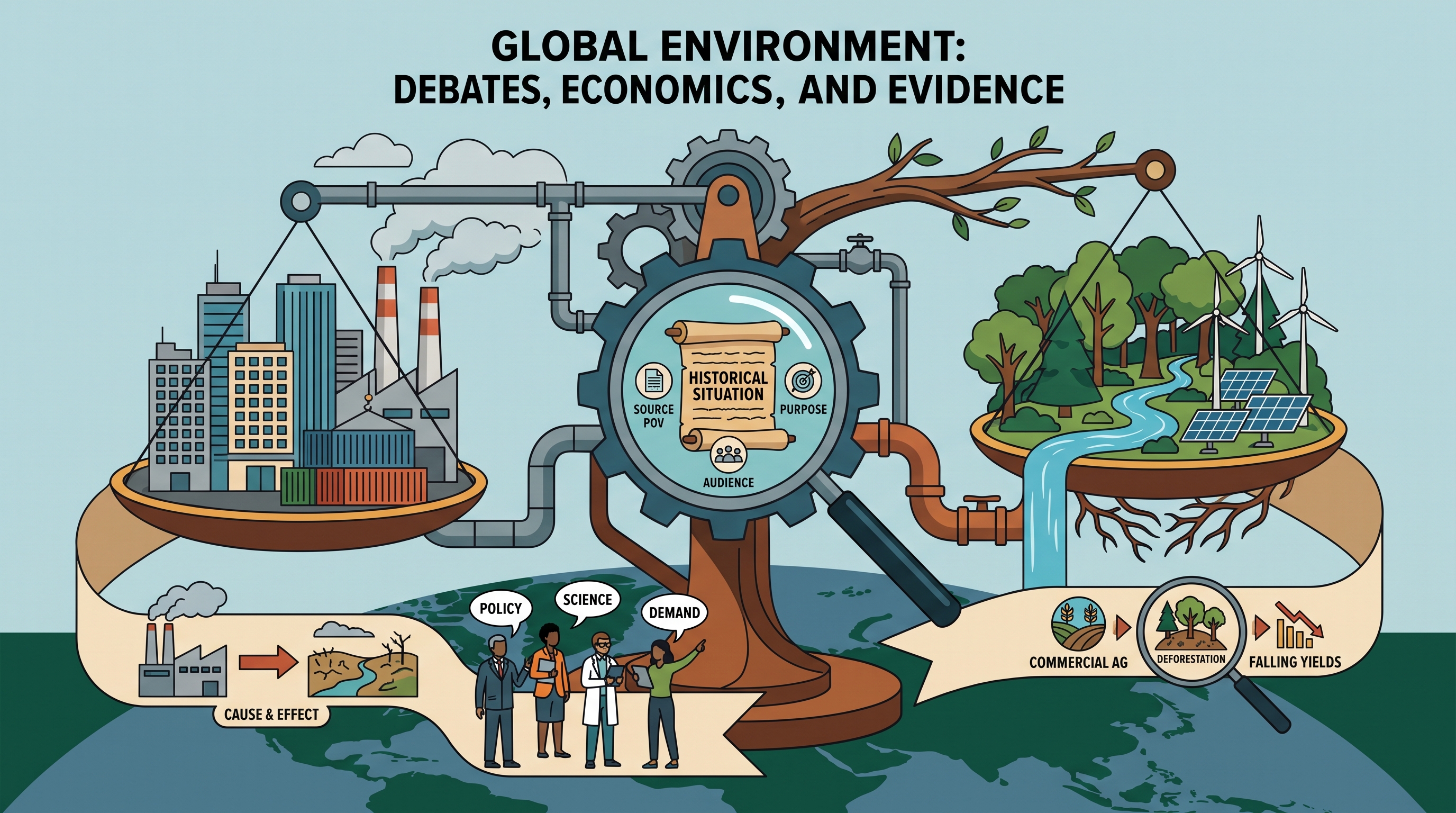

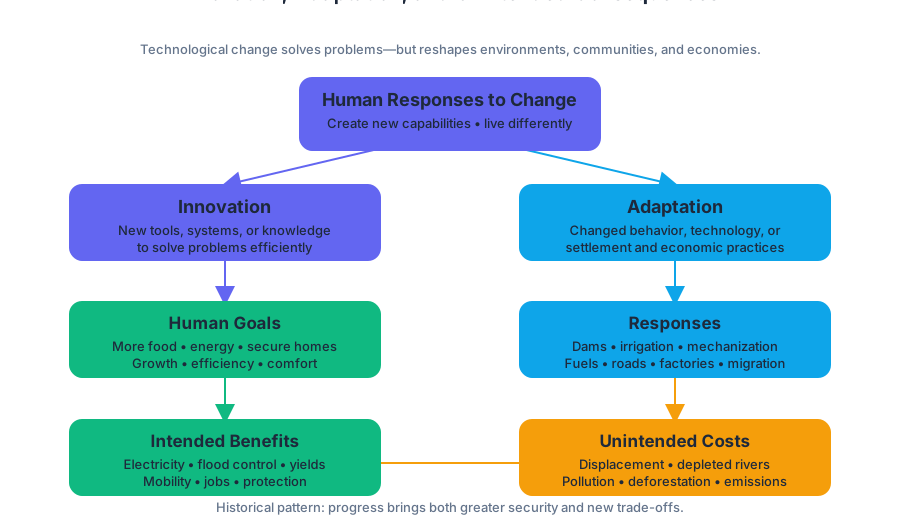
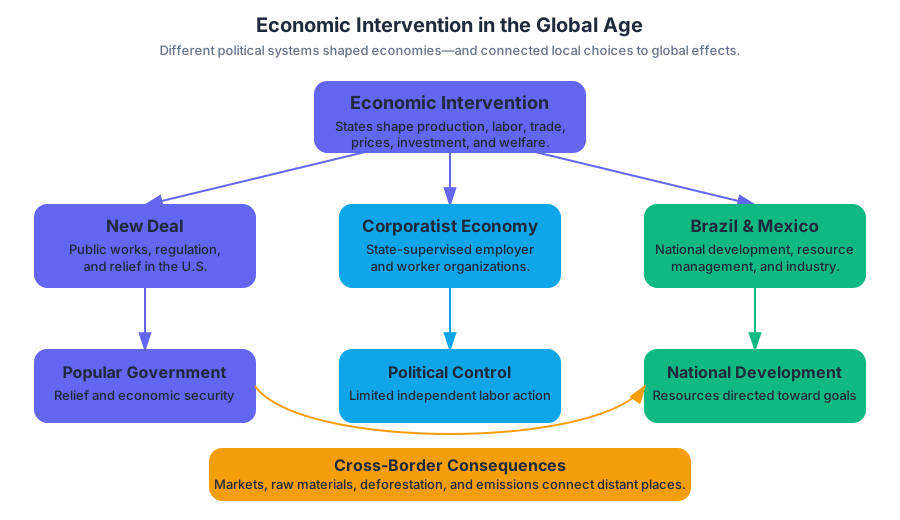
9.5 Calls for Reform and Responses After 1900 · 9.6 Globalized Culture After 1900
Key concepts: Calls for reform after 1900 · Responses to globalization · Challenges to assumptions about race, class, gender, and religion · The United Nations Universal Declaration of Human Rights · Global development and inequality · Per capita income as an indicator of standard of living · Tanzimat reforms in the Ottoman Empire · Japanese selective Westernization in response to Matthew Perry · The Opium Wars and Boxer Rebellion · Women’s long hours and harsh working conditions in factory jobs
After 1900, globalization connected societies more tightly—but it also made inequality, exclusion, and cultural domination harder to ignore. Reformers therefore asked a fundamental question: Who should count as a full member of society, and what rights should that membership guarantee?
9.5 Calls for Reform and Responses After 1900 · 9.6 Globalized Culture After 1900
After 1900, globalization connected societies more tightly—but it also made inequality, exclusion, and cultural domination harder to ignore. Reformers therefore asked a fundamental question: Who should count as a full member of society, and what rights should that membership guarantee?
Reform in a Globalizing World
Reform movements sought to change political institutions, social hierarchies, education, labor conditions, or cultural assumptions. Some reforms came from governments responding to foreign pressure; others emerged from mass movements challenging the effects of industrialization, imperialism, and global integration.
Earlier reform examples continued to shape the modern period. The Ottoman Tanzimat reforms attempted to strengthen and reorganize the empire through administrative, legal, and military changes. In Japan, the arrival of Commodore Matthew Perry’s American naval expedition exposed the danger of Western military pressure. Japan responded with selective Westernization: it adopted selected technologies, institutions, and military practices while attempting to preserve Japanese political authority and cultural identity.
China faced a different sequence of responses. The Opium Wars demonstrated the military consequences of foreign economic pressure and unequal treaties. The Boxer Rebellion represented violent resistance to foreign influence and Christian missionaries, while later reformers argued that China needed major political and educational changes to survive. Mao Zedong, a Communist leader, eventually associated reform and revolution with the creation of a radically reorganized Chinese society.
These cases should not be collapsed into a single “Westernization” story. Tanzimat reform tried to preserve Ottoman state power; Japan borrowed selectively to resist domination; Chinese movements debated whether resistance, reform, or revolution offered the best defense against foreign pressure.
Rights, Social Categories, and Inclusion
The CED connects this development to Unit 9: Learning Objective E and KC-6.3.III.i: rights-based discourses challenged older assumptions about race, class, gender, and religion. A rights-based discourse argues that people possess rights because they are human—not merely because they belong to a favored nation, class, race, sex, or faith.
The United Nations Universal Declaration of Human Rights challenged traditional assumptions by presenting dignity and basic rights as universal principles.
The 1948 declaration especially emphasized the rights of children, women, and refugees. It did not instantly eliminate discrimination, but it supplied reformers with a shared language for criticizing governments and institutions. Related challenges included global feminist movements, the Negritude movement, which affirmed Black cultural identity against racist colonial assumptions, and liberation theology in Latin America, which connected Christian teachings to struggles against poverty and oppression.
KC-6.3.III.ii emphasizes that access to education and participation in political and professional roles became more inclusive in much of the world. Examples include women gaining voting or office-holding rights in the United States in 1920, Brazil in 1932, Turkey in 1934, Japan in 1945, India in 1947, and Morocco in 1963. The pattern was significant but incomplete: legal access did not guarantee equal wages, safety, political influence, or social acceptance.
Industrial employment also produced contradiction. Documents 3, 5, and 6 illustrate the long hours and harsh working conditions women routinely faced in factories. Industrialization could create paid employment and public activism while preserving the assumption that women belonged primarily in domestic roles.
Measuring Development and Inequality
Globalization increased access to goods, education, communication, and employment for some populations while distributing its economic and environmental costs unevenly. KC-6.3.II.C identifies worldwide movements protesting this inequality. A protest against globalization might target labor exploitation, unequal trade, environmental damage, or institutions seen as favoring wealthy states and corporations.
The 2011 Snapshot “Global Development and Inequality” in Strayer, page 1031, should be read as a quantitative source: a source using numerical data to make comparisons. One important measure is per capita income, calculated by dividing a country’s total income by its population:
$$\text{Per capita income}=\frac{\text{total national income}}{\text{population}}$$
Per capita income can help compare average economic resources, but it is not the same as the average person’s actual experience. It can conceal wealth concentrated among elites, unpaid labor, regional disparities, unequal access to health care, or differences in the cost of living. Statistical indicators of standard of living—the material and social conditions in which people live—may also include literacy, life expectancy, infant mortality, access to education, nutrition, housing, and medical care.
A country may have a high per capita income but poor access to health services for rural communities. Conversely, a country with lower average income may achieve strong literacy or life-expectancy outcomes through broad public programs. The strongest interpretation therefore treats per capita income as one indicator, not a complete definition of development.
AP Historical Reasoning: Contextualization and Sourcing
The suggested skill is Contextualization (4.B): Explain how a specific historical development or process is situated within a broader historical context. To contextualize the Universal Declaration, connect it to the world wars, imperialism, mass atrocities, refugee crises, and expanding international institutions of the twentieth century. Its universal language made sense partly because earlier national and imperial systems had excluded entire categories of people from equal protection.
When analyzing a document about women’s factory work, use Sourcing: explain the source’s point of view, purpose, historical situation, and/or audience. A reform photograph intended for middle-class policymakers may emphasize exhaustion and danger to provoke legislation; a factory owner’s report may minimize those conditions to defend production. Sourcing does not mean dismissing a source—it means explaining why its perspective matters.
Misconception check: “Reform automatically produced equality.”
Reform often widened formal rights while leaving economic inequality, racism, gender expectations, religious discrimination, and exploitative labor intact.
Retrieval check: Explain one way the Universal Declaration challenged an older social assumption. Then explain why per capita income alone cannot fully measure standard of living. Finally, contextualize either Tanzimat reform or Japanese selective Westernization by identifying the foreign pressure that shaped it.
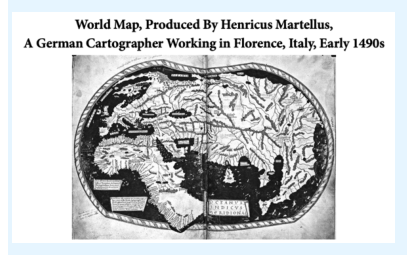
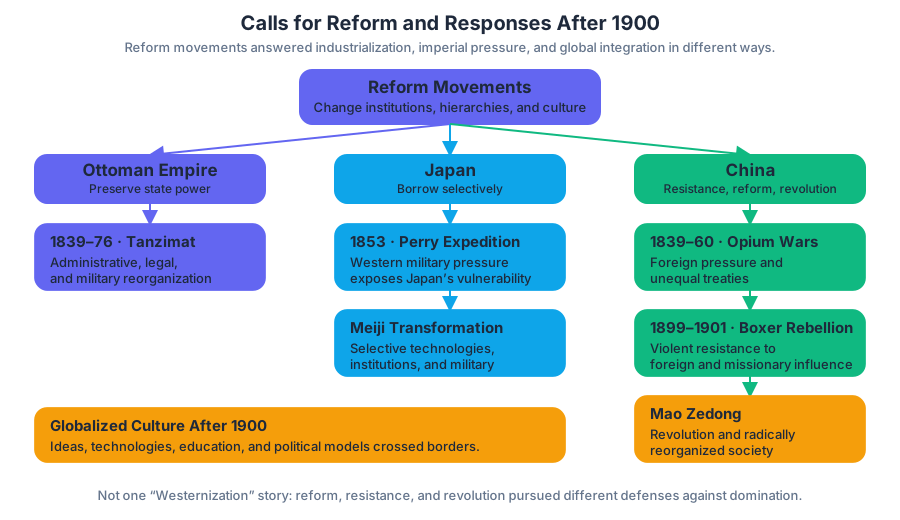
9.7 Resistance to Globalization After 1900 · 9.8 Institutions Developing in a Globalized World
Key concepts: Globalization after 1900 · Resistance to globalization · Globalized culture · Global consumer culture · International institutions · Human rights · Global inequality · World Health Organization · Global commerce and brands · Historical contextualization
Globalization connected people across national borders, but connection did not produce universal agreement. The same networks that carried medicine, brands, media, and commerce also exposed unequal access to wealth and power—and created new targets for protest.
9.7 Resistance to Globalization After 1900 · 9.8 Institutions Developing in a Globalized World
Globalization connected people across national borders, but connection did not produce universal agreement. The same networks that carried medicine, brands, media, and commerce also exposed unequal access to wealth and power—and created new targets for protest.
Global consumer culture—and the backlash against it
Consumer culture is a social system in which people express identity, status, and belonging partly through the goods and services they purchase. After 1900, consumer culture became increasingly globalized and transcended national borders (KC-6.3.IV.iii). A shopper could encounter the same brand, entertainment style, or commercial message in multiple countries.
The process operated through several connected channels:
- online commerce expanded through companies such as Alibaba and eBay;
- global brands such as Toyota and Coca-Cola became recognizable across national markets;
- popular culture circulated through international media, sports, and entertainment;
- advertising linked consumption with ideas of modernity, success, and personal freedom.
This expansion did not mean that every society simply copied Western or American culture. Local consumers adapted global products to local tastes, while critics argued that commercial globalization weakened cultural traditions, encouraged materialism, or reproduced unequal economic relationships. Resistance therefore targeted both globalization itself and the perceived dominance of Western or American influence.
Key distinction: Globalization describes expanding cross-border connections; resistance to globalization describes political, cultural, or social responses that challenge the effects, values, or power relationships produced by those connections.
Why globalization generated protest
Globalization could increase awareness of human rights while simultaneously increasing awareness of inequality. International communication made it easier for people to learn about abuses, discrimination, poverty, or unequal access to technology. Yet the same global economy could concentrate wealth, expose workers to difficult conditions, and make communities feel that distant corporations or institutions had influence over local decisions.
This tension helps explain why protest movements emerged against globalization and Western or American cultural influence. Protesters might oppose foreign economic control, cultural homogenization, environmental damage, or policies associated with international organizations. Their criticism did not necessarily reject all international exchange; many movements demanded a different form of globalization—one that distributed benefits more fairly and respected local autonomy.
Worked contextual example: Imagine a community receiving a new multinational retail chain. The chain may lower prices and provide employment, but local shopkeepers may lose customers, profits may leave the region, and residents may view the chain’s advertising as an intrusion into local culture. To explain the historical development, connect the local protest to the broader twentieth-century growth of global consumer culture, transportation, communications, and multinational business. The protest is not evidence that globalization failed; it is evidence that globalization produced uneven consequences.
International institutions and unequal access to progress
International institutions are organizations created by multiple states to address problems that cross national borders. In Topic 9.8, the World Health Organization illustrates how such institutions attempted to spread the benefits of innovations in medicine and public health to developing countries. These efforts reduced deaths from communicable diseases in many regions.
The example reveals both institutional possibility and limitation. Medical knowledge, antibiotics, vaccines, sanitation programs, and disease-control campaigns could travel internationally, but their success depended on funding, infrastructure, trained personnel, political cooperation, and public trust. A scientific innovation therefore did not automatically produce equal outcomes: institutions had to organize its delivery.
Human-rights language also became more influential in the globalized world. International communication and institutions helped publicize violations and gave activists vocabulary for demanding equality. At the same time, critics questioned whether powerful states applied human-rights principles consistently or used them to justify intervention and preserve influence.
AP historical thinking in action
Skill 2.C — Sourcing and Situation: To evaluate a source, identify its point of view, purpose, historical situation, and/or audience, then explain how those features affect its usefulness. A government advertisement praising international development may reveal official goals and optimism, but its purpose may lead it to minimize inequality or local resistance.
AP Skill 4.B — Contextualization: Explain how a specific historical development fits within a broader historical context. For example, place a protest against a foreign corporation within the wider context of post-1900 consumer globalization, expanding communications, international institutions, and unequal economic integration.
Common misconception: Resistance to globalization was not simply “opposition to modern technology.” Many protesters used global media, international networks, and digital communication to organize. Their objection was often directed at who controlled globalization, who benefited from it, and whose culture or rights were neglected.
Retrieval check
Explain, in two steps, how the World Health Organization demonstrates both a benefit and a limitation of globalization. Then identify one feature of a source—audience, purpose, point of view, or historical situation—that could shape how it portrays a protest against Western influence.
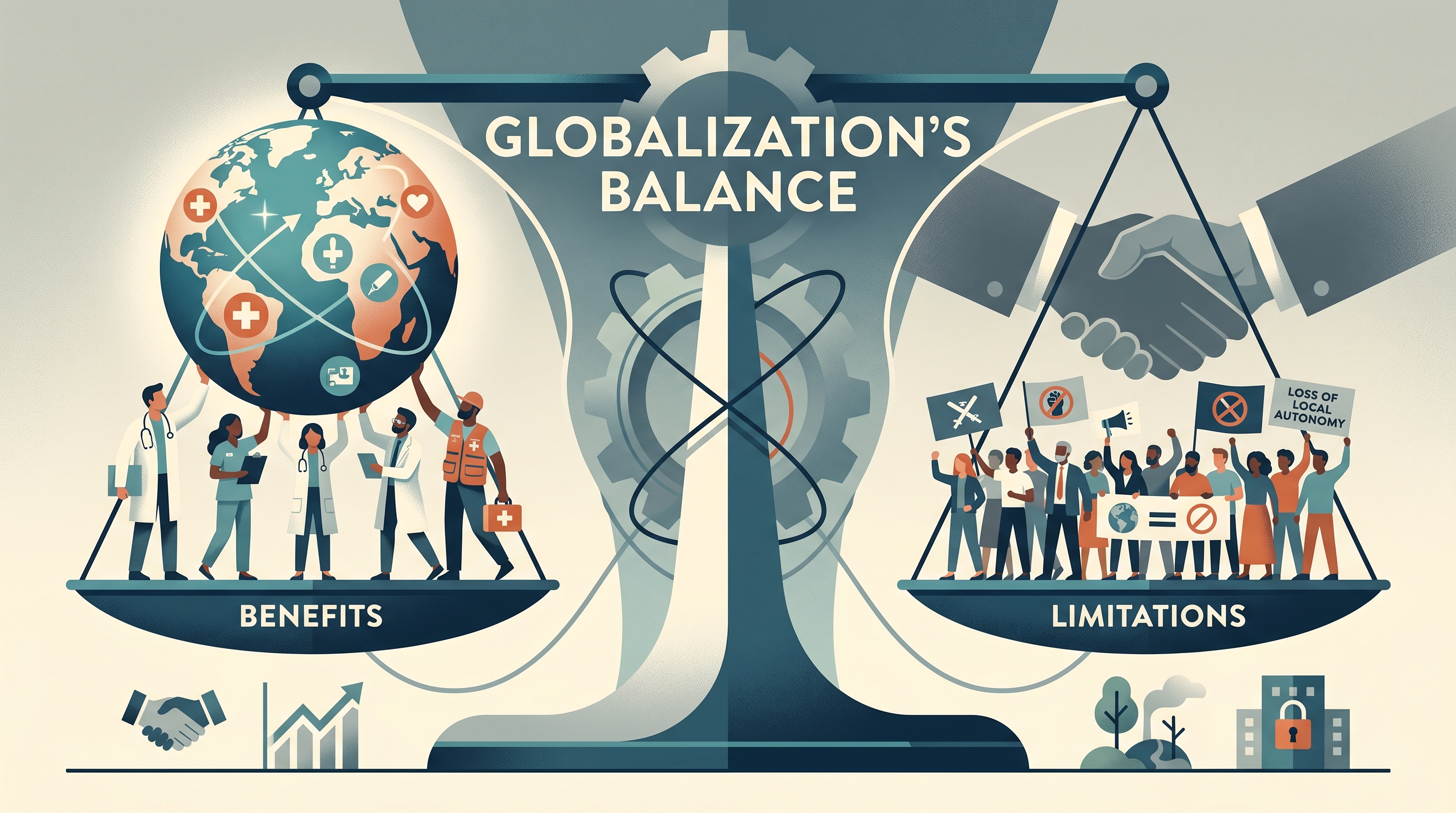
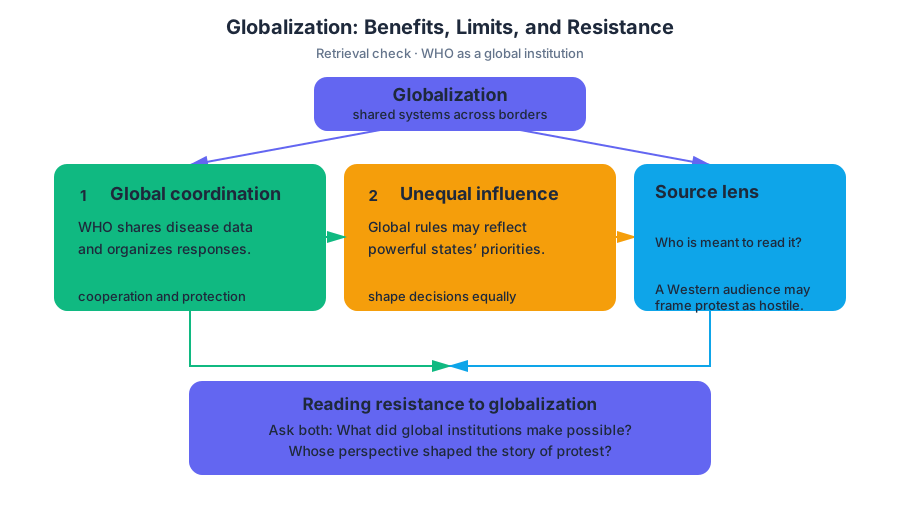
9.9 Continuity and Change in a Globalized World
Key concepts: Globalization and international interactions · International organizations · United Nations · World peace and international cooperation · Continuity and change over time · Argumentation · Skill 6.D: corroborating, qualifying, or modifying an argument · Complex historical arguments · Analyzing multiple variables · Explaining continuity and change, causes and effects, and similarities and differences
Globalization changed international interactions among states, but greater connection did not automatically produce agreement, equality, or peace. The central historical problem is therefore one of continuity and change over time: what changed in global relationships after 1900, what persisted, and how far did new…
9.9 Continuity and Change in a Globalized World
Globalization changed international interactions among states, but greater connection did not automatically produce agreement, equality, or peace. The central historical problem is therefore one of continuity and change over time: what changed in global relationships after 1900, what persisted, and how far did new institutions accomplish their stated purposes?
The historical puzzle: more connection, mixed results
By the twentieth century, states interacted through denser networks of trade, communication, diplomacy, migration, warfare, and international law. International organizations, including the United Nations, formed with the stated goal of maintaining world peace and facilitating international cooperation. The historical question is not simply whether these institutions existed, but whether their existence changed the behavior and outcomes of international politics.
A strong argument separates intended purpose from historical effect:
| Dimension | Continuity | Change |
|---|---|---|
| International conflict | States continued to compete for security, influence, and resources | Conflict increasingly operated within global diplomatic and institutional frameworks |
| Cooperation | States still pursued national interests | States gained standing forums for negotiation and coordinated action |
| World peace | International institutions could not eliminate war | Collective diplomacy, peacekeeping, and international agreements created new tools for managing conflict |
| Global relationships | Power remained unequal | Smaller or newly independent states gained more opportunities to make claims in international settings |
This comparison avoids two opposite errors. One error is declaring globalization a complete transformation that erased older rivalries. The other is treating international institutions as meaningless because they did not end every conflict. A complex historical argument explains how both continuity and change operated at the same time.
Skill 6.D: building a complex argument
Skill 6.D — “Corroborate, qualify, or modify an argument using diverse and alternative evidence in order to develop a complex argument” — asks the writer to do more than list examples. The writer must test an initial claim against evidence from different perspectives, regions, or outcomes, then make the claim more precise.
A complex argument does not merely say that globalization caused change; it explains the extent, limits, conditions, and consequences of that change.
Three moves are especially important:
- Corroborate: use separate evidence that supports the same interpretation.
- Qualify: show that an argument is broadly valid but limited by time, place, or circumstance.
- Modify: revise the original argument because alternative evidence changes its meaning.
A complex argument may explain nuance through multiple variables, make relevant and insightful connections across periods, assess the significance and limitations of evidence, or explain why a historical claim is effective or incomplete. In practice, this means connecting political institutions to power relationships, economic interests, technological change, and the experiences of different states rather than treating “globalization” as a single force with one predictable result.
Worked argument: evaluating the United Nations
Prompt: Evaluate the extent to which globalization changed international interactions among states from 1900 to the present.
Step 1 — Initial claim: Globalization changed international interactions to a significant extent because states increasingly used international institutions to pursue peace and cooperation.
Step 2 — Corroborating evidence: The United Nations provides evidence that states developed permanent structures for diplomacy and collective action. Its stated goals of maintaining world peace and facilitating international cooperation demonstrate a change from relying only on separate national diplomacy.
Step 3 — Qualifying evidence: The creation of the United Nations did not remove national competition or guarantee successful peace. States could continue to prioritize sovereignty, security, and strategic interests, meaning that institutional cooperation operated within older power struggles.
Step 4 — Modified conclusion: Globalization changed the mechanisms of international interaction more consistently than it changed the underlying interests of states. The United Nations created new forums and expectations for cooperation, but its effectiveness depended on whether powerful states accepted collective limits and whether member states shared compatible goals.
This argument earns complexity because it explains both change and continuity, uses the United Nations as evidence without assuming automatic success, and distinguishes institutional innovation from actual political outcomes. It also analyzes multiple variables: global connectivity, institutional design, state power, and national interest.
Making continuity and change persuasive
When organizing a response, use a before-and-after structure, but do not force history into a simple “old versus new” story. Ask four questions: What changed? What persisted? Why did both occur? What were the consequences?
A useful thesis pattern is:
Globalization significantly changed international interactions by expanding institutional cooperation and diplomatic coordination; however, it did not eliminate competition among states, so the transformation was greater in the methods of interaction than in the persistence of power politics.
Common misconception — “The existence of the United Nations proves that world peace was achieved.” Institutions reveal changing ambitions and methods, not guaranteed results. To evaluate effectiveness, compare the organization’s stated goals with actual outcomes and explain the conditions that enabled or limited success.
Retrieval check
A response claims, “Globalization transformed international relations after 1900.” Strengthen it using Skill 6.D: name one piece of evidence that corroborates the claim, one that qualifies it, and one variable—such as state power or national interest—that explains why continuity and change existed together.
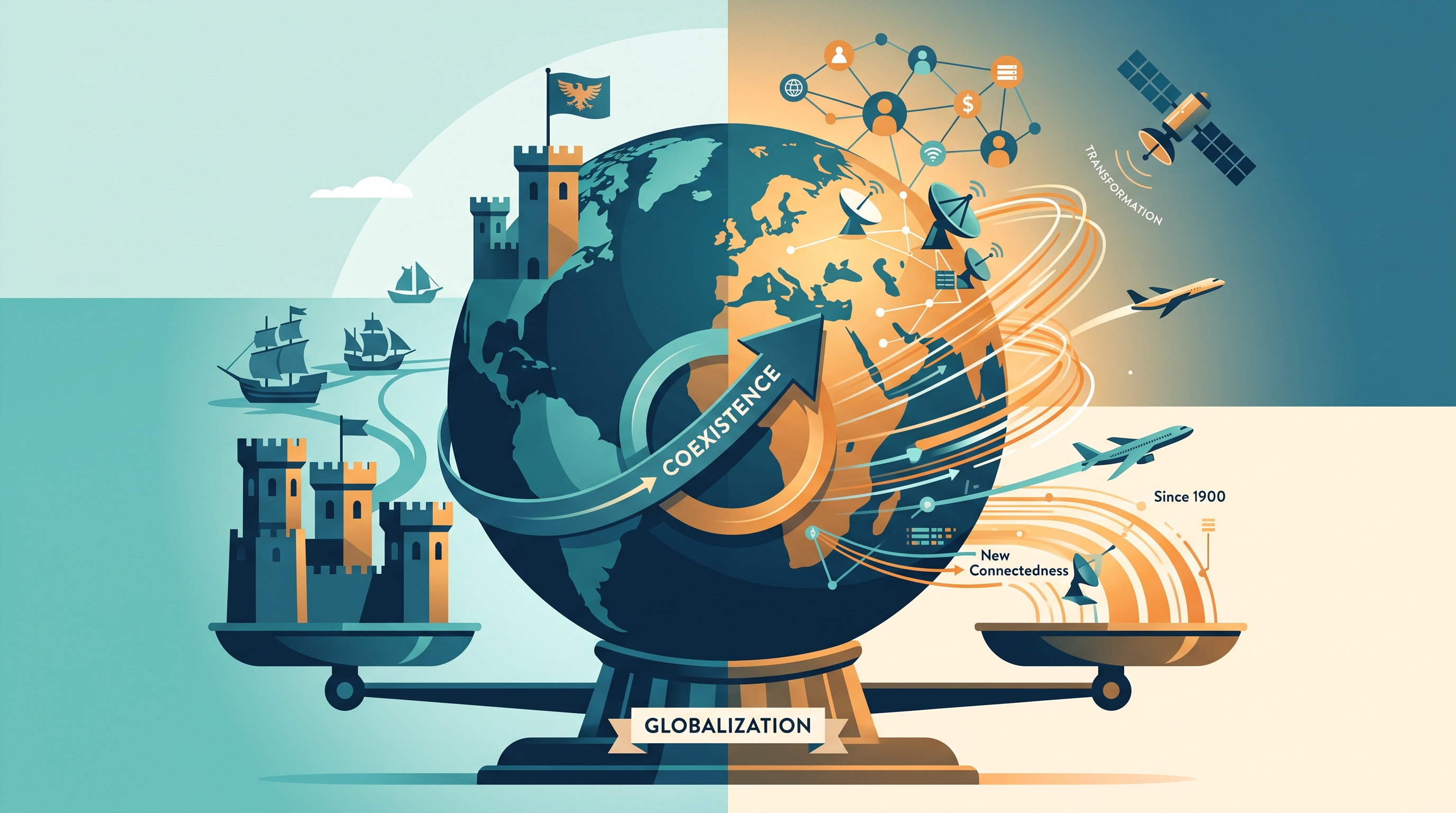
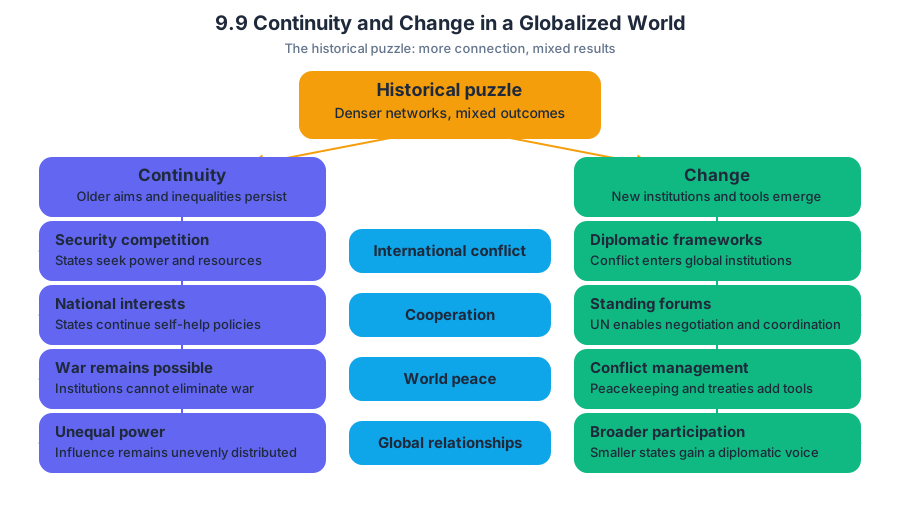
AP Practice 1
Key concepts: AP course frameworks and sample assessments · Evidence-based inquiry and the scientific method · Independent thinking and drawing conclusions · Evaluating source credibility · Respectful debate and protection of diverse perspectives · Parent and student choice in AP enrollment · AP Classroom assessments and progress feedback · Teacher flexibility in adapting instructional activities · DBQ contextualization · DBQ evidence and complexity criteria
A strong Document-Based Question (DBQ) answer does more than summarize documents: it makes a defensible historical argument, places that argument in context, and uses evidence with deliberate reasoning.
AP Practice 1
A strong Document-Based Question (DBQ) answer does more than summarize documents: it makes a defensible historical argument, places that argument in context, and uses evidence with deliberate reasoning. The AP approach begins from a larger principle—students encounter evidence directly, assess source credibility, compare perspectives, and draw their own conclusions rather than reproduce an approved political or cultural viewpoint.
Key principle: AP rewards the quality of historical reasoning, not agreement with a particular ideology.
AP makes its course frameworks and sample assessments public so teachers and students can see what the classroom and exam require. Teachers may adapt suggested activities, create customized tests, assign them online or on paper, and use question-level feedback to improve practice. AP Classroom can provide answer rationales and broader unit- and skill-level feedback through its progress dashboard.
The DBQ as evidence-based inquiry
A DBQ resembles an investigation. The prompt supplies the historical problem, the documents provide a limited body of evidence, and the response must construct and test an explanation. Contextualization means describing a broader historical situation relevant to the prompt—not merely naming an earlier event.
A useful reasoning chain is:
- Question: What historical development or relationship must be explained?
- Hypothesis: What specific claim answers the prompt?
- Evidence: Which documents support, qualify, or challenge that claim?
- Source analysis: Why might each document’s point of view, purpose, audience, or historical situation matter?
- Conclusion: What larger pattern, qualification, or contradiction makes the argument more complex?
Original practice DBQ
Prompt: Evaluate the extent to which new transportation and communication technologies changed African societies from approximately $1850$ to $1960$.
Imagine a document set containing:
- an African merchant describing how railways redirected regional trade;
- a European administrator presenting railways as evidence of “civilizing” colonial rule;
- an African political organizer explaining how newspapers and telegraphs spread anticolonial ideas;
- a missionary reporting increased access to medical services;
- a colonial labor report documenting forced or coerced work on infrastructure;
- a post-independence leader arguing that inherited transport networks served export economies more than local needs;
- a demographic report showing urban growth near rail junctions.
A defensible thesis might argue that transportation and communication technologies transformed African economies, political organization, and urban life, but that the extent of change was limited because colonial governments designed many systems to extract resources and control labor. This thesis earns strength by making a claim and adding a qualification.
For contextualization, connect the prompt to the broader expansion of European imperialism, the search for raw materials and markets, and the political reorganization of Africa during the late nineteenth century. A weak response says only that “imperialism was happening.” A stronger response explains how imperial competition created the motives and institutions through which railways, telegraphs, and ports were built.
For document evidence, use documents to prove categories in the argument rather than listing them. For example, the merchant and demographic report can support economic and urban transformation, while the labor report and post-independence leader can support the qualification that colonial infrastructure often prioritized extraction. To earn the highest document-evidence credit, effectively use all seven documents in support of the argument; the use does not have to be perfectly even or equally developed.
For sourcing, explain how a document’s point of view, purpose, audience, or historical situation affects its meaning. “The administrator was European” is identification. “Because the administrator sought to justify colonial rule to officials in Europe, the description of railways as benevolent progress may understate coercive labor and extraction” is analysis.
Timing and error review
For a timed DBQ, reserve approximately $15$ minutes to read and group documents, then use the remaining time to write and revise. Before drafting, create a rapid map: thesis, two or three argument categories, document assignments, one piece of outside evidence, and two or three sourcing opportunities.
Common misconception check: Respectful debate does not mean treating every claim as equally supported. AP protects diverse perspectives and rejects personal attacks, while still requiring students to evaluate arguments and sources critically. You may disagree with a document or historical interpretation; demonstrate that disagreement through evidence and reasoning, not judgment of the person.
After practice, review errors by rubric category: Was the thesis historically defensible? Was the context genuinely broader? Did each document serve an argument? Did sourcing explain significance? Did the essay include evidence beyond the documents? Did it show complexity through qualification, contradiction, multiple perspectives, or effective use of all seven documents? Teachers can edit or reuse practice assessments, while AP Classroom feedback can help identify recurring content and skill weaknesses.
Retrieval check: In one sentence, distinguish contextualization from document sourcing. Then explain why the claim “railways changed Africa” is incomplete without a qualification about who controlled the infrastructure and why it was built.
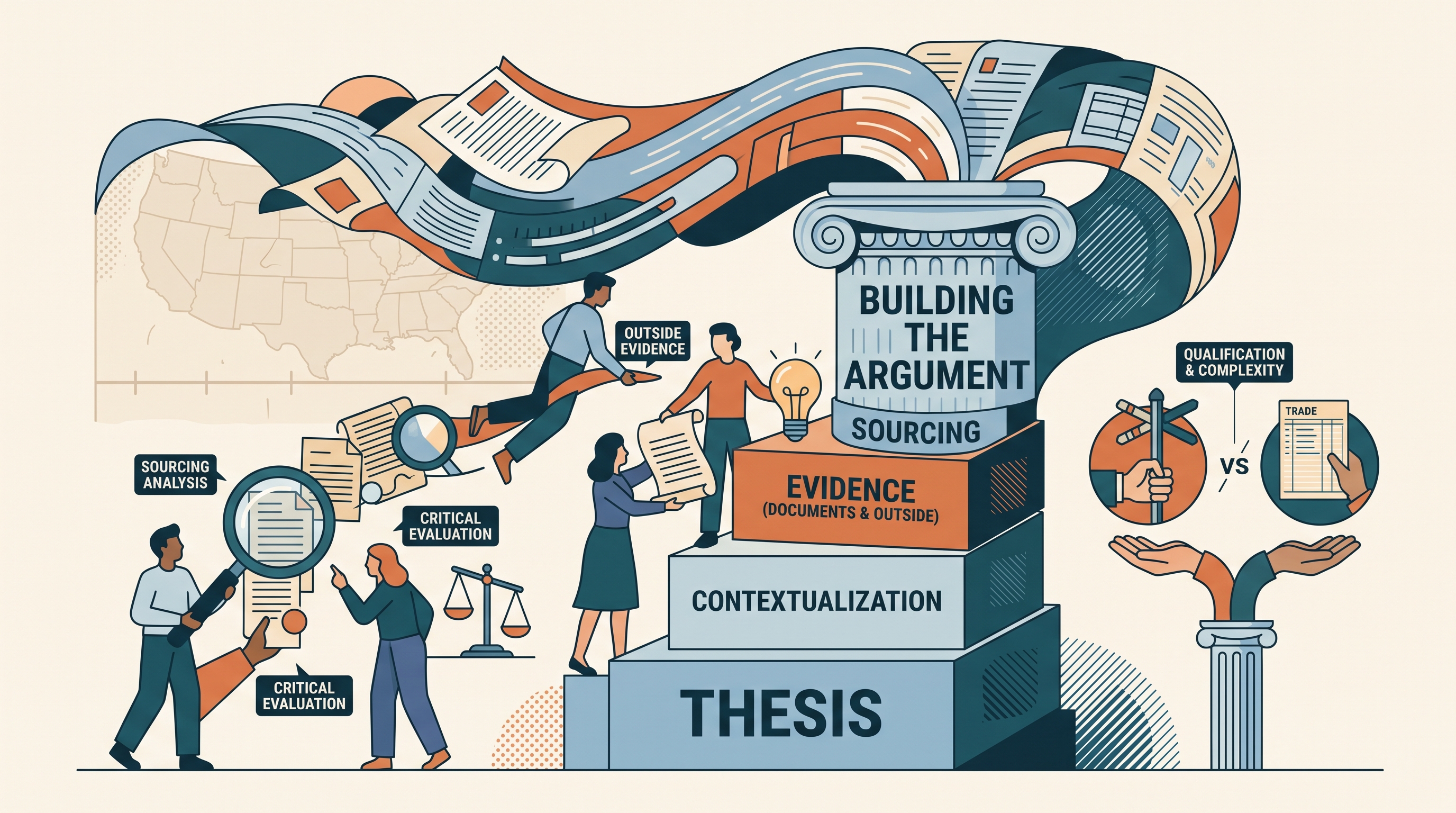
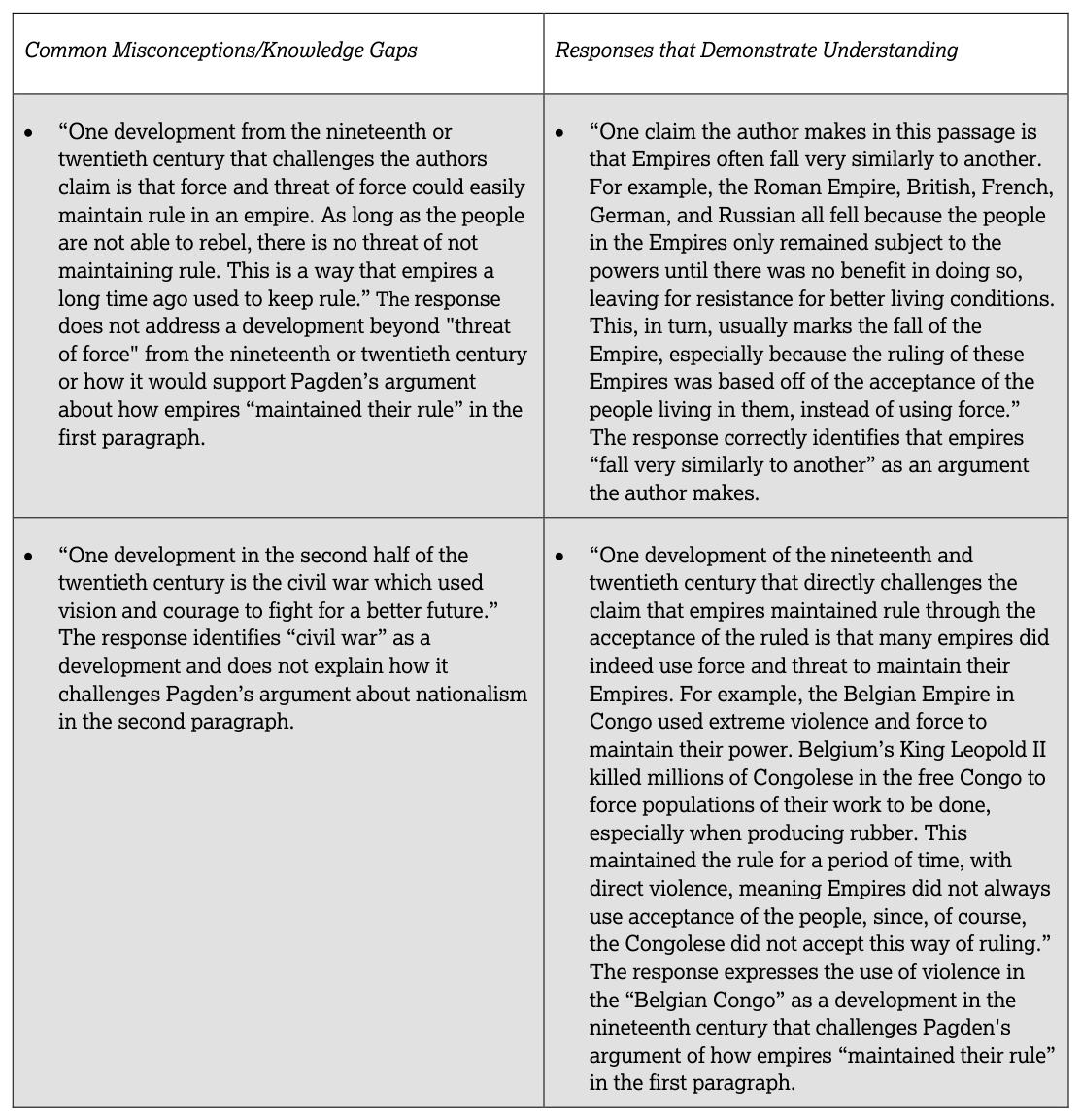
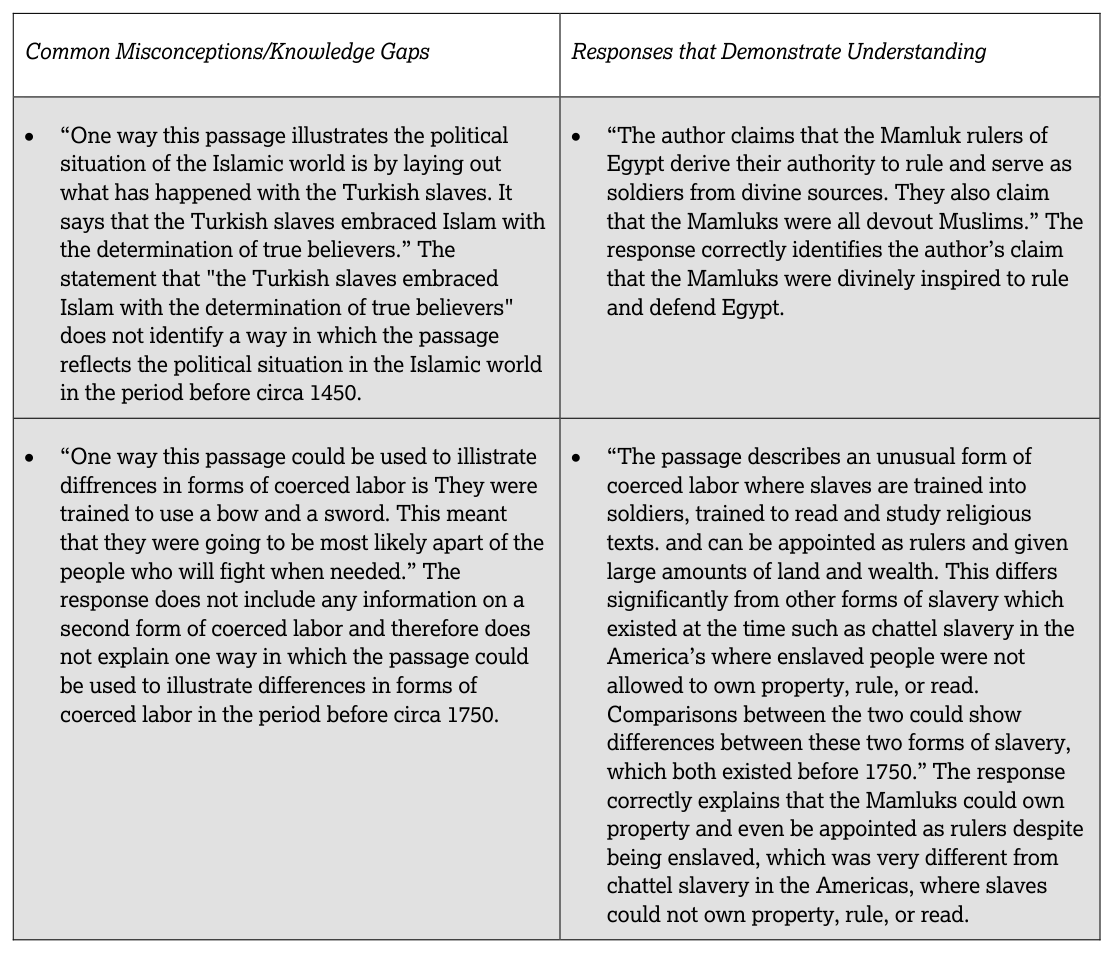
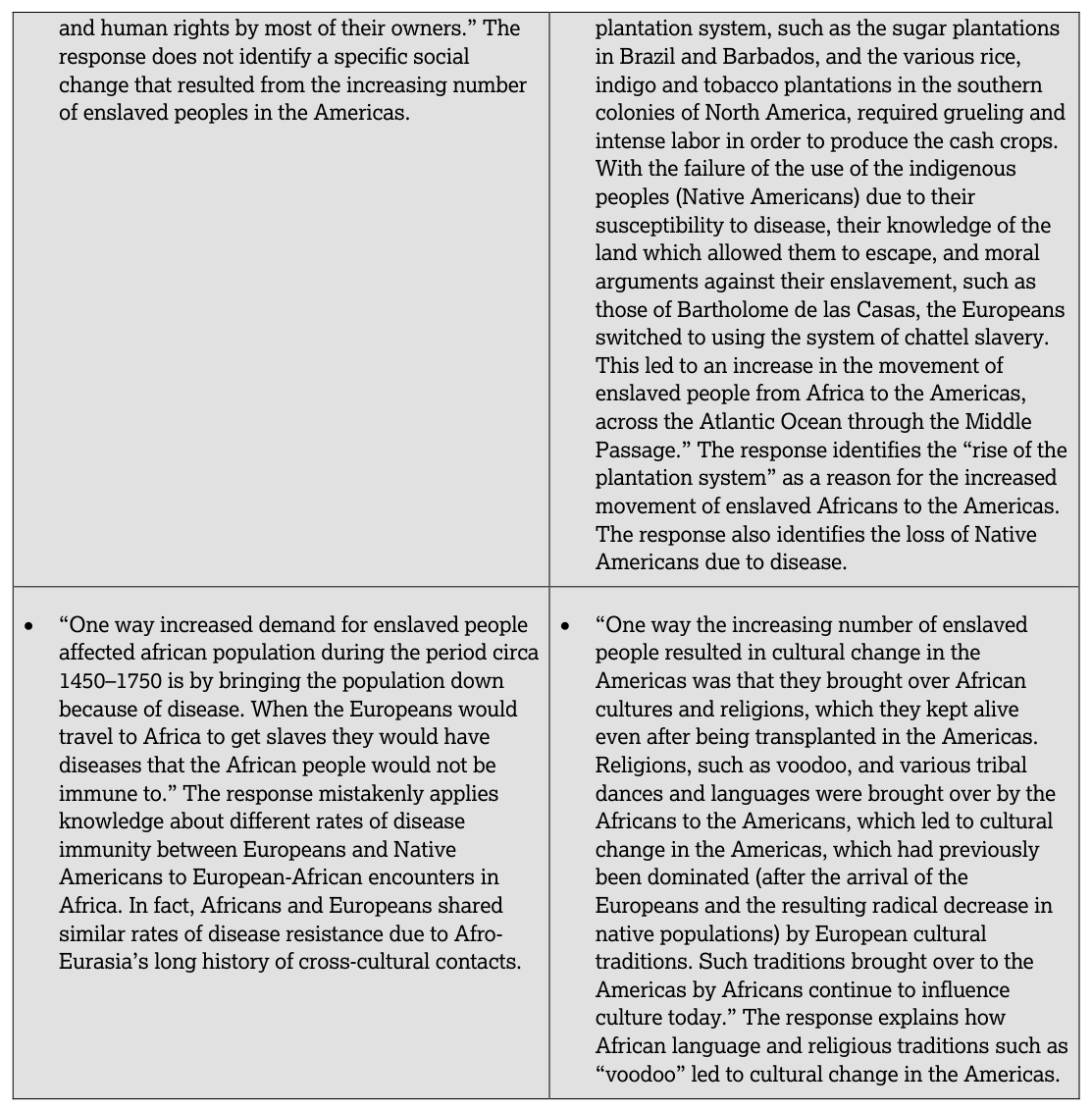

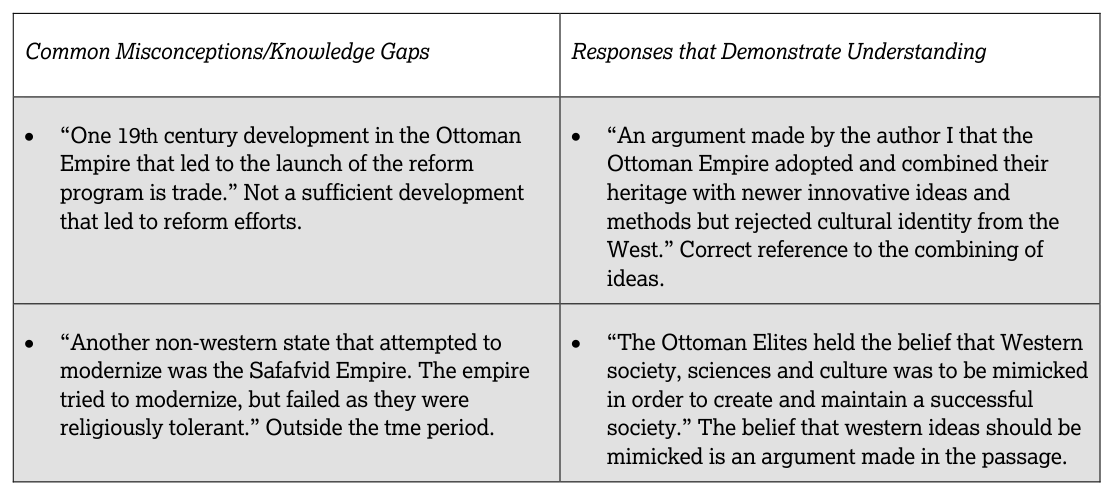
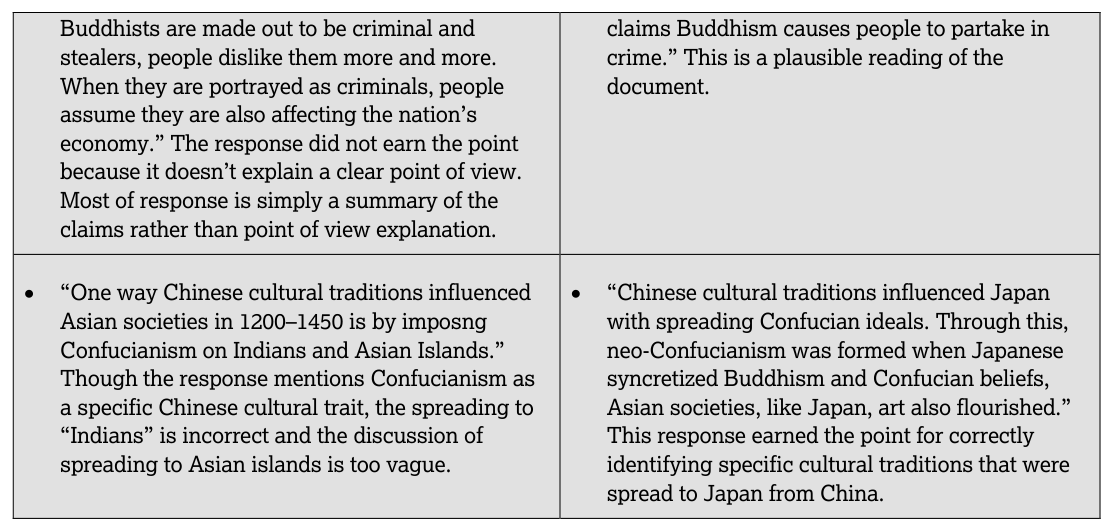
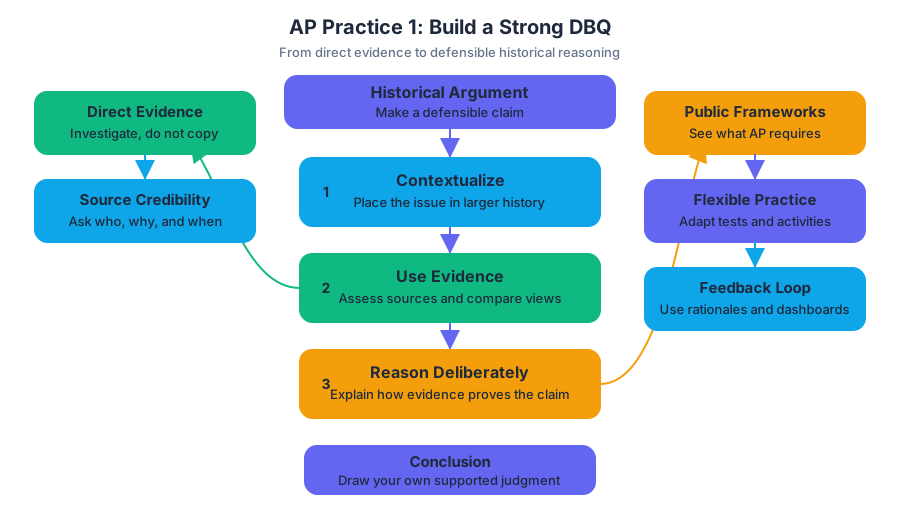
AP Practice 2
Key concepts: Historical argumentation · Sourcing and analysis of historical evidence · Complexity in historical reasoning · Effects of migration · African colonial soldiers in World War I · Imperialism and colonial rule · Nationalism and patriotism · Anti-colonial resistance and independence movements · Cultural diffusion and technology · Coerced labor systems and agricultural change
An African soldier who fought for France during World War I could return to his village with new dignity, courage, and respect—yet also with a sharper understanding of the violence and inequality built into colonial rule.
AP Practice 2
An African soldier who fought for France during World War I could return to his village with new dignity, courage, and respect—yet also with a sharper understanding of the violence and inequality built into colonial rule. That tension is the historical problem at the center of this original, unofficial Document-Based Question (DBQ) practice.
The task
Topic connection: AP World History Topic 6.7, “Effects of Migration.” African colonial soldiers were mobile migrants within imperial systems: they crossed regions, encountered European institutions, and returned with experiences that could strengthen both cooperation with and resistance to colonial governments.
Prompt: Evaluate the extent to which World War I changed the relationship between European imperial powers and colonized peoples in Africa from approximately 1914 to 1930.
Your response should make a historically defensible claim, establish broader context, use the documents as evidence, add relevant evidence beyond the documents, analyze sourcing, and demonstrate complexity where possible.
Document set
| Document | Source description | Historical use |
|---|---|---|
| 1 | A West African veteran of a French regiment recalled that military service gave him dignity, courage, and respect from both his village and the French colonial government. | Shows how wartime service could increase African status and create new expectations. |
| 2 | The same veteran criticized patriotism and nationalism as ideas that encouraged bloodshed and allowed one country to justify taking another country’s land. | Reveals an anti-imperial interpretation of European warfare. |
| 3 | A photograph shows African soldiers in French military uniforms standing alongside white civilians. | Suggests contact, cooperation, and limited social interaction within the French imperial system. |
| 4 | The passage warns that colonized peoples could adopt imperial warfare as a model for independence struggles, producing cycles of violence. | Shows that colonial subjects could appropriate European methods while rejecting European domination. |
Worked argument: from evidence to thesis
A weak thesis merely repeats one side: “World War I changed colonial relationships because Africans served in European armies.” This identifies a development but does not explain its significance.
A stronger thesis establishes a line of reasoning—a connected explanation of how and why change occurred:
World War I changed imperial relationships to a significant but limited extent: African military service challenged European claims of racial superiority and encouraged veterans and colonial leaders to demand greater respect or autonomy, but European governments generally preserved colonial rule, causing some anticolonial activists to turn toward nationalism and armed resistance.
This claim earns the Row A Thesis/Claim point because it answers the prompt, identifies a relevant development, and qualifies the argument. The words “significant but limited” create an analytical structure: wartime service produced change in ideas and expectations, while political power remained largely imperial.
Sourcing: do more than identify the author
For Skill 2: Sourcing and Situation and Skill 3: Claims and Evidence in Sources, explain why a source’s position, purpose, audience, or historical situation matters.
Worked sourcing analysis for Document 1: Because the speaker was an African veteran describing his own experience, he had reason to emphasize the dignity and courage gained through service. His perspective is valuable because it shows that military migration could alter status within an African community; however, it may not represent civilians who experienced recruitment, taxation, or wartime disruption negatively.
Worked sourcing analysis for Document 2: The veteran’s criticism of patriotism and nationalism reflects the historical situation of a colonized person who had witnessed Europeans use those ideals to justify territorial conquest. His purpose appears critical rather than celebratory, making the document useful for showing how imperial war could produce anticolonial ideas.
Contextualization and evidence beyond the documents
For Skill 4: Contextualization, place the argument inside a larger development. Before World War I, European imperialism had expanded through military conquest, economic extraction, and racial ideologies that portrayed Europeans as entitled to rule others. Colonial governments also relied on coerced labor. For example, the mit’a system required male household labor in the Andes for state agricultural and mining projects; although earlier and geographically distinct, it illustrates a wider historical pattern in which states organized production through forced labor.
A relevant piece of evidence beyond the documents is the growth of African and Asian nationalism after World War I. Some colonial leaders hoped that wartime contributions would persuade imperial governments to grant autonomy. When those hopes were disappointed, anticolonial movements increasingly used nationalism to demand self-rule. This evidence supports the argument that wartime participation changed political expectations even when it did not immediately dismantle empire.
Do not confuse this context with the Agricultural Revolution, which involved improved fertilizer use, crop rotation, and increased cultivation of crops such as the potato. Those developments help explain broader changes in production and society, but they are not direct evidence for the effects of African military migration unless explicitly connected to the argument.
Complexity: the point many responses leave unused
The Row D Analysis and Reasoning: Complex Understanding point requires more than adding extra facts. It rewards an argument that qualifies, corroborates, or modifies its central claim through sophisticated reasoning.
A complex paragraph might argue that wartime experience worked in opposite directions:
Military service sometimes challenged European assumptions of cultural superiority because African soldiers demonstrated discipline, courage, and military competence, as the veteran’s account suggests. Yet the same war reinforced imperial control by allowing European governments to mobilize colonial manpower without granting equal political rights. The photograph’s apparent camaraderie therefore should not be mistaken for racial equality; cooperation within the army could coexist with colonial hierarchy.
This earns complexity because it analyzes multiple variables rather than treating the photograph as proof that imperialism became humane. It also connects military service to later nationalism: veterans and colonial leaders could use wartime sacrifice as evidence that imperial subjects deserved autonomy, while the violence of imperial warfare supplied a model for future independence struggles.
Timing and error review
Use the current DBQ pacing guidance: approximately 15 minutes for reading and planning and 45 minutes for writing. Spend the planning period grouping documents, identifying a defensible qualification, and choosing at least one source for purposeful sourcing analysis.
After writing, run this error check:
- Did the thesis answer how much change occurred?
- Did the context precede or surround World War I rather than merely repeat the prompt?
- Did each document support an argument instead of appearing as a summary?
- Did at least one sourcing explanation connect author, purpose, audience, or situation to meaning?
- Did outside evidence directly support the claim?
- Did the conclusion or body qualify the argument through tension, contradiction, or change over time?
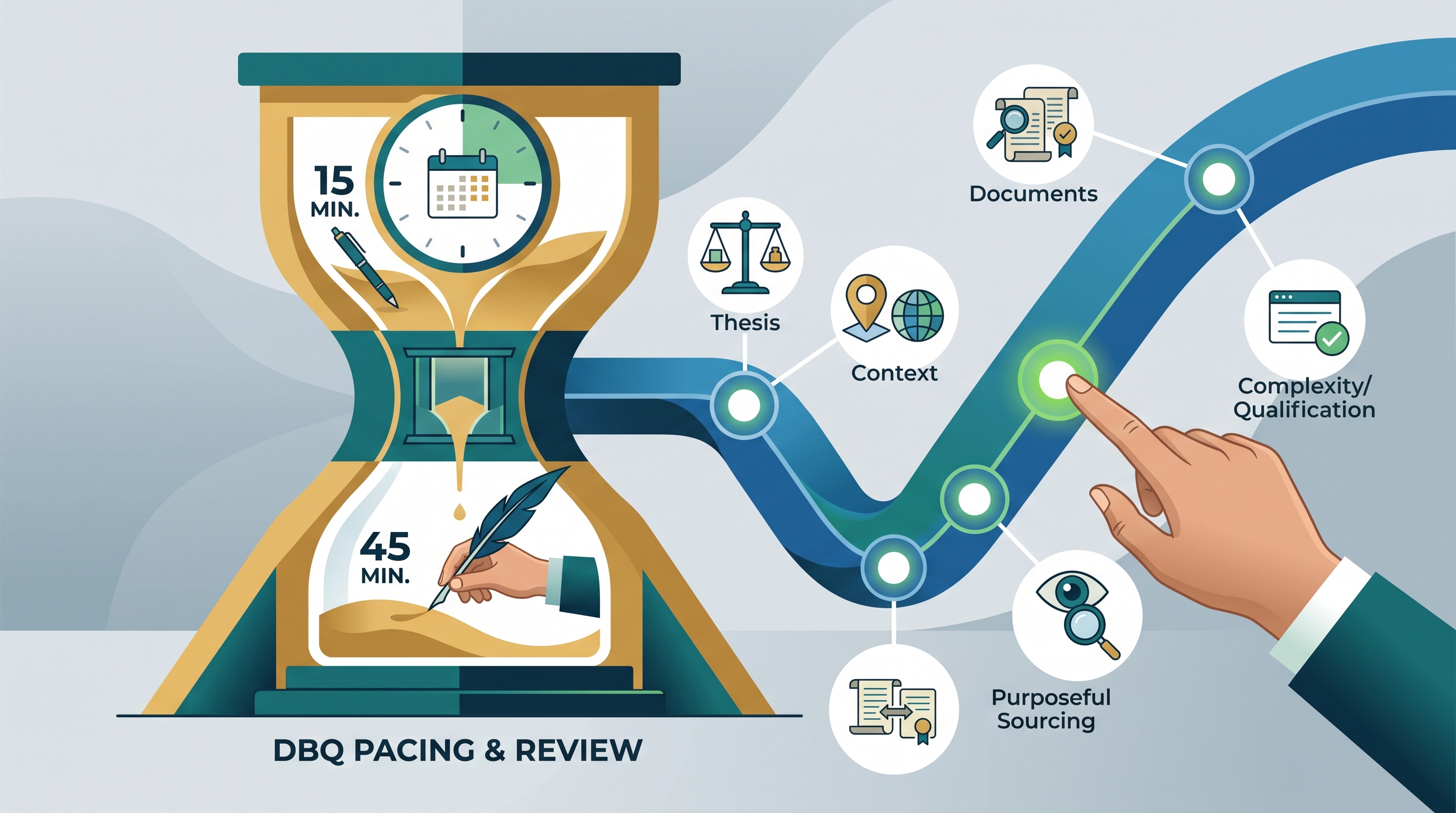
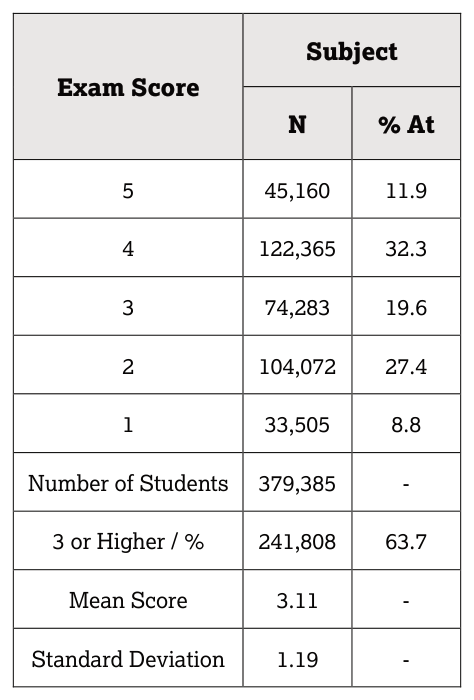
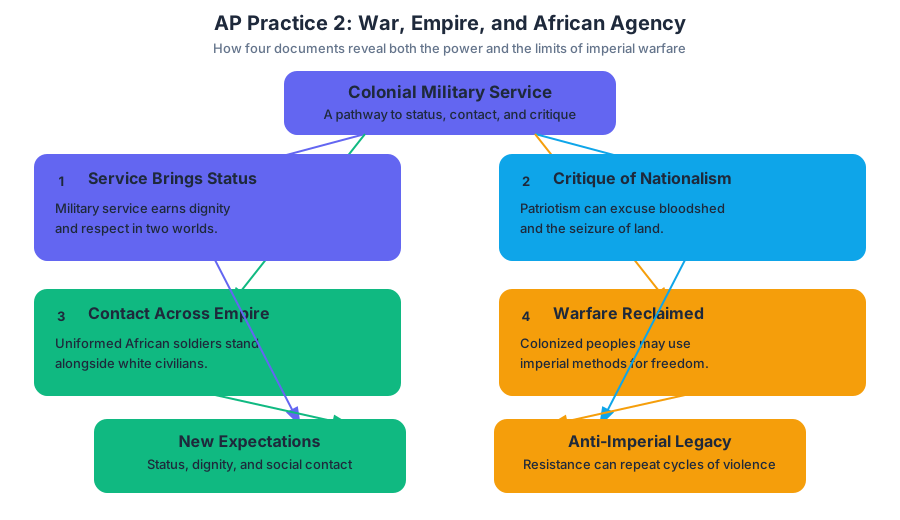
AP Practice 3
Industrialization gave European states new military and commercial tools, but those tools did not automatically produce complete control over China. Between 1839 and 1911, European powers used industrial advantages to reshape China’s economy, diplomacy, and territory, while Chinese officials and reformers responded…
AP Practice 3
Document-Based Question: Industrialization and Relations with China
Industrialization gave European states new military and commercial tools, but those tools did not automatically produce complete control over China. Between 1839 and 1911, European powers used industrial advantages to reshape China’s economy, diplomacy, and territory, while Chinese officials and reformers responded with resistance, selective adaptation, and attempts to strengthen the state.
Prompt: Evaluate the extent to which industrialization transformed relations between European powers and China in the period from 1839 to 1911.
Suggested timing: Spend approximately 15 minutes reading and planning, then 45 minutes writing. A strong response should develop a defensible thesis, establish historical context, use the documents as evidence, explain the significance of sourcing for at least three documents, add relevant evidence beyond the documents, and demonstrate a complex understanding of the historical development.
Historical situation
By 1839, Britain’s Industrial Revolution had produced steam-powered ships, mass-produced weapons, and expanding commercial networks. China, ruled by the Qing dynasty, remained a major economic and political power, but its government attempted to restrict foreign trade to controlled locations such as Guangzhou. British merchants responded to this limitation by selling opium from British-controlled India to Chinese consumers, creating both commercial profits and a serious social and political crisis.
Document set
| Document | Source and historical situation | Central idea |
|---|---|---|
| 1 | Commissioner Lin Zexu’s 1839 appeal to Queen Victoria | China condemns Britain’s opium trade as morally and politically destructive. |
| 2 | Treaty of Nanjing, 1842 | Britain gains commercial privileges, an indemnity, and control of Hong Kong after the First Opium War. |
| 3 | A British parliamentary defense of the war, 1840s | British leaders present the conflict as necessary to protect commerce and national honor. |
| 4 | A Qing official’s report on the Taiping Rebellion, 1850s | Foreign pressure and internal rebellion weaken Qing authority simultaneously. |
| 5 | A Japanese observation of China’s defeat by Japan, 1895 | China’s military weakness demonstrates the consequences of failing to modernize effectively. |
| 6 | A Chinese reformer’s argument for industrial and educational reform, 1890s | Some Chinese intellectuals advocate selective adoption of Western technology and institutions. |
| 7 | A description of the Boxer Uprising and foreign intervention, 1900 | Popular anti-foreign resistance confronts a coalition of industrial powers. |
How to read the documents
The documents do not merely provide facts; they reveal different perspectives on the same transformation. Lin Zexu emphasizes morality and Chinese sovereignty, while the British parliamentary defense emphasizes commerce and national power. The Treaty of Nanjing shows the concrete outcome of military conflict, whereas the reformer’s argument shows that Chinese responses were not limited to rejection.
A useful evidence chain is:
- Industrial capacity created unequal military power.
- Military victories produced unequal treaties and foreign privileges.
- Foreign pressure intensified internal Qing crises.
- Chinese responses ranged from resistance to reform.
- Industrialization transformed the relationship substantially, but did not eliminate Chinese agency or produce direct European colonization of all China.
Worked thesis and outline
Defensible thesis: Industrialization transformed European relations with China to a great extent by allowing European states to use superior weapons, steam transport, and global commercial networks to impose unequal treaties, expand foreign economic privileges, and intervene in Chinese affairs; however, the transformation was incomplete because Chinese officials resisted foreign demands, reformers selectively adopted industrial methods, and Qing institutions continued to govern most of China until the dynasty’s collapse in 1911.
This thesis earns the argument point because it makes a historically defensible claim, establishes a line of reasoning, and qualifies the extent of change. Its structure also creates three body sections: military and diplomatic change, economic and political consequences, and Chinese resistance and adaptation.
Model evidence reasoning
Military and diplomatic transformation: Documents 1, 2, and 3 show how industrialization changed the balance of power. Lin’s appeal demonstrates that Chinese officials viewed the opium trade as a threat to sovereignty, while the Treaty of Nanjing reveals that Britain converted military victory into concrete privileges. The British parliamentary defense is useful because its intended audience—lawmakers and the British public—encouraged the author to justify war as protection of commerce rather than describe it as imperial coercion.
Political and economic consequences: The Treaty of Nanjing transferred Hong Kong to Britain and opened additional Chinese ports to foreign trade. Document 4 can be connected to the Taiping Rebellion: Qing authorities faced internal rebellion while also confronting foreign military and economic pressure. This combination weakened the dynasty and made it more dependent on foreign loans, military expertise, and diplomatic concessions.
Resistance and adaptation: Documents 5, 6, and 7 demonstrate that Chinese responses were varied. The Japanese observation after 1895 highlights China’s military vulnerability, while the reformer argues that industrial technology and modern education could strengthen the state. The Boxer Uprising shows a different response: violent resistance to foreign influence. Together, these documents complicate the claim that industrialization simply “westernized” China.
Evidence beyond the documents
A response could add the Second Opium War, which led to the Treaty of Tianjin and expanded foreign access; the Sino-Japanese War of 1894–1895, which revealed China’s weakness against a recently modernized Japan; or the Self-Strengthening Movement, which attempted to adopt Western military technology while preserving Qing political traditions. The “spheres of influence” established by European powers and Japan also show that foreign control expanded without becoming a single unified colonial administration.
Rubric map
| Rubric criterion | What an examiner rewards | Where the model earns it |
|---|---|---|
| Thesis/claim | A defensible claim with a line of reasoning | Industrialization caused major change, but Chinese agency limited its extent. |
| Contextualization | Broader historical setting | Industrial Revolution, Qing trade restrictions, and the opium crisis. |
| Evidence from documents | Accurate use of at least four documents | Documents 1–7 are organized into analytical categories. |
| Evidence beyond documents | Specific relevant outside information | Second Opium War, Self-Strengthening Movement, and spheres of influence. |
| Sourcing and situation | Explains why sourcing matters for the argument | British parliamentary audience and Lin’s official position. |
| Complex understanding | Explains multiple perspectives, causes, or limits | Foreign domination is analyzed alongside resistance and selective reform. |
Misconception check
Misconception: “Industrialization caused Europeans to colonize all of China.” Industrialization produced coercive power and foreign privileges, but China was not governed as one European colony. European powers controlled ports, concessions, loans, and spheres of influence while the Qing government retained authority over much of the country.
Error-review routine
After writing, mark every document reference with D, every outside fact with O, every sourcing explanation with S, and every complexity move with C. If a paragraph has documents but no explanation of how they support the thesis, revise it from summary into reasoning: replace “Document 2 says Britain gained Hong Kong” with “The transfer of Hong Kong shows how industrial military power converted commercial conflict into territorial privilege.”
Retrieval check
In one sentence, explain why the best argument is not simply that industrialization “destroyed” Chinese power. A strong answer should mention both the unequal power created by industrial technology and the Chinese strategies of resistance, reform, and continued political control.
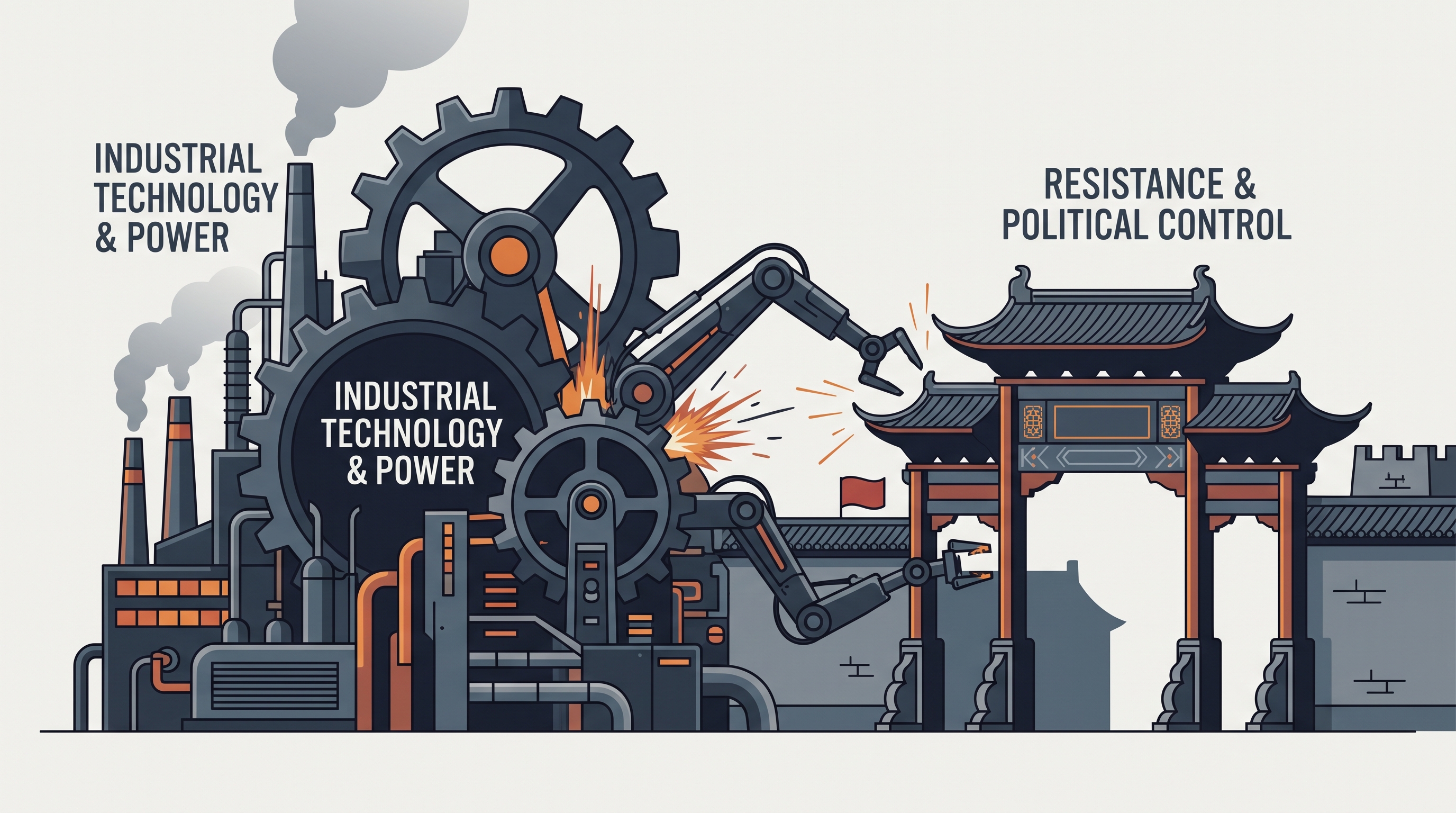
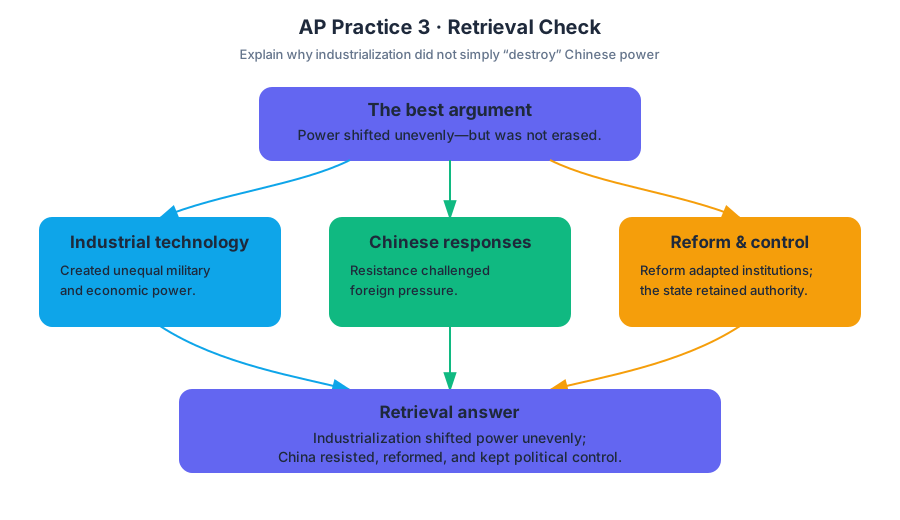
AP Practice 4
A Document-Based Question (DBQ) asks you to build a historical argument from a set of sources while adding relevant knowledge beyond those sources. The strongest response does not summarize six documents one by one; it uses documents as evidence inside an argument about change, causation, comparison, or continuity.
AP Practice 4
A Document-Based Question (DBQ) asks you to build a historical argument from a set of sources while adding relevant knowledge beyond those sources. The strongest response does not summarize six documents one by one; it uses documents as evidence inside an argument about change, causation, comparison, or continuity.
The task: connectivity and state power, c. 1200–c. 1750
Prompt: Evaluate the extent to which expanding networks of exchange strengthened states between c. 1200 and c. 1750.
This is an original, unofficial practice question. It draws on the course themes of Developments and Processes, Sourcing and Situation, Claims and Evidence in Sources, Contextualization, comparison, causation, continuity, and change, and Argumentation. The question also invites analysis through the PIECES themes: Politics, Innovation, Environment, Cultural Developments and Interactions, Economic Systems, and Social Interactions and Organization.
What the prompt is really asking
The key phrase is “the extent to which.” You must make a judgment, not merely list examples. A defensible argument might claim that exchange networks generally strengthened states by increasing tax revenue, improving military mobility, and expanding administrative reach—but that the same connectivity could also spread disease, empower rivals, or expose states to destabilizing pressures.
Before reading the sources, establish a time-and-place frame:
- Earlier context: Long-distance exchange existed before 1200, including the Silk Roads, Indian Ocean routes, and trans-Saharan trade.
- Period developments: Mongol rule connected much of Eurasia; cities and commercial communities expanded; states gained access to new technologies, luxury goods, and tax opportunities.
- Possible limitation: Connectivity did not automatically produce centralized government. Some states benefited from trade while others faced epidemics, rebellion, or competition.
Practice source set
| Document | Source and central idea | Most useful analytical move |
|---|---|---|
| 1 | A Yuan official describes improved roads, relay stations, and protected merchants across Mongol territories. | Explain how infrastructure increased imperial control. |
| 2 | A Swahili coastal merchant records the importance of monsoon winds and Indian Ocean ports. | Connect commerce to the power of port cities and rulers. |
| 3 | A Mamluk administrator discusses customs duties collected from caravans and ships. | Analyze trade as a fiscal resource. |
| 4 | A European traveler describes the wealth of West African rulers linked to gold and trans-Saharan commerce. | Use economic evidence to explain state authority. |
| 5 | A medical writer describes the devastation caused by plague moving along trade routes. | Qualify the argument: connectivity could weaken states. |
| 6 | A ruler’s decree restricts foreign merchants and religious activity in a major capital. | Analyze state attempts to manage cultural and economic exchange. |
The documents above are intentionally summarized rather than reproduced from historical texts. On an actual DBQ, identify what each source says, then ask: Who created it? For what purpose? In what historical situation? For which audience?
Worked planning: from documents to argument
A weak plan organizes by document order: “Document 1 says this; Document 2 says that.” A stronger plan organizes by reasoning:
- Fiscal and administrative strengthening: Documents 1, 3, and 4.
- Commercial and urban power: Document 2.
- Limits and dangers of connectivity: Documents 5 and 6.
A defensible thesis could read:
Expanding exchange networks strengthened states to a considerable extent between c. 1200 and c. 1750 because rulers used protected routes, port cities, and customs systems to collect revenue and extend authority; however, connectivity also created vulnerabilities, especially when disease spread or rulers struggled to control foreign merchants and cultural influences.
This thesis earns the argument point because it answers the extent question, establishes a line of reasoning, and includes a qualification. It does not simply repeat the prompt or claim that trade was “important.”
Worked paragraph with document analysis
States often converted commercial movement into administrative power. The Yuan official’s emphasis on roads and relay stations suggests that the Mongol government did more than permit trade: it built systems that made movement legible and controllable. Because the official served the ruling administration, his purpose was likely to present imperial infrastructure as evidence of effective government; this perspective makes the document especially useful for showing how the Mongols justified centralized rule. The Mamluk administrator’s attention to customs duties provides a different kind of evidence: rulers benefited financially when merchants crossed their territories. Together, the documents show a chain of causation—protected routes increased commercial activity, commercial activity generated taxes, and taxes supported government and military institutions.
Notice the difference between using evidence and merely mentioning it. The paragraph identifies Documents 1 and 3, explains their content, connects them to the claim, and analyzes the official’s point of view. That is the reasoning examiners reward.
Sourcing moves that matter
For at least two documents, explain why the author’s situation, purpose, audience, or point of view matters:
- Point of view: A Yuan official may emphasize order because his position depends on imperial administration.
- Purpose: A ruler’s decree restricting merchants may be designed to defend political authority rather than neutrally describe society.
- Historical situation: A plague account must be read in the context of intensified Afro-Eurasian connections and the movement of people, animals, and pathogens.
- Audience: A travel account intended for readers far from West Africa may exaggerate wealth or present unfamiliar rulers through European assumptions.
A common misconception is that sourcing means attaching a label: “This is biased.” Every historical source has a perspective. The required move is to explain how that perspective affects the evidence’s meaning or usefulness.
Evidence beyond the documents
Relevant outside evidence could include Mali’s taxation of trans-Saharan commerce, Mongol protection of Eurasian routes, the spread of the Black Death, or the growth of Indian Ocean port cities such as Kilwa. To count as outside evidence, the example must be specific and connected to the argument; writing “trade made countries rich” is too vague.
Scoring map and timing
| Rubric target | What your response must do |
|---|---|
| Thesis/claim | Make a defensible judgment answering the prompt. |
| Contextualization | Explain a broader development before, during, or around the period. |
| Evidence from documents | Use at least three documents to support the argument; stronger work uses at least four. |
| Evidence beyond documents | Supply one specific relevant historical example. |
| Sourcing | Explain how the situation, purpose, audience, or point of view matters for at least two documents. |
| Complexity | Show a meaningful qualification, contradiction, comparison, or interaction among factors. |
Use approximately 15 minutes to read and plan and 45 minutes to write. Spend the planning time grouping documents, writing a one-sentence thesis, selecting outside evidence, and marking two sourcing opportunities. During revision, ask whether every body paragraph proves part of the thesis rather than merely describing a source.
Error-review routine
After writing, classify each weakness:
- Content error: a date, place, ruler, or process is inaccurate.
- Evidence error: a document is mentioned but not tied to a claim.
- Reasoning error: the paragraph describes effects without explaining causation.
- Sourcing error: “biased” appears without explaining why the perspective matters.
- Argument error: the essay never answers how far the claim is true.
Retrieval check: If a response uses Documents 1, 3, 4, and 5 but never explains an author’s purpose or point of view, which rubric target is missing? What one sentence could add it?
Answer: The sourcing target is missing. A useful sentence would explain that the Yuan official’s administrative position encouraged him to portray imperial infrastructure as proof of effective Mongol rule.
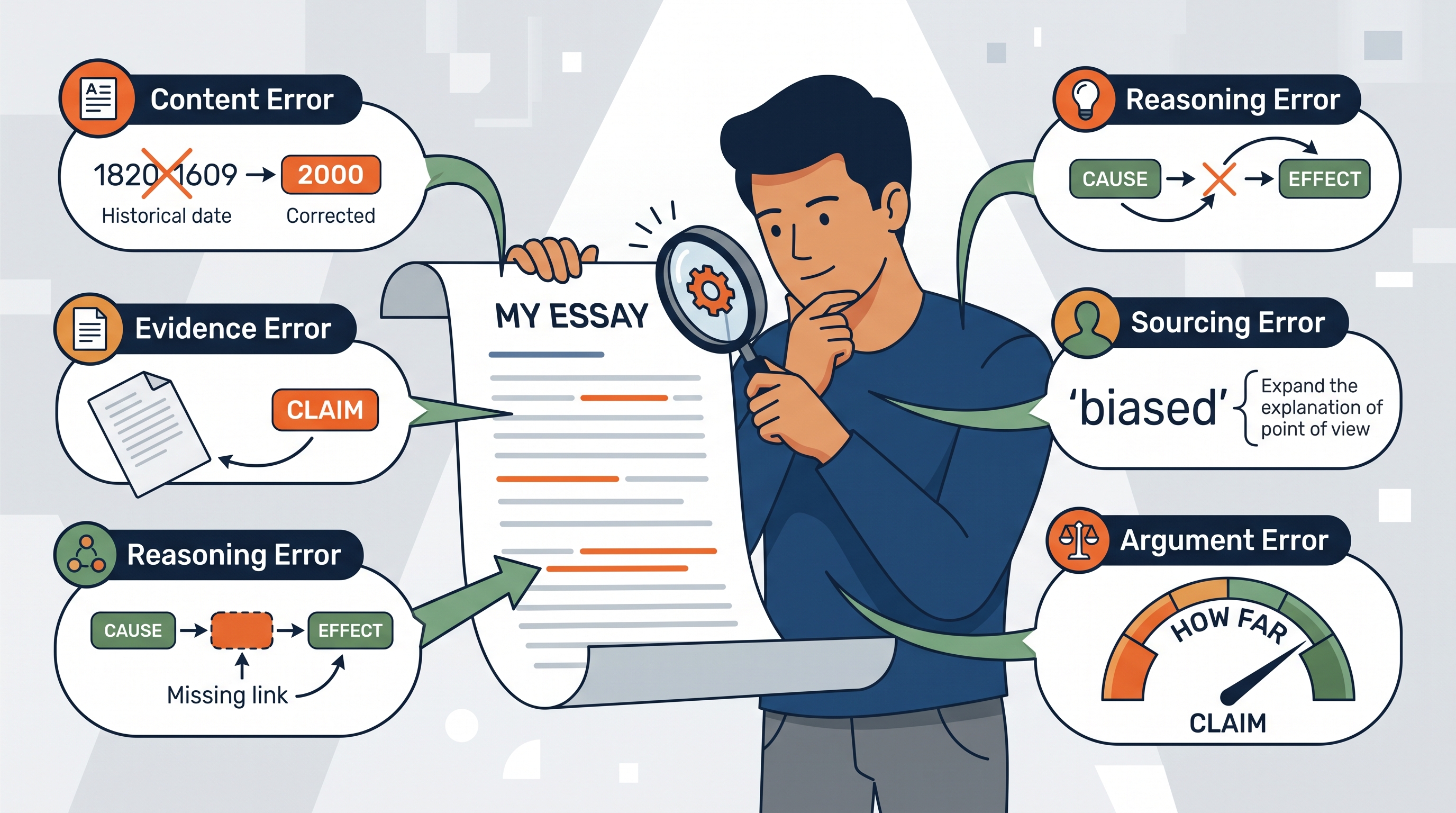
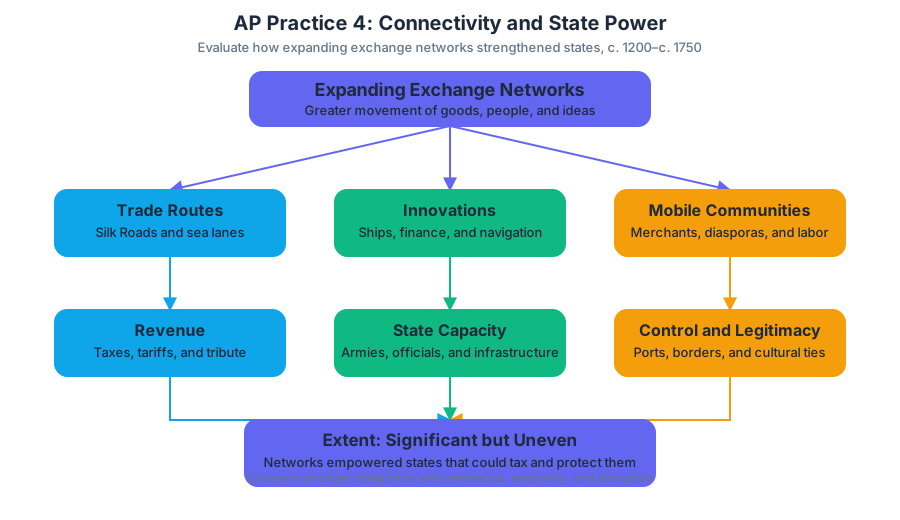
AP Practice 5
A strong Long Essay Question (LEQ) answer does more than remember facts: it turns historical knowledge into a defensible explanation. The writer must establish a historical setting, answer the prompt with a precise thesis, use specific evidence, and explain why the evidence proves the argument.
AP Practice 5
A strong Long Essay Question (LEQ) answer does more than remember facts: it turns historical knowledge into a defensible explanation. The writer must establish a historical setting, answer the prompt with a precise thesis, use specific evidence, and explain why the evidence proves the argument.
Task: Write a Causation LEQ
Prompt: Evaluate the extent to which industrialization caused changes in social structures from approximately 1750 to 1900.
This original, unofficial prompt asks for a judgment about causation—the relationship between factors that produce change and the resulting historical developments. “Evaluate the extent” means that a sophisticated response should not simply claim that industrialization changed society; it should explain how much it changed society, identify limits or continuities, and distinguish industrialization from other causes.
First move: Build a causal map
Before drafting, translate the prompt into a compact reasoning chain:
| Historical factor | Social change it encouraged | Limit or qualification |
|---|---|---|
| Factory production | Growth of an urban industrial working class | Workers remained divided by skill, gender, and region |
| Industrial wealth | Expansion of an industrial middle class | Aristocratic elites retained political and cultural influence |
| Urbanization | New neighborhoods, public-health reforms, and class tensions | Rural life continued for much of the population |
| Wage labor | Labor unions and socialist movements | Coercive labor systems and unequal gender roles persisted |
The map prevents a common error: treating “social structures” as a synonym for “working conditions.” Social structures include classes, gender relationships, political organization, urban communities, and systems of status. Industrialization affected all of these, but it did not erase every older hierarchy.
What the rubric rewards
The LEQ rubric rewards six distinct points. Each point requires a visible action in the essay rather than a collection of disconnected facts.
| Rubric criterion | What the reader must see |
|---|---|
| Thesis/Claim | A historically defensible claim that answers the prompt and establishes a line of reasoning |
| Contextualization | Broader developments that occurred before, during, or beyond the central period and help explain the issue |
| Evidence: one point | At least one specific historical example relevant to the topic |
| Evidence: two points | At least two specific examples used to support the argument |
| Analysis and Reasoning: one point | The argument consistently uses causation |
| Analysis and Reasoning: one point | The response demonstrates complex understanding through qualification, comparison, multiple causes, or continuity and change |
These criteria connect directly to the official historical thinking skills: Skill 1: Developments and Processes, Skill 4: Contextualization, Skill 5: Making connections through comparison, causation, continuity and change, and Skill 6: Argumentation. An LEQ does not reward name-dropping; it rewards using historical examples as evidence in a chain of reasoning.
Worked thesis and outline
A weak thesis would say: “Industrialization changed society in many ways.” It identifies a topic but makes no judgment, gives no categories, and does not establish an argument.
A stronger thesis is:
Industrialization substantially transformed social structures from 1750 to 1900 by creating a large urban working class, strengthening an industrial middle class, and encouraging labor-based political movements; however, its effects were limited because aristocratic privilege, gender inequality, and coercive labor systems continued alongside factory production.
This thesis earns the thesis point because it answers extent, identifies three lines of reasoning, and includes a qualification. It also previews the essay’s structure: working class, middle class and politics, then continuities and limits.
Contextualization: place industrialization in motion
A contextual paragraph might explain that before industrialization, most people worked in agriculture or household production, social status was strongly shaped by inherited privilege, and manufacturing often occurred through small workshops or the putting-out system, in which merchants supplied raw materials to rural households. Britain’s access to coal, capital, commercial markets, and agricultural improvements helped shift production toward mechanized factories.
The key is the connection: these earlier conditions explain why factory production represented a major change rather than appearing suddenly. Simply writing “the Enlightenment happened before industrialization” would not earn contextualization unless the response explains how political and economic ideas helped shape later debates about labor, property, or reform.
Evidence paragraphs: turn facts into proof
Body paragraph 1 — working-class formation: Factories concentrated wage laborers in cities such as Manchester. Long hours, dangerous machinery, crowded housing, and low wages produced shared class grievances. These conditions helped encourage trade unions, strikes, and socialist criticism, including Karl Marx’s argument that industrial society was divided between the bourgeoisie, who controlled capital, and the proletariat, who sold their labor.
The analysis must explain the mechanism: factories placed workers under common rules and schedules, concentrated them geographically, and made collective action easier. The evidence therefore demonstrates not merely poverty, but the creation of a new social class with shared political interests.
Body paragraph 2 — middle-class expansion: Industrialization increased the influence of factory owners, merchants, engineers, bankers, and professional managers. This industrial middle class gained wealth and pressed for political influence, as seen in British reforms that gradually expanded representation and in liberal arguments favoring property, contracts, and private enterprise.
Again, the causal explanation matters: industrial wealth challenged older status systems based primarily on land and aristocratic birth. Yet the argument should avoid claiming that aristocrats disappeared. In Britain and elsewhere, landed elites often adapted by investing in industry, entering government, or preserving social prestige.
Complexity: explain change and continuity together
A complex response recognizes that industrialization transformed some relationships while preserving others. Women entered factories and wage labor in large numbers, but industrial societies frequently paid women less and continued to define domestic responsibility as feminine. Likewise, legal abolition of slavery in much of the Atlantic world did not end exploitative labor: indentured labor, colonial labor systems, and racial hierarchies remained powerful.
Named misconception check — “Industrialization created equality”: Industrialization expanded mobility for some people, but it also created sharper class distinctions and preserved gender, racial, and imperial inequalities. The best answer argues that industrialization reorganized social structures; it did not produce a classless or fully merit-based society.
Timing and error review
Allow approximately 40 minutes for a timed LEQ: spend about 5 minutes planning, 30 minutes writing, and 5 minutes revising. During revision, underline the thesis, circle specific evidence, and draw an arrow from each example to the claim it proves.
Use this error-review routine after writing:
- Claim check: Does the thesis answer the exact verb and extent of the prompt?
- Context check: Did the broader background connect directly to the argument?
- Evidence check: Are at least two specific examples explained rather than merely listed?
- Reasoning check: Does every body paragraph show a causal mechanism?
- Complexity check: Did the essay qualify its claim or explain continuity alongside change?
If the essay names factories, Marx, unions, urbanization, or reform laws but never explains how those developments altered class power, political organization, or gender relations, it is descriptive rather than analytical. The examiner rewards the bridge between evidence and argument.
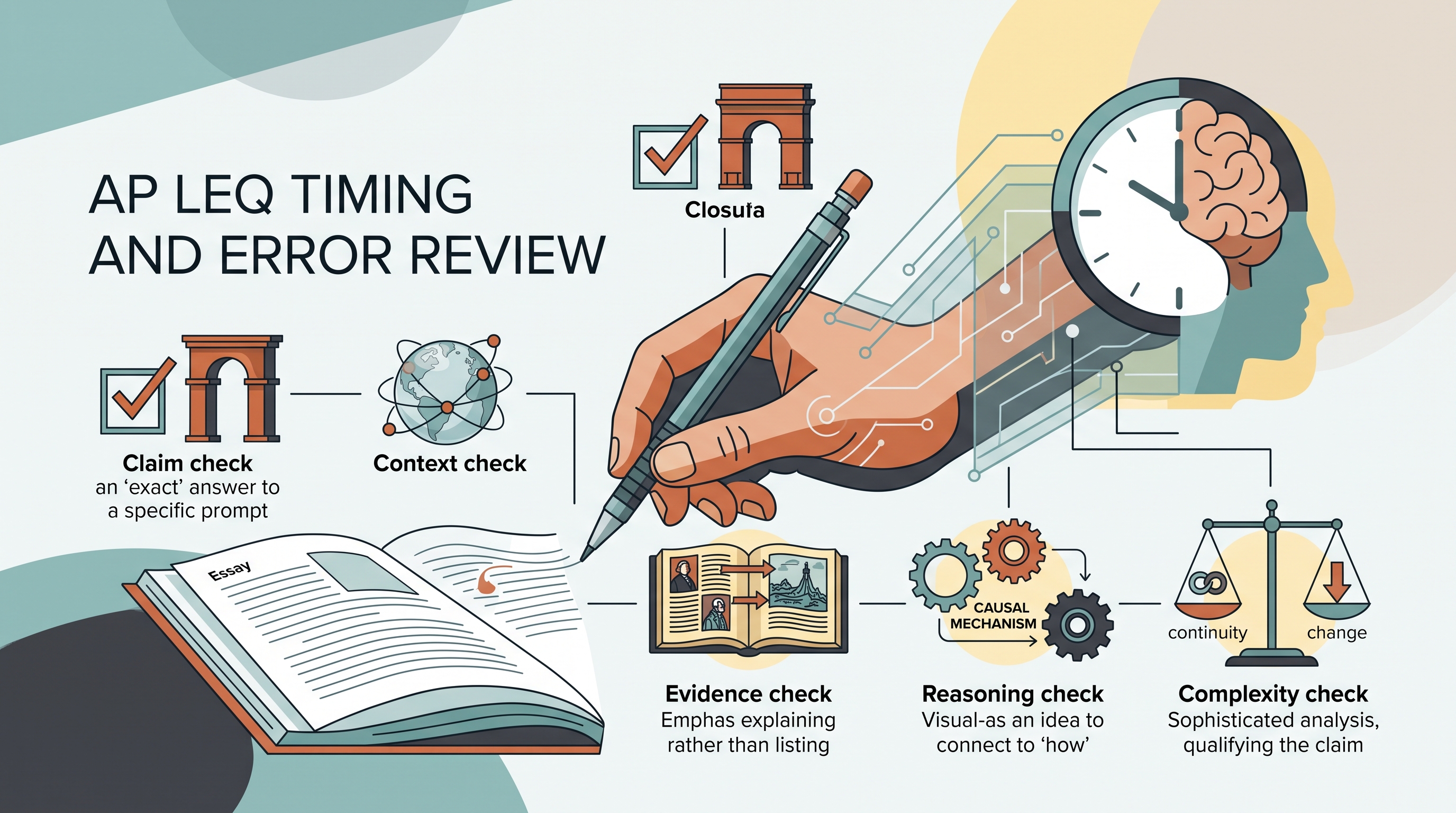
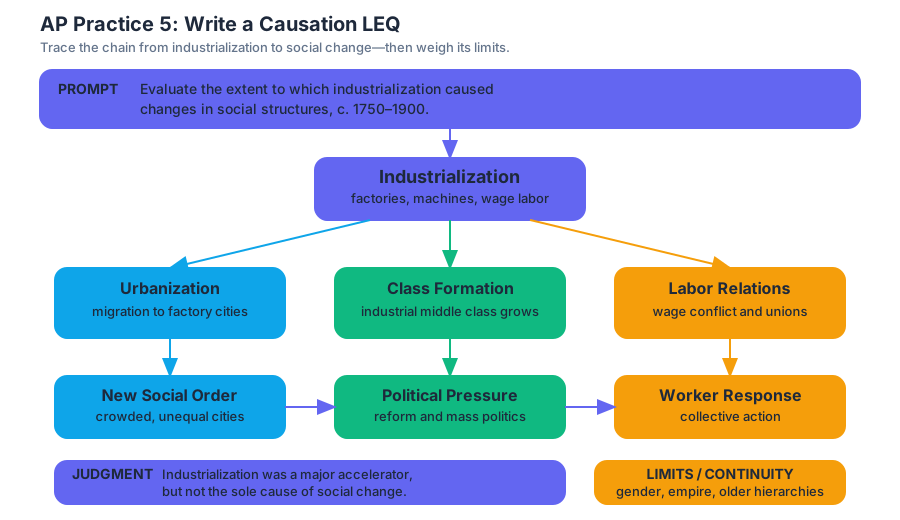
AP Practice 6
A strong Long Essay Question (LEQ) response does more than name events. It makes a defensible claim, places that claim in a wider historical setting, supports it with specific evidence, and explains why the evidence proves the argument.
AP Practice 6
Long Essay Question: Explaining Historical Change
A strong Long Essay Question (LEQ) response does more than name events. It makes a defensible claim, places that claim in a wider historical setting, supports it with specific evidence, and explains why the evidence proves the argument. The central historical move is turning a list of facts into a chain of reasoning.
Core principle: An LEQ is an argument about history, not a memory dump.
Original Practice Prompt
Evaluate the extent to which the expansion of long-distance exchange networks from c. 1200 to c. 1750 changed cultural interactions among societies in Afro-Eurasia.
You may use the Silk Roads, the Mongol Empire, the Indian Ocean network, the spread of Islam, the transmission of technologies, or other historically relevant examples.
What the prompt is really asking
The phrase “evaluate the extent” requires a qualified judgment. You must decide whether exchange networks caused major, moderate, or limited cultural change—and then explain both the changes and the continuities that justify your judgment.
| Prompt component | Question to ask yourself | Useful direction |
|---|---|---|
| Evaluate | What is your overall judgment? | Make a claim, not merely a description. |
| Extent | How large or important was the change? | Weigh change against continuity. |
| Changed | What was different by c. 1750? | Identify consequences over time. |
| Cultural interactions | How did societies influence one another? | Discuss religion, language, technology, art, or knowledge. |
| Afro-Eurasia | Where must your evidence come from? | Use connected regions rather than one society alone. |
Worked Reasoning
Step 1: Build the historical context
Before c. 1200, Afro-Eurasian societies already exchanged goods, beliefs, technologies, and knowledge through regional routes. The rise of powerful states, expanding cities, improved transportation, and organized commercial communities increased the scale and regularity of those contacts after c. 1200.
This contextualization works because it does not begin with an isolated event. It establishes a broader setting: cultural interaction existed before the period, but expanding networks made interaction more sustained and geographically extensive.
Step 2: Select evidence that proves a pattern
Use evidence from more than one network or region:
- Silk Roads: merchants, missionaries, and travelers connected East Asia, Central Asia, the Middle East, and Europe.
- Mongol Empire: political consolidation across much of Eurasia made travel and communication more secure in many areas.
- Indian Ocean network: merchants carried Islam, languages, artistic styles, and commercial practices between East Africa, the Middle East, South Asia, and Southeast Asia.
- Islam: existing Islamic traditions spread into new communities through trade and migration, while adapting to local cultures.
- Technology and knowledge: paper-making, navigational knowledge, scientific learning, and artistic forms circulated across cultural boundaries.
The evidence is strongest when paired with explanation. For example, saying “Islam spread through the Indian Ocean” identifies evidence; explaining that merchants and Muslim trading communities helped establish Islam in port cities, where it blended with local traditions, demonstrates historical reasoning.
Step 3: Construct a defensible thesis
Model thesis: Long-distance exchange networks changed cultural interactions across Afro-Eurasia to a substantial extent from c. 1200 to c. 1750 because they expanded the movement of religions, technologies, and artistic traditions across regions; however, the change was not complete because local societies adapted imported beliefs and practices rather than abandoning existing cultural identities.
This thesis earns its force from three features: it makes a clear judgment—substantial extent; it identifies categories of change—religion, technology, and art; and it includes a qualification—local continuity and adaptation.
A High-Scoring Response Blueprint
Paragraph 1: Context and thesis
Begin with preexisting regional exchange, then explain why networks expanded after c. 1200. End with the thesis so the reader knows the argument that the essay will prove.
Paragraph 2: Religious interaction
Argue that exchange networks transformed cultural interaction by spreading Islam beyond its original centers. Use the Indian Ocean and transregional merchants as evidence, then explain the mechanism: commercial communities created repeated contact, religious institutions supported those communities, and local societies incorporated Islam in regionally distinct ways.
Paragraph 3: Knowledge and technology
Explain that the movement of paper-making, navigational knowledge, and scientific learning connected intellectual traditions. The Mongol Empire can serve as a political condition that facilitated travel and communication across Eurasia, while the Silk Roads demonstrate the routes through which knowledge moved.
Paragraph 4: Continuity and qualification
Show that connectivity did not erase cultural difference. Local societies selected, adapted, and reinterpreted outside influences. This qualification turns the essay from a simple “exchange caused change” narrative into a more precise argument about selective cultural transformation.
Rubric-Aligned Scoring
| Criterion | What the examiner rewards | How this response addresses it |
|---|---|---|
| Thesis/Claim | A historically defensible answer to the prompt | Judges change as substantial but incomplete. |
| Contextualization | Relevant broader developments before, during, or after the period | Establishes earlier regional exchange and expanding networks. |
| Evidence | Specific examples used to support the argument | Uses the Silk Roads, Mongol Empire, Indian Ocean, Islam, and technology. |
| Analysis and Reasoning | Explains causation, comparison, continuity, or change | Shows how networks produced interaction and why local adaptation persisted. |
| Complexity | Demonstrates a nuanced understanding | Explains both transformation and continuity rather than treating cultural exchange as uniform. |
The key AP skills are Skill 1: Developments and Processes, because the response traces expanding networks over time; Skill 3: Claims and Evidence in Sources, when evidence is used to support an argument; Skill 4: Contextualization, through the wider Afro-Eurasian setting; Skill 5: Making connections through comparison, causation, continuity, and change, especially causation and continuity; and Skill 6: Argumentation, through the thesis and organized reasoning.
Timing and Error Review
Reserve approximately five minutes to plan, twenty-five minutes to write, and five minutes to revise. During revision, underline the thesis, circle specific evidence, and mark every sentence that explains how or why the evidence supports the claim.
Common misconception check
Misconception: “Cultural diffusion means one culture replaces another.”
Correction: Historical exchange usually produces adaptation. Islam, technologies, artistic traditions, and knowledge could spread widely while taking different forms in different societies.
Retrieval check
In one sentence, explain why “the Silk Roads spread ideas” is weaker than “the Silk Roads spread ideas through merchants, travelers, and political conditions that increased contact, producing cultural change while leaving room for local adaptation.” The second statement identifies evidence, explains a mechanism, and qualifies the historical result—the essential moves of an LEQ.
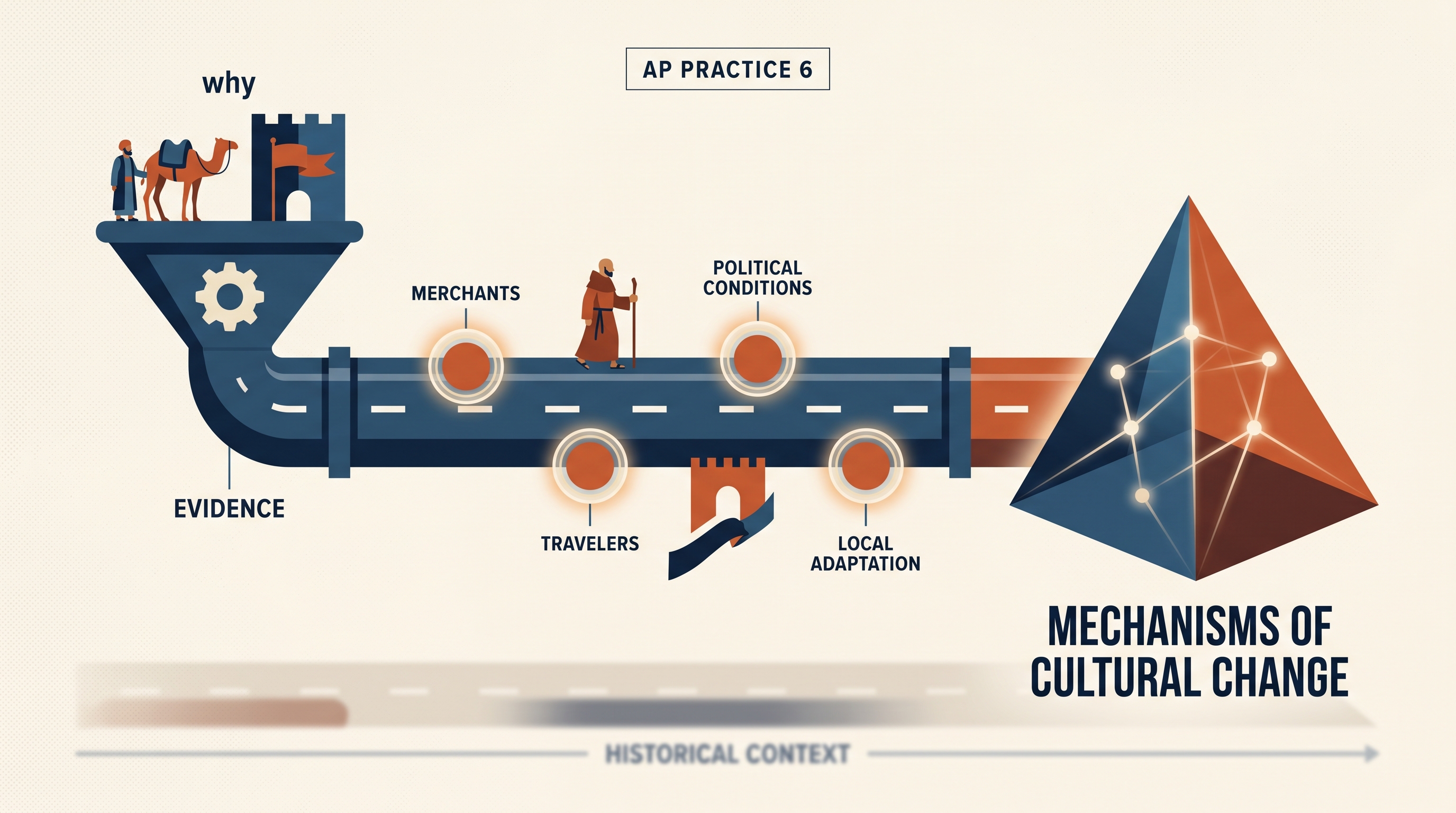
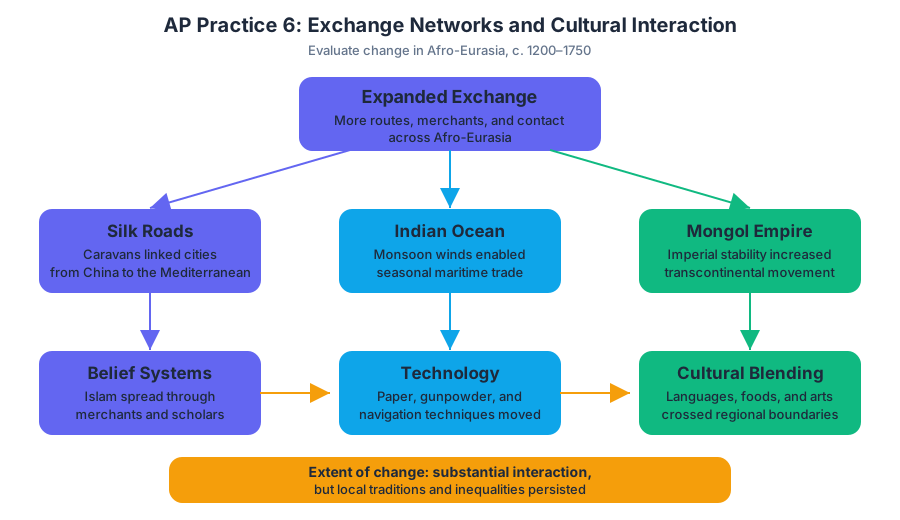
Source Materials
- AP World History: Modern Course and Exam Description
- AP World History: Modern Course and Exam Description Clarifications and Corrections
- AP World History: Modern Course Overview
- AP World History: Modern Course at a Glance
- AP World History: Modern Course at a Glance Poster
- AP World History: Modern
- AP World History: Modern
- AP World History: Modern Sample Syllabus 1
- NOTE: Partial versions of the free-response questions are provided to prepare students for more complex, full questions that they will encounter on the AP Exam.
- V.1 | 23 © 2019 College Board
- © 2019 College Board V.1 | 24
- Figure — AP World History: Modern Course at a Glance (p. 4)
Study AP World History: Modern with AI — Free on Lykke
Sign up for free to generate personalized flashcards, quizzes, and study guides from this course. Chat with an AI tutor that knows the material.
Get Started FreeView this course wiki on Lykke · Browse all public course wikis