From the free course AP World History: Modern on Lykke
5.7 Economic Developments and Innovations in the Industrial Age · 5.8 Reactions to the Industrial Economy from 1750 to 1900
Key concepts: Technological innovation and increased efficiency, comfort, and security · Diffusion of technology through cross-cultural interactions · Innovations in ship design and navigation, including the lateen sail and compass · Industrialization and the global nature of trade and production · Large-scale manufacturing and the production of consumer goods · Industrial capitalism and its social and economic effects · The emergence of new social classes, including the middle class · Government and organizational responses to industrial capitalism · Calls for social, economic, and cultural changes in industrial societies · The demand for factory raw materials and increased food supplies
Explain and apply 5.7 Economic Developments and Innovations in the Industrial Age · 5.8 Reactions to the Industrial Economy from 1750 to 1900.
5.7 Economic Developments and Innovations in the Industrial Age · 5.8 Reactions to the Industrial Economy from 1750 to 1900
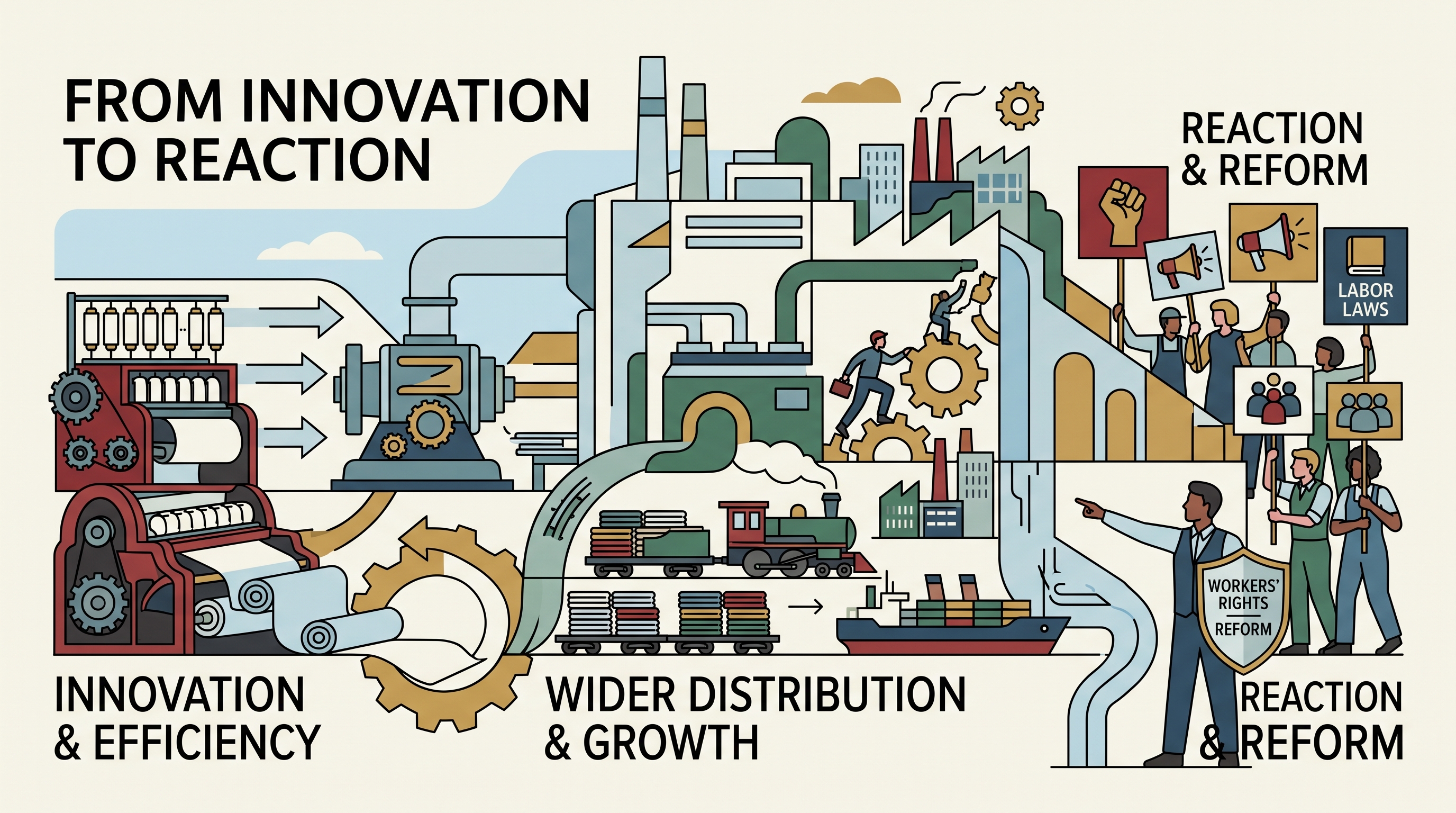
Industrialization transformed trade from a network of regional exchanges into a system of global production, in which factories depended on raw materials, workers, markets, banking, transportation, and food supplies spread across continents.
From shared technologies to global production
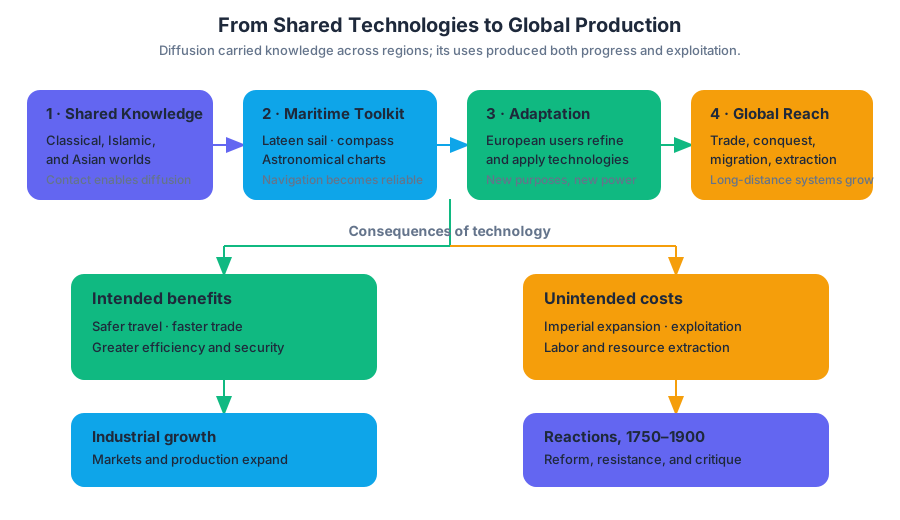
The lateen sail—a triangular sail that allowed ships to tack more effectively against the wind—and the compass, which helped sailors determine direction, were technologies shared through interactions among the Classical, Islamic, and Asian worlds. Astronomical charts also supported navigation. These innovations did not belong to one isolated civilization: cross-cultural contact carried knowledge across regions, where later users adapted it to new purposes.
This illustrates KC-4.1.II and KC-4.1.II.A: knowledge, scientific learning, and technology from the Classical, Islamic, and Asian worlds spread and facilitated European developments. The important historical process is diffusion: an innovation moves through interaction, but its consequences depend on how societies apply it.
Technological development often produced both intended and unintended consequences. Better ships and navigation increased efficiency, comfort, and security for merchants and travelers, while also making longer-distance trade, conquest, migration, and exploitation more practical.
Misconception check — “Technology automatically causes progress.” A technology can solve one problem while creating another. Improved navigation might make travel safer and trade faster, yet the same capacity could support imperial expansion or intensify the extraction of labor and resources.
Industrial capitalism and the global economy
Industrial capitalism is an economic system organized around privately owned factories, investment for profit, wage labor, and large-scale production. Industrialization increased the demand for food and consumer goods, intensifying patterns of trade and travel. Factories needed raw materials such as cotton, rubber, minerals, and other agricultural products; growing urban populations also required expanded food supplies.
The global nature of trade and production contributed to the proliferation of large-scale manufacturing, meaning production carried out in factories using substantial capital, specialized machinery, and a concentrated workforce. Production could therefore be separated from consumption: raw cotton might come from one region, be processed in another, financed through banks in a third, and sold in markets around the world.
The movement from mercantilism toward free-trade policies and laissez-faire capitalism—the idea that governments should interfere relatively little in economic exchange—was influenced by Adam Smith. KC-5.1.III.A identifies this shift, while KC-5.1.III.B connects global trade and production to transnational businesses and new banking and financial practices.
HSBC and Unilever illustrate this expanding commercial world. HSBC developed as an international banking institution connected to Asian and global trade, while Unilever became associated with multinational production and the worldwide sale of consumer goods. These examples show that industrial capitalism required more than factories: it also depended on finance, transportation, marketing, and international business organization.
Why industrialization provoked resistance
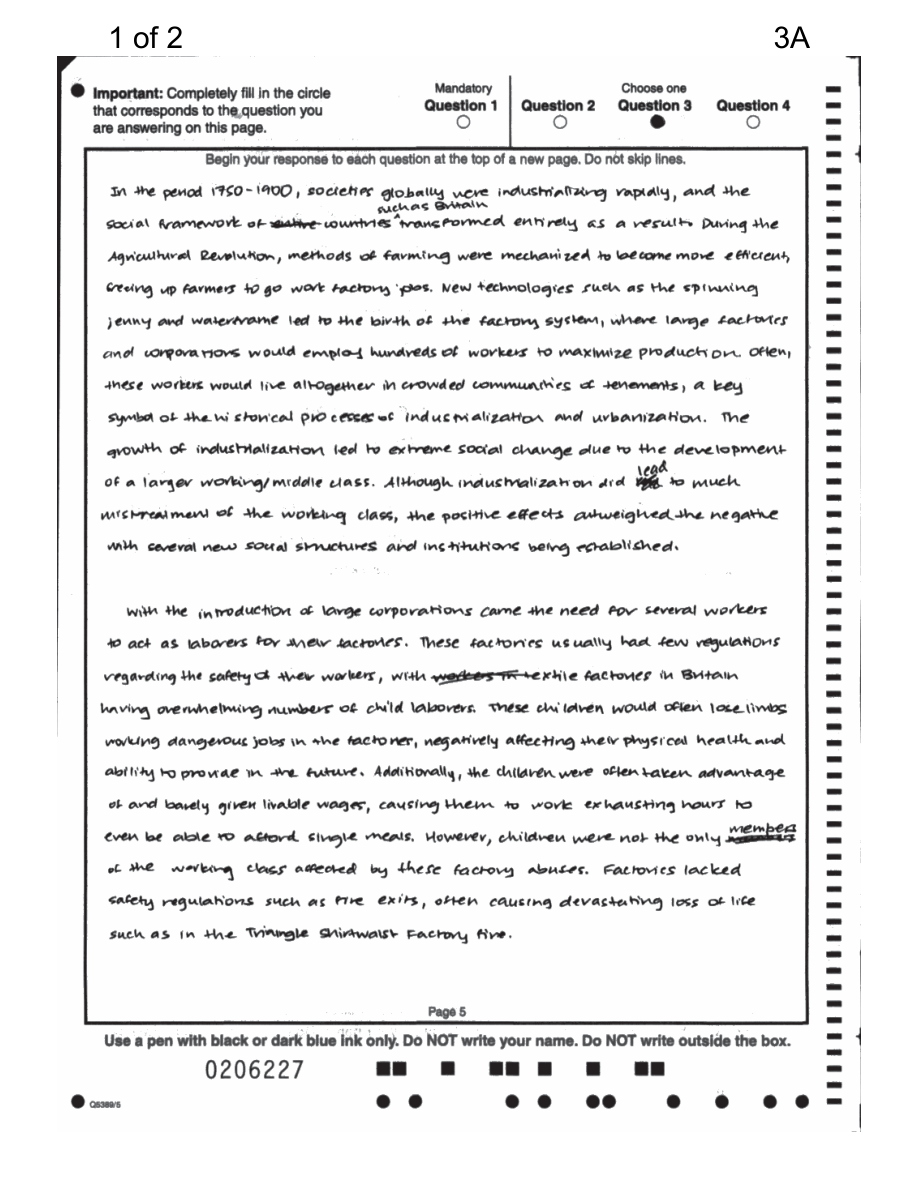
Industrial capitalism made manufactured goods more available, affordable, and varied, and it raised living standards for some people. However, its benefits were uneven. Factory workers often faced low wages, long hours, dangerous conditions, and insecure employment, while owners and investors accumulated wealth.
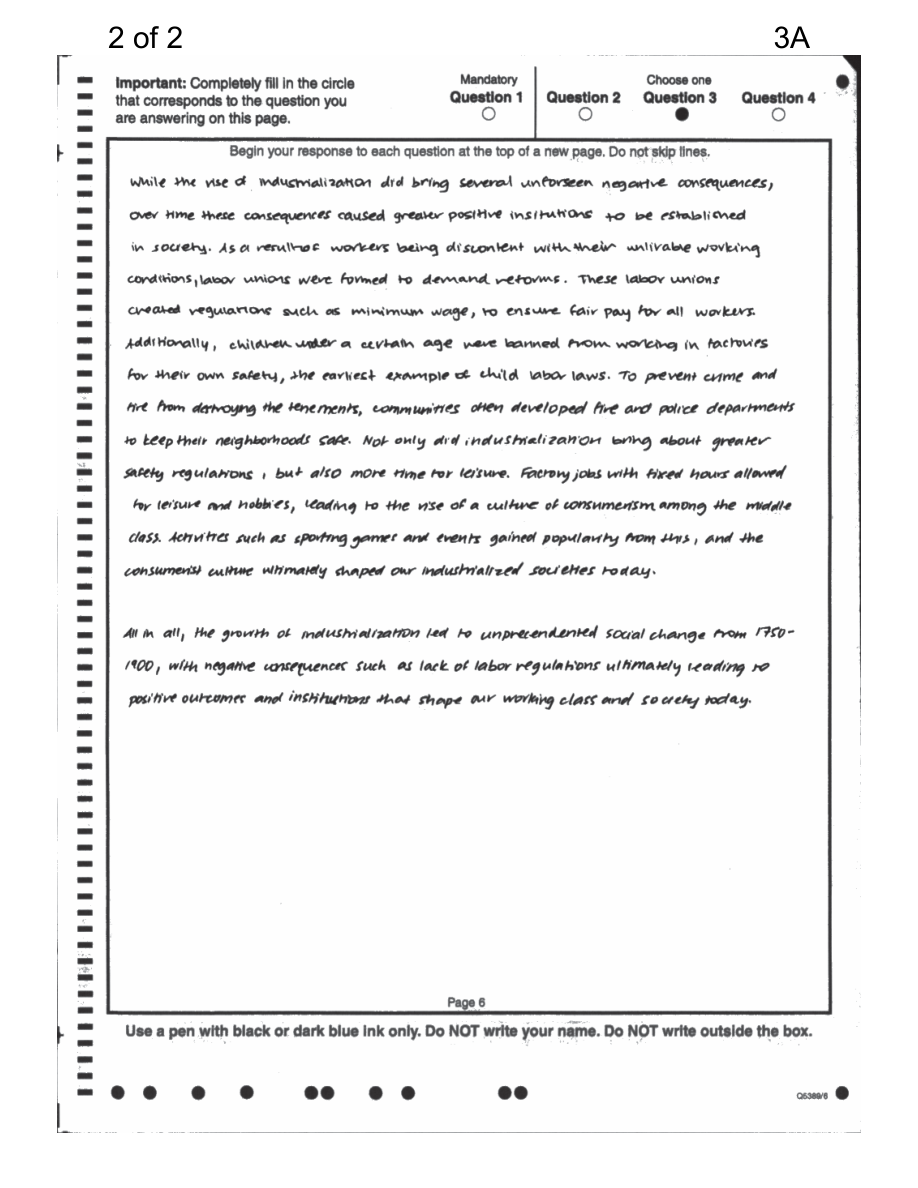
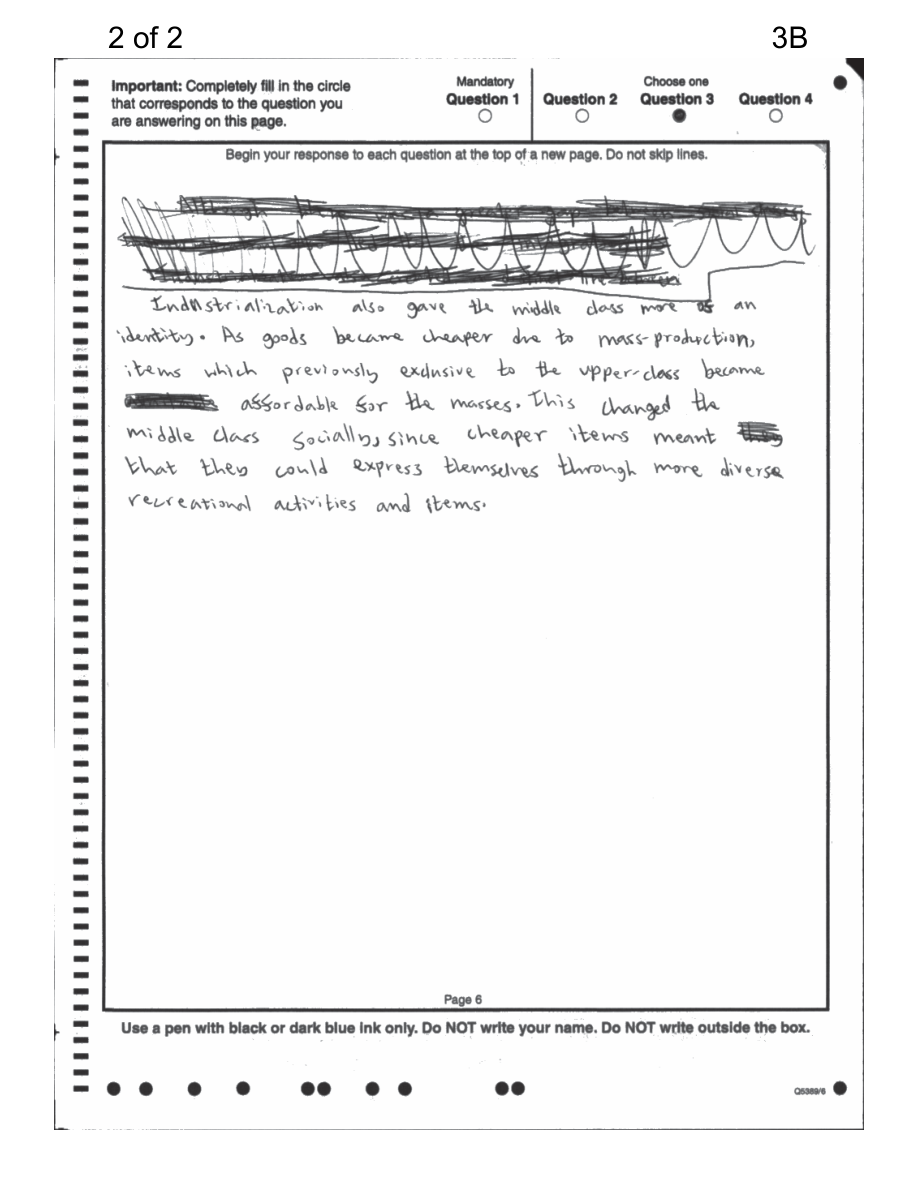
Industrialization also contributed to the emergence of new social classes, especially an expanding middle class of merchants, professionals, managers, and business owners. At the same time, wage labor created a large industrial working class. These economic divisions prompted calls for reform, including labor unions, workplace regulation, social welfare measures, and alternative economic ideologies such as socialism and communism.
Governments and organizations responded by creating social, economic, and cultural institutions. Banks helped mobilize investment; corporations organized production across borders; labor organizations represented workers; reform movements challenged poverty and unsafe workplaces. Industrial society therefore generated both institutions that strengthened capitalism and movements that criticized its consequences.
Environmental costs of industrial demand
Industrial production linked distant environments to factory consumption. The Amazon and Congo basins, for example, became connected to industrial demands for raw materials and food supplies. Forests, mines, plantations, and river systems were increasingly treated as sources of commodities for global markets.
The causal chain is crucial: industrial factories → rising demand for raw materials and food → expanded extraction and production → environmental and social disruption. A strong historical explanation does not merely list inventions or factories; it shows how technological and economic changes altered prices, labor, trade, class relations, and environments.
Worked example: from innovation to social change
Suppose a new manufacturing process allows textiles to be produced more quickly. First, factory efficiency increases. Second, cloth becomes cheaper and more widely available. Third, demand for cotton and factory labor grows. Fourth, trade networks expand, cities attract workers, and factory owners gain wealth. Finally, unsafe conditions and unequal wages encourage workers and reformers to organize.
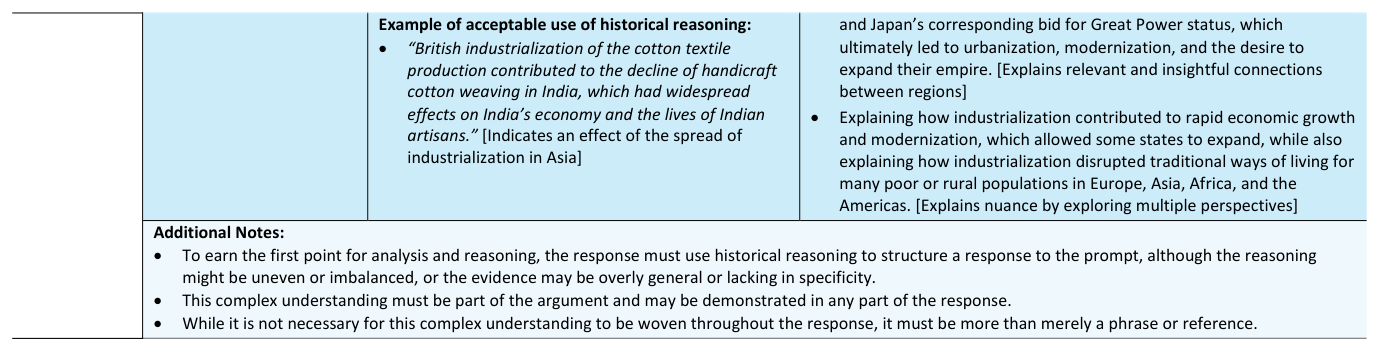
This chain demonstrates the reasoning expected under Unit 5: Learning Objective G and Unit 5: Learning Objective H: connect economic developments to their broader social effects and explain how industrial capitalism generated reactions and institutional responses. The key is not naming an invention; it is explaining its long-term economic impact.
Retrieval check: Why did industrialization increase both global trade and demands for reform? A complete answer should connect factory production to the need for raw materials, food, labor, and consumers—and then connect unequal industrial conditions to labor organizations, reform movements, and new economic ideologies.


Source Materials
- AP World History: Modern Course and Exam Description
- AP World History: Modern Course and Exam Description Clarifications and Corrections
- AP World History: Modern Course Overview
- AP World History: Modern Course at a Glance
- AP World History: Modern Course at a Glance Poster
- AP World History: Modern
- AP World History: Modern
- AP World History: Modern Sample Syllabus 1
- Figure — Sample Responses - LEQ 3 - Set 1 (p. 6)
- Figure — Sample Responses - LEQ 3 - Set 1 (p. 8)
- Figure — Sample Responses - LEQ 3 - Set 1 (p. 9)
- Figure — Sample Responses - LEQ 3 - Set 1 (p. 10)