From the free course AP World History: Modern on Lykke
5.1 The Enlightenment · 5.2 Nationalism and Revolutions from 1750 to 1900
Key concepts: Enlightenment thought · Nationalism · Revolutions and rebellions from 1750 to 1900 · Democratic ideals · Questioning established traditions · Commonality based on language, religion, social customs, and territory · Government use of nationalism to foster unity · Colonial resistance in the Americas · Causes and effects of revolutions · Historical development of states and empires
Between approximately 1750 and 1900, political authority faced a powerful double challenge: people questioned why governments should rule, and they increasingly asked who belonged to the political community.
5.1 The Enlightenment · 5.2 Nationalism and Revolutions from 1750 to 1900
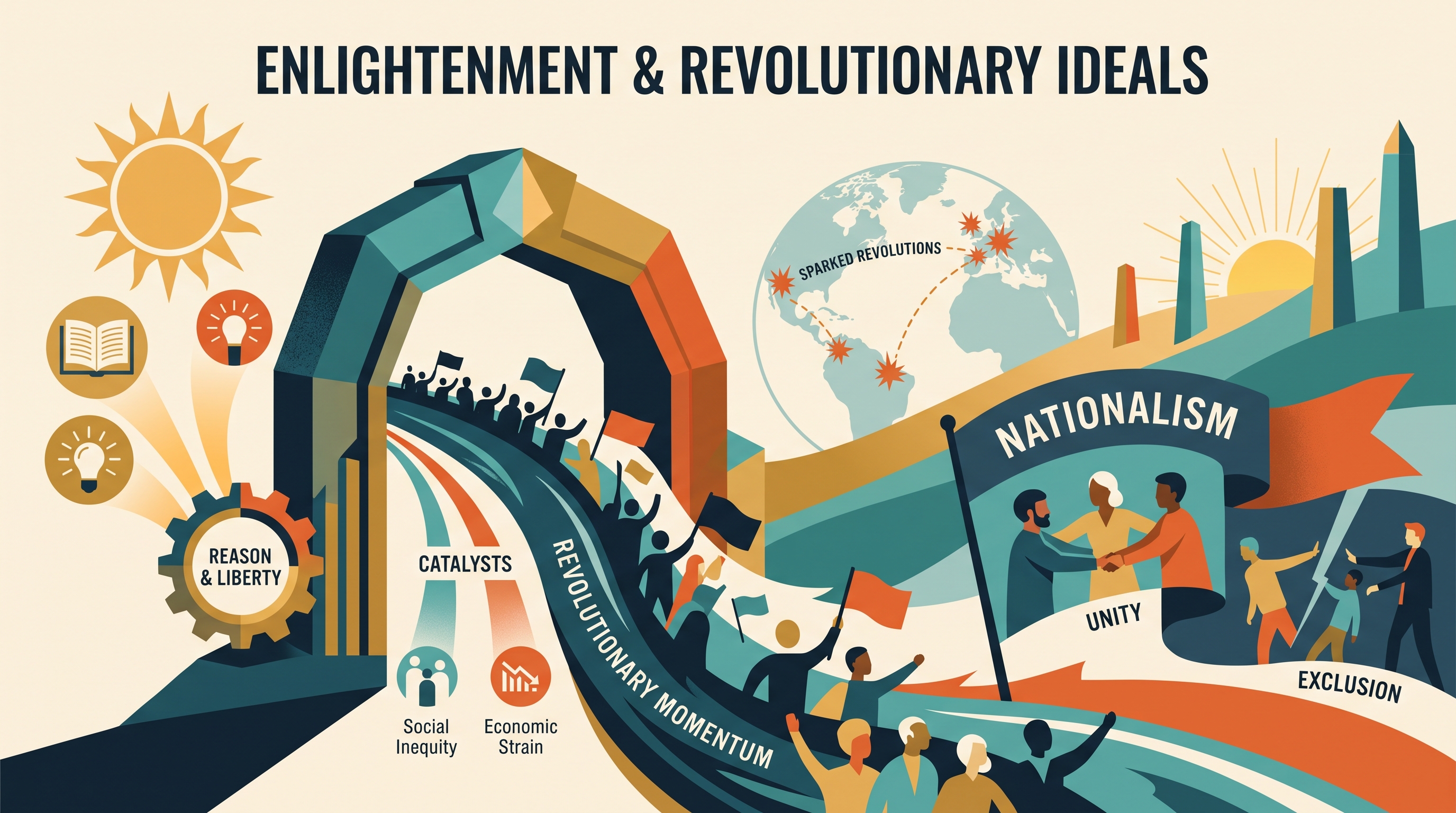
Between approximately 1750 and 1900, political authority faced a powerful double challenge: people questioned why governments should rule, and they increasingly asked who belonged to the political community. Enlightenment thought supplied arguments about reason, rights, and legitimate government; nationalism supplied a sense of collective identity based on language, religion, social customs, and territory. Together, these forces helped produce an intense period of revolutions and rebellions against existing governments.
Learning Objective — Unit 5: Learning Objective C: Explain causes and effects of the various revolutions in the period from 1750 to 1900.
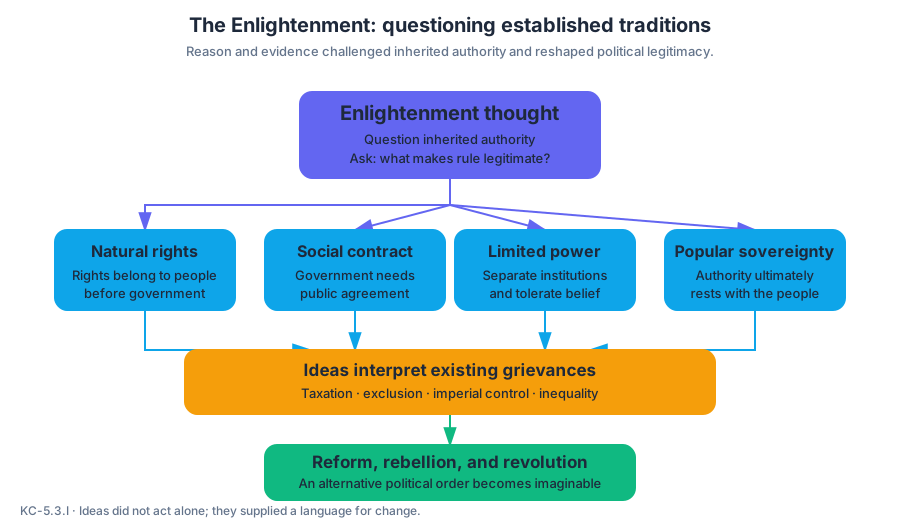
The Enlightenment: questioning established traditions
The Enlightenment was an intellectual movement that applied reason and evidence to questions traditionally answered by inherited authority. Enlightenment thinkers questioned established traditions in government, religion, society, and law. Their central pressure point was legitimacy: Should a monarch, church, or social hierarchy be obeyed simply because it had existed for a long time?
Enlightenment arguments often included natural rights, the social contract, religious toleration, and limits on arbitrary government. John Locke argued that people possessed rights that governments should protect; Montesquieu advocated separating governmental powers; and Jean-Jacques Rousseau emphasized popular sovereignty—the idea that political authority ultimately rests with the people. These arguments did not automatically create equal societies, but they gave critics of monarchist and imperial rule a language for demanding reform.
KC-5.3.I: The rise and diffusion of Enlightenment thought that questioned established traditions in all areas of life often preceded revolutions and rebellions against existing governments. The key relationship is not “ideas caused every revolution by themselves.” Rather, ideas helped people interpret existing grievances—taxation, political exclusion, imperial control, or social inequality—and imagine an alternative political order.
From political discontent to revolution
A revolution is a rapid and substantial transformation of political or social order. A rebellion is organized resistance against authority, which may or may not create a new state. During this period, colonial subjects in the Americas led rebellions inspired partly by democratic ideals. The American Revolution challenged British imperial rule, while the Haitian Revolution combined anticolonial resistance with a direct challenge to racial slavery. In Spanish America, independence movements weakened Iberian imperial control and produced new states.
The causes of revolutions usually operated together:
- Political causes: monarchist or imperial governments restricted representation and participation.
- Economic causes: taxation, unequal trade arrangements, debt, and food insecurity intensified discontent.
- Ideological causes: Enlightenment ideas made natural rights and popular sovereignty appear politically legitimate.
- Social causes: groups excluded from power sought recognition, autonomy, or equality.
The effects were equally uneven. Revolutions could establish republics, weaken empires, and inspire new nation-states, while still preserving slavery, racial hierarchy, gender inequality, or elite power. This is a crucial AP distinction: a revolution may produce major political change without creating social equality for everyone.
Worked example: tracing an ideological cause
Consider a colonial society ruled by a distant empire. Local elites resent imperial taxes and restrictions; merchants oppose regulated trade; and political thinkers circulate arguments about rights and representation. Enlightenment ideas do not create every grievance, but they transform the argument from “this policy is inconvenient” into “this government violates legitimate political rights.” Rebellion can then claim a universal principle—self-government—even when many revolutionaries limit that principle to property-owning men.
Reasoning chain: imperial rule and economic restrictions → political discontent → Enlightenment language of rights and representation → rebellion → creation of a new government. The same chain can produce different outcomes depending on the population mobilized and the institutions available afterward.
Nationalism and the making of unity
Nationalism is the belief that people who share a common identity should possess political loyalty, autonomy, or their own state. KC-5.3.II.i identifies nationalism as a major force shaping the historical development of states and empires. KC-5.3.II.ii emphasizes that commonality could be based on language, religion, social customs, and territory—and that governments sometimes harnessed it to foster unity.
Nationalism could unite people against an empire, as in independence movements, or strengthen an existing state by encouraging citizens to identify with a common homeland. It could also exclude minorities whose language, religion, or customs differed from the dominant national identity. Thus nationalism was both a force for self-determination and a tool governments could use to consolidate power.
Comparison: Enlightenment and nationalism
Enlightenment thought primarily asked, What makes government legitimate? Nationalism primarily asked, Who constitutes the political community? They often reinforced one another: a national community could demand popular government, while democratic ideals could justify national independence. Yet they were not identical. A nationalist movement could seek an independent monarchy, and a government could invoke national unity while limiting democratic participation.
KC-5.3: The eighteenth century marked the beginning of an intense period of revolution and rebellion against existing governments, leading to the establishment of new nation-states around the world. KC-5.3.IV.A.i connects discontent with monarchist and imperial rule to new systems of government and ideologies, including democracy and nineteenth-century liberalism.
AP historical-thinking skills in this topic
- Skill 1: Developments and Processes: identify how Enlightenment ideas and nationalism developed over time and shaped revolutions.
- Skill 2: Sourcing and Situation: ask how an author’s position, purpose, audience, and historical situation affect arguments about rights or national identity.
- Skill 3: Claims and Evidence in Sources: use a specific political document or revolutionary statement as evidence for a claim about ideology.
- Skill 4: Contextualization: connect revolutions to wider monarchist, imperial, economic, and social conditions.
- Skill 5: Making Connections: compare causes and effects across the American, Haitian, French, and Latin American revolutions.
- Skill 6: Argumentation: defend an argument about the extent to which Enlightenment thought or nationalism produced political change.
Misconception check
Misconception: “Enlightenment ideas immediately created democratic equality.” In reality, revolutionary language could be universal while political rights remained restricted by gender, race, class, or property. Always separate a revolution’s ideals, its institutional changes, and the people who actually benefited.
Retrieval check
Explain, in two steps, how Enlightenment thought could contribute to revolution without being the only cause. Then identify one way nationalism could promote unity and one way it could produce exclusion.
Source Materials
- AP World History: Modern Course and Exam Description
- AP World History: Modern Course and Exam Description Clarifications and Corrections
- AP World History: Modern Course Overview
- AP World History: Modern Course at a Glance
- AP World History: Modern Course at a Glance Poster
- AP World History: Modern
- AP World History: Modern
- AP World History: Modern Sample Syllabus 1
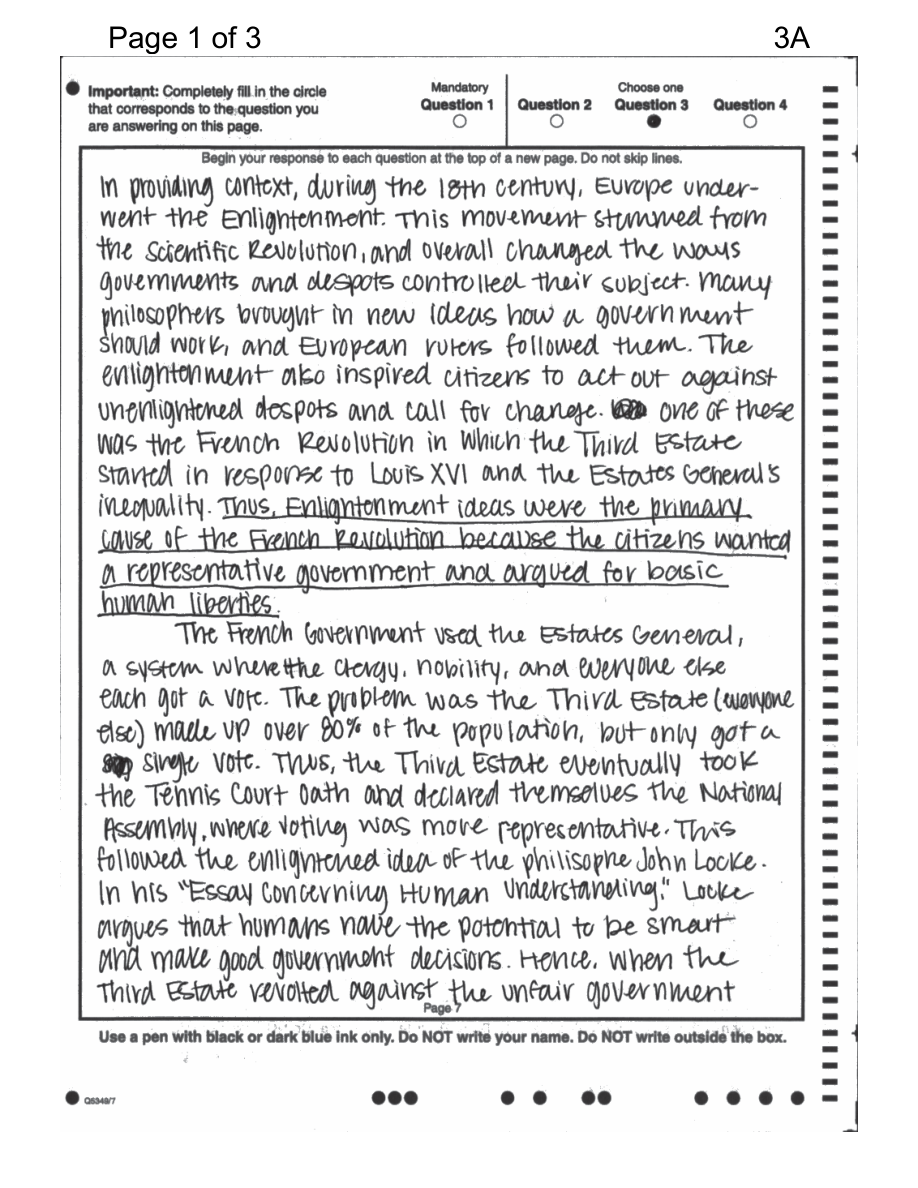
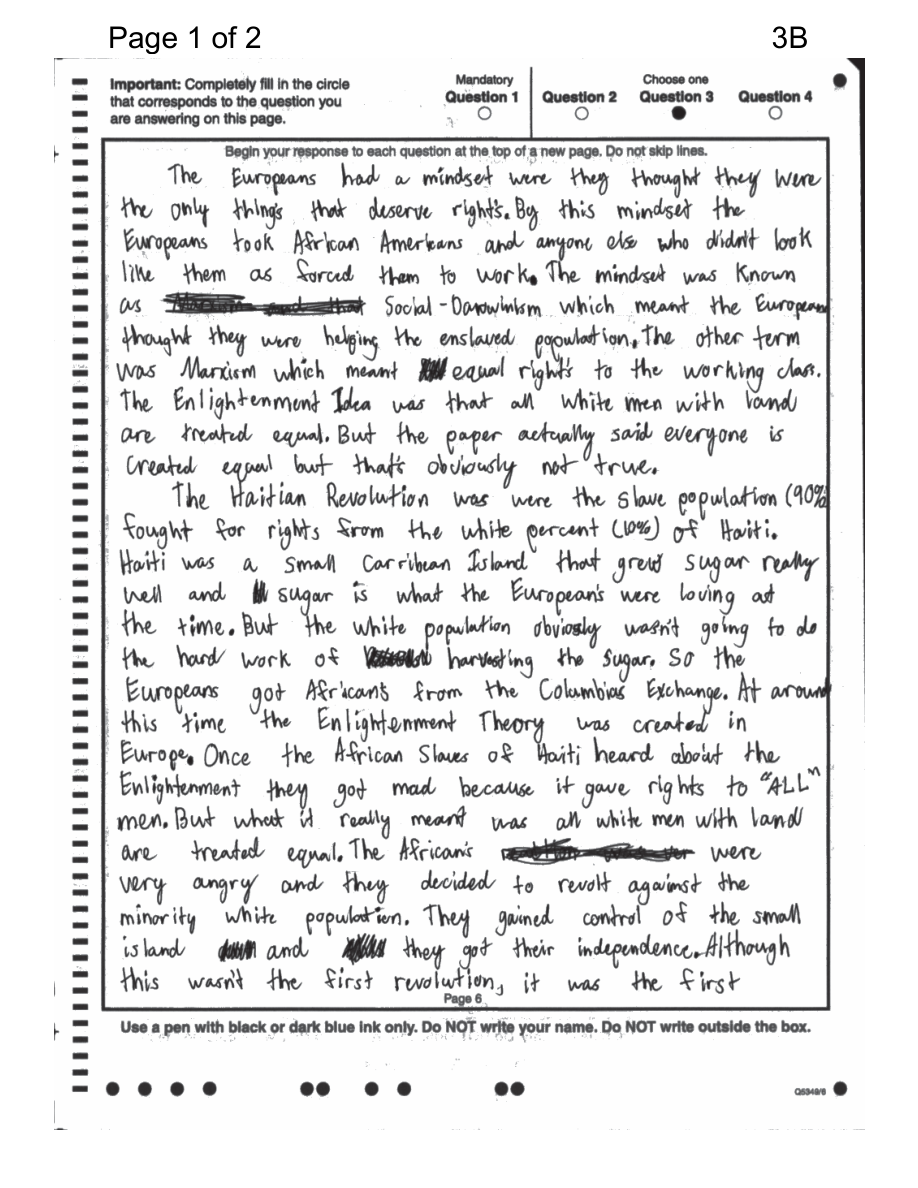
- Figure — Sample Responses - LEQ 3 - Set 2 (p. 7)
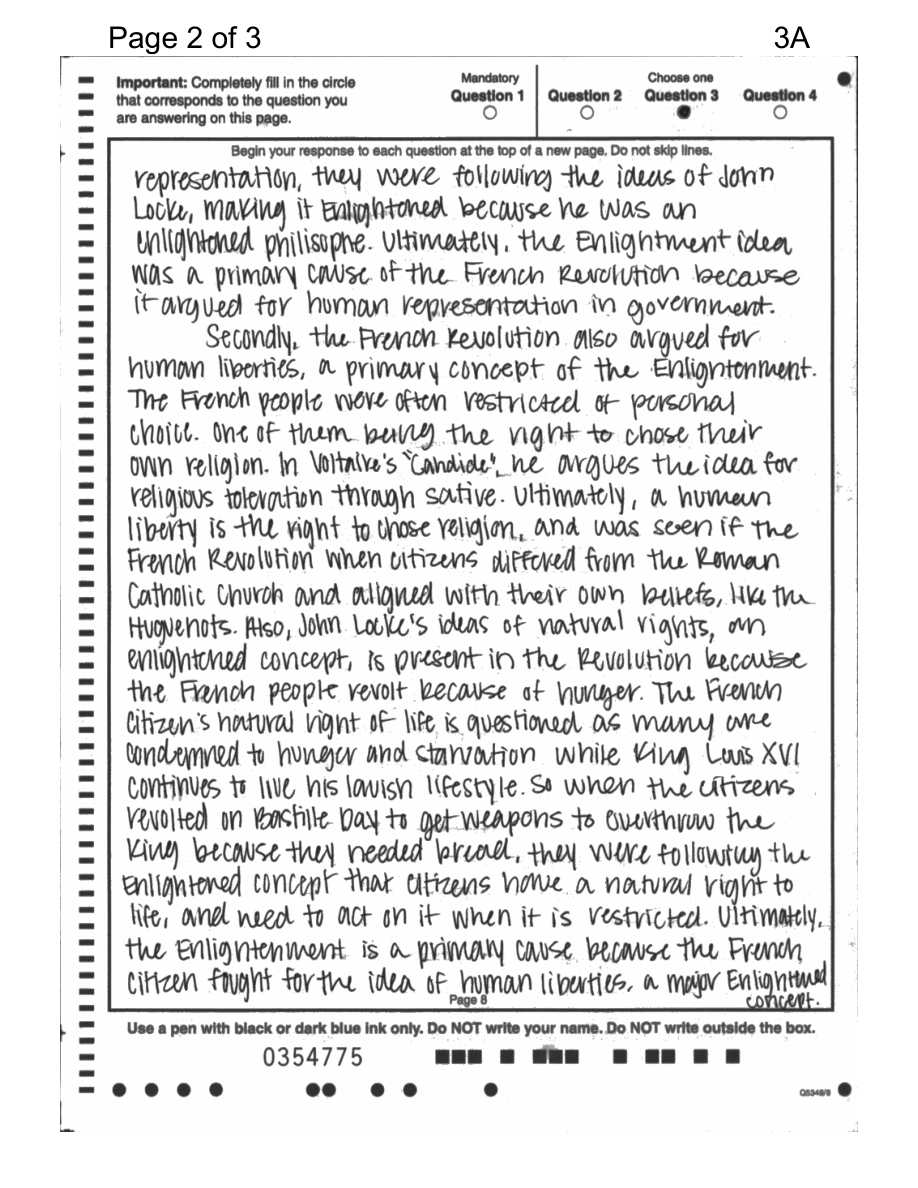
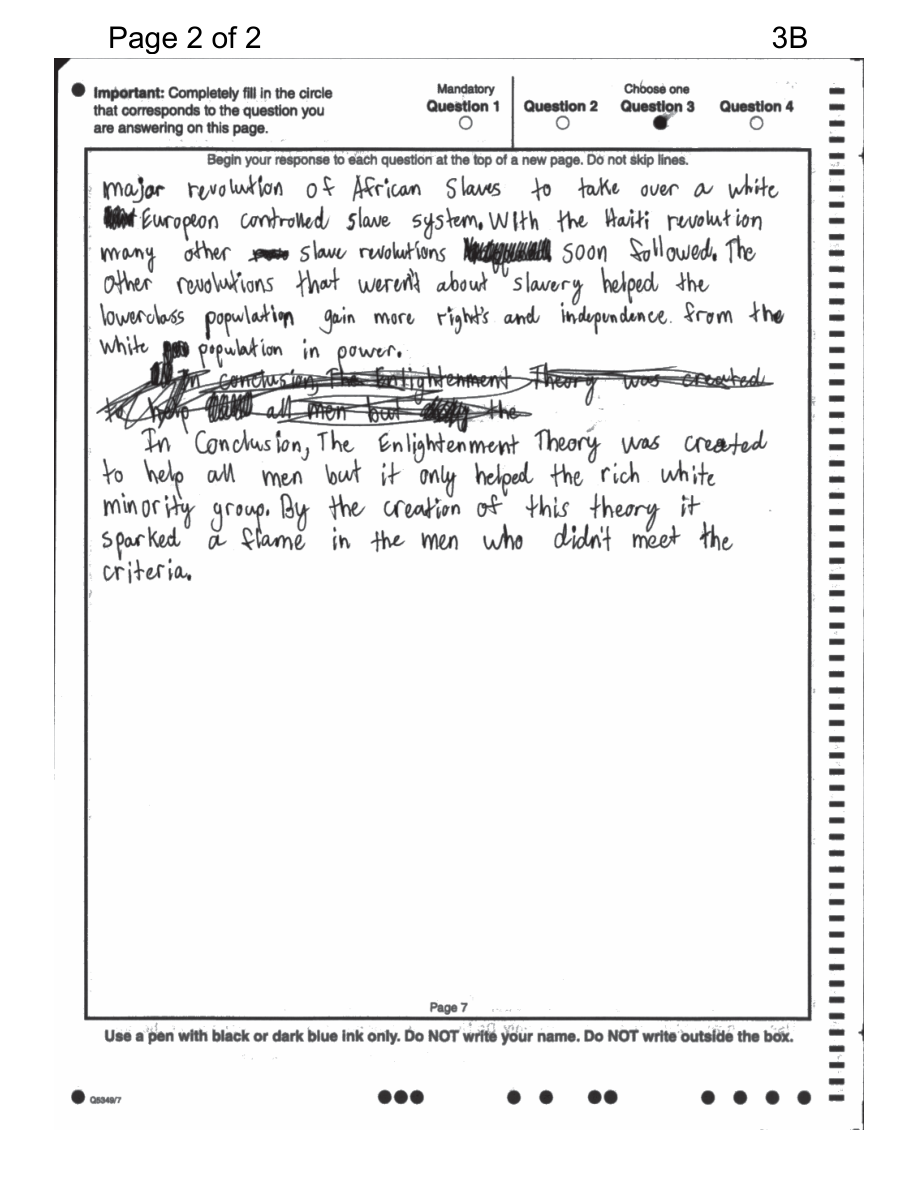
- Figure — Sample Responses - LEQ 3 - Set 2 (p. 8)
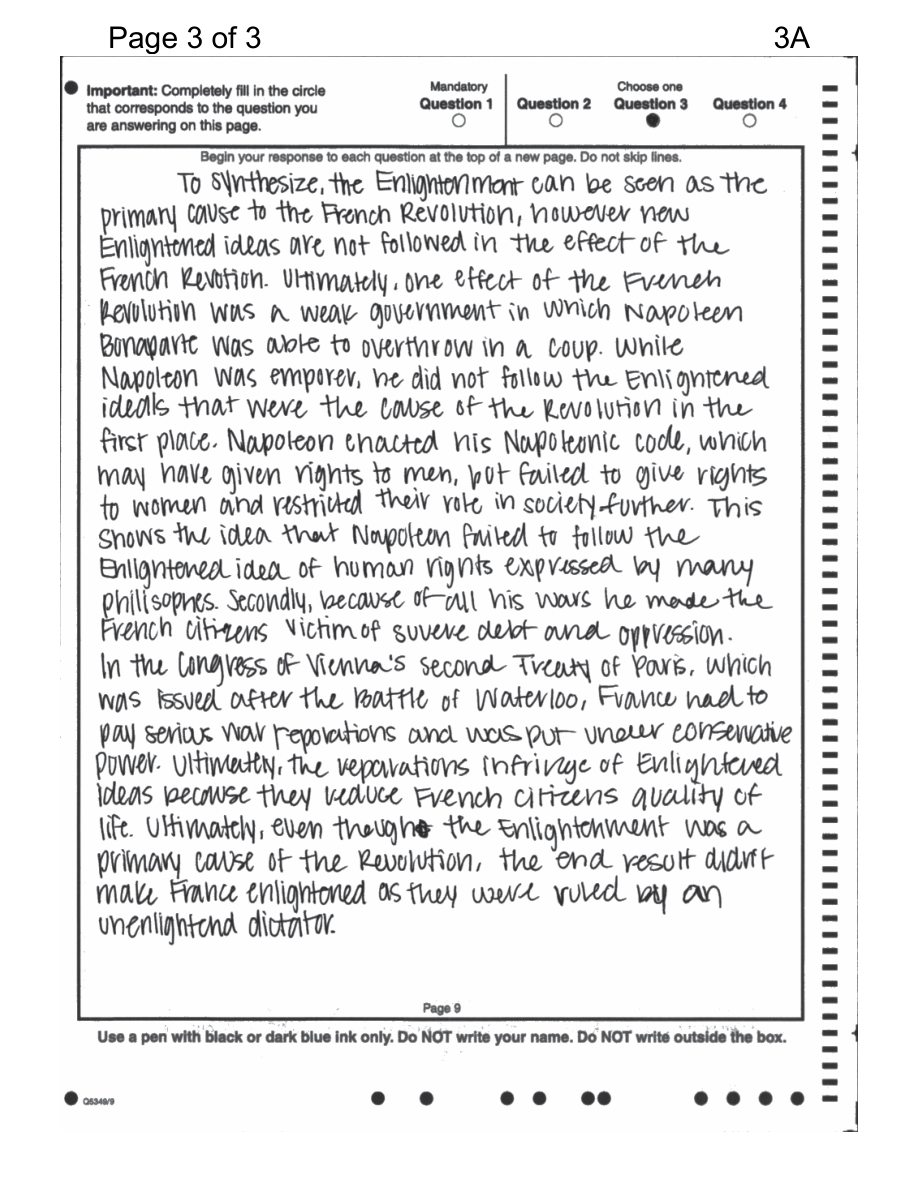
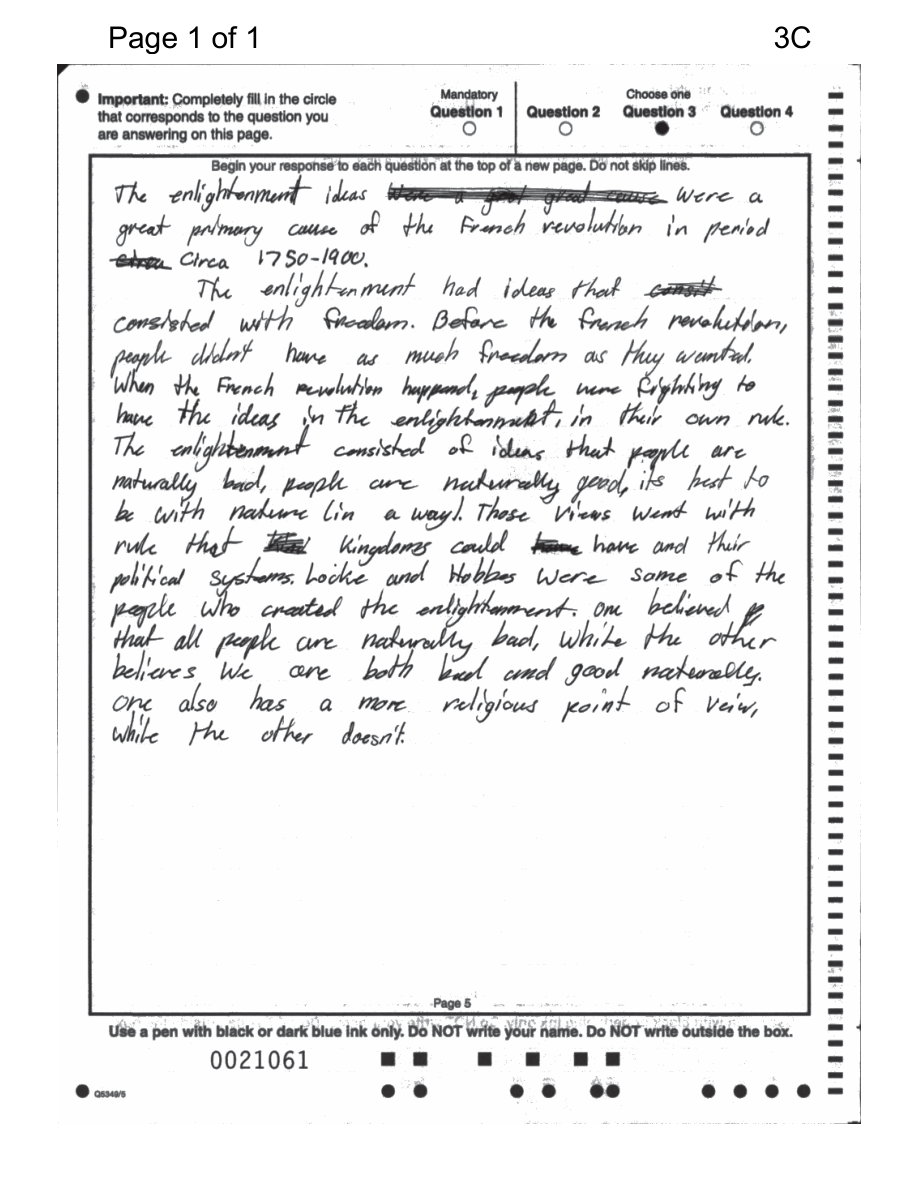
- Figure — Sample Responses - LEQ 3 - Set 2 (p. 9)
- Figure — Sample Responses - LEQ 3 - Set 2 (p. 10)