From the free course AP World History: Modern on Lykke
AP Practice 1
Key concepts: AP course frameworks and sample assessments · Evidence-based inquiry and the scientific method · Independent thinking and drawing conclusions · Evaluating source credibility · Respectful debate and protection of diverse perspectives · Parent and student choice in AP enrollment · AP Classroom assessments and progress feedback · Teacher flexibility in adapting instructional activities · DBQ contextualization · DBQ evidence and complexity criteria
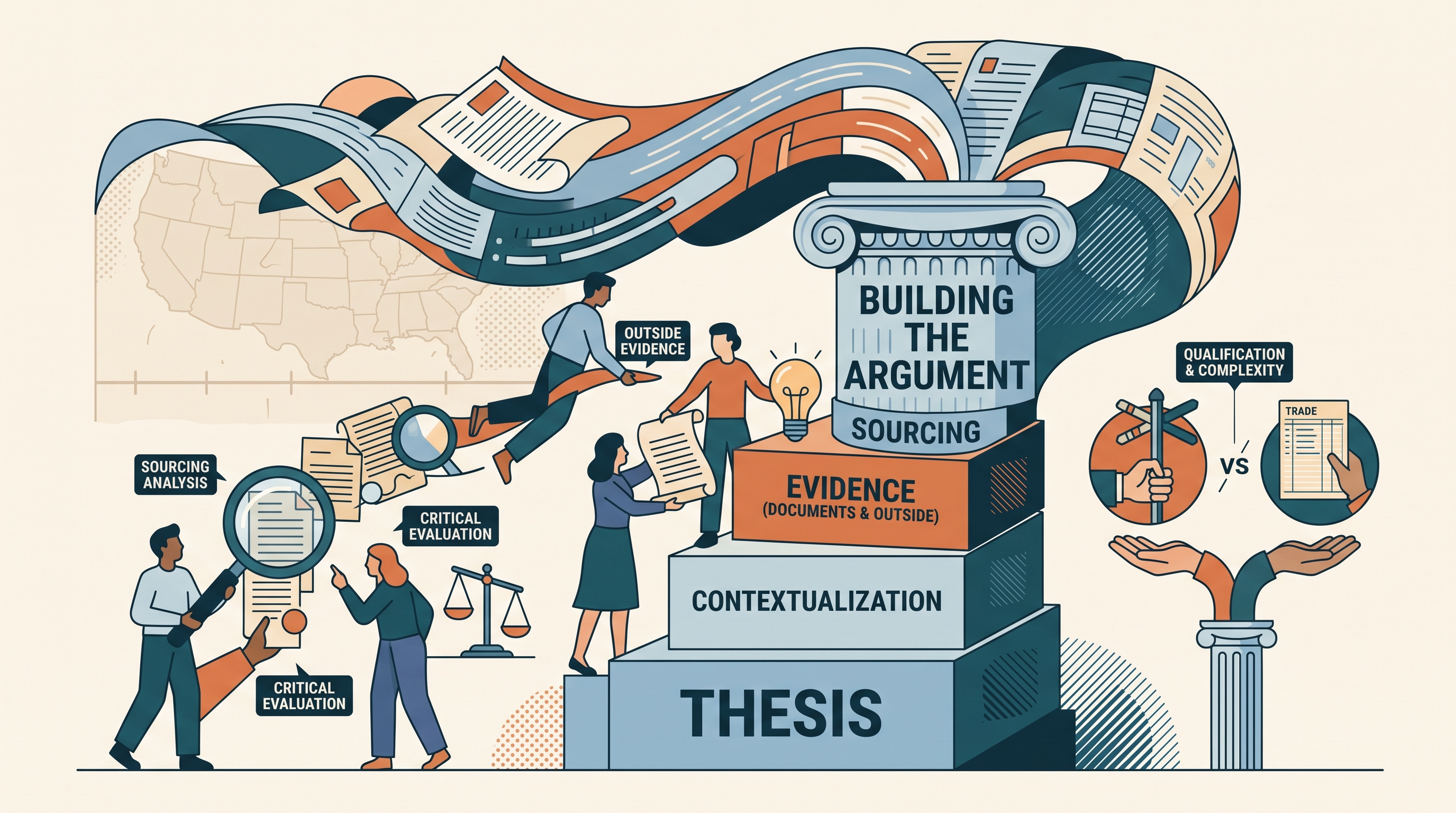
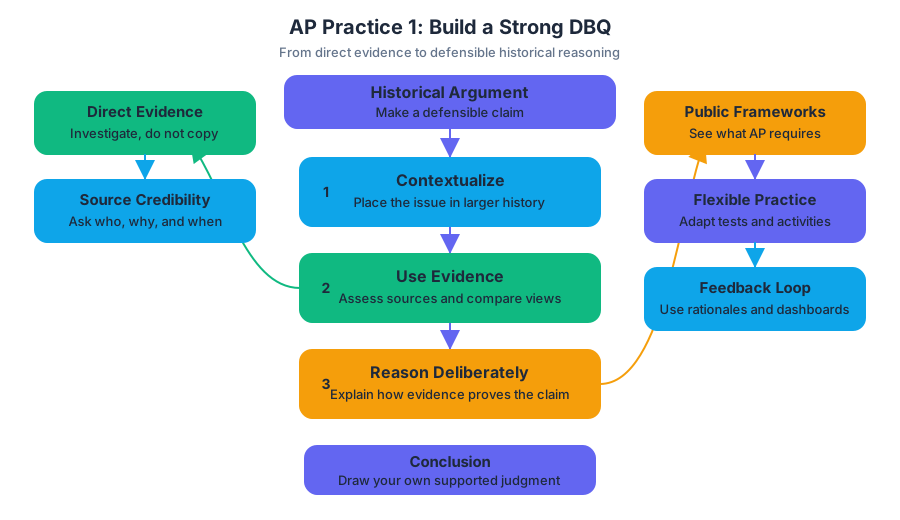
A strong Document-Based Question (DBQ) answer does more than summarize documents: it makes a defensible historical argument, places that argument in context, and uses evidence with deliberate reasoning.
AP Practice 1
A strong Document-Based Question (DBQ) answer does more than summarize documents: it makes a defensible historical argument, places that argument in context, and uses evidence with deliberate reasoning. The AP approach begins from a larger principle—students encounter evidence directly, assess source credibility, compare perspectives, and draw their own conclusions rather than reproduce an approved political or cultural viewpoint.
Key principle: AP rewards the quality of historical reasoning, not agreement with a particular ideology.
AP makes its course frameworks and sample assessments public so teachers and students can see what the classroom and exam require. Teachers may adapt suggested activities, create customized tests, assign them online or on paper, and use question-level feedback to improve practice. AP Classroom can provide answer rationales and broader unit- and skill-level feedback through its progress dashboard.
The DBQ as evidence-based inquiry
A DBQ resembles an investigation. The prompt supplies the historical problem, the documents provide a limited body of evidence, and the response must construct and test an explanation. Contextualization means describing a broader historical situation relevant to the prompt—not merely naming an earlier event.
A useful reasoning chain is:
- Question: What historical development or relationship must be explained?
- Hypothesis: What specific claim answers the prompt?
- Evidence: Which documents support, qualify, or challenge that claim?
- Source analysis: Why might each document’s point of view, purpose, audience, or historical situation matter?
- Conclusion: What larger pattern, qualification, or contradiction makes the argument more complex?
Original practice DBQ
Prompt: Evaluate the extent to which new transportation and communication technologies changed African societies from approximately $1850$ to $1960$.
Imagine a document set containing:
- an African merchant describing how railways redirected regional trade;
- a European administrator presenting railways as evidence of “civilizing” colonial rule;
- an African political organizer explaining how newspapers and telegraphs spread anticolonial ideas;
- a missionary reporting increased access to medical services;
- a colonial labor report documenting forced or coerced work on infrastructure;
- a post-independence leader arguing that inherited transport networks served export economies more than local needs;
- a demographic report showing urban growth near rail junctions.
A defensible thesis might argue that transportation and communication technologies transformed African economies, political organization, and urban life, but that the extent of change was limited because colonial governments designed many systems to extract resources and control labor. This thesis earns strength by making a claim and adding a qualification.
For contextualization, connect the prompt to the broader expansion of European imperialism, the search for raw materials and markets, and the political reorganization of Africa during the late nineteenth century. A weak response says only that “imperialism was happening.” A stronger response explains how imperial competition created the motives and institutions through which railways, telegraphs, and ports were built.
For document evidence, use documents to prove categories in the argument rather than listing them. For example, the merchant and demographic report can support economic and urban transformation, while the labor report and post-independence leader can support the qualification that colonial infrastructure often prioritized extraction. To earn the highest document-evidence credit, effectively use all seven documents in support of the argument; the use does not have to be perfectly even or equally developed.
For sourcing, explain how a document’s point of view, purpose, audience, or historical situation affects its meaning. “The administrator was European” is identification. “Because the administrator sought to justify colonial rule to officials in Europe, the description of railways as benevolent progress may understate coercive labor and extraction” is analysis.
Timing and error review
For a timed DBQ, reserve approximately $15$ minutes to read and group documents, then use the remaining time to write and revise. Before drafting, create a rapid map: thesis, two or three argument categories, document assignments, one piece of outside evidence, and two or three sourcing opportunities.
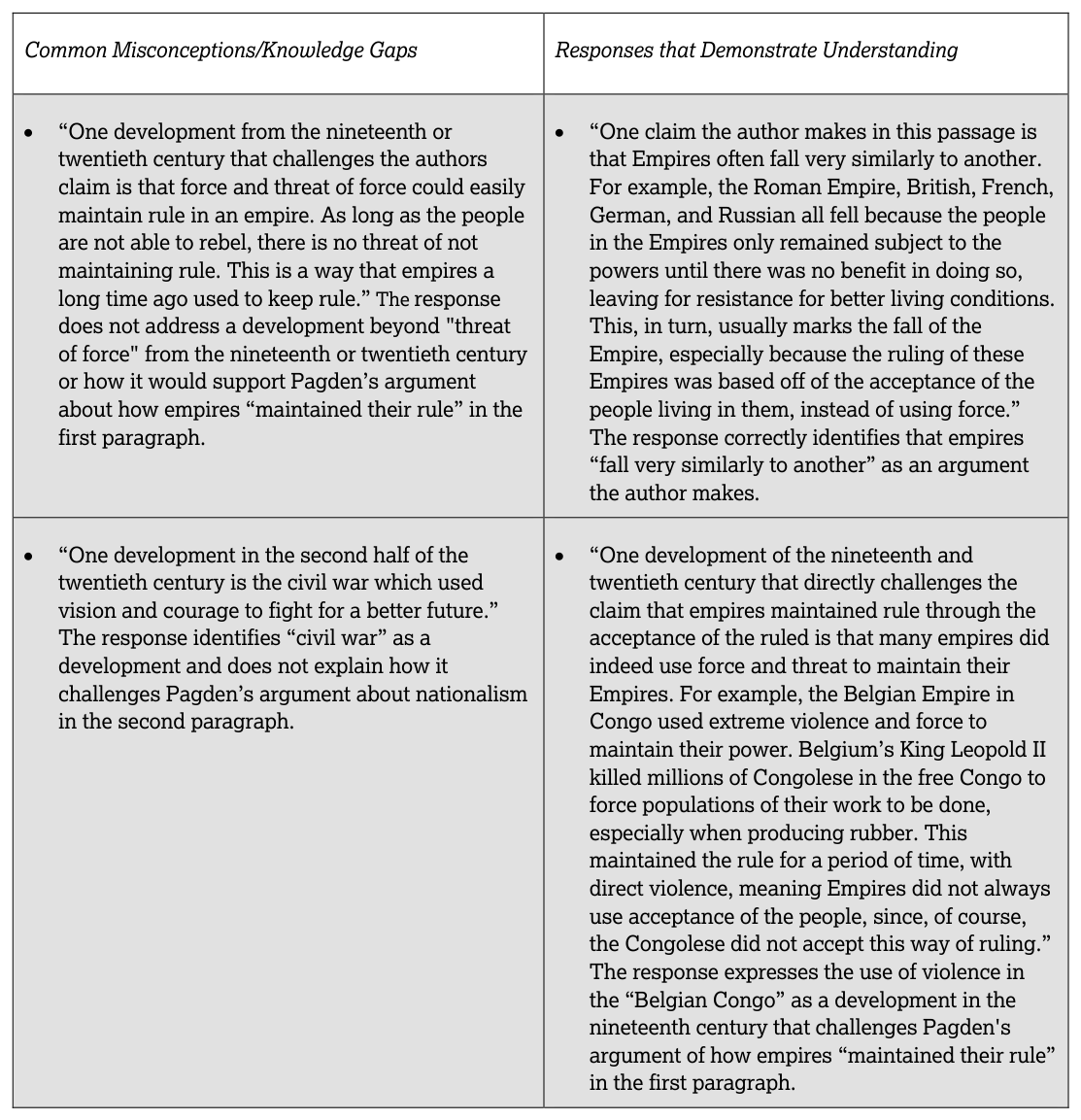
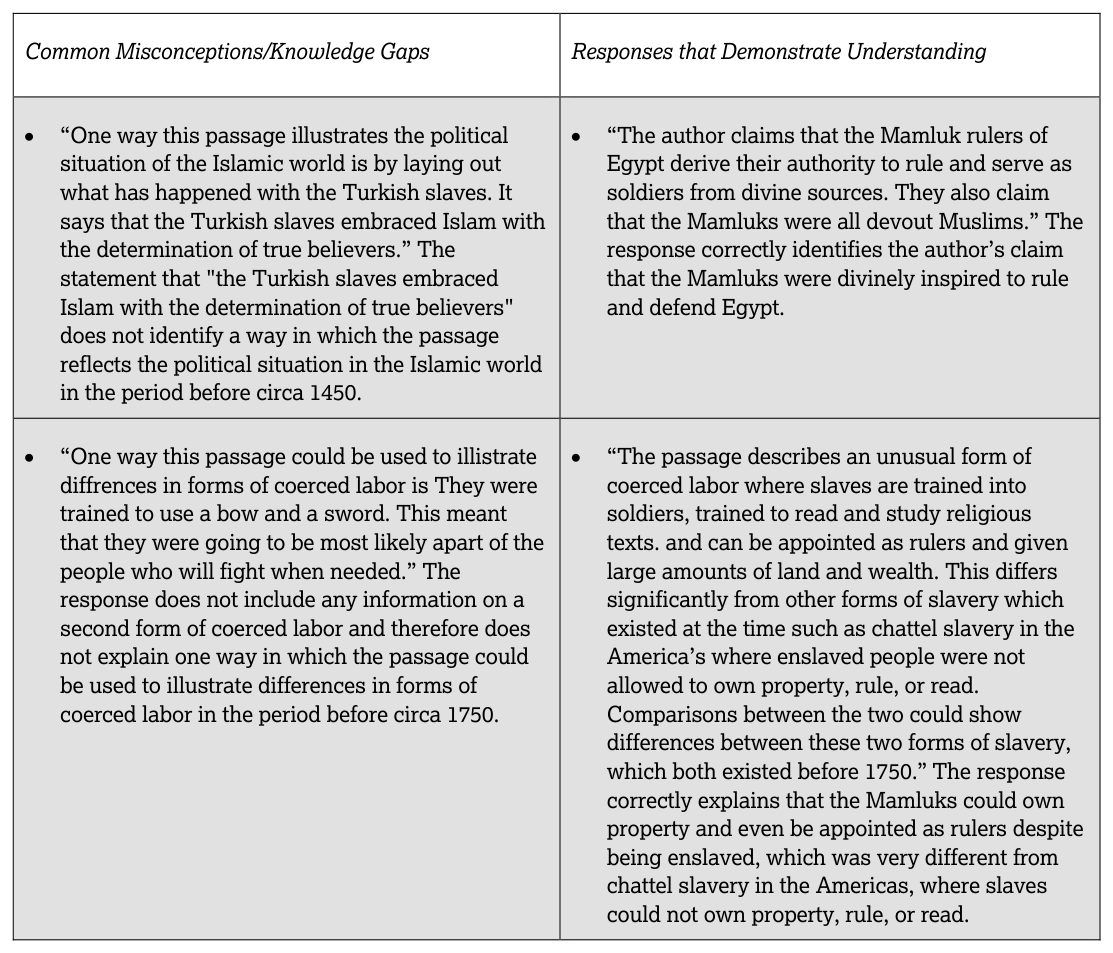
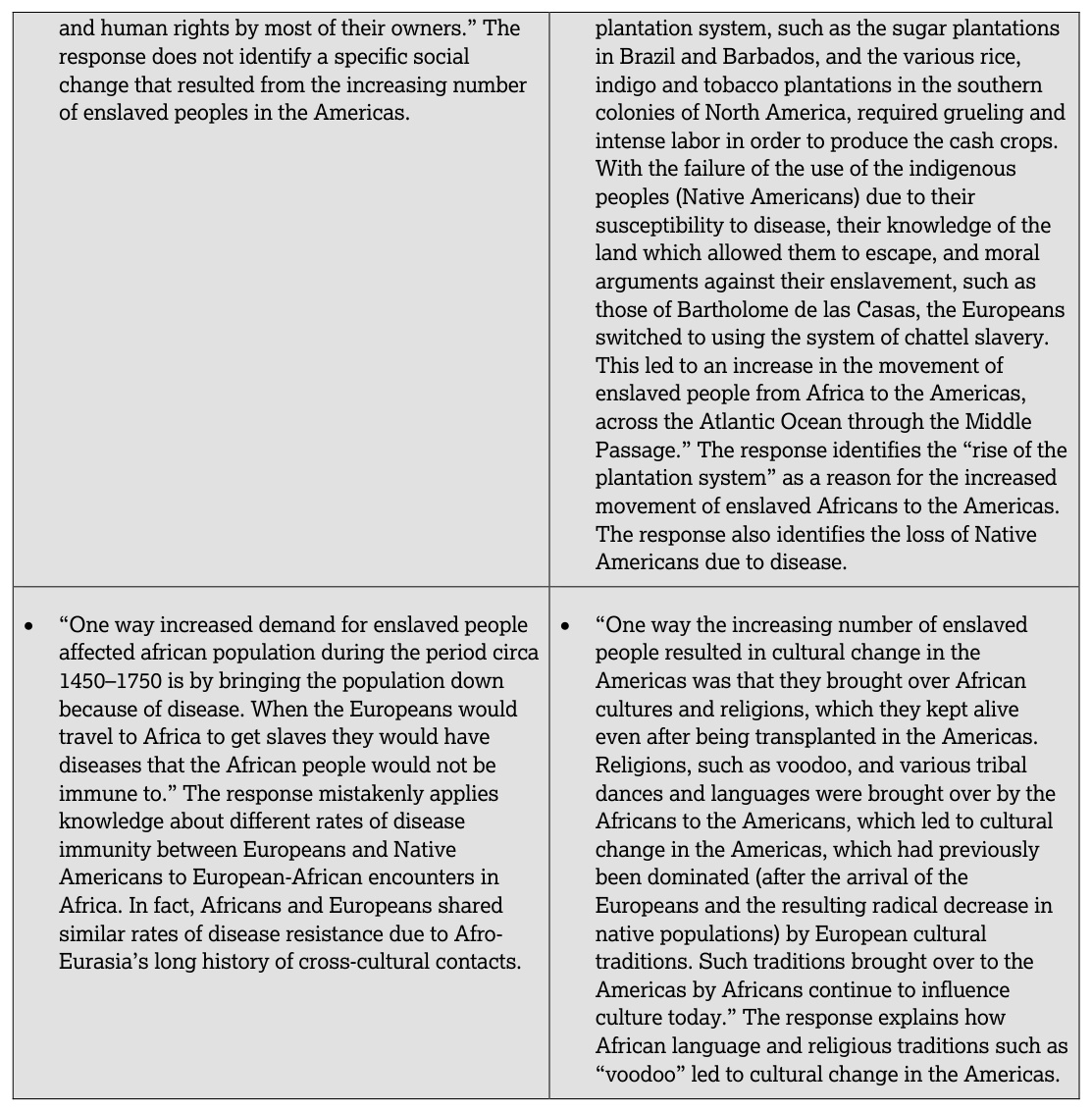
Common misconception check: Respectful debate does not mean treating every claim as equally supported. AP protects diverse perspectives and rejects personal attacks, while still requiring students to evaluate arguments and sources critically. You may disagree with a document or historical interpretation; demonstrate that disagreement through evidence and reasoning, not judgment of the person.
After practice, review errors by rubric category: Was the thesis historically defensible? Was the context genuinely broader? Did each document serve an argument? Did sourcing explain significance? Did the essay include evidence beyond the documents? Did it show complexity through qualification, contradiction, multiple perspectives, or effective use of all seven documents? Teachers can edit or reuse practice assessments, while AP Classroom feedback can help identify recurring content and skill weaknesses.
Retrieval check: In one sentence, distinguish contextualization from document sourcing. Then explain why the claim “railways changed Africa” is incomplete without a qualification about who controlled the infrastructure and why it was built.

Source Materials
- AP World History: Modern Course and Exam Description
- AP World History: Modern Course and Exam Description Clarifications and Corrections
- AP World History: Modern Course Overview
- AP World History: Modern Course at a Glance
- AP World History: Modern Course at a Glance Poster
- AP World History: Modern
- AP World History: Modern
- AP World History: Modern Sample Syllabus 1
- Based on your experience at the AP® Reading with student responses, what advice would you offer teachers to help them improve the student performance on the exam?
- Based on your experience at the AP® Reading with student responses, what advice would you offer teachers to help them improve the student performance on the exam?
- Based on your experience at the AP® Reading with student responses, what advice would you offer teachers to help them improve the student performance on the exam?
- Based on your experience at the AP® Reading with student responses, what advice would you offer teachers to help them improve the student performance on the exam?