From the free course AP Psychology on Lykke
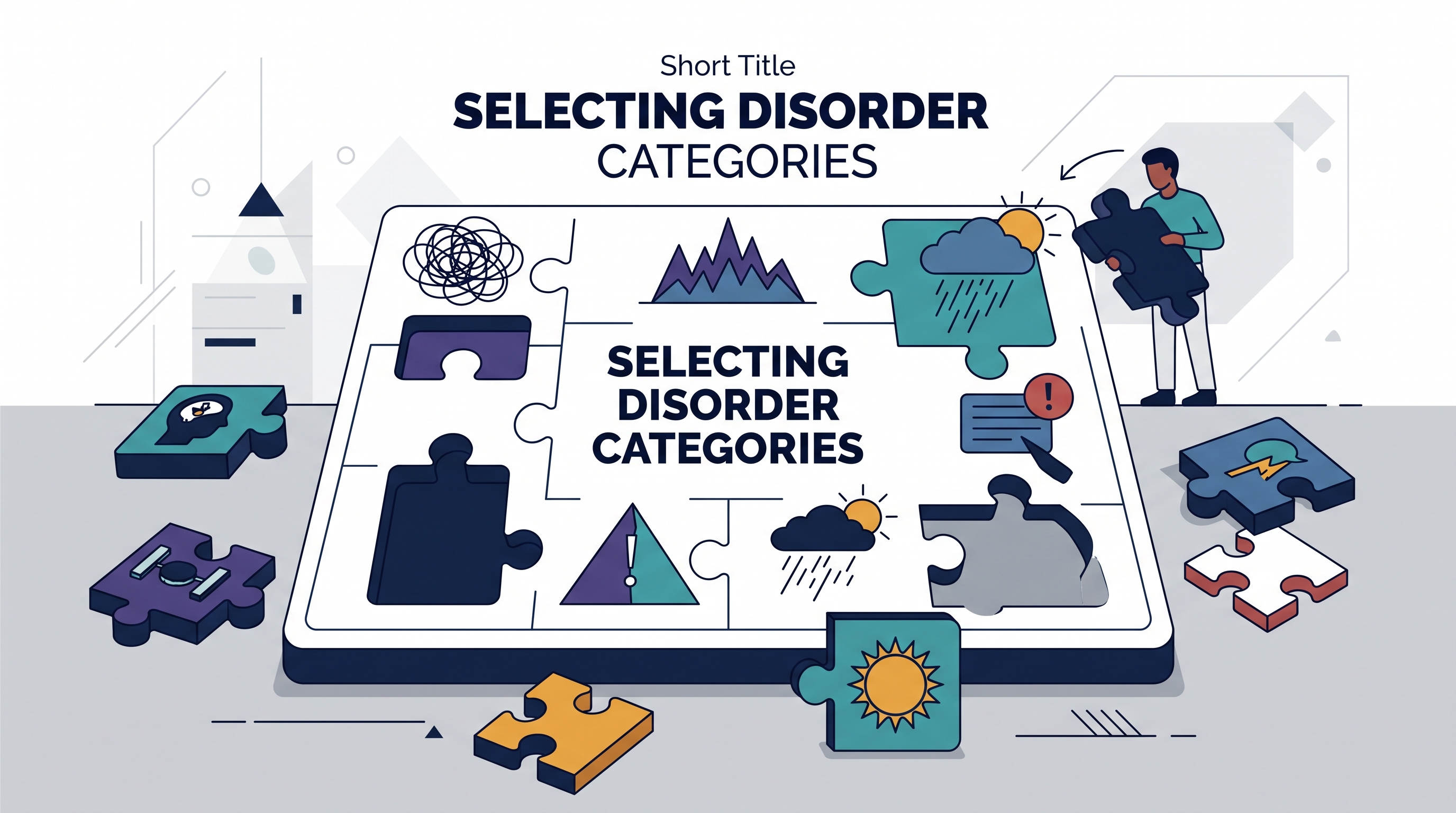
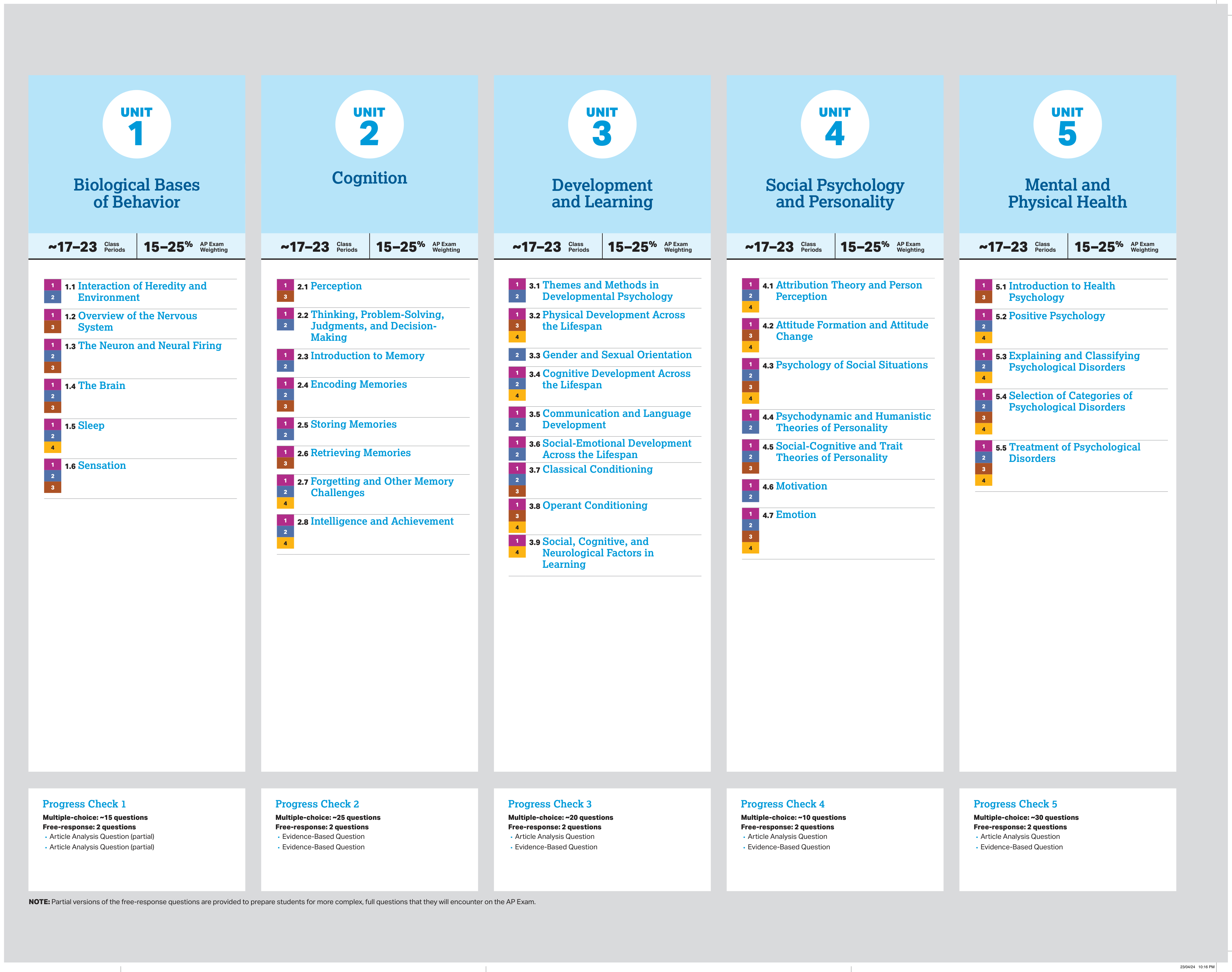
5.4 Selection of Categories of Psychological Disorders
Key concepts: Psychological disorders as representative categories in introductory psychology · Dysfunction and age- or maturity-appropriate behavior as considerations in identifying disorders · Depressive disorders · Bipolar disorders · Schizophrenia · Anxiety disorders · Trauma- and stressor-related disorders · Feeding and eating disorders · Personality disorders · Biological, genetic, social, cultural, behavioral, and cognitive causes of disorders
A psychological disorder is identified by a pattern of thoughts, emotions, or behaviors that causes significant distress or dysfunction—not simply by behavior that seems unusual.
5.4 Selection of Categories of Psychological Disorders
A psychological disorder is identified by a pattern of thoughts, emotions, or behaviors that causes significant distress or dysfunction—not simply by behavior that seems unusual. The categories below provide an introductory understanding of psychological disorders: they help you recognize characteristic patterns without assuming that a category reveals one simple cause or defines a person.
A classification rule: dysfunction depends on context
Dysfunction means that symptoms interfere substantially with everyday functioning, such as relationships, work, school, self-care, or safety. You must also consider whether a behavior is appropriate for the person’s age or maturity range. A preschool child’s intense separation distress, for example, cannot be evaluated by exactly the same expectations used for an adult.
A useful exam question is not “Is this behavior strange?” but “Is there a persistent pattern, is it excessive or impairing, and is it inappropriate for this person’s developmental context?” Cultural expectations and situational demands also matter. Classification is therefore not a guessing game about a real person; it is the careful matching of a fictional symptom pattern to a representative category.
Depressive disorders
Depressive disorders involve an empty or irritable mood along with physical and cognitive changes that affect a person’s ability to function. Look for a cluster rather than one isolated feeling: mood changes may occur alongside disrupted sleep or appetite, low energy, difficulty concentrating, slowed or agitated behavior, and reduced ability to carry out ordinary responsibilities.
Worked example: Jordan has become persistently irritable, has stopped completing ordinary tasks, sleeps poorly, feels exhausted, and cannot concentrate on familiar assignments. The best category is depressive rather than anxiety solely because Jordan worries; the decisive pattern is the combination of mood, physical, cognitive, and functional changes.
Bipolar disorders
The bipolar category includes Bipolar I disorder and Bipolar II disorder. Recognition depends on characteristic shifts in mood and activity across episodes, not merely on ordinary moodiness or rapid changes during one afternoon. Bipolar I includes manic episodes; Bipolar II includes hypomanic episodes and depressive episodes, without the full manic episode required for Bipolar I.
The key distinction is severity and episode type: mania is more intense and impairing than hypomania. Do not infer a single cause from the category. The CED identifies possible biological, genetic, social, cultural, behavioral, and cognitive sources (5.4.D.2), but category recognition alone does not prove which source caused a particular person’s symptoms.
Schizophrenia
Schizophrenia is recognized through disturbances in thinking, perception, emotion, and behavior. A fictional vignette may describe hallucinations, delusions, disorganized speech or behavior, and reduced emotional expression or motivation. These features represent a disruption in how a person interprets reality and organizes behavior; they are not the same as having multiple personalities.
Possible causes may include genetic or biological factors, such as prenatal virus exposure or imbalances involving biological processes. Treat that information as a possible explanation, not as a diagnostic shortcut: a biological risk factor does not by itself establish schizophrenia.
Anxiety disorders
Anxiety disorders are characterized by excessive fear and/or anxiety with related disturbances to behavior (5.4.E.1). The selected categories are specific phobia, agoraphobia, panic disorder, social anxiety disorder, and generalized anxiety disorder.
| Category | Recognition cue |
|---|---|
| Specific phobia | Fear or anxiety focused on a particular object or situation, such as heights or spiders |
| Agoraphobia | Intense fear involving situations such as public transportation, open or enclosed spaces, crowds or lines, or being outside the home alone |
| Panic disorder | Unanticipated, overwhelming panic attacks; culturally shaped expressions can include ataque de nervios |
| Social anxiety disorder | Excessive fear centered on social evaluation or performance |
| Generalized anxiety disorder | Persistent, excessive worry across multiple areas of life |
Misconception check: “Any fear is an anxiety disorder.” Correction: fear can be a useful, proportionate response to danger. The category becomes relevant when fear or anxiety is excessive and produces related behavioral disturbance or dysfunction. Also avoid confusing panic disorder with a specific phobia: panic attacks are unexpected in panic disorder, whereas a specific phobia is organized around a particular trigger.
Trauma- and stressor-related disorders
Trauma- and stressor-related disorders involve psychological distress following trauma or stress (5.4.H.1–5.4.H.2). The selected disorder is posttraumatic stress disorder (PTSD). Relevant symptoms may include hypervigilance, severe anxiety, flashbacks, insomnia, emotional detachment, and hostility. The category is tied to the experience of trauma or stress, but not every stressful event produces PTSD.
Feeding and eating disorders
Feeding and eating disorders involve altered consumption or absorption of food that impairs health or psychological functioning (5.4.I.1). The selected disorders are anorexia nervosa and bulimia nervosa. Possible influences include biological, genetic, social, cultural, behavioral, and cognitive sources (5.4.I.2). Do not reduce these disorders to appearance or willpower; the defining issue is disturbed eating behavior with impairment to health or functioning.
Retrieval check
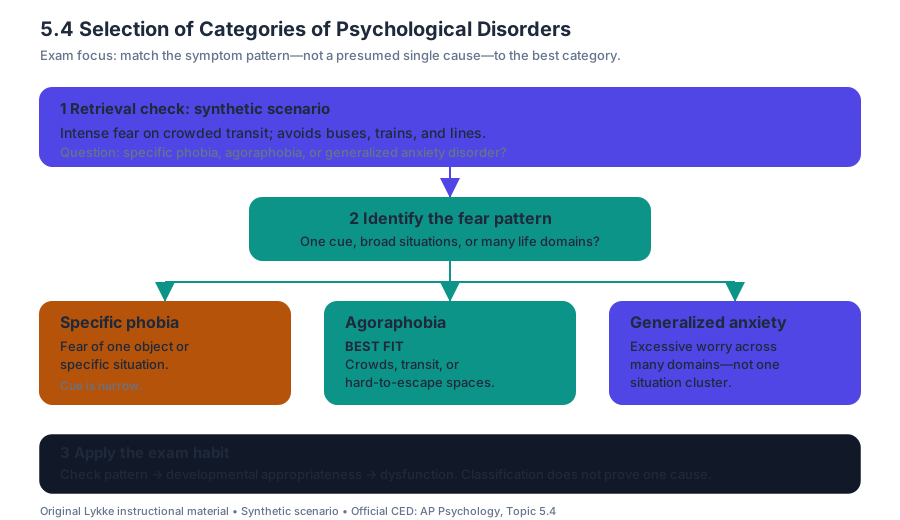
A fictional person has intense fear whenever using crowded public transportation and begins avoiding buses, trains, and lines. Which category best fits: specific phobia, agoraphobia, or generalized anxiety disorder? Answer: agoraphobia, because the fear centers on a broader set of situations involving crowds and public or difficult-to-escape spaces, rather than one specific object or situation.
The central exam habit is to match the pattern to the category, check developmental appropriateness and dysfunction, and avoid claiming that classification proves a single cause. That disciplined distinction prepares you to evaluate how different treatments address different symptom patterns.
Source Materials
- Ap Psychology Course And Exam Description
- Ap Psychology Course At A Glance
- AP Psychology CED: Student Responses and Scoring Commentary
- AP Psychology Exam Questions
- Free-Response Questions
- Free-Response Questions - Set 1
- Free-Response Questions - Set 2
- 00762‐140-CED-Psychology_Unit1.indd 31 29/01/24 4:08 PM
- 00762‐140-CED-Psychology_Unit1.indd 35 29/01/24 4:09 PM
- 00762-115-AP-CED-CAAG-Poster-Psychology.indd All Pages 23/04/24 10:16 PM
- 00762-115-AP-CED-CAAG-Poster-Psychology.indd All Pages 23/04/24 10:16 PM