From the free course AP Psychology on Lykke
P.6 The Article Analysis Question: Method and Scoring Logic
Key concepts: Article Analysis Question · Research method identification · Operational definition of executive functioning · Difference in means interpretation · Ethical guidelines in research · Informed consent and right to withdraw · Confidentiality · Scoring guidelines and point-based responses · Generalizability of study findings · Participant sample and population
An Article Analysis Question (AAQ) asks you to turn a research description into six precise, evidence-based answers: identify the method, define how a variable was measured, interpret a statistic, identify an ethical guideline, evaluate generalizability, and connect the findings to the researchers’ argument.
P.6 The Article Analysis Question: Method and Scoring Logic
An Article Analysis Question (AAQ) asks you to turn a research description into six precise, evidence-based answers: identify the method, define how a variable was measured, interpret a statistic, identify an ethical guideline, evaluate generalizability, and connect the findings to the researchers’ argument.
The scoring logic rewards application to the described study, not vocabulary dropped beside it. A response can name “informed consent,” “mean,” or “experiment” and still miss the point if it never explains how that idea operates in the research.
The six-part map
The AAQ commonly contains parts A–F. The official scoring commentary for the 2025 AAQ describes a seven-point structure: one point each for research method, research variable, statistic interpretation, ethical guidelines, and generalizability, plus two points for argumentation.
| Part | What you must do | The evidence anchor |
|---|---|---|
| A | Identify the research method | Say why the design is an experiment or another named method |
| B | State the operational definition | Identify exactly how the study measured the variable |
| C | Interpret the statistic | Explain what the difference in means indicates in this study |
| D | Identify an ethical guideline | Name the protection and explain how researchers applied it |
| E | Evaluate generalizability | Link the sample to a named population |
| F | Build an argument | Use a specific result to support or challenge the hypothesis |
A–B: Name the design and measurement
An experiment is a study in which researchers manipulate an independent variable and compare its effects on a dependent variable, often using random assignment. If participants were assigned to a multivitamin group or a placebo group, identify the method as an experiment. A questionnaire or memory task included inside that design does not change the overall method to “survey” or “memory study.”
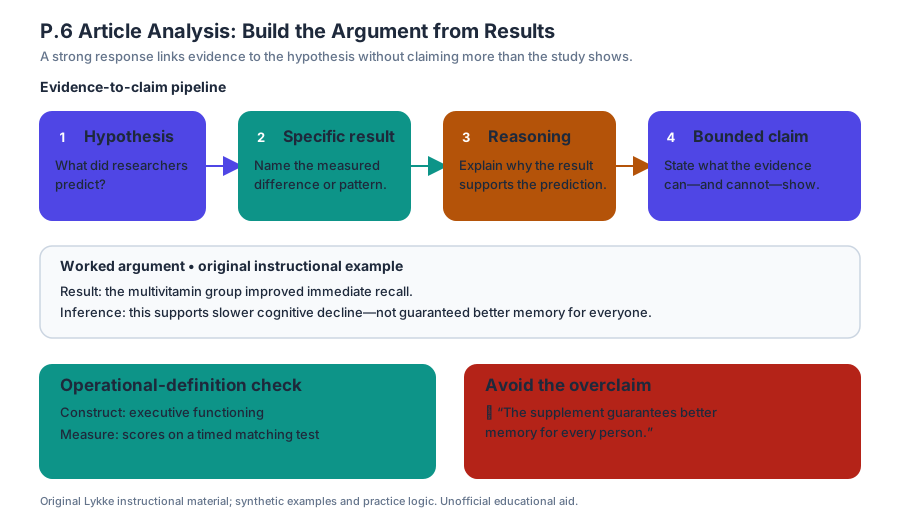
An operational definition states exactly how a researcher turns an abstract concept into a measurable observation. In the study, the operational definition of executive functioning is participants’ scores on the test—specifically, how quickly and accurately they identified whether items in two presented lists were the same or different. Do not merely repeat the construct, such as “executive functioning is cognitive control.” That defines the idea, not its measurement.
Key distinction: Construct = the psychological idea. Operational definition = the observable score or behavior used to measure it.
C: Interpret a difference in means
A mean is an arithmetic average. When the prompt asks what the difference in means indicates for the immediate recall task, compare the multivitamin group directly with the placebo group and state what that difference means for recall over the study period.
A strong response has three parts: identify the higher or lower group, name the measured outcome, and connect the comparison to the study. For example: The multivitamin group had a higher mean immediate-recall score than the placebo group, indicating better average immediate recall for participants who received multivitamins. If the reported means show the opposite pattern, reverse the comparison. Do not answer by defining mean, median, and mode; that does not interpret the statistic.
D: Ethics means participant protection
An ethical guideline is a rule or protection concerning participants’ welfare, autonomy, privacy, or treatment. Informed consent qualifies when participants are told enough about participation to decide voluntarily, including that they may withdraw at any time. Confidentiality qualifies when researchers protect participants’ identities or personal information from disclosure.
To earn the point, name the guideline and explain its application: The study followed informed consent because participants agreed to take part after being informed that participation was voluntary and that they could withdraw at any time. Or: The researchers protected confidentiality by keeping participants’ identities and test information private.
Do not confuse an ethical guideline with an ordinary study feature. Random assignment, a placebo group, a three-year duration, a memory test, and measuring executive functioning may be scientifically important, but none is automatically an ethical guideline; ethics concerns how participants are protected.
E: Generalizability requires a population
Generalizability means applying findings from a sample to a broader population. Saying “the study is generalizable” is incomplete. Identify who was sampled, name the population to which you want to extend the result, and explain whether the sample represents that population.
For example: Because both men and women were included in the sample, the findings may generalize to both men and women in the population represented by the study. That is stronger than saying “the results apply to everyone,” which ignores the sample’s limits.
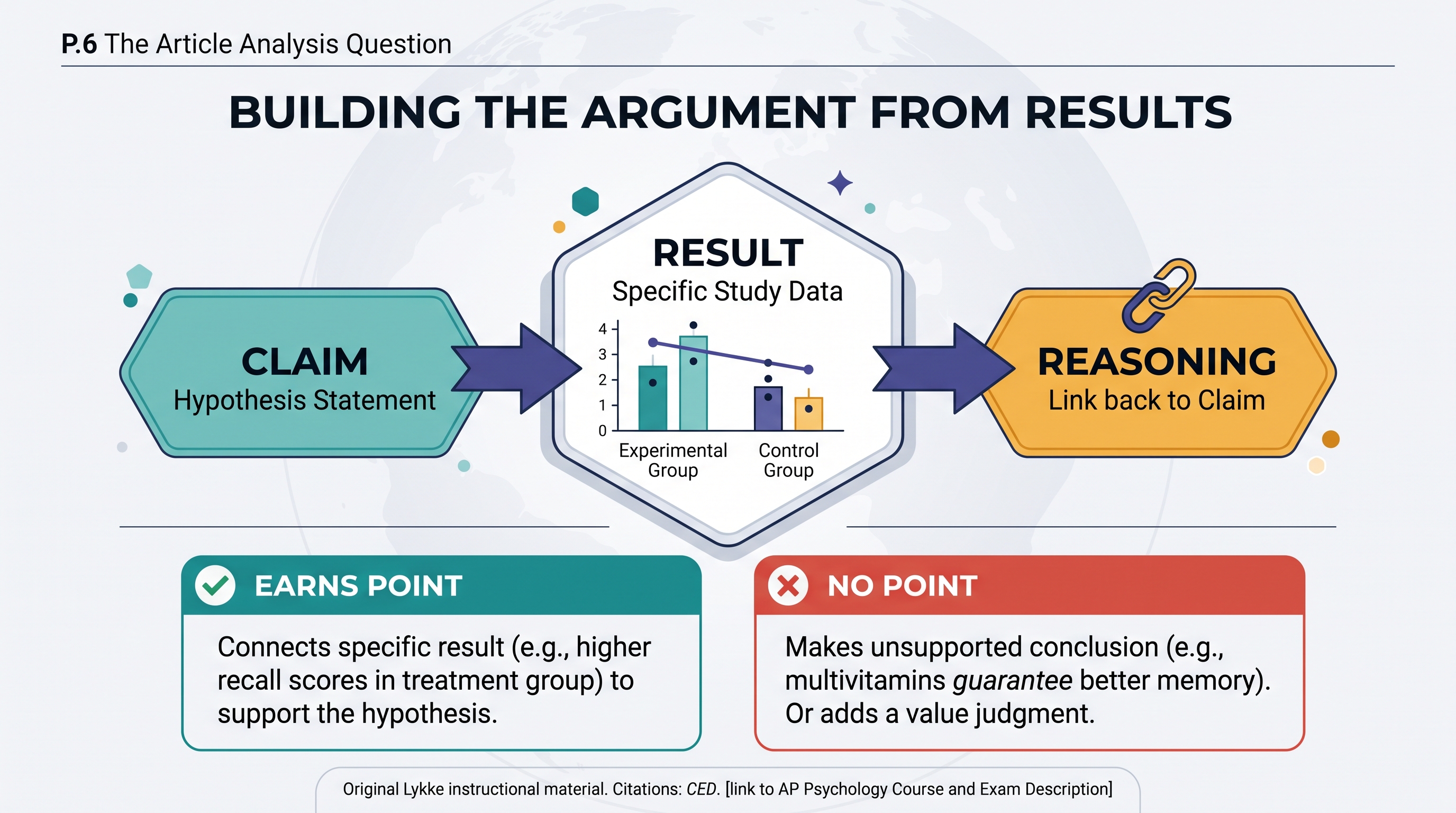
F: Build the argument from results
Argumentation requires a claim about the researchers’ hypothesis, a specific study result, and reasoning that connects the result to the claim. A response might state that the multivitamin group’s improved immediate recall supports the hypothesis that multivitamins slow cognitive decline. Avoid adding a conclusion the result cannot establish, such as claiming that multivitamins guarantee better memory for every person.
Original Lykke instructional material — retrieval check: A study randomly assigns adults to a caffeine-free supplement or placebo and measures executive functioning using participants’ scores on a timed matching test. Which response earns the operational-definition point?
Answer: Executive functioning was operationally defined as participants’ scores on the timed matching test. The phrase identifies the measurable test score rather than merely restating “executive functioning” as a mental ability.
Source Materials
- Ap Psychology Course And Exam Description
- Ap Psychology Course At A Glance
- AP Psychology CED: Student Responses and Scoring Commentary
- AP Psychology Exam Questions
- Free-Response Questions
- Free-Response Questions - Set 1
- Free-Response Questions - Set 2
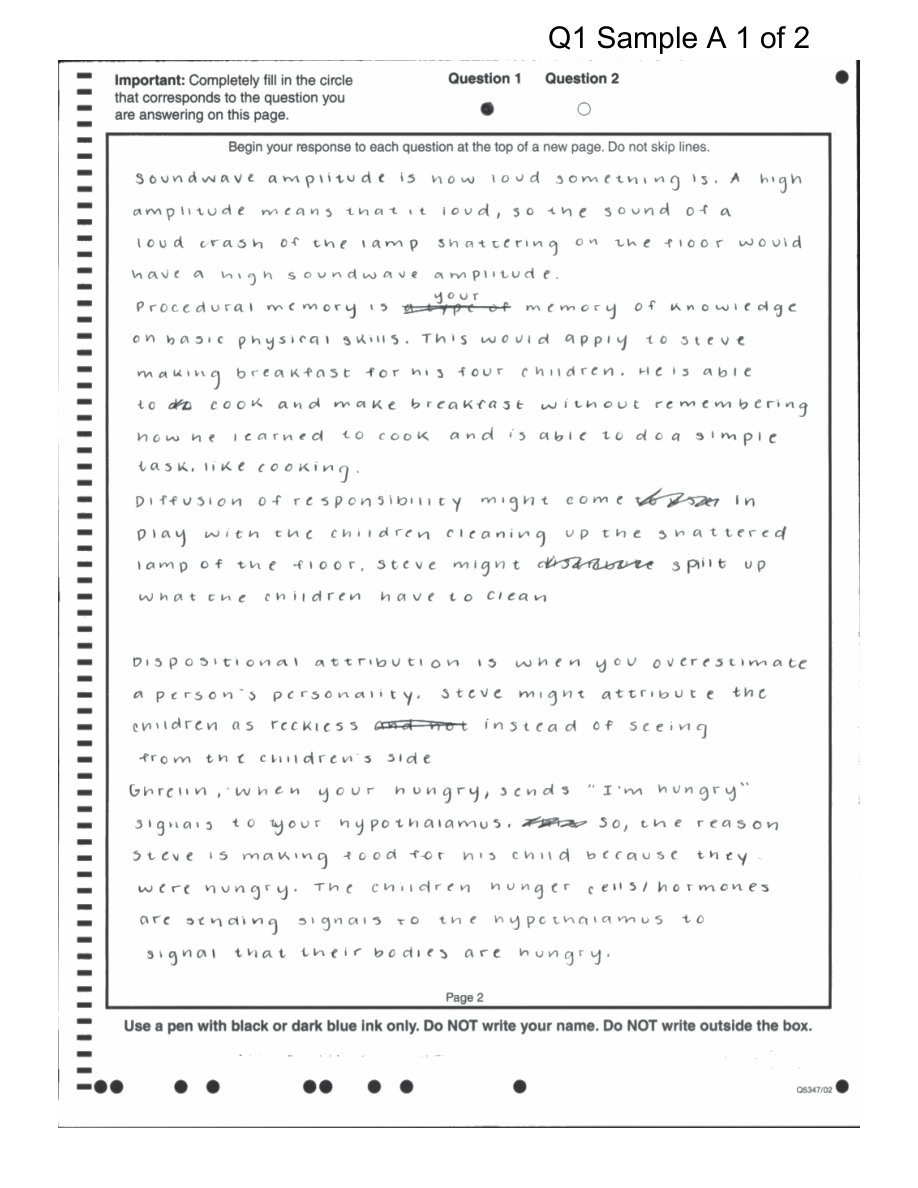
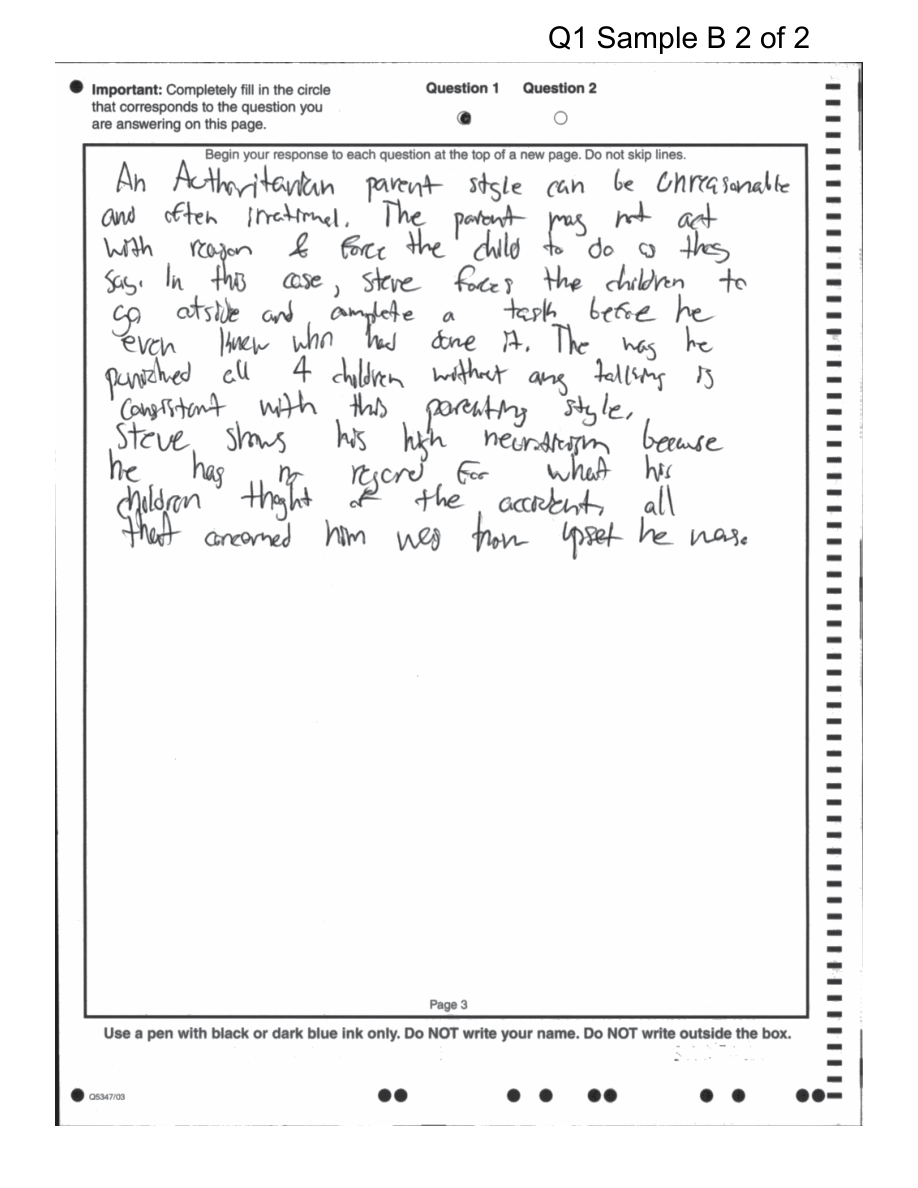
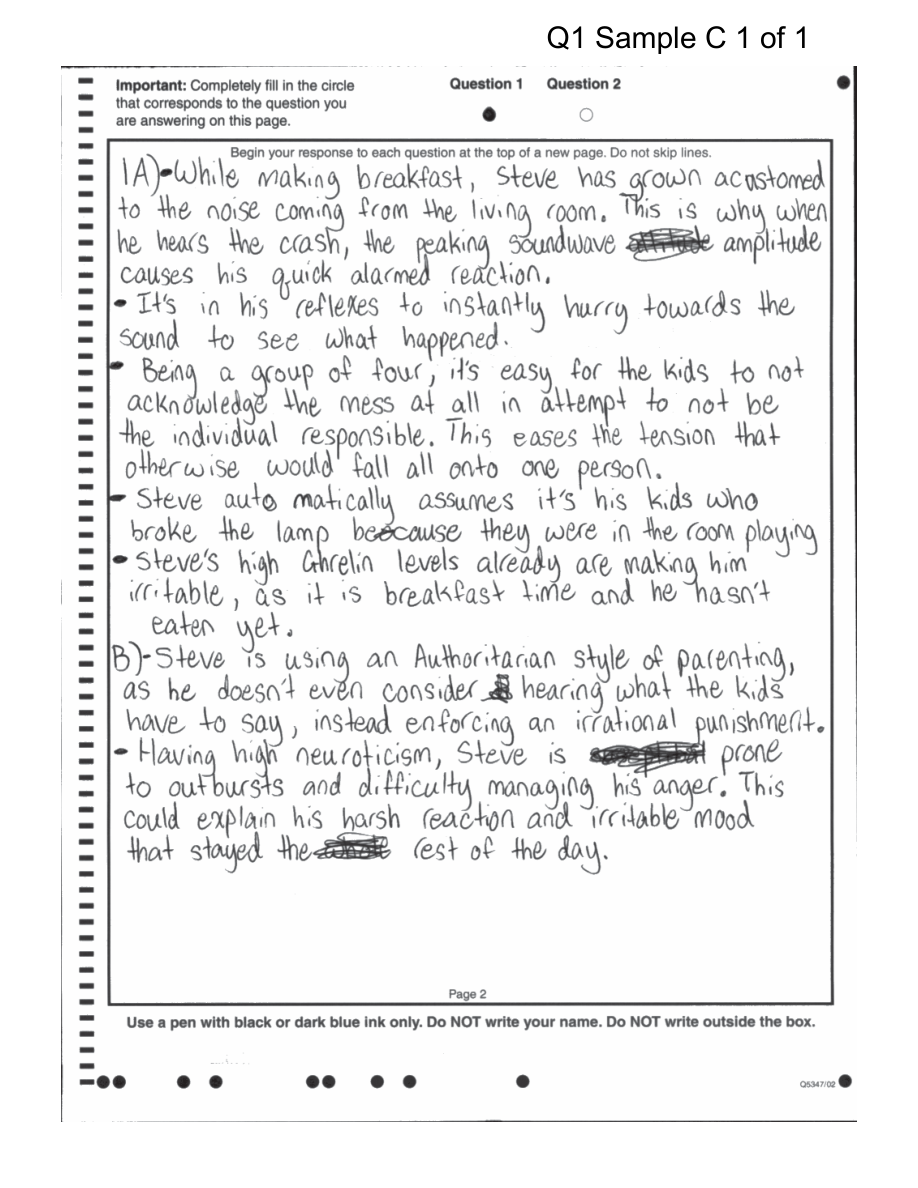
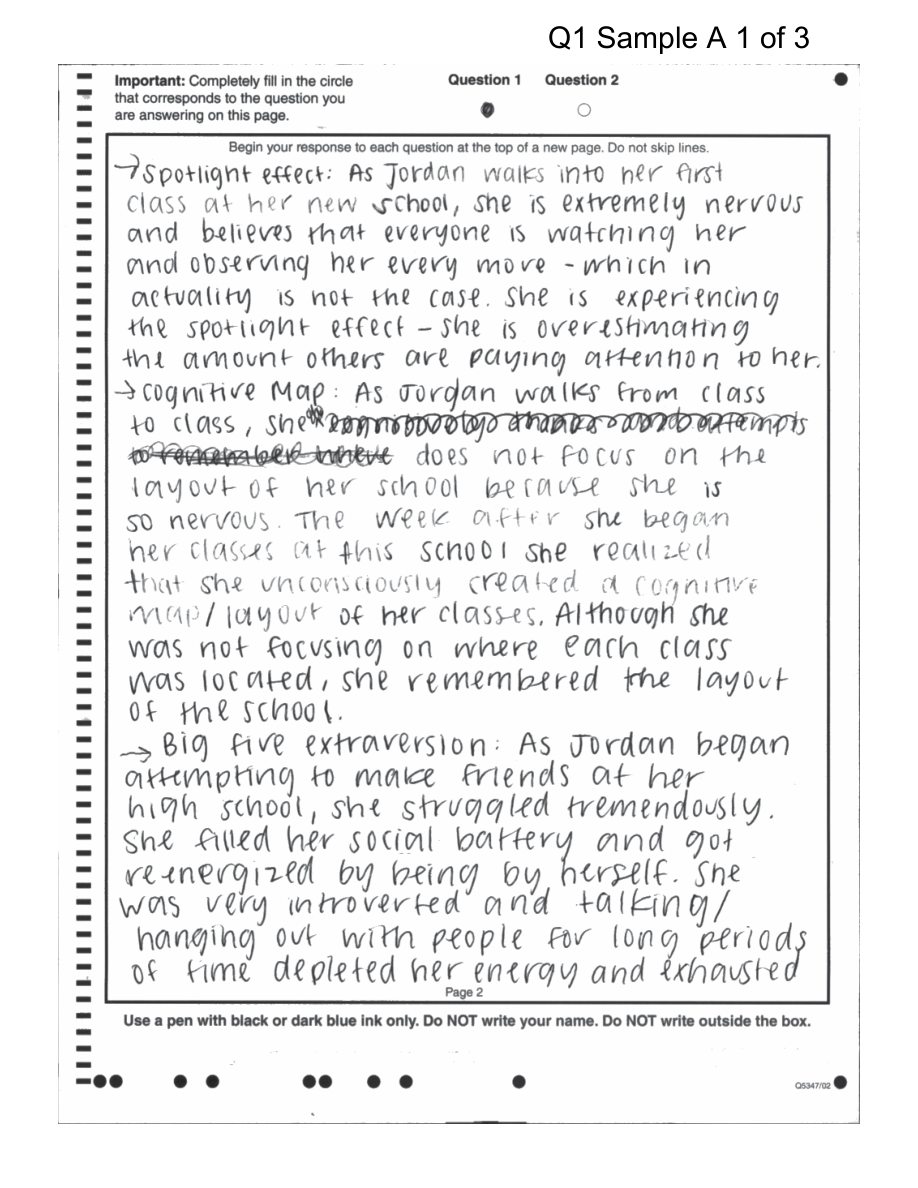
- Figure — Sample Responses Q1 - Set 1 (p. 6)
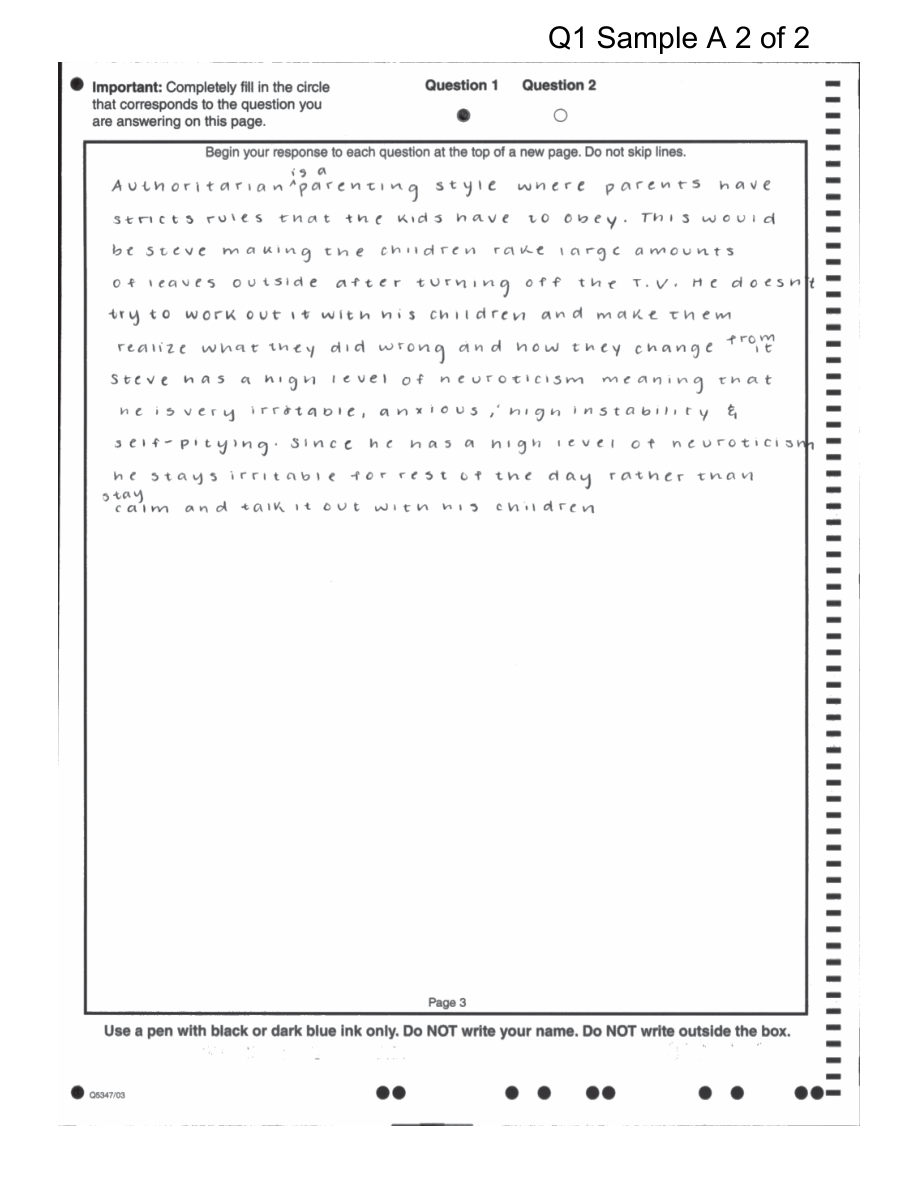
- Figure — Sample Responses Q1 - Set 1 (p. 7)
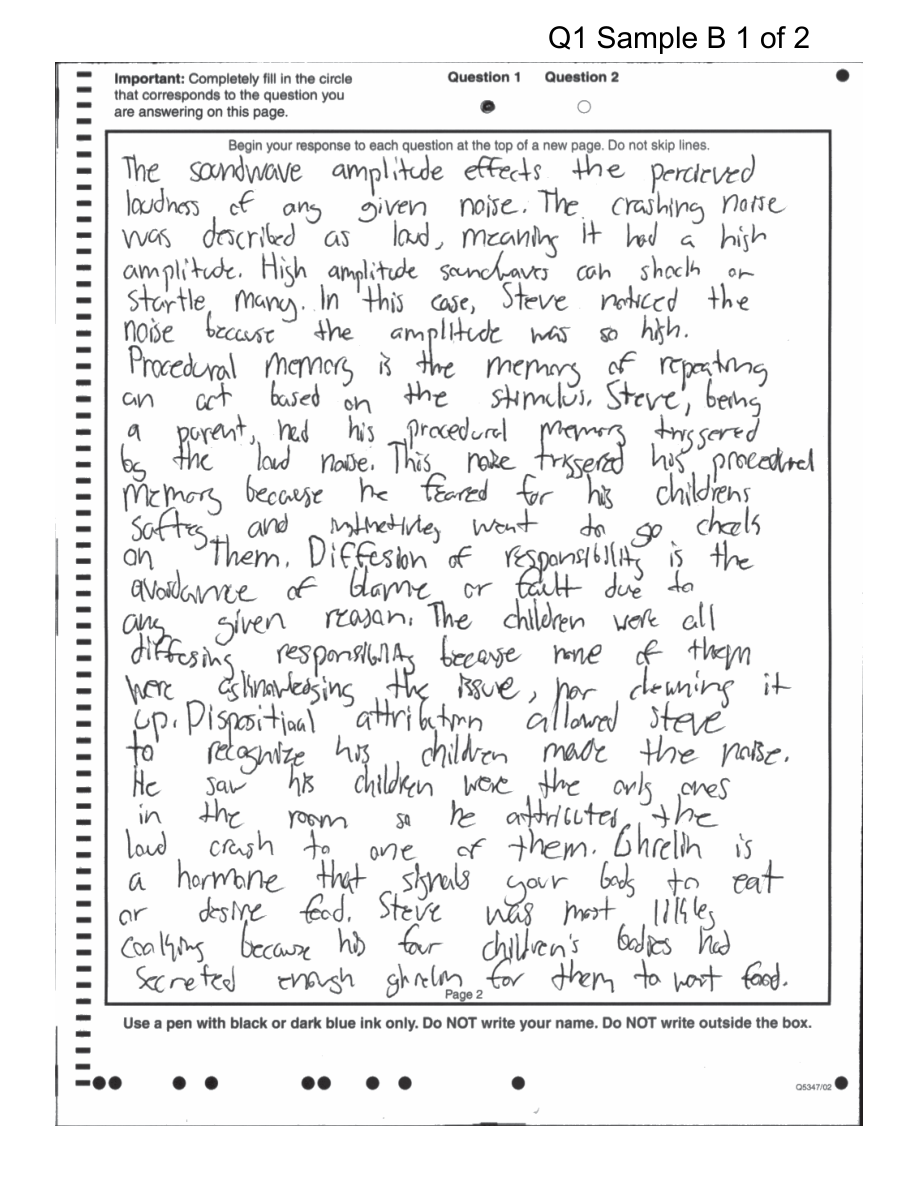
- Figure — Sample Responses Q1 - Set 1 (p. 8)
- Figure — Sample Responses Q1 - Set 1 (p. 9)
- Figure — Sample Responses Q1 - Set 1 (p. 10)