From the free course AP Psychology on Lykke
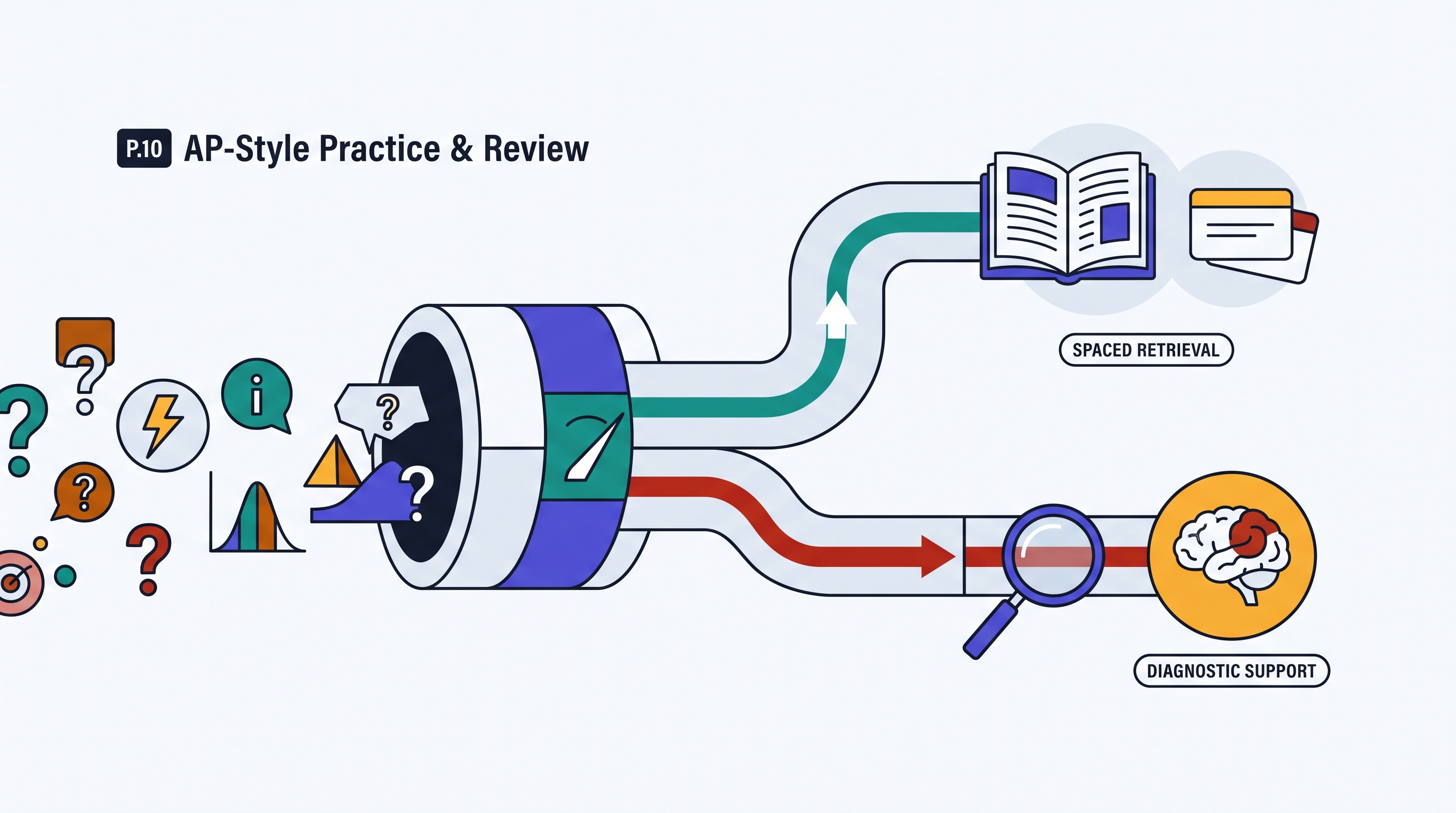
P.10 Full-Length AP-Style Practice Exam and Error Review
Key concepts: Negative emotions · Reduced awareness · Narrowed thinking and action · AP Psychology Course and Exam Description · Instant feedback · Additional study or support · Advanced Placement Program · College-level courses in high school · AP Exams in May · College credit or advanced placement
A full AP-style practice run requires more than recognizing familiar terms: you must sustain accurate reasoning across unfamiliar scenarios, data, research designs, and evidence. Negative emotions can make that harder because they tend to reduce awareness and narrow thinking and action—a useful reminder to pause,…
P.10 Full-Length AP-Style Practice Exam and Error Review
A negative emotion can shrink the mental “spotlight”: awareness becomes reduced, and thinking and action become narrower. That mechanism matters during a long AP Psychology practice exam, where fatigue, anxiety, or frustration can make a student overlook evidence that was actually present in the question.
Negative emotions tend to reduce awareness and narrow thinking and action.
Reduced awareness does not mean that a person becomes completely unconscious or loses all thought. It means that fewer details, alternatives, and possible responses enter active attention. Narrowed thinking and action means relying on a smaller set of interpretations or behaviors—for example, choosing the first familiar answer rather than comparing each option with the psychological mechanism described in the vignette.
The Advanced Placement Program offers college-level courses and examinations to students while they are still in high school. A qualifying AP Exam score may lead to college credit, placement into a more advanced course, or both, depending on the college. A full-length AP Psychology practice exam therefore has a specific purpose: it tests whether reasoning can remain accurate across sustained, college-level work—not merely whether isolated vocabulary terms can be recognized.
What “full-length” must simulate
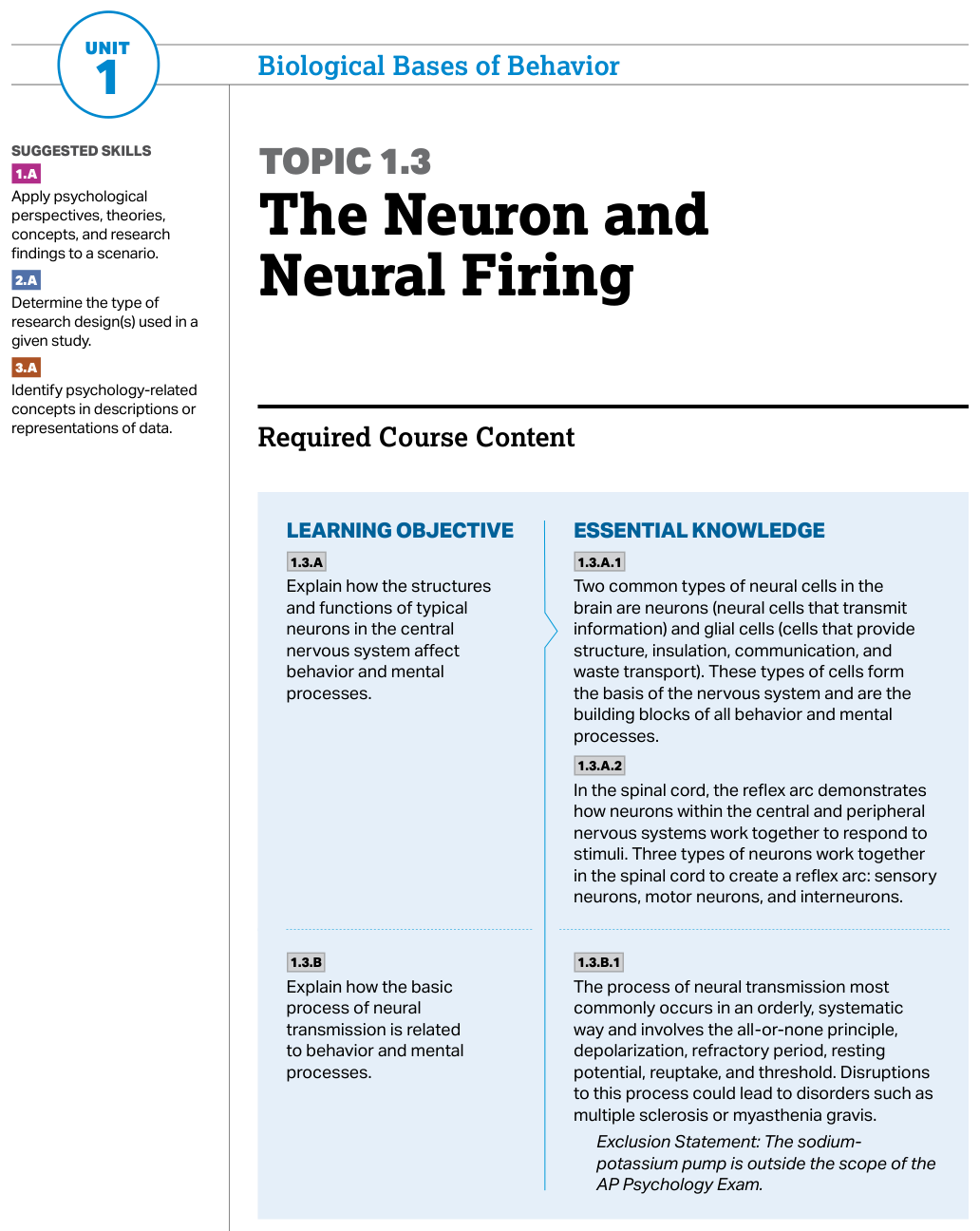
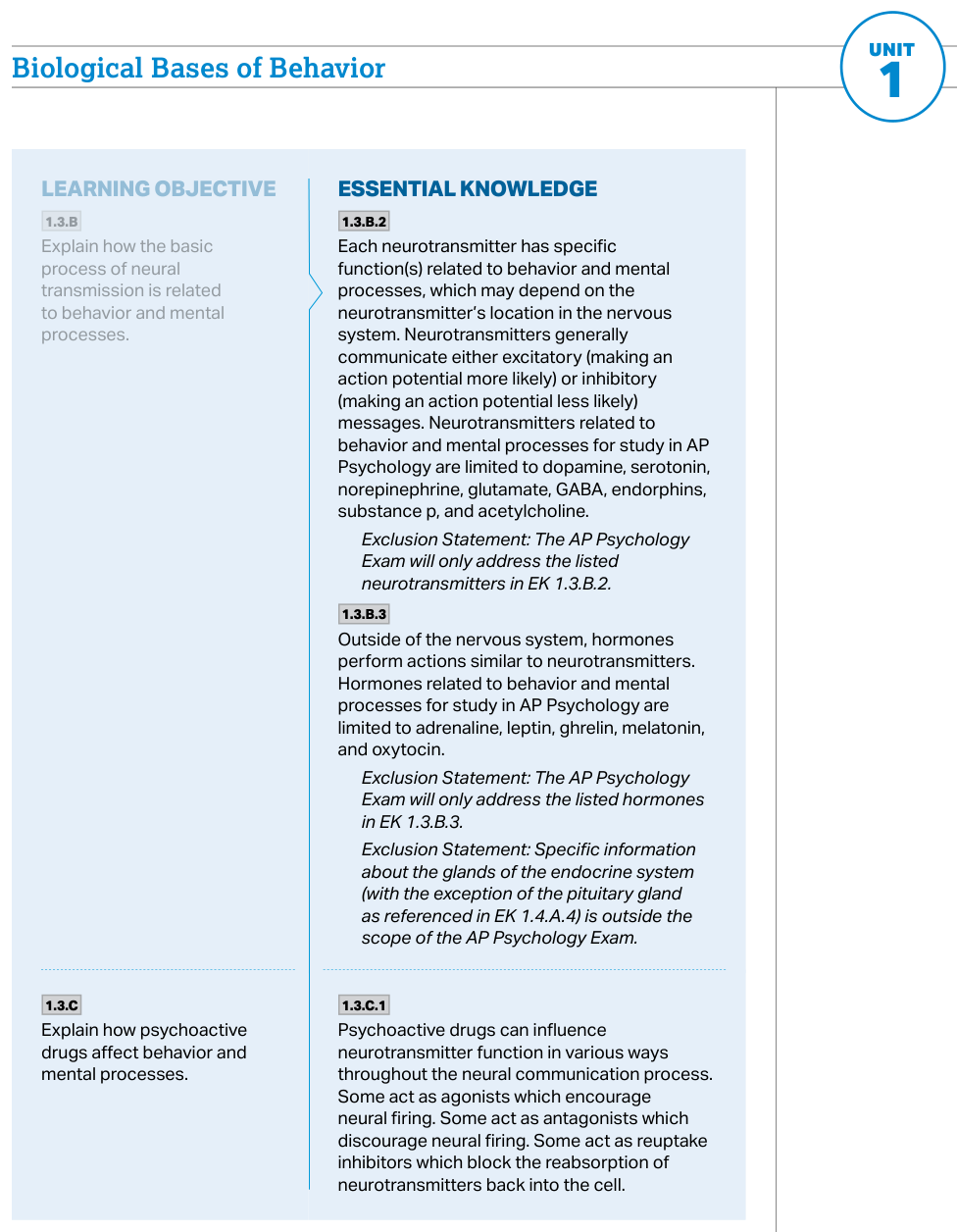
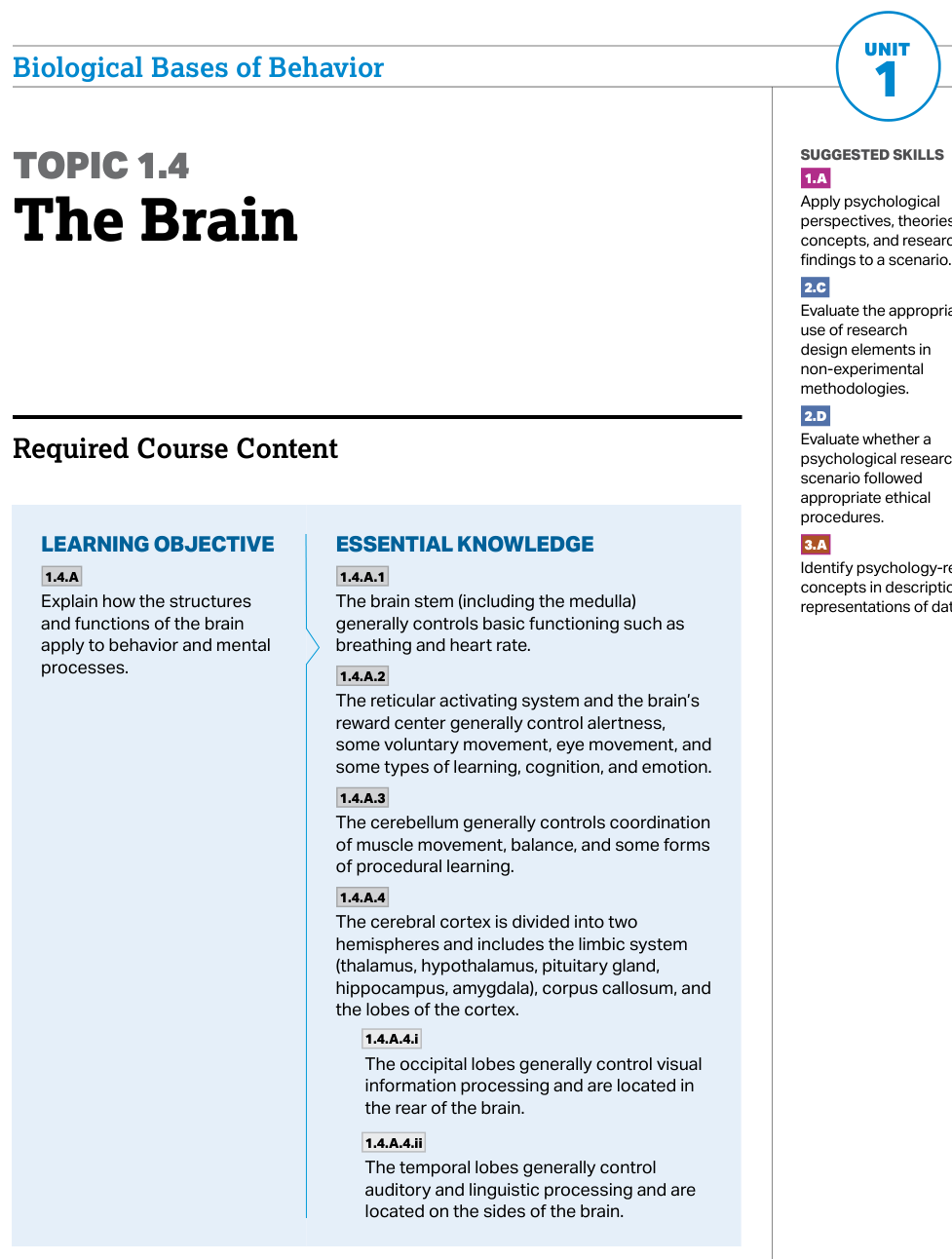
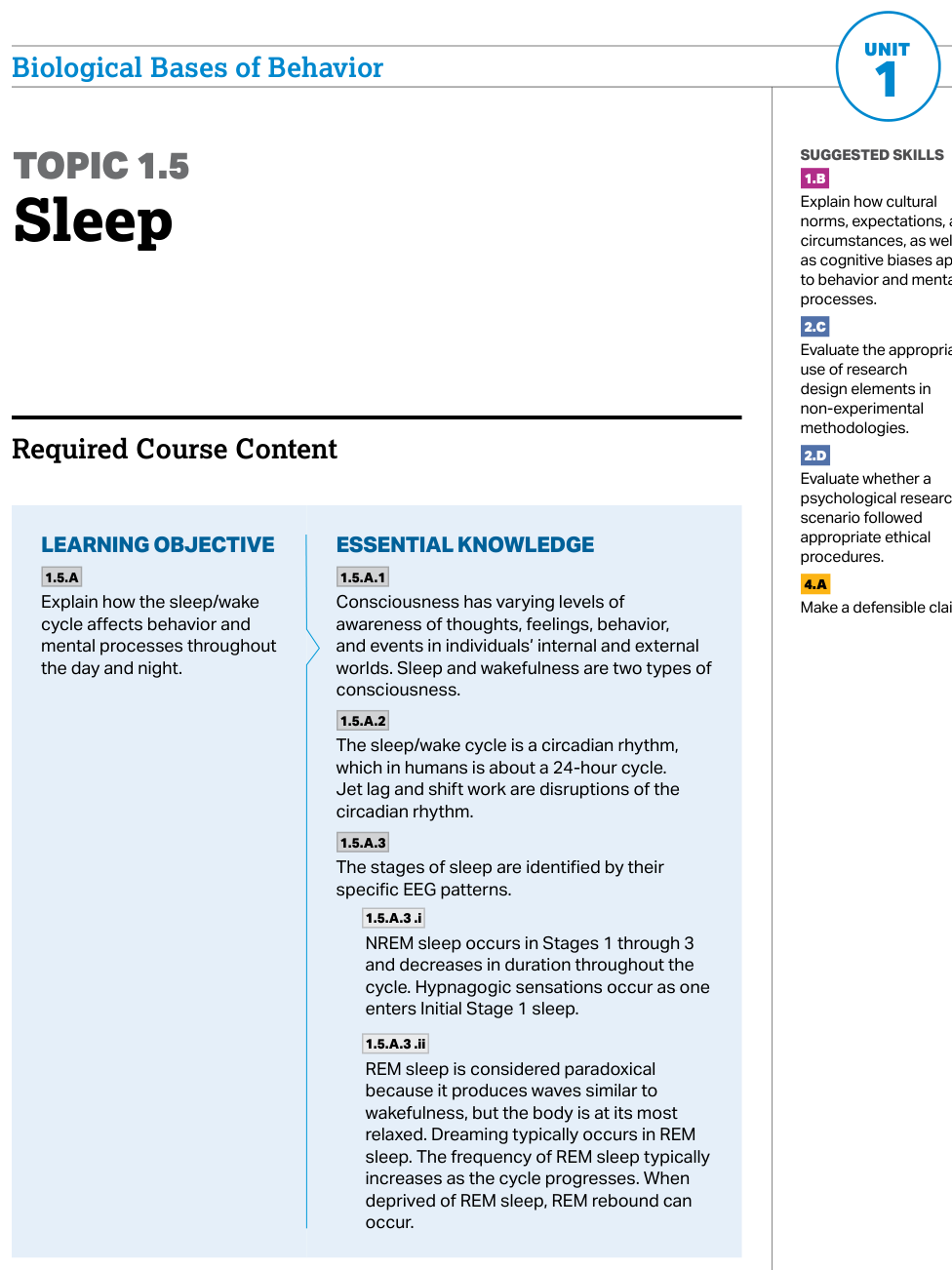
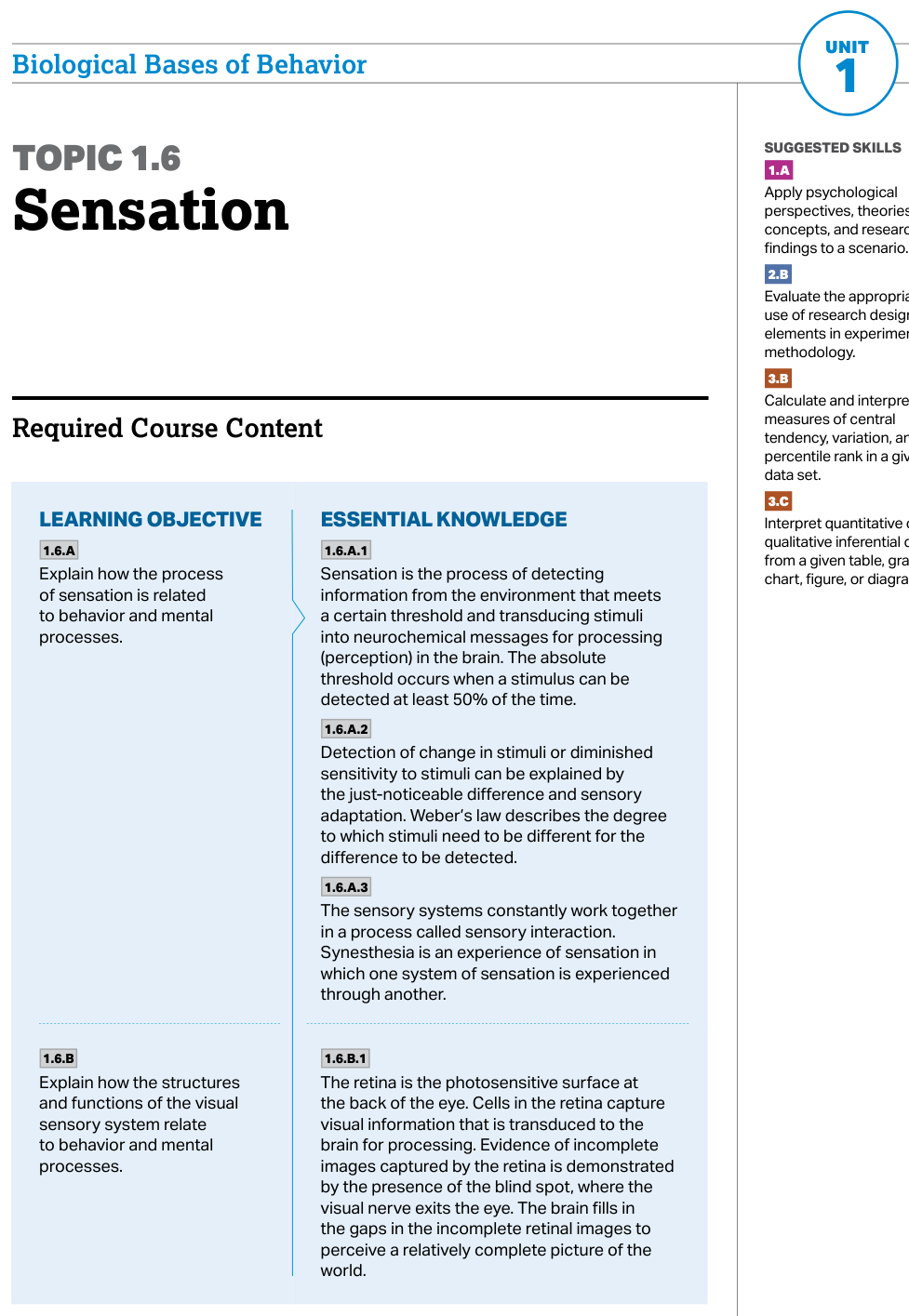
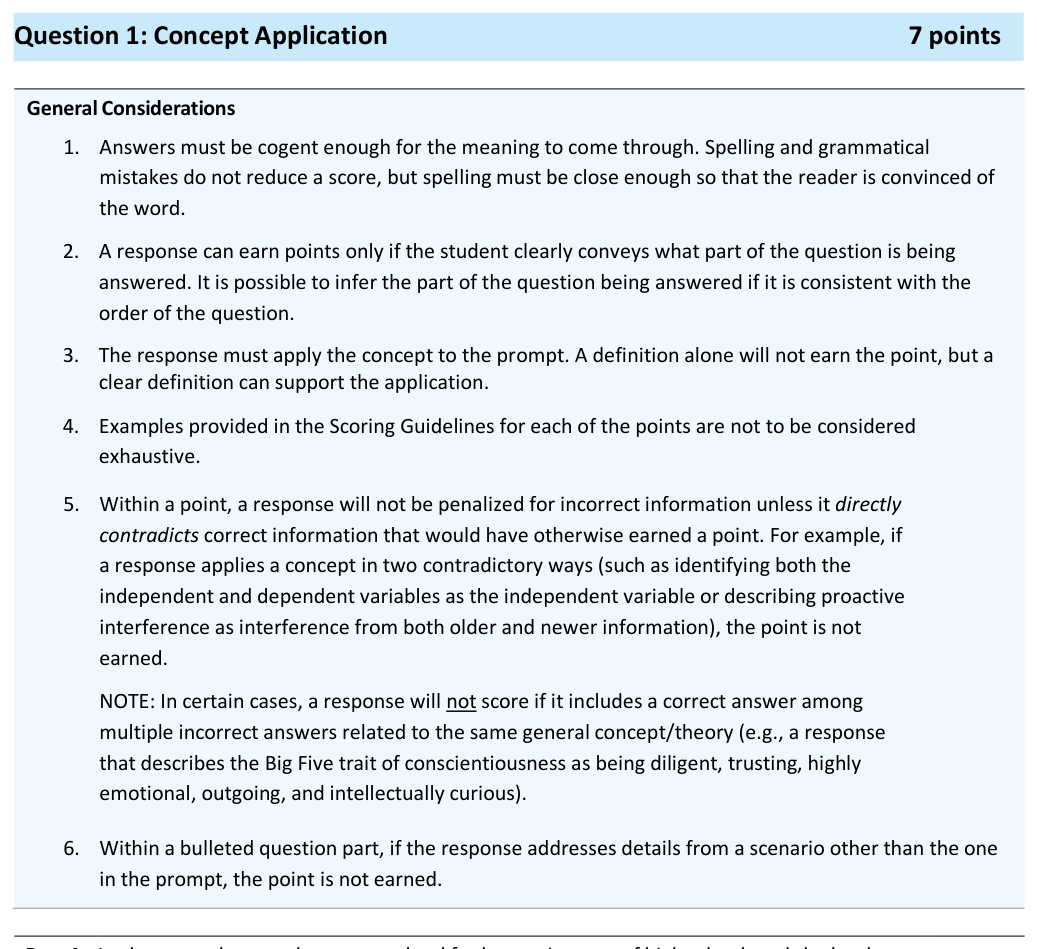
A genuine full-length practice exam preserves the complete experience of the AP Psychology assessment: the multiple-choice portion, the free-response work, unfamiliar scenarios, psychological research or evidence, and the need to manage attention across the entire sitting. It should use original questions aligned with the AP Psychology Course and Exam Description rather than recycling the guided multiple-choice items already used for mechanism-first reasoning.
The practice run should be taken under realistic conditions: use one uninterrupted session when possible, avoid notes and answer searches, record answers before checking them, and mark—not immediately solve—items that create uncertainty. The goal is diagnostic accuracy. If feedback appears after every item, the experience becomes a lesson-by-lesson drill rather than a full-length performance sample.
A useful full-length sequence moves from independent completion to structured review:
- Complete the entire exam without consulting explanations.
- Record the result for each question: correct, incorrect, or guessed.
- Separate knowledge errors from reasoning errors.
- Locate the exact evidence in the stem, graph, study description, or response requirement.
- Rewrite the reasoning that would have produced the correct answer.
- Choose additional study or support based on the pattern, not on one difficult question.
Error review: the answer is only the beginning
An incorrect answer can reflect several different problems. A student may lack the definition, confuse two related concepts, miss the mechanism in a scenario, misread research evidence, or let a negative emotion narrow attention to one attractive answer choice. A guessed-correct answer also deserves review because it may signal fragile knowledge rather than mastery.
For each missed or guessed item, write a compact error record:
| Error question | Diagnostic question | Repair |
|---|---|---|
| Knowledge | Could I define the tested term accurately? | Relearn the term and a contrasting example. |
| Application | Did I connect the term to the behavior in the vignette? | State the mechanism in one sentence. |
| Evidence | Did I use the study, data, or result provided? | Cite the relevant evidence before selecting. |
| Reading | Did I overlook a qualifier such as “best,” “most likely,” or “not”? | Reread the stem and eliminate unsupported choices. |
| Attention | Did stress or fatigue narrow my search too early? | Pause, widen the alternatives, and compare all options. |
Instant feedback and additional support
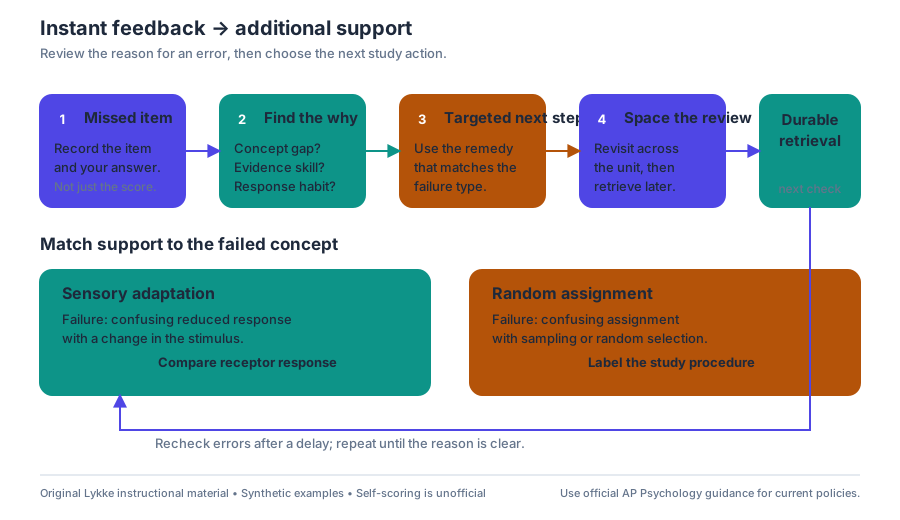
Instant feedback is feedback delivered close to the moment of performance. It is especially useful after a full-length exam has been scored: the student can identify the unit, skill, or concept connected to an error while the reasoning is still accessible. The feedback should explain why the correct answer follows from the evidence and why the distractors fail, not simply reveal a letter.
AP instructional guidance recommends using topic questions to provide instant feedback about areas where students may still need additional study or support. A student who repeatedly misses one topic should return to its definitions, examples, and application questions; a student whose errors cluster around evidence or research interpretation needs practice making claims from the information supplied. Support may include teacher explanation, a targeted reread, a new set of topic questions, or collaborative discussion.
Review should also continue during instruction rather than waiting until the entire course is finished. Revisiting information learned earlier in a unit helps prevent narrow, short-lived recall and makes later full-length performance more stable. The practical rule is simple: use the full exam to reveal the pattern, use instant feedback to name the problem, and use targeted study or support to repair it.
Source Materials
- Ap Psychology Course And Exam Description
- Ap Psychology Course At A Glance
- AP Psychology CED: Student Responses and Scoring Commentary
- AP Psychology Exam Questions
- Free-Response Questions
- Free-Response Questions - Set 1
- Free-Response Questions - Set 2
- continued on next page
- continued on next page
- continued on next page
- continued on next page
- continued on next page