From the free course AP Psychology on Lykke
2.8 Intelligence and Achievement
Key concepts: Intelligence measurement · Intelligence tests · Construct validity · Predictive validity · Cultural responsiveness in assessment · Stereotype threat and stereotype lift · Socioeconomic and educational inequities · Uses and consequences of intelligence scores · Achievement versus aptitude · Fixed and growth mindsets
Intelligence is a psychological construct: an abstract ability inferred from patterns of reasoning, problem-solving, learning, and adaptation rather than directly observed like height or blood pressure.
2.8 Intelligence and Achievement
Intelligence is a psychological construct: an abstract ability inferred from patterns of reasoning, problem-solving, learning, and adaptation rather than directly observed like height or blood pressure. Early formal intelligence tests were created to measure intellectual abilities systematically, but a score is meaningful only when you ask two questions: What does this test actually measure, and what can the score legitimately predict?
Measuring intelligence: more than producing a number
A test has construct validity when it truly measures the construct it claims to measure. If an “intelligence” test depends heavily on vocabulary learned in one cultural setting, it may partly measure language exposure, schooling, or familiarity with the test format—not intelligence alone.
Predictive validity asks a different question: how well do scores predict a relevant future outcome? An intelligence score may predict some academic or occupational outcomes, but prediction is never proof of permanent ability, personal worth, or guaranteed success. Motivation, opportunity, health, instruction, and discrimination also affect outcomes.
Key distinction: Construct validity asks, “Are we measuring intelligence?” Predictive validity asks, “How well does this score forecast something relevant later?”
The goal of socio-culturally responsive assessment is to reduce unfair effects caused by language, cultural assumptions, unequal preparation, or threatening testing conditions. Researchers therefore try to design assessments that are technically sound and responsive to the social and cultural contexts in which people take them. This ethical concern is traceable to 2.8.B.3.
Stereotype threat and stereotype lift
Stereotype threat occurs when fear of confirming a negative stereotype about one’s group interferes with performance. The pressure can consume attention and working-memory resources, so a person may perform below their capability in that situation. This does not demonstrate that the stereotype is true; it demonstrates that the testing context can affect performance.
Stereotype lift is the reverse pattern: performance may improve when people benefit from a favorable comparison with another group. Both effects show why a test score reflects an interaction among ability, context, expectations, and opportunity—not an isolated measure of an unchanging trait.
Systemic context changes what scores mean
Suppose average intelligence-test scores rise across several generations. The Flynn Effect refers to the broad historical increase in IQ scores across much of the world. Higher socioeconomic status, improved health care, better nutrition, expanded schooling, and other societal changes can contribute to this pattern (2.8.C.1).
A careful interpretation does not conclude that people suddenly acquired a permanent, biologically fixed increase in intelligence—or that earlier generations were lazy. The pattern could reflect improved health, education, test familiarity, nutrition, or changing environments. Those are possible confounds and alternative explanations that matter for construct validity. If scores predict later outcomes, that supports predictive validity only for those outcomes and contexts; it still does not prove that the score captures a permanent inner capacity.
Scores also vary more within a group than between groups. Poverty, discrimination, unequal educational opportunities, nutrition, health care, and test access can influence scores for individuals and societal groups. Personal and sociocultural biases can further distort how a score is interpreted or how it is related to other outcomes (2.8.C.2).
Historically, intelligence-test scores have been used as gatekeeping tools to restrict access to jobs, military ranks, educational institutions, and immigration to the United States (2.8.C.3). A score can be quantitative—a number used for comparison or selection—but its qualitative meaning depends on who was tested, under what conditions, for what purpose, and with what consequences.
Intelligence, achievement, and aptitude
Achievement tests measure knowledge or skills already acquired: for example, what mathematical procedures you have learned. Aptitude tests estimate potential for future learning or performance. The distinction is about the target of measurement, not a claim that one person possesses “real ability” while another does not.
| Test type | Main question | Example interpretation |
|---|---|---|
| Achievement | What has been learned already? | “How well can you solve the algebra taught in this course?” |
| Aptitude | How might someone perform or learn in the future? | “How prepared might this person be for further technical training?” |
Your beliefs about intelligence can also affect achievement. A fixed mindset treats intelligence as fixed from birth; a growth mindset treats it as capable of development through experience. A fixed belief may encourage someone to avoid difficult tasks because mistakes feel like evidence of limited ability. A growth belief can support persistence and revision, although it is not a magic guarantee: effective instruction, resources, feedback, and opportunity still matter (2.8.D.1–2.8.D.2).
Misconception check: A higher score does not prove permanent intelligence, and a lower score does not prove laziness or lack of potential. Interpret the measure, the context, and the evidence before making the claim.
Retrieval check
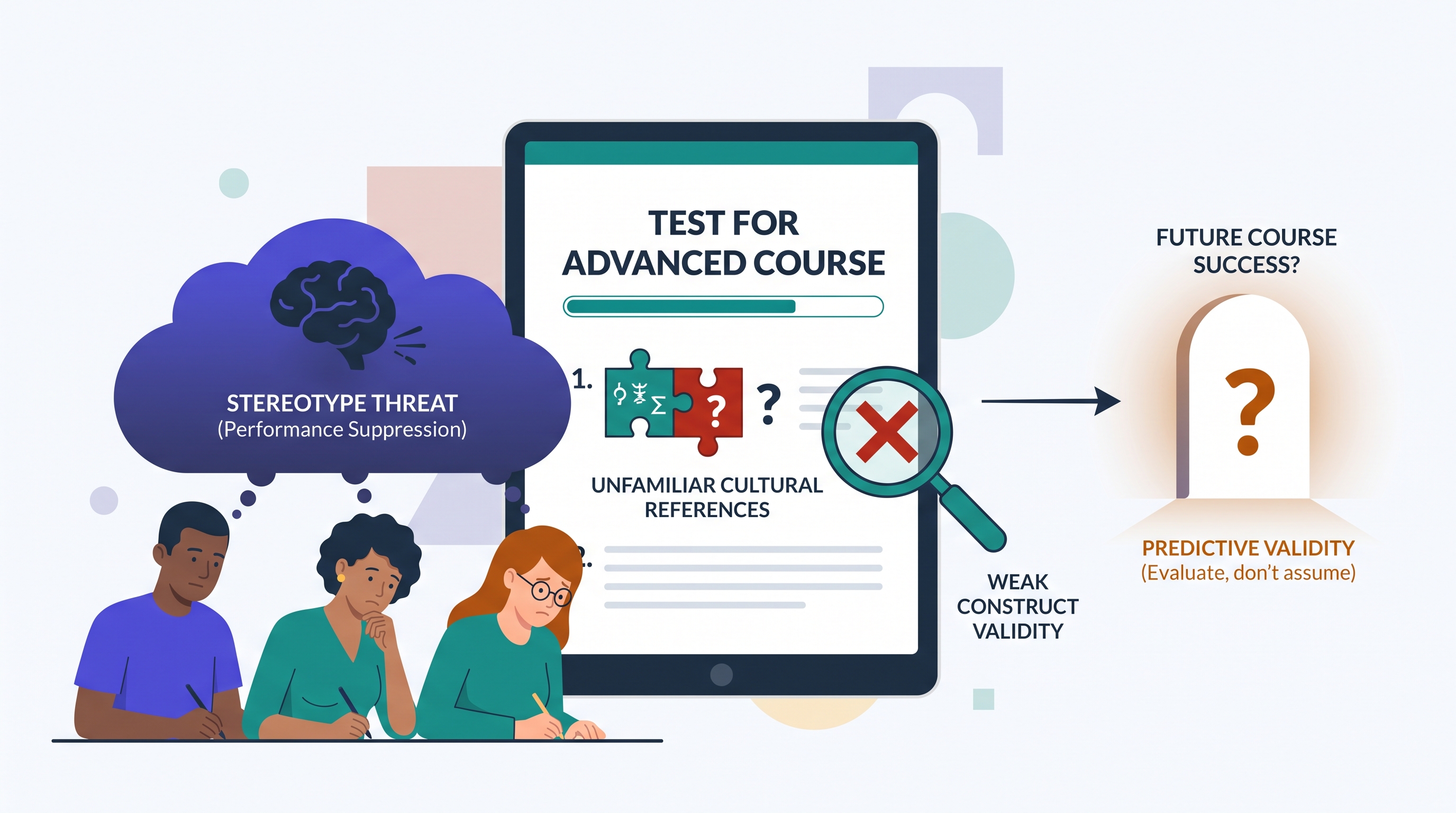
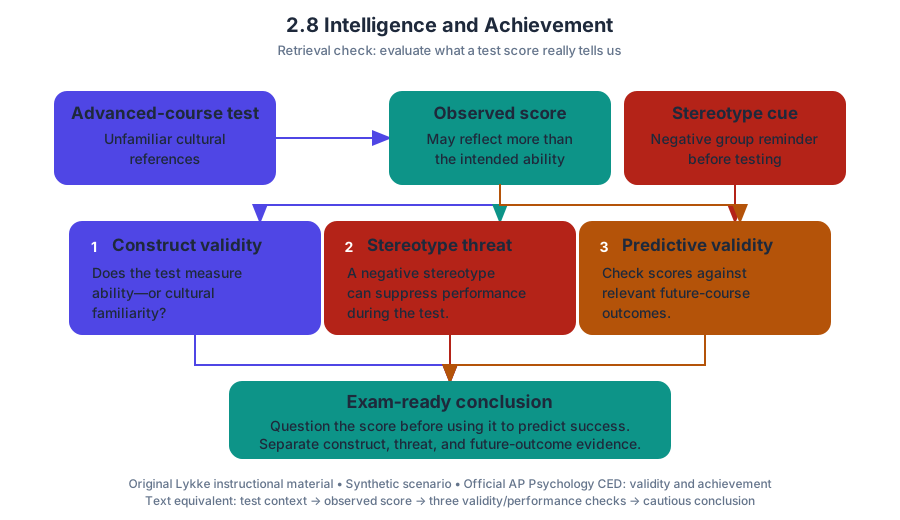
A school gives a test to predict success in an advanced course, but the test uses unfamiliar cultural references and is administered while students are reminded of a negative stereotype about their group. Which two concerns should you raise?
Answer: The test may have weak construct validity if cultural familiarity contaminates the intended measure, and stereotype threat may suppress performance. Its predictive validity should be evaluated with relevant future-course data rather than assumed from the score alone.
Source Materials
- Ap Psychology Course And Exam Description
- Ap Psychology Course At A Glance
- AP Psychology CED: Student Responses and Scoring Commentary
- AP Psychology Exam Questions
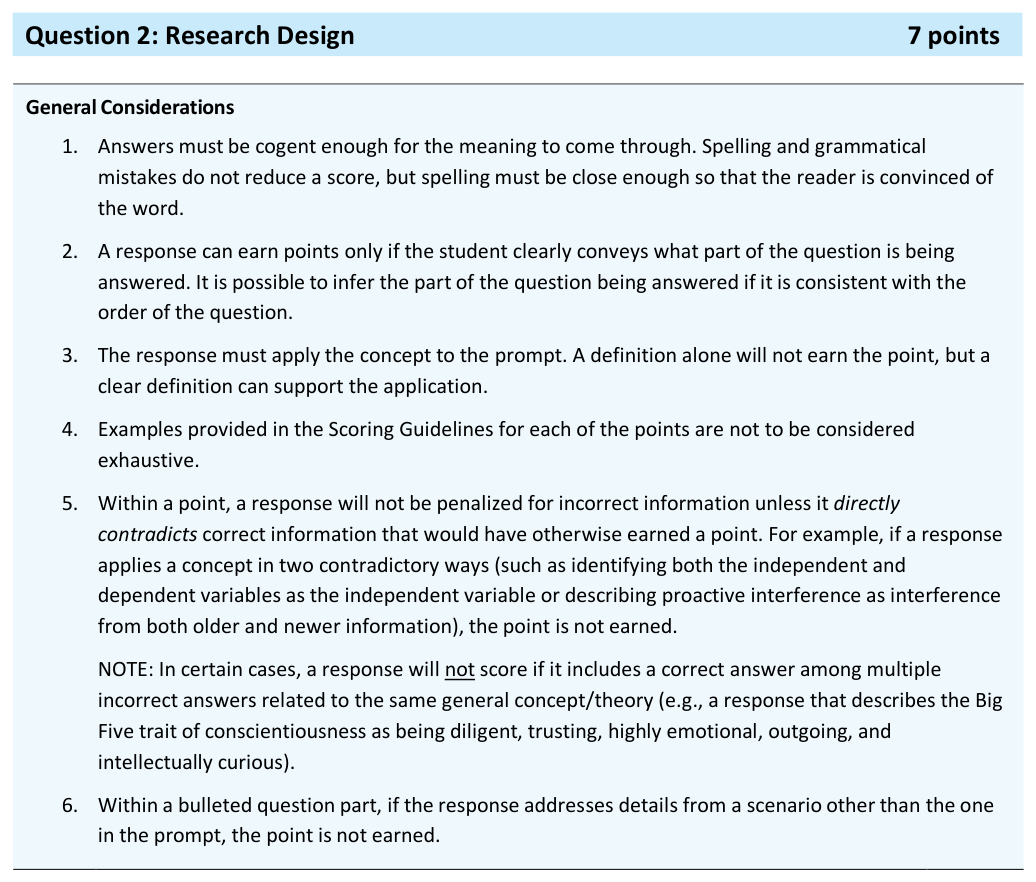
- Free-Response Questions
- Free-Response Questions - Set 1
- Free-Response Questions - Set 2
- Michael is the regional manager for a car company and needs to give a presentation to the president of the company about how different management styles might relate to the total number of sales of th
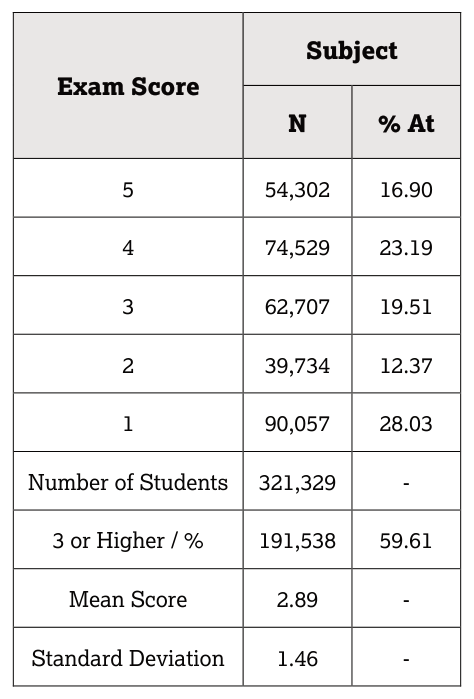
- Figure — Score Distributions (p. 1)
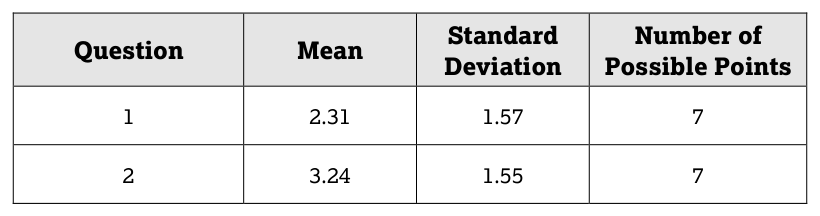
- Figure — Scoring Statistics – Set 1 (p. 1)
- Michael is the regional manager for a car company and needs to give a presentation to the president of the company about how different management styles might relate to the total number of sales of th
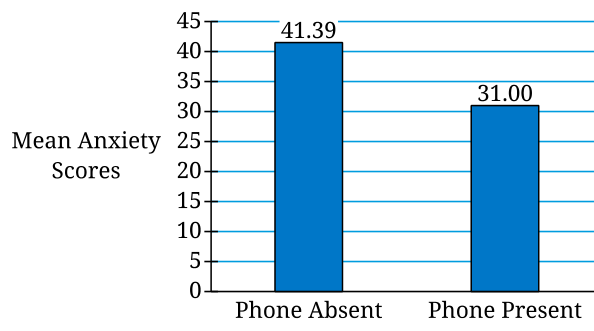
- Participants in the Phone Absent group reported significantly higher mean anxiety scores than those in the Phone Present group.