From the free course AP Psychology on Lykke
3.3 Gender and Sexual Orientation
Key concepts: Sex and gender · Gender identity · Sexual orientation · Gender socialization · Development across the lifespan · Research design in non-experimental methodologies · Psychosocial development and identity formation · Racial, ethnic, religious, occupational, and familial identities · Possible selves · Gender participant demographics
Distinguish sex, gender identity, gender roles and sexual orientation, and describe the evidence on their development without inferring cause from correlation.
3.3 Gender and Sexual Orientation
Sex, gender, gender identity, and sexual orientation describe related but different aspects of human development. Sex generally refers to biological characteristics, while gender refers to socially shaped meanings, expectations, roles, and patterns associated with being perceived or identifying in particular ways. Gender identity is a person’s internal sense of gender; sexual orientation concerns enduring patterns of romantic, emotional, or sexual attraction. One term cannot be substituted for another: knowing someone’s gender identity does not tell you their sexual orientation.
Core learning objective 3.3.A: Describe how sex and gender influence socialization and other aspects of development.
Socialization: how gender becomes part of everyday development
Socialization is the process through which people learn and respond to the expectations, values, behaviors, and meanings of their social groups. Families, peers, schools, media, workplaces, and cultural institutions may communicate gender expectations through language, clothing, activities, praise, discipline, role models, and assumptions about future occupations or relationships.
A child may therefore receive social feedback that influences self-concept: “people like me do this,” “this behavior is accepted,” or “this role does not seem available to me.” Socialization can shape opportunities and behavior, but it does not mean that every person adopts the expectations they encounter. People interpret, resist, combine, and revise social messages.
Misconception check — “Gender is only biology.” Biological characteristics can influence development, but this claim ignores socialization, cultural variation, personal interpretation, and the active development of identity. A stronger explanation asks how biological, psychological, and social factors interact rather than treating gender as a single biological outcome.
Identity develops across the lifespan
Identity development is not a one-time decision made at a single age. In childhood, a person may begin noticing gender categories, receiving social feedback, and forming ideas about which activities, relationships, and future roles feel possible. Gender identity and expression may become more clearly articulated over time, but people vary widely in when and how they understand or communicate them.
Adolescence often brings increased self-reflection, comparison with peers, exploration of belonging, and consideration of possible selves—images of who one might become. A person may explore or commit to aspects of gender identity, sexual orientation, racial or ethnic identity, religious identity, occupational identity, and familial identity. These identities can intersect: the experience of gender may be shaped by culture, race, family expectations, community, disability, or other social positions.
Psychosocial identity formation involves movement among exploration and commitment. Someone may actively compare possible identities, temporarily adopt an identity without extensive exploration, experience uncertainty, or reach a personally meaningful commitment. Social feedback can support belonging and confidence, while rejection or exclusion can make exploration more difficult; neither response mechanically determines a person’s identity.
Adulthood does not end identity development. New relationships, workplaces, communities, cultural settings, or changes in family roles may lead a person to express an established identity differently, reconsider an earlier understanding, or integrate several identities more fully. “Development” here means changing self-understanding and social participation across time—not a claim that one identity is immature or incomplete.
Sexual orientation is distinct from gender identity
Sexual orientation describes patterns of attraction, whereas gender identity describes a person’s internal sense of gender. A person’s orientation cannot be inferred from appearance, gender expression, behavior in one relationship, or the gender identity of a partner. Likewise, gender identity cannot be inferred from sexual orientation.
Use precise language when interpreting a developmental case: identify whether the evidence concerns socialization, gender identity, sexual orientation, or another identity process. Avoid assuming that a group average describes every individual, and avoid treating identity as a disorder or as a guessing game about a real person.
Evaluating non-experimental research: Skill 2.C
Suggested Skill 2.C: Evaluate the appropriate use of research design elements in non-experimental methodologies. Non-experimental research can describe naturally occurring differences and examine associations when researchers cannot or should not assign participants to identities, social environments, or orientations.
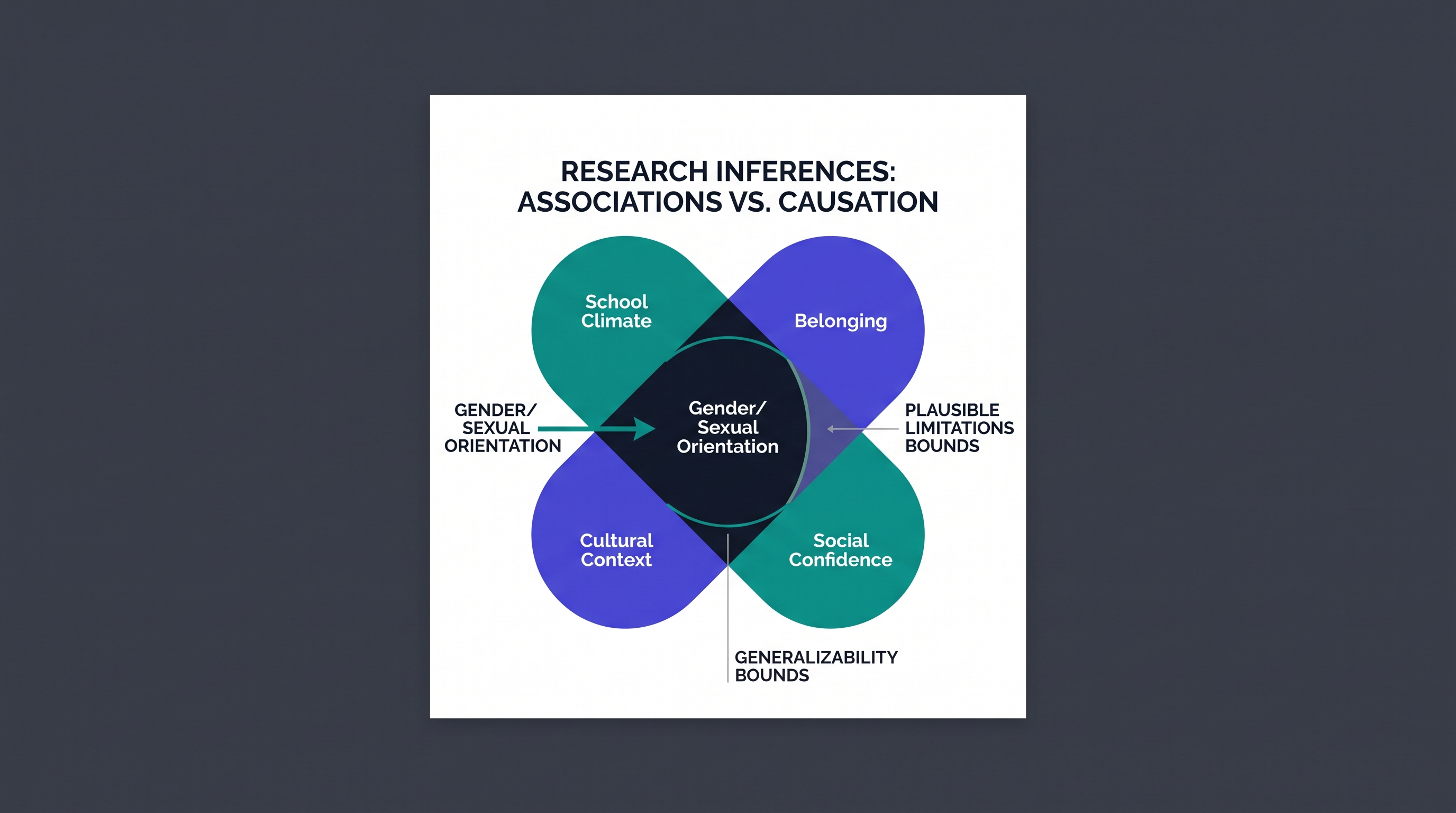
Imagine an original survey study of school belonging. It reports 35 male participants, or 27.3%, and 93 female participants, or 72.7%. The percentages describe the sample’s gender distribution; they do not establish that gender caused differences in belonging. You should ask how gender was measured, whether the categories allowed participants to describe themselves accurately, how participants were recruited, whether the sample represents the target population, and whether other variables—such as age, school climate, or cultural context—could explain the association.
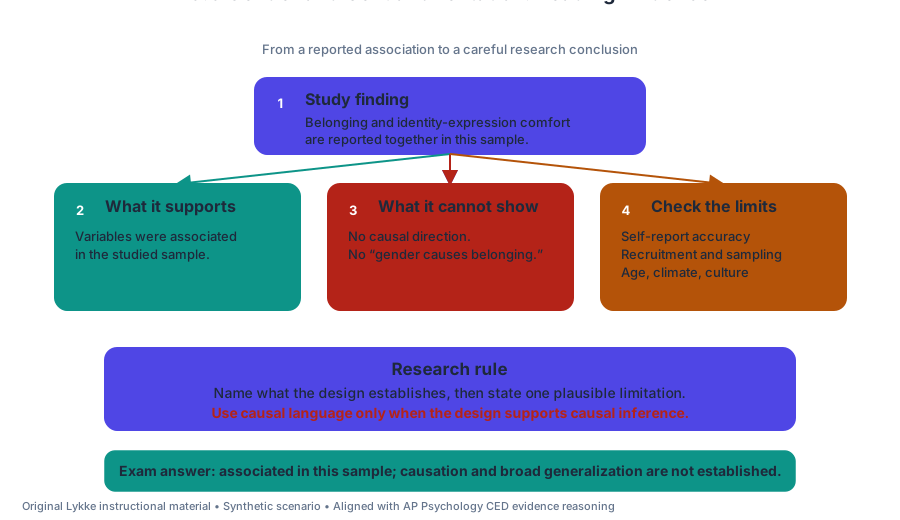
A correlational result may support a claim such as “the measured variables were associated in this sample.” It does not license “gender causes belonging,” “orientation causes social confidence,” or a claim about every population. A case study may provide detailed information about one person but limited generalizability; a survey may include many participants but depend on self-report accuracy and sampling quality.
Research rule: describe what the design can establish, identify a plausible limitation, and refuse causal language unless the design actually supports causal inference.
Retrieval check: A study finds that students who report stronger school belonging also report greater comfort expressing their identities. What is the strongest conclusion? Answer: The variables are associated in the studied sample. Because the study is non-experimental, the result alone does not establish that one variable caused the other, and generalizability depends on the sample and measurement procedures.
Source Materials
- Ap Psychology Course And Exam Description
- Ap Psychology Course At A Glance
- AP Psychology CED: Student Responses and Scoring Commentary
- AP Psychology Exam Questions
- Free-Response Questions
- Free-Response Questions - Set 1
- Free-Response Questions - Set 2
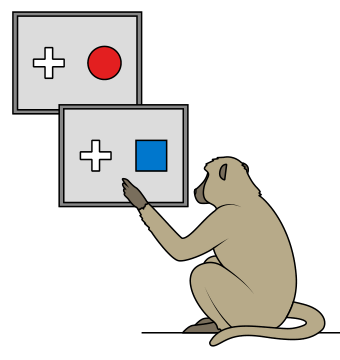
- Figure 1: The Non-Conflict Trial
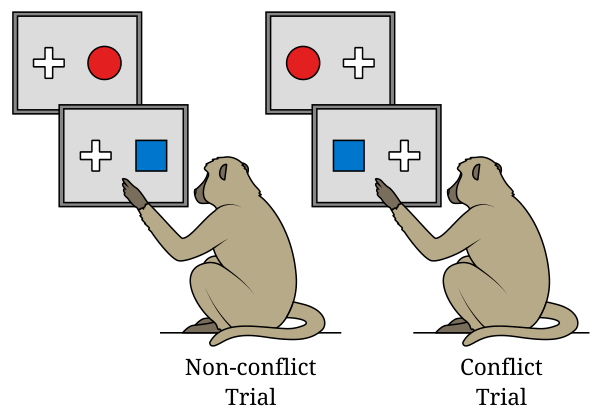
- Figure 2: The Non-Conflict and the Conflict Trial