From the free course AP Art History on Lykke
4.2 Purpose and Audience in Later European and American Art
Key concepts: artist intent and purpose · intended audience and patronage · how purpose and audience affect artmaking · changing social roles and functions of art · audience experience and reception · public exhibitions and commercial galleries · the Paris Salon · the avant-garde · artistic movements and “isms” · visual and contextual analysis
Why does one painting become a national symbol while another shocks its first viewers? Purpose, intended audience, patronage, and artistic intent shape not only what an artist makes, but also how people encounter, value, reject, or reinterpret it.
4.2 Purpose and Audience in Later European and American Art
Why does one painting become a national symbol while another shocks its first viewers? Purpose, intended audience, patronage, and artistic intent shape not only what an artist makes, but also how people encounter, value, reject, or reinterpret it. In Later European and American Art, from $1750$ to $1980$ CE, art moved through changing systems of religious, civic, political, and commercial support.
Enduring Understanding PAA-1: A variety of purposes may affect art and art making, including intended audience, patron, artistic intention, and function. Because contexts change, an artwork’s function and reception may change as well.
The purpose–audience–reception chain
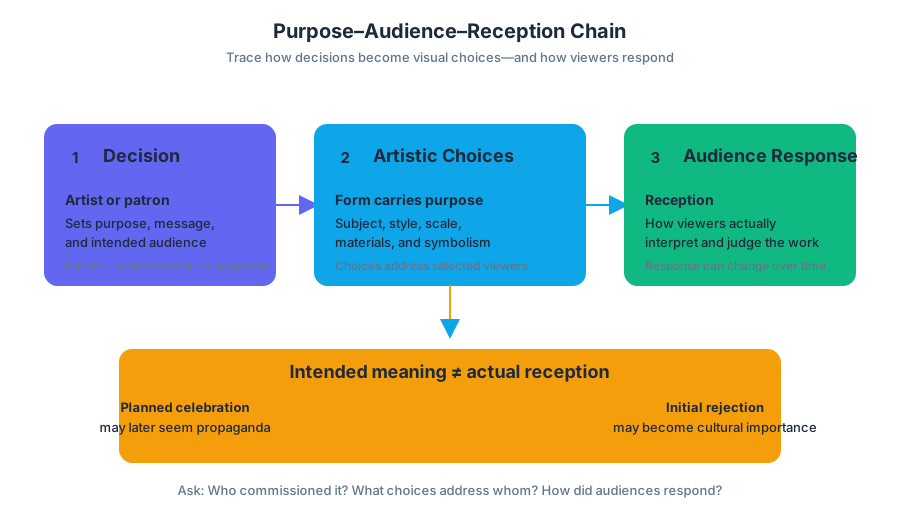
A useful way to analyze an artwork is to follow a three-part chain:
Artist or patron decision $\rightarrow$ artistic choices $\rightarrow$ audience response
The patron is the person or institution that commissions, purchases, or supports an artwork. The intended audience is the group the work is designed to address, while reception means how viewers actually respond to it. Intended meaning and actual reception can diverge: a work meant to celebrate authority may later be criticized as propaganda, or a work initially rejected may become culturally important.
This directly develops Learning Objective PAA-1.A: Explain how purpose, intended audience, or patron affect art and art making. It is assessed especially through Skill 2.B (Blue): Explain how the possible intent, purpose, and/or function shape the creation or meaning of a work of art (or group of related works of art) and Skill 2.D (Blue): Explain how artistic decisions about form, style, materials, content, function, and/or context of a work of art (or group of related works of art) elicit a response or shape its reception.
New roles for art
PAA-1.A.9: Works of art took on new roles and functions in society, and were experienced by audiences in new ways. Church patronage declined, while corporate patronage emerged. Museums became important institutions of civic and national status and pride, and art increasingly circulated through public exhibitions and commercial galleries.
The economic structure changed with the audience. The sale of art to the public became a leading driver of production; collecting increased demand and prices, turning art into a commodity—an object bought and sold for financial as well as cultural value. After the devastation of Europe in World War II, artists in the United States dominated the international art market.
Public display transformed the viewing experience. The Salon in Paris presented art before a broad audience, while later commercial galleries connected artists to buyers, critics, collectors, and competing artists. Audiences therefore ranged from private patrons to the general public, which could be hostile toward art that broke with tradition (PAA-1.A.10; PAA-1.A.11).
The avant-garde and the problem of tradition
The avant-garde describes artists dedicated to innovation. Their purpose was often not simply to produce attractive objects, but to challenge inherited expectations about subject matter, technique, perspective, artistic authority, or the status of the art object itself.
Major movements associated with the avant-garde include neoclassicism, romanticism, realism, impressionism, post-impressionism, symbolism, expressionism, cubism, constructivism, abstraction, surrealism, abstract expressionism, pop art, performance art, and earth and environmental art. These movements do not share one visual style; they share an investment in testing what art can do and how it can address its audience.
Worked contextual example: Les Demoiselles d’Avignon
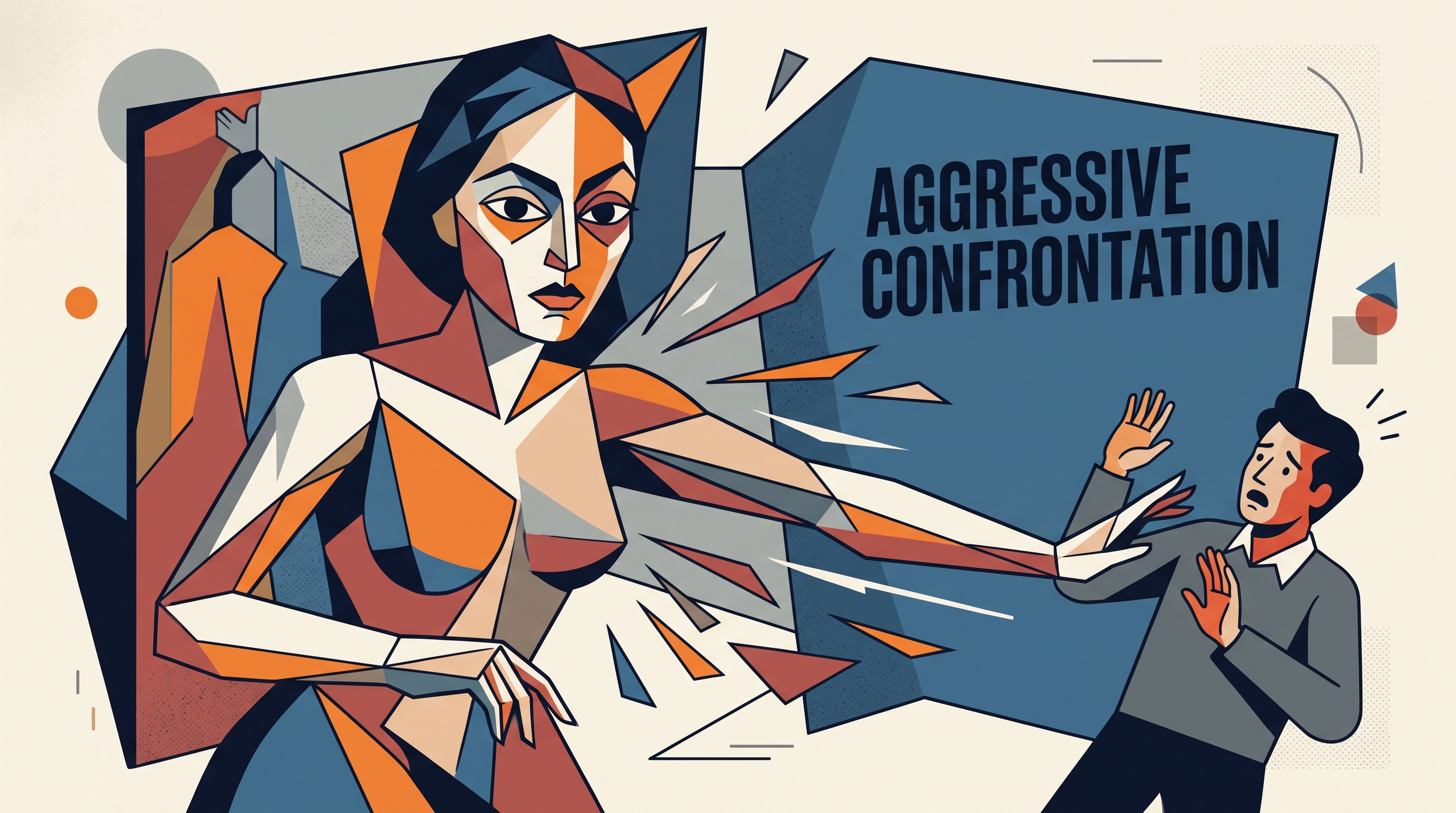
Pablo Picasso’s Les Demoiselles d’Avignon demonstrates how artistic decisions can provoke a new reception. Its fractured bodies, sharply angular planes, and multiple viewpoints create a radical break from traditional Western perspective and idealized human forms. Instead of presenting a unified, pleasing view of the human figure, the painting confronts viewers with instability and visual difficulty.
Using Skill 2.B, one can argue that its possible purpose was to challenge academic conventions and redefine modern painting. Using Skill 2.D, the visual evidence explains the reception: viewers accustomed to coherent perspective and idealized bodies could experience the work as aggressive, confusing, or even hostile. The painting’s meaning therefore depends not only on what appears in it, but also on the expectations it deliberately violates.
Compare purpose, audience, and function
| Work | Purpose or function to investigate | Audience or reception question |
|---|---|---|
| Oath of the Horatii | How might history and moral duty serve a civic purpose? | What values does its public address encourage viewers to admire? |
| George Washington | How does portraiture construct political identity and national authority? | Who benefits from seeing Washington represented as a public ideal? |
| The Starry Night | How might expressive form communicate personal or emotional experience? | How did later audiences transform the work into a widely recognized cultural image? |
| Where Do We Come From? What Are We? Where Are We Going? | How can an artwork address existential or cultural questions? | How might different audiences interpret its symbols and narrative? |
| Mont Sainte-Victoire | How can repeated observation transform a landscape into an artistic investigation? | What changes when landscape is viewed as modern formal exploration rather than simple description? |
The strongest interpretation combines art-historical knowledge with visual and contextual analysis. Do not claim an artist’s intention solely from appearance; connect a formal decision—such as composition, distortion, scale, or viewpoint—to a plausible purpose and then explain how a particular audience might have responded.
Misconception check
Misconception: “The artist’s intention determines the meaning permanently.” Correction: intention matters, but meaning and function can change as works move from private settings to museums, exhibitions, galleries, or mass culture. A public may reject innovation at first and later celebrate it, so critical and popular reception can become evidence when interpreting purpose and audience.
Retrieval check
A painting is commissioned by a government, displayed in a public museum, and later criticized by viewers who reject its unconventional style. Identify one factor related to PAA-1.A.10 or PAA-1.A.11, then explain how one artistic decision could shape reception using 2.D.
Source Materials
- AP Art History Course and Exam Description
- AP Art History Course and Exam Description Clarifications and Corrections
- AP Art History Course Overview
- AP Art History Course at a Glance
- AP Art History Course at a Glance Poster
- Adopt AP Art History
- AP Art History
- AP Art History
- Public Domain
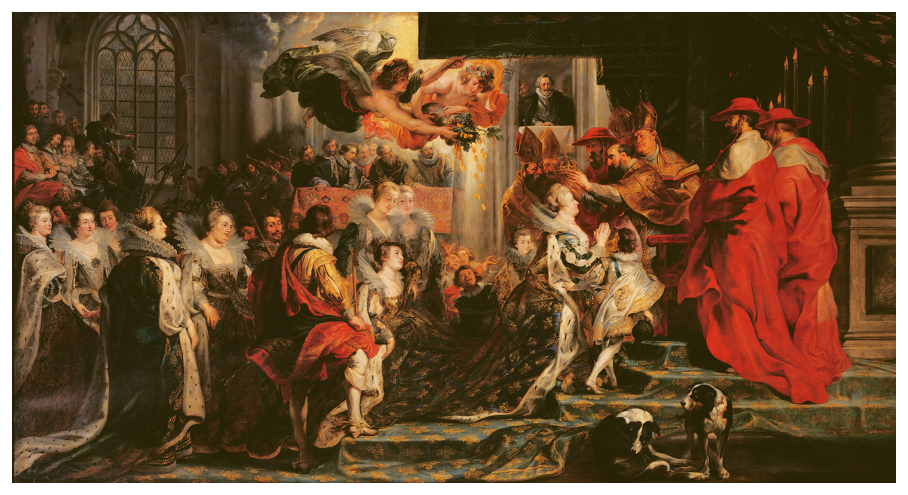
- Louvre, Paris, France/Bridgeman Images