From the free course World History Volume 1 on Lykke
4.4 The Hebrews
Key concepts: The Bible as a historical source for Hebrew history · The distinction between religious belief and historical analysis of the Bible · Abraham as the Hebrew patriarch and his migration from his city to Canaan · Sarah, Isaac, and Jacob in the Hebrew patriarchal tradition · Hebrew migration and settlement in Egypt · The Hyksos period in Egypt and its possible connection to groups from the eastern Mediterranean · Egyptian accounts of the Hyksos defeat and alleged destruction and enslavement · Persian rule and the return of Judeans to rebuild the Temple · Persian imperial policies of tribute, loyalty, and religious tolerance · The role of Zoroastrian beliefs in the broader religious context of the ancient Near East
By the end of this section the student can: Discuss the history of the Hebrews in the context of the development of the Near East; Explain how the Hebrew faith differed from others in the same region and time period
4.4 The Hebrews
The Hebrew Bible begins with creation and Adam, but historians examine Hebrew history most closely through the traditions surrounding Abraham and the generations that followed him. Those traditions are religious narratives, yet they also preserve memories of migration, settlement, political domination, and relationships among peoples in the ancient Near East. The central historical challenge is therefore to study the Bible seriously without treating every biblical statement as independently verified fact.
The Bible as a Historical Source
The Hebrews were a Semitic-speaking Canaanite people best known for the monotheistic religion of Judaism. The Hebrew Bible is the most important written source for their early history, but it must be read in two ways at once. It is a sacred text for Jewish communities, containing religious teachings and accounts of the relationship between God and the Hebrew people. It is also a historical source that can be compared with archaeological discoveries, inscriptions, and records produced by neighboring societies.
Religious belief asks what a sacred narrative means and why it matters to a community; historical analysis asks when, how, and under what circumstances that narrative was formed, transmitted, and connected to other evidence.
This distinction does not require historians to dismiss the Bible. Religious texts can preserve memories of real places, migrations, political conflicts, and social practices. At the same time, a religious narrative may organize events around theological purposes rather than modern historical standards of documentation. Historical study must therefore scrutinize the Bible as a religious text and compare it with the broader historical record.
The biblical traditions concerning Abraham appear to have been written down between the tenth and sixth centuries BCE. Before being recorded, some of these traditions may have circulated orally for generations. That long process of oral transmission creates both possibilities and limits: Abraham may have been a historical person whose life became part of an ancient migration tradition, but without additional written records or archaeological discoveries confirming his existence, historians cannot know this with certainty.
The History of the Hebrews
Abraham and the Patriarchal Tradition
The biblical narrative presents Abraham as the Hebrew patriarch, meaning the founding ancestor of the Hebrew people. According to the tradition, Abraham left his city at the age of seventy-five and traveled to Canaan in the eastern Mediterranean. The journey connects Mesopotamia, where Abraham had lived, with Canaan, the region that became central to Hebrew identity.
Abraham’s story is not simply a biography of one individual. It establishes a family line through which the Hebrew people understood their origins. Abraham and his wife Sarah had a son, Isaac. Isaac then had a son, Jacob, and Jacob fathered twelve sons. According to the tradition, the descendants of Jacob’s twelve sons became the traditional Twelve Tribes of Israel.
The patriarchal narratives are therefore structured around family succession: Abraham leads the migration, Isaac continues the line, and Jacob expands it into the ancestral foundation of Israel’s tribes. Their importance lies less in providing a modern chronological record than in explaining how the Hebrews understood their relationship to Canaan, to one another, and to their God.
Migration and Settlement in Egypt
The Hebrew Bible next connects part of this family line to Egypt. Joseph, one of Abraham’s twelve great-grandsons, is described as ending up in Egypt. The broader tradition also suggests that some groups associated with the Hebrews may have been traders who settled there and brought extended families and other dependents with them.
This possibility fits a wider pattern in ancient Near Eastern history: movement between Canaan, the eastern Mediterranean, and Egypt could involve merchants, families, laborers, and political groups rather than a single unified migration. The biblical story gives these movements a powerful family narrative, while historical analysis asks how different communities may have entered Egypt and how their identities changed after settlement.
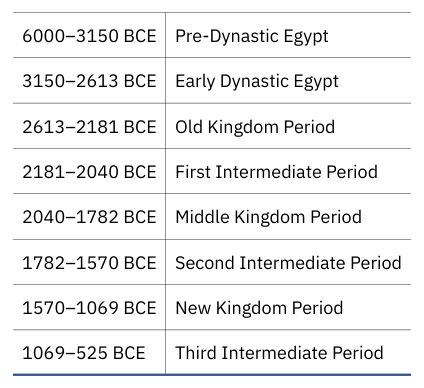
By about $1720$ BCE, groups associated with these migrations had become numerous in Lower Egypt. Some of their chieftains eventually became rulers. Their rise is connected with the period known as the Hyksos period. The Hyksos ruled Egypt for more than a century, approximately from $1650$ to $1540$ BCE. The term refers to foreign rulers of Egypt, and the passage of Hebrew-associated groups into Egypt has sometimes been discussed in relation to this broader movement of peoples from the eastern Mediterranean.
The connection remains possible rather than proven. The historical record does not establish that the Hyksos were identical with the Hebrews, nor does it demonstrate that all groups in Lower Egypt shared one origin. What the evidence does show is that Egypt experienced the arrival and political rise of groups associated with regions to its northeast. The biblical tradition of Hebrews in Egypt can therefore be examined alongside, but not simply equated with, the history of the Hyksos.
After the Hyksos were defeated, Egyptian tradition portrayed their rule negatively. It described them as destructive rulers who enslaved Egyptians and burned cities. Such accounts must also be interpreted as political memory: victorious rulers often depicted defeated foreign dynasties as cruel and illegitimate. The later biblical tradition of Hebrew oppression in Egypt belongs to a different narrative framework, but both traditions preserve memories of domination, forced labor, and conflict involving Egypt and foreign populations.
The Culture of the Hebrews
Monotheism and Historical Interpretation
The Hebrews became especially distinctive in the ancient Near East through monotheism, the belief in one God. The Hebrew Bible presents the worship of Yahweh and obedience to the laws associated with Moses as defining features of Hebrew religious life. Yet the biblical text also contains repeated stories of the Hebrews abandoning Yahweh and adopting or retaining practices associated with Canaanite religion.
This recurring pattern is sometimes called the Bible’s “backsliding” theme. It explains disasters that befell the Hebrews as consequences of abandoning Yahweh. The theme also helps account for evidence of Canaanite religious practices that did not fit later interpretations of the Hebrews as consistently monotheistic from the earliest period.
By the middle of the seventh century BCE, religious reformers who promoted centralized worship of Yahweh and obedience to the laws of Moses had clearly gained the upper hand. Their interpretation of Hebrew history and religion was rising in influence. The biblical account thus reflects not only early traditions but also later debates over worship, law, identity, and the causes of national success or disaster.
A common misconception is that identifying a religious text’s theological purpose makes it useless for history. The opposite is true: the text’s religious purpose is part of the historical evidence. It reveals what later Hebrew writers and reformers believed their community should be, how they explained suffering and political defeat, and why centralized worship and obedience became so important. Historians must distinguish those claims from independently verified descriptions of earlier events.
The Persian-Era Return to Judah
The later history of the Hebrews also demonstrates why political context matters. Under the Persian Empire, Judeans were permitted to return to Judah and rebuild their temple. The Persian government expected loyalty and the payment of tribute, but Persian kings generally did not attempt to transform their diverse subjects into Persians.
This policy allowed Judeans to restore a central institution of their religious life while remaining within an imperial system that included many peoples, languages, and religions. The return to Judah was therefore both a religious restoration and a political arrangement: the community could rebuild its temple and maintain its traditions, provided that it recognized Persian authority and met imperial obligations.
The Persian-era experience helps place Hebrew history within the wider history of the Near East. Hebrew identity was shaped not only by patriarchal traditions and religious reform but also by migration, settlement in Egypt, foreign rule, displacement, and return. These themes appear in the Bible as meaningful accounts of covenant, judgment, and restoration; historical analysis places them alongside the changing political structures and movements of peoples that characterized the ancient eastern Mediterranean.
The most careful interpretation keeps both dimensions visible. Abraham’s migration to Canaan, the family line of Sarah, Isaac, and Jacob, the movement of groups into Egypt, the Hyksos period, and the Persian authorization of a return to Judah all belong to the history of how Hebrew traditions developed. Some events may preserve memories of real historical movements, but the evidence does not permit every biblical detail to be confirmed. The historian’s task is to preserve that distinction while asking what the narratives reveal about Hebrew origins, religious identity, and life among the peoples of the ancient Near East.
Content adapted from OpenStax World History, Volume 1: to 1500 by Ann Kordas et al., licensed CC BY 4.0.

Source Materials
Study World History Volume 1 on Lykke
This course page is free to open: signed out, you can read its first two sections, and signing in, on any plan, opens the rest. The free Lykke Chrome extension syncs your own Canvas courses, so ChatGPT, Claude and Muse can answer from your classes and deadlines. It only reads Canvas.
Add the free extensionSign in to open every sectionAll sections of World History Volume 1 · Browse more course pages