From the free course World History Volume 1 on Lykke
14.3 The Mongol Empire Fragments
Key concepts: The Mongol steppe world · Temujin (Genghis Khan) and the growth of his clan · Jamukha and rival clan expansion · Mongol alliances and political consolidation · Song dynasty military weakness · Emperor Huizong of the Song · Relations between steppe peoples and China · Han Chinese views of the Xiongnu as “barbarians” · Islamization of parts of the Indian subcontinent · Vijayanagar administration and governance
By the end of this section the student can: Analyze the extent to which Chinggis Khan’s vision for the future of Eurasia was realized by his grandsons; Explain why Islam was successful in gaining converts in the Mongol Empire; Analyze the degree to which Yuan China was a continuation of traditional Chinese civilization
14.3 The Mongol Empire Fragments
The Mongol Empire grew out of a political world in which loyalty was negotiated, clans competed for followers, and alliances could change as quickly as military fortunes. Temujin’s rise mattered not simply because he defeated rivals, but because his expanding clan drew in more people as allied clans expanded around it. The same process that created Mongol power also contained the seeds of rivalry and fragmentation.
The Mongol Steppe World
The peoples of the Eurasian steppe did not live within fixed nation-states with permanent borders. They organized themselves through clans, tribes, and temporary confederations—political groupings formed when leaders and communities joined for mutual advantage. These alliances were fluid: groups could cooperate, separate, or attach themselves to a more successful leader. Political power therefore depended on the ability to attract followers, protect them, distribute rewards, and defeat or absorb competitors.
This fluidity shaped how steppe peoples understood settled societies. Han Chinese historians described groups such as the Xiongnu as “barbarians,” presenting them as the opposite of what it meant to be Chinese. Steppe nomads and tribes, in turn, often regarded Chinese farmers as lowly, weak, and servile in contrast with their own values and identity. These descriptions were not neutral observations. They expressed competing cultural judgments: settled Chinese writers emphasized agriculture, urban life, and Chinese civilization, while steppe peoples valued mobility, martial ability, and independence.
The Mongol world was not a single, unified nation waiting to be awakened. It was a changing network of steppe peoples whose political relationships had to be built and rebuilt.
The tension between steppe societies and China also involved access to the Silk Roads. These routes carried goods, wealth, and political influence across Central Asia. Control over routes and access to their profits could shift the balance between nomadic powers and Chinese states. The source describes an earlier shift in power involving the Xiongnu and the Han, after Han military expeditions went into Central Asia to seek allies. The broader lesson is important for understanding the Mongols: steppe politics and Chinese politics were not isolated systems. Military alliances, trade routes, and frontier struggles connected them.
Temujin and the Growth of a Clan
Temujin’s growing power followed the central political logic of the steppe. His clan attracted more followers as allied clans expanded. Expansion produced further expansion: a successful leader could offer protection, access to resources, and the possibility of rewards, while communities had strong reasons to join a coalition that appeared likely to win. Military success was therefore also a form of political recruitment.
This process helps explain why Temujin’s rise should not be reduced to a sequence of battlefield victories. His achievement was political consolidation—the bringing together of previously competing groups under a stronger and more dependable center of authority. Once enough clans joined him, the coalition became more powerful than any single rival. The growth of the clan and the growth of the alliance reinforced one another.
A common misconception is that the Mongols expanded as a unified people from the beginning. The steppe world instead required leaders to create unity from competition. Temujin’s importance lay in his success at making a broad coalition possible, but the same structure remained vulnerable to renewed rivalry whenever competing leaders could attract followers of their own.
Jamukha and Rival Clan Expansion
Jamukha represented the continuing competitive character of Mongol politics. As Temujin’s clan grew, Jamukha expanded his own clan to keep pace. His expansion contributed to rivalry among Mongol groups because each leader’s success threatened the other’s position. Followers were not merely passive members of a permanent organization; their movement toward one leader or another could alter the balance of power.
The rivalry between Temujin and Jamukha illustrates why clan expansion was politically consequential. A growing clan could become the nucleus of a larger confederation, while a rival leader’s response could turn competition into open conflict. Alliances that had once been useful could become dangerous if one leader appeared to be gaining too much influence. In this environment, political consolidation always carried a double meaning: it created unity within one coalition while increasing pressure on those outside it.
The Mongol steppe world therefore operated through a cycle of alliance and rivalry. Leaders expanded by attracting allied clans; allied clans expanded the leader’s military and political resources; that success attracted still more followers; and rival leaders responded by building competing coalitions. Temujin’s rise was extraordinary because he pushed this cycle farther than his rivals, but the underlying political habits of the steppe did not disappear.
Alliances and Political Consolidation
Political consolidation means concentrating authority by bringing separate groups under a common leadership. In the Mongol case, consolidation did not erase clan identities or the importance of personal loyalty. Instead, it created a larger political structure out of existing relationships. The process depended on alliances, military success, and the continuing ability of a central ruler to hold followers together.
This distinction matters because the later fragmentation of the Mongol Empire was not an inexplicable collapse of an otherwise uniform state. The empire had been assembled across a world where political bonds were personal, military, and changeable. Once central authority weakened or rival leaders pursued their own interests, large territories could separate into distinct political units. The empire eventually splintered into four sections known as khanates, each governed by a military ruler or governor known as a khan.
Fragmentation did not mean that the Mongol conquests had no lasting effect. The same networks that had enabled expansion continued to connect regions, rulers, and peoples. Yet political unity became more difficult to maintain over such a vast territory, especially when members of the ruling family competed for authority. The Mongol Empire’s history consequently combines two processes: the creation of an enormous imperial system and the division of that system into separate centers of power.
Song China and Military Weakness
Mongol expansion confronted the Song dynasty, a wealthy and sophisticated Chinese state that was nevertheless militarily weak during this period. Its weakness should not be mistaken for cultural or economic insignificance. The Song possessed major urban and administrative resources, but those strengths did not automatically provide the military capacity needed to resist a powerful steppe empire.
The contrast between the Mongols and the Song was therefore not simply one between “barbarism” and civilization, despite the language used by some Chinese observers. The Mongols brought a highly effective steppe military tradition and a political system built around expanding alliances. The Song represented a settled imperial order whose resources were substantial but whose military position was vulnerable. The Mongol challenge exposed the difference between possessing wealth and being able to defend it.
Emperor Huizong and the Distance between Courts
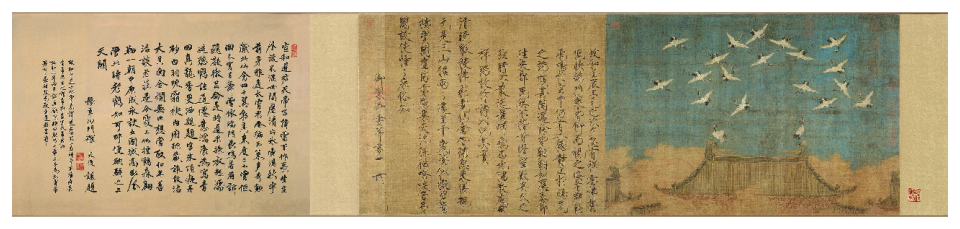
Emperor Huizong of the Song had ruled since 1100 and lived in luxury far beyond anything Temujin’s people had seen. His court embodied the wealth and cultural refinement of the settled Chinese empire, while the Mongol steppe world was organized around mobility, clan relationships, and warfare. The contrast is vivid, but it should not be interpreted as proof that one society was simply “advanced” and the other “primitive.” Each developed institutions suited to different environments and political needs.
Huizong’s luxury also highlights a political problem. An elaborate court could display imperial power, yet display did not guarantee military security. The Song dynasty’s wealth made it an attractive target, while its military weakness made resistance difficult. For the Mongols, the Chinese empire represented resources and authority that could be conquered; for Song rulers and historians, Mongol demands threatened the cultural and political hierarchy that placed the Chinese emperor above outsiders.
Yuan China and the Fragmentation of Empire
The conflict became especially clear when Kublai Khan demanded that the Song emperor recognize him as the Son of Heaven in exchange for autonomy over the Han Chinese people. The title expressed the Chinese idea that legitimate rule depended on Heaven’s approval. The Song ruler refused to submit to vassalage under a man he regarded as a barbarian, and war followed.
Kublai’s eventual victory allowed him to claim that the Mandate of Heaven—the right to rule China—had shifted to him. He proclaimed the Yuan dynasty. This was more than a change of rulers. Kublai used a Chinese political concept to legitimize Mongol authority, presenting conquest as evidence that Heaven had transferred legitimate sovereignty. The Mongol ruler thus entered the political language of China even as many Chinese viewed him as an outsider.
Kublai’s rule also unfolded during a larger imperial fragmentation. The Mongol realm had already begun to divide into separate khanates, and disagreements among members of the ruling family weakened the idea of a single political center. Yuan China became one major component of the former Mongol Empire rather than an unchallenged command center over all Mongol territories.
The Mongol Empire fragments are therefore best understood through a tension between unity and division. Temujin and his successors demonstrated how fluid steppe alliances could be transformed into an empire. Jamukha’s rival expansion shows how quickly those alliances could generate conflict. The Song dynasty’s weakness made conquest possible, while Huizong’s luxurious court and the Song refusal to recognize Mongol authority revealed the deep cultural and political stakes of that conquest. The empire’s later khanates preserved the consequences of Mongol expansion even after the original unity of the empire had broken apart.
Content adapted from OpenStax World History, Volume 1: to 1500 by Ann Kordas et al., licensed CC BY 4.0.
Source Materials
Study World History Volume 1 on Lykke
This course page is free to open: signed out, you can read its first two sections, and signing in, on any plan, opens the rest. The free Lykke Chrome extension syncs your own Canvas courses, so ChatGPT, Claude and Muse can answer from your classes and deadlines. It only reads Canvas.
Add the free extensionSign in to open every sectionAll sections of World History Volume 1 · Browse more course pages