From the free course World History Volume 1 on Lykke
17.1 The Ottomans and the Mongols
Key concepts: Ottoman state formation in Anatolia · Timur’s influence on Ottoman political development · The Byzantine Empire and Constantinople · The Seljuk Sultanate of Rum · Mongol conquests and their effects on Anatolia · Nomadic pastoralism and competition for natural resources · Caravanserais and Silk Road commerce · The timar system and timariots · Timur’s military tactics and war elephants · Ottoman succession struggles after the Battle of Ankara
By the end of this section the student can: Discuss the origins of the Ottoman Empire; Describe how the conflict between the Ottomans and Timur influenced the development of the
17.1 The Ottomans and the Mongols
The Ottoman Empire began as one of several small Turkic principalities in Anatolia and eventually captured Constantinople, the capital of the Byzantine Empire, in 1453. Its rise depended on more than battlefield victories: the Ottomans inherited political traditions from the Seljuk Turks, benefited from Byzantine weakness, attracted merchants and religious scholars, and adapted to the pressures created by Mongol conquest and nomadic competition for land and water.
Ottoman Growth
The Ottoman state emerged in northwestern Anatolia during a period of political fragmentation. Earlier, much of Anatolia had been ruled by the Seljuk Sultanate of Rum, a Turkic Muslim state whose capital was Iconium, now called Konya. The Seljuks had established cities, encouraged trade, and built caravansaries, inns where merchants traveling along the Silk Roads could rest, protect their animals, and conduct business. These commercial centers attracted merchants, artisans, and religious scholars, helping Turkish cities grow even as political authority became divided.
The Seljuk defeat by the Mongols weakened the sultanate’s control over Anatolia. Mongol armies defeated the Seljuks at the Battle of Köse Dağ in 1243, and the Seljuk rulers thereafter operated under Mongol influence. As Seljuk authority declined, independent Turkic principalities, or beyliks, appeared across Anatolia. These beyliks competed for territory, pasture, trade routes, and the allegiance of local populations. The Ottomans were initially only one of these small frontier states.
The Ottoman dynasty took its name from Osman, who ruled from approximately 1299 to 1326. Ottoman tradition portrayed Osman and his successors as Muslim warriors defending and expanding the faith, but the early Ottoman frontier was also a zone of economic opportunity and political competition. Turkic pastoralists needed access to natural resources, especially grazing lands and water. Expansion into Byzantine territory offered land, wealth, and strategic positions, while victory allowed Ottoman rulers to attract additional warriors and supporters.
The weakening of the Byzantine Empire made Ottoman expansion possible. Byzantine authority in Anatolia had already suffered from internal conflict, the loss of territory, and the sack of Constantinople by western European crusaders in 1204. As Byzantine control receded, Orthodox Christian clergy and monks fled some regions. Their departure loosened many peasants’ institutional ties to Christianity and made conversion to Islam easier for some communities. Ottoman growth therefore involved military conquest, migration, commerce, and religious change rather than a single process of forced conversion.
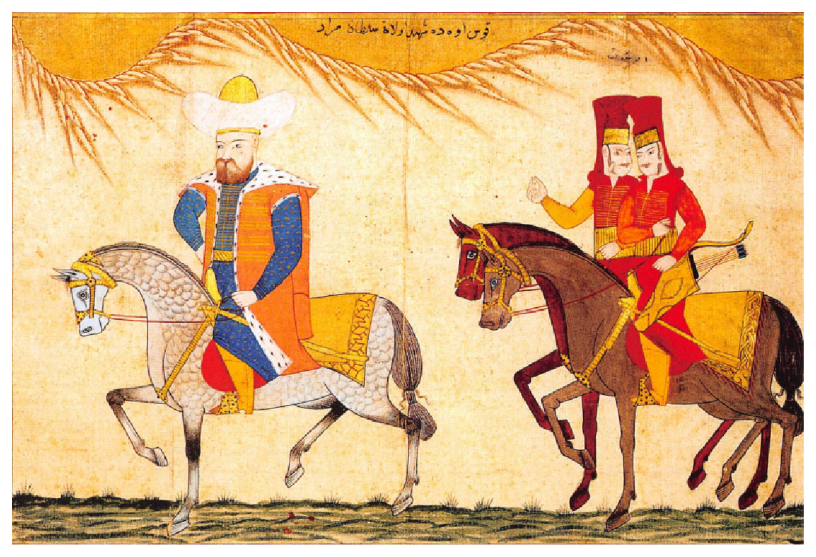
Osman’s successors expanded the state beyond its original frontier. Orhan, who succeeded Osman, captured Bursa in 1326 and made it an Ottoman capital. Bursa’s location connected Anatolia to important routes across the Sea of Marmara. Ottoman forces then crossed the Dardanelles into Europe. This movement established a permanent Ottoman presence on the European side of the strait and allowed later rulers to attack Byzantine and Balkan territories from both sides.
Under Murad I, Ottoman power expanded through the Balkans. Ottoman forces defeated Serbian armies at the Battle of Kosovo in 1389, a victory that extended Ottoman influence over Serbia and surrounding regions. The Ottomans frequently incorporated defeated Christian rulers as vassals. These rulers retained a degree of local authority but owed military service, tribute, and political loyalty to the Ottoman sultan. Such arrangements allowed the Ottomans to govern a growing and religiously diverse territory without immediately replacing every local administration.
Ottoman institutions also connected military service to landholding. The timar was a grant of the right to collect taxes from a particular area. A holder of such a grant was a timariot. Timariots used the revenues they collected to support themselves and provide military service. Because the state did not need to pay every cavalryman a regular salary or employ separate tax collectors, the timar system helped the sultan reward administrators and soldiers while extending central authority into the countryside.
Key distinction: Ottoman expansion was sustained by both conquest and administration. The state gained land through war, but it kept that land through tax arrangements, vassalage, military obligations, and the incorporation of diverse communities.
The Ottoman advance alarmed Christian rulers in Europe. In 1396, Roman Catholic knights from throughout Europe joined a crusading army to confront the Ottomans on the Danube River. Ottoman troops, fighting alongside the Serbian vassals of Bayezid I, defeated the crusader army at the Battle of Nicopolis. The victory demonstrated that the Ottomans had become a major European power. Bayezid then turned toward Constantinople, but the Ottoman blockade ultimately failed because his forces lacked a way to break through the city’s walls.
The Timurids and the Aftermath of the Battle of Ankara
Bayezid’s most dangerous opponent was not a European crusader army but the Mongol conqueror Timur, also known in Europe as Tamerlane. Timur built a powerful empire in Central Asia and launched campaigns across a vast region. His armies conquered territories extending from Central Asia toward Persia, India, and Anatolia. His career illustrates the continuing importance of mobile military power and pastoral resources in the politics of Eurasia: rulers who controlled horse-producing regions and competed successfully for pasture could assemble highly effective armies.
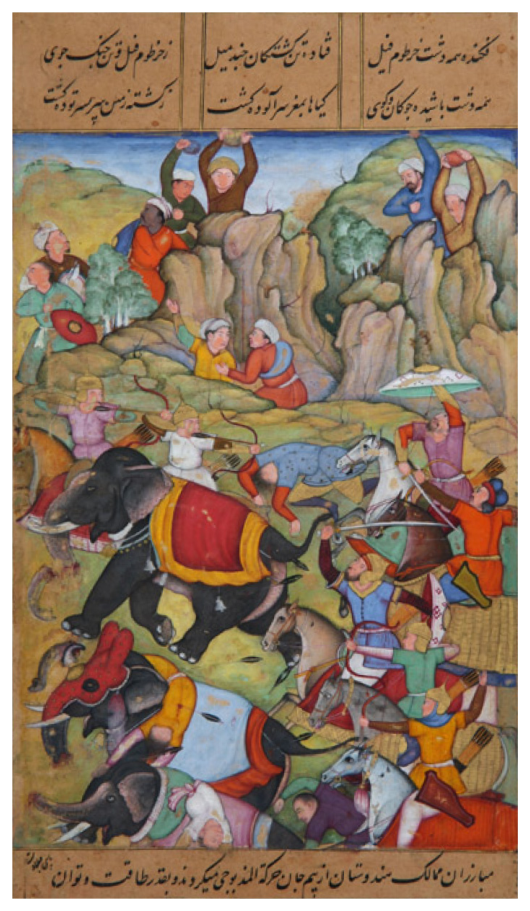
Timur’s campaigns were marked by both strategic imagination and extreme violence. In 1398, he invaded northern India and defeated the sultan of Delhi. Indian forces used elephants, which Timur’s soldiers had not seen before. Timur placed hay on the backs of his camels, set the hay on fire, and sent the panicked animals toward the enemy lines. The elephants scattered, helping Timur win the battle. He then destroyed Delhi. The episode shows how armies adapted unfamiliar technologies and animals to the conditions of warfare, but it also reveals the destructive consequences of Timur’s conquests.
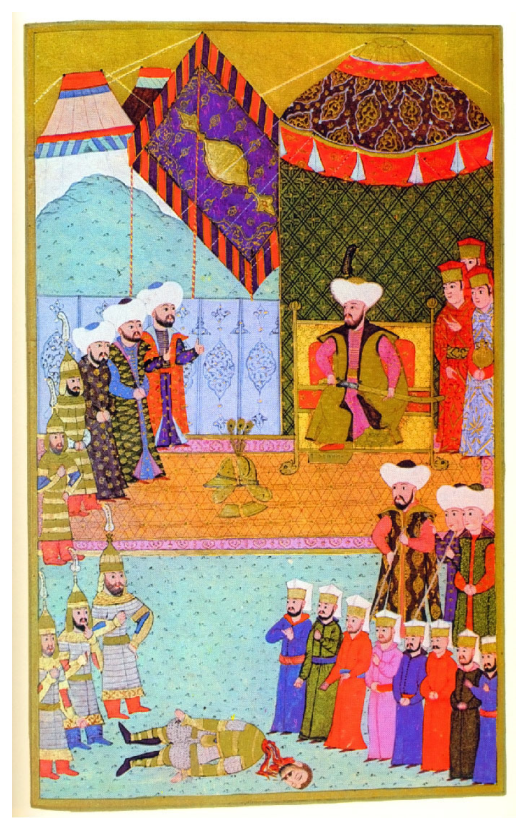
Timur and Bayezid competed for influence in Anatolia. Bayezid had incorporated several Anatolian beyliks into the Ottoman state, while Timur sought to restore his own authority over territories and rulers affected by Ottoman expansion. Their armies met at the Battle of Ankara in 1402. Timur defeated Bayezid and captured him. The defeat halted Ottoman expansion and threatened to break apart the state that Bayezid had assembled.
Bayezid’s sons fought one another for control of the Ottoman lands after their father’s defeat. This period of civil conflict weakened the dynasty and is often called the Ottoman interregnum. Although Bayezid’s son Mehmed declared himself a vassal of Timur, Timur did not support Mehmed in his struggle against his brothers. Timur’s intervention therefore did not produce a stable Ottoman successor immediately; instead, the Ottomans had to reconstruct their state through dynastic warfare.
Timur died in 1405, and his sons and grandsons then fought over the territories he had conquered. In 1409, his son Shah Rukh emerged as his successor and became the next head of the Timurids, the dynasty founded by Timur. The Timurid political order survived, but Timur’s enormous empire was difficult to hold together. The contrast with the Ottomans is important: the Ottoman dynasty eventually reunified its core territories, while Timurid lands were divided among competing members of the ruling family.
The Ottoman state recovered under Mehmed I, who reunited the Ottoman territories in 1413. His successors resumed expansion, and the conflict with Timur influenced Ottoman political development by exposing the danger of divided succession and overextended conquest. The Ottomans rebuilt their military and administrative structures before again threatening Constantinople. Timur’s victory delayed Ottoman expansion, but it did not destroy the dynasty.
The Ottoman Conquest of the Byzantine Empire
By the fifteenth century, the Byzantine Empire had been reduced to a small state centered on Constantinople and a few remaining territories. The city was still strategically important because it stood at the intersection of Europe and Asia and controlled access between the Black Sea and the Mediterranean. Its massive walls had protected it for centuries, but the empire surrounding the city had become too weak to prevent the Ottomans from encircling it.
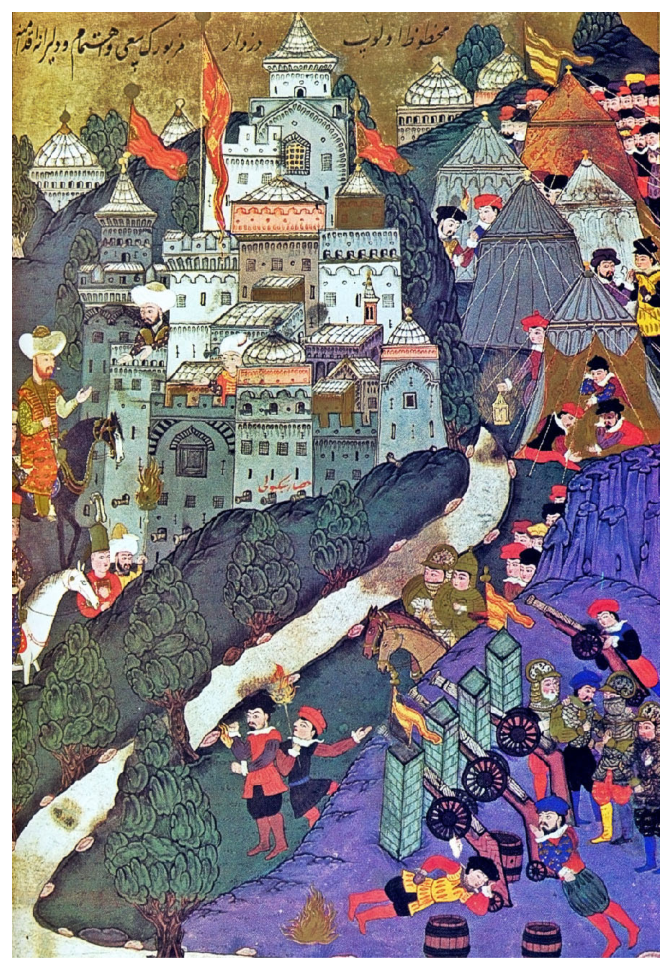
After recovering from the defeat at Ankara, the Ottomans renewed their pressure on Constantinople. Mehmed II, who became sultan in 1451, prepared a major assault against the city. The Byzantine emperor Constantine XI defended Constantinople, but the city lacked the resources and political support necessary to withstand a determined Ottoman siege. The final Ottoman attack began in 1453, and Constantinople fell after weeks of fighting.
The Ottoman conquest ended the Byzantine Empire. Constantinople became the center of Ottoman power, and the city later became widely known as Istanbul. The conquest also transformed the Ottoman state from a frontier principality into an empire controlling territory in both Anatolia and southeastern Europe. The fall of the city was therefore not merely the capture of one stronghold; it marked the transfer of a long-standing imperial center to a new dynasty.
The conquest did not erase Byzantine political and cultural legacies. Ottoman rulers governed a population that included Muslims, Orthodox Christians, Jews, and other communities. They also inherited Constantinople’s urban infrastructure, strategic position, and traditions of imperial rule. The city remained a major center of commerce and administration under the Ottomans, while Byzantine institutions and populations continued within the new imperial order.
Ottoman control also affected trade. The empire now held key routes linking Anatolia, the Balkans, the Black Sea, and the eastern Mediterranean. Merchants continued to travel through Ottoman territory, but European powers increasingly sought alternative routes to Asian markets. The conquest thus had consequences beyond the political history of Byzantium: it strengthened Ottoman control over regional commerce and contributed to European efforts to find maritime routes that bypassed Ottoman-held lands.
The Renaissance
The fall of Constantinople in 1453 is often used as a convenient marker for the end of the medieval period and the beginning of the Renaissance in Europe. That boundary is not a precise historical instant, but the Ottoman conquest did have consequences for the movement of people, texts, and commercial connections. Byzantine scholars and other residents of the city moved to western Europe, where they contributed to the transmission of Greek learning. At the same time, Ottoman control of important eastern Mediterranean routes encouraged European rulers and merchants to seek new paths toward Asia.
The connection between the Ottoman conquest and the Renaissance should not be misunderstood. The Renaissance did not begin solely because Constantinople fell, nor did the Ottomans simply end long-distance trade. Ottoman rulers controlled and participated in trade across their territories. The most direct historical significance of 1453 was that the conquest transferred Constantinople and its strategic routes to the Ottomans, preserved the city as an imperial center, and reshaped the political and commercial environment in which Europe and the eastern Mediterranean interacted.
Content adapted from OpenStax World History, Volume 1: to 1500 by Ann Kordas et al., licensed CC BY 4.0.
Source Materials
Study World History Volume 1 on Lykke
This course page is free to open: signed out, you can read its first two sections, and signing in, on any plan, opens the rest. The free Lykke Chrome extension syncs your own Canvas courses, so ChatGPT, Claude and Muse can answer from your classes and deadlines. It only reads Canvas.
Add the free extensionSign in to open every sectionAll sections of World History Volume 1 · Browse more course pages