From the free course World History Volume 1 on Lykke
3.2 Ancient Mesopotamia
Key concepts: Neolithic settlements and the transition to sedentary agriculture · The emergence of Sumerian civilization in southern Mesopotamia · Urbanization, specialized labor, and social stratification · Sumerian city-states · Cuneiform writing and record keeping · Temple institutions and the redistribution of goods · Sumerian religion and the pantheon, including Enlil · Trade, merchants, and cylinder seals · City gates as centers of economic exchange · Sumerian art and literature, including the Epic of Gilgamesh
By the end of this section the student can: Identify characteristics of civilization in Ancient Mesopotamia; Discuss the political history of Mesopotamia from the early Sumerian city-states to the rise of Old
3.2 Ancient Mesopotamia
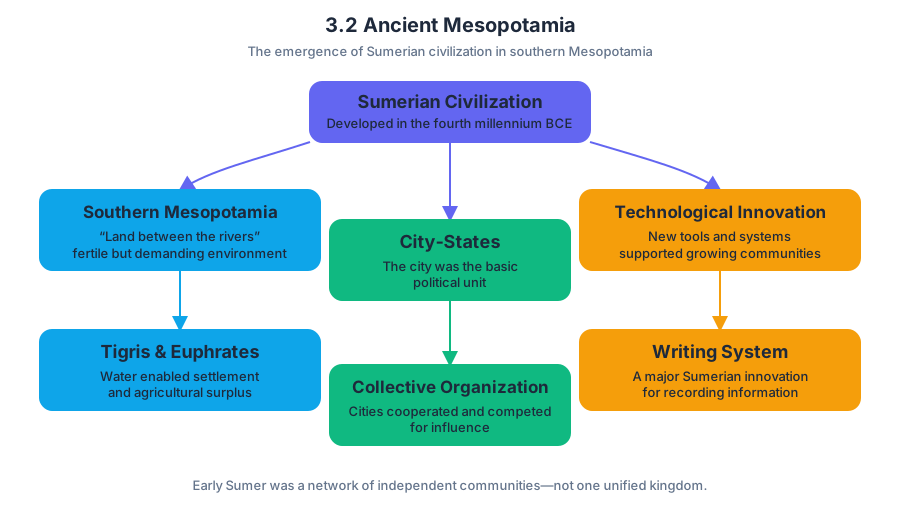
In the fourth millennium BCE, the world’s first great cities arose in southern Mesopotamia, the fertile but difficult land between the Tigris and Euphrates Rivers. Their appearance was not a sudden “invention of civilization”; it was the result of centuries of settlement, farming, irrigation, craft production, administration, warfare, and religious organization. The people who built these cities are known as the Sumerians, and their achievements included city-states, cuneiform writing, monumental temples, long-distance trade, and some of the earliest surviving literature.
The word civilization refers here to a complex society characterized by permanent settlements, cities, specialized labor, social hierarchy, organized government, economic administration, and systems of writing or record keeping. A useful way to understand Mesopotamian civilization is to imagine a farming village becoming a city: once hundreds or thousands of people live together, someone must organize water, food storage, construction, trade, defense, religious ceremonies, and disputes. Those pressures helped produce institutions that could coordinate society on a much larger scale than a small village.
The Rise and Eclipse of Sumer
The first stage of Mesopotamian urban history grew out of the Neolithic transition—the long shift from mobile hunting and gathering to settled agriculture. Neolithic communities cultivated crops, domesticated animals, built permanent houses, stored food, and developed increasingly complex social relationships. Jericho, in the southern Levant, illustrates this process. It was abandoned and resettled several times, yet it remains a functioning city today. Such settlements show that the movement toward urban life was gradual and uneven rather than a single event.
Beginning around $5500$ BCE, some communities established settlements in southern Mesopotamia, a wetter but more demanding environment than the regions farther north. The southern plain offered rich alluvial soil, but it lacked many basic resources: stone, timber, and metal were scarce. Farming therefore depended heavily on controlling water through irrigation and on exchanging agricultural surpluses for materials from other regions. These environmental conditions encouraged cooperation, planning, and the development of administrative institutions.
By around $4500$ BCE, some formerly small farming villages had become expanding urban centers, in some cases with thousands of residents. During the fourth millennium BCE—the $3000$s BCE—urbanization accelerated dramatically. By the end of that millennium, at least $124$ villages and cities existed in the region. Urbanization meant more than crowded housing: cities concentrated political authority, religious institutions, workshops, merchants, laborers, farmers, and officials in one place.
Sumerian cities depended on specialized labor, meaning that not everyone produced food. Farmers supplied grain and other agricultural goods, while potters, metalworkers, textile workers, builders, merchants, priests, scribes, and soldiers performed other tasks. This specialization increased productivity and made large public projects possible, but it also created social distinctions. People’s status increasingly depended on occupation, wealth, access to institutions, and proximity to political or religious power.
The political unit that emerged in Sumer was the city-state, a city together with the surrounding territory that it controlled. Each city-state possessed its own government, ruling elite, patron deity, temple institutions, and claims to surrounding farmland and water. Sumer was therefore not initially a unified kingdom. Cities such as Uruk, Ur, Lagash, and Isin competed with one another for land, trade routes, labor, and prestige.
The temple stood at the center of Sumerian urban life. Temples were religious buildings, but they were also economic institutions. They controlled land, organized labor, received agricultural produce, commissioned craft goods, and redistributed supplies to dependents. This system of redistribution meant that goods flowed into an institution and were then allocated to workers, officials, soldiers, and others. The arrangement helped sustain cities, but it also strengthened institutional and social inequality.
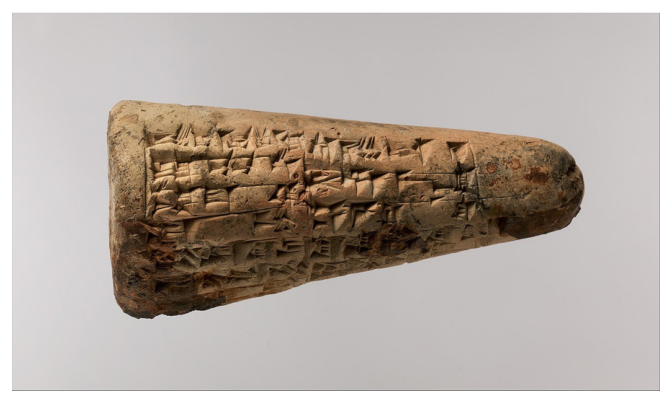
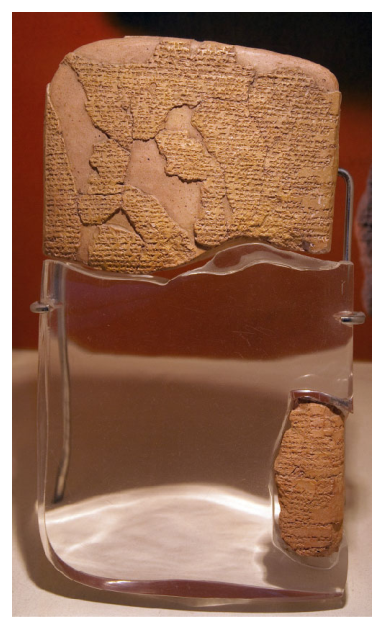
Sumerians developed cuneiform, a writing system whose name comes from the Latin cuneus, meaning “wedge.” A scribe pressed a reed stylus into wet clay, producing purposeful arrangements of wedge-shaped marks. The earliest uses of writing were closely connected to administration: recording goods, tracking labor, identifying officials, and managing property. Writing thus emerged not simply as a way to tell stories, but as a technology of economic and political organization.
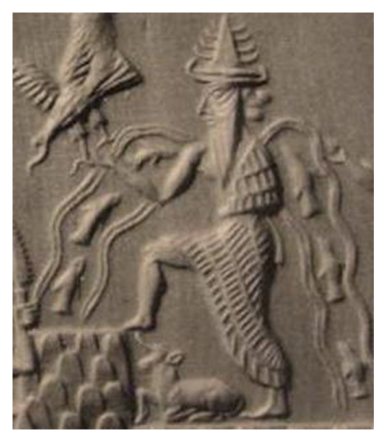
Seals provide another important source for understanding Sumerian administration. Merchants marked ownership by pressing a seal into the soft clay covering the mouth of a jar or another container. They also attached clay tags to sacks of grain. These impressions could identify an individual, office, or institution and could help protect goods from unauthorized access. Cuneiform tablets and sealings together reveal a society in which ownership, labor, and distribution required increasingly precise records.
Sumerian writing eventually supported literature as well as administration. The Epic of Gilgamesh is one of the world’s earliest surviving examples of epic literature. The story concerns Gilgamesh, the legendary king of Uruk, and explores power, friendship, mortality, and the limits of human achievement. The form known today was first written down around $2100$ BCE, although the traditions behind it are older. Its survival demonstrates that cuneiform served not only officials and merchants but also scribes preserving cultural memory.
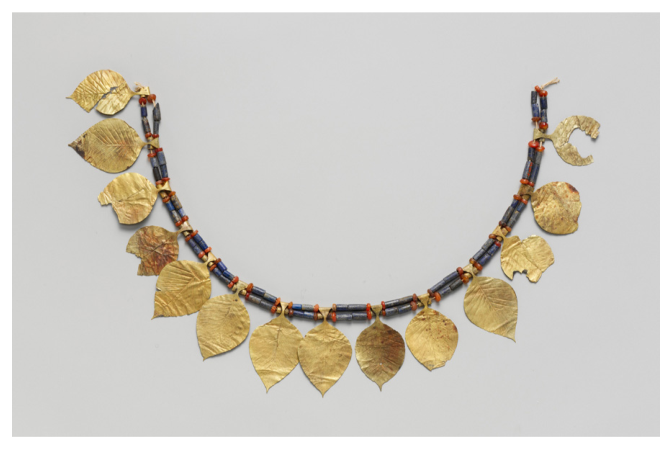
The archaeological record also reveals striking differences in wealth and status. A gold and lapis lazuli headdress from a tomb at Ur, dating to approximately $2600$ BCE, is so elaborate that some historians have argued that the woman buried with it was a queen. Others believe she may have been an attendant who was exceptionally well dressed. The disagreement is important: artifacts can demonstrate wealth and social distinction, but they do not always identify a person’s exact rank or role.
Sumer’s eclipse resulted from both internal rivalry and external conquest. Independent city-states competed continually, and their conflicts made the region vulnerable to rulers who could mobilize forces across several cities. Around $2300$ BCE, the age of the independent Sumerian city-state came to an end when Sumer and the rest of Mesopotamia were conquered by a ruler from the north.
The Rise of the World’s First Empire
Around $2300$ BCE, Sargon of Akkad conquered the Sumerian city-states and created what is commonly regarded as the world’s first empire. An empire differs from a city-state because it rules multiple peoples and territories beyond the homeland of its ruling city. Sargon’s achievement was therefore not merely the capture of one city; it was the creation of a political structure that brought much of Mesopotamia under a single authority.
Sargon came from Akkad, a city or region in northern Mesopotamia. His empire joined the Akkadian-speaking north with Sumerian-speaking communities in the south. The conquest did not erase Sumerian culture. Instead, Akkadian rulers adopted and continued many Sumerian practices, including cuneiform writing, temple administration, monumental construction, and traditions of kingship. Sumerian remained an important written language even after it ceased to be the everyday spoken language early in the second millennium BCE.
The Akkadian Empire depended on military power, administrative control, and the cooperation—or submission—of conquered cities. An empire had to collect tribute, secure routes, appoint officials, and suppress rebellion across a much larger territory than a city-state. Its scale created new possibilities for political integration and exchange, but it also created new vulnerabilities. Maintaining authority over distant communities required continuous military and administrative effort.
The Akkadian period illustrates a recurring pattern in Mesopotamian history: conquest could unify the region temporarily, but political unity was difficult to maintain. Local city traditions, rival elites, geographic distance, and disputes over resources repeatedly challenged imperial rule. The empire eventually declined, and Mesopotamia returned to a landscape of competing states before later rulers again attempted to unify it.
Later Empires in Mesopotamia
After the Akkadian Empire, Mesopotamia experienced alternating periods of fragmentation and reunification. The city of Ur later became the center of the Third Dynasty of Ur, often called the Ur III state, which flourished near the end of the third millennium BCE. Its rulers restored a centralized government over much of southern Mesopotamia and relied heavily on bureaucratic records. Thousands of clay tablets document deliveries, labor assignments, rations, and institutional property, showing how thoroughly administration had become part of Mesopotamian government.
The Ur III state did not eliminate the importance of cities or temples. Instead, it placed them within a more centralized political order. Officials managed agricultural production, labor, taxation, and public works, while temples remained major landholders and religious centers. This combination of royal authority and institutional administration became a durable feature of Mesopotamian political life.
In the early second millennium BCE, power shifted again among competing Amorite rulers and Mesopotamian cities. The most famous of these rulers was Hammurabi, king of Babylon, who reigned approximately $1792$–$1750$ BCE. Through diplomacy, warfare, and political strategy, Hammurabi expanded Babylon from a relatively minor city into the center of a large kingdom. His success marked the rise of what historians call Old Babylon, or the Old Babylonian period.
Hammurabi is especially remembered for the Code of Hammurabi, a large collection of royal judgments inscribed on a stone monument. The code is not a complete legal system in the modern sense; it presents cases and specified penalties, often using conditional formulations such as “if” a person commits an offense, “then” a consequence follows. Its provisions reveal differences based on social status, distinctions between free persons and enslaved people, rules concerning property and contracts, and concerns about family, labor, and violence.
The code also demonstrates how rulers presented themselves. Hammurabi portrayed the king as an agent of justice responsible for protecting the vulnerable and ordering society. Historians therefore use the monument both as evidence for legal and social practices and as royal ideology—that is, a public statement about how a king wanted his authority to be understood. It should not be assumed that every rule was enforced uniformly or that the text describes everyday life without distortion.
Mesopotamian empires repeatedly expanded and contracted, but their cultural institutions endured. Later rulers continued to use cuneiform, preserve Sumerian literary traditions, support temples, and govern through cities and provincial officials. Political control changed hands, while writing, administrative practices, religious traditions, and urban institutions created continuity across successive empires.
Society and Religion in Ancient Mesopotamia
Mesopotamian society was hierarchical. At the top stood kings and royal households, followed by elite officials, priests, military leaders, wealthy landowners, and successful merchants. Below them were farmers, craft workers, laborers, and other free people. Enslaved people occupied the lowest legal and social positions, although their circumstances could vary. This hierarchy was visible in access to land, luxury goods, education, authority, and the ability to command labor.
Women’s lives also varied according to status, occupation, and household position. Some women worked in textile production, served religious institutions, managed property, or participated in economic transactions. The richly furnished tomb at Ur shows that at least some women were connected to considerable wealth or institutional power, although the identity of the buried woman remains debated. Archaeological evidence therefore reveals both inequality and the difficulty of reconstructing individual lives from incomplete remains.
Religion permeated Mesopotamian society. Sumerians and later Mesopotamian peoples were polytheistic, meaning they worshiped many gods and goddesses. Each city had a patron deity, and temples served as the deity’s earthly household. Religious institutions organized rituals, offerings, land, labor, and storage, so religious authority and economic power were closely connected rather than separate spheres.
Mesopotamian rulers claimed legitimacy partly through their relationship with the gods. Kings built and repaired temples, sponsored rituals, and presented themselves as chosen or favored by divine powers. Temples and palaces therefore worked together while also representing different institutional centers: temples managed religious and economic resources, while palaces directed royal administration, warfare, and political authority.
The economy rested on agriculture, especially grain cultivation supported by irrigation. Farmers, temple workers, palace dependents, artisans, and merchants formed an interdependent system. Institutions collected goods such as grain, wool, and livestock and redistributed rations or supplies. Merchants connected Mesopotamian cities to regions that supplied timber, stone, metals, and luxury materials unavailable in the southern plain.
The surviving evidence comes from several kinds of sources: archaeological remains of settlements and temples; tombs and objects such as the Ur headdress; clay tablets recording transactions and administration; seal impressions marking goods; royal inscriptions; legal collections such as Hammurabi’s code; and literary works such as the Epic of Gilgamesh. Each source answers different questions. A tablet may reveal the movement of grain, while a poem expresses ideals and anxieties, and a monument communicates royal power.
Ancient Mesopotamia is therefore best understood as a connected system rather than a list of inventions. Irrigated agriculture supported surplus; surplus supported specialized labor; specialization and population growth produced cities; cities required administration; administration encouraged writing; temples and palaces organized redistribution; and competition among city-states created the conditions for empire. The same institutions that made urban civilization possible also produced inequality, warfare, and struggles over authority.
Content adapted from OpenStax World History, Volume 1: to 1500 by Ann Kordas et al., licensed CC BY 4.0.
Source Materials
Study World History Volume 1 on Lykke
This course page is free to open: signed out, you can read its first two sections, and signing in, on any plan, opens the rest. The free Lykke Chrome extension syncs your own Canvas courses, so ChatGPT, Claude and Muse can answer from your classes and deadlines. It only reads Canvas.
Add the free extensionSign in to open every sectionAll sections of World History Volume 1 · Browse more course pages