From the free course World History Volume 1 on Lykke
2.3 The Neolithic Revolution
Key concepts: Neolithic Revolution · Çatalhöyük and early settled communities · Mud-brick architecture and roof entry · Early agriculture in China · Millet cultivation along the Yellow River · Rice cultivation along the Yangtze River · Plant and animal domestication · Eastern Woodlands plant experimentation · Hunter-gatherer settlement and environmental adaptation · Human impacts on animals and ecosystems
By the end of this section the student can: Discuss the Neolithic Age; Explain the consequences of the Neolithic Revolution; Describe Neolithic settlements around the world and their significance
2.3 The Neolithic Revolution
The Neolithic Revolution was the gradual shift toward cultivating plants, domesticating animals, and living in more settled communities. It was not a single invention or a sudden worldwide transformation. Instead, people in different regions experimented with local plants, animals, technologies, and environments, producing several pathways into what became a Neolithic way of life.
The word revolution can mislead if it suggests that everyone immediately abandoned hunting and gathering for farming. Domestication developed piecemeal and gradually, and the exact origins of many domesticated species remain uncertain. Some communities continued hunting, fishing, and gathering even as they cultivated crops or kept animals. The important change was not the disappearance of older strategies but an increasing reliance on cultivation, domestication, and settled communities.
Key definition: The Neolithic Revolution was the long, uneven process through which human communities increasingly cultivated plants, domesticated animals, and established permanent or semi-permanent settlements.
This process also changed environments. As people settled and altered landscapes, some grasslands that had supported bison disappeared, while wolves became smaller. Human history and environmental history therefore developed together: people adapted to local ecosystems, but their settlement and subsistence practices also transformed those ecosystems.
Çatalhöyük and Early Settled Communities
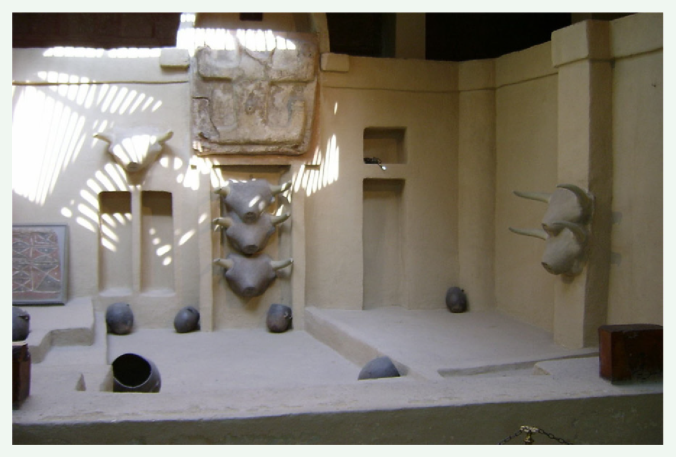
Çatalhöyük, an important early settled community, shows that Neolithic life cannot be reduced to “farmers living in simple villages.” Archaeological excavations reveal residents who included farmers, hunters, and skilled craftworkers. They also held complex religious ideas, visible in the art found inside their homes. Rooms contained depictions of hunts and many kinds of animals, suggesting that hunting and the natural world remained meaningful even in a settled community.
Çatalhöyük demonstrates the mixed character of early Neolithic economies. Cultivation and settlement were important, but hunting and craft production continued as well. The community’s residents did not fit neatly into a single occupation or lifestyle. Their society combined food production, older subsistence practices, specialized skills, artistic expression, and religious beliefs.
Mud-Brick Architecture and Roof Entry
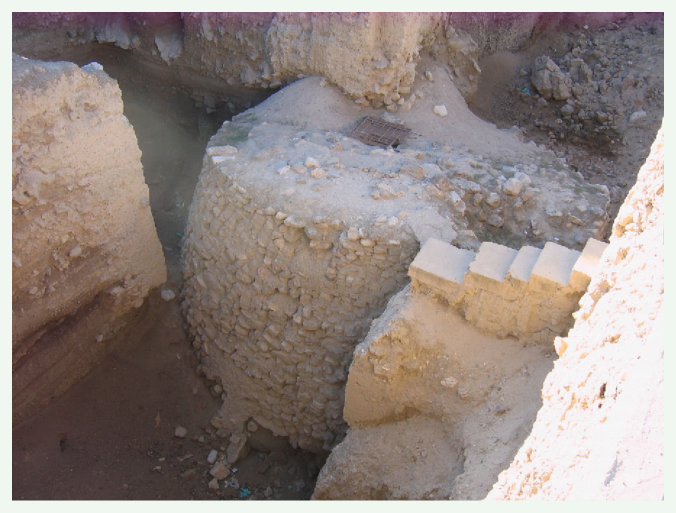
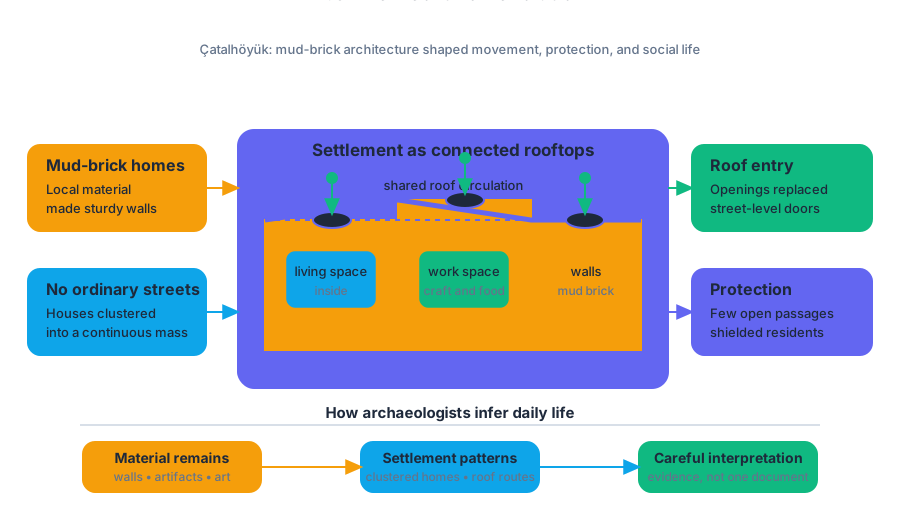
The architecture of Çatalhöyük made the settlement especially distinctive. Houses were built from mud brick and clustered tightly together, with no roads or ordinary passages separating them. Instead of approaching each home through a street-level doorway, residents entered through openings in the roofs.
This arrangement created a settlement that functioned almost like a continuous mass of adjoining houses. Roofs served as circulation spaces, while the lack of open passages helped protect residents from the outside world. Architecture therefore reflected both practical needs and social organization: the physical design of the settlement shaped how people moved, entered their homes, and interacted with their surroundings.
Çatalhöyük also illustrates why archaeological evidence must be interpreted carefully. Excavation can reveal walls, artifacts, artwork, and settlement patterns, but it does not provide a complete written explanation of daily life. Historians and archaeologists infer the community’s activities from the material remains. The presence of farmers, hunters, craftworkers, and religious imagery comes from connecting many kinds of evidence rather than from a single document.
Early Agriculture in China
In China, early agriculture developed in regions supported by abundant water, fertile grasslands, and a wide range of edible plants and animals. These environmental advantages encouraged the growth of Neolithic settlements along two major river systems: the Yellow River and the Yangtze River. Settlements proliferated because people could combine cultivation with hunting, fishing, and gathering.
The two river regions became associated with different principal crops. Along the Yellow River, people mainly cultivated millet, while along the Yangtze River, they mainly cultivated rice. This distinction reflects regional adaptation rather than a single agricultural system imposed across China.
| Region | Principal crop | Environmental and subsistence context |
|---|---|---|
| Yellow River | Millet | Abundant water, fertile grasslands, and access to gathered and hunted foods |
| Yangtze River | Rice | Abundant water, fertile environments, and access to gathered and hunted foods |
The people of these regions did not depend exclusively on millet or rice. They domesticated pigs and dogs, supplemented their diets with hunted animals, fish, and wild plants, and made cord from hemp and pottery from clay. These practices show that agriculture formed part of a broader economic system. Food production, animal domestication, gathering, fishing, craftwork, and settlement supported one another.
Millet Cultivation along the Yellow River
Millet became the principal cultivated crop along the Yellow River. Its importance reflects the ability of communities to make use of the region’s water, grasslands, and naturally available resources. Cultivation created a more dependable food base, but people still hunted and gathered to supplement what they grew.
The Yellow River region therefore illustrates a central feature of the Neolithic Revolution: cultivation increased, but it did not erase ecological flexibility. Communities continued to draw on several resources at once. Their way of life was increasingly settled and agricultural while remaining connected to hunting and gathering.
Rice Cultivation along the Yangtze River
Along the Yangtze River, people mainly cultivated rice. The river environment supplied abundant water, and the surrounding region offered fertile land and diverse edible resources. As in the Yellow River region, rice cultivation existed alongside hunting, fishing, gathering, and animal domestication.
The comparison between millet along the Yellow River and rice along the Yangtze shows that early agriculture was shaped by place. Plants did not become important everywhere in the same way. People developed food systems suited to local environments and combined cultivated foods with whatever wild resources their surroundings provided.
Experimentation and Domestication in the Americas
The Americas provide another example of gradual, regionally distinct domestication. In the Andes, groups began experimenting with animal domestication about nine thousand years ago. In some areas, camelids such as llamas, guanacos, and alpacas may have been domesticated for meat and later wool as early as $7400$ BCE. Guinea pigs may have been domesticated for food as early as $6200$ BCE or as recently as $4400$ BCE, depending on which evidence scholars accept.
Plant domestication also developed through experimentation. Some discoveries place the earliest cultivation of squash and bottle gourds at approximately $8000$ BCE. These dates are estimates, and the range of evidence helps explain why the origins of domestication are not entirely clear. Archaeologists reconstruct gradual change from physical remains, and later discoveries can alter interpretations.
The Eastern Woodlands
In the Eastern Woodlands, people experimented for thousands of years with naturally occurring edible plants. These included goosefoot, sunflower, bottle gourds, and squash. Such experimentation could involve collecting useful plants, encouraging their growth, selecting desirable traits, and eventually cultivating them more deliberately.
Bottle gourds had long been used as containers in the Eastern Woodlands. Their cultivation may have been encouraged as early as $5000$ BCE, showing that plants could be valuable for practical purposes as well as for food. Sunflowers, whose seeds were oily and nutritious, appear to have been domesticated by about $2300$ BCE.
By about $2000$ BCE, groups in the Eastern Woodlands began making more concentrated efforts to increase their food supply by altering the physical environment and clearing land. This was an important step in the development of settled food production. It demonstrates that agriculture involved not only planting seeds but also reshaping landscapes to favor selected resources.
Settlement, Adaptation, and Environmental Change
Some hunter-gatherers became more settled in particular regions without immediately becoming full-time farmers. They adapted their strategies to local environments and to the resources available there. Pottery in ancient Japan, for example, helped people become more sedentary and less dependent on finding wild game and edible plants. The vessels could be used to store vegetables and boil seawater, expanding the range of resources people could preserve and process.
This pattern reinforces the broader meaning of the Neolithic Revolution. Settlement could develop through several linked changes: food storage, pottery, cultivation, animal domestication, environmental modification, and repeated use of favorable locations. No single innovation explains the entire transformation.
The regional examples make the central historical point clear. Çatalhöyük combined farming with hunting, craftwork, and religious art; China developed millet and rice economies shaped by two river environments; the Andes saw gradual experimentation with camelids, guinea pigs, squash, and bottle gourds; and the Eastern Woodlands show long-term experimentation with local plants and landscape management. Together, these cases reveal the Neolithic Revolution as a collection of local adaptations that gradually produced more settled and increasingly food-producing communities.
Content adapted from OpenStax World History, Volume 1: to 1500 by Ann Kordas et al., licensed CC BY 4.0.


Source Materials
Study World History Volume 1 on Lykke
This course page is free to open: signed out, you can read its first two sections, and signing in, on any plan, opens the rest. The free Lykke Chrome extension syncs your own Canvas courses, so ChatGPT, Claude and Muse can answer from your classes and deadlines. It only reads Canvas.
Add the free extensionSign in to open every sectionAll sections of World History Volume 1 · Browse more course pages