From the free course World History Volume 1 on Lykke
1.1 Developing a Global Perspective
Key concepts: Role of history in higher education · Global perspective · Liberal arts education · Lifelong learning · Cultural empathy and awareness · Adaptive thinking · Cross-cultural competency and social intelligence · Media literacy · Global citizenship · Global interconnectedness and human rights
By the end of this section the student can: Identify the role history plays in higher education; Discuss the ways in which the study of history can build skills for lifelong learning and success; Explain how the features of this text will optimize your learning experience
1.1 Developing a Global Perspective
History matters in higher education because it gives people a truthful account of how human societies became what they are. A useful historical account cannot hide the darker parts of the past or turn earlier generations’ actions into automatic justifications. Historians therefore try to present the clearest picture that surviving evidence allows, while recognizing that some voices have been lost forever. New sources and new histories can make the record more precise, but no account can recover every human experience.
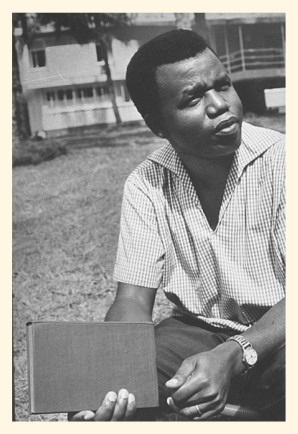
History should reflect the past truthfully—not mask human wrongdoing or justify the actions of previous generations.
History in Higher Education
Knowing the past has long been treated as a mark of civilization, but its value in higher education is practical as well as cultural. Historical study asks students to examine evidence, compare interpretations, identify patterns, and explain change over time. These habits prepare them to understand the shared human past while also making informed decisions about the future.
A common misconception is that history is mainly the memorization of names and dates. Names and dates matter because they establish sequence and context, but historical learning goes further: it asks why events happened, how people understood their circumstances, whose perspectives survived, and what consequences followed. The goal is not to produce a perfect telling of the human story—an impossible task—but a more accurate and thoughtful one.
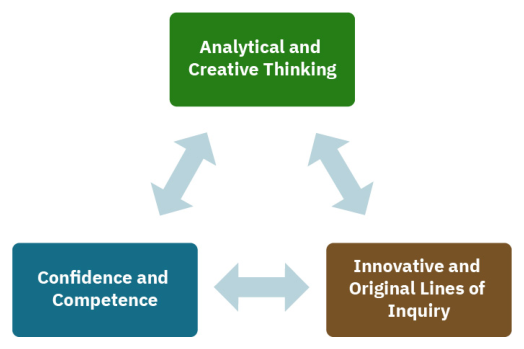
This makes history part of a liberal arts education, an education that develops broad intellectual abilities rather than training someone for only one narrow occupation. History expands knowledge of peoples, ideas, institutions, and cultures. It also strengthens critical-thinking and analytical abilities, skills that employers consistently value. The World Economic Forum identified innovative inquiry and creative thinking among the skills employers would value in 2025, and historical study directly exercises both: students investigate questions and construct interpretations from evidence.
World History and Global Citizenship
World history develops a global perspective, meaning an understanding of human societies as interconnected while still recognizing their cultural and historical differences. People increasingly live and work across national and cultural boundaries. Employers, institutions, and communities bring together individuals whose languages, customs, experiences, and assumptions may differ. Success in such settings requires more than awareness that differences exist; it requires the ability to communicate and collaborate respectfully across them.
Knowledge of the world and its people affects both private and public life. In private life, it can shape how people interpret unfamiliar customs, relationships, migration, religion, and cultural identity. In public life, it helps citizens evaluate international events, public policy, conflict, cooperation, and shared responsibilities. World history therefore prepares people for a world in which national borders remain politically important but do not prevent problems, ideas, economies, or people from crossing them.
Cultural empathy is the effort to understand how people’s beliefs and actions make sense within their own historical and cultural circumstances. It does not require approving of every action, erasing moral judgment, or pretending that all values are identical. Instead, it discourages the assumption that one’s own worldview is the universal standard. Cultural awareness and empathy allow people to approach global complexity with greater competence and fewer reflexive misunderstandings.
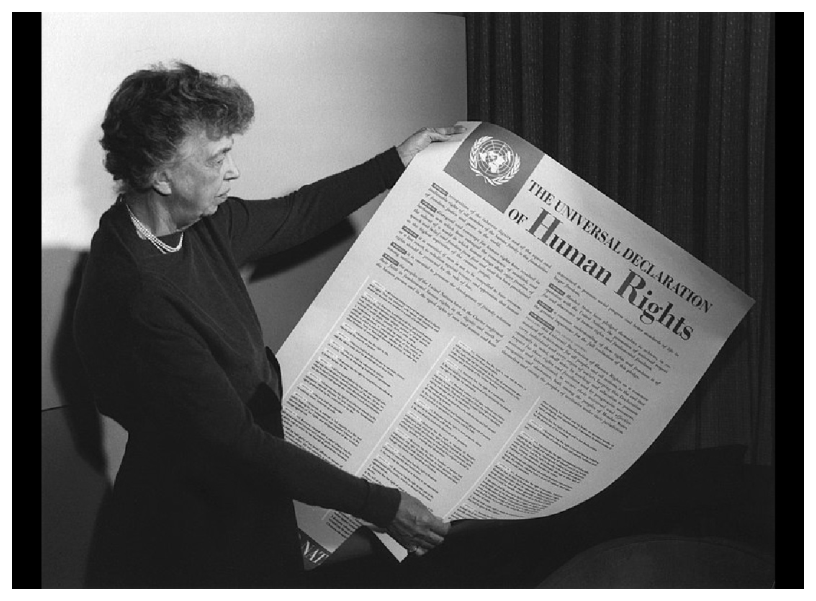
Global citizenship extends this perspective by emphasizing shared rights and responsibilities. International declarations and agreements affirm common obligations, human rights, and human dignity, including protections for women. These principles do not eliminate disagreement, but they establish claims about what human beings owe one another beyond the limits of a single nation.
Public attitudes toward this idea have also varied with circumstances. A survey conducted in 2015 and 2016 across eighteen countries found that more than half of respondents considered themselves global citizens. Support for global citizenship tended to increase during periods of prosperity. This finding suggests that people may be more willing to identify with wider human communities when they feel economically secure, while periods of crisis can make narrower identities more politically attractive.
History and Lifelong Learning
Lifelong learning means continuing to acquire knowledge and develop intellectual abilities throughout life rather than treating education as something completed at graduation. History supports lifelong learning because the questions it raises never become permanently closed. New sources may be discovered, historians may offer new interpretations, and changing circumstances may make older events newly relevant.
Historical study also teaches people how to learn independently. Students must assess the material they read, distinguish claims from evidence, and decide whether an interpretation is persuasive. They practice presenting content in meaningful and convincing ways. These abilities remain useful when people encounter unfamiliar subjects, changing workplaces, new technologies, public controversies, or information that demands careful evaluation.
Transferable Skills for a Changing World
The study of history develops several connected skills:
- Critical thinking and analytical ability: examining claims, evidence, causes, consequences, and competing interpretations.
- Adaptive thinking: responding flexibly when circumstances change or when familiar explanations no longer fit.
- Social intelligence: recognizing how people interact, cooperate, disagree, and organize themselves.
- Cross-cultural competency: communicating and working effectively across cultural differences.
- Media literacy: assessing and analyzing the material one encounters and presenting information meaningfully and persuasively.
- Creative thinking: remaining open to interpretations and ideas outside one’s own worldview.
Adaptive thinking is especially important because historical situations rarely remain fixed. Societies face changing political conditions, economic pressures, environmental circumstances, and cultural encounters. Studying how people responded to such changes helps students recognize that institutions and assumptions are products of particular circumstances, not permanent features of human life. That recognition makes it easier to imagine alternatives when present conditions change.
Media literacy is equally important in a workplace and public sphere saturated with information. History trains students to ask who created a source, what purpose it served, what evidence it uses, and what it leaves out. It also teaches them to develop and present content in ways that are meaningful and persuasive. These practices help people avoid treating every written or digital claim as equally reliable.
Global Problems and Shared Responsibilities
Many of the most important problems facing societies operate on a global scale. Climate change, social justice, and human rights cannot be understood entirely through the experience of one country. Their causes and consequences involve multiple communities, unequal power, competing interests, and long historical processes. A wider knowledge of the world helps people see why solutions require cooperation as well as local action.
Respectful communication and collaboration become more important as workplaces and institutions evolve across cultural boundaries. People must be able to listen to perspectives shaped by different histories without immediately dismissing them. Historical knowledge supplies context for those differences, while cultural empathy helps turn knowledge into constructive interaction. Together, they support participation in communities whose members do not share a single cultural background.
Features for Developing Historical Understanding
The learning features associated with world history reinforce these habits. In Their Own Words boxes present sources composed during the period under study, allowing readers to encounter historical voices directly. Such passages make the past more concrete and expose students to the language, assumptions, and concerns of people who lived in earlier societies.
Link to Learning materials direct readers toward digital resources that clarify content, expand on ideas, or highlight new work in the field. The Past Meets the Present connects historical developments with current concerns, making the relationship between past and present explicit. Dueling Voices places differing perspectives alongside one another, encouraging readers to compare arguments rather than assume that a single interpretation is automatically complete.
These features support an active understanding of history: readers encounter evidence, consider more than one perspective, connect historical events to present questions, and practice evaluating information. The result is not merely a larger store of facts. It is a more flexible way of thinking about people, change, disagreement, and the responsibilities created by shared human problems.
A global perspective therefore combines truthful historical inquiry with practical intellectual and social abilities. It asks people to understand the past without disguising its injustices, to recognize differences without reducing people to stereotypes, and to respond to global challenges with evidence, adaptability, empathy, and respect.
Content adapted from OpenStax World History, Volume 1: to 1500 by Ann Kordas et al., licensed CC BY 4.0.
Source Materials
Study World History Volume 1 on Lykke
This course page is free to open: signed out, you can read its first two sections, and signing in, on any plan, opens the rest. The free Lykke Chrome extension syncs your own Canvas courses, so ChatGPT, Claude and Muse can answer from your classes and deadlines. It only reads Canvas.
Add the free extensionSign in to open every sectionAll sections of World History Volume 1 · Browse more course pages