From the free course English Composition I on Lykke
3.2 Trailblazer
Key concepts: Rhetorical choices and audience expectations · Literacy as a set of varied practices · Literacy narratives · Tara Westover’s memoir Educated · Frederick Douglass’s pursuit of literacy · Literacy as transformation and resistance · Strategic learning under oppression · Close reading of narrative details and language · Writing-process revision and feedback · Collaborative literacy interviews
By the end of this section the student can: Use reading for inquiry, learning, critical thinking, and communicating; Identify various types of literacy in the context of a literacy narrative.
3.2 Trailblazer
Literacy is not one skill owned in one approved form; it is a set of practices people use to understand, create, and exchange meaning. Reading a religious text, preserving food, caring for animals, navigating a mountain, speaking within a community, or learning to write can all involve literacy. The important question is not simply, “Can this person read and write?” but also, “What kinds of knowledge and communication does this person practice, and when do those practices matter?”
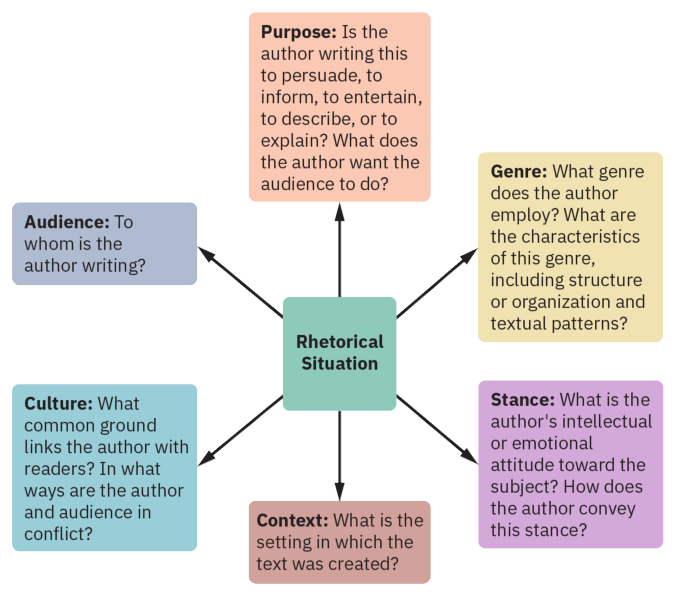
A communicator enters every rhetorical situation—the combination of audience, purpose, subject, and circumstances—with choices. You can draw on one variety of literacy rather than another, and you can decide whether to meet the audience’s expectations or disrupt them. A student writing for a professor may use academic conventions, for example, while also bringing in family knowledge, multilingual expression, visual communication, or community experience. These choices depend on both existing literacies and newly learned ones.
Key idea: Communicators choose which literacies to use in a rhetorical situation and whether to follow or challenge what an audience expects.
A common misconception is that literacy means only mastery of standardized reading and writing. That narrow definition overlooks the many ways people already communicate competently. It can also cause institutions to label some people “uneducated” simply because their knowledge does not resemble the knowledge valued by a particular audience. A broader view recognizes that literacy is connected to identity, community membership, opportunity, and power.
Being Educated
Tara Westover’s Educated: A Memoir, published in 2018, can be read as a literacy narrative: a narrative about a person’s experiences with learning and the effects of those experiences. The memoir examines academic and nonacademic literacies and considers how identification with particular literacies can create, strengthen, or disturb relationships and community memberships.
Westover’s story is especially useful because it does not present education as a simple movement from ignorance to knowledge. Early in the memoir, she describes growing up as the youngest of seven children in a homeschooled family. She learned to read, but her literary world consisted almost entirely of the Book of Mormon and other religious texts. At the same time, she developed practical literacies: preserving food, preparing herbs, caring for animals, working on the family farm, and surviving in the Idaho mountain environment.
These practices gave Westover a strong sense of belonging to both her family and their mountain home. They were not meaningless skills waiting to be replaced by academic education. They were forms of knowledge that shaped her identity and allowed her to participate in her community. The tension arises when another literacy—formal academic study—offers Westover new ways to interpret history, society, and her own experiences.
Westover’s memoir therefore shows that literacy can have social consequences. Becoming familiar with academic language and institutions may open opportunities, but it may also make a person’s relationships more complicated. A new way of naming an experience can challenge the explanations a family or community has always used. In this sense, education can both connect people to new communities and disturb their membership in older ones.
The memoir also demonstrates why a literacy narrative needs more than a list of accomplishments. “I learned to read” is a fact, but a literacy narrative asks what changed because of that learning. It examines the people, places, conflicts, practices, and consequences surrounding literacy. Westover’s practical knowledge, religious reading, and academic education matter because each one shapes what she can do, how she understands the world, and how others understand her.
Literacy as Transformation and Resistance
Frederick Douglass’s Narrative of the Life of Frederick Douglass presents literacy as both transformation and resistance. Douglass describes learning to read and write while enslaved, even though the people controlling his life understood literacy as a threat. His account shows that reading and writing are not merely neutral academic abilities. Under oppressive conditions, access to language can change how a person understands the self, the surrounding society, and the possibility of freedom.
Douglass recounts that Hugh Auld warned his wife not to teach him to read. Auld argued that literacy would make an enslaved person unfit for slavery and difficult to control. Douglass recognizes the warning as evidence of literacy’s power. If reading could make enslavement harder to maintain, then literacy had the potential to transform the lived experience of enslaved people.
Douglass’s insight: The attempt to prevent literacy reveals how powerful literacy can become when people use it to question domination.
While living with Master Hugh’s family for about seven years, Douglass succeeded in learning to read and write. He had no regular teacher. His mistress initially began instructing him, but she stopped after her husband objected and then opposed anyone else teaching him. Douglass explains that he had to develop “various stratagems”—deliberate tactics for creating learning opportunities where none were officially permitted.
Douglass used errands, a book, and bread to support his education. When sent on errands, he took opportunities to interact with local white boys. He exchanged bread for lessons, turning a resource he possessed into access to knowledge. These encounters show literacy developing through social relationships, improvisation, and persistence rather than through a formal classroom.
His method also demonstrates rhetorical flexibility. Douglass recognized what different people could offer, what they expected from him, and how he might create an exchange without revealing the full extent of his purpose. He drew on the resources available in his environment and adapted his behavior to each situation. Literacy here is not passive reception; it is strategic participation.
Living by Their Own Words
Douglass’s narrative is autobiographical and uses first-person point of view. The repeated presence of “I” establishes that the person who experienced enslavement is also the person interpreting and recording it. This choice gives Douglass authority over his own history and challenges systems that treated enslaved people as objects to be controlled rather than as thinking, speaking subjects.
His account of Hugh Auld’s dialogue serves several purposes at once. It follows a convention of narrative writing by presenting a specific scene and preserving a character’s words. It also exposes Auld’s racist reasoning and gives readers the context for Douglass’s later pursuit of literacy. By placing Auld’s warning in the narrative, Douglass makes Auld’s language testify against him: the oppressor unintentionally explains why education threatens oppression.
The passage’s meaning also depends on its language choices. Rhythm is the pattern of movement created by stressed and unstressed words, sentence length, repetition, and pacing. Sentence structure—the way clauses and phrases are arranged—can make a passage feel controlled, urgent, reflective, or forceful. Poetic phrasing can give an idea emotional intensity and make it memorable even in prose.
Douglass’s discussion of literacy gains power because his sentences move between concrete experience and broad interpretation. He describes the practical difficulty of learning without a teacher, then connects that difficulty to the larger system designed to keep enslaved people powerless. The writing does not treat literacy as an isolated accomplishment. Its rhythm and structure help readers feel the pressure of concealment, the persistence of effort, and the significance of intellectual freedom.
The historical language used in quoted dialogue requires careful rhetorical judgment. The original wording helps readers understand the setting, Douglass’s purpose, and the racism he exposes. In contemporary writing, however, racist language should not be repeated casually or for dramatic effect. It should appear only when necessary to analyze the historical context, and writers should explain why it is included. In most current rhetorical situations, avoiding such language is the responsible choice.
Writing a Literacy Narrative
A literacy narrative focuses on an aspect of your own literacy practice or experience. The subject might be learning a language, developing confidence in public speaking, participating in a religious or cultural tradition, mastering a workplace practice, learning through music or images, or discovering how a community communicates. The strongest subject is not necessarily the most impressive one. It is the one that allows you to show change, conflict, discovery, belonging, exclusion, or a new understanding of yourself and others.
For example, a writer might begin with a scene in which a family member teaches them to prepare herbs for winter. The writer could then explain how the practice communicates knowledge across generations and how it differs from the literacy valued in school. A short passage might read:
“My grandmother never called the recipe a lesson. She placed the leaves in my palm, named each one, and watched until I could sort them by smell. Years later, when I read about medicinal plants in a textbook, I realized that my first science vocabulary had begun in her kitchen.”
This example uses a specific scene rather than a general claim. It identifies a nonacademic literacy, shows how learning happened through a relationship, and reflects on the connection between family knowledge and school knowledge. The final sentence gives the experience significance beyond the event itself. That reflective movement is what turns a memory into a literacy narrative.
The writing process calls for drafting, receiving clear and honest feedback, and revising. A first draft discovers the story; revision decides what the story means and how an audience can understand it. Feedback is most useful when it is specific: a reader might identify where the narrative becomes vivid, where the change is unclear, or where more context is needed. Revision should respond to such observations by strengthening scenes, clarifying relationships, and making the significance of the literacy practice visible.
The process may also include collaboratively recording and transcribing peer interviews. Interviewing classmates can reveal literacy practices that writers take for granted, while transcription preserves the details of a person’s language and experience. Collaboration matters because literacy develops through communities, not isolation. Listening carefully to another person can expand the writer’s definition of what counts as knowledge and communication.
A successful literacy narrative does not rank one kind of literacy above all others. Like Westover’s memoir and Douglass’s narrative, it asks how learning shapes relationships, opportunities, identity, and power. It also makes deliberate rhetorical choices: which experience to present, which audience to address, which expectations to follow, and which assumptions to challenge.
Content adapted from OpenStax Writing Guide with Handbook by Michelle Bachelor Robinson, Maria Jerskey et al., licensed CC BY 4.0.


Source Materials
Study English Composition I on Lykke
This course page is free to open: signed out, you can read its first two sections, and signing in, on any plan, opens the rest. The free Lykke Chrome extension syncs your own Canvas courses, so ChatGPT, Claude and Muse can answer from your classes and deadlines. It only reads Canvas.
Add the free extensionSign in to open every sectionAll sections of English Composition I · Browse more course pages