From the free course English Composition I on Lykke
1.2 Trailblazer
Key concepts: Responsible digital communication · Awareness of the longevity of posted content · Rhetorical situation · Anticipating audience reaction · Selena Gomez’s solo albums · OpenStax access
By the end of this section the student can: Read for inquiry, learning, critical thinking, and communicating in various rhetorical contexts.; Identify the elements of successful social media use.
1.2 Trailblazer
A social media post can outlive the moment that produced it, traveling to audiences the writer never expected and acquiring meanings the writer never intended. Posting responsibly therefore requires more than deciding whether something is true or interesting; it requires anticipating how a message may be received, reshared, remembered, and interpreted later.
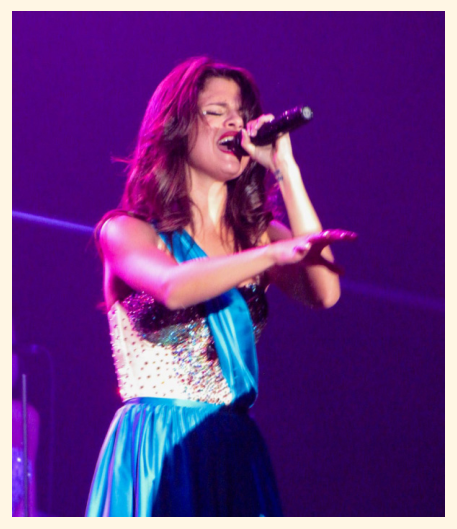
Social Media Trailblazer: Selena Gomez
Selena Gomez provides a useful example because her public communication combines personal identity, professional visibility, advocacy, and deliberate restraint. Her social media choices demonstrate that online communication is not merely casual self-expression. A post is also a rhetorical act: it addresses people, creates an impression, advances a purpose, and appears within a particular cultural and technological setting.
Gomez’s career as a public figure includes the solo albums Stars Dance (2013), Revival (2015), and Rare (2020). Those titles identify an established public identity, but the passage emphasizes that public success does not make social media communication simple. Gomez’s relationship with social media has been “rocky,” suggesting that visibility can create both opportunities and pressures.
Her stated strategy is “intentional”: she says that she does not take many “pointless pictures.” The important idea is not that every post must be solemn or carefully engineered. Rather, Gomez recognizes that a public account has consequences. Choosing not to post something can be as deliberate as posting it. Her selectivity communicates a stance—a position or attitude toward what deserves public attention.
Gomez also recognizes the power of her platform and uses it to champion causes she cares about. The passage identifies her diagnoses of lupus in 2015 and bipolar disorder in 2018 as part of this context. These details matter rhetorically because they show how personal experience can shape public communication without reducing a person to a diagnosis. Her platform can make private experience relevant to wider conversations, while also requiring care about vulnerability, privacy, and audience response.
Learning Outcomes
Gomez’s example turns the central practical question into a decision: before posting, can you predict how different audiences might understand the message now and later? The answer depends on examining the post’s rhetorical situation—the combination of circumstances that shapes communication. In social media, this includes the genre of the post, its purpose, the writer’s stance, the context in which it appears, and the writer’s cultural awareness.
The point is not to make posting impossible by imagining every reaction. It is to pause long enough to notice foreseeable consequences. A humorous caption, for example, may be understood differently by close friends, employers, strangers, or people encountering it years later without the original context. Considering those audiences helps a writer make a more informed choice about wording, images, timing, and whether to post at all.
Authenticity as Rhetoric
Authenticity means presenting oneself as genuine or sincere, but online authenticity is still a form of rhetoric. A writer chooses what to reveal, what to omit, and how to frame an experience. Even a post that feels spontaneous gives an audience a selected version of the writer. Authenticity can build trust, but it does not eliminate the need for judgment.
Authenticity is not the absence of rhetorical choices; it is the effect created by choices that appear genuine, relevant, and consistent with the writer’s identity.
Gomez’s intentional approach illustrates this distinction. Avoiding “pointless pictures” does not necessarily mean avoiding personal expression. It means treating the account as meaningful communication rather than as an automatic record of every moment. When she uses social media to support causes she values, her posts connect personal credibility with public purpose. Her identity and experiences influence the message, but the message is shaped for an audience.
Reading the Rhetorical Situation
A useful way to judge a possible post is to examine five features of its rhetorical situation:
- Genre: What kind of communication is it—a photograph, caption, story, video, announcement, comment, or advocacy message? Each genre creates different expectations.
- Purpose: What should the post accomplish? It might inform, entertain, express emotion, invite support, or draw attention to a cause.
- Stance: What attitude does the post convey? It may sound sincere, playful, angry, uncertain, celebratory, or critical.
- Context: What is happening around the post? Current events, a previous conversation, a trending topic, or a personal circumstance can affect interpretation.
- Cultural awareness: Could language, symbols, humor, or assumptions carry different meanings for people from different backgrounds?
These elements work together rather than functioning as a checklist with isolated answers. A serious message posted in a joking format may seem dismissive. A sincere statement placed in a tense public conversation may be treated as a political position. A familiar phrase may be harmless within one community but offensive or confusing to another. Rhetorical awareness helps the writer anticipate these possibilities before the audience supplies its own interpretation.
Anticipating Audience Reaction
A rhetorical situation helps writers anticipate an audience’s reaction because it directs attention away from intention alone. “I meant it as a joke” describes the writer’s purpose, but it does not predict how an audience will understand the joke. Readers bring their own experiences, expectations, cultural knowledge, and emotional responses to a message. Responsible communication considers both what the writer intends and what the message reasonably invites.
Consider a hypothetical post:
“Long week, but grateful for the people who showed up. Taking a break tonight.”
This short post has a relatively clear purpose: it expresses appreciation and announces a pause. Its stance is reflective rather than accusatory. The wording avoids identifying a conflict or naming people, which limits unnecessary speculation. Yet it could still be interpreted in several ways. Friends might read it as a personal update, while coworkers might wonder whether it refers to a workplace problem. A future reader might lack the context entirely. The writer cannot control every interpretation, but the writer can decide whether the possible ambiguity is acceptable.
A more pointed version would create a different rhetorical situation:
“Some people only show up when it benefits them. I see you.”
This version has a sharper stance and may be intended for one person, but its public genre addresses many possible audiences. It invites readers to guess who is being criticized, encourages reposting and commentary, and may appear hostile when separated from the original situation. The change in wording does not merely make the message “more honest.” It changes the likely audience reaction and the consequences of circulation.
Longevity and Responsible Posting
Posts should be treated responsibly and with awareness of their longevity. Longevity is the ability of a message to remain available or continue influencing people over time. A post may be deleted and still survive through screenshots, quotation, memory, or redistribution. It may also reach audiences beyond the writer’s followers. This does not mean that every post must be formal or permanently polished. It means that the writer should recognize the difference between a temporary feeling and a durable public record.
The practical test is to imagine several stages of a post’s life: its first audience, a wider unintended audience, and a future audience encountering it without explanation. Ask what the post appears to claim, what assumptions it makes, and whether its tone still represents the writer’s intended stance outside the original moment. This pause is especially important when the message concerns health, conflict, identity, public causes, or another person’s private information.
Selena Gomez’s example makes intentionality concrete. Her selective posting and use of a public platform for causes she cares about show that effective social media use involves choices about relevance, purpose, and audience—not simply frequent activity. A responsible post can still be personal, emotional, and authentic; responsibility lies in recognizing its rhetorical force and possible afterlife.
OpenStax Access
The material is available for free at openstax.org. Free access expands the number of readers who can examine these ideas about digital communication, public identity, and rhetorical decision-making.
Before publishing, identify the likely audiences, consider how the post could be reinterpreted without its original context, and imagine where it might circulate in the future. That brief rhetorical check preserves room for authentic expression while making the post a deliberate and responsible choice.
Content adapted from OpenStax Writing Guide with Handbook by Michelle Bachelor Robinson, Maria Jerskey et al., licensed CC BY 4.0.
Source Materials
Study English Composition I on Lykke
This course page is free to open: signed out, you can read its first two sections, and signing in, on any plan, opens the rest. The free Lykke Chrome extension syncs your own Canvas courses, so ChatGPT, Claude and Muse can answer from your classes and deadlines. It only reads Canvas.
Add the free extensionSign in to open every sectionAll sections of English Composition I · Browse more course pages