From the free course English Composition II: Rhetorical Methods–Based on Lykke
13.4 Annotated Student Sample: Research Log
Key concepts: research skills · technology literacy · time management · periodical citations · publication dates · optional citation elements · historical publication information · source evaluation · Paul Broca’s case study of Leborgne · brain localization and language functions
By the end of this section the student can: Demonstrate the ability to inquire, learn, think critically, and communicate when reading in varying rhetorical and cultural contexts.; Identify and analyze relationships between ideas, patterns of organization, and interplay between verbal and nonverbal elements in written texts.; Practice and apply strategies such as interpretation, synthesis, response, and critique to compose texts that integrate the writer’s ideas with those from appropriate sources.
13.4 Annotated Student Sample: Research Log
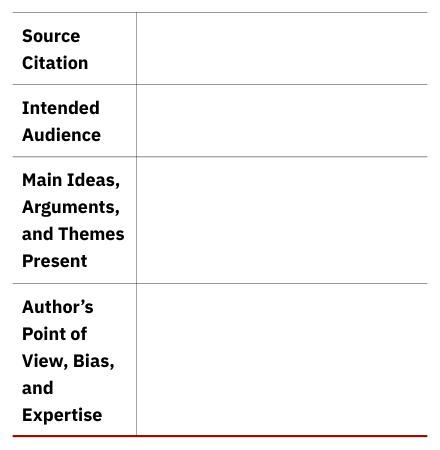
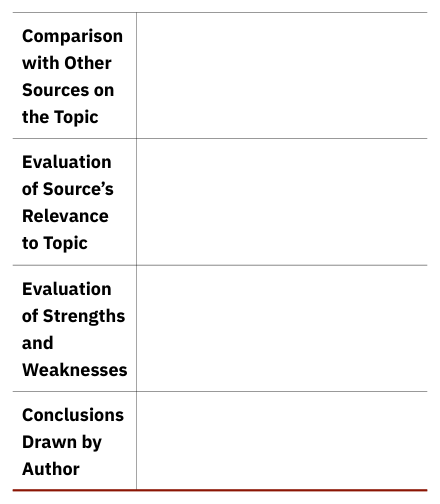
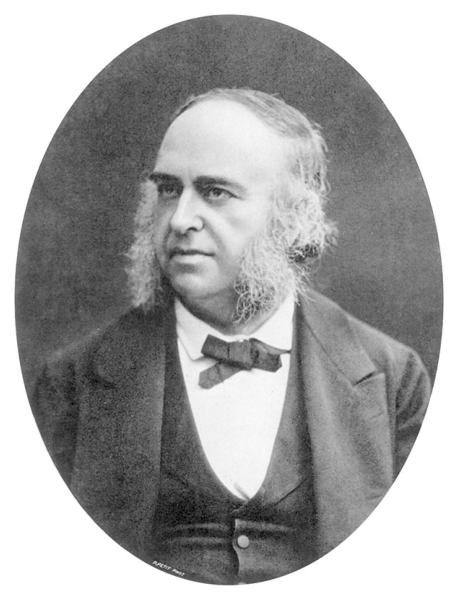
A research log turns scattered reading into a traceable record of inquiry: it shows what a researcher found, when it was found, how the source was documented, and how the information may contribute to an argument. Its value becomes clearest when a project combines technical source management with close attention to a historical case, such as Paul Broca’s study of Louis Victor “Tan” Leborgne.
Research Skills in Practice
Technology literacy is the ability to use computers, databases, and other forms of technology to conduct research. In practice, this means more than knowing how to type a search term. A researcher must move among databases, digital articles, library catalogs, webpages, and citation records while preserving enough information to locate each source again. The technology supports the inquiry, but the researcher remains responsible for judging what the information means and recording it accurately.
Time management is the ability to plan research tasks over several weeks or months. Research rarely consists of one successful search followed immediately by a finished paper. A writer may need to identify a question, locate sources, read closely, record evidence, compare perspectives, draft an argument, and return to sources for verification. A research log supports this process because it keeps the project’s discoveries and decisions visible over time.
A common misconception is that a research log is merely a list of links. A useful log is more deliberate: it connects a source with its publication information, location, relevant ideas, and possible role in the writer’s thinking. For example, a note about Broca’s study should not merely record a title. It should preserve the details that matter to the argument, such as the patient’s symptoms, the limits of the medical history, and Broca’s claims about brain function.
Reading the Annotated Student Sample
The student sample demonstrates how research records preserve both evidence and interpretation. The notes concerning Broca’s case do not treat the historical account as a collection of isolated facts. They identify what Broca observed, what he inferred from those observations, how he qualified his method, and what questions remained unresolved. That movement from information to analysis is essential to responsible research writing.
Patient Admission
Broca’s account begins with Leborgne coming under his care. The record acknowledges that Broca’s method offered “only a cursory medical history,” a limitation that affects how confidently modern readers should interpret the case. Even so, Broca gathered several relevant details: when Leborgne developed epilepsy, when he lost the ability to speak, and when he was first admitted to the hospital.
These details illustrate why a research log should preserve chronology. The timing of symptoms gives readers a way to understand the development of the patient’s condition rather than seeing it as a single undifferentiated diagnosis. The student’s notes therefore record not only what happened but also when it happened.
Patient History
The patient history supplies a sequence of physical and cognitive changes. Approximately ten years after the onset of his first symptoms, Leborgne experienced gradual weakness in his right arm. The weakness developed into complete paralysis of that limb, followed by weakness in his right leg and foot. Four years passed from the beginning of the arm paralysis until he completely lost the ability to stand; during this period, his vision and mental faculties also deteriorated.
A strong research note distinguishes direct observation from later interpretation. The progression of paralysis is a reported feature of the case. Broca’s interpretation of what that progression revealed about brain organization is a separate intellectual claim. Keeping those layers distinct helps a writer avoid presenting an interpretation as though it were an unquestionable fact.
Periodical Citation and Publication Information
Formatting
Citation formatting allows readers to identify and retrieve the material behind a writer’s claims. For a periodical, no publisher is listed in the citation. This distinction matters because students sometimes assume that every citation must contain a publisher. Citation elements depend on the kind of source being documented; a periodical citation follows different conventions from a book citation.
The sample includes an access date—“Accessed 23 Jan. 2021”—which records when the researcher consulted the source. An access date can be especially useful for online material that may be revised, moved, or presented in different versions. It also gives the research process a temporal record: readers can see not only what source was used but when it was accessed.
Publication Date
The publication date should be the most recent date available for the version of the source used. This rule requires attention to the actual version consulted, not an earlier date that happens to appear elsewhere in a record. The date is followed by a comma in the citation format shown in the sample.
The reason for using the most recent available date is practical and rhetorical. A date helps readers identify the precise form of a source, while also indicating how current that version may be. If a writer cites an online source without checking its version or date, readers may have difficulty determining which text supports the writer’s claim.
Location
Location identifies where the relevant information appears in the source. It may include page numbers and URLs, and it should be as specific as possible. A precise location allows readers to return to the source and examine the evidence for themselves, which strengthens the transparency of the research.
For an online source, the citation may include a URL. In the format shown here, the beginning tag http:// or https:// is removed when listing the URL. The larger principle is more important than the mechanical detail: a citation should provide a usable path back to the material, not merely a vague reference to a website.
Optional Elements
Optional citation elements may be added to help readers identify a source more easily. They are not automatically required in every citation, so the writer should consider whether an element clarifies the source or helps distinguish it from similar materials.
The city of publication is generally included only for books published before 1900 or for books whose publishers have offices in more than one country or are unknown in North America. It is therefore not a routine element for every modern book or periodical. Including it indiscriminately can make a citation longer without making the source easier to identify.
Other optional elements include an access date, a DOI—a digital object identifier—which may be used in place of a URL when available, and the original publication date when it differs from the publication date used for the citation. Each element answers a reader’s identification problem: when the writer accessed the material, how to locate its stable digital record, or when the work first appeared.
Broca’s Interpretation of Leborgne
Autopsy Findings
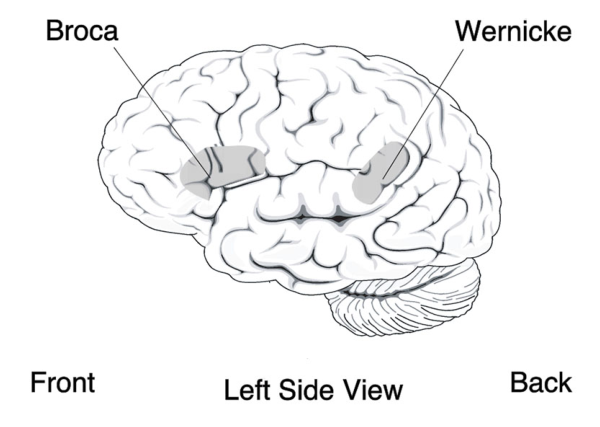
Broca used the case to make a claim about the relationship between the brain and language. His argument was not simply that Leborgne had lost the ability to speak. Broca asserted that specific areas of the brain have specific functions. The patient’s condition became evidence in a developing effort to associate particular mental or linguistic abilities with particular regions of the brain.
The research log should preserve this claim because it represents the source’s central contribution to knowledge. A note that recorded only Leborgne’s paralysis would miss the reason Broca’s case mattered. Effective notes therefore identify the connection between an observed condition and the larger hypothesis the researcher develops from it.
Discussion
Broca further stated that motor articulation is not directly relevant to the ability to conceive words and ideas. This distinction separates the physical act of producing speech from the mental capacity to form language and thoughts. In other words, difficulty moving the speech organs does not by itself prove an inability to conceive words or ideas.
That distinction also demonstrates why researchers must record exact claims rather than reducing a complex argument to a broad slogan. “The patient could not speak” and “the patient could not think” are not equivalent statements. Broca’s discussion rejects that easy conclusion by treating articulation and the conception of words and ideas as related but not identical functions.
Advancing Knowledge
Broca used the case study to contribute to research on brain functions. The value of the case lies not only in its description of one patient but also in the questions it raised about how language and other abilities are organized. A research log captures this contribution by noting the source’s main claim and the larger inquiry to which the case belongs.
This is where synthesis begins: the writer connects the details of Leborgne’s history with Broca’s interpretation and then with the broader question of brain function. The notes do not replace the source’s argument; they preserve the relationships among its evidence, reasoning, and significance so those relationships can later be represented accurately in writing.
Limitations of the Research
Broca also noted that not everyone attending the meeting agreed with his conclusions. This disagreement suggests that the case did not settle every question about the brain. Further research was needed to determine more about the brain and whether specific parts control specific functions.
A credible research record includes limitations and disagreement rather than collecting only statements that support a preferred conclusion. Broca’s acknowledgment of a cursory medical history and the lack of complete agreement among his contemporaries make the account more intellectually honest. They also give a later writer material for evaluating the strength and boundaries of the evidence.
Conclusion
The sample’s conclusion continues from the observation that Leborgne could respond to verbal and mathematical questions despite his loss of speech. That contrast is significant: the inability to articulate speech did not necessarily eliminate the ability to understand or conceive words and ideas. The case therefore supports a more precise argument about language functions than a simple equation between speech and thought.
Taken together, the citation notes and the case notes show what a research log is designed to preserve. It records the source’s identity, the version used, the location of evidence, the relevant facts, the author’s interpretation, and the limits of the research. Those records make later synthesis more accurate because the writer can return to the evidence instead of relying on memory or an incomplete impression.
Alphabetizing and Indenting
MLA citations in a research project also follow rules for alphabetizing and indenting. These rules organize the final list of sources so readers can locate entries efficiently. Although they may appear separate from intellectual analysis, consistent formatting supports the same goal as precise notes: it makes the path from a writer’s claim back to the research easier to follow.
The central habit is consistency. Record source information while researching, preserve specific locations, distinguish required from optional citation elements, and apply the formatting rules when assembling the final list. Technology can speed up searching and storage, but careful human decisions determine whether the resulting record is complete, accurate, and useful.
Content adapted from OpenStax Writing Guide with Handbook by Michelle Bachelor Robinson, Maria Jerskey et al., licensed CC BY 4.0.

Source Materials
Study English Composition II: Rhetorical Methods–Based on Lykke
This course page is free to open: signed out, you can read its first two sections, and signing in, on any plan, opens the rest. The free Lykke Chrome extension syncs your own Canvas courses, so ChatGPT, Claude and Muse can answer from your classes and deadlines. It only reads Canvas.
Add the free extensionSign in to open every sectionAll sections of English Composition II: Rhetorical Methods–Based · Browse more course pages