Psychology as Science
Institution: MIT
30 study materials · 10 sections
Psychology as Science provides a comprehensive exploration of the scientific study of human behavior and mental processes. The course bridges the gap between biological foundations—such as neuroanatomy and genetics—and complex social phenomena like community interaction and cultural influence. Students will gain a rigorous understanding of research methodologies, cognitive processes, developmental stages, and the clinical frameworks used to treat psychological disorders.
Course Sections
Biological Basis of Behavior
Key concepts: Neuroanatomy · Neurons and Neural Communication · Epigenetics · Behavioral Endocrinology · Natural and Sexual Selection
Explores the physiological foundations of behavior, including neuroanatomy, the nervous system, and the endocrine system.
Biological Basis of Behavior
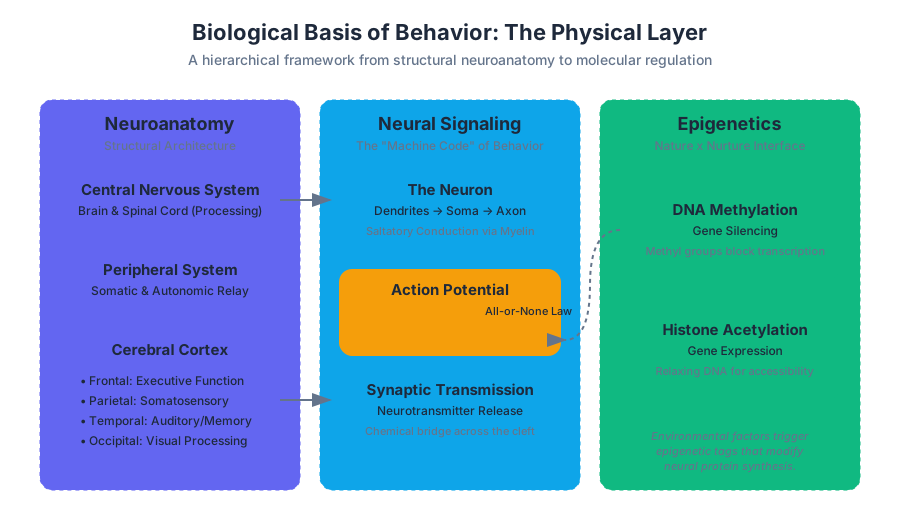
The biological basis of behavior represents the "physical layer" of the human experience. In the same way that software performance is constrained by the underlying CPU architecture and memory bandwidth, human cognition, emotion, and social interaction are fundamentally products of biological substrates. This field synthesizes neuroanatomy, electrophysiology, molecular biology, and evolutionary theory to explain why we think, feel, and act the way we do.
Neuroanatomy: The Structural Architecture
Neuroanatomy is the study of the physical organization of the nervous system. It is traditionally divided into two primary systems: the Central Nervous System (CNS), consisting of the brain and spinal cord, and the Peripheral Nervous System (PNS), which connects the CNS to the rest of the body.
The Central Nervous System (CNS)
The CNS acts as the primary processing hub. The brain is organized hierarchically, with "lower" structures handling autonomic survival functions and "higher" structures managing complex cognition.
| Region | Primary Components | Functional Specialization |
|---|---|---|
| Hindbrain | Medulla, Pons, Cerebellum | Autonomic functions (breathing, heart rate), motor coordination, and balance. |
| Midbrain | Tectum, Tegmentum | Sensory processing (visual/auditory triggers), reticular formation (arousal). |
| Forebrain | Cerebral Cortex, Thalamus, Limbic System | High-level executive function, sensory relay, emotional processing, and memory. |
The Cerebral Cortex and Localization of Function
The cerebral cortex is divided into four lobes, each associated with distinct functional domains. While the brain exhibits high levels of neuroplasticity (the ability to reorganize itself), certain areas are highly specialized.
- Frontal Lobe: Home to the Prefrontal Cortex (PFC), responsible for executive functions, planning, and impulse control. It also contains the motor cortex.
- Parietal Lobe: Processes somatosensory information (touch, temperature, pain) and spatial awareness.
- Temporal Lobe: Essential for auditory processing, language comprehension (Wernicke’s area), and memory formation.
- Occipital Lobe: Dedicated almost exclusively to visual processing.
Neurons and Neural Communication: The Signaling Protocol
Behavior is the result of billions of specialized cells called neurons communicating via electrochemical signals. This process is the "machine code" of the brain.
Anatomy of a Neuron
- Dendrites: Branch-like structures that receive incoming signals from other neurons.
- Soma (Cell Body): Integrates incoming signals and contains the nucleus.
- Axon: A long fiber that carries the electrical impulse (action potential) away from the soma.
- Myelin Sheath: A fatty insulating layer that increases signal transmission speed via saltatory conduction.
- Axon Terminals: The exit point where neurotransmitters are released into the synapse.
The Action Potential
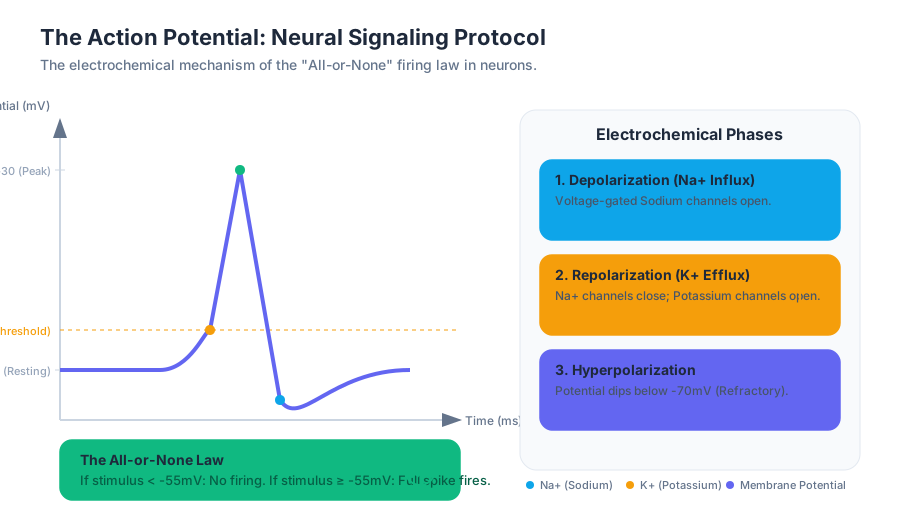
The Action Potential is an "all-or-nothing" electrical discharge. It occurs when the neuron's membrane potential reaches a specific threshold (typically -55mV), causing a rapid influx of Sodium ($Na^+$) ions and a subsequent efflux of Potassium ($K^+$) ions.
The All-or-None Law: A neuron either fires completely or not at all. The intensity of a stimulus is communicated not by the "size" of the electrical pulse, but by the frequency of firing (rate coding).
Synaptic Transmission
When the action potential reaches the terminal, it triggers the release of neurotransmitters into the synaptic cleft. These chemicals bind to receptors on the postsynaptic neuron, acting like a key in a lock to either excite or inhibit the next cell.
/*
 * Low-level simulation of a Leaky Integrate-and-Fire (LIF) Neuron
 * This represents the basic logic of neural summation and firing.
 */

#include <stdio.h>

#define THRESHOLD -55.0  // mV
#define RESTING_POT  -70.0 // mV
#define SPIKE_VALUE  30.0  // mV
#define DECAY_RATE   0.95  // Membrane leak factor

typedef struct {
    double membrane_potential;
    int is_refractory;
} Neuron;

void process_input(Neuron *n, double input_current) {
    if (n->is_refractory) {
        n->membrane_potential = RESTING_POT;
        n->is_refractory = 0;
        return;
    }

    // Update potential: V(t) = V(t-1) * decay + input
    n->membrane_potential = (n->membrane_potential * DECAY_RATE) + input_current;

    // Check for spike
    if (n->membrane_potential >= THRESHOLD) {
        printf("Action Potential Fired! [V = %.2f mV]\n", SPIKE_VALUE);
        n->membrane_potential = SPIKE_VALUE;
        n->is_refractory = 1; // Enter refractory period
    } else {
        printf("Membrane Potential: %.2f mV\n", n->membrane_potential);
    }
}

int main() {
    Neuron n1 = {RESTING_POT, 0};
    double stimulus_train[] = {2.0, 5.0, 10.0, 10.0, 10.0, 2.0};

    for(int i = 0; i < 6; i++) {
        process_input(&n1, stimulus_train[i]);
    }
    return 0;
}
Epigenetics: The Interface of Nature and Nurture
For decades, the "Nature vs. Nurture" debate suggested a binary choice. Epigenetics has rendered this distinction obsolete by showing how the environment directly influences gene expression without altering the underlying DNA sequence.
Mechanisms of Epigenetic Change
Epigenetic modifications act as "tags" on the genome, determining which genes are "turned on" (expressed) or "turned off" (silenced).
| Mechanism | Action | Resulting Effect |
|---|---|---|
| DNA Methylation | Addition of a methyl group to DNA bases. | Typically silences gene expression by preventing transcription. |
| Histone Acetylation | Modification of the proteins (histones) DNA wraps around. | Relaxes DNA structure, making genes more accessible for expression. |
| Non-coding RNA | RNA molecules that do not code for proteins. | Can intercept and degrade mRNA, preventing protein synthesis. |
Behavioral Implications
Studies in rodents (e.g., Weaver et al., 2004) demonstrated that high-quality maternal care (licking and grooming) leads to decreased DNA methylation of the glucocorticoid receptor gene. This makes the offspring more resilient to stress in adulthood. In humans, similar mechanisms are implicated in how childhood trauma increases the risk for later psychiatric disorders.
\text{Phenotype} (P) = \text{Genotype} (G) + \text{Environment} (E) + (G \times E) + \text{Epigenetic State} (\epsilon)
Key Insight: Epigenetic changes can be heritable. This means the environmental stressors experienced by a parent can potentially influence the biological predispositions of their offspring through "transgenerational epigenetic inheritance."
Behavioral Endocrinology: The Chemical Messengers
While the nervous system uses electrical impulses for rapid communication, the Endocrine System uses hormones for slower, longer-lasting, and more widespread signaling.
The HPA Axis
The Hypothalamic-Pituitary-Adrenal (HPA) Axis is the body's primary stress response system.
- Hypothalamus releases CRH (Corticotropin-releasing hormone).
- Pituitary Gland releases ACTH (Adrenocorticotropic hormone).
- Adrenal Glands release Cortisol, which increases blood sugar and suppresses non-essential functions (like digestion) to prepare for "fight or flight."
Major Hormones and Behavior
| Hormone | Source | Primary Behavioral Influence |
|---|---|---|
| Oxytocin | Hypothalamus/Pituitary | Social bonding, trust, maternal behavior, and "tend-and-befriend" response. |
| Testosterone | Gonads/Adrenals | Dominance seeking, aggression (context-dependent), and libido. |
| Cortisol | Adrenal Cortex | Stress management, arousal, and metabolic regulation. |
| Estradiol | Ovaries | Cognitive function, mood regulation, and reproductive behavior. |
Evolutionary Psychology: Natural and Sexual Selection
The biological basis of behavior is not random; it is the result of millions of years of evolutionary pressure. Evolutionary Psychology posits that the human mind consists of "evolved psychological mechanisms" designed to solve specific problems faced by our ancestors.
Natural Selection
Traits that increase an organism's chances of survival to reproductive age are more likely to be passed on. In a psychological context, this includes:
- Fear responses: Rapid detection of snakes or spiders.
- Food preferences: Cravings for high-calorie fats and sugars (adaptive in environments of scarcity).
Sexual Selection
Some traits evolve not because they aid survival, but because they aid reproductive success.
- Intrasexual Competition: Traits that help one compete with members of the same sex (e.g., physical size, aggression).
- Intersexual Selection: Traits that attract the opposite sex (e.g., complex song in birds, or perhaps creativity and humor in humans).
Inclusive Fitness and Altruism
Why do humans help others at a cost to themselves? Hamilton’s Rule ($rb > c$) suggests that altruism is biologically viable if the benefit to a relative ($b$), weighted by the degree of genetic relatedness ($r$), exceeds the cost to the individual ($c$).
# Evolutionary Simulation: Trait Selection Over Generations
import random

class Individual:
    def __init__(self, fitness_score):
        self.fitness = fitness_score  # Probability of survival/reproduction

def simulate_generation(population):
    # Selection: Only the top 50% survive to reproduce
    population.sort(key=lambda x: x.fitness, reverse=True)
    survivors = population[:len(population)//2]

    # Reproduction with minor mutation
    next_gen = []
    for parent in survivors:
        # Each survivor has two offspring
        for _ in range(2):
            mutation = random.uniform(-0.05, 0.05)
            child_fitness = max(0, min(1, parent.fitness + mutation))
            next_gen.append(Individual(child_fitness))
    return next_gen

# Initial population with random fitness
pop = [Individual(random.random()) for _ in range(100)]

print(f"Initial Avg Fitness: {sum(i.fitness for i in pop)/100:.2f}")

for gen in range(10):
    pop = simulate_generation(pop)
    avg_f = sum(i.fitness for i in pop) / len(pop)
    print(f"Gen {gen+1} Avg Fitness: {avg_f:.2f}")
Common Pitfalls and Misconceptions
- Biological Determinism: The mistaken belief that because a behavior has a biological basis, it is unchangeable. In reality, the brain is highly plastic, and environmental interventions can alter biological trajectories.
- The "One Gene, One Behavior" Fallacy: Most behaviors are polygenic, meaning they are influenced by hundreds or thousands of genes, each with a tiny effect, interacting with the environment.
- Localization Overstatement: While we speak of "the fear center" (amygdala), no brain region acts in isolation. Behavior emerges from network connectivity rather than isolated "modules."
- Misunderstanding Evolutionary "Fitness": In biology, fitness refers to reproductive success, not physical strength or "superiority." An anxious individual might have higher "fitness" in a dangerous environment because they are more likely to survive and reproduce.
Synthesis: The Integrated Biological Model
To understand any behavior—for example, a person’s reaction to a social rejection—we must look at all these layers simultaneously:
- Evolutionary: Why did humans evolve a need for social belonging? (Survival in groups).
- Endocrine: What happens to cortisol levels when we are rejected? (Stress response).
- Neuroanatomical: Which areas activate? (The Anterior Cingulate Cortex, which also processes physical pain).
- Neural: What is the neurotransmitter balance? (Drop in dopamine/opioid activity).
- Epigenetic: How does this person's history of attachment (nurture) influence their current receptor sensitivity (nature)?
By viewing behavior through this multi-layered biological lens, we move away from simplistic explanations and toward a rigorous, scientific understanding of the human condition.
Cognition and Language
Key concepts: Attention · Theory of Mind · Language Use · Social Cognition · Conformity and Obedience
An investigation into how humans process information, use language, and navigate social environments through cognitive frameworks.
Cognition and Language: The Architecture of Human Interaction
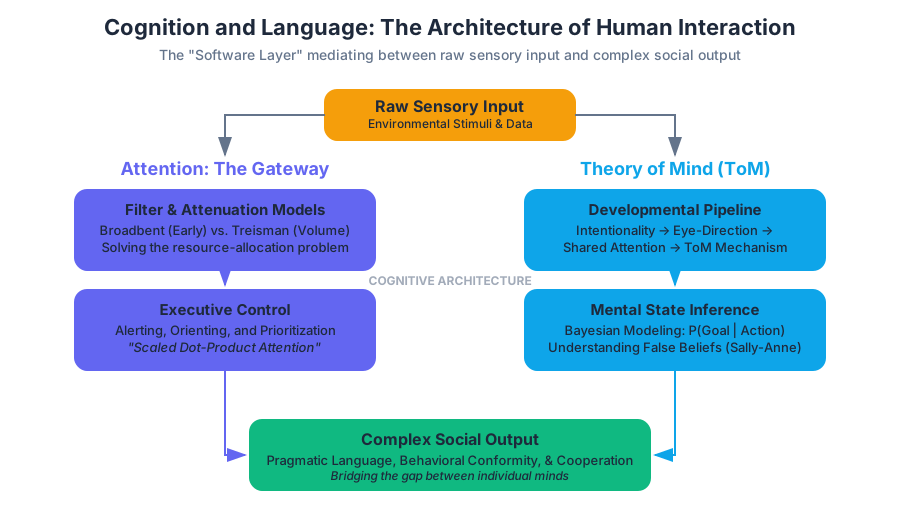
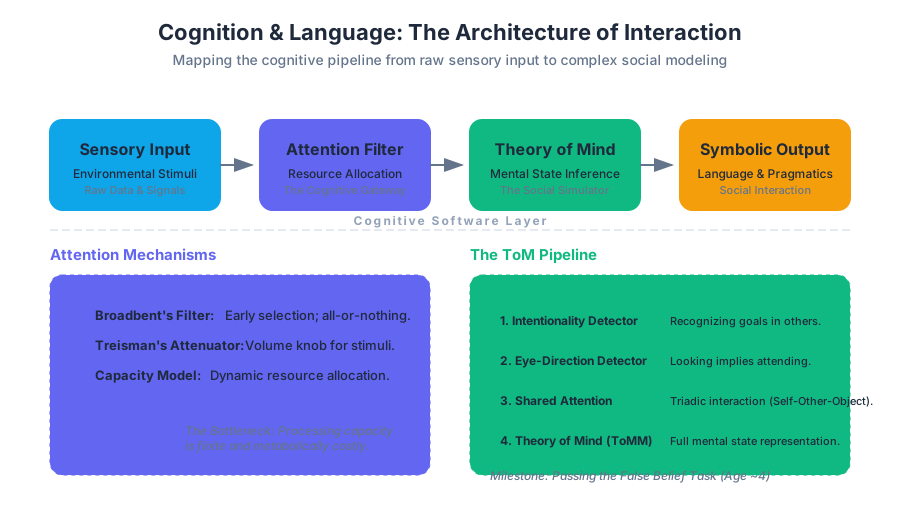
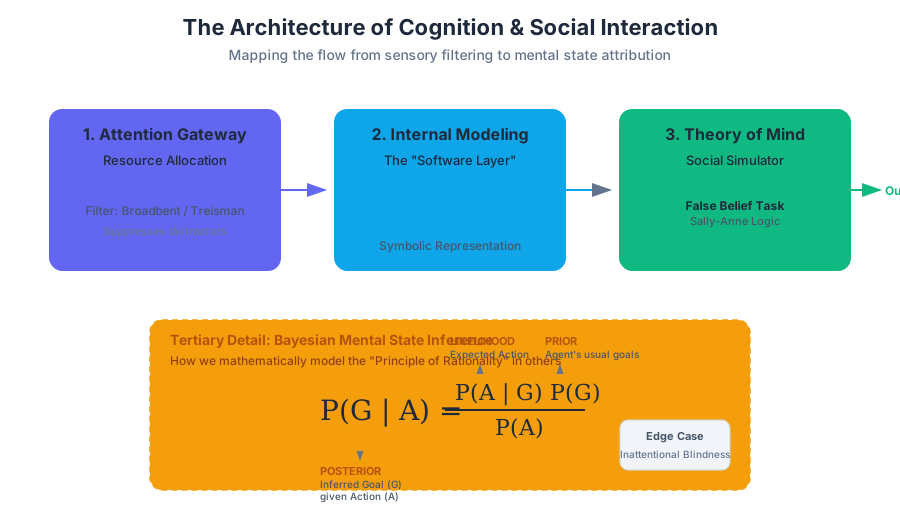
Cognitive psychology serves as the "software layer" of the human experience, mediating between raw sensory input and complex social output. While neuroanatomy provides the hardware, the study of Cognition and Language explores the algorithms governing how we filter information, model the internal states of others, and utilize symbolic systems to bridge the gap between individual minds. This section examines the mechanisms of attention, the development of a "Theory of Mind," the pragmatic use of language, and the social pressures that dictate behavioral conformity.
Attention: The Cognitive Gateway
Attention is the selective cognitive process of prioritizing specific environmental stimuli or internal thoughts while suppressing competing distractors. It is not a single "beam" of light but a complex suite of mechanisms including alerting, orienting, and executive control.
What it is
In computational terms, attention is a resource-allocation problem. Because the brain’s processing capacity is finite (constrained by metabolic costs and neural bandwidth), it must implement a "bottleneck" to prevent information overload.
Definition: Attention is the active processing of a subset of available information, characterized by the withdrawal from some things in order to deal effectively with others.
How it Works: Filter Models
Historically, psychologists have debated where the "filter" occurs. Broadbent’s Filter Model suggests early selection (filtering based on physical characteristics), while Treisman’s Attenuation Model suggests that unattended information is not blocked but "turned down," allowing highly relevant stimuli (like one's name) to break through.
| Model | Selection Point | Mechanism | Handling of Unattended Stimuli |
|---|---|---|---|
| Broadbent | Early | All-or-nothing filter | Completely blocked; no semantic processing. |
| Treisman | Early/Intermediate | Attenuator (Volume knob) | Weakened, but can reach threshold if salient. |
| Deutsch-Norman | Late | Selection after recognition | All stimuli processed for meaning; only some enter awareness. |
| Capacity Model | Variable | Resource allocation | Depends on the "budget" of cognitive effort available. |
Implementation Example: Scaled Dot-Product Attention
In modern Artificial Intelligence, the concept of attention is formalized mathematically to help models focus on relevant parts of an input sequence.
import numpy as np

def scaled_dot_product_attention(query, key, value, mask=None):
    """
    Core algorithm for the Attention mechanism used in Transformers.
    Computes the weighted sum of values based on query-key similarity.
    """
    # Calculate dot product of Query and Key
    matmul_qk = np.matmul(query, key.T)

    # Scale by the square root of the dimension of keys (dk)
    dk = key.shape[-1]
    scaled_attention_logits = matmul_qk / np.sqrt(dk)

    # Apply mask if provided (e.g., to ignore padding)
    if mask is not None:
        scaled_attention_logits += (mask * -1e9)

    # Softmax to get weights between 0 and 1
    attention_weights = np.exp(scaled_attention_logits) / np.sum(np.exp(scaled_attention_logits), axis=-1, keepdims=True)

    # Multiply weights by Value to get the output
    output = np.matmul(attention_weights, value)

    return output, attention_weights
Common Pitfalls: Inattentional Blindness
A common misconception is that we "see" everything in our visual field. However, Inattentional Blindness—the failure to notice a fully visible but unexpected object because attention was engaged on another task—demonstrates that perception is a function of attention, not just optical input.
Theory of Mind (ToM): The Social Simulator
Theory of Mind (ToM) is the cognitive capacity to attribute mental states—beliefs, desires, intentions, and knowledge—to oneself and others. It is the foundation of social intelligence, allowing humans to predict and interpret the behavior of peers.
Why it Matters
Without ToM, social interaction would be a series of inexplicable physical movements. ToM allows us to understand that someone might act based on a False Belief (a belief that contradicts reality), which is a milestone in child development typically reached around age four.
The Developmental Pipeline
The acquisition of ToM follows a predictable trajectory, often mapped via the "False Belief Task" (e.g., the Sally-Anne test).
- Intentionality Detector: Recognizing that others have goals.
- Eye-Direction Detector: Understanding that "looking" implies "attending."
- Shared Attention Mechanism: Three-way interaction between self, other, and an object.
- Theory of Mind Mechanism (ToMM): The full ability to represent the mental states of others.
Mathematical Representation of Mental State Inference
We can model ToM using Bayesian inference, where an observer $O$ estimates the probability of an agent's goal $G$ given their observed actions $A$.
P(G | A) = \frac{P(A | G) P(G)}{P(A)}
The Principle of Rationality: Observers assume agents will take the most efficient path to their goal, given their (potentially limited) knowledge.
Logic Representation: Modeling Beliefs
To represent ToM in a multi-agent system, we use modal logic to distinguish between "Truth" and "Belief."
% Pseudocode for Agent Mental States
agent(sally).
agent(anne).

location(marble, basket).

% Sally believes the marble is in the basket
believes(sally, location(marble, basket)).

% Anne moves the marble to the box while Sally is away
move_item(anne, marble, basket, box).

% The reality has changed
location(marble, box).

% Sally's belief remains unchanged (False Belief)
still_believes(sally, location(marble, basket)) :-
    not(witnessed(sally, move_item(anne, marble, basket, box))).
Language and Language Use: The Cooperative Protocol
Language is more than a set of grammatical rules (Syntax); it is a dynamic social tool (Pragmatics). While linguistics often focuses on the structure of sentences, cognitive psychology focuses on Language Use—how we use words to achieve social goals.
Gricean Maxims: The Rules of Cooperation
Philosopher H.P. Grice proposed that conversation is governed by the Cooperative Principle. We assume our interlocutors are trying to be helpful and clear.
| Maxim | Description | Violation Example |
|---|---|---|
| Quantity | Be as informative as required, but no more. | Giving a 10-minute history of clocks when asked for the time. |
| Quality | Do not say what you believe to be false or lack evidence for. | Spreading a rumor you know is likely untrue. |
| Relation | Be relevant. | Responding to "How are you?" with "The sky is blue." |
| Manner | Be clear, brief, and orderly; avoid ambiguity. | Using overly technical jargon with a layperson. |
Social Cognition in Language
Language use requires constant "audience design." We adjust our speech based on what we assume the listener knows (their Common Ground). This is a direct application of Theory of Mind to communication.
Real-World Usage: Pragmatic Parsing
In Natural Language Processing (NLP), understanding the difference between literal and intended meaning is a primary challenge.
# Example of using a CLI tool to analyze sentiment and intent
# The literal text might be "Great, another meeting,"
# but the pragmatic intent is "Sarcasm/Frustration."

$ echo "Great, another meeting." | sentiment-analyzer --mode=pragmatic
> Result: Negative (Sarcasm detected)
> Context: High workload, repetitive schedule.
> Confidence: 0.89
Social Cognition: Processing the Human Environment
Social Cognition refers to the mental processes that people use to make sense of the social world. It involves how we perceive, remember, and interpret information about ourselves and others.
Heuristics and Biases
Because social environments are complex, we rely on mental shortcuts (Heuristics).
- Availability Heuristic: Estimating the frequency of an event based on how easily examples come to mind (e.g., fearing shark attacks more than heart disease).
- Representativeness Heuristic: Categorizing someone based on how much they fit a "prototype" (stereotyping).
- Fundamental Attribution Error: The tendency to over-emphasize personality traits and under-emphasize situational factors when explaining others' behavior.
Dual-Process Theory
Social cognition is often divided into two systems:
- System 1 (Automatic): Fast, intuitive, and non-conscious (e.g., reading a facial expression).
- System 2 (Controlled): Slow, analytical, and conscious (e.g., deciding how to word a difficult email).
Conformity and Obedience: The Mechanics of Influence
While cognition often focuses on the individual, Conformity and Obedience examine how the social collective overrides individual judgment.
Conformity: The Asch Paradigm
Conformity is the change in beliefs or behavior in order to fit in with a group. Solomon Asch’s experiments showed that individuals would provide an obviously wrong answer (e.g., which line is longer) simply because the rest of the group did.
Obedience: The Milgram Experiment
Obedience is following orders from an authority figure. Stanley Milgram demonstrated that a significant majority of people (approx. 65%) would administer what they believed were lethal electric shocks to a stranger if instructed to do so by a "scientist" in a lab coat.
Factors Influencing Social Pressure
The strength of social influence depends on several variables, often summarized by Social Impact Theory.
| Factor | Description | Effect on Influence |
|---|---|---|
| Strength | The status or power of the influencing source. | Higher status = More influence. |
| Immediacy | Physical or temporal proximity of the source. | Closer proximity = More influence. |
| Number | The total number of people in the group. | Influence increases with group size (up to a point). |
| Unanimity | Whether the group is in total agreement. | A single dissenter drastically reduces conformity. |
Common Pitfalls: The "Bystander Effect"
A common misconception is that people don't help in emergencies because they are "apathetic." In reality, the Bystander Effect is a cognitive failure caused by Diffusion of Responsibility (assuming someone else will act) and Pluralistic Ignorance (looking to others to see if they look worried).
Synthesis: The Integrated Cognitive Loop
The concepts in this section do not exist in isolation. They form a feedback loop that defines the human social experience:
- Attention filters the environment for social cues (a frown, a pointed finger).
- Social Cognition interprets those cues using schemas and heuristics.
- Theory of Mind simulates the internal state of the person providing the cues.
- Language is used to negotiate meaning and establish common ground.
- Conformity/Obedience pressures regulate the final behavioral output to ensure group cohesion.
- Attention: The process of selectively concentrating on specific stimuli.
- Theory of Mind (ToM): The ability to attribute mental states to others.
- False Belief Task: A test used to determine if a child understands that others can have incorrect beliefs.
- Pragmatics: The study of how context contributes to meaning in language use.
- Gricean Maxims: Four rules (Quantity, Quality, Relation, Manner) that guide cooperative conversation.
- Fundamental Attribution Error: Overestimating internal traits and underestimating situational factors in others.
- System 1 vs. System 2: The distinction between fast, intuitive thinking and slow, deliberate thinking.
- Diffusion of Responsibility: The tendency for individuals to feel less accountable when in a large group.
-
Which model of attention suggests that unattended information is "turned down" rather than completely blocked?
- A) Broadbent's Filter Model
- B) Treisman's Attenuation Model
- C) Deutsch-Norman Late Selection Model
- Answer: B
-
At what approximate age do children typically pass the "False Belief Task"?
- A) 18 months
- B) 2 years
- C) 4 years
- D) 7 years
- Answer: C
-
If a speaker is being intentionally vague to avoid answering a question, which Gricean Maxim are they violating?
- A) Quality
- B) Quantity
- C) Manner
- D) Relation
- Answer: C
-
In the Milgram experiment, what factor most significantly reduced the level of obedience?
- A) Moving the experiment to a less prestigious office building.
- B) Having the "teacher" touch the "learner's" hand.
- C) The presence of a second authority figure who disagreed with the first.
- Answer: C
-
The "Availability Heuristic" leads people to judge the frequency of an event based on:
- A) How closely it matches a prototype.
- B) How much effort it takes to think about it.
- C) How easily examples come to mind.
- Answer: C
Core Themes to Remember:
- The Resource Constraint: Attention is necessary because the brain cannot process everything.
- The Social Mirror: Theory of Mind allows us to "see" inside others, which is essential for language and social harmony.
- The Cooperative Principle: Language relies on the assumption that we are trying to be understood.
- The Power of the Situation: Conformity and obedience show that social context often overrides individual logic.
Key Researchers:
- Donald Broadbent & Anne Treisman: Attention.
- Simon Baron-Cohen: Theory of Mind.
- H.P. Grice: Language Pragmatics.
- Daniel Kahneman: Social Cognition (Dual-Process).
- Solomon Asch & Stanley Milgram: Social Influence.
Community Psychology
Key concepts: Ecological Perspective · Social Justice · Prevention · Environment-Person Interaction
Focuses on the relationship between individuals and their communities, emphasizing social justice and proactive prevention.
Community Psychology
Overview
Unlike clinical psychology, which often focuses on the individual, community psychology looks at the broader social systems. It emphasizes the importance of the environment in shaping well-being and seeks to empower marginalized groups.
Key Concepts
- Ecological Perspective: Viewing human behavior as a product of multiple levels of influence, from the individual to the family, community, and society.
- Social Justice: The fair and equitable distribution of resources, opportunities, and privileges within a society.
- Prevention: Proactive efforts to stop psychological or social problems before they emerge, rather than just treating them after the fact.
- Environment-Person Interaction: The study of how physical and social settings influence individual behavior and mental health.
Why This Matters
Community psychology shifts the focus from 'fixing' people to 'fixing' systems, leading to more sustainable and large-scale social improvements.
Developmental Psychology
Key concepts: Attachment Theory · Cognitive Development · Emerging Adulthood · Identity Exploration · Aging
Traces the physical, cognitive, and social changes that occur throughout the human lifespan.
Developmental Psychology
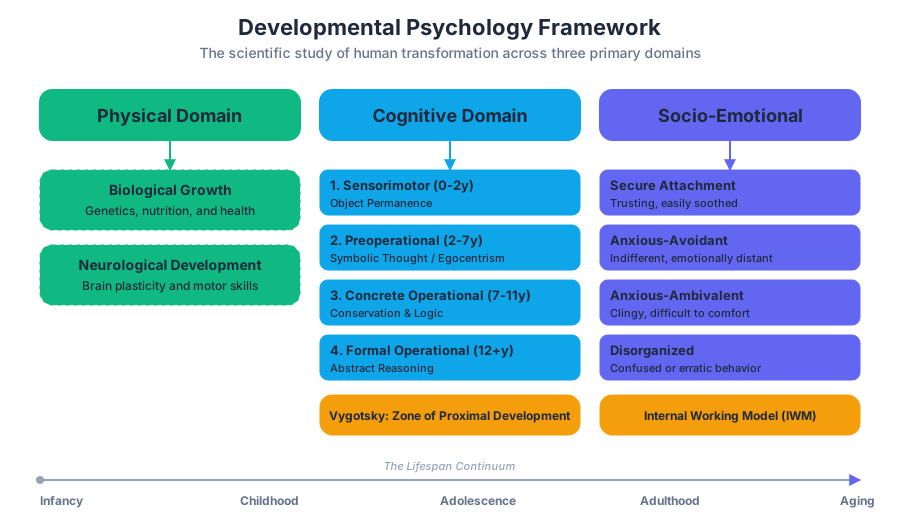
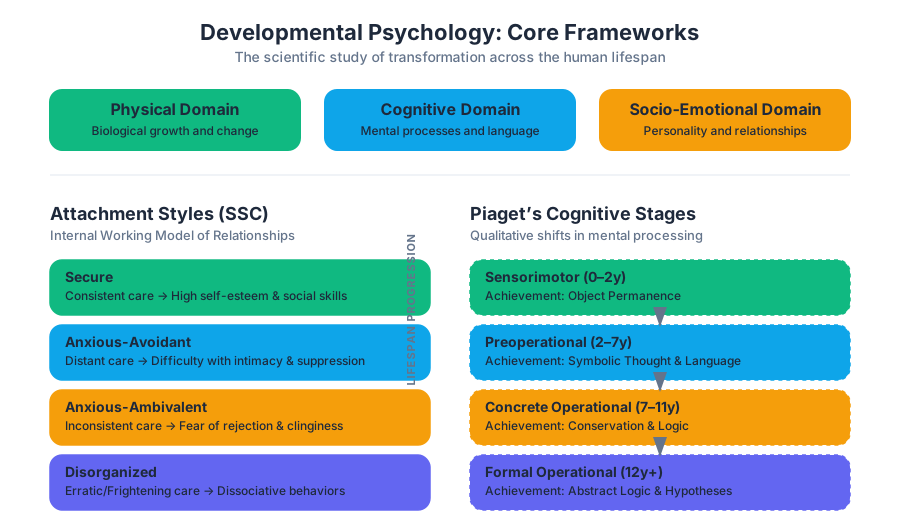
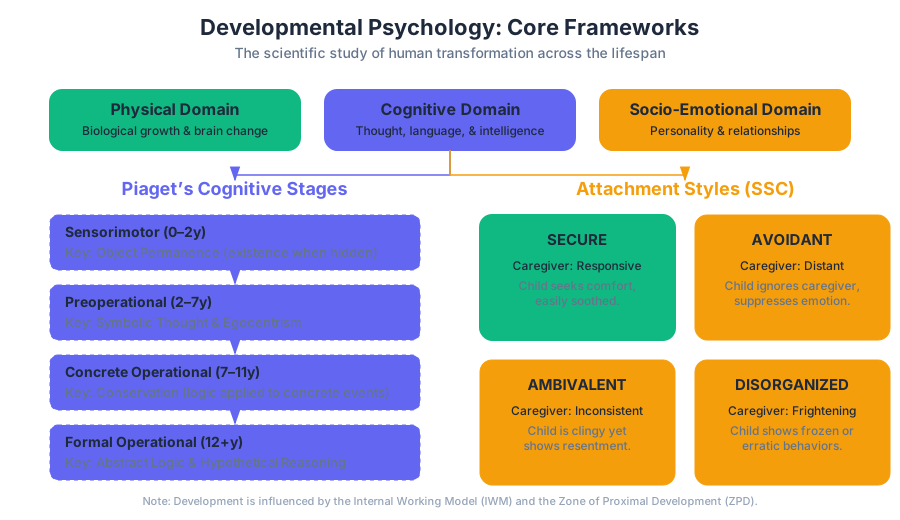
Developmental psychology is the scientific study of how and why human beings change over the course of their life. Originally concerned with infants and children, the field has expanded to include adolescence, adult development, aging, and the entire lifespan. It examines the transformation of psychological processes across three primary domains: physical (biological growth and change), cognitive (mental processes, language, and intelligence), and socio-emotional (personality, emotions, and relationships).
Attachment Theory
Attachment Theory is a psychological, evolutionary, and ethological framework concerning the interest of relationships between humans. The core premise is that infants need to develop a relationship with at least one primary caregiver for normal social and emotional development.
What it is
Formulated by John Bowlby and expanded by Mary Ainsworth, attachment is defined as a "lasting psychological connectedness between human beings." It posits that the bond between infant and caregiver is not merely a product of feeding but a biological imperative for safety and security.
The Internal Working Model (IWM): A mental representation of the self, the caregiver, and the relationship. This cognitive framework acts as a template for future relationships; if a child receives consistent care, they develop an IWM of the self as worthy of love and others as trustworthy.
How it works: The Strange Situation
Mary Ainsworth developed the Strange Situation Classification (SSC) to observe attachment relationships between a caregiver and a child. Through a series of eight episodes involving separations and reunions, researchers categorize children into specific attachment styles.
| Attachment Style | Caregiver Behavior | Child's Response to Reunion | Long-term Implications |
|---|---|---|---|
| Secure | Consistent, responsive, sensitive to needs. | Seeks comfort, easily soothed, returns to play. | High self-esteem, strong social skills, healthy relationships. |
| Anxious-Avoidant | Distant, disengaged, or intrusive. | Ignores or avoids caregiver; shows little emotion. | Difficulty with intimacy, emotional suppression. |
| Anxious-Ambivalent | Inconsistent, sometimes responsive, sometimes neglectful. | Distressed on separation; seeks comfort but shows resentment/anger. | Dependency, "clinginess," fear of rejection. |
| Disorganized | Frightening, abusive, or highly erratic. | Confused, frozen, or contradictory behaviors. | High risk for dissociative disorders and aggression. |
Implementation: Scoring Attachment
In modern research, attachment is often quantified through behavioral coding. The following Python snippet demonstrates a simplified logic-gate system for classifying attachment based on observed behavioral variables (Proximity Seeking, Contact Maintenance, Resistance, and Avoidance).
class AttachmentClassifier:
    """
    A simplified algorithmic representation of the Strange Situation
    Classification (SSC) based on behavioral intensity scores (1-7).
    """
    def __init__(self, proximity_seeking, contact_maintenance, resistance, avoidance):
        self.proximity = proximity_seeking
        self.contact = contact_maintenance
        self.res = resistance
        self.avd = avoidance

    def classify(self):
        # Secure: High proximity/contact, low resistance/avoidance
        if self.proximity >= 5 and self.res <= 2 and self.avd <= 2:
            return "SECURE"

        # Avoidant: Low proximity/contact, high avoidance
        elif self.avd >= 4 and self.proximity <= 2:
            return "INSECURE-AVOIDANT"

        # Ambivalent: High proximity/contact, high resistance
        elif self.res >= 4 and self.proximity >= 4:
            return "INSECURE-AMBIVALENT"

        # Disorganized: High scores in contradictory categories or erratic behavior
        elif self.res >= 3 and self.avd >= 3:
            return "DISORGANIZED"

        else:
            return "UNCLASSIFIED / BORDERLINE"

# Example Case: Infant shows high distress but resists comfort upon reunion
infant_a = AttachmentClassifier(proximity_seeking=6, contact_maintenance=5, resistance=6, avoidance=1)
print(f"Classification: {infant_a.classify()}")
Cognitive Development
Cognitive Development refers to the evolution of the ability to think, reason, and understand. The field is dominated by Jean Piaget’s Stage Theory, though it has been refined by Vygotsky’s sociocultural perspective and modern Information Processing theories.
Piaget’s Stages of Development
Piaget proposed that children move through four discrete stages, characterized by qualitatively different ways of thinking. This process is driven by Schemas (mental frameworks), Assimilation (fitting new info into existing schemas), and Accommodation (changing schemas to fit new info).
| Stage | Age Range | Key Achievement | Description |
|---|---|---|---|
| Sensorimotor | 0–2 years | Object Permanence | Understanding that objects exist even when not visible. |
| Preoperational | 2–7 years | Symbolic Thought | Use of language and symbols; marked by egocentrism and lack of conservation. |
| Concrete Operational | 7–11 years | Conservation | Logical thinking about concrete events; understanding that volume/mass remains constant despite shape changes. |
| Formal Operational | 12+ years | Abstract Logic | Ability to reason about hypothetical situations and abstract concepts. |
Vygotsky and the Social Context
Lev Vygotsky argued that Piaget neglected the role of social interaction. He introduced the Zone of Proximal Development (ZPD)—the gap between what a learner can do without help and what they can do with support (Scaffolding).
Mathematical Representation of the ZPD
The ZPD can be conceptualized as a function of a learner's current competence ($C$) and the complexity of a task ($T$), moderated by the quality of scaffolding ($S$).
Learning\_Potential = \int_{C}^{C+S} f(T) \,dT
Where:
- $C$: Current independent mastery level.
- $S$: The "Scaffold" or external assistance provided by a More Knowledgeable Other (MKO).
- $T$: The task difficulty. Learning is optimized when $C < T \leq C+S$.
Common Pitfalls
- Underestimating Children: Modern research (e.g., Baillergeon) shows infants understand object permanence much earlier than Piaget thought.
- Cultural Bias: Piaget’s "Formal Operational" stage is often not reached by adults in cultures where formal Western schooling is absent.
Emerging Adulthood
Emerging Adulthood is a developmental stage occurring between the ages of 18 and 25 (and potentially up to 29). It was proposed by Jeffrey Arnett to account for the shifting demographics in industrialized nations where marriage and parenthood are delayed.
The Five Features of Emerging Adulthood
- Identity Exploration: Trying out various possibilities in love and work.
- Instability: Frequent changes in residence, jobs, and relationships.
- Self-Focused: Having few social obligations and great autonomy.
- Feeling In-Between: Not feeling like an adolescent, but not quite an adult.
- Possibilities: A time of high hopes and optimism about the future.
Why It Matters
This stage is a product of the "Knowledge Economy," which requires longer periods of education. It represents a luxury of time that allows for deeper identity consolidation but can also lead to "quarter-life crises" and prolonged anxiety.
Identity Exploration
While identity formation begins in childhood, it becomes a central task during adolescence and emerging adulthood. Erik Erikson’s stage of Identity vs. Role Confusion provides the foundation for this concept.
Marcia’s Identity Statuses
James Marcia expanded Erikson’s work by defining four identity statuses based on two dimensions: Crisis/Exploration (searching for options) and Commitment (investing in a choice).
| Status | Exploration? | Commitment? | Description |
|---|---|---|---|
| Identity Achievement | Yes | Yes | Has explored options and made a self-chosen commitment. |
| Moratorium | Yes | No | Currently in the midst of a crisis/exploration; no commitment yet. |
| Foreclosure | No | Yes | Commitment made without exploration (often adopting parents' values). |
| Identity Diffusion | No | No | No exploration and no commitment; lack of direction. |
Identity Transition Logic
The following pseudocode represents the state-machine transitions of an individual moving through identity statuses during late adolescence.
STATE_MACHINE IdentityFormation:
    INITIAL_STATE = IDENTITY_DIFFUSION

    TRANSITION on "Start Exploration":
        IF state == IDENTITY_DIFFUSION OR state == FORECLOSURE:
            NEW_STATE = MORATORIUM

    TRANSITION on "Make Commitment":
        IF state == MORATORIUM:
            NEW_STATE = IDENTITY_ACHIEVEMENT
        IF state == IDENTITY_DIFFUSION:
            NEW_STATE = FORECLOSURE  // Commitment without exploration

    TRANSITION on "Crisis/Doubt":
        IF state == IDENTITY_ACHIEVEMENT:
            NEW_STATE = MORATORIUM   // "MAMA" cycle (Moratorium-Achievement-Moratorium-Achievement)
Aging and Late Adulthood
Development does not stop at 25. Aging is a lifelong process involving biological, cognitive, and social changes. Gerontologists distinguish between Primary Aging (biological factors like molecular changes) and Secondary Aging (aging influenced by lifestyle and disease).
Cognitive Changes in Aging
A common misconception is that all cognitive functions decline with age. In reality, the trajectory depends on the type of intelligence.
- Fluid Intelligence: The ability to solve new problems and process information quickly. This typically peaks in early adulthood and declines steadily.
- Crystallized Intelligence: Accumulated knowledge, vocabulary, and expertise. This tends to remain stable or even increase well into late adulthood.
| Cognitive Domain | Trajectory | Mechanism |
|---|---|---|
| Processing Speed | Decline | Reduction in white matter integrity and neurotransmitter efficiency. |
| Working Memory | Decline | Reduced inhibitory control; difficulty filtering irrelevant info. |
| Semantic Memory | Stable/Increase | Continued acquisition of facts and language. |
| Emotional Regulation | Increase | Socioemotional Selectivity Theory: Older adults prioritize positive affect. |
Socioemotional Selectivity Theory (SST)
Proposed by Laura Carstensen, SST suggests that as people perceive their time horizon shrinking, they shift their goals from knowledge-acquisition (future-oriented) to emotional-meaning (present-oriented). This explains why social circles often shrink in old age—not because of isolation, but because of a deliberate preference for deep, meaningful relationships over broad, superficial ones.
Implementation: Analyzing Aging Data
Researchers use longitudinal models to track these changes. Below is an example of how a developmental psychologist might use R to model cognitive decline over time using a Linear Mixed-Effects Model (LMM).
# R Snippet: Longitudinal Analysis of Cognitive Scores
library(lme4)

# Simulated data: ID, Age, Cognitive_Score (e.g., Processing Speed)
# We expect a negative slope for Age in Fluid Intelligence tasks.
model <- lmer(Cognitive_Score ~ Age + (1 | Participant_ID), data = aging_study_data)

# Summary of the model to see the fixed effect of Age
summary(model)

# Interpretation:
# If the coefficient for Age is -0.15, it implies that for every
# year of aging, the average cognitive score drops by 0.15 units,
# accounting for individual baseline differences.
Parental Development
Developmental psychology also examines the Parental Development—the psychological changes adults undergo as they transition into and move through parenthood.
- The Transition to Parenthood: Often marked by a temporary dip in marital satisfaction but an increase in "meaning in life."
- Parenting Styles (Baumrind):
- Authoritative: High warmth, high demandingness (Optimal).
- Authoritarian: Low warmth, high demandingness.
- Permissive: High warmth, low demandingness.
- Uninvolved: Low warmth, low demandingness.
- The Empty Nest: Contrary to popular belief, most parents experience an increase in life satisfaction once their children leave the home, as they rediscover their own identities and reduce daily stressors.
Common Pitfalls in Aging Research
- Cohort Effects: Differences between age groups may be due to the era they grew up in (e.g., education levels, nutrition) rather than biological aging.
- The Deficit Myth: The assumption that aging is purely a process of loss. In reality, many older adults report higher levels of subjective well-being than younger adults (the "Paradox of Aging").
Summary of Developmental Trajectories
| Concept | Primary Focus | Key Mechanism | Peak/Critical Period |
|---|---|---|---|
| Attachment | Emotional Security | Internal Working Model | 0–24 months |
| Cognition | Logical Reasoning | Schema/Equilibration | Adolescence (Formal Ops) |
| Identity | Self-Definition | Exploration & Commitment | 18–25 years |
| Aging | Functional Capacity | Selective Optimization | Late Adulthood |
Developmental psychology reveals that the "self" is not a static entity but a dynamic system in constant flux, shaped by the interplay of biology, individual agency, and the social environment. From the first attachment bond to the final stages of life review, the human experience is defined by the capacity for growth and adaptation.
Emotions and Motivation
Key concepts: Affective Neuroscience · Drive States · Self-Efficacy · Emotional Intelligence · Self-Regulation
Examines the internal forces that drive behavior and the biological and cultural functions of emotional states.
Emotions and Motivation
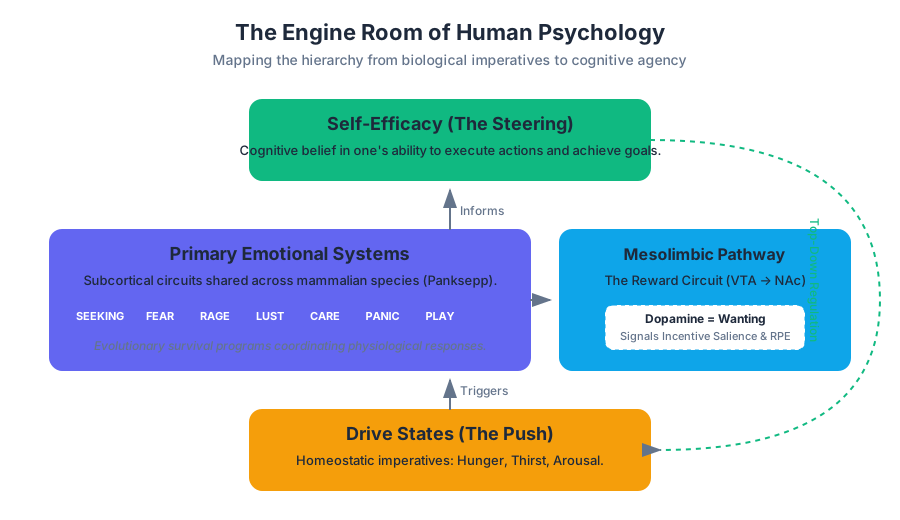
The study of emotions and motivation represents the "engine room" of human psychology. While cognitive psychology often focuses on the "hardware" of memory and the "software" of logic, the study of emotions and motivation examines the energy and direction that drive these systems. This domain bridges the gap between low-level biological imperatives (homeostasis) and high-level social achievements (self-actualization).
Affective Neuroscience: The Biological Architecture of Feeling
Affective Neuroscience is the subfield of neuroscience that examines how the brain creates emotional responses. It integrates findings from animal research, human neuroimaging, and clinical psychology to map the neural circuits responsible for our "feelings."
The Primary Emotional Systems
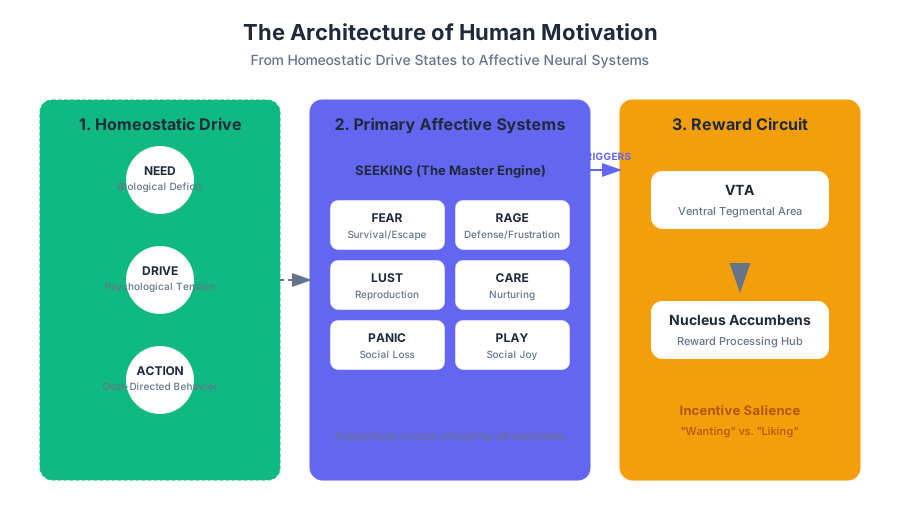
Jaak Panksepp, a pioneer in the field, identified seven "primary-process" emotional systems shared across mammalian species. These systems are subcortical, meaning they reside deep within the brain, beneath the conscious "thinking" layers of the cortex.
| System | Brain Region Focus | Function | Evolutionary Purpose |
|---|---|---|---|
| SEEKING | Nucleus Accumbens, VTA | Exploration, anticipation, desire | Foraging for resources, learning |
| FEAR | Amygdala, Periaqueductal Gray | Response to physical danger | Survival through escape or freezing |
| RAGE | Medial Amygdala, Hypothalamus | Response to frustration/restraint | Defending resources or territory |
| LUST | Preoptic area, Hypothalamus | Sexual desire and reproduction | Species propagation |
| CARE | Anterior Cingulate, Oxytocin circuits | Nurturing and maternal care | Survival of offspring |
| PANIC/GRIEF | Thalamus, Dorsal Cingulate | Social loss and separation distress | Maintaining social bonds |
| PLAY | Thalamic nuclei, Somatosensory cortex | Social joy and rough-and-tumble play | Learning social boundaries and skills |
Definition: Affective Neuroscience is the study of the neural mechanisms of emotion. It posits that emotions are not merely "feelings" but are evolved survival programs that coordinate physiological, behavioral, and cognitive responses to environmental challenges.
Neural Implementation of Reward
The most studied circuit in affective neuroscience is the Mesolimbic Dopamine Pathway. This "reward circuit" connects the Ventral Tegmental Area (VTA) to the Nucleus Accumbens. Contrary to popular belief, dopamine is not the "pleasure molecule"; rather, it is the "wanting" molecule. It signals Incentive Salience—the degree to which a stimulus is worth pursuing.
# Low-level simulation of Dopamine-based Reward Prediction Error (RPE)
# This represents how the brain updates the "value" of a stimulus

import numpy as np

class MesolimbicCircuit:
    def __init__(self, learning_rate=0.1, discount_factor=0.9):
        self.v_table = {}  # Value of states
        self.alpha = learning_rate
        self.gamma = discount_factor

    def compute_rpe(self, state, reward, next_state):
        """
        Calculates the Reward Prediction Error (Dopamine Spike).
        RPE = Reward + (Gamma * Value of Next State) - Value of Current State
        """
        current_v = self.v_table.get(state, 0.0)
        next_v = self.v_table.get(next_state, 0.0)

        # The 'Dopamine' signal
        rpe = reward + (self.gamma * next_v) - current_v

        # Update the internal value (Learning)
        self.v_table[state] = current_v + self.alpha * rpe

        return rpe

# Example: A rat (agent) sees a light (CS) and receives sugar (US)
brain = MesolimbicCircuit()
for trial in range(5):
    dopamine_spike = brain.compute_rpe("Light_ON", reward=10, next_state="Eating")
    print(f"Trial {trial}: Dopamine Signal Magnitude = {dopamine_spike:.2f}")
Drive States: The Homeostatic Imperative
Drive States are affective experiences that motivate organisms to fulfill goals that are beneficial to their survival and reproduction. These states (such as hunger, thirst, or sexual arousal) function through a mechanism of Homeostasis—the body’s tendency to maintain a stable internal environment.
The Mechanics of Drive
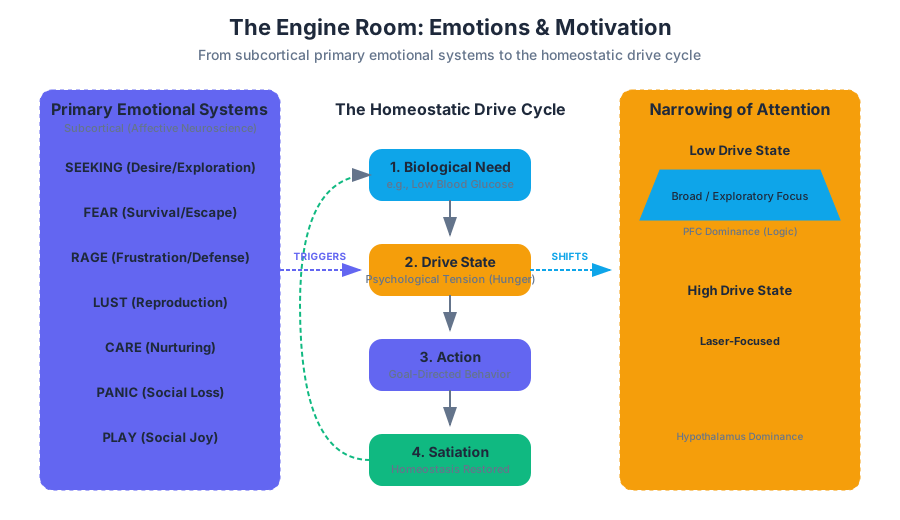
Drive states differ from general emotions in their physiological specificity. They are typically triggered by internal signals (e.g., low blood glucose) rather than external stimuli (e.g., a predator).
- Biological Need: A physiological deprivation (e.g., lack of water).
- Drive: A psychological state of tension or arousal (e.g., thirst).
- Action: Behavior directed toward reducing the drive (e.g., drinking).
- Satiation: The reduction of the drive and return to homeostasis.
The Narrowing of Attention
A critical feature of drive states is the Narrowing of Attention. As a drive state intensifies, it collapses the individual's "temporal horizon."
- Present-Biased: Future goals (saving money, studying) become irrelevant compared to the immediate need (eating).
- Self-Centered: The needs of others are ignored in favor of the self.
- Object-Focused: The environment is scanned exclusively for "drive-relevant" cues.
| Feature | Low Drive State | High Drive State |
|---|---|---|
| Attention Width | Broad / Exploratory | Narrow / Laser-focused |
| Time Preference | Delayed Gratification | Immediate Gratification |
| Decision Logic | Multi-attribute utility | Single-attribute (Drive fulfillment) |
| Neural Dominance | Prefrontal Cortex (PFC) | Hypothalamus / Amygdala |
Self-Efficacy: The Cognitive Architecture of Agency
While drive states provide the push, Self-Efficacy provides the steering. Developed by Albert Bandura, self-efficacy is the belief in one’s ability to succeed in specific situations or accomplish a task.
The Four Sources of Self-Efficacy
Self-efficacy is not a global personality trait (like self-esteem) but a task-specific belief system built from four primary sources:
- Performance Accomplishments (Mastery): The most powerful source. Success builds a robust belief in efficacy; failure undermines it.
- Vicarious Experiences (Modeling): Seeing people similar to oneself succeed through sustained effort.
- Verbal Persuasion: Encouragement from others (though this is easily undermined by subsequent failure).
- Physiological States: Interpreting "butterflies in the stomach" as excitement (high efficacy) rather than anxiety (low efficacy).
Mathematical Representation of Efficacy
In computational psychology, self-efficacy can be modeled as a confidence interval over an agent's expected performance.
\begin{aligned}
\text{Self-Efficacy } (\mathcal{E}) &= P(\text{Success} | \text{Effort}, \text{History}) \\
\mathcal{E}_{t+1} &= \mathcal{E}_t + \kappa \cdot (\text{Outcome}_t - \text{Expected}_t) \cdot \text{Attribution}_t
\end{aligned}
Where:
Outcome - Expectedis the performance gap.Attributionis a weight (0 to 1) representing how much the individual credits themselves versus luck for the outcome.
Key Insight: High self-efficacy leads to "Challenge-Seeking" behavior. When faced with a setback, high-efficacy individuals increase their effort, whereas low-efficacy individuals give up or experience "learned helplessness."
Emotional Intelligence (EI): The Regulatory Framework
Emotional Intelligence refers to the ability to recognize, understand, and manage our own emotions while recognizing, understanding, and influencing the emotions of others.
The Four-Branch Model (Mayer & Salovey)
The most scientifically rigorous model of EI treats it as a standard intelligence (Ability EI) rather than a personality trait.
- Perception of Emotion: The ability to identify emotions in faces, music, and stories.
- Use of Emotion to Facilitate Thinking: Using emotions to prioritize thinking and generate creative solutions (e.g., using a "sad" mood to perform meticulous proofreading).
- Understanding Emotions: Recognizing the "vocabulary" of emotions—how they transition (e.g., how irritation turns into rage).
- Management of Emotions: The ability to remain open to feelings and modulate them in oneself and others to promote personal and social goals.
Ability vs. Trait EI
There is a significant debate in the literature regarding the measurement of EI:
| Type | Measurement Method | Pros | Cons |
|---|---|---|---|
| Ability EI | Performance tests (e.g., MSCEIT) | Objective; correlates with IQ | Hard to score; "correct" answers are subjective |
| Trait EI | Self-report surveys | Easy to administer; predicts job performance | Subjective; susceptible to "faking good" |
Self-Regulation: The Executive Control of Action
Self-Regulation is the process by which we alter our responses (thoughts, emotions, impulses, and behaviors) to bring them into alignment with standards such as goals, ideals, or social norms.
The Dual-Process Model
Self-regulation is often described as a battle between two systems:
- The "Hot" System (Impulsive): Emotional, simple, reflexive, and fast. Centered in the amygdala.
- The "Cool" System (Reflective): Cognitive, complex, slow, and deliberative. Centered in the Prefrontal Cortex (PFC).
The Process Model of Emotion Regulation (James Gross)
Regulation can occur at different points in the "emotion-generative" process. This is vital for clinical interventions.
- Situation Selection: Avoiding a person who makes you angry.
- Situation Modification: Changing the environment (e.g., hiding the cookies).
- Attentional Deployment: Distracting yourself from a stressful stimulus.
- Cognitive Change (Reappraisal): Reinterpreting the meaning of an event (e.g., "He didn't cut me off because he's a jerk; he's probably rushing to the hospital").
- Response Modulation: Suppressing the outward expression of emotion (e.g., "poker face").
# A conceptual configuration for a Self-Regulating Agent (AI or Human-Model)
# Demonstrates the hierarchy of control from Drive to Regulation

agent_profile:
  id: "Human_Model_01"
  traits:
    self_efficacy: 0.85
    emotional_intelligence: 0.72

regulation_policy:
  primary_goal: "Complete_DeepWiki_Article"
  standards:
    quality_threshold: 0.95
    time_limit: 3600 # seconds

  monitoring_loop:
    interval: 60s
    check_states:
      - drive_state: "Hunger"
        threshold: 0.8
        action: "Suppress_Until_Goal_Met" # Self-Regulation in action
      - affective_state: "Frustration"
        threshold: 0.6
        action: "Cognitive_Reappraisal"
      - attention_state: "Distraction"
        threshold: 0.4
        action: "Attentional_Deployment_To_Task"

  failure_modes:
    ego_depletion:
      threshold: 0.2
      recovery_strategy: "Short_Rest_Period"
Synthesis: The Interaction of Systems
These concepts do not exist in isolation. They form a complex, interlocking system that determines human behavior.
- Drive States generate the initial energy.
- Affective Neuroscience provides the underlying hardware (the "Hot" system).
- Self-Efficacy determines whether that energy is channeled into action or stifled by doubt.
- Emotional Intelligence allows the individual to navigate the social consequences of their actions.
- Self-Regulation acts as the "Cool" executive, ensuring that the organism doesn't just react to the loudest drive, but acts in accordance with long-term values.
Common Pitfalls and Misconceptions
- The "Ego Depletion" Controversy: For years, it was believed that self-regulation was a finite resource (like a battery). Recent replication failures suggest that "willpower" might be more about motivation and beliefs about willpower than a physical resource.
- Dopamine = Pleasure: As noted, dopamine is about anticipation and pursuit. Opioids and endocannabinoids are more closely linked to the actual "liking" or pleasure of a stimulus.
- High Self-Esteem vs. High Self-Efficacy: You can have high self-esteem (liking yourself) but low self-efficacy (believing you are incompetent at a specific task). Efficacy is the better predictor of actual performance.
- Affective Neuroscience: The study of how the brain's structures and chemicals create emotional experiences.
- Incentive Salience: The "wanting" or motivational value of a stimulus, primarily driven by dopamine.
- Homeostasis: The biological process of maintaining internal stability (e.g., temperature, glucose levels).
- Narrowing of Attention: The psychological phenomenon where intense drive states focus the mind exclusively on immediate needs.
- Self-Efficacy: A person's belief in their ability to succeed in a specific task or situation.
- Cognitive Reappraisal: A self-regulation strategy involving changing the way one thinks about a stimulus to change its emotional impact.
- Trait Emotional Intelligence: Emotional intelligence viewed as a constellation of personality traits, measured via self-report.
- Ability Emotional Intelligence: Emotional intelligence viewed as a set of mental skills, measured via performance tests.
-
Which brain circuit is most responsible for "wanting" and incentive salience?
- A) The Amygdala
- B) The Mesolimbic Dopamine Pathway
- C) The Prefrontal Cortex
- D) The Cerebellum Correct: B
-
According to Albert Bandura, what is the most influential source of self-efficacy?
- A) Verbal Persuasion
- B) Vicarious Experiences
- C) Mastery Experiences (Performance Accomplishments)
- D) Physiological Arousal Correct: C
-
In the "Process Model of Emotion Regulation," which strategy involves changing the meaning of a situation?
- A) Situation Selection
- B) Response Modulation
- C) Cognitive Reappraisal
- D) Attentional Deployment Correct: C
-
How do intense drive states affect a person's temporal horizon?
- A) They expand it, making the person think more about the future.
- B) They have no effect on time perception.
- C) They narrow it, making the person focus on immediate gratification.
- D) They make the person focus exclusively on the past. Correct: C
-
Which of Panksepp's primary emotional systems is associated with social loss and separation distress?
- A) FEAR
- B) RAGE
- C) PANIC/GRIEF
- D) SEEKING Correct: C
DeepWiki Study Guide: Emotions and Motivation
Core Concepts to Master
- The Amygdala-PFC Balance: Understand how the "Hot" system (emotional reactivity) and the "Cool" system (executive control) interact during self-regulation.
- Dopamine vs. Opioids: Be able to distinguish between the "wanting" (dopamine) and "liking" (opioid) systems in the brain.
- Bandura’s Efficacy Model: Memorize the four sources of self-efficacy and be able to provide a real-world example for each.
- Homeostatic Feedback Loops: Explain how a physiological deficit leads to a drive state and how satiation closes the loop.
- EI Branches: List the four branches of the Mayer-Salovey model and explain why "Perception" is the foundation for "Management."
Application Exercises
- Case Study: Analyze a person struggling with a diet. Use the "Narrowing of Attention" and "Process Model of Emotion Regulation" to explain why they failed and how they could use "Situation Modification" to succeed next time.
- Neuroanatomy Mapping: Draw a simple diagram of the brain and label the Nucleus Accumbens, Amygdala, and Prefrontal Cortex. Assign one "Key Concept" from this article to each region.
- Efficacy Audit: Identify a task you are currently avoiding. Which of the four sources of self-efficacy is lacking? Design a "Mastery Experience" (a small, winnable sub-task) to boost your efficacy.
Connections to Other Modules
- Cognition: How does high arousal (from a drive state) interfere with Working Memory?
- Development: How does the development of the Prefrontal Cortex in adolescence affect the ability to self-regulate?
- Psychological Disorders: How might a dysfunction in the SEEKING system relate to depression (anhedonia)?
Learning and Memory
Key concepts: Classical Conditioning · Instrumental Conditioning · Encoding · Storage · Retrieval
Covers the fundamental principles of how we acquire new information and store it for later retrieval.
Learning and Memory
Learning and memory are the dual pillars of cognitive plasticity. While learning refers to the process by which an organism acquires new information or modifies existing behaviors based on experience, memory is the physiological and cognitive architecture that enables the encoding, persistence, and eventual recovery of that information. In the context of biological and computational systems, these processes represent the transition from transient environmental stimuli to stable internal representations.
Associative Learning: The Mechanics of Conditioning
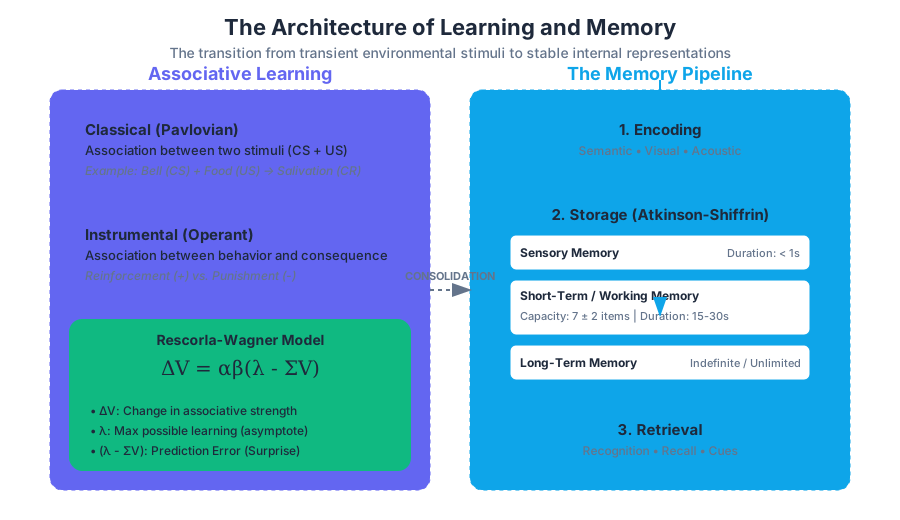
At the most fundamental level, learning occurs through the formation of associations between stimuli or between a behavior and its consequence. This is categorized into two primary paradigms: Classical and Instrumental conditioning.
Classical (Pavlovian) Conditioning
Classical Conditioning is a learning process where a biologically potent stimulus (the Unconditioned Stimulus or US) is paired with a previously neutral stimulus (the Conditioned Stimulus or CS).
Definition: Classical conditioning is the process by which an organism learns to associate two stimuli, such that the CS comes to elicit a Conditioned Response (CR) that was previously only elicited by the US (the Unconditioned Response or UR).
The most technically precise model for understanding this is the Rescorla-Wagner Model, which posits that the amount of learning is determined by the "surprisingness" of the US. If the US is already predicted by the CS, no further learning occurs.
| Component | Description | Example (Pavlov) |
|---|---|---|
| US | Stimulus that naturally triggers a response | Food |
| UR | Unlearned, natural response to the US | Salivation (to food) |
| CS | Originally neutral stimulus that, after association, triggers a CR | Bell/Tone |
| CR | Learned response to a previously neutral stimulus | Salivation (to bell) |
Instrumental (Operant) Conditioning
Instrumental Conditioning involves learning the relationship between a voluntary behavior and its consequences. Unlike classical conditioning, where the organism is passive, instrumental conditioning requires the organism to "operate" on the environment.
- Reinforcement: Any consequence that increases the likelihood of a behavior.
- Punishment: Any consequence that decreases the likelihood of a behavior.
Mathematical Representation of Learning: The Rescorla-Wagner Model
The change in the associative strength ($V$) of a stimulus is proportional to the difference between the maximum possible learning ($\lambda$) and the current associative strength.
# Implementation of the Rescorla-Wagner Model for Associative Learning
import numpy as np

class RescorlaWagner:
    def __init__(self, alpha, beta, lambda_max):
        """
        alpha: Salience of the CS (0-1)
        beta: Learning rate associated with the US (0-1)
        lambda_max: Maximum associative strength possible (asymptote)
        """
        self.alpha = alpha
        self.beta = beta
        self.lambda_max = lambda_max
        self.v_total = 0.0

    def update(self, present=True):
        # Prediction Error: (Lambda - Sum of V)
        if present:
            target = self.lambda_max
        else:
            target = 0 # Extinction case

        prediction_error = target - self.v_total
        delta_v = self.alpha * self.beta * prediction_error
        self.v_total += delta_v
        return self.v_total

# Simulation: 10 trials of conditioning
model = RescorlaWagner(alpha=0.5, beta=0.1, lambda_max=1.0)
history = [model.update() for _ in range(10)]
print(f"Associative Strength after 10 trials: {history[-1]:.4f}")
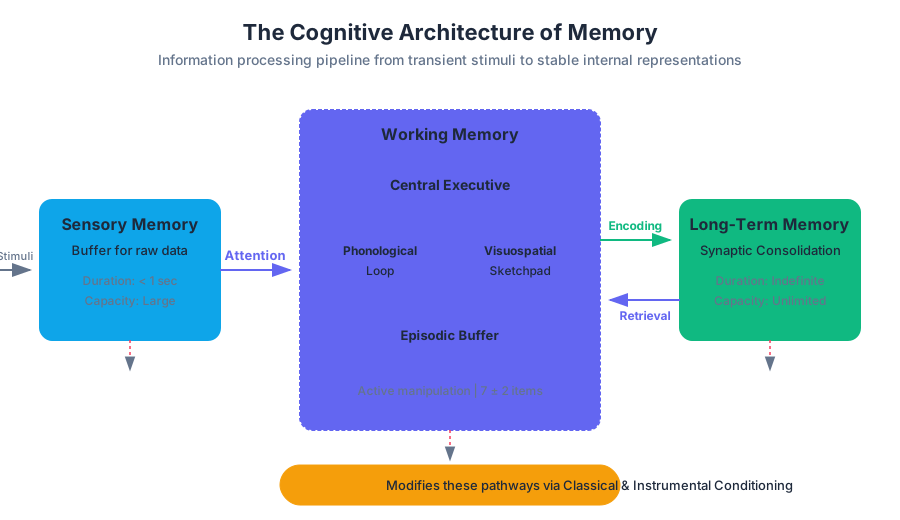
The Memory Pipeline: Encoding, Storage, and Retrieval
Memory is not a monolithic "recording"; it is a multi-stage pipeline of information processing. Failure at any of these stages results in what we subjectively experience as "forgetting."
1. Encoding: The Input Phase
Encoding is the initial processing of information that leads to a memory trace. It involves converting sensory input into a form that the brain can process.
- Semantic Encoding: Processing the meaning of the input.
- Visual Encoding: Processing images and shapes.
- Acoustic Encoding: Processing sounds, especially the sound of words.
2. Storage: The Retention Phase
Storage refers to the maintenance of encoded information over time. The most influential model is the Atkinson-Shiffrin Model, which divides storage into three distinct buffers:
| Memory Type | Duration | Capacity | Mechanism |
|---|---|---|---|
| Sensory Memory | < 1 second | Large | Buffer for raw sensory data |
| Short-Term (Working) | 15–30 seconds | 7 ± 2 items | Active manipulation of data |
| Long-Term Memory | Indefinite | Virtually Unlimited | Synaptic consolidation (LTP) |
3. Retrieval: The Output Phase
Retrieval is the process of accessing stored information. It is highly dependent on Retrieval Cues—environmental or internal stimuli that help "trigger" the memory. The Encoding Specificity Principle suggests that retrieval is most successful when the conditions at retrieval match the conditions at encoding.
Working Memory and Executive Function
While "Short-Term Memory" is a passive store, Working Memory is a functional system for the temporary maintenance and manipulation of information. According to Baddeley's Model, it consists of:
- Central Executive: The "processor" that directs attention and coordinates the slave systems.
- Phonological Loop: Handles auditory and verbal information.
- Visuospatial Sketchpad: Handles visual and spatial information.
- Episodic Buffer: Integrates information across domains into a chronological sequence.
% Mathematical representation of Ebbinghaus' Forgetting Curve
% R = e^(-t/S)
% Where:
% R is Retrievability (how easy it is to recall)
% t is Time since encoding
% S is Stability of memory (strength)

Retrievability(t) = exp(-t / Stability)
Pathological and Adaptive Forgetting
Forgetting is often viewed as a system failure, but it is frequently an adaptive process. By filtering out irrelevant or outdated information, the brain maintains the efficiency of retrieval for relevant data.
Interference Theory
Forgetting often occurs because other memories interfere with the retrieval process.
- Proactive Interference: Old information hinders the recall of new information (e.g., calling your new partner by your ex's name).
- Retroactive Interference: New information hinders the recall of old information (e.g., learning a new programming language makes you forget the syntax of one you used years ago).
Amnesia: Clinical Memory Loss
Amnesia provides a window into the modularity of the brain's memory systems.
- Anterograde Amnesia: Inability to form new memories after the onset of the condition (often due to hippocampal damage).
- Retrograde Amnesia: Loss of memories formed before the onset of the condition.
Key Insight: The case of patient H.M. demonstrated that the hippocampus is essential for declarative memory (facts/events) but not for procedural memory (skills/motor tasks), as H.M. could learn to trace a star in a mirror despite having no memory of ever practicing the task.
Implementation in Modern Systems: A Comparison
To understand these biological concepts, it is helpful to look at how engineers implement similar "memory" patterns in distributed systems.
# Configuration for a Multi-Tiered Memory System (Redis Example)
# This mirrors the Sensory -> STM -> LTM hierarchy in human cognition

cache_layers:
  sensory_buffer:
    type: "in-memory-stream"
    retention_policy: "100ms" # High throughput, transient
    capacity: "unlimited_burst"

  working_memory:
    type: "redis-lru"
    eviction_policy: "volatile-lru" # Least Recently Used (Interference)
    max_memory: "8gb"
    persistence: "none"

  long_term_storage:
    type: "persistent-db"
    engine: "PostgreSQL"
    indexing: "B-Tree" # Retrieval Cues
    backup_interval: "24h" # Consolidation
Common Pitfalls in Understanding Memory
- The Video Camera Fallacy: Many people believe memory works like a recording device. In reality, memory is reconstructive. Every time we retrieve a memory, we potentially alter it based on new information (the Misinformation Effect).
- Confusing Performance with Learning: In educational contexts, a student might perform well on a test (retrieval) due to "cramming," but without consolidation, that information is never moved to long-term storage.
- The "Storage Full" Myth: Unlike a hard drive, the human brain does not "run out of space." Learning new information can actually make it easier to learn subsequent related information by providing more retrieval cues and organizational schemas.
Summary Table: Conditioning Paradigms
| Feature | Classical Conditioning | Instrumental Conditioning |
|---|---|---|
| Nature of Behavior | Involuntary, Reflexive | Voluntary, Operant |
| Association | Between two stimuli (CS + US) | Between behavior and consequence |
| Timing of Stimulus | Comes before the response | Comes after the response |
| Role of Organism | Passive | Active |
| Primary Goal | Prediction of environment | Control of environment |
Conclusion
Learning and memory are not merely "features" of the human brain but are the fundamental processes that allow for adaptation in a dynamic environment. From the synaptic adjustments of the Rescorla-Wagner model to the complex executive functions of working memory, these systems ensure that an organism's past informs its future. Understanding the limitations of these systems—such as interference and the reconstructive nature of retrieval—is critical for both clinical practice and the design of effective learning environments.
Psychological Disorders and Treatments
Key concepts: ADHD · Mood Disorders · Personality Disorders · Schizophrenia · Psychodynamic Perspective
An overview of mental health conditions, their classification, and the various therapeutic approaches used to treat them.
Psychological Disorders and Treatments
Psychopathology is the scientific study of mental disorders, including their theoretical underpinnings, etiology, progression, symptomatology, and treatment. Unlike physical ailments with clear biomarkers, psychological disorders are often defined by a constellation of behaviors, cognitive patterns, and emotional responses that deviate from cultural norms and cause significant functional impairment or distress.
The Framework of Mental Illness: Taxonomy and Diagnosis
To treat psychological disorders, we must first categorize them. The modern standard relies on the Diagnostic and Statistical Manual of Mental Disorders (DSM-5) and the International Classification of Diseases (ICD-11). These frameworks move away from purely theoretical "neuroses" toward a descriptive, evidence-based approach.
Definition: The Four D's of Abnormality To be classified as a disorder, a condition generally meets four criteria: Deviance (statistically rare), Distress (unpleasant to the individual), Dysfunction (interferes with daily life), and Danger (risk to self or others).
| Feature | DSM-5 (APA) | ICD-11 (WHO) | RDoC (NIMH) |
|---|---|---|---|
| Primary Use | Clinical diagnosis (North America) | Global health reporting/billing | Research into biological markers |
| Structure | Categorical (Yes/No diagnosis) | Categorical with some dimensions | Dimensional (Neural circuits) |
| Focus | Symptom clusters | Broad clinical utility | Genetic and neural underpinnings |
Neurodevelopmental Disorders: ADHD
Attention-Deficit/Hyperactivity Disorder (ADHD) is a neurodevelopmental condition characterized by persistent patterns of inattention, hyperactivity, and impulsivity that interfere with functioning or development.
What it is
ADHD is not merely "high energy"; it is a deficit in executive function—the brain's command-and-control center located in the prefrontal cortex (PFC). It is one of the most heritable psychological disorders, with genetic factors accounting for approximately 70-80% of the variance in traits.
How it works: The Dopamine Deficit Hypothesis
The primary mechanism involves dysregulation of the mesocorticolimbic dopamine pathway. In neurotypical brains, dopamine acts as a signal-to-noise stabilizer. In ADHD brains, low tonic levels of dopamine lead to a "noisy" environment where the brain constantly seeks external stimulation to reach a baseline level of arousal.
Implementation: Simulating Neurotransmitter Reuptake
In the following Python example, we model the concentration of dopamine in the synaptic cleft under two conditions: a baseline state and a state influenced by a Methylphenidate-class stimulant (a Reuptake Inhibitor).
import numpy as np
import matplotlib.pyplot as plt

def simulate_synapse(reuptake_rate, release_amount, duration=100):
    """
    Simulates dopamine concentration in the synaptic cleft.
    reuptake_rate: Speed at which DA is cleared (higher = faster clearance)
    release_amount: Amount of DA released per pulse
    """
    cleft_concentration = [0.0]
    for t in range(1, duration):
        # Natural decay/reuptake
        current_conc = cleft_concentration[-1] * (1 - reuptake_rate)

        # Periodic neural firing (release)
        if t % 10 == 0:
            current_conc += release_amount

        cleft_concentration.append(max(0, current_conc))
    return cleft_concentration

# ADHD Baseline: High reuptake rate clears DA too fast
adhd_baseline = simulate_synapse(reuptake_rate=0.4, release_amount=5.0)

# Treated: Stimulant reduces reuptake rate, allowing DA to linger
treated_adhd = simulate_synapse(reuptake_rate=0.1, release_amount=5.0)

# Output analysis
print(f"Mean Cleft DA (Baseline): {np.mean(adhd_baseline):.2f}")
print(f"Mean Cleft DA (Treated): {np.mean(treated_adhd):.2f}")
Common Pitfalls
A frequent misconception is that ADHD is a "childhood disorder" that individuals outgrow. While hyperactivity often diminishes with age, executive dysfunction (time blindness, emotional dysregulation) frequently persists into adulthood, requiring lifelong management strategies.
Mood Disorders: Depression and Bipolarity
Mood disorders involve serious disturbances in emotional state that transcend normal fluctuations in "happiness" or "sadness."
Major Depressive Disorder (MDD)
MDD is defined by at least two weeks of depressed mood or anhedonia (loss of interest in pleasure), accompanied by vegetative symptoms (sleep/appetite changes).
Bipolar and Related Disorders
Bipolar disorder is characterized by the presence of Mania or Hypomania. Unlike MDD, which is unipolar, Bipolar involves a "switch" mechanism.
| Disorder | Key Symptom | Duration Requirement | Biological Marker |
|---|---|---|---|
| MDD | Persistent low mood | 2+ Weeks | HPA-axis hyperactivity |
| Bipolar I | Full Manic Episode | 1+ Week | Ventricular enlargement |
| Bipolar II | Hypomania + Depression | 4+ Days (Hypomania) | Genetic overlap with Schizophrenia |
| Cyclothymia | Mild mood swings | 2+ Years | Chronic sub-threshold instability |
The Diathesis-Stress Model
The onset of mood disorders is best explained by the Diathesis-Stress Model, which posits that a biological vulnerability (diathesis) remains dormant until triggered by environmental stressors.
P(\text{Disorder}) = \sigma(\beta_0 + \beta_1 \cdot \text{Genetic\_Vulnerability} + \beta_2 \cdot \text{Environmental\_Stress} + \epsilon)
Where:
- $\sigma$ is the logistic function.
- $\beta_1$ represents the weight of heritability (high in Bipolar, moderate in MDD).
- $\beta_2$ represents the impact of trauma or life events.
Schizophrenia Spectrum Disorders
Schizophrenia is a chronic and severe mental disorder affecting how a person thinks, feels, and behaves. It is often described as a "split" from reality, though it is distinct from "split personality" (Dissociative Identity Disorder).
Symptom Categories
- Positive Symptoms (Added behaviors): Hallucinations (auditory are most common), delusions (persecutory, grandiose), and disorganized speech.
- Negative Symptoms (Removed behaviors): Avolition (lack of drive), Alogia (poverty of speech), and Flat Affect.
- Cognitive Symptoms: Deficits in working memory and executive control.
Neuroanatomy and Neurochemistry
The Dopamine Hypothesis suggests that overactivity in the mesolimbic pathway causes positive symptoms, while underactivity in the mesocortical pathway causes negative symptoms. Structural imaging often shows enlarged lateral ventricles, indicating a loss of surrounding brain tissue.
Clinical Data Representation
In a clinical research environment, tracking the efficacy of antipsychotics (like Haloperidol vs. Clozapine) requires structured data to correlate dosage with symptom reduction (measured via the PANSS scale).
-- Querying patient progress on the Positive and Negative Syndrome Scale (PANSS)
SELECT
    p.patient_id,
    p.medication_name,
    p.dosage_mg,
    s.assessment_date,
    s.positive_score,
    s.negative_score,
    (s.positive_score + s.negative_score + s.general_psychopathology) AS total_panss
FROM
    treatment_logs p
JOIN
    symptom_assessments s ON p.patient_id = s.patient_id
WHERE
    p.diagnosis = 'Schizophrenia'
    AND s.assessment_date > '2023-01-01'
ORDER BY
    total_panss DESC;
Personality Disorders: The Enduring Pattern
Personality disorders are characterized by an enduring pattern of inner experience and behavior that deviates markedly from the expectations of the individual's culture. These patterns are inflexible and pervasive.
The Cluster System
The DSM-5 organizes the ten personality disorders into three clusters based on shared descriptive characteristics.
| Cluster | Description | Key Examples |
|---|---|---|
| Cluster A | Odd, Eccentric | Paranoid, Schizoid, Schizotypal |
| Cluster B | Dramatic, Emotional, Erratic | Antisocial, Borderline, Narcissistic, Histrionic |
| Cluster C | Anxious, Fearful | Avoidant, Dependent, Obsessive-Compulsive (OCPD) |
Borderline Personality Disorder (BPD)
BPD is marked by instability in interpersonal relationships, self-image, and affect. It is often rooted in early childhood trauma and a biological sensitivity to emotional stimuli. The gold-standard treatment is Dialectical Behavior Therapy (DBT), which balances acceptance with change.
Antisocial Personality Disorder (ASPD) and Psychopathy
While related, these are not identical. ASPD is a behavioral diagnosis in the DSM-5 (disregard for the rights of others). Psychopathy is a personality construct involving a lack of empathy, shallow affect, and boldness.
The Psychodynamic Perspective
While modern psychiatry emphasizes biology and behavior, the Psychodynamic Perspective—descended from Sigmund Freud—remains influential in understanding the "why" behind psychological distress.
Core Tenets
- The Unconscious: Much of our behavior is driven by thoughts and feelings outside of our conscious awareness.
- Developmental Origins: Early childhood experiences, particularly with primary caregivers (Attachment Theory), shape adult personality.
- Defense Mechanisms: The ego uses strategies like Repression, Projection, and Sublimation to manage anxiety arising from internal conflicts.
Modern Evolution: Object Relations
Modern psychodynamic theory focuses on "Object Relations"—how we internalize mental representations of significant others ("objects"). If a child internalizes an "unreliable object," they may struggle with trust and intimacy in adulthood, potentially manifesting as a personality disorder.
Insight: Transference In therapy, the patient often redirects feelings for a significant person in their life onto the therapist. This transference is not an error but a vital diagnostic tool to see the patient's internal world in real-time.
Treatment Modalities: A Multi-Modal Approach
Effective treatment rarely relies on a single method. Instead, it utilizes a "biopsychosocial" approach.
1. Psychopharmacology
Medications alter brain chemistry to manage symptoms.
- SSRIs (Selective Serotonin Reuptake Inhibitors): Used for Depression and Anxiety. They prevent the reabsorption of serotonin, increasing its availability in the synapse.
- Antipsychotics: Block dopamine receptors ($D_2$ receptors) to reduce hallucinations.
- Mood Stabilizers: Such as Lithium, used to prevent manic "overshoot" in Bipolar disorder.
2. Psychotherapy
- Cognitive Behavioral Therapy (CBT): Focuses on identifying and changing "cognitive distortions" (e.g., catastrophizing).
- Exposure Therapy: The primary treatment for phobias and PTSD, involving controlled interaction with the feared stimulus to achieve extinction.
3. Neuromodulation
For treatment-resistant cases, direct intervention in brain activity may be necessary.
- ECT (Electroconvulsive Therapy): Highly effective for severe, suicidal depression.
- TMS (Transcranial Magnetic Stimulation): Uses magnetic fields to stimulate nerve cells in the PFC.
Implementation: A Triage Logic for Treatment
In modern healthcare systems, "Stepped Care" models determine the intensity of treatment.
# Treatment Triage Logic Configuration
triage_rules:
  - condition: "Mild Depression"
    action: "Watchful waiting, Exercise, Guided Self-help"
    follow_up: "2 weeks"
  - condition: "Moderate Depression"
    action: "CBT or SSRI"
    priority: 2
  - condition: "Severe Depression w/ Psychosis"
    action: "Inpatient admission, Antipsychotics + Antidepressants, consider ECT"
    priority: 1
  - condition: "Acute Mania"
    action: "Lithium or Valproate, Safety assessment"
    priority: 1
Summary of Connections
Psychological disorders are not isolated silos. They exist on a continuum and often show high comorbidity (the presence of two or more disorders). For example, a patient with ADHD may develop MDD due to the chronic stress of executive failure, or a patient with BPD may experience transient psychotic symptoms during periods of extreme stress.
Understanding these conditions requires a synthesis of:
- Neurobiology: The hardware (neurotransmitters, brain structures).
- Cognition: The software (thought patterns, biases).
- Environment: The network (social support, trauma, culture).
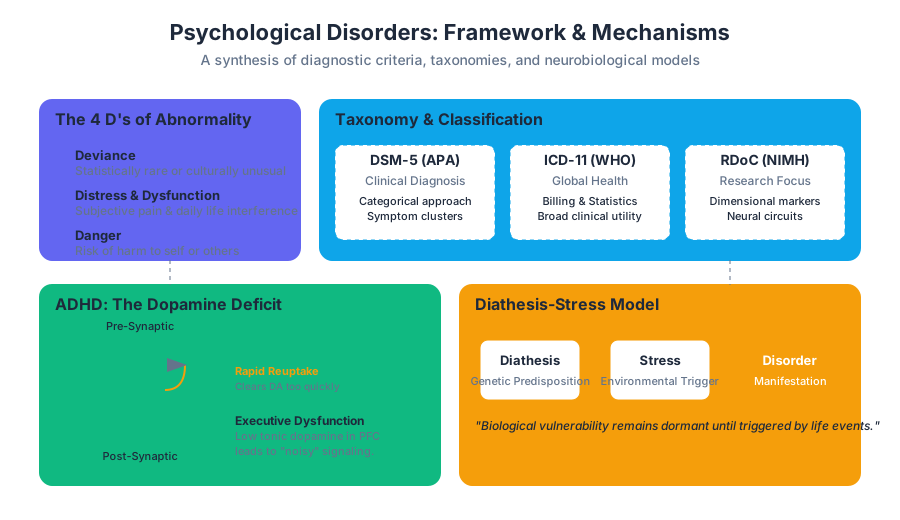
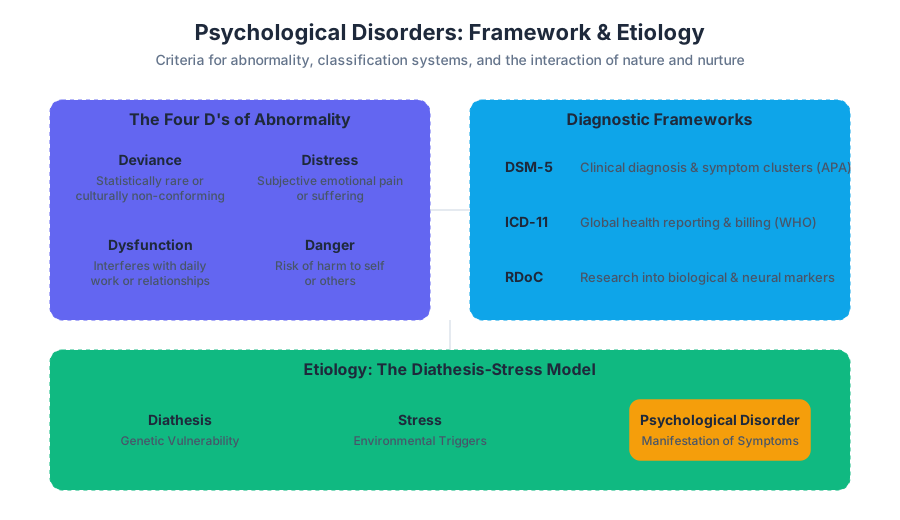
Psychology as Science
Key concepts: Scientific Method · Replication Crisis · Experimental vs. Correlational Research · Statistical Inference · History of Psychology
Introduces the scientific method, the history of the discipline, and the critical challenges facing modern psychological research.
Psychology as Science
Psychology is the rigorous scientific study of the mind and behavior. While often perceived by the public through the lens of "folk psychology" or "intuition," the discipline operates as a "hub science" that integrates biological, social, and physical methodologies to understand internal mental processes and external actions. The transition of psychology from philosophical speculation to an empirical science was marked by the adoption of the Scientific Method, a commitment to Falsifiability, and the development of sophisticated Statistical Inference techniques.
The Evolution of Psychological Science
The history of psychology is a narrative of shifting paradigms, moving from the subjective analysis of consciousness to the objective measurement of behavior, and finally to the integrated study of brain, mind, and environment.
From Philosophy to the Laboratory
The formal "birth" of psychology as a science is generally dated to 1879, when Wilhelm Wundt established the first psychological laboratory at the University of Leipzig. Wundt’s approach, Structuralism, attempted to use Introspection to break down mental processes into their most basic components. This was quickly challenged by William James and Functionalism, which focused on the purpose of consciousness and behavior in the context of evolution and adaptation.
The Rise of Behaviorism and the Cognitive Revolution
By the early 20th century, the "subjective" nature of introspection led to the rise of Behaviorism, championed by John B. Watson and B.F. Skinner. Behaviorists argued that for psychology to be a true science, it must limit itself to observable, measurable behaviors. This "Black Box" approach was eventually superseded in the 1950s and 60s by the Cognitive Revolution, which utilized the metaphor of the computer to study internal states like memory, attention, and decision-making through objective, experimental means.
| Era | Primary Focus | Key Figures | Methodological Shift |
|---|---|---|---|
| Structuralism (1870s) | Basic elements of consciousness | Wilhelm Wundt, Edward Titchener | Systematic Introspection |
| Functionalism (1880s) | Purpose and adaptation of the mind | William James | Observation and Evolutionary Theory |
| Psychoanalysis (1900s) | Unconscious drives and childhood | Sigmund Freud | Case Studies and Clinical Interview |
| Behaviorism (1920s-50s) | Observable stimulus-response | Watson, Skinner, Pavlov | Controlled Laboratory Experiments |
| Cognitive Science (1960s+) | Mental processing and information | Miller, Chomsky, Neisser | Computer Modeling and Reaction Time |
| Neuroscience (1990s+) | Biological substrates of behavior | Damasio, Gazzaniga | fMRI, EEG, and Optogenetics |
The Scientific Method in Psychology
The scientific method is the engine of psychological inquiry. It is a cyclical process designed to minimize bias and ensure that conclusions are based on evidence rather than anecdote.
The Cycle of Inquiry
- Observation: Identifying a phenomenon (e.g., "People seem to remember the first items in a list better than the middle ones").
- Hypothesis Formation: A testable, falsifiable prediction (e.g., "If a participant is given a list of 20 words, they will recall the first five more accurately than the middle five").
- Experimentation/Data Collection: Systematically testing the hypothesis under controlled conditions.
- Analysis: Using statistics to determine if the results are due to chance.
- Theory Building/Refinement: Integrating the findings into a broader framework (e.g., The Multi-Store Model of Memory).
Definition: Falsifiability Proposed by Karl Popper, falsifiability is the principle that for a claim to be scientific, it must be possible to conceive of an observation or an argument which could negate it. "Invisible spirits cause depression" is not a scientific claim because it cannot be falsified.
Implementation: A Simple Memory Experiment
To illustrate the low-level logic of an experimental trial, consider a Python script designed to randomize stimuli and record reaction times, a staple of cognitive psychology.
import time
import random

def run_stroop_trial(word, color):
    """
    Simulates a single trial of a Stroop Task.
    Measures reaction time (RT) and accuracy.
    """
    print(f"WORD: {word} (displayed in {color})")

    start_time = time.time()
    # In a real scenario, this would be a keyboard interrupt or button press
    user_input = input("Enter the COLOR of the word: ").strip().lower()
    end_time = time.time()

    reaction_time = end_time - start_time
    is_correct = (user_input == color.lower())

    return {
        "word": word,
        "color": color,
        "congruent": (word.lower() == color.lower()),
        "rt": reaction_time,
        "correct": is_correct
    }

# Example of data generation for a pilot study
results = []
stimuli = [("RED", "red"), ("BLUE", "red"), ("GREEN", "green"), ("YELLOW", "blue")]

for w, c in stimuli:
    trial_data = run_stroop_trial(w, c)
    results.append(trial_data)

# Calculate mean RT for congruent vs incongruent
congruent_rt = [r['rt'] for r in results if r['congruent']]
incongruent_rt = [r['rt'] for r in results if not r['congruent']]

print(f"Mean Congruent RT: {sum(congruent_rt)/len(congruent_rt):.4f}s")
Research Designs: Experimental vs. Correlational
The most critical distinction in psychological research is between designs that can establish Causality and those that can only establish Association.
Experimental Research
In an Experiment, the researcher actively manipulates one variable (the Independent Variable or IV) to see its effect on another (the Dependent Variable or DV). To ensure the effect is caused by the IV, researchers use Random Assignment to distribute participant characteristics (confounds) equally across groups.
Correlational Research
Correlational Research measures the relationship between two variables without manipulating them. While useful for prediction and studying variables that cannot be ethically manipulated (e.g., the effects of smoking on lung health), it suffers from two major limitations:
- Directionality Problem: Does X cause Y, or does Y cause X?
- Third Variable Problem: Does an unmeasured variable Z cause both X and Y?
| Feature | Experimental | Correlational |
|---|---|---|
| Goal | Determine Causality (A causes B) | Identify Relationships (A relates to B) |
| Manipulation | High (Researcher controls IV) | None (Naturalistic observation) |
| Assignment | Random Assignment to conditions | No assignment (pre-existing groups) |
| Internal Validity | High (Controls for confounds) | Low (Subject to third-variable bias) |
| External Validity | Can be lower (Artificial lab setting) | Often higher (Real-world data) |
Statistical Inference: Quantifying Uncertainty
Psychologists use Statistical Inference to determine whether the results of a study represent a true effect in the population or are merely the result of "sampling error" (random noise).
The Null Hypothesis Significance Testing (NHST) Framework
The standard approach involves the Null Hypothesis ($H_0$), which posits that there is no effect. Researchers calculate a p-value—the probability of obtaining results at least as extreme as the observed ones, assuming the null hypothesis is true.
The Alpha Level ($\alpha$) By convention, psychologists set $\alpha = .05$. If $p < .05$, the result is deemed "statistically significant," meaning there is less than a 5% chance the results occurred by chance alone.
Mathematical Foundation: The t-Statistic
The $t$-test is commonly used to compare the means of two groups. The formula represents the ratio of the "Signal" (difference between means) to the "Noise" (variability within groups).
t = \frac{\bar{X}_1 - \bar{X}_2}{\sqrt{\frac{s_1^2}{n_1} + \frac{s_2^2}{n_2}}}
Where:
- $\bar{X}$: Sample mean
- $s^2$: Sample variance
- $n$: Sample size
The Replication Crisis and Open Science
In the early 2010s, psychology faced a reckoning known as the Replication Crisis. Several high-profile studies failed to replicate when independent labs attempted to reproduce the results. This led to a deep investigation into "Questionable Research Practices" (QRPs).
Common Pitfalls and QRPs
- p-hacking: Manipulating data or analyses until a non-significant result becomes significant ($p < .05$).
- HARKing: "Hypothesizing After the Results are Known"—presenting a post-hoc discovery as if it were the original prediction.
- The File Drawer Problem: The tendency for journals to only publish positive results, while "null" results remain unpublished and invisible.
- Small Sample Sizes: Studies with low "Power" are more likely to produce false positives or over-estimate effect sizes.
The Path Forward: Open Science
The discipline has responded by adopting Open Science practices to increase transparency and reliability.
- Preregistration: Researchers submit their hypotheses and analysis plans to a public registry before collecting data.
- Registered Reports: A journal commits to publishing a study based on the quality of the methodology, regardless of whether the results are significant.
- Open Data/Materials: Sharing raw data and code so others can verify the findings.
# Example: Using the 'pwr' package in R to calculate required sample size
# to avoid 'underpowered' studies (a key driver of the replication crisis).

# Install and load the power analysis library
install.packages("pwr")
library(pwr)

# Calculate sample size for a medium effect size (d = 0.5)
# with 80% power and 5% significance level
pwr.t.test(d = 0.5, sig.level = 0.05, power = 0.80, type = "two.sample")

# Output will show 'n', the number of participants needed per group.
Psychophysiological Methods
To bridge the gap between the "mind" and the "biological basis of behavior," psychologists employ various psychophysiological tools. These methods vary in their Spatial Resolution (how precisely they locate an effect in the brain) and Temporal Resolution (how precisely they track the timing of an effect).
Key Modalities
- EEG (Electroencephalography): Measures electrical activity on the scalp. High temporal resolution (milliseconds) but low spatial resolution.
- fMRI (Functional Magnetic Resonance Imaging): Measures blood oxygenation levels (BOLD signal). High spatial resolution but low temporal resolution (seconds).
- Skin Conductance (GSR): Measures sweat gland activity as a proxy for sympathetic nervous system arousal.
- Eye Tracking: Measures gaze patterns to infer attentional focus.
| Method | Measure | Spatial Resolution | Temporal Resolution | Invasiveness |
|---|---|---|---|---|
| EEG | Electrical voltage | Low | Excellent | Non-invasive |
| fMRI | Blood oxygenation | Excellent | Low | Non-invasive |
| PET | Radioactive tracer | Moderate | Very Low | Invasive |
| TMS | Magnetic pulses | Moderate | Moderate | Non-invasive (Active) |
| Lesion Studies | Tissue damage | High (Localized) | N/A | Natural/Accidental |
Real-World Research: Ecological Validity
While laboratory experiments provide high Internal Validity (certainty about cause and effect), they often lack Ecological Validity (the degree to which findings generalize to real-world settings).
Field Experiments and Naturalistic Observation
To combat this, researchers use Ambulatory Assessment or Experience Sampling Methods (ESM). In ESM, participants receive prompts on their smartphones throughout the day to report their moods, behaviors, or social interactions in real-time. This captures the "messiness" of human life that a sterile lab environment might miss.
The Ethics of Psychological Science
Because psychology involves human and animal subjects, it is governed by strict ethical guidelines enforced by Institutional Review Boards (IRB).
- Informed Consent: Participants must know what the study involves and that they can leave at any time.
- Deception: Must be justified and followed by a thorough Debriefing.
- Confidentiality: Data must be protected and anonymized.
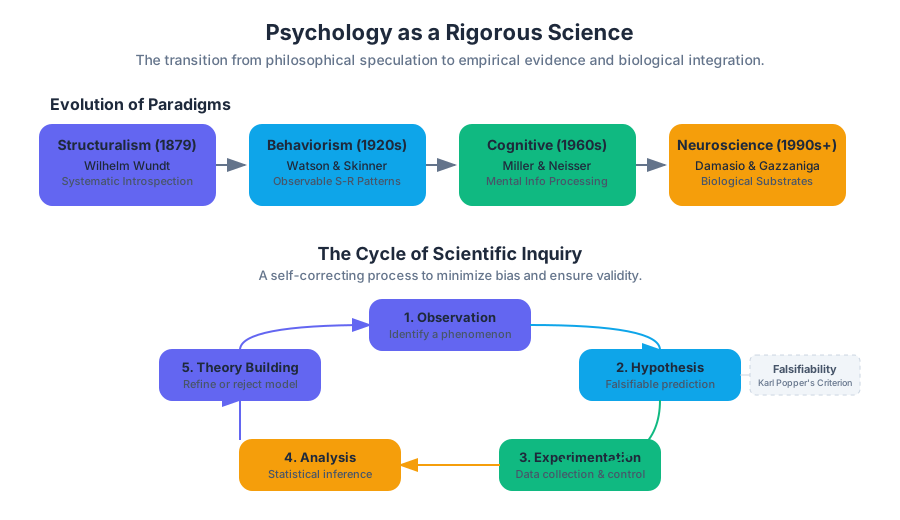
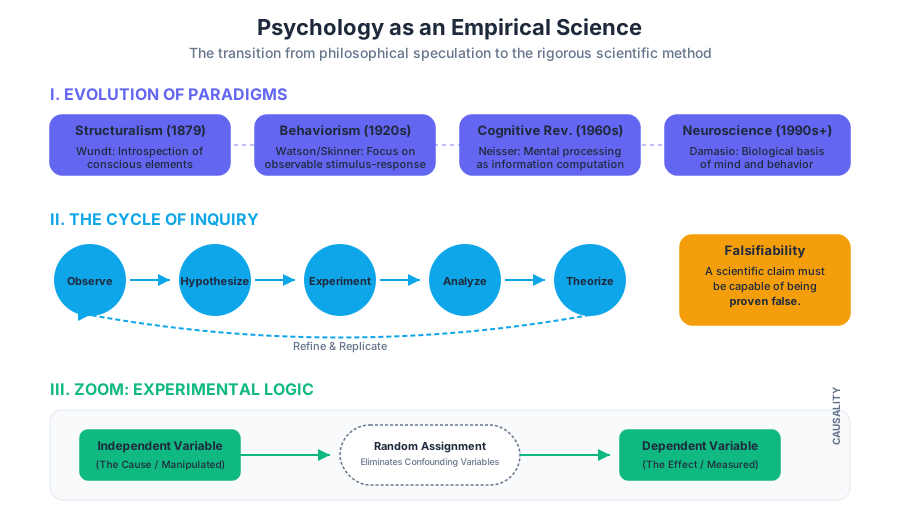
Sensation and Perception
Key concepts: Multi-Modal Perception · Inattentional Blindness · Vestibular System · Eyewitness Testimony Biases
Explores how our sensory organs receive stimuli and how our brains interpret that data to create our reality.
Sensation and Perception
In the hierarchy of cognitive architecture, Sensation and Perception represent the interface between the external objective universe and the internal subjective experience. While often used interchangeably in colloquial speech, they represent distinct computational stages: sensation is the transduction of physical energy (photons, pressure waves, chemical concentrations) into neural impulses, whereas perception is the high-level synthesis and interpretation of those signals to construct a coherent model of reality.
The Transduction-to-Interpretation Pipeline
The human brain does not "see" light; it interprets a stream of action potentials generated by the retina. This creates a fundamental epistemological gap: our experience of the world is a "controlled hallucination" constrained by sensory input.
| Stage | Process | Biological Component | Output |
|---|---|---|---|
| Sensation | Transduction | Sensory Receptors (Rods/Cones, Hair Cells) | Neural Impulses (Action Potentials) |
| Transmission | Propagation | Afferent Pathways (Optic Nerve, Thalamus) | Signal Arrival in Primary Cortex |
| Perception | Synthesis | Association Areas (Ventral/Dorsal Streams) | Mental Representation / Object Recognition |
Definition: Transduction The process by which foreign physical energy is converted into an electrical signal (neural impulse) that the nervous system can process. This is the "analog-to-digital" conversion of the biological world.
Multi-Modal Perception: The Bayesian Brain
While we often study senses in isolation, the brain is fundamentally a multi-modal processor. It does not process sound and vision in silos; rather, it integrates these streams to reduce uncertainty and resolve ambiguities.
The Principle of Inverse Effectiveness
The brain relies more on multi-modal integration when the individual sensory signals are weak or noisy. If you are in a quiet room, you don't need to see a speaker's lips to understand them. In a loud bar, your brain automatically integrates visual lip movements with auditory fragments to reconstruct the speech—a phenomenon known as the McGurk Effect.
Maximum Likelihood Estimation (MLE) in Perception
Modern cognitive science models multi-modal perception using Bayesian inference. The brain treats each sense as a "source" with a certain degree of variance ($\sigma^2$). It weights the more reliable sense more heavily.
import numpy as np

def bayesian_sensory_integration(mu_visual, sigma_visual, mu_auditory, sigma_auditory):
    """
    Simulates the Maximum Likelihood Estimation (MLE) for multi-modal integration.
    The brain integrates two noisy signals to produce a single optimal estimate.
    """
    # Calculate weights based on the inverse of variance (precision)
    w_visual = (1 / sigma_visual**2) / (1 / sigma_visual**2 + 1 / sigma_auditory**2)
    w_auditory = 1 - w_visual

    # The integrated percept is a weighted average
    mu_integrated = (w_visual * mu_visual) + (w_auditory * mu_auditory)

    # The variance of the integrated percept is always lower than individual variances
    sigma_integrated = np.sqrt((sigma_visual**2 * sigma_auditory**2) /
                               (sigma_visual**2 + sigma_auditory**2))

    return mu_integrated, sigma_integrated

# Example: Visual signal says object is at 10cm (high precision),
# Auditory signal says 12cm (low precision)
pos, uncertainty = bayesian_sensory_integration(10.0, 0.5, 12.0, 2.0)
print(f"Integrated Percept Position: {pos:.2f}cm, Uncertainty: {uncertainty:.2f}")
Cross-Modal Phenomena
- The Ventriloquist Effect: The tendency to localize a sound source to a visible moving object, even if the sound originates elsewhere.
- Rubber Hand Illusion: A multi-modal conflict where visual and tactile synchronization causes the brain to "adopt" a prosthetic limb into its body schema.
Inattentional Blindness: The Cost of Focus
Perception is a resource-constrained process. We cannot process every bit of data hitting our receptors. Inattentional Blindness is the failure to notice a fully visible, but unexpected, stimulus when attention is directed elsewhere.
The Mechanism of Selective Attention
Attention acts as a filter or a "spotlight." When the cognitive load of a primary task is high, the brain suppresses "irrelevant" sensory inputs to prevent overflow. This is not a failure of the eyes (sensation), but a failure of the "internal renderer" (perception).
Factors Influencing Detection
- Task Difficulty: Higher cognitive load increases the likelihood of missing unexpected stimuli.
- Spatial Proximity: Objects closer to the focus of attention are more likely to be noticed.
- Feature Similarity: If you are looking for "black shirts," you are more likely to notice an unexpected black object than a bright red one.
P(Detection) \propto \frac{Saliency \times Expectancy}{CognitiveLoad}
Comparison: Inattentional vs. Change Blindness
| Feature | Inattentional Blindness | Change Blindness |
|---|---|---|
| Stimulus | A new, unexpected object appears. | A feature of an existing object changes. |
| Requirement | High focus on a different task. | A visual disruption (flicker, blink, or cut). |
| Memory | Failure of awareness/encoding. | Failure of memory comparison. |
The Vestibular System: The Sixth Sense
Often overlooked, the Vestibular System is the sensory apparatus responsible for balance, spatial orientation, and coordinating movement with balance. It is located within the inner ear and works in tandem with the visual system and proprioception.
Anatomy and Mechanics
The system consists of two primary types of sensors:
- Semicircular Canals: Three fluid-filled loops oriented in the X, Y, and Z axes. They detect rotational acceleration (angular momentum) via the movement of endolymph fluid against hair cells in the ampulla.
- Otolith Organs (Utricle and Saccule): These detect linear acceleration and gravity. They contain small calcium carbonate crystals (otoconia) that shift when you tilt your head or accelerate in a car, pulling on hair cells.
The Vestibulo-Ocular Reflex (VOR)
The VOR is one of the fastest reflexes in the human body. It uses vestibular input to rotate the eyes in the opposite direction of head movement, stabilizing the image on the retina. Without VOR, your vision would "blur" every time you took a step.
/*
 * Pseudocode for a PID-based stabilization system mimicking the VOR.
 * Used in robotics to stabilize camera gimbals based on IMU data.
 */
void stabilize_vision(float head_angular_velocity, float delta_time) {
    static float eye_position = 0.0;

    // The VOR Gain: Ideally 1.0 (eyes move exactly opposite to head)
    const float VOR_GAIN = 1.0;

    // Calculate required eye movement to compensate for head rotation
    float compensation = -head_angular_velocity * VOR_GAIN;

    // Update eye actuator position
    eye_position += compensation * delta_time;

    // Apply physical constraints to eye movement (human limit ~50 degrees)
    eye_position = clamp(eye_position, -50.0, 50.0);

    move_eye_actuator(eye_position);
}
Common Pitfalls: Sensory Conflict
Motion Sickness occurs when there is a mismatch between the vestibular system and the visual system. For example, when reading in a car:
- Vestibular: Senses acceleration and bumps (movement).
- Visual: Senses a static book (no movement).
- Result: The brain interprets this conflict as a sign of neurotoxin ingestion (hallucination) and induces nausea to expel the "poison."
Eyewitness Testimony Biases: The Fragility of Memory
Perception does not end when the stimulus disappears; it transitions into memory. However, memory is not a video recording; it is a reconstructive process. In the context of the legal system, this leads to significant Eyewitness Testimony Biases.
The Misinformation Effect
Proposed by Elizabeth Loftus, this effect demonstrates that memory can be altered by post-event information. If an eyewitness is asked "How fast was the car going when it smashed into the pole?" they will report higher speeds than if the word "hit" was used.
Sources of Bias
- Schema-Driven Processing: We fill in gaps in our memory using "schemas" (mental templates of how the world usually works). If we see a robbery, we might "remember" the thief having a gun even if they didn't, because our "robbery schema" includes weapons.
- Weapon Focus: The presence of a weapon narrows attention (Inattentional Blindness for other details), making the witness less likely to remember the perpetrator's face.
- Own-Race Bias: Individuals are statistically better at recognizing faces of their own race, likely due to increased experience with those facial features.
| Bias Type | Description | Impact on Testimony |
|---|---|---|
| Source Monitoring Error | Forgetting where a piece of info came from. | Witness "remembers" a face from a mugshot as being at the crime scene. |
| Leading Questions | Wording that suggests a specific answer. | Distorts the original memory trace. |
| Confirmation Bias | Seeking info that fits an existing belief. | Witness identifies a suspect they already suspect is guilty. |
Database Representation of Testimony Reliability
In forensic psychology, tracking these variables is crucial for assessing the probability of a "false positive" identification.
-- Schema for tracking factors that influence eyewitness reliability
CREATE TABLE Eyewitness_Reports (
    report_id INT PRIMARY KEY,
    witness_id INT,
    case_id INT,
    lighting_conditions ENUM('Low', 'Medium', 'High'),
    duration_of_observation INT, -- in seconds
    weapon_present BOOLEAN,
    time_delay_days INT, -- time between event and report
    leading_questions_asked BOOLEAN,
    confidence_score FLOAT -- witness's self-reported confidence (often poorly correlated with accuracy)
);

-- Query to identify high-risk testimonies based on psychological research
SELECT report_id, witness_id
FROM Eyewitness_Reports
WHERE (weapon_present = TRUE AND duration_of_observation < 10)
   OR (time_delay_days > 30)
   OR (leading_questions_asked = TRUE);
Synthesis: The "Controlled Hallucination"
The study of sensation and perception reveals a startling truth: we do not perceive the world as it is, but as it is useful for us to perceive it. Our brains integrate multi-modal data to resolve noise, ignore "irrelevant" data through inattentional blindness, maintain balance via the vestibular system, and reconstruct past events through a biased lens of memory.
Understanding these mechanisms is not just a matter of biological curiosity; it has profound implications for:
- AI/Robotics: How we build sensors and "perceptual" algorithms for autonomous vehicles.
- Law: How we evaluate the reliability of human memory in courtrooms.
- Human Factors: How we design cockpits and interfaces to prevent inattentional blindness in high-stakes environments.
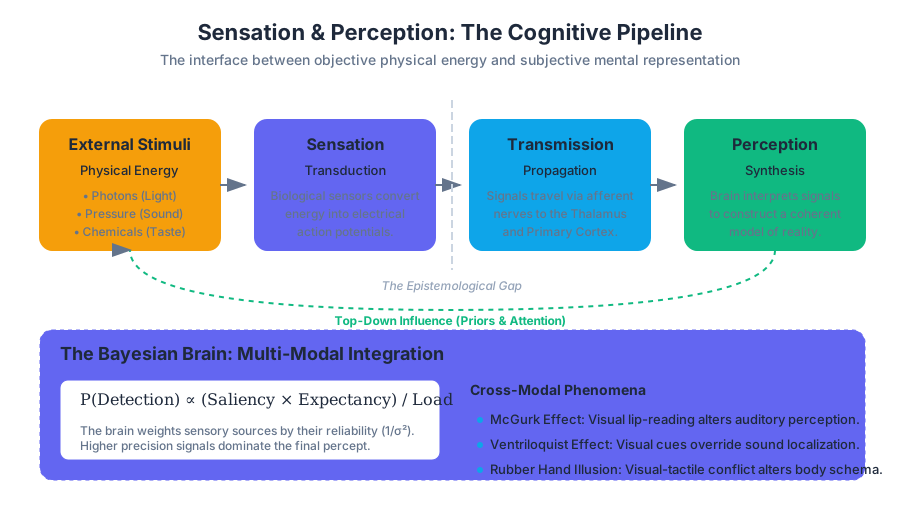
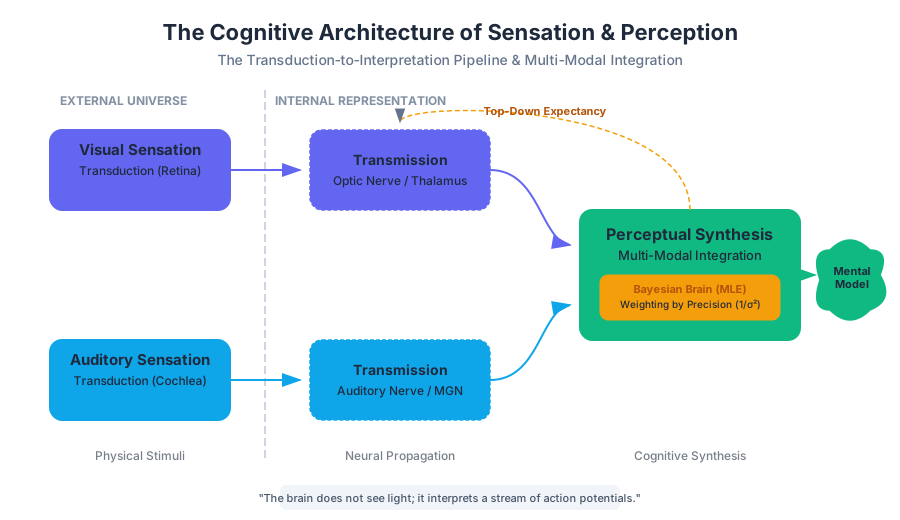
Well-Being
Key concepts: Subjective Well-Being (SWB) · Positive Psychology · Health Psychology · Character Strengths
The study of happiness, health, and the factors that allow individuals and communities to flourish.
Well-Being
Overview
This final section focuses on 'the good life.' It examines the science of happiness and how psychological factors influence physical health and long-term life satisfaction.
Key Concepts
- Subjective Well-Being (SWB): The scientific term for happiness and life satisfaction, measured through self-reports of emotional states.
- Positive Psychology: A branch of psychology that focuses on strengths, virtues, and factors that contribute to a fulfilling life.
- Health Psychology: The study of how biological, psychological, and social factors influence health and illness.
- Character Strengths: Positive traits such as gratitude, forgiveness, and resilience that contribute to human flourishing.
Why This Matters
Psychology isn't just about treating disorder; it's about optimizing human potential and helping people lead healthier, happier lives.
Source Materials
- Biological Basis of Behavior
- Biological Basis of Behavior
- Biological Basis of Behavior
- Biological Basis of Behavior
- Biological Basis of Behavior
- Biological Basis of Behavior
- Biological Basis of Behavior
- Biological Basis of Behavior
- Cognition and Language
- Cognition and Language
- Cognition and Language
- Psychology as Science
Study Psychology as Science with AI — Free on Lykke
Sign up for free to generate personalized flashcards, quizzes, and study guides from this course. Chat with an AI tutor that knows the material.
Get Started FreeView this course wiki on Lykke · Browse all public course wikis