Psychology 2e
Institution: MIT
1 study materials · 4 sections
Psychology 2e by OpenStax is a comprehensive, open-source introductory textbook designed to provide students with a foundational understanding of the human mind and behavior. The course covers a wide range of topics, from the biological basis of behavior to complex social interactions and clinical disorders. This edition emphasizes modern research standards, including the replication crisis and updated DSM-5 criteria, while ensuring diverse representation across all psychological domains to make the science of psychology accessible and relevant to all students.
Course Sections
Foundations of Psychological Science
Key concepts: Replication Crisis · Research Ethics · Scientific Method · History of Psychology
An introduction to the history of psychology, scientific research methods, and the critical importance of the replication crisis in modern science.
Foundations of Psychological Science
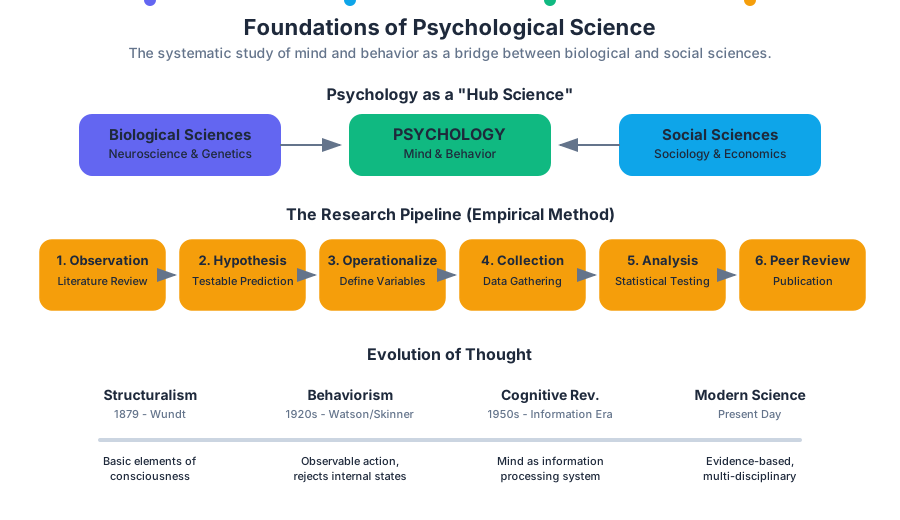
Psychology is the rigorous, systematic study of the mind and behavior. While often perceived by the public through the lens of clinical therapy or "pop-psychology" tropes, the discipline functions as a "hub science" that bridges the gap between the biological sciences (neuroscience, genetics) and the social sciences (sociology, economics). The foundations of psychological science rest upon a commitment to empirical evidence, ethical scrutiny, and a self-correcting methodological framework designed to parse the complexities of human cognition and action.
The History of Psychology: From Philosophy to Empirical Science
The evolution of psychology is characterized by a transition from speculative philosophy to a laboratory-based science. Before the late 19th century, questions regarding the nature of the mind were the domain of philosophers like René Descartes and John Locke. The formal "birth" of psychology as a distinct scientific discipline is generally attributed to Wilhelm Wundt and William James.
Structuralism vs. Functionalism
Wundt, often called the father of psychology, established the first psychological laboratory in Leipzig, Germany, in 1879. His approach, Structuralism, sought to map the "periodic table" of the mind by breaking down conscious experience into its basic components using Introspection. Conversely, William James, influenced by Darwinian evolution, proposed Functionalism. This school of thought focused not on what the mind is, but what it does—how mental activities help an organism fit into its environment.
| School of Thought | Key Proponent | Core Methodology | Primary Objective |
|---|---|---|---|
| Structuralism | Wilhelm Wundt | Introspection | Identifying the basic elements of consciousness. |
| Functionalism | William James | Observation/Evolutionary Theory | Understanding how mental processes aid adaptation. |
| Psychoanalysis | Sigmund Freud | Case Studies/Clinical Interview | Exploring the influence of the unconscious mind. |
| Behaviorism | B.F. Skinner / John Watson | Controlled Experimentation | Studying observable behavior, rejecting internal states. |
| Humanism | Carl Rogers / Abraham Maslow | Qualitative Interview | Emphasizing personal growth and self-actualization. |
The Cognitive Revolution
By the 1950s, the dominance of Behaviorism—which viewed the mind as a "black box" that could not be scientifically studied—was challenged. The Cognitive Revolution re-integrated the study of internal mental processes (memory, perception, language) by utilizing metaphors from the emerging field of computer science. This shift allowed psychologists to treat the mind as an information-processing system.
The Scientific Method in Psychology
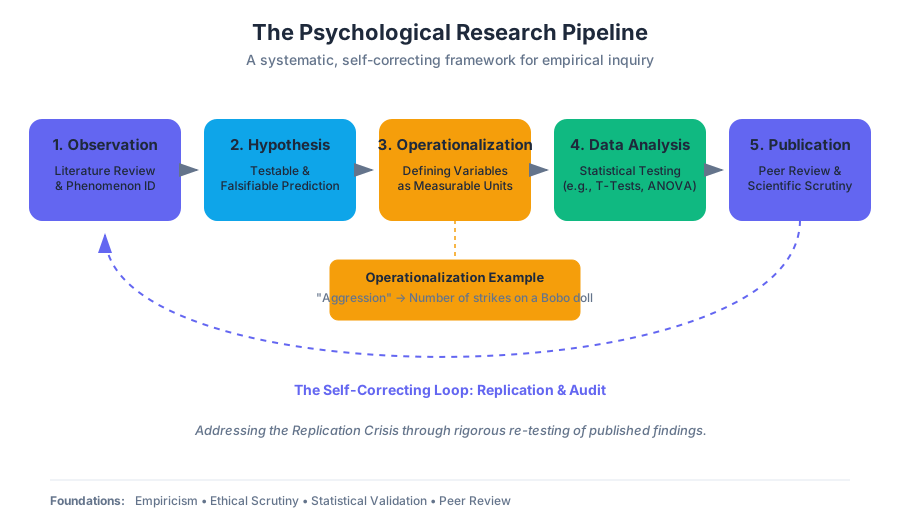
The Scientific Method is the standardized protocol used by psychologists to generate knowledge. It is an iterative process that relies on Empiricism—the belief that knowledge comes from sensory experience and evidence.
The Research Pipeline
- Observation and Literature Review: Identifying a phenomenon and reviewing existing data.
- Hypothesis Formulation: Creating a testable, falsifiable prediction.
- Operationalization: Defining abstract variables in measurable terms.
- Data Collection: Executing the experimental or observational design.
- Data Analysis: Using statistical tools to test the hypothesis.
- Peer Review and Publication: Subjecting findings to the scrutiny of the scientific community.
Definition: Operationalization The process of strictly defining variables into measurable factors. For example, "intelligence" might be operationalized as a score on the WAIS-IV exam, while "aggression" might be operationalized as the number of times a subject strikes a Bobo doll.
Implementation: Statistical Analysis of Experimental Data
In modern psychology, the primary tool for validating a hypothesis is the use of inferential statistics. Below is a Python implementation using scipy and pandas to perform an independent samples t-test, a common method for comparing the means of two groups (e.g., a control group vs. an experimental group).
import pandas as pd
from scipy import stats

def analyze_experiment_results(data_csv, independent_var, dependent_var):
    """
    Performs an independent t-test on experimental data.

    Args:
        data_csv (str): Path to the dataset.
        independent_var (str): The grouping variable (e.g., 'treatment_group').
        dependent_var (str): The outcome variable (e.g., 'reaction_time').
    """
    # Load dataset
    df = pd.read_csv(data_csv)

    # Split groups
    group_a = df[df[independent_var] == 'Control'][dependent_var]
    group_b = df[df[independent_var] == 'Experimental'][dependent_var]

    # Perform Levene's test for equality of variances
    stat, p_levene = stats.levene(group_a, group_b)

    # Perform T-test (Welch's if variances are unequal)
    t_stat, p_val = stats.ttest_ind(group_a, group_b, equal_var=(p_levene > 0.05))

    results = {
        "t_statistic": round(t_stat, 4),
        "p_value": round(p_val, 4),
        "significant": p_val < 0.05,
        "mean_diff": round(group_b.mean() - group_a.mean(), 4)
    }

    return results

# Example usage
# results = analyze_experiment_results('study_data.csv', 'group', 'memory_score')
# print(f"P-Value: {results['p_value']} | Significant: {results['significant']}")
The Replication Crisis: A Systemic Audit
The Replication Crisis refers to a methodological crisis in which the results of many scientific studies are difficult or impossible to replicate upon being conducted a second time. This issue came to the forefront in the early 2010s, particularly following the "Reproducibility Project: Psychology," which found that only about 36% of replicated studies produced significant results, compared to 97% of the original studies.
Causes of the Crisis
The crisis is not attributed to a single factor but to a cluster of systemic incentives and statistical misunderstandings:
- P-hacking: The practice of manipulating data or statistical analyses until non-significant results become significant (typically $p < .05$).
- HARKing (Hypothesizing After Results are Known): Presenting a post-hoc hypothesis as if it were the original hypothesis after seeing the data.
- Publication Bias: The tendency for journals to publish only "positive" results (findings that support a hypothesis), leading to the "File Drawer Problem."
- Low Statistical Power: Studies with small sample sizes are less likely to detect true effects and more likely to produce "fluke" significant results.
Mathematical Foundations of the P-Value
The $p$-value is the probability of observing results at least as extreme as those measured, assuming the null hypothesis ($H_0$) is true.
p = P(D | H_0)
Where:
- $D$ is the observed data.
- $H_0$ is the hypothesis that there is no effect.
A common pitfall is the Inverse Deterministic Fallacy, where researchers mistakenly believe $p = 0.05$ means there is a 95% chance the hypothesis is true. In reality, the $p$-value only speaks to the data's compatibility with the null hypothesis, not the truth of the alternative hypothesis.
Research Ethics: The Moral Guardrails
Psychological research involves sentient beings, necessitating a robust ethical framework to prevent harm. Modern ethics are governed by the Belmont Report (1979), which established three core principles: Respect for Persons, Beneficence, and Justice.
The Institutional Review Board (IRB)
Any institution receiving federal funding must maintain an Institutional Review Board (IRB). This committee reviews research proposals to ensure they meet ethical standards before any data collection begins.
| Ethical Requirement | Description | Application |
|---|---|---|
| Informed Consent | Participants must be told what to expect and that they can withdraw at any time. | Signed documents before the study. |
| Deception | Misleading participants about the study's purpose is allowed only if necessary and harmless. | Must be justified to the IRB. |
| Debriefing | Participants must be told the true purpose of the study after it concludes. | Essential if deception was used. |
| Confidentiality | Data must be kept private and anonymous where possible. | Encrypted storage, no identifying names. |
| Animal Welfare | Research on non-human animals must minimize pain and distress. | Governed by the IACUC. |
Ethics Metadata Schema
To ensure transparency and compliance, researchers often use structured metadata to document ethical approvals.
research_project:
  id: "PSYCH-2024-089"
  title: "Impact of Sleep Deprivation on Spatial Reasoning"
  ethics_board: "University Central IRB"
  approval_status: "Approved"
  participants:
    type: "Human"
    vulnerable_populations: false
    min_age: 18
    consent_method: "Written Digital"
  data_management:
    anonymization: "De-identified at source"
    storage_duration_years: 7
    encryption_level: "AES-256"
  risk_assessment:
    physical_harm: "Low"
    psychological_distress: "Moderate (Temporary fatigue)"
    mitigation_plan: "Mandatory 20-minute rest period and taxi voucher provided."
Diversity and Representation in Research
A significant criticism of foundational psychological science is its reliance on WEIRD populations (Western, Educated, Industrialized, Rich, and Democratic). Research conducted almost exclusively on American college students was often generalized to the entire human species, ignoring cultural and socioeconomic variances.
The DSM-5 and Research Currency
The Diagnostic and Statistical Manual of Mental Disorders (DSM-5) represents the evolution of how we categorize psychological phenomena. Unlike earlier versions, the DSM-5 moves toward a dimensional approach to diagnosis, recognizing that many mental health conditions exist on a spectrum rather than as binary "present/absent" categories.
Modern psychology emphasizes Research Currency—the need for findings to be updated as societal norms and technologies change. For example, the impact of social media on adolescent development is a field that requires constant updating, as the "stimulus" (the app interface and algorithm) changes faster than traditional peer-review cycles.
Common Pitfalls in Psychological Reasoning
- Correlation vs. Causation: This is the most frequent error. Just because two variables (e.g., ice cream sales and drowning incidents) move together does not mean one causes the other. A third variable (e.g., temperature) usually drives both.
- The Barnum Effect: The tendency for people to believe that generic personality descriptions (like horoscopes) apply specifically to them.
- Confirmation Bias: The tendency to search for, interpret, and recall information in a way that confirms one's pre-existing beliefs.
- Over-reliance on Anecdotes: Prioritizing a single compelling story over statistical data from a large sample.
Example: Calculating Correlation Coefficient ($r$)
To quantify the relationship between two variables, we use Pearson's $r$.
# Using a command-line tool like 'datamash' to quickly check correlation
# between two columns in a CSV file (StudyHours vs ExamScore)

cat study_results.csv | datamash --headers --field-separator=',' jar 1,2
The output $r$ ranges from -1.0 to +1.0:
- +1.0: Perfect positive correlation.
- 0.0: No linear relationship.
- -1.0: Perfect negative correlation.
Summary of Foundations
The foundations of psychological science are built on the tension between the subjective nature of the mind and the objective requirements of the scientific method. By acknowledging the history of the field, adhering to strict ethical guidelines, and aggressively addressing the replication crisis through open science practices, psychology continues to evolve as a robust and essential discipline for understanding the human condition.
Biological and Cognitive Bases of Behavior
Key concepts: Biopsychology · Neuroscience · Sensation and Perception · Cognitive Psychology
Explores the physical structures of the brain, the nervous system, and the cognitive processes of sensation, perception, and memory.
Biological and Cognitive Bases of Behavior
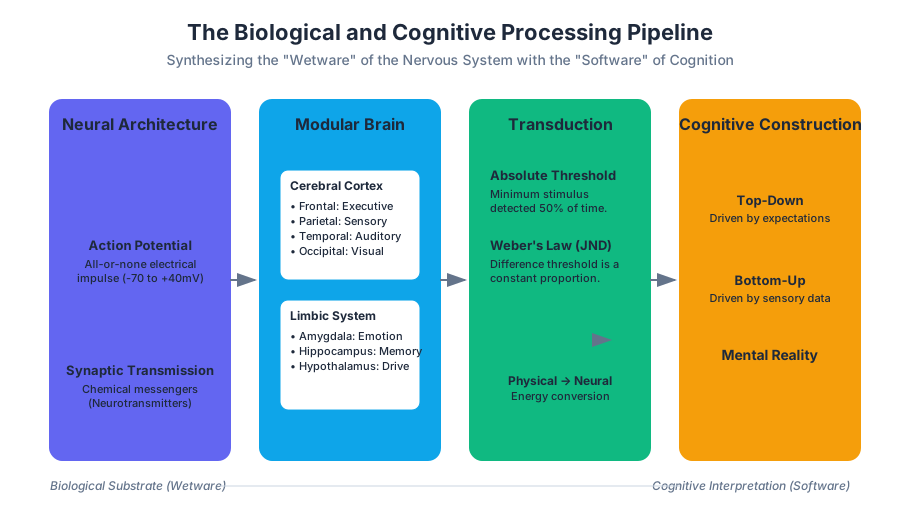
The human experience is an emergent property of biological substrates and computational processes. To understand behavior, we must bridge the gap between the "wetware" of the nervous system and the "software" of cognitive processing. This article synthesizes the foundational principles of biopsychology, neuroscience, sensation, perception, and cognitive psychology, providing a technical framework for how humans interact with and interpret the world.
Biopsychology and the Architecture of the Nervous System
Biopsychology (also known as behavioral neuroscience) is the application of biological principles to the study of physiological, genetic, and developmental mechanisms of behavior in humans and other animals. At its core, it posits that every thought, feeling, and action is the result of electrochemical events within the nervous system.
The Neuron: The Fundamental Unit of Processing
The nervous system is composed of approximately 86 billion neurons. Unlike standard cells, neurons are specialized for high-speed communication.
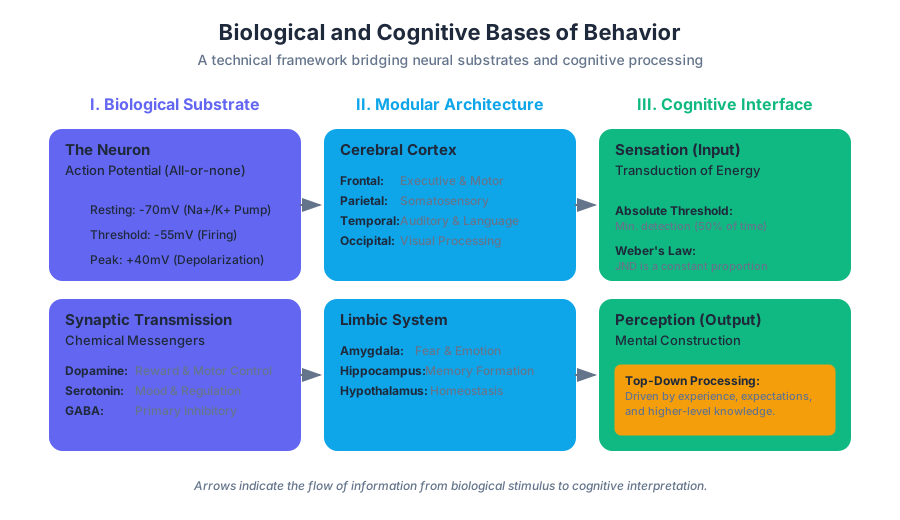
Definition: The Action Potential An action potential is a rapid, temporary change in the electrical potential across a neuron's membrane. It is an "all-or-none" event, meaning the signal does not lose strength as it travels down the axon.
The communication cycle follows a precise sequence:
- Resting Potential: The neuron maintains a charge of approximately -70mV relative to the outside, maintained by the sodium-potassium pump.
- Depolarization: Stimuli cause sodium ($Na^+$) channels to open, allowing positive ions to rush in. If the threshold of excitation (~ -55mV) is reached, the action potential fires.
- Repolarization: Potassium ($K^+$) channels open, and $K^+$ rushes out, restoring the negative charge.
- Hyperpolarization: The cell briefly becomes more negative than the resting state, creating a refractory period where it cannot fire again immediately.
import numpy as np
import matplotlib.pyplot as plt

# Simplified Hodgkin-Huxley Model Component: Membrane Potential Simulation
def simulate_action_potential(stimulus_strength, duration_ms=50):
    dt = 0.01
    time = np.arange(0, duration_ms, dt)
    v = np.full_like(time, -70.0)  # Initial resting potential

    # Constants for a simplified model
    threshold = -55.0
    peak = 40.0
    recovery_rate = 0.1

    firing = False
    for i in range(1, len(time)):
        if v[i-1] >= threshold or firing:
            firing = True
            # Depolarization phase
            if v[i-1] < peak:
                v[i] = v[i-1] + (stimulus_strength * 2.0)
            else:
                # Repolarization phase
                v[i] = v[i-1] - 5.0
                if v[i] <= -70.0:
                    firing = False
        else:
            # Passive leakage/Resting state
            v[i] = v[i-1] + (np.random.normal(0, 0.1))

    return time, v

# Example usage: simulate a neuron receiving a strong stimulus
t, v_trace = simulate_action_potential(stimulus_strength=1.5)
Neurochemistry and Synaptic Transmission
Neurons do not physically touch; they communicate across the synapse via neurotransmitters. These chemical messengers bind to specific receptors on the postsynaptic neuron, acting like a key in a lock.
| Neurotransmitter | Primary Function | Associated Disorders |
|---|---|---|
| Dopamine | Reward, motivation, motor control | Parkinson's (low), Schizophrenia (high) |
| Serotonin | Mood regulation, sleep, appetite | Depression, Anxiety |
| GABA | Primary inhibitory transmitter; reduces excitability | Anxiety, Insomnia |
| Glutamate | Primary excitatory transmitter; learning/memory | Seizures, Neurodegeneration |
| Acetylcholine | Muscle activation, attention, memory | Alzheimer's |
Neuroanatomy: The Modular Brain
The brain is organized into specialized structures that handle different aspects of behavior. Modern neuroscience rejects strict phrenology but acknowledges functional localization—the idea that specific areas are optimized for specific tasks.
The Cerebral Cortex and Lobes
The "gray matter" of the brain is divided into four main lobes, each with distinct responsibilities:
- Frontal Lobe: Contains the motor cortex (movement), prefrontal cortex (executive function, decision making), and Broca's area (speech production).
- Parietal Lobe: Contains the somatosensory cortex, processing touch, temperature, and pain.
- Temporal Lobe: Processes auditory information and contains Wernicke's area (speech comprehension).
- Occipital Lobe: Dedicated almost entirely to visual processing.
The Limbic System: The Emotional Core
Deep within the brain lies the limbic system, which governs emotion and memory:
- Amygdala: Processes fear and emotional salience.
- Hippocampus: Essential for the formation of new long-term memories.
- Hypothalamus: Regulates homeostasis (hunger, thirst, temperature) and the endocrine system.
Sensation and Perception: The Interface of Reality
While often used interchangeably, sensation and perception are distinct stages of a single pipeline.
Sensation: The Physical Input
Sensation is the process by which our sensory receptors and nervous system receive and represent stimulus energies from our environment. This involves transduction—the conversion of physical energy (like light waves or sound vibrations) into neural impulses.
Key metrics in sensation:
- Absolute Threshold: The minimum stimulation needed to detect a particular stimulus 50% of the time.
- Difference Threshold (JND): The minimum difference between two stimuli required for detection 50% of the time (governed by Weber’s Law, which states the JND is a constant proportion of the original stimulus).
Perception: The Mental Construct
Perception is the process of organizing and interpreting sensory information, enabling us to recognize meaningful objects and events. This is heavily influenced by:
- Bottom-up processing: Starting with the raw sensory data and building up to a final perception.
- Top-down processing: Using prior knowledge, expectations, and context to interpret sensory data.
Signal Detection Theory (SDT)
SDT provides a mathematical framework for understanding how we make decisions under conditions of uncertainty. It separates "sensitivity" (how well you can see the signal) from "bias" (how likely you are to say "yes").
\text{The probability of a 'Hit' vs. a 'False Alarm' is defined by:} \\
d' = Z(\text{Hit Rate}) - Z(\text{False Alarm Rate}) \\
\text{where } d' \text{ is the sensitivity index and } Z \text{ is the z-score of the normal distribution.}
| Stimulus Present? | Response: "Yes" | Response: "No" |
|---|---|---|
| Yes | Hit | Miss (Type II Error) |
| No | False Alarm (Type I Error) | Correct Rejection |
Cognitive Psychology: The Information Processing Model
Cognitive psychology views the human mind as a complex information-processing system, similar to a computer. It focuses on how we acquire, process, store, and retrieve information.
Memory Systems
Memory is not a single "video recording" but a multi-stage construction process. The Atkinson-Shiffrin Model describes three distinct stages:
- Sensory Memory: Brief storage of sensory events (e.g., iconic/visual for <1s, echoic/auditory for 3-4s).
- Short-Term / Working Memory: A temporary storage system that processes incoming sensory memory. It has a capacity of roughly $7 \pm 2$ items (Miller's Law), though modern research suggests it may be closer to 4 "chunks."
- Long-Term Memory (LTM): The continuous storage of information. LTM is divided into Explicit (declarative) and Implicit (non-declarative) memory.
| Memory Type | Sub-type | Description | Example |
|---|---|---|---|
| Explicit | Episodic | Experienced events | Your 10th birthday party |
| Explicit | Semantic | Knowledge and facts | The capital of France |
| Implicit | Procedural | Skills and actions | How to ride a bicycle |
| Implicit | Emotional | Conditioned responses | Fear when seeing a spider |
Cognitive Pitfalls and Heuristics
Humans are not perfectly rational actors. We use heuristics (mental shortcuts) to make decisions quickly, which can lead to systematic errors or cognitive biases.
- Availability Heuristic: Judging the likelihood of an event based on how easily examples come to mind (e.g., fearing shark attacks more than car accidents).
- Confirmation Bias: The tendency to search for, interpret, and recall information in a way that confirms one's pre-existing beliefs.
- Anchoring: Relying too heavily on the first piece of information offered when making decisions.
Modern Challenges: The Replication Crisis and Diversity
The field of psychology is currently undergoing a significant "software update" regarding its methodology and scope.
The Replication Crisis
In the early 2010s, researchers discovered that many classic findings in social and cognitive psychology were difficult or impossible to replicate. This led to a push for:
- Open Science: Sharing raw data and code.
- Preregistration: Publicly documenting a study's hypothesis and analysis plan before data collection to prevent "p-hacking."
- Larger Sample Sizes: Increasing statistical power to ensure results are not due to chance.
Diversity and Representation
Historically, psychological research was conducted primarily on WEIRD populations (Western, Educated, Industrialized, Rich, and Democratic). Modern biopsychology and cognitive science are increasingly focused on:
- Cross-cultural validity: Testing if cognitive models hold true across different cultures.
- Neurodiversity: Recognizing that variations in brain function (e.g., Autism, ADHD) are natural variations rather than purely "disorders" to be "fixed."
Technical Implementation: Analyzing Cognitive Data
In a professional research environment, cognitive data (like reaction times or fMRI voxels) is processed using standardized pipelines.
# Example: Using FSL (FMRIB Software Library) to preprocess fMRI data
# 1. Motion Correction (mcflirt)
mcflirt -in bold_data.nii.gz -out bold_mcf.nii.gz -plots

# 2. Slice-timing correction (slicetimer)
slicetimer -i bold_mcf.nii.gz -o bold_stc.nii.gz -r 2.0

# 3. Spatial Smoothing (fslmaths) - using a 5mm FWHM kernel
fslmaths bold_stc.nii.gz -s 2.1231 bold_smoothed.nii.gz

# 4. High-pass Temporal Filtering
fslmaths bold_smoothed.nii.gz -bptf 50 -1 bold_final.nii.gz
To manage the massive amounts of data generated by these studies, researchers often use relational databases to track participants and trial results.
-- Schema for a Cognitive Psychology Experiment
CREATE TABLE Participants (
    participant_id INT PRIMARY KEY,
    age INT,
    gender VARCHAR(20),
    handedness CHAR(1),
    group_assignment VARCHAR(50) -- e.g., 'Control', 'Experimental'
);

CREATE TABLE Trials (
    trial_id SERIAL PRIMARY KEY,
    participant_id INT REFERENCES Participants(participant_id),
    stimulus_type VARCHAR(50),
    reaction_time_ms FLOAT,
    is_correct BOOLEAN,
    timestamp TIMESTAMP DEFAULT CURRENT_TIMESTAMP
);

-- Query to find average reaction time for correct responses in the 'Experimental' group
SELECT p.group_assignment, AVG(t.reaction_time_ms) as avg_rt
FROM Participants p
JOIN Trials t ON p.participant_id = t.participant_id
WHERE t.is_correct = TRUE
GROUP BY p.group_assignment;
Summary of Theoretical Perspectives
The study of behavior is not a monolith; different schools of thought prioritize different levels of analysis.
| Perspective | Focus | Key Question |
|---|---|---|
| Biological | Genetics, Neurochemistry, Brain Structure | How do neurotransmitters influence depression? |
| Cognitive | Mental processes, Memory, Perception | How do we transform sensory input into meaning? |
| Evolutionary | Adaptation and Natural Selection | Why did humans evolve the capacity for language? |
| Behavioral | Observable stimulus-response patterns | How does reinforcement affect learning? |
Core Vocabulary for Mastery
- Neuroplasticity: The brain's ability to change and adapt as a result of experience or injury.
- Long-Term Potentiation (LTP): The strengthening of synaptic connections through frequent activation; the biological basis of learning.
- Transduction: The conversion of physical energy into neural signals.
- Gestalt Principles: Rules governing how we organize small parts into a meaningful whole (e.g., proximity, similarity, closure).
- Executive Function: High-level cognitive processes (planning, inhibition, working memory) managed by the prefrontal cortex.
- Selective Attention: The ability to focus on one stimulus while filtering out others (the "Cocktail Party Effect").
By integrating these biological and cognitive frameworks, we move closer to a unified understanding of the human mind—not as a mysterious "ghost in the machine," but as an incredibly sophisticated biological computer capable of self-reflection and complex interaction with its environment.
Development and Social Dynamics
Key concepts: Lifespan Development · Social Psychology · Diversity and Representation · Personality Theory
Covers human growth across the lifespan and how individuals are influenced by their social environments and cultural contexts.
Development and Social Dynamics
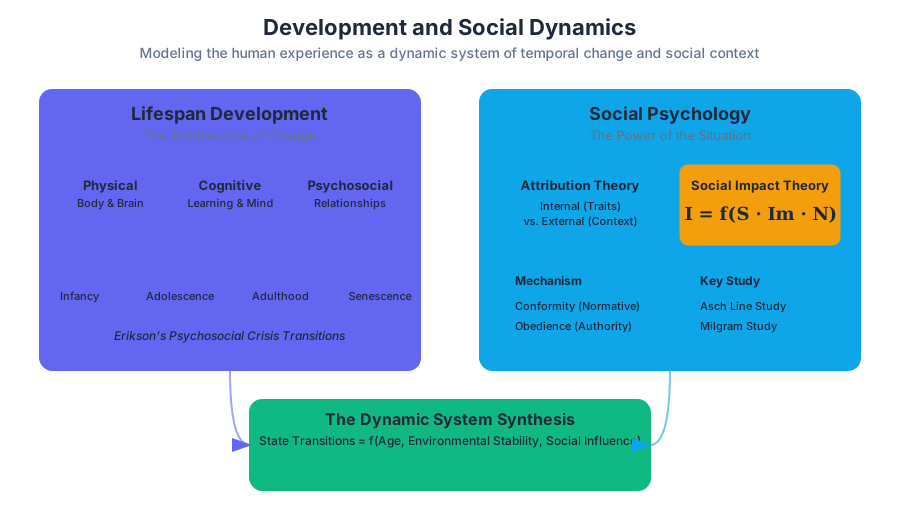
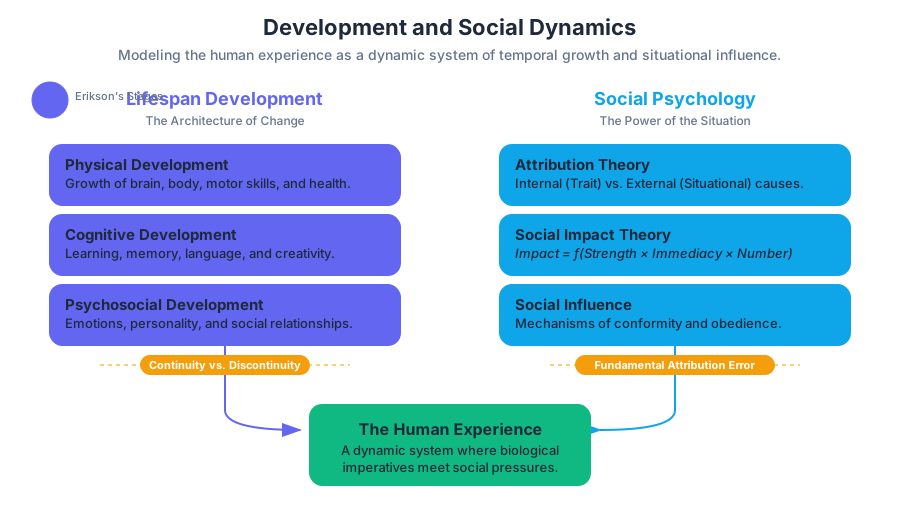
The study of human behavior is fundamentally a study of change and interaction. Development and Social Dynamics represents the intersection of temporal progression—how an organism evolves from conception to senescence—and the contextual field—how that organism interacts with, influences, and is influenced by its social environment. This domain moves beyond static descriptions of behavior to model the human experience as a dynamic system influenced by biological imperatives, cognitive schemas, and socio-cultural pressures.
Lifespan Development: The Architecture of Change
Lifespan Development is the scientific study of development through stages: physical, cognitive, and psychosocial. Unlike earlier models that focused almost exclusively on childhood, modern developmental psychology views the entire lifespan as a period of significant change.
The Three Domains of Development
- Physical Development: Growth and changes in the body and brain, the senses, motor skills, and health and wellness.
- Cognitive Development: Learning, attention, memory, language, thinking, reasoning, and creativity.
- Psychosocial Development: Emotions, personality, and social relationships.
The Continuity vs. Discontinuity Debate: A core theoretical conflict regarding whether development is a cumulative process, gradually improving on existing skills (continuity), or whether it takes place in unique stages at specific times or ages (discontinuity).
Theoretical Frameworks: Erikson and Piaget
The field is dominated by stage theories, most notably Erikson’s Psychosocial Theory and Piaget’s Cognitive Theory. Erikson proposed that personality development occurs throughout the lifespan in eight distinct stages, each characterized by a "psychosocial crisis."
| Stage | Age (Years) | Psychosocial Crisis | Virtue Gained |
|---|---|---|---|
| 1 | 0–1 | Trust vs. Mistrust | Hope |
| 2 | 1–3 | Autonomy vs. Shame/Doubt | Will |
| 3 | 3–6 | Initiative vs. Guilt | Purpose |
| 4 | 6–12 | Industry vs. Inferiority | Competence |
| 5 | 12–18 | Identity vs. Role Confusion | Fidelity |
| 6 | 18–40 | Intimacy vs. Isolation | Love |
| 7 | 40–65 | Generativity vs. Stagnation | Care |
| 8 | 65+ | Integrity vs. Despair | Wisdom |
Implementation: Modeling Developmental State Transitions
In computational psychology, we can model these stages as a state machine where transitions are dependent on the resolution of specific environmental variables.
class HumanSubject:
    def __init__(self, age, environment_stability):
        self.age = age
        self.env_stability = environment_stability  # 0.0 to 1.0
        self.psychosocial_state = "Infancy"
        self.virtues = []

    def transition_stage(self):
        """
        Simulates the resolution of a psychosocial crisis.
        Success is a function of environmental stability and age.
        """
        if 0 <= self.age < 1:
            self.resolve_crisis("Trust vs Mistrust", threshold=0.5)
        elif 1 <= self.age < 3:
            self.resolve_crisis("Autonomy vs Shame", threshold=0.6)
        # ... additional stages ...

    def resolve_crisis(self, crisis_name, threshold):
        outcome = "Success" if self.env_stability > threshold else "Failure"
        print(f"Resolving {crisis_name}: {outcome}")
        if outcome == "Success":
            self.virtues.append(self.map_virtue(crisis_name))

    @staticmethod
    def map_virtue(crisis):
        mapping = {"Trust vs Mistrust": "Hope", "Autonomy vs Shame": "Will"}
        return mapping.get(crisis)

# Example: A subject in a high-stability environment
subject_alpha = HumanSubject(age=0.5, environment_stability=0.8)
subject_alpha.transition_stage()
Social Psychology: The Power of the Situation
Social Psychology examines how the presence of others—real, imagined, or implied—affects individual cognition and behavior. It shifts the unit of analysis from the individual's internal traits to the situation.
Attribution Theory and the Fundamental Attribution Error
Humans act as "naive scientists," constantly trying to explain the causes of behavior. Attribution is the process of assigning a cause to an event or behavior.
- Internal Attribution: Crediting behavior to personality traits (e.g., "He is late because he is lazy").
- External Attribution: Crediting behavior to situational factors (e.g., "He is late because of traffic").
Fundamental Attribution Error (FAE): The tendency to overemphasize internal factors as causes for others' behavior while underestimating situational factors.
Social Impact Theory
Bibb Latané’s Social Impact Theory provides a quasi-mathematical framework for understanding how social influence operates. The total impact ($I$) experienced by a target is a function of the Strength ($S$), Immediacy ($I_m$), and Number ($N$) of the sources.
I = f(S \cdot I_m \cdot N)
Where:
- $S$ (Strength): The status, power, or relationship of the source to the target.
- $I_m$ (Immediacy): The proximity in space or time.
- $N$ (Number): The quantity of people exerting influence.
Conformity and Obedience
Key experiments by Solomon Asch (conformity) and Stanley Milgram (obedience) demonstrated the terrifying power of social pressure. In the Asch studies, ~75% of participants conformed to an obviously wrong group consensus at least once.
| Experiment | Key Finding | Mechanism |
|---|---|---|
| Asch Line Study | Conformity to group pressure | Normative Social Influence |
| Milgram Study | Obedience to authority | Agentic State Theory |
| Stanford Prison | Role-based behavior | Deindividuation |
| Zajonc (1965) | Social Facilitation | Arousal-based performance |
Personality Theory: Mapping the Self
Personality Theory seeks to explain the consistent patterns of thought, feeling, and behavior that make a person unique. This field has evolved from the deterministic models of Freud to the data-driven "Big Five" trait models.
The Five-Factor Model (OCEAN)
Currently the most widely accepted trait theory, the Five-Factor Model uses factor analysis to categorize personality into five broad dimensions.
- Openness: Imagination, feelings, actions, ideas.
- Conscientiousness: Competence, self-discipline, thoughtfulness, goal-driven.
- Extroversion: Sociability, assertiveness, emotional expression.
- Agreeableness: Cooperative, trustworthy, good-natured.
- Neuroticism: Tendency toward unstable emotions.
Comparing Theoretical Perspectives
| Perspective | Key Proponents | Core Mechanism | View of Human Nature |
|---|---|---|---|
| Psychodynamic | Freud, Jung, Adler | Unconscious conflicts, childhood | Deterministic, often pessimistic |
| Humanistic | Rogers, Maslow | Self-actualization, free will | Optimistic, growth-oriented |
| Social-Cognitive | Bandura | Reciprocal determinism, modeling | Interactionist |
| Trait | McCrae, Costa | Genetic/Biological predispositions | Descriptive, stable |
Data Representation: Personality Vector Analysis
In modern psychometrics, personality is often represented as a high-dimensional vector. We can use SQL to query research databases for correlations between these traits and life outcomes.
-- Querying the relationship between Conscientiousness and Job Performance
SELECT
    subject_id,
    trait_conscientiousness_score,
    performance_rating,
    CASE
        WHEN trait_conscientiousness_score > 0.8 THEN 'High'
        WHEN trait_conscientiousness_score BETWEEN 0.4 AND 0.8 THEN 'Medium'
        ELSE 'Low'
    END AS conscientiousness_tier
FROM psych_research_data
WHERE age_group = 'Adult'
ORDER BY trait_conscientiousness_score DESC;
Diversity, Representation, and the Replication Crisis
A critical update in the Psychology 2e (OpenStax) curriculum is the integration of diversity and the acknowledgment of the Replication Crisis. Historically, psychology relied on WEIRD (Western, Educated, Industrialized, Rich, and Democratic) populations, which limited the generalizability of findings.
The Replication Crisis
In the early 2010s, researchers found that many classic social psychology findings could not be replicated. This led to a paradigm shift toward Open Science.
Open Science: The movement to make scientific research, data, and dissemination accessible to all levels of an inquiring society. It includes practices like pre-registration of studies and sharing raw datasets.
Diversity and Representation in Research
Representation is not just about ethics; it is about scientific accuracy. Cultural context influences everything from perception (e.g., the Müller-Lyer illusion) to social behavior (individualism vs. collectivism).
| Concept | Individualist Cultures (e.g., USA) | Collectivist Cultures (e.g., Japan) |
|---|---|---|
| Focus | Independence and personal achievement | Interdependence and group harmony |
| Attribution | More prone to Fundamental Attribution Error | More likely to consider situational context |
| Self-Concept | Defined by internal traits | Defined by social roles |
Implementation: Open Science Configuration
Modern researchers use tools like the Open Science Framework (OSF) to ensure transparency. Below is a conceptual YAML configuration for a reproducible research environment.
# Research Project Configuration
project_metadata:
  title: "Cross-Cultural Analysis of Social Loafing"
  version: 1.2.0
  license: "CC-BY-4.0"

data_management:
  raw_data: "data/raw_responses.csv"
  anonymization_protocol: "hash_subject_ids"
  public_access: true

reproducibility:
  environment: "conda_env.yml"
  pre_registration_id: "osf.io/example-123"
  analysis_script: "scripts/main_analysis.R"

demographics_check:
  required_diversity_index: 0.75
  target_populations: ["Sub-Saharan Africa", "East Asia", "Western Europe"]
Common Pitfalls in Developmental and Social Psychology
- The "Stage" Fallacy: Assuming that everyone moves through developmental stages at the exact same age. Stages are averages, not rigid deadlines.
- Cultural Blindness: Applying Western psychological constructs (like "self-esteem") to cultures where the construct may be defined differently or hold less significance.
- Hindsight Bias: The tendency to believe, after learning an outcome, that one would have foreseen it. This is rampant when studying social experiments like Milgram's.
- Correlation vs. Causation: In personality studies, finding that "Extroverts are happier" does not mean that being extroverted causes happiness; a third variable (like social support) might cause both.
Summary of Modern Psychometrics: DSM-5 and Beyond
The DSM-5 (Diagnostic and Statistical Manual of Mental Disorders, 5th Edition) represents the current standard for classifying psychological disorders, reflecting our evolving understanding of development and social dynamics.
- Developmental Focus: The DSM-5 organizes disorders based on their typical age of onset (e.g., Neurodevelopmental disorders are listed first).
- Dimensional Approach: Moving away from "Yes/No" diagnoses toward "Spectrums" (e.g., Autism Spectrum Disorder).
- Cultural Sensitivity: Includes a "Cultural Formulation Interview" to help clinicians understand the impact of culture on a patient's symptoms.
Mental Health, Disorders, and Therapy
Key concepts: DSM-5 · Psychological Disorders · Psychotherapy · Biomedical Therapy
A detailed look at psychological disorders using the DSM-5 framework and the various therapeutic approaches used to treat them.
Mental Health, Disorders, and Therapy: A Systems Engineering Perspective on the Human Mind
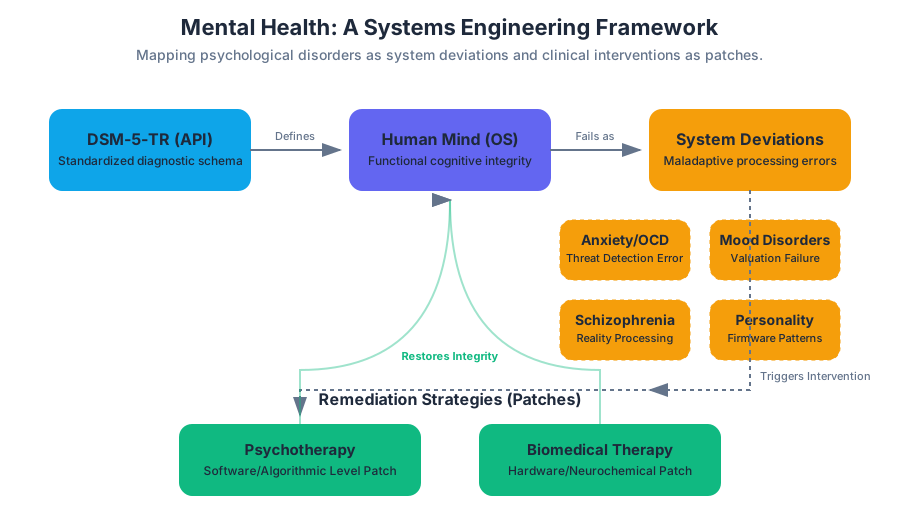
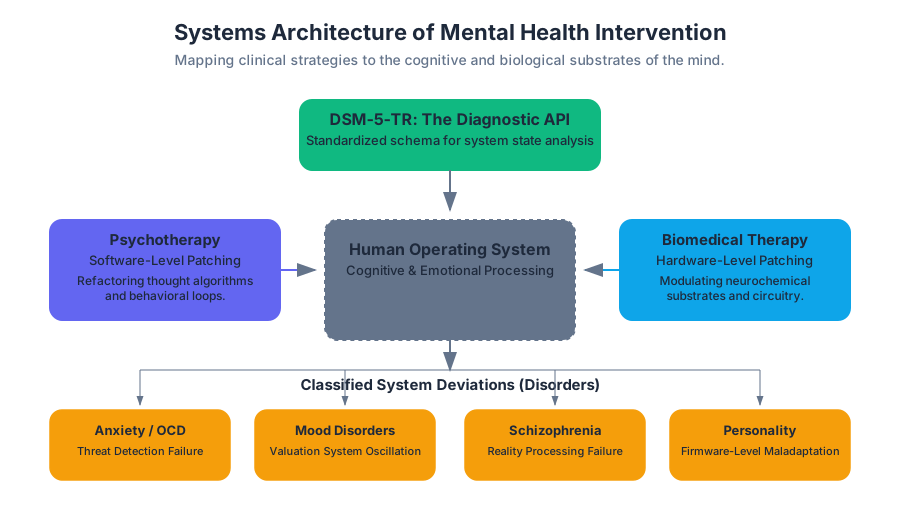
Mental health is the functional integrity of the human cognitive and emotional operating system. When we discuss Psychological Disorders, we are essentially describing persistent, maladaptive deviations from normative psychological processing that result in significant distress or impairment. To manage these deviations, the clinical field employs two primary "patching" strategies: Psychotherapy (addressing the software/algorithmic level of thought and behavior) and Biomedical Therapy (addressing the hardware/neurochemical substrate).
The Diagnostic Framework: DSM-5-TR
The Diagnostic and Statistical Manual of Mental Disorders (DSM-5-TR) serves as the authoritative "API documentation" for mental health professionals. Published by the American Psychiatric Association, it provides a standardized language and set of criteria for diagnosing mental disorders.
Evolution of the Schema
The DSM has evolved from a psychoanalytic, prose-heavy document (DSM-I) into a highly structured, evidence-based taxonomy. The current version, the DSM-5-TR (Text Revision), moved away from the previous "multiaxial system" to a non-axial documentation of diagnosis, reflecting a more integrated view of mental and physical health.
Definition: Psychological Disorder A syndrome characterized by clinically significant disturbance in an individual's cognition, emotion regulation, or behavior that reflects a dysfunction in the psychological, biological, or developmental processes underlying mental functioning.
| Feature | DSM-IV-TR (Legacy) | DSM-5 / DSM-5-TR (Modern) |
|---|---|---|
| Structure | Multiaxial (Axis I-V) | Non-axial (Unified diagnosis) |
| Approach | Categorical (Yes/No) | Increasing use of Dimensional scales |
| Organization | By onset age (Childhood vs. Adult) | Developmental lifespan approach |
| Key Change | Asperger's as distinct | Autism Spectrum Disorder (ASD) |
| Grief | "Bereavement Exclusion" for MDD | Exclusion removed; focus on clinical severity |
Taxonomy of Major Psychological Disorders
Disorders are categorized based on their primary symptomatic "output." Understanding these requires looking at both the phenomenological experience (what the patient feels) and the underlying systemic failure.
1. Anxiety and Obsessive-Compulsive Disorders
These disorders represent an over-active "threat detection" system. In Generalized Anxiety Disorder (GAD), the system is in a constant state of high-alert without a specific trigger. In Phobias, the trigger is hyper-specific. Obsessive-Compulsive Disorder (OCD) involves a "logic loop" where intrusive thoughts (obsessions) trigger repetitive behaviors (compulsions) to neutralize the perceived threat.
2. Mood Disorders: The Valuation System
Mood disorders affect the "hedonic tone" of the individual.
- Major Depressive Disorder (MDD): A persistent state of low energy, anhedonia (inability to feel pleasure), and negative cognitive bias.
- Bipolar Disorder: A system-level oscillation between extreme lows (depression) and pathological highs (Mania), characterized by pressured speech, decreased need for sleep, and grandiosity.
3. Schizophrenia: The Reality Processing Failure
Schizophrenia is a profound disintegration of thought, perception, and affect. It is characterized by Positive Symptoms (additions to reality, like hallucinations and delusions) and Negative Symptoms (subtractions from reality, like social withdrawal and flat affect).
4. Personality Disorders: The Firmware Level
These are enduring, inflexible patterns of inner experience and behavior that deviate markedly from cultural expectations. Because they are "ego-syntonic" (the person feels their behavior is normal), they are notoriously difficult to treat.
| Cluster | Key Characteristic | Examples |
|---|---|---|
| Cluster A | Odd, Eccentric | Paranoid, Schizoid, Schizotypal |
| Cluster B | Dramatic, Emotional, Erratic | Antisocial, Borderline, Histrionic, Narcissistic |
| Cluster C | Anxious, Fearful | Avoidant, Dependent, Obsessive-Compulsive (Personality) |
Implementing Diagnostic Logic
In modern clinical informatics, the criteria from the DSM-5 are often translated into screening algorithms. Below is a Python-based representation of how a screening tool for Major Depressive Disorder (based on PHQ-9 logic) might be implemented to determine if a full clinical interview is triggered.
class DiagnosticScreener:
    """
    Implements a simplified PHQ-9 (Patient Health Questionnaire)
    logic for Major Depressive Disorder screening.
    """
    def __init__(self, patient_id):
        self.patient_id = patient_id
        self.scores = []

    def record_response(self, frequency_score):
        # frequency_score: 0 (Not at all) to 3 (Nearly every day)
        if 0 <= frequency_score <= 3:
            self.scores.append(frequency_score)
        else:
            raise ValueError("Score must be between 0 and 3.")

    def calculate_severity(self):
        total = sum(self.scores)
        if total >= 20: return "Severe"
        if total >= 15: return "Moderately Severe"
        if total >= 10: return "Moderate"
        if total >= 5:  return "Mild"
        return "Minimal"

    def requires_intervention(self):
        # A score of 10+ is the standard clinical cutoff for further evaluation
        return sum(self.scores) >= 10

# Usage Example
patient_001 = DiagnosticScreener("P-882")
# Simulating responses to 9 questions
responses = [2, 3, 1, 2, 3, 0, 1, 2, 2]
for r in responses:
    patient_001.record_response(r)

print(f"Patient Severity: {patient_001.calculate_severity()}")
print(f"Trigger Clinical Interview: {patient_001.requires_intervention()}")
Psychotherapy: The Software Intervention
Psychotherapy, or "talk therapy," aims to modify the cognitive algorithms and behavioral patterns of the individual.
Cognitive-Behavioral Therapy (CBT)
CBT is the current "gold standard" for many disorders. It operates on the Cognitive Triad: Thoughts, Feelings, and Behaviors are interconnected. By changing one (usually thoughts or behaviors), you can force a state change in the others.
The Logic of Cognitive Restructuring
In CBT, we identify "Cognitive Distortions" (bugs in the logic) such as Catastrophizing or All-or-Nothing Thinking. The therapeutic process is akin to debugging code:
- Identify the Trigger (Input)
- Identify the Automatic Thought (Processing)
- Evaluate the Evidence (Unit Testing)
- Generate an Alternative Thought (Refactoring)
Mathematical Representation of Behavioral Activation
In treating depression, we often use Behavioral Activation. We can model the probability of a "Positive State" ($P(S_+)$) as a function of the frequency of rewarding activities ($A$) and the reinforcement sensitivity ($k$):
P(S_+) = \frac{1}{1 + e^{-k(A - \theta)}}
Where $\theta$ is the threshold of activity required to overcome anhedonia.
Biomedical Therapy: The Hardware Intervention
When the "software" interventions are insufficient, or when the disorder has a clear biological etiology (like the dopamine dysregulation in Schizophrenia), we turn to biomedical interventions.
Psychopharmacology
Drugs act as exogenous modulators of synaptic transmission. They generally work via four mechanisms:
- Agonism: Mimicking a neurotransmitter.
- Antagonism: Blocking a receptor.
- Reuptake Inhibition: Preventing the "recycling" of neurotransmitters, keeping them in the synapse longer.
- Enzyme Inhibition: Preventing the breakdown of neurotransmitters.
| Drug Class | Mechanism | Primary Use Case | Example |
|---|---|---|---|
| SSRIs | Selective Serotonin Reuptake Inhibition | Depression, Anxiety | Fluoxetine (Prozac) |
| Benzodiazepines | GABA Agonism (Inhibitory) | Acute Anxiety, Panic | Diazepam (Valium) |
| Antipsychotics | Dopamine (D2) Antagonism | Schizophrenia, Bipolar | Haloperidol, Risperidone |
| Mood Stabilizers | Ion channel modulation / GSK-3 inhibition | Bipolar Disorder | Lithium Carbonate |
Advanced Biological Interventions
For treatment-resistant cases, clinicians may use:
- Electroconvulsive Therapy (ECT): Inducing a controlled seizure to "reboot" brain chemistry. Highly effective for severe depression.
- Transcranial Magnetic Stimulation (TMS): Using magnetic fields to stimulate specific cortical regions (e.g., the prefrontal cortex).
- Deep Brain Stimulation (DBS): Surgical implantation of electrodes (the "pacemaker for the brain").
Data Integrity and the Replication Crisis
A critical component of modern psychology (as emphasized in the OpenStax 2e update) is the Replication Crisis. Many classic studies in social and clinical psychology failed to replicate when subjected to rigorous, large-scale testing. This has led to a shift toward:
- Open Educational Resources (OER): Ensuring transparent access to data.
- Pre-registration: Forcing researchers to state their hypotheses and analysis plans before gathering data to prevent "p-hacking."
- Diversity and Representation: Recognizing that a "standard" human model based solely on WEIRD (Western, Educated, Industrialized, Rich, and Democratic) populations is scientifically insufficient.
Clinical Workflow: A Real-World Pipeline
In a modern clinical setting, the process of moving from "distress" to "remission" follows a structured pipeline. This can be viewed as a series of state transitions.
# Hypothetical CLI for a Clinical Management System (CMS)
# Querying the status of a patient in the treatment pipeline

$ cms-tool --patient-id P-882 --status
[STATUS]: Initial Assessment Complete
[DIAGNOSIS]: F33.1 (Major depressive disorder, recurrent, moderate)
[CURRENT_PLAN]:
  - Modality: CBT (Weekly)
  - Pharmacotherapy: Sertraline 50mg QD
[ADHERENCE]: 85%
[OUTCOME_METRICS]:
  - PHQ-9 Delta: -4 points (Improving)
  - GAD-7 Delta: -2 points (Stable)
[NEXT_STEP]: Review medication dosage in 14 days.
Common Pitfalls in Understanding Mental Health
- The "Chemical Imbalance" Myth: While neurotransmitters are involved, it is rarely as simple as a "low level" of a single chemical. It is usually a complex failure of neural circuits and feedback loops.
- The Dunning-Kruger Effect in Diagnosis: Self-diagnosis via internet "symptom checkers" often ignores the Differential Diagnosis—the process of ruling out other conditions (like thyroid issues causing depression-like symptoms).
- Stigma vs. Science: Viewing mental illness as a "character flaw" rather than a systemic biological/psychological dysfunction.
Summary of Treatment Efficacy
Research indicates that for many moderate-to-severe conditions, a Combined Approach (Psychotherapy + Biomedical Therapy) yields the best long-term outcomes. Psychotherapy provides the skills for long-term "maintenance," while medication can lower the "activation energy" required for the patient to engage in therapy.
The Biopsychosocial Model The most robust framework for understanding mental health. It posits that health and illness are determined by a dynamic interaction between Biological (genes, neurochemistry), Psychological (stress, trauma, patterns of thought), and Social (socioeconomic status, culture, relationships) factors.
Further Reading and Resources
- DSM-5-TR Diagnostic Criteria - American Psychiatric Association.
- The Replication Crisis in Psychology - Open Science Framework (OSF).
- Psychology 2e - OpenStax, Rice University.
Source Materials
Study Psychology 2e with AI — Free on Lykke
Sign up for free to generate personalized flashcards, quizzes, and study guides from this course. Chat with an AI tutor that knows the material.
Get Started FreeView this course wiki on Lykke · Browse all public course wikis