Organic Chemistry: Structure, Reactivity, and the Functional Group Approach
Institution: MIT
1 study materials · 4 sections
This course explores the comprehensive 'Organic Chemistry: A Tenth Edition' by John McMurry, provided through OpenStax. It utilizes a functional group approach to simplify the study of organic molecules, making it suitable for a standard two-semester college sequence. The course emphasizes the accessibility of Open Educational Resources (OER) while providing updated scientific applications and clear pedagogical structures.
Course Sections
Introduction to OpenStax and OER
Key concepts: Open Educational Resources (OER) · Accessibility · Peer-Reviewed Content
An overview of the OpenStax mission and the role of Open Educational Resources (OER) in modern higher education.
Introduction to OpenStax and OER
The landscape of higher education is currently undergoing a structural shift driven by the tension between rising tuition costs and the digital democratization of information. At the center of this movement is OpenStax, a non-profit pedagogical technology initiative based at Rice University, and the broader framework of Open Educational Resources (OER). Unlike traditional publishing models that rely on restrictive copyright and high-margin pricing, OER leverages open-source philosophy to provide high-quality, peer-reviewed instructional materials at zero cost to the end-user.
The Architecture of Open Educational Resources (OER)
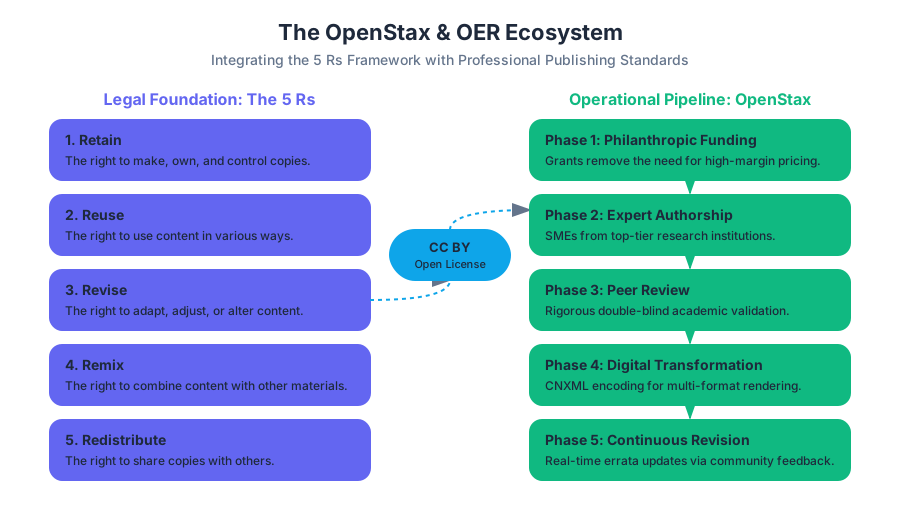
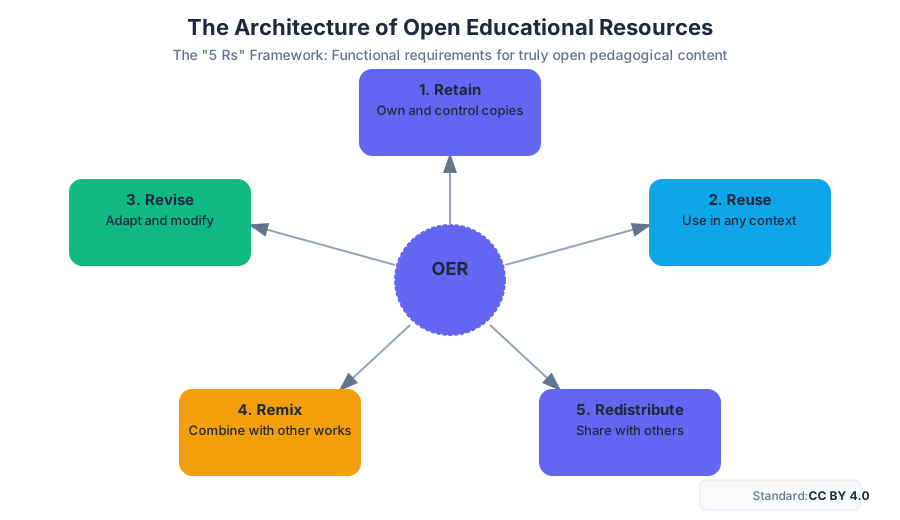
At its core, Open Educational Resources (OER) are defined not just by their price (gratis), but by the legal permissions granted to the user (libre). The conceptual foundation of OER is built upon the "5 Rs," a framework developed by David Wiley that defines the functional requirements for a resource to be considered truly "open."
The 5 Rs Framework
| Permission | Description | Technical Implication |
|---|---|---|
| Retain | The right to make, own, and control copies of the content. | Users can download and host the files locally without DRM. |
| Reuse | The right to use the content in a wide range of ways. | Content can be used in a classroom, on a website, or in a video. |
| Revise | The right to adapt, adjust, modify, or alter the content. | Source files (e.g., LaTeX, XML) must be editable. |
| Remix | The right to combine the original or revised content with other material. | Modular content structures allow for "mashups" of different books. |
| Redistribute | The right to share copies of the original content, revisions, or remixes. | Users can legally distribute the material to peers or the public. |
Definition: Open Educational Resources (OER) Teaching, learning, and research materials in any medium—digital or otherwise—that reside in the public domain or have been released under an open license that permits no-cost access, use, adaptation, and redistribution by others with no or limited restrictions.
Licensing and Legal Frameworks
The primary mechanism for OER is Creative Commons (CC) licensing. While traditional copyright functions as "all rights reserved," CC licenses function as "some rights reserved," providing a standardized way for authors to grant the public permission to use their creative work under copyright law.
Comparison of Licensing Models
| License Type | Symbol | Commercial Use | Derivative Works | Attribution Required |
|---|---|---|---|---|
| Public Domain | CC0 | Yes | Yes | No |
| Attribution | CC BY | Yes | Yes | Yes |
| Attribution-ShareAlike | CC BY-SA | Yes | Yes (must use same license) | Yes |
| Attribution-NonCommercial | CC BY-NC | No | Yes | Yes |
| Traditional Copyright | © | No | No | N/A |
OpenStax typically utilizes the CC BY license, which is the most flexible for educators, requiring only that credit be given to the original creator while allowing for commercial use and the creation of derivative works (remixes).
The OpenStax Ecosystem: A Case Study in Scale
OpenStax (formerly Connexions) was founded by Dr. Richard Baraniuk in 1999. It has since evolved from a repository of modular "bricks" of information into a sophisticated publisher of core introductory textbooks. The OpenStax model is unique because it mirrors the production quality of "Big Three" publishers (Pearson, McGraw-Hill, Cengage) while maintaining a non-profit, open-access distribution model.
The Production Pipeline
To ensure that OER is not perceived as "low quality" due to its lack of a price tag, OpenStax employs a rigorous editorial workflow.
- Grant Funding: Initial development is funded by philanthropic organizations (e.g., Bill & Melinda Gates Foundation, William and Flora Hewlett Foundation).
- Expert Recruitment: Subject Matter Experts (SMEs) and lead authors are recruited from top-tier research institutions.
- Peer Review: Content undergoes double-blind peer review by dozens of professors in the field.
- Digital Transformation: Content is encoded in CNXML (a specialized XML schema) for multi-format rendering (PDF, HTML5, iBooks).
- Continuous Revision: Errata are reported by the community and updated in real-time in the digital versions.
Case Study: Organic Chemistry and the McMurry Transition
A landmark moment in the OER movement was the transition of John McMurry’s "Organic Chemistry" to the OpenStax platform. Historically, McMurry’s text was a dominant commercial force in chemistry education. The tenth edition was published through OpenStax as a tribute to the author's late son, marking a significant shift where a high-prestige, "gold standard" academic text moved from a proprietary model to a free, open-access model.
The Functional Group Approach
McMurry’s text is famous for its Functional Group Approach, which organizes the study of organic chemistry by the reactive parts of molecules rather than by reaction types. This pedagogical strategy is preserved in the OpenStax version, demonstrating that OER can maintain sophisticated instructional design while removing financial barriers.
Technical Implementation: Metadata and Discovery
For OER to be effective, it must be discoverable. OpenStax utilizes structured metadata to ensure its resources are indexable by Library Management Systems (LMS) and search engines.
# Example: A Python utility to validate OER Metadata (Schema.org/CreativeWork)
import json

def validate_oer_metadata(metadata_json):
    required_fields = ["name", "author", "license", "inLanguage", "learningResourceType"]
    content = json.loads(metadata_json)

    missing = [field for field in required_fields if field not in content]

    if missing:
        return False, f"Missing required OER metadata: {missing}"

    # Check for Creative Commons in license string
    if "creativecommons.org" not in content['license']:
        return False, "License must be a valid Creative Commons URL."

    return True, "Metadata is OER compliant."

# Example usage with OpenStax-style metadata
textbook_meta = """
{
    "name": "Organic Chemistry: Tenth Edition",
    "author": "John McMurry",
    "license": "https://creativecommons.org/licenses/by/4.0/",
    "inLanguage": "en",
    "learningResourceType": "Textbook",
    "publisher": "OpenStax"
}
"""

is_valid, message = validate_oer_metadata(textbook_meta)
print(f"Status: {is_valid}, Message: {message}")
Accessibility and Universal Design for Learning (UDL)
Accessibility in OER refers to two distinct but related concepts: Financial Accessibility (cost) and Functional Accessibility (disability access).
Financial Impact: The Economic Derivation
The economic benefit of OER can be modeled by calculating the "Student Savings Metric." If $S$ is the number of students, $C_{avg}$ is the average cost of a commercial textbook, and $A$ is the adoption rate:
$$Total Savings = \sum_{i=1}^{n} (S_i \times C_{avg, i}) \times A_i$$
Where $n$ represents the number of courses transitioning to OER. OpenStax has saved students an estimated $1.7 billion since 2012 using this model.
Functional Accessibility: WCAG 2.1 Compliance
OpenStax textbooks are designed to meet Web Content Accessibility Guidelines (WCAG) 2.1 Level AA. This involves:
- Screen Reader Compatibility: Using semantic HTML5 and ARIA labels.
- Alt-Text: Providing descriptions for complex chemical structures and diagrams.
- Color Contrast: Ensuring that text is readable for users with visual impairments.
- Keyboard Navigation: Allowing full site navigation without a mouse.
Technical Architecture: Content Delivery and Interoperability
OpenStax does not just provide PDFs; it provides a platform. The backend infrastructure must handle massive traffic while allowing for seamless integration into Learning Management Systems (LMS) like Canvas, Blackboard, and Moodle via the LTI (Learning Tools Interoperability) standard.
Content Representation: CNXML to HTML5
The source of truth for an OpenStax book is often an XML dialect. This allows for "single-source publishing," where one file generates multiple outputs.
<!-- Simplified CNXML fragment for a Chemistry definition -->
<term xmlns="http://cnx.rice.edu/cnxml" id="term-0001">
  <label>Functional Group</label>
  <meaning>
    An atom or group of atoms within a molecule that has similar
    chemical properties whenever it appears in various compounds.
  </meaning>
</term>
Integration via LTI
To integrate a textbook directly into a university's LMS, a "Tool Provider" (OpenStax) communicates with a "Tool Consumer" (the LMS).
# Conceptual CLI for syncing OER content to an LMS via an API
# This demonstrates how a sysadmin might automate content updates

oer-sync --source "openstax-org-chem-10e" \
         --target "canvas-lms-api" \
         --auth-token $CANVAS_TOKEN \
         --course-id "CHEM201" \
         --update-mode "delta" \
         --verbose
Common Pitfalls and Misconceptions
Despite the growth of OER, several misconceptions persist among faculty and administrators.
| Misconception | Reality |
|---|---|
| "Free means low quality" | OER like OpenStax undergo the same peer-review and professional editing as commercial texts. |
| "OER is only digital" | Most OER providers offer low-cost print-on-demand versions for students who prefer physical books. |
| "I can't change the content" | The "Revise" and "Remix" rights explicitly allow instructors to tailor the book to their syllabus. |
| "OER lacks supplements" | OpenStax provides PowerPoint slides, test banks, and online homework systems (often via partners). |
The "Inclusive Access" Trap
A common pitfall in the industry is Inclusive Access, a commercial model where students are automatically charged a "discounted" fee for digital access that expires at the end of the semester. Unlike OER, Inclusive Access does not grant the student ownership of the material and does not allow for the "5 Rs."
Conclusion: The Future of Open Pedagogy
The evolution of OpenStax and OER represents more than just a change in the price of books; it represents a shift toward Open Pedagogy. This is an instructional approach where students are not just consumers of information, but creators. Because the licenses allow for modification, students can participate in "renewable assignments"—such as updating a chapter of an OER or creating a video explanation—that benefit future students, rather than "disposable assignments" that are graded and discarded.
As AI and machine learning continue to integrate with educational technology, the open nature of OER data (unencumbered by restrictive APIs or paywalls) makes it the ideal training set for the next generation of intelligent tutoring systems and personalized learning paths.
The Functional Group Approach
Key concepts: Functional Groups · Pedagogical Framework · John McMurry
Understanding the pedagogical framework used by John McMurry to organize the study of organic chemistry.
The Functional Group Approach
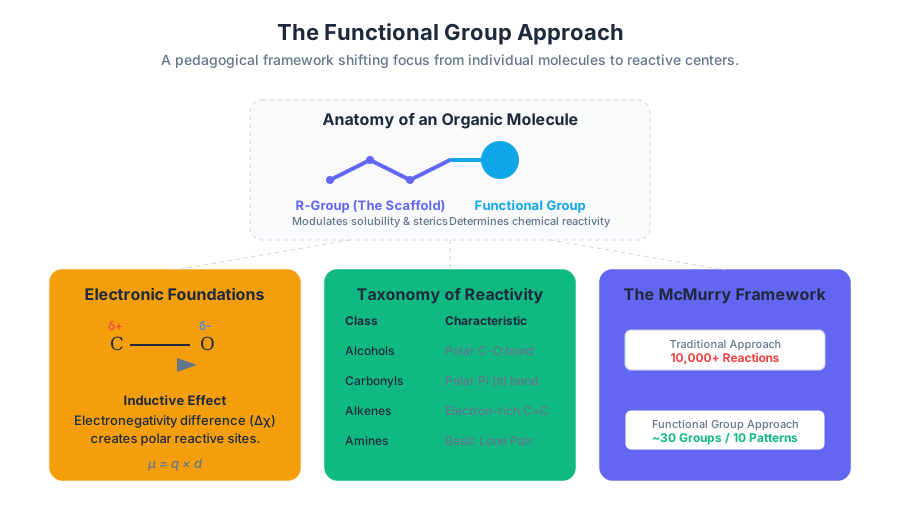
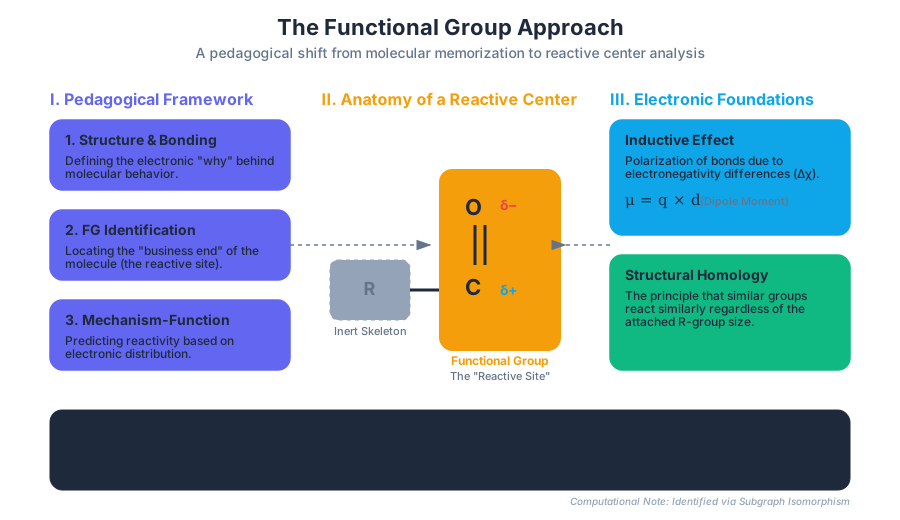
The Functional Group Approach represents the most significant pedagogical shift in the history of organic chemistry education. Pioneered and refined by educators like John McMurry, this framework moves away from the encyclopedic memorization of individual molecules and instead focuses on the "reactive centers" of organic compounds. By identifying specific clusters of atoms that exhibit consistent chemical behavior regardless of the larger molecular scaffold, students and researchers can predict the reactivity, physical properties, and spectroscopic signatures of millions of unique substances using a relatively small set of rules.
The Taxonomy of Reactivity: Defining the Functional Group
At its core, a functional group is a structural fragment within a molecule that causes the molecule's characteristic chemical reactions. While the carbon-carbon and carbon-hydrogen bonds of an alkane "skeleton" are relatively inert, the introduction of heteroatoms (like Oxygen, Nitrogen, or Halogens) or pi-bonds (double and triple bonds) creates regions of high or low electron density.
Definition: A functional group is an atom or a group of atoms that has similar chemical properties whenever it appears in various compounds. It is the site of most chemical reactivity in an organic molecule.
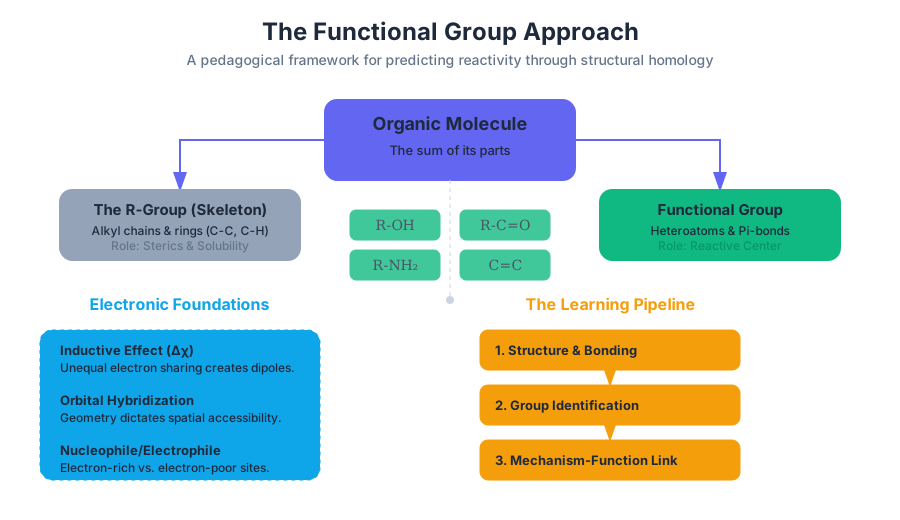
The functional group approach is governed by the principle of structural homology. This principle posits that the chemical environment of the functional group is the primary determinant of its reactivity, while the "R-group" (the rest of the molecule) serves primarily as a modulator of steric hindrance and solubility.
Table 1: Primary Functional Group Classifications
| Group Class | Structure (General) | Characteristic Bond | Typical Reactivity |
|---|---|---|---|
| Alcohols | $R-OH$ | $C-O$ (Polar) | Nucleophilic substitution, Oxidation |
| Carbonyls | $R-C(=O)-R'$ | $C=O$ (Polar Pi) | Nucleophilic addition |
| Carboxylic Acids | $R-COOH$ | $O-H$ (Acidic) | Acid-base, Nucleophilic Acyl Substitution |
| Amines | $R-NH_2$ | $C-N$ (Basic) | Nucleophilic attack, Hydrogen bonding |
| Alkenes | $R_2C=CR_2$ | $C=C$ (Pi bond) | Electrophilic addition |
The Pedagogical Framework of John McMurry
John McMurry’s Organic Chemistry (now in its 10th edition via OpenStax) codified the functional group approach as the standard for undergraduate education. Before this shift, organic chemistry was often taught by compound class (e.g., "The Chemistry of Coal Tar") or by reaction type in isolation. McMurry’s framework organizes the curriculum into a logical progression:
- Structure and Bonding: Establishing the electronic "why" behind the "what."
- Functional Group Identification: Learning to see the "business end" of the molecule.
- The Mechanism-Function Link: Demonstrating how the electronic nature of a group (e.g., the electrophilicity of a carbonyl carbon) dictates the mechanism (e.g., nucleophilic addition).
This approach reduces the cognitive load on the learner. Instead of learning 10,000 reactions, the student learns approximately 30 functional groups and 10 fundamental mechanistic patterns (nucleophilic substitution, electrophilic addition, etc.).
Electronic and Steric Foundations
The behavior of a functional group is not magic; it is the result of electronegativity and orbital hybridization.
The Inductive Effect and Dipole Moments
When atoms of different electronegativity form a covalent bond, the electrons are shared unequally. This creates a dipole moment ($\mu$), defined as:
$$\mu = q \times d$$
Where $q$ is the magnitude of the separated charge and $d$ is the distance between the charges. In a functional group like a hydroxyl group ($-OH$), the oxygen is significantly more electronegative than the carbon it is attached to ($\chi_O = 3.44$ vs $\chi_C = 2.55$). This induces a partial positive charge ($\delta+$) on the carbon, making it a target for nucleophiles.
Table 2: Electronegativity and Bond Polarity in Functional Groups
| Bond | $\Delta\chi$ (Electronegativity Diff) | Polarity Type | Common Functional Group |
|---|---|---|---|
| $C-H$ | 0.35 | Non-polar | Alkanes |
| $C-C$ | 0.00 | Non-polar | Alkanes / Skeleton |
| $C-Cl$ | 0.61 | Polar Covalent | Alkyl Halides |
| $C-O$ | 0.89 | Strongly Polar | Alcohols / Ethers |
| $C=O$ | 0.89 | Strongly Polar (Pi) | Aldehydes / Ketones |
Computational Identification of Functional Groups
In modern chemoinformatics, the functional group approach is operationalized through subgraph isomorphism algorithms. To a computer, a molecule is a graph where atoms are nodes and bonds are edges. Identifying a functional group involves searching the molecular graph for a specific pattern of nodes and edges.
The following Python example uses the RDKit library, the industry standard for handling chemical structures, to programmatically identify functional groups within a SMILES (Simplified Molecular Input Line Entry System) string.
from rdkit import Chem
from rdkit.Chem import Fragments

def analyze_molecule(smiles_string):
    """
    Analyzes a molecule to identify and count specific functional groups.
    Uses RDKit's fragment descriptors.
    """
    mol = Chem.MolFromSmiles(smiles_string)
    if not mol:
        return "Invalid SMILES"

    # Dictionary of functional group detection functions in RDKit
    analysis = {
        "Hydroxyl (-OH)": Fragments.fr_Al_OH(mol),
        "Carbonyl (Ketone)": Fragments.fr_ketone(mol),
        "Carboxylic Acid": Fragments.fr_COO(mol),
        "Amine (Primary)": Fragments.fr_NH2(mol),
        "Benzene Rings": Fragments.fr_benzene(mol)
    }

    print(f"Analysis for Molecule: {smiles_string}")
    print("-" * 30)
    for group, count in analysis.items():
        print(f"{group:20}: {count}")

# Example: Salicylic Acid (C7H6O3)
# SMILES: Oc1ccccc1C(=O)O
analyze_molecule("Oc1ccccc1C(=O)O")
The Logic of Chemical Transformation
How does the functional group approach predict a reaction? Consider the Grignard Reaction. The fundamental logic is not about the specific molecule, but about the interaction between a nucleophilic carbon (in the Grignard reagent) and an electrophilic carbon (in a carbonyl group).
Mathematical Derivation of Reactivity: The Hammett Equation
To quantify how substituents on a functional group affect reactivity, we use the Hammett Equation. This relates the equilibrium constants ($K$) or rate constants ($k$) for a series of reactions to a substituent constant ($\sigma$) and a reaction constant ($\rho$):
$$\log\left(\frac{k}{k_0}\right) = \rho\sigma$$
Where:
- $k$ is the rate constant for the substituted molecule.
- $k_0$ is the rate constant for the "reference" molecule (usually the unsubstituted benzene derivative).
- $\sigma$ measures the electron-withdrawing or donating ability of the substituent.
- $\rho$ measures the sensitivity of the reaction to those electronic effects.
\text{Reactivity Logic Example (Nucleophilic Addition):}
\begin{aligned}
1. & \quad \text{Identify Electrophile: } C=O \text{ (Carbonyl Carbon is } \delta+) \\
2. & \quad \text{Identify Nucleophile: } R-MgX \text{ (R group is } \delta-) \\
3. & \quad \text{Mechanism: } R:^- \rightarrow C=O \text{ (Nucleophilic attack)} \\
4. & \quad \text{Result: } \text{Formation of a new } C-C \text{ bond and an Alkyloxide.}
\end{aligned}
Common Pitfalls in the Functional Group Approach
While powerful, the functional group approach can lead to errors if the "R-group" is ignored entirely.
- Steric Hindrance: A functional group may be electronically "ready" to react, but physically inaccessible. For example, a tertiary alkyl halide ($R_3C-X$) cannot undergo $S_N2$ reactions because the central carbon is shielded by bulky R-groups.
- Electronic Conjugation: If a functional group is adjacent to a pi-system (like a benzene ring), its reactivity changes. An alcohol attached to benzene (a phenol) is $10^{10}$ times more acidic than a standard alcohol like ethanol.
- Solvent Effects: The "characteristic properties" of a group can be radically altered by the solvent. A carboxylate is a strong nucleophile in DMSO but a weak one in water due to hydrogen bonding.
Table 3: Steric vs. Electronic Effects
| Feature | Influence Type | Example | Impact on Reactivity |
|---|---|---|---|
| Inductive Effect | Electronic | Fluorine atom nearby | Increases acidity of -COOH |
| Resonance | Electronic | Lone pair on Nitrogen | Decreases basicity of Amides |
| Steric Bulk | Physical | tert-Butyl group | Blocks nucleophilic attack |
| Protic Solvent | Environmental | Water/Ethanol | Stabilizes ions, slows $S_N2$ |
The OpenStax Transition and Global Accessibility
The move of McMurry's Organic Chemistry to OpenStax (Rice University) marks a milestone in Open Educational Resources (OER). By releasing the 10th edition under a Creative Commons license, the "Functional Group Approach" is no longer gated by a $300 textbook price tag.
This transition ensures that the systematic logic of organic chemistry is available to a global audience. The 10th edition specifically includes updated "Chemistry in Context" modules, linking functional group behavior to metabolic pathways (biochemistry) and polymer science (materials engineering).
Real-World Usage: Command Line Chemical Conversion
In professional labs, scientists use tools like Open Babel to convert and manipulate molecules based on their functional groups.
# Convert a molecule from SMILES to a 3D structure (SDF)
# and automatically add hydrogens based on functional group valency
obabel -:"CC(=O)Oc1ccccc1C(=O)O" -osdf -O aspirin.sdf --gen3d

# Search a directory of chemical files for molecules containing
# a specific functional group (e.g., a carboxylic acid)
obgrep "C(=O)[OH]" *.sdf
Summary of the Systematic Workflow
To master organic chemistry via the McMurry method, one follows a repeatable pipeline for every new molecule encountered:
- Scan for Heteroatoms: Locate O, N, S, P, or Halogens.
- Identify Pi Systems: Locate double or triple bonds.
- Assign the Group Name: Use IUPAC nomenclature rules (e.g., -one for ketones, -ol for alcohols).
- Determine Polarity: Draw the $\delta+$ and $\delta-$ vectors.
- Predict Mechanism: Match the nucleophilic/electrophilic sites with potential reagents.
Variations and Extensions: Beyond Simple Groups
As chemistry advances, the definition of a functional group expands into Bioisosteres and Protective Groups.
- Bioisosteres: These are atoms or groups that possess near-equal molecular shapes and volumes, and exhibit similar physical properties. In drug design, a carboxylic acid might be replaced with a tetrazole ring. They look different, but within the "Functional Group Approach," they serve the same purpose: providing a localized acidic proton.
- Protecting Groups: Sometimes a chemist wants to react one part of a molecule but not another. They will "mask" a functional group (e.g., turning an alcohol into a silyl ether) to temporarily change its reactivity.
Theorem of Orthogonality: In complex synthesis, two functional groups are considered orthogonal if one can be reacted or protected without affecting the other, a principle that relies entirely on the distinct electronic signatures of those groups.
Organic Structure and Reactivity
Key concepts: Molecular Structure · Chemical Bonding · Reaction Mechanisms
Foundational concepts regarding how organic molecules are built and how they interact.
Organic Structure and Reactivity
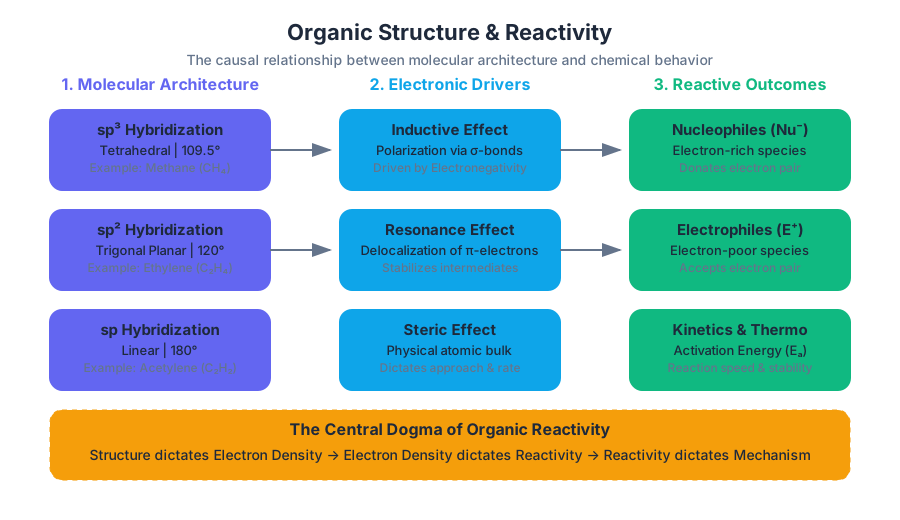
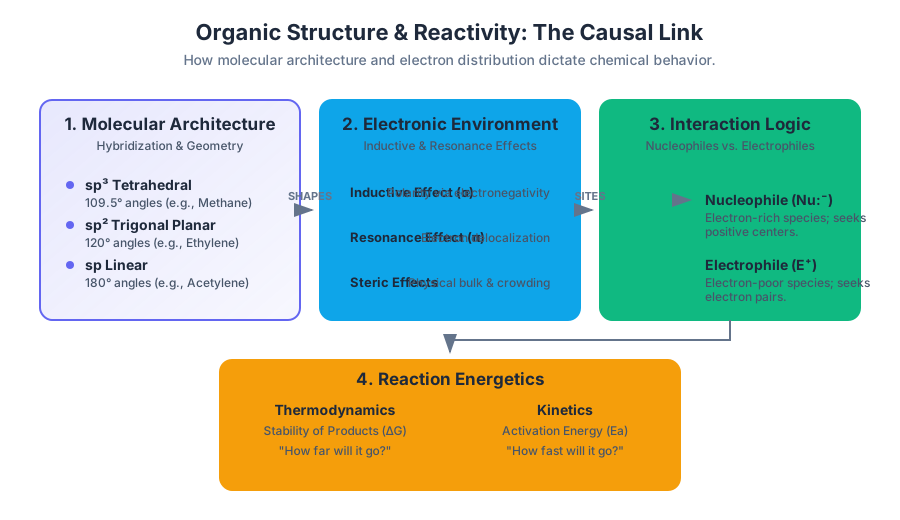
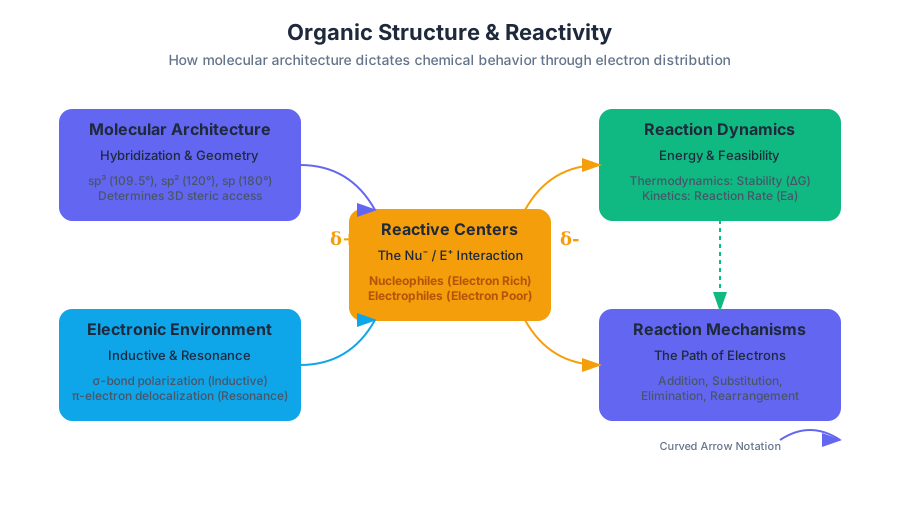
Organic chemistry is the study of carbon-based compounds, but more fundamentally, it is the study of how molecular architecture dictates chemical behavior. The relationship between Organic Structure and Reactivity is not merely correlative; it is causal. By understanding the distribution of electrons within a molecule's framework, we can predict with high precision how that molecule will interact with others, how much energy is required to transform it, and what the three-dimensional shape of the resulting product will be.
Molecular Structure: The Architecture of Carbon
At the heart of organic chemistry lies the unique versatility of the carbon atom. With four valence electrons, carbon can form stable covalent bonds with itself and a variety of heteroatoms (N, O, S, P, Halogens), leading to a nearly infinite array of structural possibilities.
Atomic Orbitals and Hybridization
To explain the observed geometries of organic molecules (like the 109.5° bond angles in methane), we utilize the concept of Orbital Hybridization. This is a mathematical mixing of atomic orbitals ($s$ and $p$) to form new hybrid orbitals that better represent the electron density in a bonded state.
Definition: Hybridization The process of mixing atomic orbitals into new hybrid orbitals (with different energies, shapes, etc., than the component atomic orbitals) suitable for the pairing of electrons to form chemical bonds in valence bond theory.
| Hybridization | Geometry | Bond Angle | Composition | Example |
|---|---|---|---|---|
| sp³ | Tetrahedral | 109.5° | 25% s, 75% p | Methane ($CH_4$), Ethane |
| sp² | Trigonal Planar | 120° | 33% s, 67% p | Ethylene ($C_2H_4$), Benzene |
| sp | Linear | 180° | 50% s, 50% p | Acetylene ($C_2H_2$), Nitriles |
Stereochemistry and Conformation
Structure is not static. Molecules possess Conformational Flexibility (rotation around single bonds) and Stereoisomerism (fixed spatial arrangements). The distinction between Enantiomers (non-superimposable mirror images) and Diastereomers is critical in pharmacology, where one "hand" of a molecule may cure a disease while the other is inert or toxic.
Chemical Bonding: The Force of Interaction
Bonding in organic chemistry is primarily covalent, characterized by the sharing of electron pairs. However, the "sharing" is rarely equal.
Electronegativity and Dipole Moments
The unequal sharing of electrons, driven by differences in Electronegativity ($\chi$), creates Polar Covalent Bonds. This polarity is the primary driver of reactivity, as it creates regions of high electron density (Nucleophiles) and low electron density (Electrophiles).
| Property | Description | Impact on Reactivity |
|---|---|---|
| Inductive Effect | Polarization through $\sigma$-bonds due to electronegativity. | Stabilizes/destabilizes charges; affects $pK_a$. |
| Resonance Effect | Delocalization of $\pi$-electrons across multiple atoms. | Major factor in stability and site-selectivity. |
| Steric Effect | Physical bulk of atoms preventing proximity. | Dictates reaction rates and "forbidden" pathways. |
Resonance and Delocalization
When a single Lewis structure cannot adequately describe a molecule, we use Resonance. Resonance is not a "flipping" between states, but a weighted average (hybrid) of all contributing structures.
# Example: Using RDKit to analyze molecular properties
# and identify potential reactive centers via Gasteiger Charges.

from rdkit import Chem
from rdkit.Chem import AllChem

def analyze_molecular_reactivity(smiles_string):
    # Load molecule from SMILES
    mol = Chem.MolFromSmiles(smiles_string)
    mol = Chem.AddHs(mol)

    # Generate 3D coordinates
    AllChem.EmbedMolecule(mol, AllChem.ETKDG())

    # Calculate Gasteiger Partial Charges (Inductive effects)
    AllChem.ComputeGasteigerCharges(mol)

    print(f"Reactivity Analysis for: {smiles_string}")
    print(f"{'Atom':<10} {'Element':<10} {'Partial Charge':<15}")

    for atom in mol.GetAtoms():
        charge = float(atom.GetProp('_GasteigerCharge'))
        print(f"{atom.GetIdx():<10} {atom.GetSymbol():<10} {charge:>15.4f}")

# Analyze Acetic Acid (CH3COOH)
analyze_molecular_reactivity("CC(=O)O")
Reaction Mechanisms: The Path of Electrons
A Mechanism is a step-by-step accounting of which bonds break, which bonds form, and in what order. We use "curved arrow notation" to track the movement of electron pairs.
Nucleophiles and Electrophiles
The fundamental "logic" of organic chemistry is the interaction between an electron-rich species and an electron-poor species.
- Nucleophile ($Nu^-$): A "nucleus-loving" species. It has a pair of electrons available to donate (e.g., $OH^-$, $NH_3$, $\pi$-bonds).
- Electrophile ($E^+$): An "electron-loving" species. It is electron-deficient and seeks an electron pair (e.g., $H^+$, carbocations, carbonyl carbons).
Thermodynamics vs. Kinetics
A reaction might be energetically favorable (Exergonic, $-\Delta G$) but proceed so slowly it is effectively non-existent.
- Thermodynamics: Tells us the stability of products relative to reactants ($K_{eq}$).
- Kinetics: Tells us the speed of the reaction ($k$) and the height of the Activation Energy ($E_a$).
The Hammond Postulate The transition state of a reaction resembles the species (reactant, intermediate, or product) to which it is closest in energy. In an endergonic step, the transition state resembles the product; in an exergonic step, it resembles the reactant.
The Four Fundamental Mechanisms
Most organic reactions can be categorized into four broad types:
| Mechanism Type | Description | Key Feature |
|---|---|---|
| Addition | Two reactants combine to form one product. | Typical of alkenes and alkynes. |
| Elimination | One reactant splits into two products. | Formation of $\pi$-bonds. |
| Substitution | One group is replaced by another. | $S_N1$ and $S_N2$ pathways. |
| Rearrangement | Atoms reorganize within the same molecule. | Carbocation shifts (Wagner-Meerwein). |
Deep Dive: Substitution Mechanisms ($S_N1$ vs $S_N2$)
The competition between $S_N1$ and $S_N2$ is the classic example of how structure dictates mechanism.
$S_N2$ (Substitution Nucleophilic Bimolecular)
- Mechanism: Concerted (one step). The nucleophile attacks from the "backside" while the leaving group departs.
- Stereochemistry: Inversion of configuration (Walden Inversion).
- Kinetics: Rate = $k[Substrate][Nucleophile]$.
- Preference: Primary ($1^\circ$) substrates due to low steric hindrance.
$S_N1$ (Substitution Nucleophilic Unimolecular)
- Mechanism: Stepwise. The leaving group departs first, forming a Carbocation Intermediate.
- Stereochemistry: Racemization (mixture of configurations).
- Kinetics: Rate = $k[Substrate]$.
- Preference: Tertiary ($3^\circ$) substrates due to carbocation stability via hyperconjugation.
\begin{aligned}
&\text{Rate Law for } S_N2: v = k \cdot [R\text{-}X] \cdot [Nu^-] \\
&\text{Rate Law for } S_N1: v = k \cdot [R\text{-}X] \\
&\text{Arrhenius Equation: } k = A e^{-\frac{E_a}{RT}}
\end{aligned}
Common Pitfalls and Misconceptions
- Confusing Basicity and Nucleophilicity: While related, basicity is a thermodynamic property (affinity for protons), while nucleophilicity is a kinetic property (rate of attack on carbon). A bulky base like Potassium tert-butoxide is a strong base but a poor nucleophile due to steric hindrance.
- Ignoring Solvent Effects: Protic solvents (like water or ethanol) can hydrogen-bond to nucleophiles, "caging" them and reducing their reactivity in $S_N2$ reactions. Aprotic solvents (like DMSO or acetone) are preferred for $S_N2$.
- Resonance vs. Equilibrium: Students often mistake resonance arrows ($\leftrightarrow$) for equilibrium arrows ($\rightleftharpoons$). Resonance structures are not real, distinct molecules; they are mathematical descriptions of a single, hybrid electronic state.
Practical Application: Computational Chemistry and Synthesis
In modern industrial settings, we no longer rely solely on intuition. We use Density Functional Theory (DFT) and Molecular Dynamics (MD) to simulate the transition states of reactions before ever entering the lab.
# Example: Configuration for an ORCA Quantum Chemistry Calculation
# This setup optimizes the geometry of a transition state for a substitution reaction.

! RKS B3LYP 6-31G(d) Opt Freq
%pal nprocs 4 end

* xyz 0 1
C   0.0000   0.0000   0.0000
H   0.0000   0.0000   1.0800
H   1.0200   0.0000  -0.3600
H  -0.5100   0.8800  -0.3600
Cl  0.0000  -1.8000   0.0000
Br  0.0000   2.2000   0.0000
*
Summary of Structure-Reactivity Relationships
The reactivity of an organic molecule is a function of its Electronic Environment and its Steric Profile.
- Electronic: Is there a dipole? Is there resonance stabilization? Is the intermediate a stable carbocation?
- Steric: Can the reagents physically reach the reactive site? Is the transition state too crowded?
By mastering these two dimensions, one can predict the outcome of reactions involving millions of different compounds using a handful of fundamental principles.
Study Guide: Organic Structure and Reactivity
1. Core Vocabulary
- Hybridization: The mixing of atomic orbitals to form bonding orbitals.
- Nucleophile: Electron-pair donor ("Lewis Base").
- Electrophile: Electron-pair acceptor ("Lewis Acid").
- Inductive Effect: Electron withdrawal or donation through sigma bonds.
- Resonance: Delocalization of electrons through pi systems.
- Steric Hindrance: Slowing of a reaction due to bulky groups blocking access.
2. Key Skills to Master
- Arrow Pushing: Always draw arrows from high electron density (lone pair or bond) to low electron density (positive charge or partial positive).
- Identifying Chiral Centers: Locate carbons with four distinct groups.
- Predicting $S_N1$ vs $S_N2$: Look at the substrate (1° vs 3°), the strength of the nucleophile, and the solvent.
- Drawing Resonance Structures: Move only pi electrons and lone pairs; never move atoms.
3. Critical Equations
- Formal Charge: $FC = (\text{Valence } e^-) - (\text{Non-bonding } e^-) - \frac{1}{2}(\text{Bonding } e^-)$
- Gibbs Free Energy: $\Delta G = \Delta H - T\Delta S$
- Relationship to Equilibrium: $\Delta G^\circ = -RT \ln K_{eq}$
4. Common Reaction Patterns
- Alkenes: React as nucleophiles (addition reactions).
- Carbonyls: The carbon is a strong electrophile (nucleophilic attack).
- Alcohols: Can act as nucleophiles or be converted into leaving groups.
Scientific Applications and Modern Updates
Key concepts: Modern Applications · Scientific Literacy · Updated Research
Exploring the 10th edition's focus on contemporary scientific applications and updated research.
Scientific Applications and Modern Updates
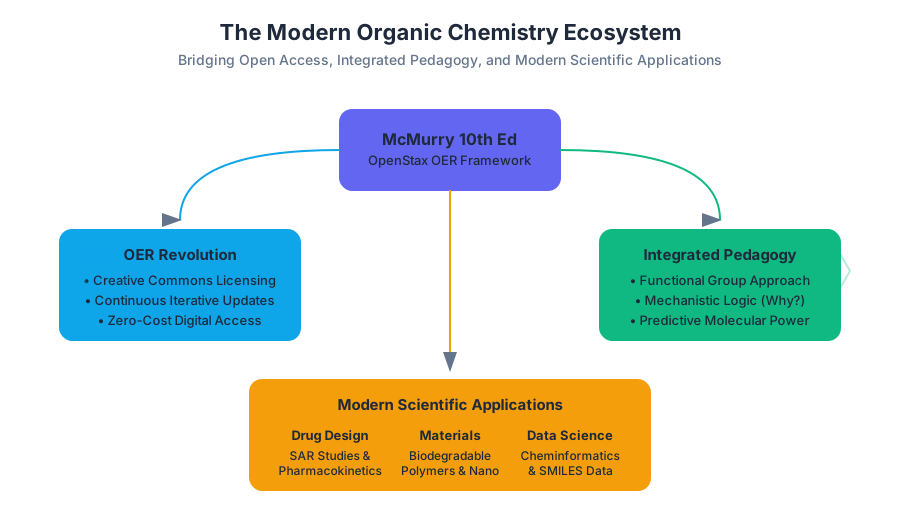
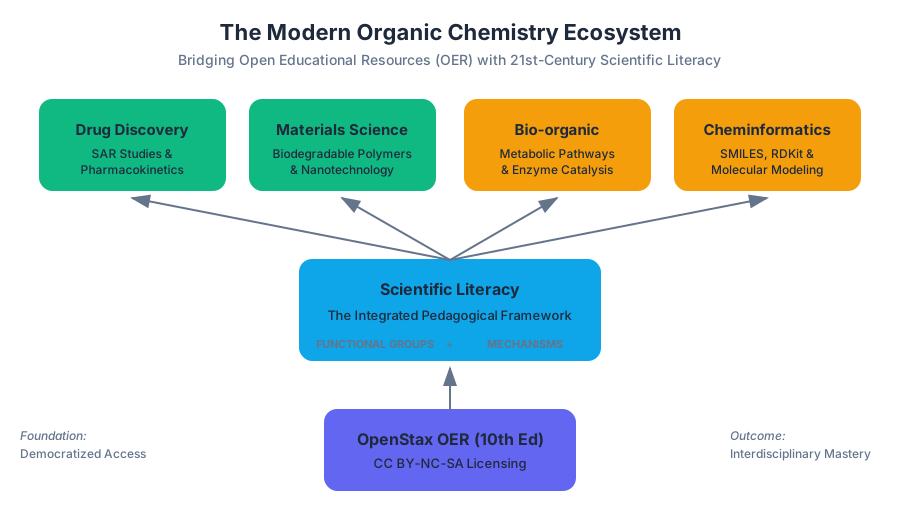
The publication of the 10th edition of John McMurry’s Organic Chemistry through OpenStax marks a pivotal moment in chemical education. This transition from a traditional proprietary model to an Open Educational Resource (OER) framework does not merely change the price tag; it fundamentally alters the delivery, accessibility, and currency of scientific information. In the modern era, organic chemistry is no longer a static collection of 19th-century reactions but a dynamic, interdisciplinary engine driving advancements in molecular biology, materials science, and green engineering.
The OER Revolution and Scientific Literacy
The shift toward Open Educational Resources (OER) is driven by the need for "Scientific Literacy" in a globalized economy. By utilizing Creative Commons Licensing, the 10th edition allows for rapid updates that traditional print cycles could not sustain. This ensures that when a new Nobel-winning reaction (such as Click Chemistry) becomes standard practice, it can be integrated into the curriculum without a five-year wait for a new edition.
Defining Scientific Literacy in Chemistry
In the context of organic chemistry, Scientific Literacy is defined as the ability to:
- Interpret Molecular Architecture: Understanding how three-dimensional structure dictates macro-scale properties.
- Evaluate Reaction Efficiency: Moving beyond "does it work?" to "how sustainable is it?" (e.g., Atom Economy).
- Navigate Digital Chemical Data: Utilizing databases, SMILES strings, and computational modeling.
| Feature | Traditional Textbooks | OpenStax OER (10th Ed) |
|---|---|---|
| Cost to Student | $200 - $400 | $0 (Digital) / Low-cost (Print) |
| Update Frequency | 4–7 years | Continuous / Iterative |
| Accessibility | Physical/Proprietary E-reader | Web, PDF, Kindle, Print, Braille |
| Customization | Fixed content | "Remixable" by instructors |
| Licensing | All Rights Reserved | Creative Commons (CC BY-NC-SA) |
"The democratization of organic chemistry knowledge via OER ensures that the next generation of researchers is limited by their imagination and effort, rather than their financial ability to access foundational texts." — Pedagogical Insight
The Functional Group Approach: Modern Refinements
McMurry’s text is famous for its Functional Group Approach. While some curricula favor a purely mechanistic approach (organizing by reaction type like "Nucleophilic Substitution"), the functional group approach organizes the study of organic chemistry by the structural motifs that govern reactivity.
Why the Functional Group Approach Persists
- Predictive Power: If a student understands the carbonyl group in an aldehyde, they can predict its behavior in a complex steroid.
- Biological Relevance: Nature organizes itself by functional groups (amino acids, lipids, carbohydrates).
- Taxonomic Clarity: It provides a "filing system" for the thousands of reactions a student must master.
Comparison of Pedagogical Frameworks
| Framework | Organization Basis | Primary Strength | Common Criticism |
|---|---|---|---|
| Functional Group | Structural units (Alkenes, Alcohols, etc.) | Excellent for synthesis and identification. | Can lead to "rote memorization" if not linked to mechanism. |
| Mechanistic | Electron movement (SN1, E2, AdE) | Deep understanding of "why" reactions happen. | Students may lose the "big picture" of molecular classes. |
| Integrated | Hybrid of structure and mechanism | Balanced; used in McMurry 10th Ed. | Requires high cognitive load from the start. |
Modern Scientific Applications: Beyond the Bench
The 10th edition places a heavy emphasis on how organic chemistry interfaces with other disciplines. This is not "extra reading" but core content designed to show the Modern Applications of the theory.
1. Drug Design and Pharmacokinetics
Modern drug discovery relies on Structure-Activity Relationship (SAR) studies. Organic chemistry provides the tools to modify a "lead compound" to increase its efficacy or decrease its toxicity.
2. Polymer Science and Nanotechnology
The transition from petroleum-based plastics to biodegradable polymers is a major focus of modern research. Understanding the mechanism of ring-opening polymerization (ROP) or radical polymerization is essential for creating sustainable materials.
3. Metabolic Pathways (Bio-organic Chemistry)
Organic chemistry is the language of metabolism. The 10th edition bridges the gap between simple laboratory reactions and the complex enzymatic reactions of the Krebs cycle or glycolysis.
Computational Integration and Data Science
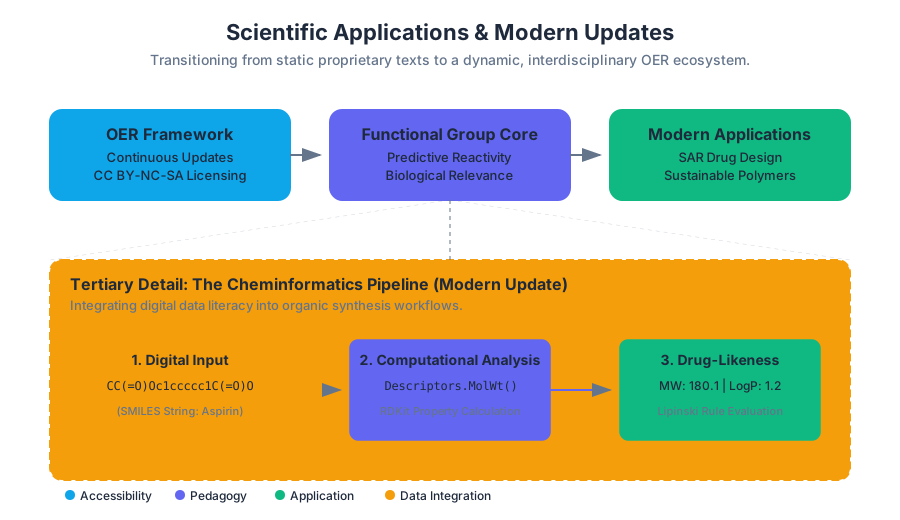
A significant "Modern Update" in the 10th edition is the acknowledgement of Cheminformatics. Modern organic chemists do not just use glassware; they use Python, R, and specialized software to predict molecular properties.
Implementation: Molecular Property Calculation
In the modern lab, we often calculate the Lipinski Rule of Five parameters to determine if a molecule is "drug-like." This involves calculating molecular weight, hydrogen bond donors/acceptors, and the partition coefficient (LogP).
# Example: Calculating Molecular Properties using RDKit
from rdkit import Chem
from rdkit.Chem import Descriptors

def analyze_molecule(smiles_string):
    """
    Analyzes a molecule's drug-likeness based on SMILES input.
    SMILES: Simplified Molecular Input Line Entry System
    """
    mol = Chem.MolFromSmiles(smiles_string)
    if not mol:
        return "Invalid SMILES"

    mw = Descriptors.MolWt(mol)
    logp = Descriptors.MolLogP(mol)
    h_donors = Descriptors.NumHDonors(mol)
    h_acceptors = Descriptors.NumHAcceptors(mol)

    print(f"Analysis for: {smiles_string}")
    print(f"Molecular Weight: {mw:.2f} Da")
    print(f"LogP (Lipophilicity): {logp:.2f}")
    print(f"H-Bond Donors: {h_donors}")
    print(f"H-Bond Acceptors: {h_acceptors}")

# Analyzing Ibuprofen
analyze_molecule("CC(C)CC1=CC=C(C=C1)C(C)C(=O)O")
Green Chemistry: The Sustainability Update
One of the most critical "Modern Updates" is the integration of Green Chemistry principles. Organic chemistry has historically been a "dirty" science, involving toxic solvents and wasteful processes. The 10th edition emphasizes the 12 Principles of Green Chemistry, specifically focusing on Atom Economy.
The Mathematics of Atom Economy
Atom economy is a measure of how much of the starting material ends up in the final product. Unlike "percent yield," which only measures the efficiency of the procedure, atom economy measures the efficiency of the reaction itself.
\text{Percent Atom Economy} = \left( \frac{\text{Formula Weight of Desired Product}}{\text{Sum of Formula Weights of All Reactants}} \right) \times 100
Comparison of Reaction Efficiency
Consider a substitution reaction ($S_N2$) versus an addition reaction.
| Reaction Type | General Equation | Theoretical Atom Economy | Why? |
|---|---|---|---|
| Substitution | $A-B + C \rightarrow A-C + B$ | Moderate/Low | The leaving group ($B$) is always waste. |
| Addition | $A + B \rightarrow C$ | 100% | All reactant atoms are incorporated into the product. |
| Elimination | $A \rightarrow B + C$ | Low | Significant portions of the molecule are discarded as byproducts. |
Updated Research: Click Chemistry and Bio-orthogonal Reactions
The 10th edition incorporates research that has reached maturity in the 2020s. A prime example is Click Chemistry, popularized by K. Barry Sharpless and Carolyn Bertozzi.
What is Click Chemistry?
Click Chemistry refers to a group of reactions that are fast, versatile, high-yielding, and occur under mild conditions (often in water). The most famous is the Copper-catalyzed Azide-Alkyne Cycloaddition (CuAAC).
Why it Matters
- Bioconjugation: Attaching fluorescent tags to proteins in living cells without disrupting their function (Bio-orthogonal chemistry).
- Drug Delivery: Linking targeting ligands to nanoparticles.
- Material Science: Creating "self-healing" polymers.
Real-World Pipeline: Drug-Target Discovery
- Synthesis: Create a library of small molecules with an "alkyne" handle.
- Incubation: Allow molecules to enter a biological system (cell culture).
- Clicking: Add an "azide" fluorescent probe. The probe only "clicks" to the small molecules that have bound to their protein targets.
- Imaging: Use confocal microscopy to see where the drug is acting.
# Example: Querying a Chemical Database (PubChem) for Modern Ligands
# Using 'curl' to interact with the PUG-REST API

curl -X GET "https://pubchem.ncbi.nlm.nih.gov/rest/pug/compound/name/aspirin/property/MolecularWeight,LogP,MolecularFormula/JSON" \
     -H "accept: application/json"
Common Pitfalls in Modern Organic Chemistry
As the field becomes more complex, students often fall into specific conceptual traps.
- The "Paper Chemistry" Trap: Assuming that because a reaction is balanced on paper, it will work in the lab. Modern updates emphasize solvation effects and steric hindrance.
- Ignoring Regiochemistry: In modern synthesis, getting the right molecule is easy; getting the right isomer is hard. The 10th edition uses updated 3D modeling to explain Enantioselectivity.
- Over-reliance on Memorization: Students often memorize the "reagents over the arrow" without understanding the Electronic Nature of the functional groups.
Troubleshooting Reaction Mechanisms
| Symptom | Likely Misconception | Modern Correction |
|---|---|---|
| No reaction occurs. | Ignoring Activation Energy ($E_a$). | Check for catalyst requirements or thermal/photochemical activation. |
| Multiple products formed. | Neglecting Regioselectivity (Markovnikov's Rule). | Analyze the stability of intermediates (carbocations/radicals). |
| Yield is 0% in water. | Ignoring Water Sensitivity. | Many modern organometallic reagents (Grignard, Li) react violently with moisture. |
Conclusion: The Future of the Field
The 10th edition of McMurry's Organic Chemistry via OpenStax is more than a textbook; it is a living document. By connecting the Functional Group Approach to Modern Applications like Click Chemistry and Green Engineering, it prepares students for a career where chemistry is the central science. The integration of digital tools and OER accessibility ensures that scientific literacy is not a luxury, but a standard for all aspiring scientists.
- Functional Group: A specific atom or group of atoms within a molecule that is responsible for a characteristic chemical reaction.
- Atom Economy: A measure of the amount of starting materials that end up as useful bits of the final product.
- SMILES: Simplified Molecular Input Line Entry System; a notation for representing chemical structures using short ASCII strings.
- Bio-orthogonal Chemistry: Chemical reactions that can occur inside living systems without interfering with native biochemical processes.
- OER (Open Educational Resources): Teaching, learning, and research materials that are in the public domain or introduced with an open license.
- SAR (Structure-Activity Relationship): The relationship between the chemical or 3D structure of a molecule and its biological activity.
- Conceptual: Why is an addition reaction generally considered "greener" than a substitution reaction? (Answer: Higher atom economy; all atoms are incorporated into the product).
- Application: In the context of drug design, what does a high LogP value indicate about a molecule? (Answer: High lipophilicity, meaning it may cross cell membranes easily but might have poor water solubility).
- Mechanism: How does the functional group approach simplify the study of millions of organic compounds? (Answer: It categorizes them into families with similar reactivity patterns).
- OER: What is the primary benefit of Creative Commons licensing for a scientific textbook? (Answer: Allows for rapid, collaborative updates and free access for students).
- Modern Research: What makes a reaction "bio-orthogonal"? (Answer: It must be highly selective and non-reactive with the functional groups naturally found in biological systems).
Key Objectives for Mastery:
- Master the Table of Functional Groups: You must be able to identify an amide, ester, and ketone instantly.
- Calculate Atom Economy: Practice with the formula provided; it is a standard metric in modern industrial chemistry.
- Link Structure to Biology: When studying alkanes or alcohols, look for their counterparts in metabolic cycles (e.g., fatty acids).
- Utilize Digital Tools: Use RDKit or ChemDraw to visualize molecules in 3D. The 10th edition's digital integration makes this easier than ever.
- Focus on Mechanisms: Don't just memorize the start and end; understand the "electron flow" (curved arrows) that defines modern organic logic.
Source Materials
Study Organic Chemistry: Structure, Reactivity, and the Functional Group Approach with AI — Free on Lykke
Sign up for free to generate personalized flashcards, quizzes, and study guides from this course. Chat with an AI tutor that knows the material.
Get Started FreeView this course wiki on Lykke · Browse all public course wikis