Interactive Demo
Memory Trace: The Pointer Workbench
Memory Trace: The Pointer Workbench is a free, interactive learning demo from the Systems Programming in C and Unix Environments course on Lykke. It helps you build intuition for C Memory Model Review, POSIX System Call Synthesis, Signal Disposition, Socket Management Pitfalls. Play with it directly in your browser — it features 8 buttons, direct drag interaction and a live visual canvas. This demo lives in the “Exam Preparation and Review” section of the course.
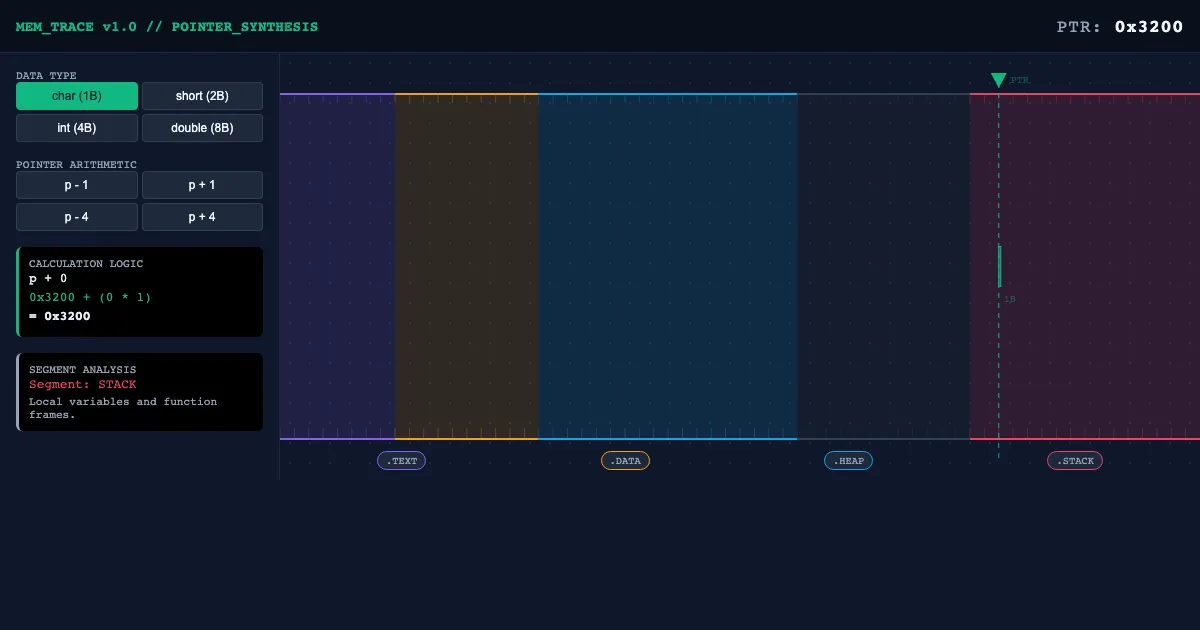
How to use this demo
- Click and drag directly on the canvas to manipulate the scene.
- Use the “char (1B)”, “short (2B)”, “int (4B)”, “double (8B)” buttons to trigger actions or reset the demo.
- Experiment freely — there's nothing to break, and every change is reversible.
What you'll explore
- C Memory Model Review
- POSIX System Call Synthesis
- Signal Disposition
- Socket Management Pitfalls
Frequently asked questions
What does the Memory Trace: The Pointer Workbench demo do?
Synthesis of course materials for midterm and final examinations. Memory Trace: The Pointer Workbench turns that idea into something you can manipulate directly and watch respond.
What Systems Programming in C and Unix Environments concept does Memory Trace: The Pointer Workbench teach?
Synthesis of course materials for midterm and final examinations. It focuses on C Memory Model Review, POSIX System Call Synthesis, Signal Disposition, Socket Management Pitfalls from the “Exam Preparation and Review” section.
What can I control in Memory Trace: The Pointer Workbench?
You can drag elements directly on the canvas; the “char (1B)”, “short (2B)”, “int (4B)”, “double (8B)” buttons run actions or reset the demo. Every change updates the visualization in real time, so you can see exactly how each variable affects the outcome.
How does Memory Trace: The Pointer Workbench fit into the Systems Programming in C and Unix Environments course?
This course provides a comprehensive exploration of the interface between software and hardware, focusing on the C programming language and the Unix/POSIX operating system model. Students learn to manage low-level memor… This demo is the interactive piece for the “Exam Preparation and Review” section. Open the full Systems Programming in C and Unix Environments course wiki at https://www.getlykke.com/explore/public/systems-programming-in-c-and-unix-6e77335e-38a0-4d8f-91d6-77ac878ffc1b for notes, flashcards, quizzes and the other demos.
What will I understand better after using Memory Trace: The Pointer Workbench?
You'll build intuition for C Memory Model Review, POSIX System Call Synthesis, Signal Disposition, Socket Management Pitfalls — and, crucially, see how they behave when you change the inputs, which is hard to get from a textbook or lecture on Systems Programming in C and Unix Environments alone.
From the Systems Programming in C and Unix Environments course
This interactive demo is part of the Exam Preparation and Review section. Explore the full Systems Programming in C and Unix Environments course wiki on Lykke — with notes, flashcards, quizzes and more interactive demos.
Open the Systems Programming in C and Unix Environments course →