Interactive Demo
Computational Thinking: Sequence & State
Computational Thinking: Sequence & State is a free, interactive learning demo from the Intro to Python Fundamentals course on Lykke. It helps you build intuition for Computational thinking (sequence and state), Data types (Integers, Floats, Booleans, Strings), Variables, Binary Data. Play with it directly in your browser — it features 2 buttons. This demo lives in the “Unit 1: Computational Thinking and Variables” section of the course.
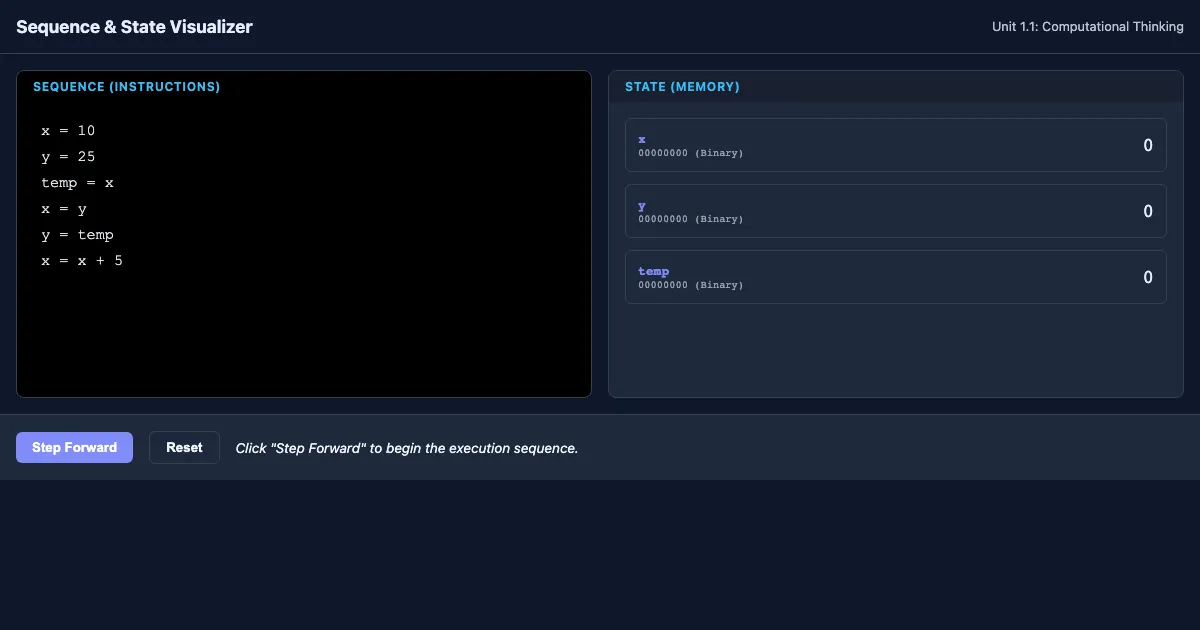
How to use this demo
- Use the “Step Forward”, “Reset” buttons to trigger actions or reset the demo.
- Experiment freely — there's nothing to break, and every change is reversible.
What you'll explore
- Computational thinking (sequence and state)
- Data types (Integers, Floats, Booleans, Strings)
- Variables
- Binary Data
Frequently asked questions
What does the Computational Thinking: Sequence & State demo do?
Introduces the basics of how computers interpret sequence and state using data types and variables. Computational Thinking: Sequence & State turns that idea into something you can manipulate directly and watch respond.
What Intro to Python Fundamentals concept does Computational Thinking: Sequence & State teach?
Introduces the basics of how computers interpret sequence and state using data types and variables. It focuses on Computational thinking (sequence and state), Data types (Integers, Floats, Booleans, Strings), Variables, Binary Data from the “Unit 1: Computational Thinking and Variables” section.
What can I control in Computational Thinking: Sequence & State?
The “Step Forward”, “Reset” buttons run actions or reset the demo. Every change updates the visualization in real time, so you can see exactly how each variable affects the outcome.
How does Computational Thinking: Sequence & State fit into the Intro to Python Fundamentals course?
The Client Challenge course is a comprehensive introduction to computer science using the Python programming language, specifically designed for beginners. The curriculum progresses through eight structured units, movin… This demo is the interactive piece for the “Unit 1: Computational Thinking and Variables” section. Open the full Intro to Python Fundamentals course wiki at https://www.getlykke.com/explore/public/intro-to-python-fundamentals-7d69e48a-d004-41fe-9114-c2d622302ba8 for notes, flashcards, quizzes and the other demos.
What will I understand better after using Computational Thinking: Sequence & State?
You'll build intuition for Computational thinking (sequence and state), Data types (Integers, Floats, Booleans, Strings), Variables, Binary Data — and, crucially, see how they behave when you change the inputs, which is hard to get from a textbook or lecture on Intro to Python Fundamentals alone.
From the Intro to Python Fundamentals course
This interactive demo is part of the Unit 1: Computational Thinking and Variables section. Explore the full Intro to Python Fundamentals course wiki on Lykke — with notes, flashcards, quizzes and more interactive demos.
Open the Intro to Python Fundamentals course →